by in News

Montenegro drafts green hydrogen development program with 2026-2028 action plan

Montenegro has drafted a program for the development of green hydrogen with an action plan for the period 2026-2028 and a strategic environmental impact assessment report.

The public discussion is underway about the draft green hydrogen development program with an action plan for the period 2026-2028 and strategic environmental assessment report. It lasts 20 days from the publication of the public call – November 25.

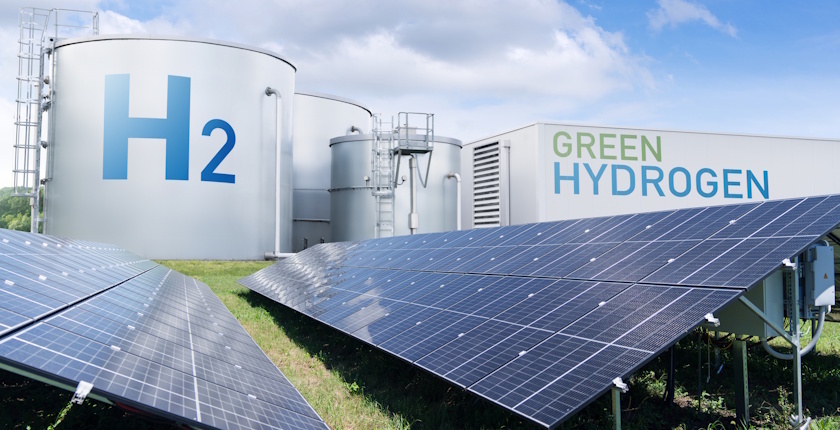
Green hydrogen is a strategic priority for Montenegro by 2030 as a key energy fuel for transition, decarbonization, and security, the document reads.

The program defines four operational goals

Its use is planned in the energy, transportation, and industry sectors, with production based on excess electricity from wind and solar power plants and the development of grid balancing activity and charging infrastructure in line with the EU regulations, the draft underlines.

The document defines four operational goals.

The first is the establishment of an institutional, regulatory, and standardisation framework for the development of the hydrogen economy. It would include a national hydrogen council.

The plan is to produce a feasibility study with a financial assessment for a green hydrogen pilot project

Strengthening administrative capacity is the second goal. The activities include staff training and the adoption of guidelines and regulatory adjustments by the local authorities in line with the national green hydrogen policy.

The third objective is to plan and develop infrastructure for the integration of green hydrogen. The program envisages the creation and adoption of a national hydrogen infrastructure map, as well as a feasibility study with a financial assessment for a pilot project for the production of green hydrogen.

The final goal is to develop science, innovation, education, and promotion in the field of green hydrogen, for which educational programs at the high school and university levels would be developed.

NECP examined two scenarios for hydrogen

The program aims to increase the competitiveness of the Montenegrin economy and achieve carbon neutrality in line with the Paris Agreement, as well as other EU strategic documents, including the European Green Deal and the New Industrial Strategy for Europe.

The country’s National Energy and Climate Plan (NECP) has outlined two hydrogen scenarios – a moderate one (MH2E) and an ambitious one (AH2E).

Pilot projects are planned by 2030, while investments are estimated at EUR 127 million to EUR 212 million by 2050, according to the NECP.

by in News

Revolutionising retail: power of real-time energy visibility with SolarEdge ONE for C&I

As retail evolves, supermarkets are under pressure to boost efficiency and sustainability. The key enabler of this transformation is SolarEdge ONE for C&I – a comprehensive platform that delivers real-time energy visibility and management for commercial and industrial (C&I) environments.

SolarEdge ONE for C&I integrates advanced solar PV, storage, and energy analytics, providing retailers with a unified “single pane of glass” to monitor, control, and optimize energy flows across their entire estate. This platform enables supermarkets to harness solar energy during peak hours, store excess power, and intelligently manage consumption, reducing reliance on the grid and lowering operational costs.

With the rise of electric vehicles and increasing electrification, supermarkets face growing energy demands. SolarEdge ONE for C&I addresses this by combining real-time data from solar panels, refrigeration, lighting, HVAC, and EV chargers. The result is a holistic view of energy usage, allowing retailers to identify inefficiencies, prevent asset failures, and take targeted actions to reduce waste and costs.

CSS-OD WG Solar Germany

Millions of sensor readings in real time

A standout feature of SolarEdge ONE for C&I is its edge-based computing, capable of processing millions of sensor readings in real time. This empowers retailers to visualize and analyze data instantly, even across hundreds of stores, warehouses, and logistics centers. The platform’s scalability means that even large retail chains can centralize energy management, ensuring consistent performance and rapid response to anomalies.

The financial benefits are significant: retailers using SolarEdge ONE for C&I have reported substantial reductions in energy costs – such as a 4.5% drop in lighting expenses – translating to millions in annual savings. The system also supports flexible energy pricing strategies, enabling retailers to shift consumption based on tariff changes, avoid penalties, and even participate in energy trading or arbitrage.

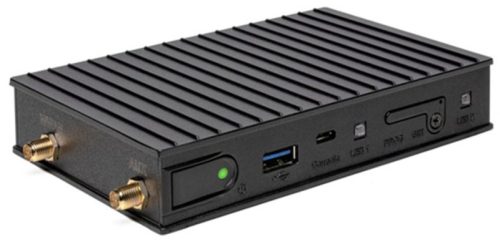
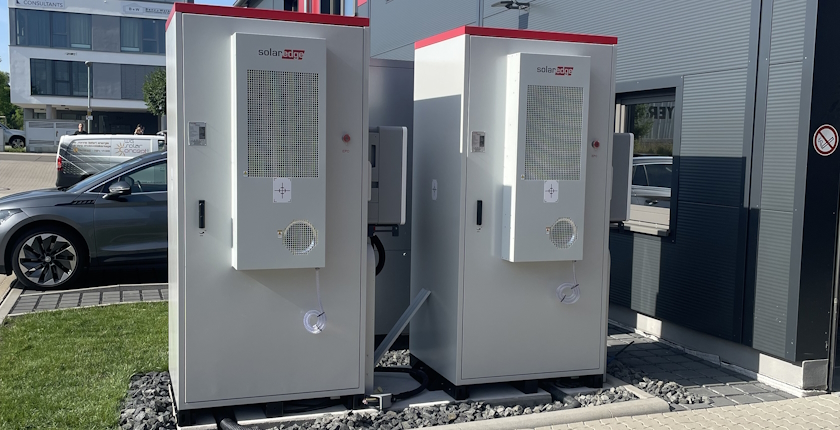
SolarEdge ONE Controller for C&I

SolarEdge ONE for C&I sets retailers on path to future

By leveraging SolarEdge ONE for C&I, supermarkets are not only meeting their sustainability goals but also gaining a competitive edge in a dynamic energy market. The platform’s advanced analytics and automation prepare retailers for the future, allowing them to optimize energy use, comply with carbon reduction targets, and unlock new revenue streams.

In summary, SolarEdge ONE for C&I is transforming retail energy management. Its real-time visibility, intelligent controls, and scalable architecture empower supermarkets to operate more efficiently, sustainably, and profitably – setting a new standard for the industry.

Find out more: SolarEdge ONE for C&I: optimizing all energy assets | SolarEdge

by in News

EPS to help SEEPEX strengthen Serbia’s intraday power market

Serbia’s power exchange, SEEPEX, has reached an agreement with state-owned utility Elektroprivreda Srbije to work together on strengthening the intraday electricity market.

SEEPEX is proud to announce the signing of a strategic agreement with Elektroprivreda Srbije (EPS), Serbia’s largest power utility company, aimed specifically at securing its support for the organized intraday continuous (IDC) electricity market, the power exchange said.

SEEPEX is part of ADEX, which was established in 2022 through a corporate merger between Slovenian energy exchange BSP SouthPool and its Serbian counterpart. In December 2024, ADEX Group completed a merger with the Hungarian Power Exchange (HUPX).

The agreement between SEEPEX and EPS marks an important step forward in strengthening SEEPEX’s organized IDC electricity market, which will also help improve the integration of renewable energy sources, according to the update.

EPS will actively support and participate in the SEEPEX IDC market

Through this partnership, EPS will actively support and participate in the SEEPEX IDC market, enhancing its liquidity and encouraging engagement from all 32 IDC members.

“We believe this collaboration will position the SEEPEX IDC market as a trusted and dynamic platform for electricity trading across the region and beyond,” SEEPEX stressed.

SEEPEX launched the intraday market in July 2023

The contract aims to secure daily offers from EPS to encourage other participants to access the market and start trading, Balkan Green Energy News has learned.

In October 2023, SEEPEX signed a market-maker agreement with EPS for the intraday continuous market.

SEEPEX launched the intraday market in July 2023, with 16 out of 20 registered participants active on the first trading day. The participants came from Serbia, neighboring countries, and the European Union. The SEEPEX intraday market now has 32 participants.

With the launch of the IDC market, SEEPEX became the first organized market in the region to fully implement all aspects of an organized market, according to company’s CEO Miloš Mladenović.

by in News

Božinovska: Solar overtakes hydro in North Macedonia

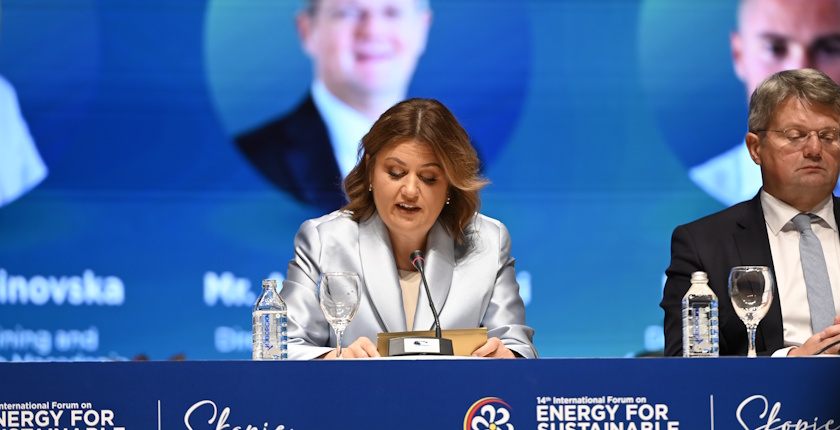
The share of solar power plants’ capacity in North Macedonia has surpassed hydropower plants in 2024, Minister of Energy, Mining and Mineral Resources Sanja Božinovska said at the 14th International Forum on Energy for Sustainable Development in Skopje.

The three-day International Forum on Energy for Sustainable Development (IFESD-14) started yesterday. Its theme is From Goals to Action: Powering the Future with Sustainable Energy. The event was organized by the Ministry of Energy, Mining and Mineral Resources of North Macedonia, in cooperation with the United Nations Development Programme (UNDP) and the UN’s five regional commissions – UNECE, UNESCAP, UNECLAC, UNECA, and UNESCWA.

According to Sanja Božinovska, Minister of Energy, Mining and Mineral Resources, North Macedonia has taken decisive steps in recent years to transform its energy system and align it with the principles of sustainability, security, and affordability.

The reforms are already delivering measurable results, with renewables now accounting for more than half of the country’s total installed electricity capacity – 56% in 2024, she noted.

North Macedonia is moving from goals to action

“The structure of that progress is even more striking. Photovoltaic power plants now represent 28% of installed capacity, surpassing large hydropower, which is at 24%. For the first time in our history, solar has overtaken hydro – a symbolic and practical milestone in our path toward decarbonization,” the minister stated.

In 2024 alone, solar output grew by 186%, she underlined at the first high-level plenary session.

Photo: Ministry of Energy, Mining and Mineral Resources

The numbers speak louder than words: they highlight a nation that is not just planning a transition, but living it, in Božinovska’s view.

Of note, at the end of 2024 the capacity of solar power plants was 848 MW. The year-on-year was higher than 340 MW. Hydropower capacity was 720 MW, at the end of last year.

Božinovska: We are supporting over 5,000 workers and communities affected by the coal phaseout

“The numbers confirm it — North Macedonia is moving from goals to action,” Božinovska stressed.

She added that the country is investing in new solar and wind projects, expanding energy storage, and modernizing the national grid to absorb growing renewable capacity. “These investments are essential for maintaining reliability and flexibility as we integrate more clean energy sources,” she explained.

Božinovska pointed out that the commitment to a just energy transition is equally important.

“We are supporting over 5,000 workers and communities affected by the coal phaseout, helping them to retrain, diversify local economies, and secure green jobs,” she underlined.

Joksimović: Serbia to reach 2030 renewables target

Sanja Božinovska and Jovana Joksimović (photo: Ministry of Energy, Mining and Mineral Resources)

According to Jovana Joksimović, Serbian Assistant Minister of Mining and Energy for International Cooperation and European Integration, coal is still the backbone of the energy system in Serbia, while the share of energy from renewables is significant and growing, and it reached 38% in 2023.

The government plans that one in two megawatt-hours would be produced from renewables by 2030, she underlined.

“Existing valuable resources will need to remain the foundation of Serbia’s electricity sector until renewable energy, transmission and distribution infrastructure, as well as storage capacities and ability to integrate renewables, are sufficiently developed and aligned to reliably and securely replace coal-based electricity generation,” the assistant minister told the audience during the second high-level plenary session.

It is necessary to diversify supply channels but also the energy mix

Joksimović stressed that the increased capacity for clean energy, secured from the two very successful rounds of the auctions, would contribute to reaching 2030 targets.

When it comes to advancing the energy transition and powering the future, it is necessary to think outside the box, she added. Supply channels should be diversified but so does the energy mix, to be as self-sustainable as possible, in Joksimović’s view.

There is huge support for it from relevant international financial institutions – IFIs, but more is needed, in her words.

“If we are going to reach the targets that we set for us, I believe that the European Commission would be partnering with us in all efforts that we are taking,” she concluded.

Photo: Ministry of Energy, Mining and Mineral Resources
by in News

Croatia allocates EUR 50 million for prosumers in business sector to install BESS

Croatia has allocated EUR 50 million to support businesses in installing batteries for storing energy from their existing solar power plants or ones they plan to install.

In recent years, many companies all over Europe have installed solar panels for self-consumption to reduce electricity costs. But battery energy storage systems (BESS) offer additional benefits for such prosumers.

Now Croatia’s Ministry of Economy and Sustainable Development has launched a public call for the allocation of grants to firms.

Small, medium, and large entrepreneurs are eligible to apply

The goal is to enable entrepreneurs to store the energy produced in their power plants and use it when it is most needed – delivering it to the grid later or for their own consumption.

The call is financed by funds from the National Recovery and Resilience Plan (NRRP). Small, medium, and large entrepreneurs are eligible to submit applications. The deadline is January 31, 2026.

The ministry’s goal is to continue investments in the power system, thereby ensuring the integration of an increasing amount of energy from renewable sources.

BESS has numerous advantages over other technologies: high efficiency, adaptability, reliability, economic viability, and fast response, the call reads.

The call targets installation of batteries with a total capacity of 60 MWh

All applicants must specify concrete benefits that would be achieved by implementing the project in their bids.

BESS projects with a total capacity of at least 60 MWh could be installed by the end of the second quarter of 2026, according to the call.

New energy storage capacities would significantly increase the flexibility and resilience of the domestic power system, the ministry said.

The minimum subsidy amount per project is EUR 60,000, and the highest is EUR 1.5 million. The minimum storage capacity eligible for grant is 1 MWh per facility.

Of note, Croatia has already implemented a call for the installation of batteries in firms.

However, the subsidies were allocated for joint installation of renewable power plants and batteries.

by in News

Sunotec secures financing for Bulgarian BESS, renewables portfolio

Sunotec has secured financing for a portfolio of seven projects in Bulgaria. The deals were agreed in September.

The portfolio, for 115 MW in peak solar power capacity and 763 MWh of battery storage, significantly expands Sunotec‘s investment presence in its home market, according to the update.

Six projects are for standalone battery energy storage systems (BESS) and one is for a solar power plant with a colocated BESS.

According to the firm, they are either wholly owned or partially, through Solaris Holding AD, a 50/50 joint venture with the main shareholders of Eurohold Bulgaria AD.

The standalone battery energy storage system projects are part of the government’s RESTORE program

The seven projects contribute to decarbonizing Bulgaria’s power sector, enhancing its grid stability and energy independence, Sunotec stressed.

The Bulgarian Ministry of Energy has approved the said standalone BESS projects to receive subsidies under the RESTORE program, the company added.

In the first round of the National Infrastructure for Storage of Electricity from Renewable Sources (RESTORE) program, Bulgaria approved EUR 587 million in subsidies for 82 BESS projects totaling 9.71 GWh.

In late July, Sunotec and Sungrow agreed to install 2.4 GWh of BESS

In late August, the ministry launched the public consultation process for a proposed new round of its subsidy program for BESS.

Viktor Stefanov, Head of IPP at Sunotec, said the seven investments mark a major milestone in its evolution.

The company added that they further strengthen its position, as well as of Solaris Holding, among Bulgaria’s leading investors in photovoltaics and energy storage.

In late July, China-based Sungrow achieved an agreement with Sunotec on installing 2.4 GWh of BESS in Europe. The portfolio includes several large-scale projects across Bulgaria, which will serve energy storage needs.

by in News

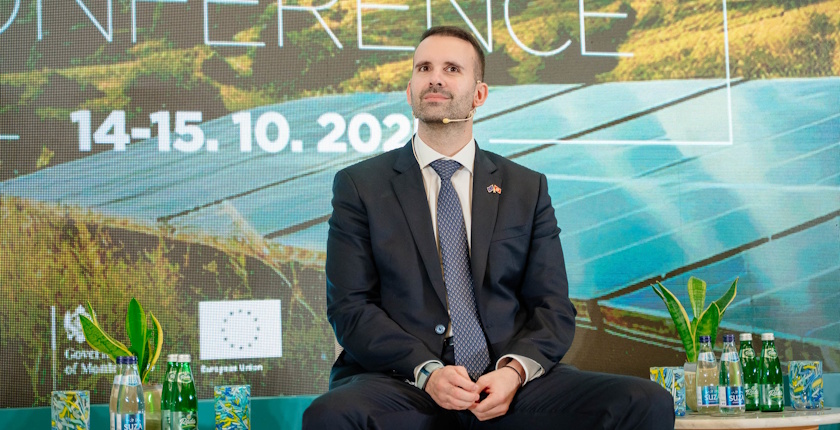
Spajić: Montenegro wants to be country of green data centers

Montenegro plans to become a country of green data centers, according to Prime Minister Milojko Spajić.

Milojko Spajić was one of the speakers at the keynote panel Accelerating the Western Balkans’ Green and Smart Growth, within the European Union – Montenegro Investment Conference in Luštica, near Tivat.

Earlier, European Commission President Ursula von der Leyen and the prime minister of Montenegro opened the two-day event, titled Smart Growth, Green Future: Accelerating Investment in Montenegro.

Spajić said energy is a cornerstone of the country’s strategy for connecting the region but also something in which Montenegro could be very competitive, helping the EU become even more competitive on the global stage.

Spajić: We can offer to Europe a possibility to get inexpensive electricity and stable supply

“We have dozens of amazing projects for hydro, wind, solar energy at very competitive rates. We can offer to Europe a possibility to get inexpensive electricity and stable supply. Baseload energy as well. For example, hydro is baseload energy,” he stated.

Photo: Bojan Gnjidić / Government of Montenegro

The prime minister recalled that his country is interconnected with Italy and that the project for the installation of the second line of the subsea cable is in the pipeline. But he also highlighted the significance of digital connections with Italy, where Milan is one of the biggest data center hubs in the EU, providing connections to Frankfurt and London.

Montenegro, in Spajić’s words, intends to be a part of the data highway. Data centers are basically the hardware for artificial intelligence, he explained and added that AI is going to be strong in big markets, not in small ones.

Partners from the US, UAE, and other countries, are interested in the development of the data centers

“But where we can actually be involved as a small country are data centers providing infrastructure for the EU’s AI to be strong and competitive,” Spajić underlined.

Therefore the country intends to focus on providing a very good environment for global data center operators, to come from all around the world. Spajić revealed that partners from the United States, United Arab Emirates, and other countries are interested in joining the opportunities for the development of the data centers.

“We want Montenegro to be the country of green data centers. We have water for hydropower. We have a lot of solar potential and a lot of wind. We are very fortunate to have such diversity,” Spajić said.

He invited investors to come to Montenegro: “Don’t waste your time, come as soon as possible.”

Participants at the panel included the Director of Enlargement Coordination, Strategy and Investments at the EU’s Directorate-General for Enlargement and Eastern Neighbourhood, Mathieu Bousquet, WizzAir CEO József Váradi, Akuo President Eric Scotto, and Charlotte Ruhe, Managing Director for Central and South-Eastern Europe in the European Bank for Reconstruction and Development (EBRD).

Of note, fourteen cooperation projects between Montenegrin and European companies have been initiated at the conference. Some of them involve investments in wind farms, solar parks, energy storage, and grids.

by in News

Montenegro’s EPCG to develop floating solar, thermal batteries, high-altitude wind turbines

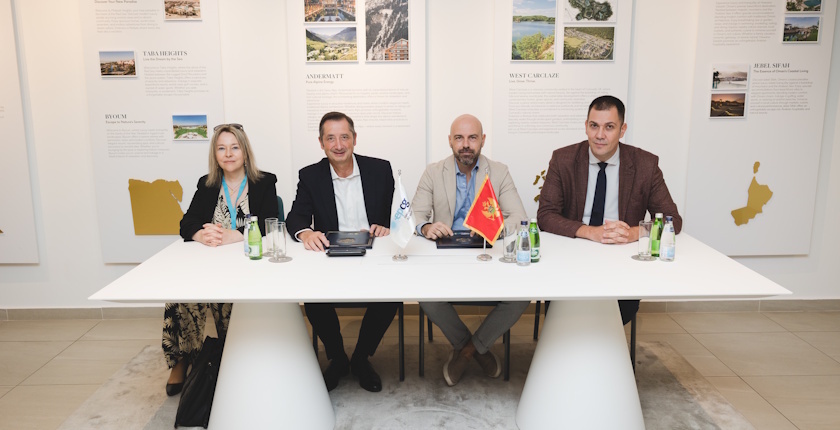
Montenegrin state-owned power utility Elektroprivreda Crne Gore has signed memoranda of understanding with Akuo, E2S Power AG, and wind fisher for a floating solar power plant, thermal batteries, and a pilot project for high-altitude wind turbines, respectively.

Memoranda of understanding (MoUs) were signed within the framework of the European Union – Montenegro Investment Conference. Domestic and European companies initiated 14 projects, including for wind and solar power, energy storage, and the electricity grid.

The two-day conference Smart Growth, Green Future: Accelerating Investment in Montenegro, held earlier this week in Luštica, near Tivat, was opened by European Commission President Ursula von der Leyen and Prime Minister of Montenegro Milojko Spajić.

Bulatović: We will develop three projects with Akuo

Ivan Bulatović, CEO of government-controlled Elektroprivreda Crne Gore (EPCG), told Balkan Green Energy News that the memorandum with French renewable energy company Akuo includes a 36 MW floating solar power plant on Slano lake.

The investment is estimated at EUR 60 million.

It is an innovative technology and it helps the environment by reducing water evaporation, Bulatović explained.

Scotto: Montenegro has everything it needs for the development of renewables

Another project within the deal is for a solar power plant, and the third one is for energy storage. On behalf of Akuo Energy, the memorandum was signed by CEO Eric Scotto.

He stressed that floating solar saves water and space while providing energy. Scotto revealed the possibility for the proposed onshore photovoltaic plant to be agrisolar.

Montenegro has everything it needs for the development of renewable energy sources – sun, wind and space, Scotto stressed.

Thermal batteries at TE Pljevlja

Photo: EPCG

EPCG signed its second memorandum with E2S Power AG, based in Switzerland, for the joint development, production, and application of thermal energy storage. The ceremony was attended by Montenegrin Prime Minister Milojko Spajić.

The aim of the project is to lower the domestic utility’s CO2 emissions, primarily from the Pljevlja coal power plant.

Electricity would be purchased on the market when it’s cheap, to charge the energy storage facility and later produce steam to drive the turbine and generate electricity, Bulatović explained.

He stressed that the cooperation opens up the possibility for the application of advanced technologies enabling more efficient energy use and a reduction in CO2 emissions.

Wind fisher is developing innovative high-altitude wind turbines

“Our thermal energy storage technology, TWEST, provides concrete solutions for decarbonizing thermal power plants and stabilizing power systems that are increasingly reliant on renewable sources,” E2S Power AG CEO Saša Savić said.

The memorandum with French innovative solutions firm wind fisher envisages the development of a joint pilot project for high-altitude wind turbines. Bulatović signed it with the company’s CEO Stéphane Vidaillet.

It is an innovative idea that should take off in the future, and this is a pilot project in the testing phase, Bulatović revealed.

The company, in his words, has the technology, and Montenegro has the space where it can be tested.

Photo: EPCG
by in News

Šahmanović: Second submarine cable line with Italy to be installed by 2031

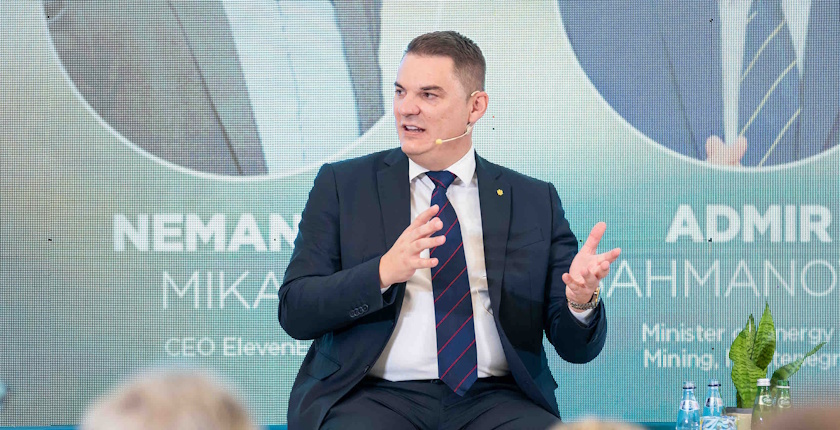
The second line of the submarine cable connecting Montenegro and Italy is expected to be completed by 2031, Montenegro’s Minister of Energy and Mining Admir Šahmanović said at the European Union – Montenegro Investment Conference.

The two-day conference, titled Smart Growth, Green Future: Accelerating Investment in Montenegro, was opened yesterday in Luštica, near Tivat, by European Commission President Ursula von der Leyen and Prime Minister of Montenegro Milojko Spajić.

Fourteen cooperation projects between Montenegrin and European companies have been initiated at the conference, including investments in wind farms, solar parks, energy storage, and grids. It shows the great significance of the energy sector for investments.

A panel called Renewables: Scaling Montenegro’s Energy Transition examined the possibilities for accelerating the country’s energy transition and enhancing the sector’s attractiveness for investment in renewables.

Šahmanović: Montenegro strives to position green energy as an export product

Prominent international experts and investors took part in the discussion. Representing the Government of Montenegro, Minister of Energy and Mining Admir Šahmanović outlined the country’s renewable energy priorities and highlighted Montenegro’s role as a regional leader in clean energy.

Montenegro has fully harmonized its legislation with EU standards, creating a stable and predictable investment environment, in his words. Šahmanović highlighted the launch of the first solar power auction as a significant step forward in the development of renewables.

Photo: Đorđe Cmiljanić/Government of Montenegro

“The government invests in battery energy storage systems (BESS), ensuring the flexibility and stability of the grid. Montenegro strives to position green energy as a recognizable export product, thereby strengthening the country’s economic sustainability,” Šahmanović stated.

He revealed that Montenegro is about to sign a memorandum of understanding with Italy that would additionally position Montenegro as an energy bridge between the Western Balkans and the EU.

Montenegro is looking for strategic partners and investors ready to jointly implement capital projects in the energy sector

The government is wrapping up the work concerning the oil and gas sector to close chapter 15 in its accession negotiations with the EU, further strengthening investor trust, Šahmanović said.

“The implementation of the project for the construction of the second phase of the subsea cable link with Italy is expected by 2031, which will further strengthen Montenegro’s role in regional and European energy connectivity. Montenegro is looking for strategic partners and investors ready to jointly materialize capital projects in energy and contribute to regional energy stability,” the minister underlined. The investment is estimated at EUR 500 million, he asserted.

In a message to investors, Šahmanović said Montenegro is open for investments and added: “Now is the time for you to invest. We will be your service 24 hours a day, seven days a week.”

Participants at the panel included Daniel Calderon, Alcazar Energy Co-Founder and Managing Partner, Yann Guinard, EDF Director of Development for Europe, Louis Blanchard, Qair Energy President, and Nemanja Mikać, ElevenEs CEO.

Memorandum with EDF

Admir Šahmanović and Yann Guinard (photo: Ministry of Energy and Mining)

Within the conference, the Ministry of Energy and Mining of Montenegro and EDF International Networks signed a memorandum of understanding. It establishes a framework for future cooperation on modernizing the distribution network, digitizing smart grids, and integrating renewable energy sources, according to the ministry.

The memorandum foresees the implementation of pilot projects and feasibility studies that will contribute to the acceleration of the energy transition of Montenegro.

Admir Šahmanović said the deal is an important step towards strengthening green and innovative energy projects. Cooperation with EDF confirms the position of Montenegro as a country with a clear vision and open opportunities for investors, he underscored.

“EDF International Networks, as part of the global EDF Group, brings international expertise in the sector of power distribution, grid upgrade and digital transformation, which opens up space for new strategic partnerships and capital infrastructure projects,” the minister pointed out.

The memorandum confirmed the joint commitment to sustainability, integrity and energy security, with a clear focus on the well-being of citizens and the economy of Montenegro, the ministry said.

by in News

Alcazar Energy plans to boost its Montenegro investments to USD 500 million

Alcazar Energy intends to increase its investments in Montenegro from USD 200 million to USD 500 million, according to Co-Founder and Managing Partner Daniel Calderon.

Alcazar Energy is one of the companies with which Montenegro has signed memoranda of understanding on projects in the energy sector. It was done today at the EU-Montenegro Investment Conference in Luštica. The company recently began construction on the largest wind farm in the Western Balkans, located in North Macedonia.

Daniel Calderon, Alcazar Energy’s Co-Founder and Managing Partner, told Balkan Green Energy News that the construction of the Bijela wind farm is scheduled to begin in the first quarter of 2026.

The investment in the 118.8 MW wind farm is estimated at USD 200 million, he added.

Alcazar is currently preparing the land and conducting procurement for this major project, which represents the first part of its investment in Montenegro.

The investment in the Bijela wind farm is valued at USD 200 million

Alcazar has now signed a memorandum of understanding with the Government of Montenegro to increase investments from USD 200 million to USD 500 million.

The country’s leadership is creating a good and consistent climate for foreign investments, Calderon stressed.

The company, in his words, sees the potential for its investments to increase to USD 500 million over the next five years.

Alcazar estimates that investments in renewables in Montenegro could reach USD 4-5 billion by 2040, and would like to be a part of it. Its investments would be around 10% of that amount, representing the first investments in this large endeavour, Calderon underlined.

Several projects in Montenegro are being considered

When asked to elaborate on these new projects, he replied that the company is considering several projects, but that he cannot disclose any details at this time.

Today, Calderon was one of the speakers at a panel titled Renewables: Scaling Montenegro’s energy transition.

At the EU-Montenegro Investment Conference, a total of 14 joint projects between Montenegrin and European companies have been initiated, including investments in wind farms, solar parks, energy storage, and power grids.

Alcazar plays a significant role in the development of the renewable energy sector in MENAT (Middle East, North Africa, and Turkey) and the Balkans, including through projects in Montenegro, Serbia, and North Macedonia.