AEA-Albania Energy Association
  • Main
  • About Us
  • Services
  • Sectors
  • News
  • EventsEvents
  • PublicationPublication
  • Contact Us
AEA-Albania Energy Association
  • Main
  • About Us
  • Services
  • Sectors
  • News
  • EventsEvents
  • PublicationPublication
  • Contact Us
AEA-Albania Energy Association
  • Home Page
  • About Us
  • Sectors
  • Our Services
  • News
  • Contact Us
May 21, 2026
by AEA in News

Electricity Production and Exports Rise Sharply in Albania in Q1 2026

Electricity production and exports increased significantly in the first quarter of 2026, while imports fell by more than half, according to data published by INSTAT on the country’s electricity balance.

Net domestic electricity production reached 3,647 GWh in the first three months of the year, compared with 2,234 GWh in the same period a year earlier, marking an increase of 63.2%. The growth was driven mainly by public hydropower plants, as well as private and concessionary hydropower producers, which together accounted for more than 93% of domestic production. Other producers, mainly photovoltaic plants, represented around 7% of total generation.

Gross electricity exports, including exchanges, rose to 1,503 GWh, up from 732 GWh in the first quarter of 2025, representing a year-on-year increase of 105.4%. At the same time, gross imports fell to 327 GWh, from 767 GWh, reflecting a decline of 57.4%.

As a result, the electricity exchange balance was positive at 1,177 GWh, while domestic production covered most of the country’s demand.

Public hydropower plants generated 1,667 GWh during the period, up 63% compared with the same quarter of the previous year. Production from private and concessionary hydropower plants reached 1,726 GWh, an annual increase of 66.8%. Meanwhile, other electricity producers, including photovoltaic plants, generated 254 GWh in the first quarter, compared with 176 GWh a year earlier, recording growth of 44%.

Electricity available for consumption increased by 8.9% compared with the first quarter of 2025, while final consumption reached 1,954 GWh, up 9.1% year-on-year.

Household electricity consumption increased by 8.8%, while consumption by businesses and other non-household consumers expanded by 9.5%. INSTAT also reported that network losses reached 516 GWh, or 8% higher than a year earlier. However, the share of losses in relation to electricity available for consumption declined slightly to 20.9%, from 21.1% in the first quarter of 2025.

Transmission losses increased by 31.9%, while distribution losses rose by 5.1%, according to official data.

TAB. 1 Electricity Energy Balance
MWh
Indicators Q1 2025 Q1 2026
A Available energy (A=1+2-3) 2.269.259 2.470.192
1 Domestic net production (1=1.1+1.2+1.3) 2.233.905 3.646.805
1.1 Thermal power plants 0 0
1.2 Hydropower plants (1.2=a+b) 2.057.523 3.392.739
a Public (a=a.1-a.2) 1.022.784 1.666.663
a.1 Gross production of public hydropower plants 1.032.261 1.679.355
a.2 Losses and own consumption 9.477 12.693
b Independent private and concessionary producers 1.034.740 1.726.076
1.3 Other producers — other renewable energy sources 176.381 254.066
2 Gross imports — energy received 767.187 326.815
3 Gross exports — energy delivered 731.833 1.503.429
B Electricity consumption (B=1+2) 2.269.259 2.470.192
1 Network losses (1.1+1.2) 477.816 515.817
1.1 Losses and own consumption in transmission 51.088 67.361
1.2 Distribution losses (1.2=a+b)1 426.728 448.456
a Technical losses in distribution 312.071 336.635
b Non-technical losses in distribution2 114.657 111.821
2 Use by consumers (2=2.1+2.2) 1.791.443 1.954.375
2.1 Household consumers 1.064.956 1.158.522
2.2 Non-household consumers 726.487 795.853
1 The breakdown of technical and non-technical losses consists of estimates carried out by operators active in the electricity sector.
2 Non-technical losses also include statistical differences arising from non-declarations of production and changes resulting from the timing of production measurement, which is shifted in relation to sales or consumption data.
⚡ Albania Electricity Balance · Q1 2026

Electricity Production and Exports Surge in Q1 2026

Official INSTAT data show that Albania’s electricity available for consumption increased by 8.9% year-on-year, supported by a strong rise in domestic generation and a sharp increase in exports.

⚡
Energy available 2,470 GWh ▲ +8.9% vs Q1 2025
🏭
Net domestic production 3,647 GWh ▲ +63.2% vs Q1 2025
🔌
Gross exports 1,503 GWh ▲ +105.4% vs Q1 2025
⬇️
Gross imports 327 GWh ▼ -57.4% vs Q1 2025

Q1 2025 vs Q1 2026: Electricity Balance

Indicator Q1 2025 Q1 2026 Change

Q1 2026 Highlights

Public hydropower 45.7%
Private & concession hydropower 47.3%
Other renewable producers 7.0%
Network losses / available energy 20.9%
Exchange balance +1,177 GWh

Values are shown in GWh for readability. The underlying data are based on the INSTAT electricity balance table, originally reported in MWh for Q1 2025 and Q1 2026.

May 21, 2026
by AEA in News

North Macedonia Moves Closer to European Green Electricity Certification System

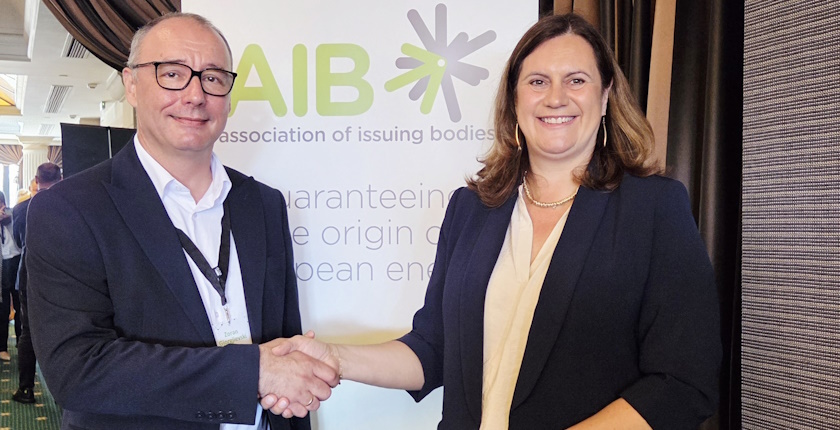
North Macedonia’s National Electricity Market Operator, MEMO, has officially joined the Association of Issuing Bodies (AIB), marking an important step toward deeper integration with the European framework for guarantees of origin and cross-border renewable electricity trade.

The decision was confirmed during the General Assembly of the Association of Issuing Bodies, where MEMO became a full member of the Brussels-based European energy certification organization. The move comes as the Ministry of Energy, Mining and Mineral Resources and the Energy Community Secretariat continue efforts to advance the mutual recognition of guarantees of origin between the European Union and Energy Community countries.

Guarantees of origin are electronic certificates proving that a specific quantity of electricity has been generated from renewable energy sources. They are increasingly important for transparent energy markets, renewable energy producers, suppliers and companies seeking to demonstrate the use of green electricity in line with ESG and decarbonisation standards.

MEMO introduced its electronic registry for guarantees of origin in April last year, in cooperation with energy certificate company Grexel and in line with European Energy Certificate System rules and AIB standards. Since then, North Macedonia has issued around 500,000 guarantees of origin, with each certificate representing 1 MWh of electricity produced from renewable sources.

According to MEMO Chief Executive Officer Zoran Gjorgjievski, AIB membership enables the Macedonian guarantees of origin system to implement the procedures required for future accession to the European Energy Certificate System. This will allow the secure, transparent and internationally recognized issuance and trading of green electricity certificates.

He emphasized that further integration of North Macedonia’s electricity market with the European energy market is essential, as it creates new opportunities for renewable energy producers, suppliers and businesses while strengthening trust, competitiveness and investment attractiveness in the country’s renewable energy sector.

Denko Rafajlovski, Head of MEMO’s Renewable Energy Support Department, noted that guarantees of origin play a key role in promoting renewable energy and giving consumers greater transparency and choice over the source of the electricity they use. Through the AIB Hub, national registries are connected, enabling the efficient cross-border transfer of green certificates between countries.

MEMO became an observer member of AIB last year as a first step toward full membership. Its accession now represents a significant milestone in the development of a modern, transparent and European-aligned electricity market in North Macedonia.

Cross-border trade in guarantees of origin will become possible once national legislation and technical requirements are fully harmonized with European Union standards.

May 18, 2026
by AEA in News

Albania Licensed Electricity Generation Companies (HPP / TPP)

Licensed Electricity Generation Companies — HPP / TPP

Energy Regulatory Authority (ERE) of Albania  •  Hydropower & Thermal Power Plant Licensees
Series:
Loading…
No companies match your search.
No. Company NUIS License No. Series ERE Board Decision License
Validity
HPP / TPP Facility Capacity [MW] Location
No. Date
ⓘ Legend / Notes * Amendment  •  ** Transfer  •  *** Decision Review  •  **** Condition Linked to Start of Operations  •  ***** Renewal
Symbols preceding a date in the ERE Board Decision Date column indicate the type of modification applied to that decision.
May 18, 2026
by AEA in News

EU Approves €405 Million Greek Aid Scheme for Energy-Intensive Industries

The European Commission has approved a €405 million Greek state aid scheme designed to reduce electricity levies for energy-intensive industries, aiming to strengthen the competitiveness of domestic manufacturers and prevent production from relocating outside the European Union.

According to the Commission, the measure complies with EU state aid rules and is targeted at sectors with high electricity consumption that are exposed to intense international competition.

EU officials stated that the scheme is intended to mitigate the risk of carbon leakage — a situation in which companies move industrial operations to countries with less stringent climate regulations, potentially increasing global greenhouse gas emissions.

The newly approved mechanism replaces a previous Greek support scheme that received European Commission approval in December 2018.

Under the framework, eligible companies will benefit from reductions ranging between 75% and 85% on electricity-related levies, depending on the level of their exposure to energy costs and international market pressures. However, beneficiaries will still be required to pay a minimum levy of 50 euro cents per megawatt-hour.

The program also introduces environmental obligations for participating companies. Beneficiaries must either implement recommendations identified through energy audits, invest at least 50% of the financial support received into projects that significantly reduce greenhouse gas emissions, or ensure that at least 30% of their electricity consumption is sourced from carbon-free energy.

The European Commission concluded that the measure is “necessary and appropriate” to reduce the risk of industrial relocation while remaining aligned with EU climate objectives and competition regulations.

May 18, 2026
by AEA in News

US-Backed LNG Projects Reshape the Western Balkans’ Energy Landscape

The United States is seeking to reshape the energy map of the Western Balkans through a network of bilateral agreements and infrastructure projects centered on liquefied natural gas (LNG). The broader objective is to reduce the region’s dependence on Russian gas while strengthening a strategic energy corridor linking Southern and Central Europe.

A series of projects is being advanced across Croatia, Bosnia and Herzegovina, North Macedonia, Albania, Montenegro, Kosovo and Serbia. These initiatives include new gas pipelines, LNG terminals and gas-fired power plants, supported politically and financially by both Washington and Brussels. Some projects are already under construction or in the contracting stage, while others remain in planning. Together, they signal a gradual shift in the region’s energy mix toward gas supplies from the United States, Azerbaijan and the Mediterranean basin.

Jonathan Stern of the Oxford Institute for Energy Studies notes that Southeast Europe has already developed alternative gas supply routes. These include LNG terminals in Greece and Croatia, the Southern Gas Corridor from Azerbaijan, and Romania’s Neptun Deep offshore field in the Black Sea, whose exploitation is expected to begin next year and whose reserves are estimated at around 100 billion cubic meters.

Bosnia and Herzegovina Seeks to End Dependence on Russian Gas

Bosnia and Herzegovina has recently become a focal point of regional gas diversification efforts through the Southern Gas Interconnection project with Croatia. The pipeline would give the Federation of Bosnia and Herzegovina access to the LNG terminal on the Croatian island of Krk and to alternative gas suppliers. At the same time, Republika Srpska continues to pursue separate gas links with Serbia, including the Eastern Interconnection project from Bijeljina to Banja Luka.

For nearly five decades, Bosnia and Herzegovina has depended almost entirely on Russian gas, delivered through TurkStream and used mainly for heating in Sarajevo. In overall volume terms, the country remains a relatively small gas consumer compared with Serbia.

The intergovernmental agreement between Bosnia and Herzegovina and Croatia on the Southern Gas Interconnection was signed in Dubrovnik in April, in the presence of US Secretary of Energy Chris Wright. The pipeline is planned to extend from Dalmatia toward central Bosnia, with additional branches toward Herzegovina and the country’s northwest. Croatia’s state-owned Plinacro is leading the Croatian section, while the US-based company AAFS Infrastructure and Energy has been designated to manage the project on the Bosnian side.

The project has, however, drawn criticism from the European Commission and the Energy Community. Concerns center on the Federation of Bosnia and Herzegovina’s special-purpose law, or lex specialis, which named a private American company in the project framework, as well as questions over compliance with EU and Energy Community rules.

Bosnia and Herzegovina currently consumes up to 250 million cubic meters of gas annually, while the planned pipeline is expected to have a capacity of around 1.5 billion cubic meters. This has prompted discussion about the possible construction of gas-fired power plants capable of supplying electricity to roughly 400,000 households. At present, about 80% of the country’s electricity is generated by coal-fired thermal power plants, some of them more than half a century old.

The new pipeline would also connect with the existing gas route arriving from Serbia. Still, Stern argues that while the project is important for Bosnia and Herzegovina, its wider regional relevance is less clear. He also questions the commercial viability of an investment estimated at around EUR 1 billion, particularly given the lack of available LNG transit capacity from Croatia and Serbia’s expanding access to gas through Bulgaria.

Serbia Balances Diversification and Russian Gas Dependence

Serbia is expanding its gas infrastructure as it seeks to preserve its position as a regional energy hub while creating room for US LNG and broader Western investment in the sector.

In February this year, Serbian Minister of Mining and Energy Dubravka Đedović Handanović signed a joint statement with the United States and several Central and Eastern European countries during the Transatlantic Gas Security Summit in Washington. The statement focused on strengthening the resilience of regional gas markets and improving supply security.

Following the summit, Srbijagas Director Dušan Bajatović stated that Serbia would eventually need to purchase American gas, although no quantities or formal supply contracts have yet been defined. Serbia’s 2024 strategic energy cooperation agreement with the United States envisages diversification of energy sources, but it does not currently include a binding agreement to buy US LNG.

Potential US LNG deliveries to Serbia could come through the Krk terminal in Croatia or via Greece’s Alexandroupolis terminal, supported by new interconnections through Bulgaria and North Macedonia. Serbia currently operates approximately 2,500 kilometers of gas pipelines, is planning new links, including one toward North Macedonia, and is expanding the Banatski Dvor gas storage facility.

Despite these diversification efforts, more than 80% of Serbia’s gas still comes from Russia through TurkStream. Major energy assets, including the TE-TO Pančevo combined heat and power plant, remain tied to Russian-linked structures involving Gazprom and the Serbian oil company NIS.

Montenegro Explores an LNG Terminal and Gas-Fired Generation

Montenegro, which currently lacks a domestic gas network, is also being drawn into the emerging US-backed LNG framework. Plans include an LNG terminal at the Port of Bar and the possible development of gas-fired power generation.

The country participated in the Transatlantic Gas Security Summit in Washington in February and joined a broader political statement on gas cooperation between the United States and several Central and Southern European countries.

In 2023, the Montenegrin government signed a memorandum of understanding with US companies Enerflex Energy Systems and Wethington Energy Innovation regarding potential LNG and power infrastructure. However, no LNG supply agreement has been finalized, no volumes have been specified, and no binding commercial contracts have been signed.

Montenegro has also supported the Ionian-Adriatic Pipeline (IAP), which would connect the Trans-Adriatic Pipeline (TAP) in Albania with Croatia, although the project remains at the conceptual stage. Separately, gas-fired power plants ranging from 50 MW to 400 MW are being considered in Bar, Podgorica and Pljevlja, including hybrid solutions and possible conversions of existing facilities.

Studies prepared for the Electric Power Company of Montenegro by Japan’s JERA and Switzerland’s SS&A Power Consultancy concluded that the options assessed are technically feasible and economically viable. Depending on the selected plant capacity and fuel supply source, estimated investments range from EUR 233 million to EUR 362 million.

Kosovo Remains Outside the Current Gas Push

Kosovo currently has no gas infrastructure and relies almost entirely on coal-fired power generation. A proposed gas interconnection with North Macedonia had been included in the European Union’s investment plan for the Western Balkans, but the project was suspended, with the government citing high costs and a strategic preference for renewable energy development.

The proposed pipeline would have provided Kosovo with access to gas from Greek LNG terminals in the Aegean Sea, while a separate link to Albania had also been considered. US officials have indicated that they remain open to supporting commercial cooperation if market conditions become more favorable.

Kosovo also declined to direct roughly USD 200 million in Millennium Challenge Corporation funding toward gas infrastructure, instead shifting the investment toward battery energy storage systems.

North Macedonia Emerges as a Strategic Southern Corridor Link

North Macedonia is building new gas infrastructure with support from Washington and Brussels, aiming to reduce its long-standing dependence on Russian gas and position itself as a regional energy transit hub. As a NATO member and EU candidate country, diversification of energy supply has also taken on a clear geopolitical dimension.

The TE-TO Skopje cogeneration plant, which provides heat to the capital and produces electricity, remains dependent on Russian gas and is controlled by interests linked to the Russian group Sintez.

Skopje has signed a memorandum related to the purchase of US LNG, though detailed commercial terms have not been publicly disclosed. The Gevgelija–Negotino gas pipeline is under construction and is expected to connect North Macedonia with Greek LNG terminals. Its initial annual capacity is planned at 1.5 billion cubic meters.

The European Union is financing the project through a combination of loans and grants. At the same time, an interconnection with Serbia is being planned, with construction expected to begin in 2027. North Macedonia’s Ministry of Energy, Mining and Mineral Resources has also stated that the country plans to develop 67 new energy facilities with a combined installed capacity of 4,416 MW, including a cogeneration plant near Negotino.

Albania Positions Vlora as a Future LNG Hub

In April 2026, Albania signed a strategic agreement worth USD 6 billion involving Venture Global and Aktor LNG USA for long-term LNG supply beginning in 2030. The agreement is part of a broader effort to turn Albania into a regional entry point for US LNG in Southeast Europe.

The plan includes the development of an energy hub in Vlora featuring an LNG terminal and a gas-fired power plant with a capacity of approximately 380 MW. The project would also connect with the Trans-Adriatic Pipeline (TAP), which has transported Azerbaijani gas to Italy since 2020.

Vlore, Albania

Vlore, Albania

Washington views Albania as a potential distribution platform for supplying US gas to Kosovo, North Macedonia and other Western Balkan markets. This is particularly significant because Albania does not currently operate a functional internal gas network, while most of the infrastructure inherited from the socialist period is no longer usable.

For Albania, whose electricity system depends overwhelmingly on hydropower, a gas-fired power plant could serve as a strategic reserve during drought periods and times of rising power demand.

Energy expert Stavri Dhima has argued that Albania’s gasification strategy should combine several elements: construction of the Ionian-Adriatic Pipeline, connection to Croatia’s LNG terminal, access to the Trans-Adriatic Pipeline carrying Caspian gas, and development of an LNG terminal and gas storage facility in Dumrea.

If completed, the LNG terminal in Vlora could become a regional gas hub serving Albania, Montenegro, North Macedonia and Kosovo. Through IAP and TAP, gas could potentially also be directed toward Bosnia and Herzegovina and Italy.

Still, experts caution that infrastructure alone does not guarantee energy security. Countries seeking to reduce dependence on Russian gas must also secure reliable, long-term supply contracts with multiple alternative suppliers.

May 18, 2026
by AEA in News

Greece, Serbia, North Macedonia and Bulgaria Advance Vertical Gas Corridor Expansion

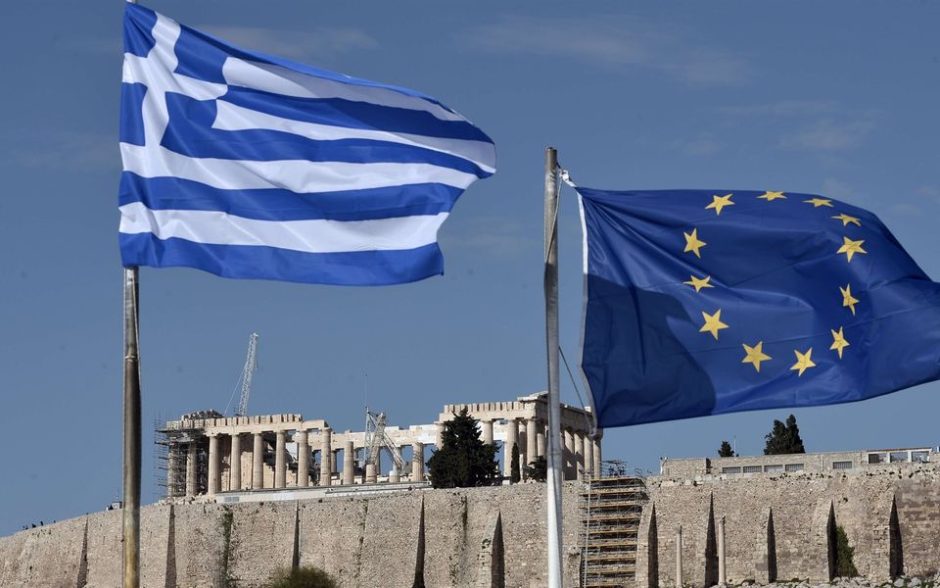
Energy ministers and senior officials from Serbia, Greece, North Macedonia and Bulgaria met today in Athens to discuss the development of regional natural gas supply routes and cross-border interconnections. During the meeting, Greek Minister of Environment and Energy Stavros Papastavrou announced that the Vertical Corridor initiative would be extended to include North Macedonia and Serbia.

Greece, Bulgaria and Romania have already achieved significant progress in developing the Vertical Corridor, a strategic gas route designed to facilitate supplies toward Ukraine and Moldova. Key milestones include infrastructure upgrades, the construction of new pipelines such as the Interconnector Greece–Bulgaria (IGB), as well as commercial agreements and dedicated capacity auctions. The same approach is now being applied to the western Balkans through the creation of an additional branch of the corridor.

The Athens meeting focused primarily on two major gas interconnection projects: Greece–North Macedonia and North Macedonia–Serbia. The Greece–North Macedonia pipeline is currently under construction and is expected to be completed this year. Once operational, it will allow natural gas to flow northward from Greek LNG terminals at Revithoussa and Alexandroupolis, as well as from pipeline gas sources, including Azerbaijan.

Serbia Plans EUR 1.2 Billion in Gas Infrastructure Investments

The next segment of the regional gas chain, linking North Macedonia with Serbia, is expected to be completed by the end of 2027, according to Serbian Minister of Mining and Energy Dubravka Đedović Handanović. The project is currently in the spatial planning phase and is designed to connect with the southern Serbian city of Vranje. Its planned annual transport capacity is 1.5 billion cubic meters of natural gas.

Minister Đedović Handanović also stated that Serbia intends to invest approximately EUR 1.2 billion in gas infrastructure, including the modernization and expansion of existing pipeline networks.

North Macedonian Minister of Energy, Mining and Mineral Resources Sanja Božinovska emphasized that the regional interconnection would soon become operational.

“By the end of next year, we will be ready and the interconnection between Greece, North Macedonia and Serbia will be operational,” she said.

She also confirmed that the tender procedure for the pipeline connecting North Macedonia and Serbia was launched yesterday.

Greek Minister Papastavrou highlighted the broader strategic importance of the initiative, stressing Greece’s role in shaping the region’s emerging energy architecture.

“Greece plays a leading role in the new European architecture through projects of strategic importance. Infrastructure, interconnections, market coupling and the Vertical Corridor are initiatives that strengthen security of supply, reinforce geopolitical stability and create new development opportunities across the region. Today, we agreed on the expansion of the Vertical Corridor to North Macedonia and Serbia, as well as on institutionalizing cooperation among the four countries,” he stated.

Bulgaria was represented at the meeting by Deputy Minister of Energy Kiril Temelkov.

Further Regional Meetings Planned

The four officials agreed to continue their cooperation through a series of follow-up meetings. The next session is scheduled for September in Belgrade, with subsequent meetings planned in Skopje and Sofia.

The Athens discussions were also attended by representatives of gas and electricity transmission system operators from all four countries, underscoring the technical and strategic importance of the planned regional energy integration.

May 14, 2026
by AEA in News

OSSH Launches €4.4 Million Smart Meter Installation Project Across Albania

The Electricity Distribution System Operator (OSSH) plans to begin the installation of smart meters for end consumers.

This Thursday, the operator launched a procurement procedure through the public procurement system titled: “Installation of the Smart Metering System for End Consumers, within the Energy Balance Metering System in MV-LV Electrical Substations, and their integration into the OSSH metering platform,” with a total estimated fund of 432 million lekë, or approximately €4.4 million.

According to the tender documents, the investment will focus on areas with high electricity consumption and higher levels of network losses, with the aim of improving technical efficiency and strengthening control over electricity distribution.

As part of previous projects, OSSH has already installed thousands of smart meters in several regions across the country. In Durrës, during the 2023 investment phase, 1,752 intelligent energy balance metering systems were installed in MV-LV substations, while in 2024 an additional 848 smart meters were installed for end consumers supplied by these substations.

Meanwhile, in Tirana, on feeders F7 and F8 of the Kashar substation, 200 intelligent balance metering systems and 3,157 smart meters were installed for end subscribers.

According to OSSH, the expansion of the project is also linked to the growing number of consumers in these areas, driven by population growth and new urban developments, including construction projects carried out as part of the reconstruction efforts following the 2019 earthquake.

The company states that the investment is part of its strategy to gradually replace the analog metering system with smart technology, in accordance with the electricity law and the directives of the European Energy Community.

The operator emphasizes that maintaining the same communication technology is intended to ensure compatibility with existing investments and maximize the use of the infrastructure developed so far.

The tender foresees the installation of a total of 14,035 smart meters. The largest number will be installed at the Sallmone substation with 7,760 units, followed by Shkoza with 3,560 meters, Spitalla with 1,600, and Kashari with 1,115 smart meters.

May 7, 2026
by AEA in News

EPCG Expands Generation and Storage Portfolio with 639 MW of New Projects

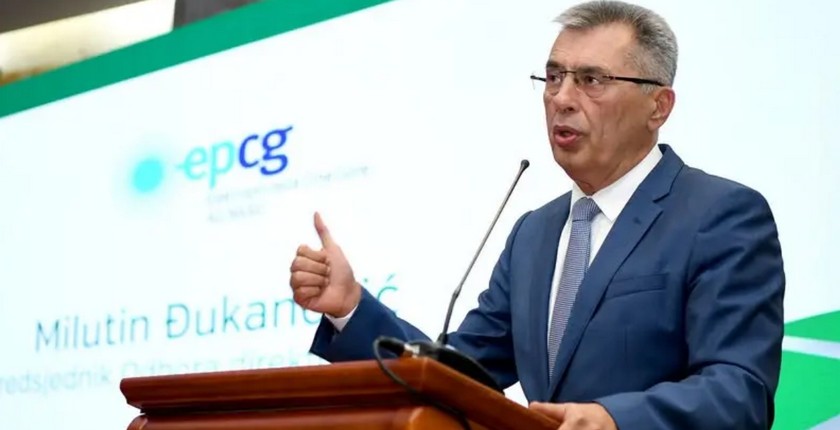
Montenegro’s state-owned utility Elektroprivreda Crne Gore (EPCG) is advancing a broad portfolio of solar, wind, battery storage, and hydropower projects with a combined capacity of 639 MW, and an expected annual electricity output of more than 1 TWh, according to Milutin Đukanović, President of EPCG’s Board of Directors.

In an opinion piece, Đukanović said the company has already completed part of a major investment cycle, including rooftop solar projects, the Gvozd 1 wind farm, the ecological reconstruction of the Pljevlja thermal power plant, and part of the modernization works at the Piva and Perućica hydropower plants. He added that new generation capacities, battery storage systems, hydropower upgrades, rooftop solar, wind projects, and strategic partnerships are EPCG’s response to the operational and market challenges it faced in 2025.

EPCG’s direct project pipeline amounts to around 639 MW/MWp, with estimated investments of approximately EUR 646.5 million and an expected annual output of about 1,024 GWh. Đukanović noted that the investment framework also includes reconstruction and upgrade projects that cannot always be expressed in megawatts.

When strategic and potential private partners are included, the company’s total portfolio rises above 4,636 MW/MWp, with a potential annual electricity generation of more than 8,176 GWh. Đukanović said EPCG is positioning itself for a larger role in Montenegro’s energy transition and in the broader regional power market.

The portfolio includes EPCG-owned solar power plants with a combined capacity of 221.1 MW and projected annual production of 299 GWh, rooftop solar systems for prosumers totaling 209.1 MW and 245 GWh in annual generation, the Gvozd 1 and Gvozd 2 wind farms with a combined capacity of 75.6 MW and expected output of 227 GWh, hydropower projects totaling 71.7 MW and 135 GWh annually, and battery energy storage facilities with an operating power of 60 MW.

A battery energy storage system is also planned at EPCG’s steel plant Željezara Nikšić. The project is estimated at around EUR 48 million and is designed as a 60 MW / 240 MWh system, with an expected annual electricity output of about 118.3 GWh, Đukanović said.

Among the completed investments, EPCG has already added 143.66 MW of new generation capacity, corresponding to around 268 GWh of annual electricity production. The value of these completed projects stands at approximately EUR 258.87 million.

These include rooftop solar systems installed under the Solari 3000+ and Solari 500+ programs, with a total peak capacity of 34.34 MW and expected annual generation of 40.18 GWh, as well as the completed portion of the Solari 5000+ project, which has a total peak capacity of 54.72 MW and expected annual output of 64.02 GWh. A further 20 MW of rooftop solar remains to be installed under the same program.

The 54.6 MW Gvozd 1 wind farm has also been completed, with an investment of EUR 82 million and projected annual output of 163.8 GWh. Together with the second phase, Gvozd 2, the project will raise total wind capacity by about 75.6 MW.

Additional completed investments include the ecological reconstruction of the Pljevlja thermal power plant, valued at EUR 75 million, along with the second phase of reconstruction and modernization works at the Piva hydropower plant, worth EUR 10.83 million, and the second phase at the Perućica hydropower plant, worth EUR 33 million.

Đukanović also noted that the Pljevlja coal mine carried out the diversion of the Ćehotina River during the power plant reconstruction, in a project worth EUR 20 million. The intervention was necessary to secure continued coal mining operations, as available reserves were close to exhaustion.

He said the main reasons for EPCG’s EUR 92.1 million loss in 2025 were the eight-month outage at the Pljevlja thermal power plant due to ecological reconstruction, as well as unfavorable hydrological conditions.

According to Đukanović, once production at Pljevlja resumed, EPCG’s energy balance returned to positive territory. The company then posted a profit of EUR 36.47 million in the first quarter of this year.

May 7, 2026
by AEA in News

Gramos Hashani appointed as permanent head of KEK in Kosovo

Kosovo Energy Corp. (KEK) has officially appointed Gramos Hashani as its Chief Executive Officer, following a fourteen-month period during which he served as interim head of the state-owned power utility. The decision was confirmed by the company’s Board of Directors after the completion of what it described as an open, transparent, and competitive selection process.

According to the board, the appointment procedure was conducted in full compliance with Kosovo’s Law on Public Enterprises and included the evaluation and interviewing of all candidates who satisfied the requirements outlined in the public vacancy announcement.

Hashani initially assumed the role of interim CEO in February last year, at a time when KEK was facing increasing pressure to improve operational efficiency, strengthen corporate governance, and accelerate modernization efforts within Kosovo’s electricity sector.

His permanent appointment is viewed as a move aimed at ensuring management continuity at one of the country’s most strategically important energy companies, particularly as Kosovo advances energy transition policies, regional market integration, and investment planning for generation and infrastructure upgrades.

Hashani graduated from the Faculty of Economics at the University of Prishtina – Hasan Prishtina and completed his master’s studies at the University of the Incarnate Word in San Antonio, Texas, in the United States.

His professional credentials include certification as an accountant and internal auditor through the Society of Certified Accountants and Auditors of Kosovo (SCAAK), while he is also a member of the United Kingdom-based Association of Chartered Certified Accountants (ACCA).

According to KEK’s Board of Directors, Hashani brings extensive expertise in strategic financial management, corporate governance, energy transition investments, and the implementation of international accounting standards, including IFRS and US GAAP.

The board also highlighted his professional experience across both the energy and financial sectors in Kosovo and the United States, where he has held senior management positions in international and domestic companies.

The appointment comes at a critical period for KEK and Kosovo’s broader energy sector, as authorities seek to modernize aging lignite-based generation assets, strengthen energy security, improve environmental performance, and attract investment into renewable energy and transmission infrastructure.

As Kosovo continues aligning its energy market framework with regional and European standards, KEK is expected to play a central role in balancing legacy thermal generation with the country’s long-term decarbonization and market reform objectives.

May 7, 2026
by AEA in News

North Macedonia Launches Intraday Electricity Market as Regional Power Trading Evolves

North Macedonia has taken another significant step toward deeper integration with the European electricity market following the launch of its intraday power market by the National Electricity Market Operator (MEMO). The development represents a major advancement in the country’s electricity market liberalization process and strengthens operational flexibility within the regional energy system.

The official launch ceremony gathered senior representatives from the government, energy institutions, market participants, and international partners. The intraday trading platform and clearing infrastructure were delivered by Slovenia’s BSP Energy Exchange, continuing its cooperation with MEMO after supporting the establishment of North Macedonia’s day-ahead market. Intraday trading operates through Deutsche Börse’s M7 trading system, one of Europe’s widely adopted electricity trading platforms.

The introduction of intraday trading comes three years after the launch of the country’s day-ahead market and reflects the increasing sophistication of North Macedonia’s power sector. Intraday markets play a critical role in modern electricity systems by enabling market participants to adjust positions closer to the actual delivery hour. This improves balancing efficiency, reduces imbalance costs, and enhances the integration of variable renewable energy sources such as solar and wind.

Prime Minister Hristijan Mickoski described the launch as evidence of tangible reform progress in the national energy sector. According to him, energy security and resilience have become strategic priorities for all European economies amid accelerating market transformation and geopolitical uncertainty.

“At a time when energy is one of the most critical issues for every country, our obligation is to create a system that is secure, competitive, and resilient to global challenges,” Mickoski stated during the event.

He emphasized that North Macedonia intends to actively participate in European energy flows and policy frameworks rather than remain on the periphery of the continent’s ongoing energy transition.

Minister of Energy, Mining and Mineral Resources Sanja Božinovska underlined that the intraday market is only one phase of a broader market integration strategy. She reiterated the government’s commitment to future market coupling with the European Union and the continued development of regional electricity trading mechanisms.

“This is just the starting point for our full integration into the European energy family,” Božinovska said, adding that authorities will continue advancing regional cooperation and aligning domestic market structures with EU standards.

MEMO Chief Executive Officer Zoran Gjorgjievski highlighted the operational significance of intraday trading in a rapidly changing electricity environment increasingly shaped by renewable generation and real-time balancing requirements.

“From today, our market not only plans for tomorrow – it operates in real time. The intraday market is a direct response to the dynamics of the modern energy sector,” Gjorgjievski noted.

He stressed that transparent and efficient price formation remains essential for optimal resource allocation, prudent investment decisions, and effective risk management across the electricity value chain.

Gjorgjievski also warned that emerging European regulatory frameworks, particularly the Carbon Border Adjustment Mechanism (CBAM), could introduce additional pressure on domestic electricity producers and potentially affect regional market liquidity. While supporting decarbonization objectives, he argued that the energy transition must remain economically sustainable and carefully managed to avoid undermining market competitiveness.

The launch of the intraday market is also viewed as an important preparatory step toward integration into the single European electricity market. Chairman of the Management Board of ADEX Group and CEO of BSP Energy Exchange Anže Predovnik said the project reflects strong institutional cooperation, strategic government support, and MEMO’s operational commitment.

“What lies ahead is integration into the single European market. Together, we will build a more connected and competitive future,” Predovnik stated.

North Macedonia’s intraday market currently includes 21 participants, demonstrating growing interest among regional traders and electricity companies.

According to Martin Martinovski, electricity and statistics expert at the Energy Community Secretariat, the operational intraday market strengthens North Macedonia’s role within the regional balancing framework. As integration with the EU electricity market progresses, the country could increasingly contribute low-carbon flexibility to neighboring systems while benefiting from cross-border balancing support.

Market growth figures indicate a rapid expansion in trading activity since the launch of organized electricity trading in the country. Trading volumes increased from 335 GWh by the end of 2023 to nearly 970 GWh in 2024, before surpassing 1.37 TWh last year. MEMO currently counts forty active market members, while first-quarter 2026 trading volumes were 19% higher compared to the same period a year earlier. 

  • 1
  • 2
  • 3
  • …
  • 140

AEA – Albania Energy Association is a industry association dedicated to representing the interests of Albanian and West Balkan for energy producers and consumers. AEA works to advance the development and adoption of sustainable energy solutions in Albania and the Western Balkans, supporting the region’s transition toward a cleaner, more secure, and more competitive energy future. AEA is registered by decision of the Court of Tirana, DECISION NO. 3032, (VAT:L11827451K).

[email protected]

Address
Blv Zogu 1
Tirana
1057
ALBANIA

LinkedIn  |  Facebook
Events
May 25, 2022 Connecting Green Hydrogen Europe 2022
May 25, 2022 Energy Week Western Balkans 2022
Copyright © Albania Energy Association