by in News

Energy Community Secretariat sets up renewables support hub for contracting parties

The Energy Community Secretariat has established a hub to speed up the deployment of renewables in contracting parties with a focus on transforming coal mines.

With the exception of Albania, members of the Energy Community in the Western Balkans generate electricity predominantly by burning coal from domestic mines.

Locations of depleted mines are suitable for renewable electricity plants.

The new Centre for Renewables Acceleration is a regional hub designed to provide technical support to all Energy Community contracting parties in accelerating renewable energy deployment through improved planning and coordination, according to the Energy Community Secretariat.

The center will especially help support the rollout of renewables acceleration areas (RAA) in brownfields, including coal mines.

Strengthening public trust in the energy transition is essential

In these locations, renewable energy projects can move forward more quickly through streamlined procedures grounded in strategic spatial planning that protects sensitive ecosystems, in the secretariat’s view.

It sees strengthening public trust in the energy transition as key to this mission, particularly in regions affected by coal phase-out and undergoing broader structural changes.

In the Western Balkans, the center will be supported through a partnership with the Open Society Foundations – Western Balkans (OSF-WB). The two sides recently formalized cooperation through a memorandum of understanding.

Work is complemented by the secretariat’s cooperation with The Nature Conservancy

Their activities in supporting the region include pilot interventions in contracting parties, expert exchanges, capacity-building initiatives and regional workshops.

The partnership with OSF-WB builds on the secretariat’s ongoing work in Ukraine, supported by the European Climate Foundation, which focuses on developing cross-border renewables acceleration areas in five regions bordering the EU and Moldova.

This work is further complemented by the secretariat’s cooperation with international environmental organization The Nature Conservancy (TNC), whose EU-recognized methodology for designating renewables acceleration areas informed the development of the Operational Blueprint for the Designation of RAAs in the Energy Community region and now serves as a best practice, the update reads.

Back in 2023, the secretariat and TNC formed a partnership to improve the planning and permitting procedures for renewable energy projects. TNC has implemented projects on RAAs in Serbia, Montenegro.

by in News

Turkey to launch carbon market, sign deals for large renewables projects in 2026

Turkey will launch a national carbon trade market, sign intergovernmental agreements on large-scale renewable energy projects and connect 2,000 MW of energy storage to the grid in 2026. These moves will be accompanied by the historic start of electricity production at the country’s first nuclear power plant Akkuyu, and a doubling of domestic natural gas production from the Sakarya field.

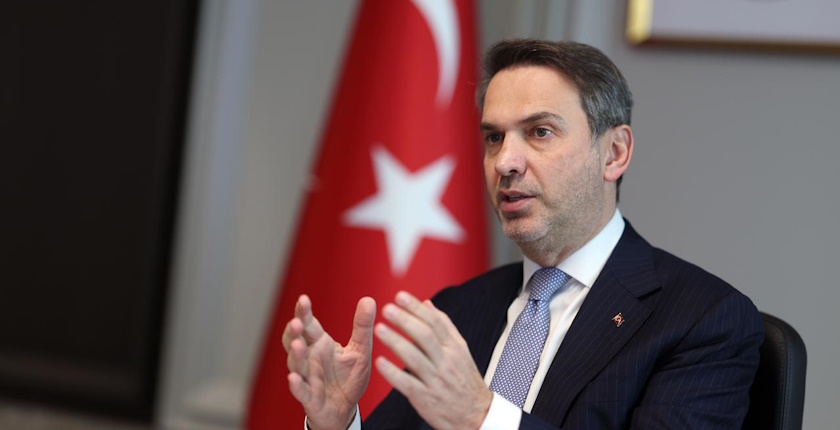
These developments represent the core of the 2026 vision for energy and mining in Turkey, revealed by Minister of Energy and Natural Resources Alparslan Bayraktar.

Large-scale projects will be launched next year through intergovernmental agreements, he stressed.

The deals include solar and other renewable energy technologies and storage, Bayraktar explained.

According to the minister, Turkey remains committed to its emission reduction targets. The government plans to launch a carbon trade center and market in 2026 within the Energy Exchange Istanbul (EXIST or EPİAŞ), he said.

Of note, Turkey’s imports of a group of goods and electricity to the European Union will be subject to the CBAM carbon border tax from January 1, 2026.

Energy storage facilities totaling 2,000 MW will be commissioned in 2026

Bayraktar recalled that the country issued permits for the installation of an overall 33,500 MW of energy storage. A very small portion has been implemented so far, but 2,000 MW will be commissioned in 2026, he underlined.

The minister said Turkey is considering the introduction of Storage Resources Zones or Depolama Alanları (DEKA) in 2026.

It would be similar to Renewable Energy Zones mechanism – REZ or YEKA – for support for solar and wind projects.

Bayraktar mentioned that a 5,000 MW solar power arrangement with Saudi Arabia-based ACWA is being discussed. Of note, it is equivalent to between 30% and 40% of Turkey’s current photovoltaic capacity.

Locations for the 2,000 MW solar project are in Sivas and Taşeli

He expressed belief that the agreement for the first phase, which envisages 2,000 MW, would be finalized in the first quarter of 2026. The plan is for 1,000 MW in Sivas and 1,000 MW in Taşeli.

A solar-plus-storage project with another company from a different country in the Persian Gulf is also under consideration, Bayraktar revealed. The investment is estimated at EUR 1.5 billion to EUR 2 billion.

A floating solar power plant of about 3,000 MW will be built as soon as possible, according to Bayraktar

In Bayraktar’s view, there is great potential in floating solar power plants. The country intends to implement a floating solar power plant of about 3,000 MW as soon as possible, the minister underlined.

The partners in this endeavour could be private companies or Turkish government-controlled Electricity Generation Corp. (EÜAŞ), the minister said. He claimed significant plans have been developed for offshore wind projects for 2026.

“We are considering a model similar to YEKA for offshore wind,” he added.

Russia to provide USD 9 billion for Akkuyu

turkey 2026 vision energy Alparslan Bayraktar brifing
Photo: Ministry of Energy and Natural Resources

The Akkuyu project is entering its final stages, according to the minister.

The country secured a USD 9 billion financing package from Russia for the investment, of which USD 4 billion to USD 5 billion is intended to be drawn in 2026.

Simultaneously, the ministry is in talks with South Korea, the US, China, and Russia for nuclear projects in Sinop and Thrace.

The Sakarya gas field is expected to double its current output in 2026, to 7.5 billion cubic meters, Bayraktar underscored.

This surge will prevent approximately USD 3.2 billion in energy imports, he explained.

by in News

Elektroprivreda BiH to invest EUR 885 million over next three years

Government-controlled power company Elektroprivreda BiH plans to invest BAM 1.73 billion (EUR 884.6 million) over the next three years, according to its 2026-2028 business plan.

The investments would be financed through loans, and BAM 538 million (EUR 275 million) from own funds of Elektroprivreda BiH (EPBiH), which operates in the Federation of BiH. Of note, it is one of the two entities making up Bosnia and Herzegovina. The other one is the Republic of Srpska.

In line with available funds and restructuring plans, the company intends to continue investing in coal mines within the EPBiH group over the three-year period.

The goal is a stable and sustainable coal production at the volume needed for the planned operation of the thermal power plants, the utility said.

The previous business plan, for the 2025-2027 period, provided for investments of BAM 2.1 billion (EUR 1.074 billion).

The three-year period should be marked by the construction of a large number of PV plants

EPBiH has highlighted the construction of new renewable energy power plants as a long-term strategic and priority goal. The construction of several solar power plants at already identified locations are particularly significant, the plan reads.

The upcoming three-year period should be marked by the construction of a large number of PV facilities at multiple locations on mining sites, company-owned land, on the roofs of its own facilities and those of its customers, EPBiH explained.

EPBiH also plans to acquire operational renewable energy facilities as well as projects in development. The plan envisages the purchase or lease of land suitable for the construction of solar power plants.

Positive business performance and maintaining the position as the dominant electricity supplier in BiH are also outlined in the business plan, adopted by the company’s assembly.

Desulfurization and denitrification of flue gases projects are planned for two thermal power plants

EPBiH has launched flue gas desulfurization and denitrification projects for its Tuzla and Kakanj coal-fired power plants. It would also upgrade unit 7 in Kakanj, unit 4 in Tuzla, and the Salakovac hydropower plant.

The document envisages the establishment of the distribution system operator (DSO), based on the provisions of the Law on Electricity of the Federation of BiH. It came into force in August 2023.

The law stipulates unbundling the distribution activity from EPBiH and establishing the DSO as a separate legal entity, a 100%-owned subsidiary, the company underlined.

by in News

EU4CAET project pre-selects 43 ideas for first renewable energy communities in BiH

A total of 43 project ideas from 28 local authorities for establishing the first renewable energy communities in Bosnia and Herzegovina have been pre-selected to receive assistance under the EU for Collective Action for Energy Transition project.

The EU for Collective Action for Energy Transition (EU4CAET) project is jointly financed by the European Union and the German Federal Ministry for Economic Cooperation and Development (BMZ). Under the slogan ‘Together for Energy Transition,’ the EUR 3 million project is implemented by GIZ.

The initiative aims to empower local municipalities, citizens, and private actors to develop sustainable energy solutions that create jobs, improve energy efficiency, and advance climate goals, according to the EU Delegation to Bosnia and Herzegovina.

A total of 51 municipalities submitted 89 project ideas

In the project’s development phase, 51 municipalities submitted a total of 89 project ideas, such as solar power plants, heat pumps, biomass heating systems, public lighting upgrades, and electric vehicle charging stations.

The proposed projects also included kindergartens, youth centers, sports halls, theaters, health centers, and other public facilities. Following the evaluation, 28 local self-governments submitted their first concept notes, and 43 ideas were pre-selected.

“The final selection, based on detailed concept notes, is currently ongoing. The number of final projects will depend on the quality of submitted concepts and available funding under EU4CAET,” the Communication Office of the Delegation of the EU to BiH & EU Special Representative in BiH told Balkan Green Energy News.

The evaluation will begin in January 2026

The deadline for the pre-selected local authorities to submit their detailed concept notes was December 20. The evaluation of the submitted concepts will begin in January 2026.

Selected local authorities will be invited to present and discuss their ideas in more detail, according to the Communication Office.

The strongest concepts will receive assistance for capacity development, business planning, feasibility studies, and the preparation of technical design documentation.

The 28 municipalities pre-selected for further evaluation are as follows: Bijeljina, Bileća, Centar Sarajevo, Doboj, Donji Vakuf, Drvar, Goražde, Ilijaš, Kakanj, Kalesija, Laktaši, Maglaj, Milići, Modriča, Mostar, Novi Grad, Novi Travnik, Novo Sarajevo, Šamac, Sokolac, Srebrenica, Teslić, Travnik, Višegrad, Vogošća, Zenica, Živinice, and Zvornik.

BiH does not yet have renewable energy communities, but one of its two entities – the Republic of Srpska – managed to adopt the necessary regulations for their establishment in May this year, becoming the first in the region to do so.

Hahr: The grant call is planned for February 2026 and 2027

Mareike Hahr, Head of EU4CAET, said the project is now focused on tailored technical assistance to further refine the ideas and prepare high-quality applications for the grant call, planned for February 2026 and 2027.

“What has been particularly encouraging is the remarkable level of interest and readiness shown by local communities from both entities to ‘enter new terrain’—to propose their own project concepts, explore innovative solutions, and actively shape their energy future,” she explained.

by in News

ENNA kicks off installation of its first solar power plant outside of Croatia

Romanian ENEVO Group has started the construction of a solar power plant for Croatia-based ENNA Group.

The site for the 87.5 MW photovoltaic plant is 25 kilometers southwest of Romania’s capital Bucharest. It is ENNA Group’s first major investment outside of Croatia.

Installation began after an EPC contract was signed in November between PVP Cepheus, owned by ENNA Solar, which is part of ENNA Group, and Romanian Enevo Group, ENNA said.

The Giurgiu solar power plant will be built in the Mihăilești area on 93 hectares. The expected annual electricity production is 133 GWh, the company added.

The investment is part of ENNA’s ten-year plan

The plant’s commercial operation and power delivery to the grid are scheduled for the first quarter of 2027. It is an investment of around EUR 60 million, according to the update.

“We are extremely pleased to announce the start of construction of our solar power plant just a few months after taking over the project. It is also a confirmation that we have chosen very reliable partners,” ENNA Group CEO Boštjan Napast stressed.

With this investment, the company is proving its commitment to a ten-year business plan with planned investments of EUR 330 million in solar energy in Croatia and abroad, he explained.

Under the EPC contract, Enevo is responsible for the entire solar power project – design, procurement, and construction.

Bureau Veritas is in charge of supervision services

Enevo Group Technical Director Radu Brașoveanu said it supports the expansion of the ENNA Group into the Romanian renewable energy market with this strategic solar investment.

Bureau Veritas will be in charge of supervision services in line with FIDIC standards, ENNA added.

Of note, the project in Romania was acquired in April.

It is implemented by ENNA Solar, which is part of the energy division of the ENNA Group. The parent company said it has around 50 MW in operational renewable energy plants or advanced projects, as well as about 350 MW in various stages of development.

ENNA is developing two geothermal power projects – Zagocha (Slatina) and Babina Greda.

In addition to energy, the company operates in the logistics sector.

by in News

North Macedonia’s ESM secures loans for investments in solar, hydro

North Macedonia’s power utility Elektrani na Severna Makedonija has secured EUR 97 million for the installation of the Bitola 3 solar power plant and revitalization of hydropower plants.

Elektrani na Severna Makedonija (ESM) said today it signed the contracts for a state guarantee and loans totaling EUR 97 million for two major energy projects.

This is an important step in strengthening North Macedonia’s energy transition, ESM added.

The company received EUR 87 million for the construction of the largest photovoltaic plant, Bitola 3. KfW allocated EUR 50 million, and the European Bank for Reconstruction and Development approved EUR 37 million.

The Hydropower Plants Revitalization Project is estimated at EUR 47.3 million

Another EUR 10 million from KfW will support the revitalization of ESM’s hydropower plants (HPPs), ESM explained.

According to the utility, the Hydropower Plants Revitalization Project, estimated at EUR 47.3 million and supported by a EUR 10 million EU grant, will increase annual hydropower generation by 50 GWh.

The agreements were signed by Minister of Finance Gordana Dimitrieska-Kochoska, EBRD representative Fatih Türkmenoğlu, KfW’s director for Kosovo* and North Macedonia Moritz Remé, and ESM CEO Lazo Uzunchev.

The ceremony was attended by Prime Minister Hristijan Mickoski and Minister of Energy, Mining and Mineral Resources Sanja Božinovska.

Uzunčev: We will increase domestic renewable capacity by over 200 MW

“With these capital investments, together with ESM, we are strengthening domestic energy production, ensuring stable electricity supply, and fostering sustainable economic development,” Gordana Dimitrieska-Kochoska underscored.

According to ESM CEO Lazo Uzunčev, the company’s strategic goals are being implemented with strong momentum.

“With ongoing solar and wind projects, including Bitola 3, we will increase domestic renewable capacity by over 200 MW in the next two to three years, while reducing CO₂ emissions by more than 260,000 tons annually,” he stressed.

Petra Drexler, Ambassador of Germany to North Macedonia, recalled that over the last years, Germany and the EU have continuously supported North Macedonia on its path toward a sustainable and resilient energy future.

* This designation is without prejudice to positions onstatus and is in line with UNSCR 1244/99 and the ICJ Opinion on the Kosovo declaration of independence.
by in News

North Macedonia’s first annual construction plan for energy projects envisages EUR 1.4 billion in investments

The annual construction plan for energy projects for 2025 envisages the installation of power plants with a capacity of 1,265 MW, according to Minister of Energy, Mining and Mineral Resources Sanja Božinovska.

North Macedonia has introduced an annual construction plan for the energy projects with the new Law on Energy, adopted this year. The goal is to bring order to the approval and construction of new power plants.

According to the new regulation, October 1 was the deadline for investors to submit the documentation for their projects for the first annual plan. The review of all documents is in the final phase, according to Božinovska.

The construction of the power plants from the annual plan represents investments of around EUR 1.4 billion, Sanja Božinovska stressed, local media reported.

Solar power plants in the plan have the largest capacity – 812 MW, followed by wind farms  with 426 MW, biomass power plants with 11 MW, and hydropower plants with 15 MW.

Investors have submitted applications for the construction of energy facilities with a capacity of 10,950 MW

She recalled that for the first time, requests were received for the installation of standalone batteries and ones that would be co-located with power plants. The capacity of the standalone battery systems is 675 MW, and of the co-located is 93 MW, Božinovska added.

North Macedonia has received requests for the construction of energy facilities with a total capacity of 10,950 MW.

Investors submitted photovoltaic projects with a capacity of 4,758 MW and wind farms with a capacity of 1,697 MW. Investors were also interested in building gas-fired power plants.

Requests were also submitted for standalone battery energy storage systems (BESS) with a capacity of 2,573 MW and co-located with a capacity of 1,405 MW.

The annual plan should be adopted by January 31, 2026

Božinovska pointed out that 10,950 MW represents a large capacity. The transmission system operator (TSO) MEPSO will have to make a plan to strengthen the grid, she underlined.

The Government of North Macedonia should adopt the annual plan for the construction of energy facilities by January 31, 2026.

The minister recalled that the regulation for the construction of energy facilities has also been adopted. It precisely defines what every potential investor must submit, starting with a feasibility study, regardless of the type of facility, Bozinovska explained.

She said that the adoption of the law on renewable energy sources is expected in the first quarter of next year.

by in News

Bislimoski urges ESM to pivot toward market procurement of electricity

State-owned power utility Elektrani na Severna Makedonija should make the most of the opportunities when prices on the power market are lower than its production costs, according to Marko Bislimoski, President of the Energy, Water Services and Municipal Waste Management Services Regulatory Commission of the Republic of North Macedonia (ERC or RKE).

​Marko Bislimoski doesn’t see the future of Elektrani na Severna Makedonija (ESM) only in production. He expressed the belief it should also be much more active in the wholesale and retail markets.

The mindset that ESM should only produce power should be abandoned, in his view.

In times when the price of electricity in the domestic and regional market is lower than its production price, it is much more logical for the company to buy it on the market, Bislimoski underlined.

This is going to reduce costs, he added.

ESM should purchase electricity when prices are lower than its costs as well as when the level is below the one at which it sells the energy to universal supplier EVN Home, Bislimoski pointed out. The firm is responsible for all households, among other categories.

North Macedonia’s solar power capacity has reached 1,200 MW

He recalled that solar power plants with a total capacity of 1,200 MW are installed in the country.

Their owners sell electricity on the market to other suppliers and traders, who then resell it to consumers.

If ESM offers them a fair price, it would have a stable and predictable cost structure in terms of purchasing and producing electricity, Bislimoski pointed out.

He noted that ESM imports coal and mixes it with domestic coal, which has caused an increase in its power production costs. In Bislimoski’s view the company can offer a fair price over a longer period, five to 10 years.

Solar power would save water in hydropower plant reservoirs and coal for thermal power plants

It would enable, especially in the summer and spring months, the purchase of electricity from domestic photovoltaic plants at a price that should be lower than EUR 65 per MWh, avoiding losses, according to Bislimoski.

Of note, the company has offered to supply electricity to EVN Home at a rate of EUR 65 per MWh for 2026.

Purchasing electricity from photovoltaic plants would allow saving water in hydropower plant reservoirs, and only one unit in the REK Bitola coal power would be required to work during some daily hours, Bislimoski concluded.

by in News

Applications open for EUSEW2026 Awards

Applications are now open for the European Sustainable Energy Awards (EUSEW) 2026. They recognise individuals, initiatives, and projects that promote best practices and raise awareness of the importance of sustainable energy solutions across Europe.

EUSEW is Europe’s largest event dedicated to renewable energy and energy efficiency. It features a wide range of activities, including the European Sustainable Energy Awards ceremony.

The EUSEW Awards recognise and celebrate people, projects, and initiatives that contribute to Europe’s transition to clean energy. They highlight achievements that support the goals of the EU’s Clean Industrial Deal and encourage others to adopt best practices in building a sustainable energy future.

The awards are presented in three categories: Local Energy Action, Women in Energy, and, for the first time, Small and Medium-Sized Enterprises (SMEs) as Energy Efficiency Leaders.

The competition showcases innovative approaches to shaping Europe’s energy future and culminates in an awards ceremony held during the EUSEW conference, which will take place from June 9 to 11 next year in a hybrid format. Participants and speakers will be able to attend both online and in person in Brussels. The slogan of this year’s edition, 20th EUSEW, is ‘A clean, secure and competitive Energy Union’.

Finalists will be selected by an expert jury, which will assess applications based on three criteria: concept, implementation, and impact. Each criterion carries a maximum of ten points. The winners will be chosen through a public vote.

Interested applicants may apply directly by January 29 or nominate someone who has made an outstanding contribution to the energy transition.

SMEs as energy efficiency leaders

This year, a new award category has been introduced to recognise the creativity and impact of small and medium-sized enterprises developing innovative business or financing models to improve energy efficiency.

Eligible applicants include SMEs operating in at least one EU member state that have a pilot or commercial project representing an innovation in energy efficiency or financing.

The European Commission and the European Investment Bank have announced a EUR 17.5 billion financing initiative aimed at improving energy efficiency among SMEs, which is expected to benefit around 350,000 businesses across the EU.

Local Energy Action Award

This category recognises clean energy initiatives that demonstrate the strength of community action. It includes associations, organisations, and groups of citizens delivering long-term, real-scale sustainable energy solutions through local and regional projects, with wider social, economic, and environmental benefits.

Last year’s winner was the Community Energy for Social Housing in Otterbeek. The project provides vulnerable residents with access to renewable energy in the Belgian city of Mechelen. Around 200 households in the Otterbeek social housing district have been equipped with solar panels and receive green electricity at a fixed price below market rates.

Women in Energy: leadership that transforms

The Women in Energy Award celebrates women who are shaping Europe’s clean energy transition and redefining leadership in the energy sector, with a particular focus on gender equality and equal opportunities.

Last year’s winner in this category was Stella Tsani, a scientist and associate professor at the University of Athens.

She was recognised for her work linking economics, sustainability, and social wellbeing to help shape fair and effective energy policies across Europe and the Mediterranean. In addition to her influential research, Tsani is a dedicated mentor to young women in the energy sector, contributing to an inclusive and future-oriented clean energy transition.

by in News

EPCG Solar Gradnja installs 36 MW of solar power in 2025

So far this year, EPCG Solar Gradnja has installed solar power plants with an overall capacity of 36 MW.

EPCG Solar Gradnja, a subsidiary of state-owned power utility Elektroprivreda Crne Gore (EPCG), specializes in the procurement, design, installation, and maintenance of photovoltaic systems.

Its main role is the installation of solar panels within the programs Solari 3,000+, Solari 500+, and Solari 5,000+.

The programs were launched by EPCG to enable households and businesses to install solar panels under favorable conditions and become prosumers.

EPCG Solar Gradnja pointed out that the results it achieved by December 1 have exceeded the plan for 2025.

The plan for 2025 was 30 MW

“Instead of the planned 30 MW, a total of 36 MW of photovoltaic systems was installed in the first 11 months,” the Board of Directors said after its sixth regular meeting.

The management added that it expects to end the year with a positive financial result.

Of note, EPCG said that since the establishment of EPCG Solar Gradnja in late 2021, the firm installed a total of 75 MW of solar power capacity by August this year. Montenegro currently doesn’t have any large PV plants, so the vast majority of the capacity is in very small PV systems.

The Board of Directors has reappointed Sanja Žugić as acting CEO for a period of six months, or until a competition or the selection of a CEO. The management highlighted good results as the main reason for its decision.

The priority is the implementation of large ground-mounted solar power plants

Due to the increased volume of work and further project development, the board adopted a new rulebook on the organization and the classification of jobs. It brings adjustments to the organization and redistribution of work tasks, EPCG Solar Gradnja said.

In the coming months, the firm’s priority will be the implementation of ground-mounted solar power plants. Two units of 40 MW each are in the pipeline, together with the installation of rooftop solar on an even larger scale, it added.

So far, EPCG Solar Gradnja has installed PV plants on nearly 9,000 roofs.

The board’s meeting was attended by the representatives of the unions. Procedures recommended by the Montenegro State Audit Institution were adopted at the meeting.