by in News

Petrović: ERS to launch construction of Trebinje 3, Hrgud this year

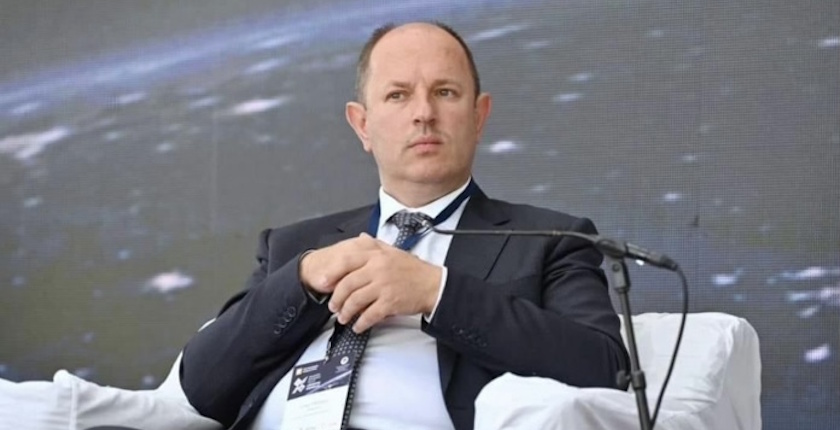
Power utility Elektroprivreda Republike Srpske plans to start the installation of the Trebinje 3 solar power plant and the Hrgud wind farm this year, according to CEO Luka Petrović.

Elektroprivreda Republike Srpske (ERS) already has projects in a ready-to-build phase through its subsidiary companies, Luka Petrović explained, Srpskainfo reported.

ERS is the dominant power producer and supplier in the Republic of Srpska, one of the two entities constituting Bosnia and Herzegovina.

The Trebinje 3 solar power plant, with a capacity of 53 MW, will be built first. The company has received a concession from the Government of the Republic of Srpska. The tender for construction will be launched soon, Petrović stressed.

Preparations for the Hrgud wind farm are also in the final stages, he added. Multi-year wind potential assessments and environmental studies have been completed. Petrović anticipates the start of construction this year. The planned capacity is 60 MW.

Wind energy attracts the most attention in the Republic of Srpska

The installation of the two power plants is expected to be finished by the end of 2027 or in early 2028, he asserted. The CEO added they would significantly contribute to the development of renewable energy sources.

He noted that wind energy attracts the most attention in the entity. The concessions commission of the Republic of Srpska has also awarded approvals for the construction of more than 1,200 MW of photovoltaic plants, Petrović recalled.

In his view, investments by private firms are dormant because solar power production is no longer profitable without battery energy storage systems (BESS).

Petrović: Many solar projects will not be completed

Solar energy prices are significantly lower than they were four to five years ago, Petrović added.

Many of these solar projects will not be finished, he underscored.

Of note, ERS decided late last year to revive the Hrgud wind project, which was halted after a decision by the German government.

The concession for the Trebinje 3 solar power project was awarded in April 2025.

by in News

Petrović: ERS to launch construction of Trebinje 3, Hrgud this year

Power utility Elektroprivreda Republike Srpske plans to start the installation of the Trebinje 3 solar power plant and the Hrgud wind farm this year, according to CEO Luka Petrović.

Elektroprivreda Republike Srpske (ERS) already has projects in a ready-to-build phase through its subsidiary companies, Luka Petrović explained, Srpskainfo reported.

ERS is the dominant power producer and supplier in the Republic of Srpska, one of the two entities constituting Bosnia and Herzegovina.

The Trebinje 3 solar power plant, with a capacity of 53 MW, will be built first. The company has received a concession from the Government of the Republic of Srpska. The tender for construction will be launched soon, Petrović stressed.

Preparations for the Hrgud wind farm are also in the final stages, he added. Multi-year wind potential assessments and environmental studies have been completed. Petrović anticipates the start of construction this year. The planned capacity is 60 MW.

Wind energy attracts the most attention in the Republic of Srpska

The installation of the two power plants is expected to be finished by the end of 2027 or in early 2028, he asserted. The CEO added they would significantly contribute to the development of renewable energy sources.

He noted that wind energy attracts the most attention in the entity. The concessions commission of the Republic of Srpska has also awarded approvals for the construction of more than 1,200 MW of photovoltaic plants, Petrović recalled.

In his view, investments by private firms are dormant because solar power production is no longer profitable without battery energy storage systems (BESS).

Petrović: Many solar projects will not be completed

Solar energy prices are significantly lower than they were four to five years ago, Petrović added.

Many of these solar projects will not be finished, he underscored.

Of note, ERS decided late last year to revive the Hrgud wind project, which was halted after a decision by the German government.

The concession for the Trebinje 3 solar power project was awarded in April 2025.
by in News

EPCG, Masdar sign cooperation agreement

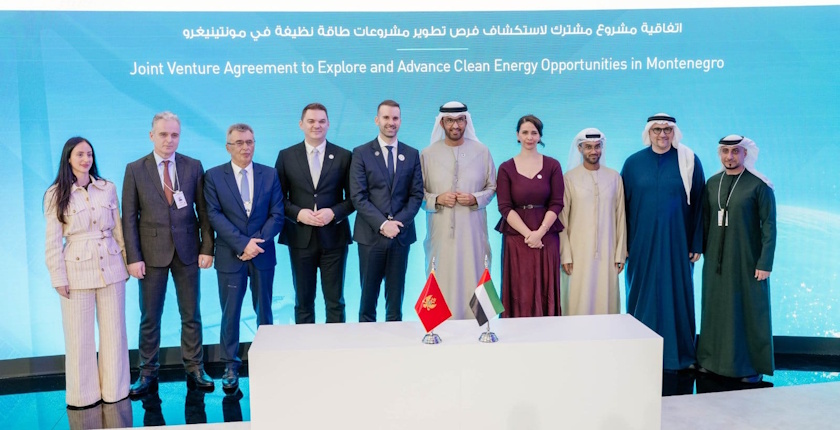
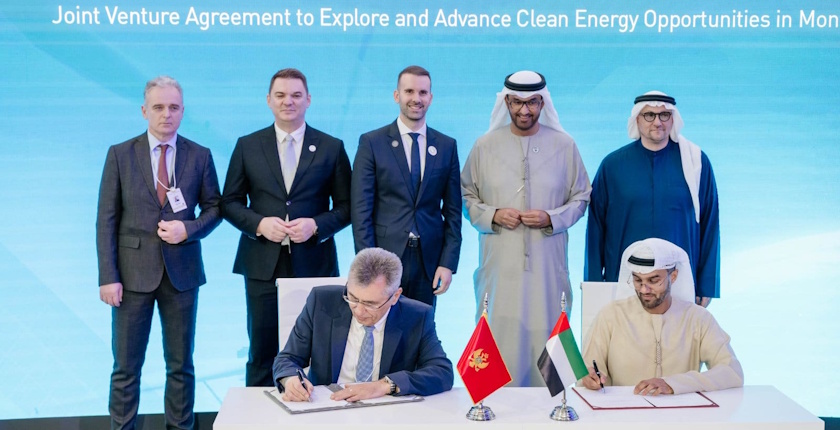
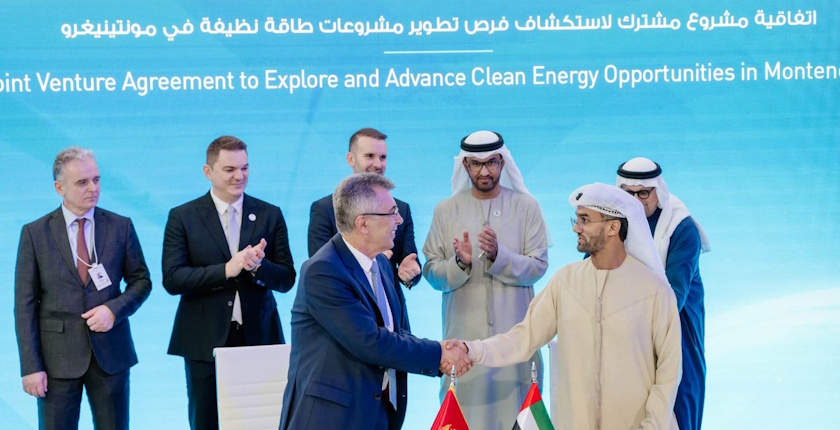
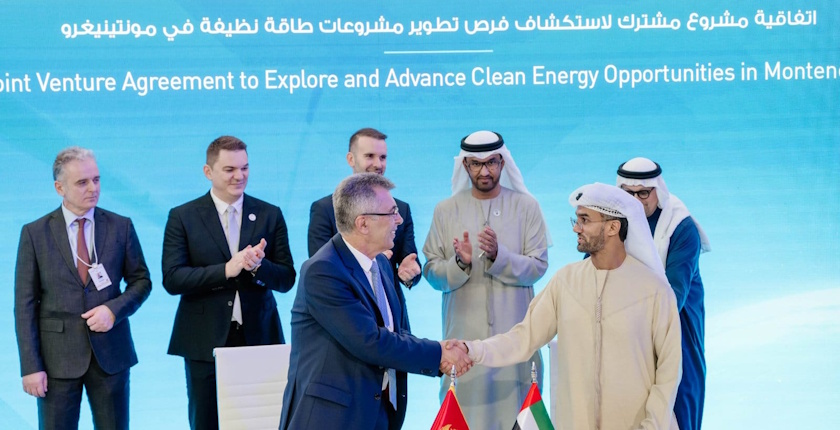
Montenegro’s power utility Elektroprivreda Crne Gore and UAE-based Masdar today signed a cooperation agreement on the sidelines of Abu Dhabi Sustainability Week.

Elektroprivreda Crne Gore (EPCG) said its agreement with Masdar sets the framework for future cooperation in the development of solar and wind projects, as well as other sustainable energy solutions, including the exchange of knowledge and experience and opportunities for joint investments.

The agreement further confirms EPCG’s strategic commitment to actively contribute to the energy transition, strengthen energy security, and support the sustainable economic development of Montenegro through partnerships with global leaders, the update reads.

Abu Dhabi Sustainability Week (ADSW) is a global forum dedicated to the energy transition, climate solutions, and sustainable development.

The agreement was signed during an official visit of the Montenegrin delegation to the United Arab Emirates, led by Prime Minister Milojko Spajić.

Đukanović: Historic agreement

Milutin Đukanović, President of EPCG’s Board of Directors, praised the agreement as historic and its strategic significance for the long-term development of Montenegro’s energy sector.

He stressed that partnering with a renowned company represents a strategic positioning of Montenegro in the modern energy environment and an important step in diversifying energy sources.

montenegro epcg masdar agreement adsw spajic djukanovic
Photo: EPCG

“In the context of the introduction of the CBAM mechanism, it is necessary to accelerate investments in energy, because along with strong development of domestic projects, cooperation with leading international partners is key to faster sector development and greater national competitiveness. Energy development represents a historic opportunity for Montenegro that we must not miss,” Đukanović stressed.

According to EPCG CEO Zdravko Dragaš, the signing of the agreement represents an important advancement in the development of Montenegro’s energy sector and a strong signal of the trust of a renowned global partner in Montenegro’s potential.

Dragaš: Montenegro to become a reliable exporter of green energy

“Our common goal is for Montenegro, in addition to meeting its own consumption, to become a reliable exporter of green energy to the region and beyond, utilizing the existing infrastructure and the country’s strategic position,” Dragaš underscored.

Montenegro and the UAE signed an agreement in November 2025 on cooperation in the energy sector.

Lately, the two countries have had a dynamic relationship in the energy sector. In December of last year, Montenegrin officials and Masdar’s management discussed potential joint projects.

montenegro epcg masdar agreement abu dhabi spajic djukanovic
Photo: EPCG
by in News

Zhongbo group advances in preparation for construction of Leotar wind park

Zhongbo Group has taken another step in preparing for the construction of its Leotar wind farm near Trebinje, in the southeastern part of Bosnia and Herzegovina (BiH). It would be the largest wind power plant in the Western Balkans by capacity and one of the largest in Southeast Europe.

Zhogbo Group has conducted research and preparatory works on the site and obtained approval from electricity transmission company Elektroprenos BiH. In June last year, the Assembly of the City of Trebinje approved the proposition to develop a zoning plan.

The company has now submitted a request to the Ministry of Spatial Planning, Construction, and Ecology of the Republic of Srpska, one of the two entities in BiH, to determine whether an environmental impact assessment (EIA) will be required.

“We are informing the public and interested parties that the project developer Zhogbo Group, Banja Luka, has submitted a request to the ministry for a preliminary environmental impact assessment for the Leotar wind farm project, with an installed capacity of 537.5 MW,” the ministry said.

The deadline for comments is 15 days

The public can review and send suggestions within 15 days from January 12, when the notice was published.

The construction of the Leotar wind farm is planned on Leotar mountain. The facility would consist of 86 wind turbines, each with a capacity of 6.25 MW, which will be placed on sites that depend on the terrain configuration and main wind directions, the accompanying document reads.

The expected annual production of the wind farm is 1.5 TWh per year. The plant’s utilization factor is 32.4%.

Of note, last year the owner of Zhongbo Group, registered in Banja Luka, was Everest Power Pte. Ltd., headquartered in Singapore, according to the business registry. Now, according to the registry, the owner is Zodic Energy PTE LTD, headquartered in Singapore.

The company is expected to obtain a concession for the wind farm

Back in September 2024, the Republic of Srpska signed an agreement on strategic cooperation in the field of renewable energy sources with Zhongbo Group and China Power. Zhongbo Group is expected to be awarded a concession for the Leotar project.

The largest wind farm in the Western Balkans is Čibuk 1 in Serbia, with a capacity of 158 MW. However, it won’t hold that title for long, as Alcazar Energy Partners began the construction of its Štip wind power plant, of 400 MW, in July last year in North Macedonia.

In the wider region of Southeast Europe, the largest is Romania’s Fântânele-Cogealac-Gradina, with 600 MW. In Europe, the top spot is held by Markbygden in Sweden, with a capacity of 2,000 MW.

by in News

EPCG, Masdar sign cooperation agreement

Montenegro’s power utility Elektroprivreda Crne Gore and UAE-based Masdar today signed a cooperation agreement on the sidelines of Abu Dhabi Sustainability Week.

Elektroprivreda Crne Gore (EPCG) said its agreement with Masdar sets the framework for future cooperation in the development of solar and wind projects, as well as other sustainable energy solutions, including the exchange of knowledge and experience and opportunities for joint investments.

The agreement further confirms EPCG’s strategic commitment to actively contribute to the energy transition, strengthen energy security, and support the sustainable economic development of Montenegro through partnerships with global leaders, the update reads.

Abu Dhabi Sustainability Week (ADSW) is a global forum dedicated to the energy transition, climate solutions, and sustainable development.

The agreement was signed during an official visit of the Montenegrin delegation to the United Arab Emirates, led by Prime Minister Milojko Spajić.

Đukanović: Historic agreement

Milutin Đukanović, President of EPCG’s Board of Directors, praised the agreement as historic and its strategic significance for the long-term development of Montenegro’s energy sector.

He stressed that partnering with a renowned company represents a strategic positioning of Montenegro in the modern energy environment and an important step in diversifying energy sources.

montenegro epcg masdar agreement adsw spajic djukanovic
Photo: EPCG

“In the context of the introduction of the CBAM mechanism, it is necessary to accelerate investments in energy, because along with strong development of domestic projects, cooperation with leading international partners is key to faster sector development and greater national competitiveness. Energy development represents a historic opportunity for Montenegro that we must not miss,” Đukanović stressed.

According to EPCG CEO Zdravko Dragaš, the signing of the agreement represents an important advancement in the development of Montenegro’s energy sector and a strong signal of the trust of a renowned global partner in Montenegro’s potential.

Dragaš: Montenegro to become a reliable exporter of green energy

“Our common goal is for Montenegro, in addition to meeting its own consumption, to become a reliable exporter of green energy to the region and beyond, utilizing the existing infrastructure and the country’s strategic position,” Dragaš underscored.

Montenegro and the UAE signed an agreement in November 2025 on cooperation in the energy sector.

Lately, the two countries have had a dynamic relationship in the energy sector. In December of last year, Montenegrin officials and Masdar’s management discussed potential joint projects.

montenegro epcg masdar agreement abu dhabi spajic djukanovic
Photo: EPCG
by in News

Zhongbo group advances in preparation for construction of Leotar wind park

Zhongbo Group has taken another step in preparing for the construction of its Leotar wind farm near Trebinje, in the southeastern part of Bosnia and Herzegovina (BiH). It would be the largest wind power plant in the Western Balkans by capacity and one of the largest in Southeast Europe.

Zhogbo Group has conducted research and preparatory works on the site and obtained approval from electricity transmission company Elektroprenos BiH. In June last year, the Assembly of the City of Trebinje approved the proposition to develop a zoning plan.

The company has now submitted a request to the Ministry of Spatial Planning, Construction, and Ecology of the Republic of Srpska, one of the two entities in BiH, to determine whether an environmental impact assessment (EIA) will be required.

“We are informing the public and interested parties that the project developer Zhogbo Group, Banja Luka, has submitted a request to the ministry for a preliminary environmental impact assessment for the Leotar wind farm project, with an installed capacity of 537.5 MW,” the ministry said.

The deadline for comments is 15 days

The public can review and send suggestions within 15 days from January 12, when the notice was published.

The construction of the Leotar wind farm is planned on Leotar mountain. The facility would consist of 86 wind turbines, each with a capacity of 6.25 MW, which will be placed on sites that depend on the terrain configuration and main wind directions, the accompanying document reads.

The expected annual production of the wind farm is 1.5 TWh per year. The plant’s utilization factor is 32.4%.

Of note, last year the owner of Zhongbo Group, registered in Banja Luka, was Everest Power Pte. Ltd., headquartered in Singapore, according to the business registry. Now, according to the registry, the owner is Zodic Energy PTE LTD, headquartered in Singapore.

The company is expected to obtain a concession for the wind farm

Back in September 2024, the Republic of Srpska signed an agreement on strategic cooperation in the field of renewable energy sources with Zhongbo Group and China Power. Zhongbo Group is expected to be awarded a concession for the Leotar project.

The largest wind farm in the Western Balkans is Čibuk 1 in Serbia, with a capacity of 158 MW. However, it won’t hold that title for long, as Alcazar Energy Partners began the construction of its Štip wind power plant, of 400 MW, in July last year in North Macedonia.

In the wider region of Southeast Europe, the largest is Romania’s Fântânele-Cogealac-Gradina, with 600 MW. In Europe, the top spot is held by Markbygden in Sweden, with a capacity of 2,000 MW.

by in News

Slovenia again uses shortcut to meet national renewables target

Slovenia will purchase renewable energy from Croatia through a statistical transfer to meet its 2024 renewable energy target.

A statistical transfer is allowed at the European Union to help member states meet their national renewable energy targets. This will be the fourth time Slovenia has used this option in the 2020-2024 period.

Since 2020, the 25% goal for renewable energy’s share in gross final consumption has only been reached in 2023. The shortfall for 2024, when the share was 24.6%, will be covered by purchasing 207 GWh from Croatia for EUR 1.78 million, or EUR 8.60 per MWh, Žurnal24 reported.

The Czechs and Croats have benefited from Slovenia’s failure to reach the set goal

In 2020, Slovenia paid the Czech Republic EUR 5 million for a missing 465 MWh. The same country assisted it in 2021 as well, and the price for the service was EUR 2 million, for 208 MWh. According to the Ministry of Infrastructure, which was in charge of energy at the time, it did it to retain access to the EU’s Cohesion Fund for 2021-2027.

Slovenia paid the most in 2022, EUR 10.8 million for 1,193 MWh, to Croatia. In total, since 2020, nearly EUR 20 million has been spent on statistical transfers from the Czech Republic and Croatia.

EUR 20 million in total went to Czechia and Croatia

The government in Ljubljana covered the cost from renewable energy support funds, managed by electricity market operator Borzen.

The problem could become even bigger as the national target will increase to 33%

The Ministry of Environment, Climate and Energy attributed the failure to reach the 2024 goal to an increase in the consumption of fossil fuels.

It was 1 TWh higher than in 2023. However, the issue could get even worse. Slovenia faces new targets from 2030 on.

The minimum share set in the National Energy and Climate Plan (NECP) is 33%. It means that the share should increase by at least 1.6 percentage points per year on average over the next five years to avoid new payments.

by in News

Bulgaria proposes changes to electricity trading rules to include new market participants

The Energy and Water Regulatory Commission of has proposed its amendments to Bulgaria’s electricity trading rules.

The changes aim to align electricity trading rules with recent updates to the country’s Energy Act and a legal and operational framework for new categories of market participants, according to law firm CMS Bulgaria.

New categories include active customers (active buyers), citizen energy communities, self-consumers (prosumers) of electricity from renewable sources, and renewable energy communities.

The Energy and Water Regulatory Commission (EWRC) held a public consultation event today on its draft changes in electricity trading rules. Representatives of the three distribution system operators (DSOs), the Sofia Municipality and the Bulgarian Association for Electrical Engineering and Electronics (BASEL) participated in the discussion.

These changes are designed to encourage electricity production for self-consumption

These changes are designed to encourage electricity production for self-consumption, minimize distribution losses, and foster more predictable energy pricing, a CMS e-alert reads. Furthermore, the amendments would ensure the Bulgarian rules comply with EU law, specifically directives 2018/2001 and 2019/944 and Regulation 2019/943.

The proposed draft introduces several specific provisions to facilitate the participation of the said new entities, CMS stressed.

It explicitly defines how new participants can join the market and the types of contracts they are permitted to conclude.

The new rules allow for the grouping of different sites for joint electricity production or consumption. They also set technical mandates for commercial metering devices, including remote reading capabilities.

The new rules also define calculation of generated, shared and sold electricity

The authors outlined procedures for registering or deregistering participants and groups with network operators. The update would impose an obligation to maintain a public register of these participants.

The proposed rules define the calculation of generated, shared and sold electricity. The framework guarantees that data is exchanged between suppliers, network operators, and group members, ensuring it is reflected in monthly bills.

Stakeholders were invited to submit their proposals from January 8 until January 22, CMS underscored.

by in News

Slovenia again uses shortcut to meet national renewables target

Slovenia will purchase renewable energy from Croatia through a statistical transfer to meet its 2024 renewable energy target.

A statistical transfer is allowed at the European Union to help member states meet their national renewable energy targets. This will be the fourth time Slovenia has used this option in the 2020-2024 period.

Since 2020, the 25% goal for renewable energy’s share in gross final consumption has only been reached in 2023. The shortfall for 2024, when the share was 24.6%, will be covered by purchasing 207 GWh from Croatia for EUR 1.78 million, or EUR 8.60 per MWh, Žurnal24 reported.

The Czechs and Croats have benefited from Slovenia’s failure to reach the set goal

In 2020, Slovenia paid the Czech Republic EUR 5 million for a missing 465 MWh. The same country assisted it in 2021 as well, and the price for the service was EUR 2 million, for 208 MWh. According to the Ministry of Infrastructure, which was in charge of energy at the time, it did it to retain access to the EU’s Cohesion Fund for 2021-2027.

Slovenia paid the most in 2022, EUR 10.8 million for 1,193 MWh, to Croatia. In total, since 2020, nearly EUR 20 million has been spent on statistical transfers from the Czech Republic and Croatia.

EUR 20 million in total went to Czechia and Croatia

The government in Ljubljana covered the cost from renewable energy support funds, managed by electricity market operator Borzen.

The problem could become even bigger as the national target will increase to 33%

The Ministry of Environment, Climate and Energy attributed the failure to reach the 2024 goal to an increase in the consumption of fossil fuels.

It was 1 TWh higher than in 2023. However, the issue could get even worse. Slovenia faces new targets from 2030 on.

The minimum share set in the National Energy and Climate Plan (NECP) is 33%. It means that the share should increase by at least 1.6 percentage points per year on average over the next five years to avoid new payments.

by in News

Bulgaria proposes changes to electricity trading rules to include new market participants

The Energy and Water Regulatory Commission of has proposed its amendments to Bulgaria’s electricity trading rules.

The changes aim to align electricity trading rules with recent updates to the country’s Energy Act and a legal and operational framework for new categories of market participants, according to law firm CMS Bulgaria.

New categories include active customers (active buyers), citizen energy communities, self-consumers (prosumers) of electricity from renewable sources, and renewable energy communities.

The Energy and Water Regulatory Commission (EWRC) held a public consultation event today on its draft changes in electricity trading rules. Representatives of the three distribution system operators (DSOs), the Sofia Municipality and the Bulgarian Association for Electrical Engineering and Electronics (BASEL) participated in the discussion.

These changes are designed to encourage electricity production for self-consumption

These changes are designed to encourage electricity production for self-consumption, minimize distribution losses, and foster more predictable energy pricing, a CMS e-alert reads. Furthermore, the amendments would ensure the Bulgarian rules comply with EU law, specifically directives 2018/2001 and 2019/944 and Regulation 2019/943.

The proposed draft introduces several specific provisions to facilitate the participation of the said new entities, CMS stressed.

It explicitly defines how new participants can join the market and the types of contracts they are permitted to conclude.

The new rules allow for the grouping of different sites for joint electricity production or consumption. They also set technical mandates for commercial metering devices, including remote reading capabilities.

The new rules also define calculation of generated, shared and sold electricity

The authors outlined procedures for registering or deregistering participants and groups with network operators. The update would impose an obligation to maintain a public register of these participants.

The proposed rules define the calculation of generated, shared and sold electricity. The framework guarantees that data is exchanged between suppliers, network operators, and group members, ensuring it is reflected in monthly bills.

Stakeholders were invited to submit their proposals from January 8 until January 22, CMS underscored.