by in News

Albania’s Solar Surge: Capital Inflows, Grid Pressures and a Market in Transition

Photovoltaic energy is attracting capital at an accelerated pace in Albania, emerging as a new investment pillar for both traditional energy players and diversified business groups. With licenses granted for nearly 980 MW of solar capacity and hundreds of megawatts already operational, the market is undergoing a structural transformation—shifting from overwhelming dependence on hydropower toward a more diversified generation mix.

Private investment in the sector is estimated at around €1.5 billion, encompassing solar, wind and hydropower projects. Yet the rapid expansion is placing mounting pressure on existing infrastructure, highlighting the urgent need for parallel grid investments. Without reinforcement of transmission and distribution networks, the growth of photovoltaics risks outpacing the system’s capacity to absorb new output. Once again, the private sector appears to be moving faster than institutions.

When Albania first adopted its legal framework “On Renewable Energy Sources” in 2017, few anticipated the scale of transformation that would unfold less than a decade later.

From Slow Beginnings to Accelerated Growth

The early years of renewable development, particularly solar, were marked by bureaucratic hurdles, limited institutional experience and an energy market still in reform. The turning point came through two key developments.

First, market liberalization opened space for self-producers—an expanding segment entitled to install capacities of up to 500 MWp. Second, and more decisively, the global energy crisis that erupted in October 2021 dramatically reshaped market dynamics.

Post-pandemic raw material inflation, surging energy demand driven by economic recovery, and the war in Ukraine—triggering disruptions in Russian gas supplies—sent shockwaves through global energy markets. In 2022, prices reached record highs. Albania spent nearly €500 million on electricity imports, while on the Hungarian exchange—an important regional benchmark—prices peaked at €1,037 per MWh.

Although prices later retreated, volatility remains a defining feature of the market. This climate of uncertainty has become a major catalyst for new energy projects. Authorities report more than €2 billion invested in Albania’s energy sector in recent years. Currently, over 700 MW of private photovoltaic capacity is operational, alongside approximately 400 MW installed by self-producers.

The development pipeline could lift total photovoltaic and wind capacity to around 1,500 MW, while more than 1,600 MW of storage projects are under study or seeking financial facilitation.

Licensing and Market Structure

Despite numerous projects in various administrative stages, only a portion have secured production licenses. The Energy Regulatory Authority (ERE) has issued 71 production licenses for photovoltaic plants, totaling approximately 980 MW of installed capacity.

Most licensed projects fall within the sub-2 MW category, which benefited from a simplified regulatory framework introduced several years ago. These smaller plants were approved through accelerated procedures and supported by reference tariffs set periodically by the regulator. Electricity is purchased by OSHEE Group under a scheme similar to that applied to priority hydropower producers.

At the same time, a growing number of independent producers operate in the liberalized market. Supply liberalization has pushed thousands of businesses to secure electricity via private contracts, creating a stable demand base for new generators.

Solar projects also benefit from technical flexibility: they can be commissioned in phases, allowing electricity production before full completion of investment works.

Production Growth and Flagship Projects

Photovoltaic output rose sharply in 2025. According to preliminary data from INSTAT for January–September, the category “Other Producers”—which includes solar plants—generated 775 GWh, doubling year-on-year. Even compared to full-year 2024 output of 506 GWh, nine-month 2025 production was 53% higher.

Solar accounted for roughly 15.3% of Albania’s net electricity generation during the same period—more than double its 2024 share. This proportion is expected to rise steadily as new plants enter operation.

Among the largest projects is the 140 MW Karavasta solar park, developed by Voltalia. Additional operational projects include Blue (130 MW combined), Nova Solar System (50 MW) and multiple 20 MW facilities in Ersekë.

Projects under development include GreeNNat Solar Park Ballsh (100 MW), Faethon (78.6 MW), Sunny Side Energy (50 MW, part of the Kastrati Group), and the 100 MW Spitalla Solar park, also owned by Voltalia.

The rapid growth of solar capacity is gradually reshaping Albania’s electricity mix—historically dominated by hydropower—reducing exposure to imports and cushioning the impact of extreme price swings in international markets.

Year Energy Production (Thousand MWh)
2019 25
2020 35
2021 40
2022 52
2023 88
2024 506
2025 (9-Months) 775

European Bank for Reconstruction and Development: Strong Potential, Grid Constraints

The European Bank for Reconstruction and Development (EBRD) has been instrumental in supporting Albania’s renewable transition, advising the government on early photovoltaic auctions, including Karavasta—the country’s first large-scale solar plant.

Ekaterina Solovova, EBRD Resident Representative in Albania, has emphasized that the country’s solar potential remains considerable due to favorable geography and high solar irradiation. However, large-scale integration requires adequate transmission infrastructure.

Recent EBRD support includes sustainability-linked financing for OSHEE, restructuring short-term liabilities into longer-term financing to free up investment for grid upgrades. The bank is also cooperating with OST on EU grant-funded technical projects: closing the national transmission loop and modernizing the Fier substation—currently among the most congested solar zones—and developing a new cross-border transmission line with Kosovo to enhance regional interconnection.

Through initiatives such as the Renewable Energy Market Acceleration Program (REMA), the EBRD has supported the allocation of roughly 800 MW of new renewable capacity via Contracts for Difference (CfD) schemes.

Albania stands at a critical juncture: rich in renewable potential but constrained by infrastructure that requires substantial upgrading to ensure system stability.

European Investment Bank: Solar Could Reach 1 GW by 2030

Alessandro De Concini, EIB representative in Albania, notes that while Albania’s green credentials are strong, they remain vulnerable due to hydropower dependence and climate variability.

Solar capacity could reach 1 GW and wind 600 MW by 2030, supported by recent reforms easing licensing and auction procedures. However, climate risks—floods, fires and landslides—could cost up to 7% of GDP by mid-century.

Albania’s energy strategy prioritizes supply security, diversification, competition and environmental protection, aligned with EU legislation. The EIB’s forward plans include infrastructure modernization to ensure year-round supply security and price stabilization.

Investor Appetite and Market Diversification

Government-backed auctions—facilitating land access and streamlining procedures—sparked early investment during the pandemic. Yet a growing number of investors have entered the sector without subsidies, relying instead on private land, private power purchase agreements and market-based strategies.

Besnik Leskaj, founder of Blessed Investment Group, explains that detailed analysis of photovoltaic technology costs and regional price trends pointed to a favorable long-term risk-return profile. The group, alongside Matrix Konstruksion, has invested in fully private solar projects, emphasizing financial discipline and direct market exposure.

The Blue Parks, spanning 230 hectares with 263,000 smart panels, aim to build a 1 GW portfolio over the medium term, with 400 MW currently under development. Wind energy (two 25 MW projects) and battery storage systems are also part of the strategy.

Supporting Industries and Vertical Integration

The solar boom has stimulated domestic supply chains, from workforce training to mounting structure manufacturing. Companies such as Emante sh.p.k have expanded into producing Magnelis steel support structures for ground-mounted systems, supplying projects including Nova Solar (74 MW) in Seman and Info-Telecom (101.5 MW) in Ballsh.

Rapid sector growth is encouraging vertical integration, with firms expanding into mounting accessories and specialized structures to enhance added value.

End-of-Life Challenges

As solar installations multiply, long-term waste management is emerging as a strategic issue. Panels have a 25–30 year lifespan, meaning the first wave of mass installations will soon approach end-of-life. The International Energy Agency estimates panel waste could reach tens of millions of tons by 2050.

While recycling is technically feasible, it is often not yet economically competitive. The European Union mandates extended producer responsibility for collection and recycling, while China is scaling industrial recycling plants. The US and Japan are experimenting with high-value material recovery models.

Albania will need to address this issue proactively to ensure sustainability extends beyond generation.

Credit Growth and Corporate Performance

Energy and tourism have been the most dynamic sectors in recent years, reflected in rising bank lending. According to the Bank of Albania, outstanding credit to the energy sector grew 19% to 47 billion lek (€470 million) by December 2025, representing 9% of total business lending.

Karavasta Solar, managed by Voltalia, generated revenues of 3.5 billion lek in 2024 and profits of approximately 2 billion lek, with a 57% margin. The plant produced 258.3 GWh last year—3.2% of domestic net output and more than half of total solar generation, according to ERE. Under its 15-year contract, 70 MW is sold at a regulated tariff (€24.89/MWh) and 70 MW on the free market.

Spitalla Solar (100 MW) follows a similar structure, though progress has been slower.

Blue 1 (50 MW), commissioned in May 2024 at Sheq Marinas, Fier, operates entirely in the free market—one of the first large projects outside support schemes. Owned 51% by Blessed Investment and 49% by Matrix Konstruksion, it generated revenues of 680 million lek and profits of 380 million lek in 2024, producing around 72,000 MWh—roughly 15% of total solar output.

Other players, such as EZ5 Energy and Nova Solar System (50 MW), are reporting rapid revenue and profit growth, underscoring solar’s emergence as one of Albania’s most profitable and strategically significant industries.

Company Revenue (2023) Revenue (2024) Pre-tax Profit (2023) Pre-tax Profit (2024)
KARAVASTA SOLAR 450 17,000 408 2,000
EZ-5 ENERGY 412 1,422 83 265
SPV BLUE 1 266 679 102 379

Albania’s solar expansion reflects a decisive shift in its energy landscape—driven by private capital, catalyzed by crisis and increasingly supported by multilateral finance. The next phase will depend on grid modernization, storage deployment and responsible lifecycle management. If these elements advance in tandem, Albania could consolidate its position as a regional renewable energy hub.

by in News

U.S. Energy Secretary Warns IEA: Prioritize Energy Security or Face U.S. Exit

Chris Wright urged the International Energy Agency to prioritize energy security over advocacy for the deployment of renewables, and warned that the United States could withdraw from the body if it does not change course. The remarks, delivered at a conference in Paris, accused the agency of acting like a “climate advocacy organization” and dismissed the value of a global net-zero scenario as unrealistic.

The intervention, which Politico reported as signalling growing tension between Washington and the IEA, frames a broader disagreement between the agency’s modelling of low-carbon transitions and the current U.S. administration’s pro-fossil-fuel orientation. Politico covered Wright’s comments and the administration’s stance.

Chris Wright

Chris Wright

Wright argued that when international data and analysis bodies devote resources to what he characterised as “leftist fantasies,” they risk undermining their core mission of delivering objective analysis for energy security and market stability. He warned that continued emphasis on net-zero scenarios could prompt a reevaluation of U.S. membership in the IEA.

Those remarks echo positions voiced by other senior U.S. officials. At the World Economic Forum in Davos, Howard Lutnick criticised European solar and wind deployment and questioned the desirability of pursuing net-zero policies, urging instead greater reliance on oil, gas and even coal. World Economic Forum meetings in Davos gathered these high-profile exchanges.

Observers note that the rhetoric follows a wider shift in U.S. climate and energy policy since the current administration’s decision to withdraw from the Paris climate accord earlier this year, a move that has intensified transatlantic debate over the pace and direction of the energy transition. Donald Trump has publicly criticised Europe’s renewables push and framed the U.S. approach as a deliberate return to fossil-fuel development.

The clash poses a practical challenge for the IEA, whose forward-looking scenarios and data are widely used by governments and markets. How the agency responds — whether by adjusting emphasis, defending its analytical frameworks, or engaging in political dialogue with member states — will shape its role in an era of sharply divergent energy strategies.

by in News

IEA: Power Demand Up 3.6%/yr to 2030 as Renewables Rise

Global electricity demand is projected to grow by an average of 3.6% per year through 2030, propelled largely by industrial electrification, the rapid uptake of electric vehicles, and the expanding power needs of data centres and artificial intelligence, the International Energy Agency (IEA) said.

In its Electricity 2026 report, the IEA expects renewables, natural gas and nuclear to cover all additional demand over the period. Electricity generation from coal is forecast to edge down, leaving CO₂ emissions from power generation broadly flat to the end of the decade. By 2030, renewables and nuclear are set to provide half of global electricity output, up from 42% today, the agency said.

Power Use Accelerates Faster Than Overall Energy Demand

The IEA estimates that electricity demand will expand at least 2.5 times faster than total energy demand. Key drivers include rising electricity use in industry, stronger EV adoption, higher air-conditioning demand, and continued growth in data centres and AI.

Global electricity consumption rose 3% year-on-year in 2025, after a 4.4% increase in 2024, the report notes.

Grid Investment and Flexibility Become the Next Bottlenecks

IEA Director of Energy Markets and Security Keisuke Sadamori said meeting the demand surge will require a significant upgrade of power networks. The IEA expects annual investment in electricity grids to rise by 50% by 2030.

Flexibility measures—such as storage, demand response and other balancing tools—will also be essential as power systems evolve, alongside stronger attention to security and resilience, Sadamori said.

Renewables Overtake Coal on the Back of Record Solar Growth

The IEA said global renewable power generation reached parity with coal in 2025 and is now moving ahead, supported by record solar installations. Renewable electricity output is expected to increase by around 1,000 TWh each year, with solar alone contributing more than 600 TWh annually.

Even so, the agency cautions that coal would still remain the single largest fuel source for electricity generation globally, despite a gradual decline.

EU: Renewables Share Seen at 63% by 2030

In the European Union, electricity demand is increasingly being met by renewables as coal use falls sharply. According to the report, renewables’ share of total EU power generation is expected to surpass all non-renewables combined as early as this year.

The IEA forecasts that renewables will exceed 50% of EU electricity generation in 2026, and rise to 63% by 2030, up from 48% in 2025. Wind and solar are projected to account for 46% of EU power output by 2030, compared with 30% in 2025.

By the end of the decade, the EU is expected to add more than 400 GW of net renewable capacity, around 70% from solar, split roughly evenly between utility-scale and distributed installations.

Nuclear Output Hits Record, Battery Storage Expands

The IEA said nuclear power is regaining strategic importance in many advanced economies. Global nuclear generation set a new record in 2025 and is expected to keep rising steadily through 2030.

The report also highlights rapid growth in utility-scale battery storage, particularly in California, Germany, Texas, South Australia and the United Kingdom, strengthening short-term system flexibility.

Connection Queues and Curtailment Rise as Grids Struggle

Despite strong momentum in renewables and storage, grid congestion is creating delays. The IEA estimates that as of 2025, at least 1,700 GW of advanced-stage renewable projects and more than 600 GW of battery storage projects were waiting in connection queues.

Grid bottlenecks are also driving higher curtailment. In Germany, wind curtailment rates between 2022 and 2024 were above 5%, while solar curtailment climbed to 2% in 2024. In China, 4.1% of wind and 3.2% of solar generation were curtailed in 2024, up from 2.7% and 2% in 2023, with preliminary 2025 data indicating curtailment rose above 5% for both wind and solar.

Coal Declines, Keeping Power-Sector CO₂ Emissions Flat

On the fossil side, the IEA expects natural gas-fired generation to increase, driven by rising demand in the United States and a shift from oil to gas in the Middle East.

Coal-fired generation is projected to fall as renewables expand, returning to 2021 levels by the end of the decade. As a result, global CO₂ emissions from electricity generation are expected to remain broadly flat through 2030.

The IEA forecasts emissions declines in major markets: between 2026 and 2030, China’s power-sector CO₂ emissions are expected to decrease by 0.2% per year on average, the United States by 1.4% annually, and the EU by around 11% per year. India, however, is projected to see emissions rise by an annual average of 2.4% over the same period.

by in News

GCL Moves Knjaževac Solar Project Forward as Serbia’s Large-Scale PV Pipeline Expands

Chinese energy group GCL has advanced its plans for the Knjaževac solar power plant, a major photovoltaic project proposed for eastern Serbia and among the country’s largest developments currently in the pipeline.

The Municipal Council of Knjaževac has launched the process to draft a detailed regulation plan for the facility. A public consultation on the draft decision was held from February 3 to 5. Once the decision to prepare the plan is formally adopted, authorities will open a second public discussion lasting 15 days.

According to the draft decision, the initiative was filed by the prospective investor, Central Europe Energy Company, a Belgrade-registered entity. The company is 90% owned by China’s GCL Intelligent Energy (Suzhou), with the remaining 10% held by Central Europe Consulting Company, also based in Belgrade.

The project has already cleared an important grid-related milestone. In May 2025, Central Europe Energy Company signed a grid connection agreement with Serbia’s transmission system operator, Elektromreža Srbije (EMS). The signing was part of a broader package of 11 renewable energy projects contracted by EMS at the time. EMS said that, among nine solar projects included in that round, the Knjaževac photovoltaic plant carried the highest proposed capacity at 136 MW.

Municipality head Milan Đokić described the development as the largest investment in Knjaževac’s history, estimating its value at EUR 200 million, as reported by local outlet Knjaževačke Novine.

Planning documentation will cover roughly 267 hectares, spanning parts of the cadastral municipalities of Krenta, Ponor, Mučibaba, and Miljkovac within the municipality of Knjaževac. The preparation deadline for the detailed regulation plan is set at 12 months, and the decision also предусматривает a strategic environmental assessment.

Serbia’s solar market is growing from a relatively low base. The country’s largest operating solar park is currently the 27 MW facility installed by Nofar Energy, while the biggest project by planned capacity is CWP Europe’s 150 MW Solarina development.

GCL is active across most continents, with a core business centered on solar module and energy storage battery manufacturing, alongside the development of low-carbon energy solutions.

by in News

Enercon inks first delivery of its 7 MW wind turbines to Turkey

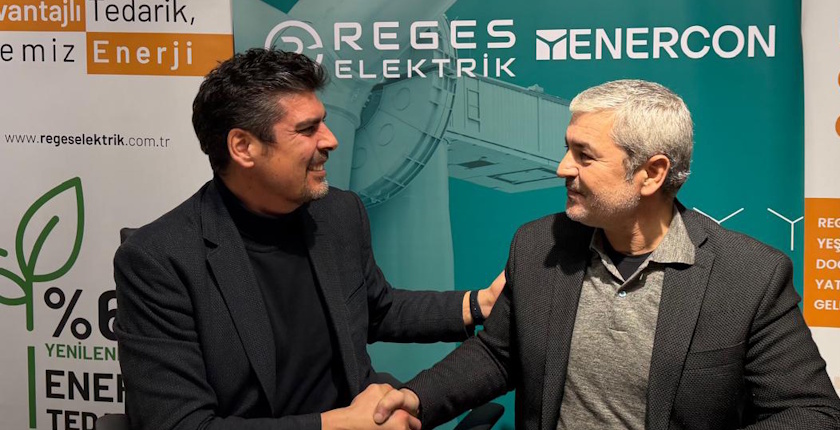
Enercon received the first order from Turkey for its latest, 7 MW wind turbines, from Reges Elektrik.

The agreement with Reges Elektrik is for the first deployment of Enercon’s 7 MW onshore turbine in Turkey, according to the German wind turbine producer. At the same time, it is the Turkish company’s first wind energy investment.

Enercon and Reges Elektrik have launched a strategic partnership by signing a turbine supply agreement for the Demirli wind farm to be constructed in Kırşehir.

Under the deal, Enercon will supply ten of its new E‑175 EP5 E2 wind turbines, totaling 70 MW of installed capacity.

The new top model is among the highest yielding onshore wind turbines in Europe

It is the first collaboration between the two companies. The agreement was signed at Reges Elektrik’s headquarters in Istanbul.

According to Enercon, featuring a large rotor diameter of 175 meters, advanced engineering solutions, and high energy yield, the E‑175 EP5 E2 stands as its most powerful and efficient onshore turbine to date.

turkey enercon reges elektrik contract Arif Günyar Mustafa Ünal
Arif Günyar and Mustafa Ünal (photo: Enercon)

It is among the highest-yielding onshore wind turbines in Europe, the German company claimed.

Ünal: The agreement represents a significant milestone for Reges Elektrik as it makes its first investment in wind energy

Arif Günyar, Enercon Regional Head for Central Asia, the Middle East and Africa (CAMEA), thanked Reges Elektrik for its trust in his company’s technology.

“We look forward to strengthening our cooperation through future projects,” he added.

According to Mustafa Ünal, Chairman of the Board of Reges Elektrik, the agreement represents a significant milestone for his firm as it makes its first investment in wind energy.

“Partnering with Enercon and deploying the E-175 EP5 E2 turbines aligns perfectly with our long-term vision to expand our renewable energy portfolio with high-efficiency, future-proof technologies,” he stressed.

Of note, Enercon has installed wind turbines with a total capacity of 60 GW in more than 50 countries around the world.

by in News

Slovenia opens its first highway solar power plant

Slovenia’s road management firm Družba za Avtoceste v Republiki Sloveniji has installed a solar power plant on a noise barrier alongside a highway. It is the first such photovoltaic system in the country.

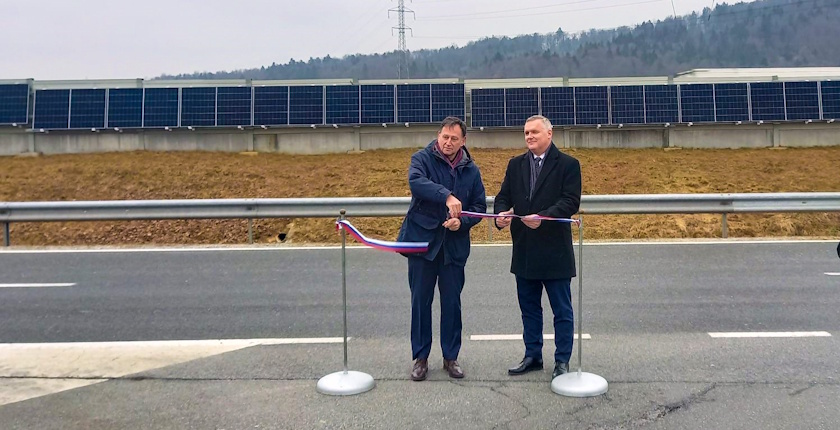
Družba za avtoceste v Republiki Sloveniji (DARS) has officially opened its first photovoltaic plant on a noise barrier at the Šmarje Sap West rest area. It is about ten kilometers from Ljubljana on the motorway connecting the Slovenian capital and Zagreb.

According to DARS, the project is part of a series of activities to achieve the company’s strategic goals in sustainable development, decarbonization, and efficient energy use.

The firm announced the development of such projects in July 2023. A pioneering idea in the region, it was later followed by Bosnia and Herzegovina, Montenegro, and Croatia.

Ribič: An example of thoughtful siting of renewable power plants

The opening ceremony was attended by the Chairman of the Management Board of DARS Andrej Ribič, Minister of the Environment, Climate and Energy Bojan Kumer, representatives of the contractor – Solvera Lynx, and representatives of distribution system operator Elektro Ljubljana.

Andrej Ribič stressed that the project is significant for electricity production but also as an example of thoughtful siting of renewable energy power plants without impacting traffic safety or routine highway maintenance.

The electricity generated by the PV system will be used for DARS’s own consumption, including public lighting and tunnel systems, he explained. This will ensure greater energy independence and more rational management of the energy system, Ribič added.

DARS plans to continue building PV plants

In line with its strategy, DARS aims to gradually reduce energy consumption from the grid and lower CO2 emissions in scopes 1 and 2. By 2030, the goal is to reduce energy consumption and carbon emissions by 30% from the 2024 levels, according to the firm.

Based on its revised strategy, DARS adopted several energy measures in 2024. They included the establishment of an energy department and the implementation of the first phase of solar installations across its five facilities, with a total capacity of 420 kW.

These plants can cover approximately 2% of the company’s annual electricity consumption.

DARS intends to further expand its solar energy projects. The plan includes building bigger plants in degraded areas and more PV systems on buildings and along highway tunnels.

The electricity produced would primarily power lighting and other road systems to ensure the safe and smooth operation of the motorway network, the company added.

Careful site selection for solar plants is crucial

In July 2023, DARS and state-owned hydropower operator Soške Elektrarne Nova Gorica (SENG) announced plans to build solar power plants along highways.

The first one was planned in the Slovenian Littoral and Coastal-Karst area. However, the new solar power plant is not located there.

The two firms later established similar cooperation with the Ministry of Defense and the Municipality of Vipava.

Solar energy use is expanding all over the planet. Experts warn that the optimal siting of PV panels is crucial to avoid occupying large areas of arable land or harming the environment. Therefore, the best solution is to install solar panels in locations that cannot be used for other purposes, such as alongside railways and roads, or on rooftops.

by in News

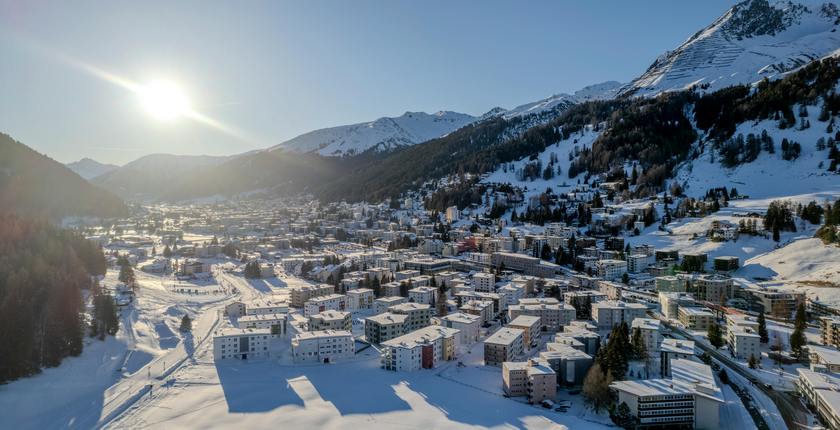
Davos: China reaffirms green agenda as US slams EU’s net-zero goal

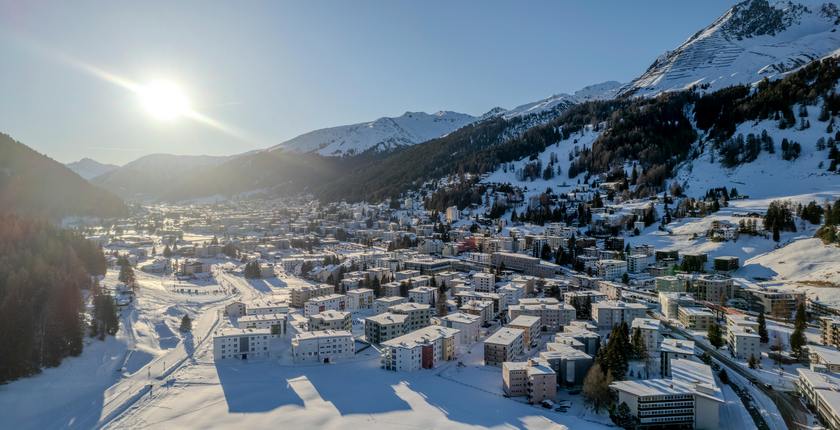
At the World Economic Forum (WEF) in Davos, China reiterated its commitment to green development, in contrast to the United States, whose secretary of commerce said America should rely on oil and gas instead of pursuing a green transition and criticized the European Union’s (EU) net-zero target. US President Donald Trump, for his part, described the energy transition as a “scam” that caused an energy collapse in Europe.

Speaking at the WEF Annual Meeting 2026 in Davos, Switzerland, Chinese Vice Premier He Lifeng emphasized China’s resolve to reduce its greenhouse gas emissions, adding that the country’s upcoming five-year plan would keep the focus on green growth fueled by solar, batteries, and electric vehicles (EVs).

China’s Vice Premier urged other countries to help combat emissions

He also urged other nations and foreign companies to collaborate with China on creating “a green and prosperous future.”

“We invite enterprises from all over the world to embrace the opportunities from the green and low-carbon transition, and work closely with China in such areas as green infrastructure, green energy, green minerals, and green finance,” He said in a speech at Davos.

In contrast, US Commerce Secretary Howard Lutnick criticized the EU’s solar and wind development, as well as its net-zero goal, adding that the green transition is not something the US should pursue. Lutnick also said that the world should focus on coal as an energy source rather than renewables, according to reports.

In January 2025, President Donald Trump signed executive orders reversing much of the previous administration’s climate policy and withdrawing the US from the Paris Agreement once again.

US Commerce Secretary claims seeking net zero without battery production would make the EU subservient to China

“Why are you going to do solar and wind? Why would Europe agree to be net zero in 2030 when they don’t make a battery? So, if they go 2030, they are deciding to be subservient to China, who makes the batteries,” Lutnick said.

“Why would the US, which has oil and natural gas, try to convert to all-electricity? China does not have oil and natural gas – electricity and electric cars make perfect sense to them,” Lutnick said at a WEF panel.

According to news agencies, Lutnick’s harsh criticism of Europe at a VIP dinner on Tuesday made European Central Bank President Christine Lagarde walk out of the event.

Trump slams “the green new scam” and claims China sells wind turbines to others, but does not build its own wind farms

For his part, Trump also criticized the EU’s transition to renewables, claiming that the US had avoided “the catastrophic energy collapse which befell every European nation that pursued the green new scam.” He also described the green transition as “perhaps the greatest hoax in history.”

In his speech in Davos, the US president claimed that wind farms “lose money” and that China only sells wind turbines without building any wind farms itself.

“They sell them to the stupid people that buy them. They don’t use them themselves,” Trump said, adding that China has only built a “couple of wind farms” in order to “show people what they could look like.”

According to available data, China has the largest wind power capacity in the world, at around 600 GW.

by in News

HEP plans to build 91 MW solar power plant on Adriatic coast

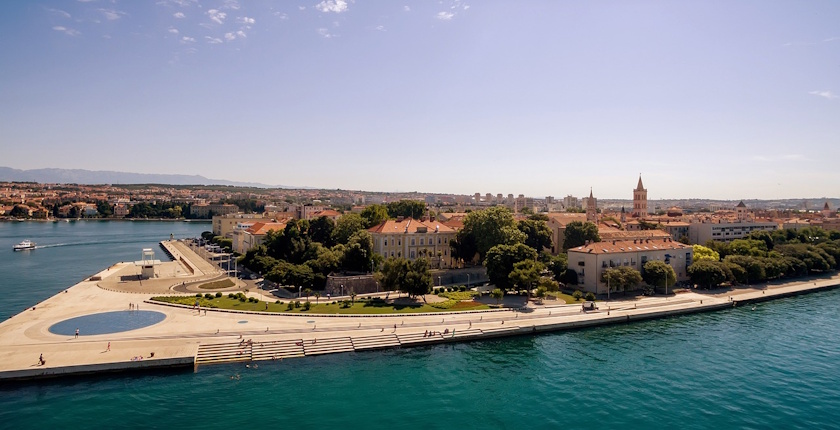
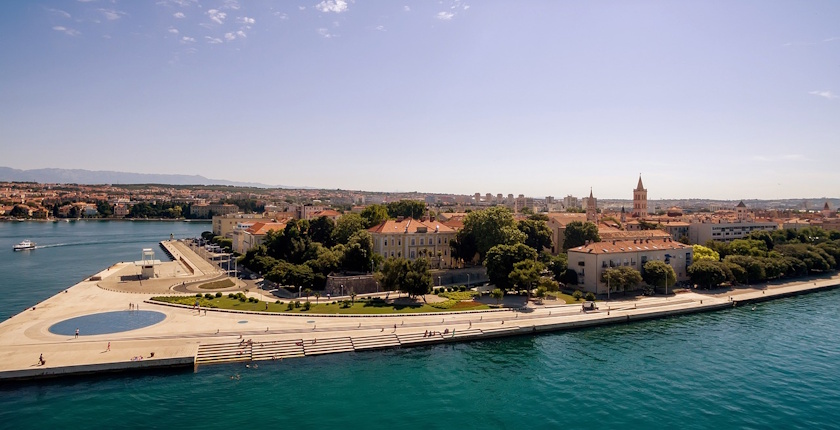
Croatian state-owned power utility Hrvatska Elektroprivreda (HEP) is planning to build a 91 MW solar power plant near the city of Zadar, on the Adriatic coast.

The photovoltaic facility will be slightly smaller than the 99 MW Korlat system – HEP’s largest, which it is building in nearby Benkovac. The company’s biggest two solar power plants will be located just a few dozen kilometers apart.

HEP plans to install the solar panels in the Crno area, eZadar reported. It is approximately six kilometers east of Zadar. The site is located within the planned Crno business zone.

Eleven solar power plants are planned near the Crno location

The power plant would span approximately 93 hectares. Its estimated annual electricity production is 119.8 GWh. HEP’s facility in Crno would consist of roughly 139,800 photovoltaic modules.

The news website pointed out that there are projects for 11 PV plants at locations within a ten-kilometer radius. They are intended to cover an area of about 483 hectares. None have been installed so far.

Neoen Renewables Croatia developed one of the projects, Vlaka, for 62.5 MW in peak capacity.

HEP is also planning 90 rooftop solar plants

The Korlat solar power plant, which will be the largest in Croatia, is being built by Chinese companies Shandong Electric Power Engineering Consulting Institute Corporation (SDEPCI) and Norinco International Cooperation.

Together with HEP’s first wind farm, commissioned in 2021, the Korlat solar plant is about to form the country’s first renewable hybrid energy park.

In addition to large ground-mounted PV facilities, HEP is planning to set up 90 solar power plants on its buildings across Croatia. Its subsidiary HEP ESCO is carrying out the project.

by in News

Davos: China reaffirms green agenda as US slams EU’s net-zero goal

At the World Economic Forum (WEF) in Davos, China reiterated its commitment to green development, in contrast to the United States, whose secretary of commerce said America should rely on oil and gas instead of pursuing a green transition and criticized the European Union’s (EU) net-zero target. US President Donald Trump, for his part, described the energy transition as a “scam” that caused an energy collapse in Europe.

Speaking at the WEF Annual Meeting 2026 in Davos, Switzerland, Chinese Vice Premier He Lifeng emphasized China’s resolve to reduce its greenhouse gas emissions, adding that the country’s upcoming five-year plan would keep the focus on green growth fueled by solar, batteries, and electric vehicles (EVs).

China’s Vice Premier urged other countries to help combat emissions

He also urged other nations and foreign companies to collaborate with China on creating “a green and prosperous future.”

“We invite enterprises from all over the world to embrace the opportunities from the green and low-carbon transition, and work closely with China in such areas as green infrastructure, green energy, green minerals, and green finance,” He said in a speech at Davos.

In contrast, US Commerce Secretary Howard Lutnick criticized the EU’s solar and wind development, as well as its net-zero goal, adding that the green transition is not something the US should pursue. Lutnick also said that the world should focus on coal as an energy source rather than renewables, according to reports.

In January 2025, President Donald Trump signed executive orders reversing much of the previous administration’s climate policy and withdrawing the US from the Paris Agreement once again.

US Commerce Secretary claims seeking net zero without battery production would make the EU subservient to China

“Why are you going to do solar and wind? Why would Europe agree to be net zero in 2030 when they don’t make a battery? So, if they go 2030, they are deciding to be subservient to China, who makes the batteries,” Lutnick said.

“Why would the US, which has oil and natural gas, try to convert to all-electricity? China does not have oil and natural gas – electricity and electric cars make perfect sense to them,” Lutnick said at a WEF panel.

According to news agencies, Lutnick’s harsh criticism of Europe at a VIP dinner on Tuesday made European Central Bank President Christine Lagarde walk out of the event.

Trump slams “the green new scam” and claims China sells wind turbines to others, but does not build its own wind farms

For his part, Trump also criticized the EU’s transition to renewables, claiming that the US had avoided “the catastrophic energy collapse which befell every European nation that pursued the green new scam.” He also described the green transition as “perhaps the greatest hoax in history.”

In his speech in Davos, the US president claimed that wind farms “lose money” and that China only sells wind turbines without building any wind farms itself.

“They sell them to the stupid people that buy them. They don’t use them themselves,” Trump said, adding that China has only built a “couple of wind farms” in order to “show people what they could look like.”

According to available data, China has the largest wind power capacity in the world, at around 600 GW.

by in News

HEP plans to build 91 MW solar power plant on Adriatic coast

Croatian state-owned power utility Hrvatska Elektroprivreda (HEP) is planning to build a 91 MW solar power plant near the city of Zadar, on the Adriatic coast.

The photovoltaic facility will be slightly smaller than the 99 MW Korlat system – HEP’s largest, which it is building in nearby Benkovac. The company’s biggest two solar power plants will be located just a few dozen kilometers apart.

HEP plans to install the solar panels in the Crno area, eZadar reported. It is approximately six kilometers east of Zadar. The site is located within the planned Crno business zone.

Eleven solar power plants are planned near the Crno location

The power plant would span approximately 93 hectares. Its estimated annual electricity production is 119.8 GWh. HEP’s facility in Crno would consist of roughly 139,800 photovoltaic modules.

The news website pointed out that there are projects for 11 PV plants at locations within a ten-kilometer radius. They are intended to cover an area of about 483 hectares. None have been installed so far.

Neoen Renewables Croatia developed one of the projects, Vlaka, for 62.5 MW in peak capacity.

HEP is also planning 90 rooftop solar plants

The Korlat solar power plant, which will be the largest in Croatia, is being built by Chinese companies Shandong Electric Power Engineering Consulting Institute Corporation (SDEPCI) and Norinco International Cooperation.

Together with HEP’s first wind farm, commissioned in 2021, the Korlat solar plant is about to form the country’s first renewable hybrid energy park.

In addition to large ground-mounted PV facilities, HEP is planning to set up 90 solar power plants on its buildings across Croatia. Its subsidiary HEP ESCO is carrying out the project.