by in News

New round of talks between Montenegro and Masdar on strategic partnership

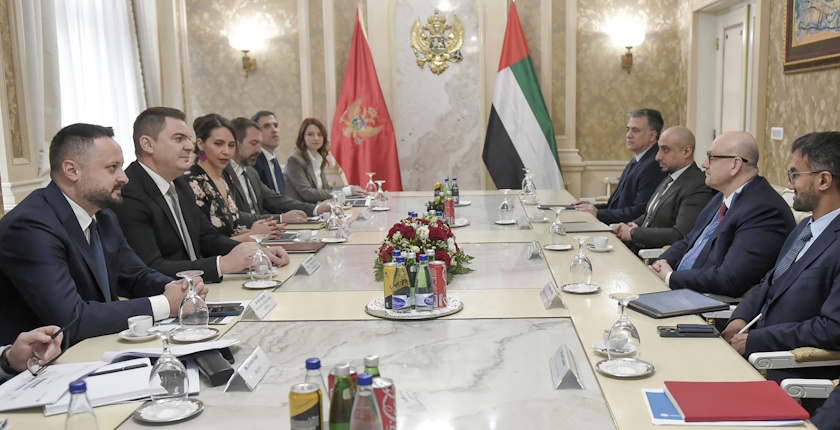
Representatives of the Government of Montenegro and Masdar discussed potential joint projects in the energy sector. The focus of the meeting was on solar energy, energy storage, and hydropower.

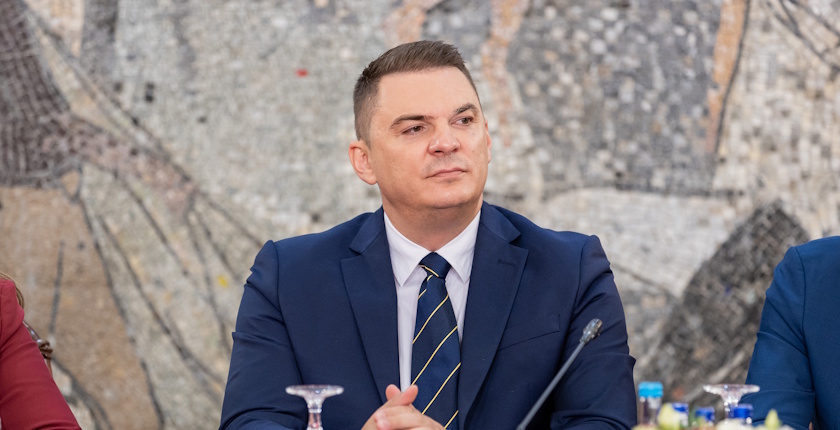
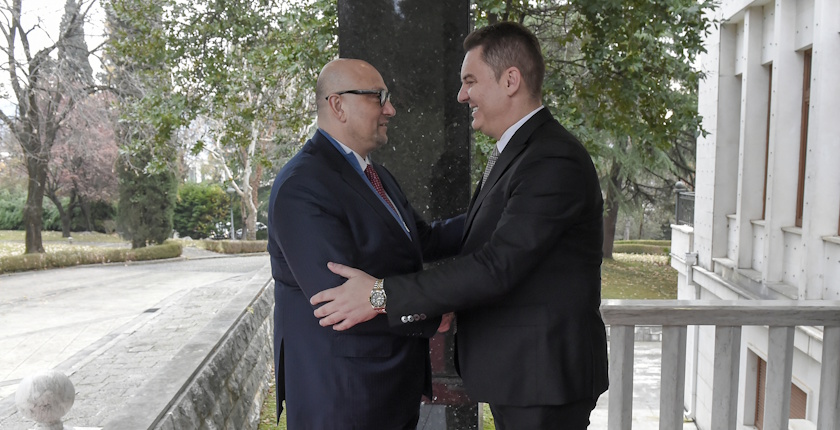
Minister of Energy and Mining of Montenegro Admir Šahmanović and the Minister of Public Works Majda Adžović met today at Villa Gorica in Montenegro’s capital Podgorica with Masdar CEO Mohamed Jameel Al Ramahi and his team.

It was the second meeting between Al Ramahi and Šahmanović in a short period. They met in early September.

The discussions now continued on top priority projects for the Government of Montenegro, ones that could be of mutual interest, according to the Ministry of Energy and Mining.

Priority should be given to projects that are the most technically advanced

Discussions will be intensified to define collaboration models, potential investments, and the selection of first projects to be implemented, the update reads.

Solar projects, including for floating solar power plants, alongside battery energy storage systems (BESS) and hydropower plants, have been identified as segments of special interest. These are also the areas where Masdar has significant engineering and technical experience, the ministry said.
montenegro masdar sahmanovic
Al Ramahi and Šahmanović (photo: Government of Montenegro/Saša Matić)

The two sides agreed to focus on projects that are the most technically advanced, environmentally sustainable, and aligned with the development of the power grid, to ensure their sustainable and efficient implementation.

Šahmanović: Montenegro’s strategic and long-term goal is to establish itself as a reliable and competitive player in the European energy market

Minister Šahmanović pointed out that the country’s strategic and long-term goal is to establish itself as a reliable and competitive player in the European energy market. He underscored that the development of energy infrastructure and renewable energy sources are among the government’s key priorities.

Officials participating in the meeting praised the planned construction of a second submarine cable line with Italy. It is an extremely wise and strategic investment that ensures Montenegro a stronger and more stable position in the European electricity market, they added.
Montenegro’s vision as an energy hub is fully aligned with the government’s development plans, Šahmanović stressed.

Minister of Public Works Majda Adžović highlighted the extensive experience of the United Arab Emirates in energy and infrastructure development in the public sector. It is of great importance for Montenegro’s activities in increasing renewable energy capacities, she added.

Masdar’s expert teams will continue technical talks with the management of EPCG and CGES

Masdar’s representatives have expressed readiness to continue technical discussions with the management of power utility Elektroprivreda Crne Gore (EPCG) and transmission system operator (TSO) Crnogorski Elektroprenosni Sistem (CGES).

The company’s expert teams will aim to identify priority and mature projects for joint implementation, the ministry said.

EPCG’s CEO Zdravko Dragaš and Ivan Mrvaljević, Executive Officer of EPCG’s Directorate for Development and Engineering, pointed out that the development of green energy is the company’s top priority.

A total of 200 MW in renewable energy projects are currently in development, they added.

Ivan Asanović, CEO of CGES, presented projects that are in the final stages of implementation.
by in News

Energy system based on renewables is cheapest solution to achieve net zero by 2050 – study

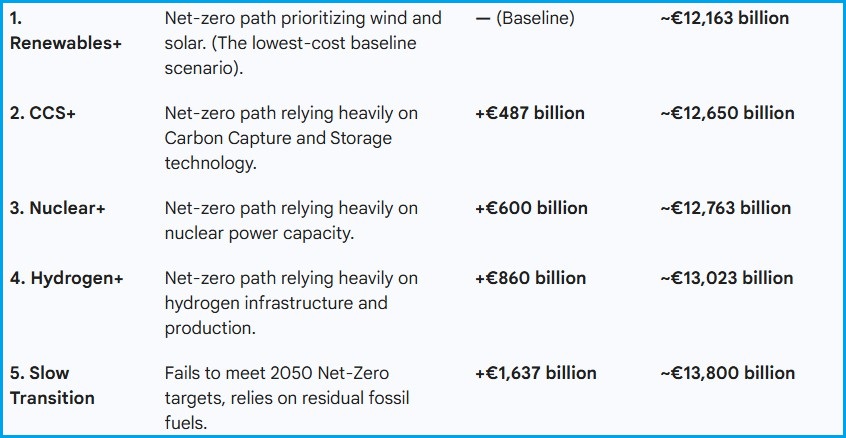
A European energy system based on a high share of renewable energy is the cheapest scenario until 2050 for achieving the net-zero goal, when compared to an increased use of nuclear capacity, or hydrogen, or carbon capture and storage, and against a delayed energy transition, according to a study produced by Hitachi Energy for WindEurope.

Costs for each scenario include not only generation facilities, but investments in grids, storage and back-up systems, according to WindEurope.

The study has mapped out the total system costs of five energy scenarios. Four scenarios deliver net zero and the remaining one is for a slow transition, where Europe doesn’t meet its climate targets, wind power advocacy group said.

The difference between the cheapest net zero path (Renewables+) and the most expensive path (Slow Transition) is EUR 1.64 trillion, the study reveals.

eu energy system 2050 scenarios costs hitachi study

The study’s authors calculated the total societal cost of building, operating, and adapting to the required energy system across electricity, transport, heat, and industry to meet or fall short of the 2050 climate targets.

The total system costs have three major groups of expenses.

The first group are new infrastructure investments in generation assets, as well as in grid, hydrogen, storage and carbon capture and storage (CCS) infrastructure.

Operational expenses are represented by fuel and CO2 costs, while the third group are electrification and demand shift costs.

The Renewables+ scenario drastically lowers import dependency

The Renewables+ scenario achieves net zero by 2050 through a massive deployment of variable renewable energy, primarily wind and solar power, leading to high electrification across the energy mix.

The renewables share reaches 85% of total electricity and nearly 70% of total gross available energy. Dependency on imported energy fuels falls drastically from 71% in 2030 to just 22% in 2050, the report reads.

“As Europe looks ahead to 2050, it is revealing to think what our energy system looked like 25 years ago. Back in 2000 the share of wind and solar in Europe’s electricity was a combined 0.8%. It’s 30% today. And Europe’s emissions are down by nearly 1/3 compared to 2000 while the economy has grown 45%. Let’s build on this success,” WindEurope stressed.

It is an inception report for the Energy System Costs Study, a project commissioned by WindEurope.

by in News

Montenegro adopts National Energy and Climate Plan

The Government of Montenegro has adopted the National Energy and Climate Plan, along with a bill on cross-border electricity and natural gas exchange.

The National Energy and Climate Plan (NECP) of Montenegro is the overarching strategy that clearly defines what the country should achieve by 2030: a 55% reduction in emissions, a renewable energy share of at least 50%, and substantial progress in energy efficiency, according to the Ministry of Energy and Mining.

“Over the past eight months, we have made a tremendous effort to finalize two key documents that have been awaited for years and are crucial for our European commitments,” Minister Admir Šahmanović stressed.

This is a plan that enables new investments, new renewable energy power plants, modern grid infrastructure, and a secure transition for the Pljevlja coal region, he explained.

Šahmanović: The latest European Commission report confirms Montenegro’s progress

The ministry noted that the bill on cross-border electricity and natural gas exchange is among the most important energy laws proposed by this government. Šahmanović recalled that this is not merely a technical issue.

The bill, in his words, opens the door to the single European market, directly impacts the closure of Chapter 15 of the accession negotiations with the EU, and gives full meaning to the electricity interconnection with Italy and the EU market.

It would provide greater energy security, better competition, more stable prices, and a stronger position for the country’s economy, he added.

“The latest report from the European Commission confirms that we have made progress. Today’s decisions by the government are the best confirmation of this. These are the foundations for a more energy-secure, modern, and European Montenegro, and we have reason to be satisfied with the progress we have achieved,” Šahmanović underscored.

The bill represents the most extensive reform of energy legislation in the past decade

According to the ministry, by adopting these two strategic documents, Montenegro has taken a significant step forward in aligning with EU energy rules.

The NECP integrates energy, climate, and development policies into a single framework for the first time, sets clear and measurable goals, and lays the foundation for Montenegro’s long-term energy transition.

The law on cross-border electricity and natural gas exchange represents the most extensive reform of energy legislation in the past decade, transitioning from a basic regulatory framework to a full European system of market, technical, and security rules.

Together, these two documents represent the most important reform package in the energy sector in recent years, fully aligned with European legislation and the EU’s strategic priorities, the ministry concluded.

by in News

IEA: Employment in energy sector grows two times faster than in global economy

A new report from the International Energy Agency (IEA) shows that the rate of employment growth in the energy sector was two times higher in 2024 than in the overall global economy. On the other hand, the organization is warning of a serious shortage of skilled workers in key sectors. Renewable energy sources, especially solar power, and the broader process of electrification play a key role in the expansion.

The energy sector employed 76 million people last year, according to the IEA’s World Energy Employment 2025 report. Investments in energy infrastructure contributed to employment growth, which came in at 2.2%, nearly double the global 1.3% rate.

The shift toward electrification is significantly transforming the structure of the workforce. It has led to the electricity sector surpassing the fuel supply sector in employment for the first time.

The number of people working in electricity generation, transmission, distribution, and storage has increased by 3.9 million over the previous five years, reaching 22.6 million—representing nearly three-quarters of all new jobs created in the energy sector.

Renewable energy sources, particularly solar power, are the strongest drivers of job creation. Solar alone accounts for 50% of all new power sector jobs since 2019. Last year, solar employment grew by 310,000, almost half of global power generation job growth. The total number of solar jobs is estimated at five million.

Nuclear power, grid expansion, and energy storage collectively accounted for one quarter of new energy sector jobs since 2019, despite challenges such as rising component costs and shortages of skilled labor, the report notes.

Wind sector stagnates

Employment in the wind sector grew by 3% in 2024, reaching 1.7 million jobs, compared to a compound annual growth rate of 5% over the previous five years. Rising procurement costs and declining government subsidies have slowed project development and delayed new investments, according to the latest data.

The slowdown is most visible in manufacturing, where employment fell by 6% due to reduced demand for new turbines and components as projects were delayed or cancelled.

Investors in offshore wind have significantly scaled back investment plans in response to rising project costs. Europe recorded the largest decline in offshore wind employment last year, with a 4% drop.

The automotive sector also recorded solid growth last year, driven by an increase in jobs related to electric vehicles (EVs) and batteries.

Oil and gas employment returns to 2020 levels

Employment in coal supply has fallen by 20% in advanced economies since 2019, but due to expansion in India, China, and Indonesia, global coal employment increased by 8%.

The report also notes that the number of workers in the oil and gas supply has returned to 2020 levels. “However, it now appears that many firms are entering a new period of retrenchment in the face of lower oil prices and revenues, with a number of major oil companies announcing job cuts in 2025,” the report states.

Shortage of skilled labour deepens

Despite job growth, the report highlights an acute shortage of skilled labour. Applied technical occupations—including electricians, pipefitters, lineworkers, plant operators, and nuclear engineers—are in particularly short supply.

In the IEA’s Energy Employment Survey, 60% of companies reported labour shortages. This bottleneck threatens countries’ ability to maintain energy security, expand grids, scale clean energy manufacturing, refurbish nuclear power plants, and attract investments.

The number of graduates with energy-relevant training is not keeping pace with rising demand. According to the report, to prevent further skill misalignment by 2030, the number of graduates entering the energy sector would need to increase globally by around 40%. Expanding training capacity to this level would cost an estimated USD 2.6 billion annually.

Limited impact of artificial intelligence

Companies are increasingly turning to workers from related industries and reskilling programs to fill labour gaps. Although 50% of surveyed fossil fuel workers said they would remain in the energy sector if alternative employment existed, not all workers have equal opportunities for retraining.

The report also examines the role of artificial intelligence. While AI brings benefits, its impact remains limited, as it cannot reduce the demand for manual technical labour—precisely the occupations in shortest supply.

Policy interventions can significantly influence the ability to attract new workers into the energy sector. According to the IEA, the biggest barriers to entering training programs include high costs, income loss during training, and limited awareness of available programs. Effective measures include targeted financial incentives, expanded vocational programs, greater industry involvement in curriculum development, and investments in training centres, while reskilling within the sector remains essential.

Working conditions also play an important role. Pay, job security, and a safe work environment are the most important factors for workers, the report shows, and these issues are increasingly at the centre of social dialogue.

by in News

Siemens Energy, Končar to install electrolyzer, solar power plant for INA

Siemens Energy and Končar will install an electrolyzer and a solar power plant for Croatian oil and gas company INA.

INA said it has signed two important contracts for the implementation of the green hydrogen production project at its Rijeka refinery.

By signing contracts with reputable companies, with a total value of EU 33 million, INA has secured the preconditions for the implementation of the first commercial green hydrogen production plant in Croatia, according to the update.

A contract with Siemens Energy and Končar was signed for the construction of a 10 MW green hydrogen production and distribution plant. The order is estimated at EUR 22.5 million excluding VAT.

INA has already secured the delivery of the electrolyzer

The second contract, worth nearly EUR 11 million excluding VAT, was signed with Končar. It envisages the construction of a 11 MW photovoltaic plant. The facility would supply electricity to the electrolyzer.

As part of the project, INA has already secured the electrolyzer, a key system for water electrolysis and hydrogen production from renewable sources. Its majority owner, Hungarian MOL, inaugurated its first 10 MW electrolyzer in April last year.

Green hydrogen is intended for use in transportation

The green hydrogen that would be produced is intended for the market, primarily for transportation purposes, and it could also be used in the refinery’s production process. The company recalled that, by a decision of the Ministry of Economy, it received a EUR 15 million grant from the National Recovery and Resilience Plan.

The program is for the production and distribution of hydrogen in transportation.

The hydrogen market in Croatia is in an early development phase. INA’s plant could produce about 1,500 tons of green hydrogen annually.

Of note, Croatia adopted a hydrogen strategy in 2022. The government subsidizes the installation of chargers for hydrogen fueled vehicles.

Ortutay: Hydrogen could open new market opportunities for INA

INA CEO Zsuzsanna Ortutay said European and national strategies consider renewable hydrogen a technology of the future.

The renewable hydrogen that INA will produce can open new opportunities for the company in the market, but also improve the sustainability of Rijeka refinery through emission reductions, Ortutay stressed.

According to Končar CEO Gordan Kolak, green hydrogen isn’t only a technology of the future but a key element for decarbonizing industry and transport.

As the main contractor for the construction of this plant, Končar confirmed its role as a reliable partner developing key expertise for the European energy infrastructure in the decades to come, Kolak added.

by in News

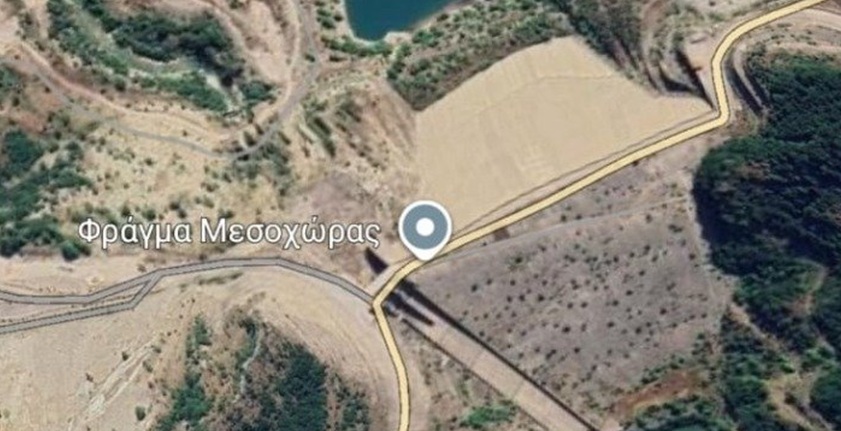
PPC receives funds for stalled Mesochora hydropower project 

Public Power Corporation has received funds to speed up its Mesochora hydropower project, stalled for 24 years.

The Greek Ministry of Environment and Energy announced that the procedures to complete the Mesochora hydropower plant (HPP) in Trikala would be significantly accelerated, ending a 24-year period of judicial deadlock and construction suspension.

Of note, the project was revived in 2021–2022.

The ministry said it signed an agreement with government-controlled Public Power Corporation (PPC or DEI), the project’s developer and operator, on the necessary studies required to finalize the 161.6 MW facility.

PPC is now responsible for commissioning the necessary relocation studies

The deal directly addresses the most sensitive issue: the relocation of residents from the affected settlement of Mesochora, the announcement revealed.

PPC is now responsible for commissioning the necessary relocation studies, with a budget of EUR 1,313,160.00, the update reads.

The ministry claimed that the government is committed to ensuring the safe relocation of the population with full compensation for property owners.

It recalled that the construction of the Mesochora HPP, located on the upper Acheloos River, started in 1986 and that the dam structure was largely finished by 2001. However, its operation was halted due to repeated appeals and long-standing legal battles at the Council of State, the country’s supreme administrative court, initiated by environmental groups and affected local communities.

Over EUR 300 million has already been invested in the project

Now a task force has been established to push forward the project and start the final construction activities by the end of 2026. The expropriation process for all necessary areas will also begin to ensure the safe and efficient functioning of the dam, the ministry underlined.

Of note, over EUR 300 million has already been invested in the project or EUR 500 million in current value.

Once operational, the plant is expected to generate approximately 360 GWh of renewable energy annually, contributing substantially to the country’s energy mix and the targets set by the revised National Energy and Climate Plan (NECP), according to the ministry.

The HPP would also provide balancing for renewable energy generation.

The meeting was attended by Minister of Environment and Energy Stavros Papastavrou, Minister of Digital Governance Dimitris Papastergiou, Mayor of Pyli Konstantinos Maravas, members of Parliament representing Trikala – Konstantinos Skrekas, Thanasis Lioutas and Katerina Papakosta-Palioura, the ministry’s General Secretary of Spatial Planning and Urban Environment Efthimios Bakogiannis and the PPC’s President and CEO Georgios Stassis and Deputy CEO Alexios Paizis.

greece Mesochora hydropower ppc relocation study
Photo: Ministry of Environment and Energy
by in News

Šahmanović: Montenegro is facing its most challenging year for energy sector

Montenegro is facing its most challenging year for the energy sector, Minister of Energy and Mining Admir Šahmanović stressed.

State-owned power utility Elektroprivreda Crne Gore (EPCG) will suffer a loss of around EUR 80 million given that the Pljevlja coal power plant is offline, while electricity consumption is rising amid increases in prices of other energy sources, Admir Šahmanović told TV Vijesti.

He explained that development is focusing on the reconstruction of the thermal power plant, addressing delays in connecting solar power plants to the grid, and plans for projects including within cooperation with the UAE and an agreement with Italy on a second subsea cable.

Šahmanović: We entered this year quite wounded

The priority will be price stability and increasing the use of renewable sources, along with strengthening Montenegro’s position as an energy hub between the region and the European Union, he added.

“I can freely say that, regarding this year, it is perhaps the most challenging year in the modern history of Montenegro, exactly for the energy sector. We entered this year quite wounded given the fact that last year the hydrological conditions were the worst in the country’s history,” he asserted.

Šahmanović added the electricity demand in Montenegro has jumped 6%.

Climate change is playing its part

One of the reasons is the increase in the price of energy sources such as wood and coal, according to the minister.

He pointed to climate change as another factor. There is a growing need to install air conditioning units even in northern Montenegro, where there was previously no need for it, he added.

Therefore, in the minister’s words, the construction of other production facilities is inevitable.

Of note, EPCG’s executive manager of supply Jovan Kasalica said in April that electricity consumption in Montenegro has risen by 25% over the previous four years.

by in News

Slovenian company Talum to install solar power plants on waste landfills

Aluminium producer Talum plans to install solar power plants of up to 60 MW overall. The project could boost utility-scale solar in Slovenia, where small PV facilities installed by firms and households account for almost the entire operating capacity of 1.5 GW.

Currently the largest solar power plant in Slovenia has a capacity of 7.1 MW. Located near the village of Krvavi Potok, it started operating in July.

Notably, the expansion of the Prapretno photovoltaic plant is underway – from 6 MW to 9.8 MW. The largest project is for the Družmirje floating solar plant, for 140 MW.

Talum told state news agency STA it is developing a project to install large solar power plants on the area of its two closed waste landfills in Kidričevo that have valid environmental permits, public broadcaster RTV SLO reported. The endeavor is in accordance with the Law on the Introduction of Devices for the Production of Electricity from Renewable Energy Sources as well as with sustainable policies, it added.

Talum is awaiting response from the Ministry of Natural Resources and Spatial Planning

The company’s project design envisages the installation of solar power plants with a total capacity of up to 60 MW at the landfills.

The company initiated a project approval procedure in July at the Ministry of Natural Resources and Spatial Planning, including additional studies. It said it would proceed with preparing the necessary documentation and other activities for the construction, after receiving a response.

It isn’t the first solar project for Talum. In 2023, it installed solar panels of 3.78 MW altogether on five buildings. Additionally, the company hosts two battery energy storage systems (BESS) on its land. NGEN commissioned a 15 MW / 30 MWh unit in 2020, and GEN-I inaugurated a 12 MW / 24 MWh facility a month ago. NGEN has also announced it would install a 70 MW BESS on the site.

Red sludge danger

Local NGO Gibanje za Kidričevo has objected to the project in a letter to Prime Minister Robert Golob and the European Commission.

Solar power plants shouldn’t be built on such sites, according to the group.

It recalled that in 2014, the European Commission classified red mud as hazardous mining waste, following an accident in Hungary four years earlier.

Talum responded that the red mud landfill has a valid environmental permit as a non-hazardous waste landfill.

The project design for the solar power plants envisages the implementation of additional measures on the closed landfills aimed at improving the state of the environment, the company explained.

Of note, Talum used to produce aluminum, but after closing its electrolysis facility, it switched to recycled aluminum products.

by in News

Premier Energy acquires 400 MWh battery energy storage project

Premier Energy has acquired a project for a 400 MWh battery energy storage system at a site near Iași, Romania’s third-largest city.

Premier Energy Group has announced the acquisition of 100% of a ready-to-build project for a battery energy storage system (BESS).

The planned power input and output is 200 MW, while the energy storage capacity would be 400 MWh.

Premier Energy Group is an electricity producer, distributor and supplier as well as natural gas distributor and supplier in Romania and Moldova. It owns and operates a total capacity of 1,100 MW.

The investment is estimated at EUR 75 million

The company has 328 MW in renewable energy projects under construction and in the pipeline.

Premier Energy revealed that the total development and construction cost of the battery near Iași is estimated at EUR 75 million. The firm’s management is currently in advanced discussions on financing options for the project, the update reads.

It expects to secure a long-term financial structure, while the BESS project would be commissioned in late 2026 or early 2027.

Garza: It will be among the largest battery plants in Southeastern Europe

In a market characterized by significant 15-minute price fluctuations and an increasing number of prosumers, the facility will enhance flexibility, reduce system costs and support the efficient integration of renewable generation, the company underscored.

According to José Garza, Premier Energy Group CEO, the project aligns naturally with its strategy of building a more flexible, integrated electricity platform in Romania.

“Its scale places it among the largest battery plants in Southeastern Europe, and it will support the market by helping to alleviate intraday price volatility, improve grid stability and complement our renewable production and supply activities,” he added.

Stohr: Large-scale storage enhances the efficiency of the entire value chain

Peter Stohr, Premier Energy Group CFO, explained that large-scale storage enhances the efficiency of the entire value chain, from production to supply, and creates important synergies with the company’s existing portfolio.

“We are already engaged in discussions with a major CEE financial institution regarding the project’s financing, and we are confident that this asset will integrate seamlessly into our broader energy platform,” he stated.

by in News

Serbia’s EPS starts trial operation of its first wind park Kostolac

Serbia’s state-owned power utility Elektroprivreda Srbije put the 66 MW Kostolac wind farm into trial operation.

The construction of Kostolac is complete, and Elektroprivreda Srbije’s (EPS) first wind farm has generated its first megawatt-hours, EPS announced.

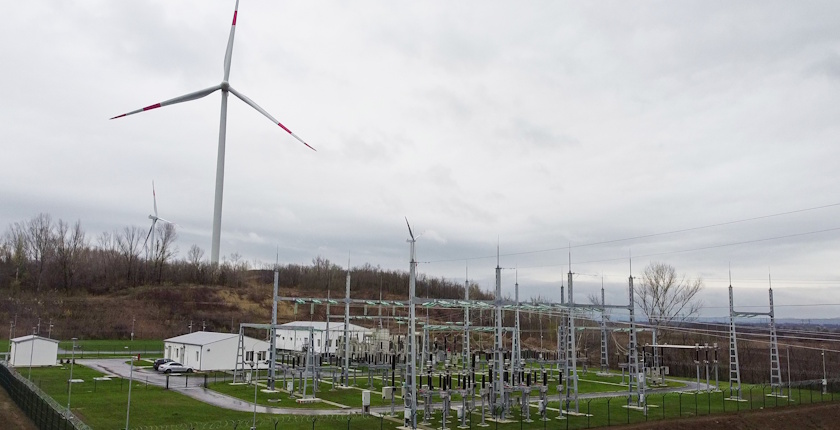
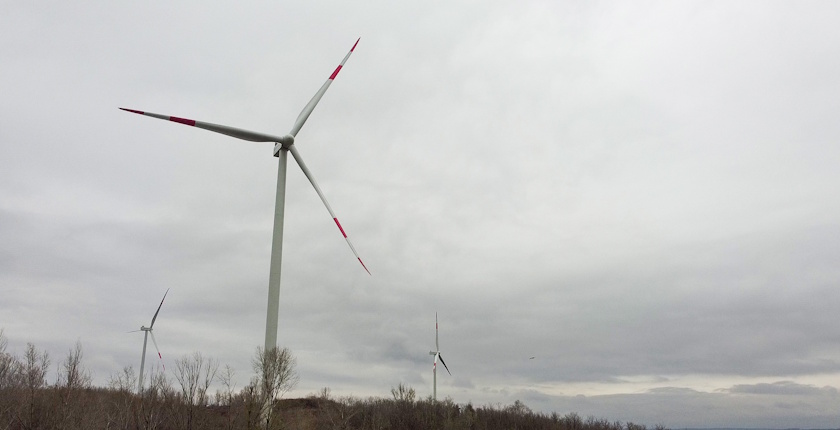
Upon receiving approval for connecting to the transmission system, the substation was energized and the blades of wind turbine 1 began to spin. It marked the start of the trial operation of the new generation capacity, the company said, and added that the kickoff of the remaining wind turbines is underway.

EPS’s first wind power plant, with 20 generators, is located at sites called Drmno, Petka, Ćirikovac and Klenovnik, at an area of closed open-pit mines of its subsidiary Termoelektrane i kopovi Kostolac (TE-KO Kostolac). It operates coal-fired power plants and open-pit coal mines.

Živković: It is a historic moment for EPS

Closed coal mines are ideal locations for installing wind farms and solar power plants, due to existing infrastructure. The concept has become widespread in Balkan countries.

“This is a historic moment for EPS. In addition to energy from water, coal, and the sun, now the first wind farm is online. This is a big step toward increasing the share of renewable energy and achieving sustainable energy development for EPS and the entire Serbian energy sector,” CEO Dušan Živković underlined.

He pointed out that the wind farm is just the beginning of future intensive development of new green capacities. It is very significant that it was built on the site of an old mining landfill and that the space has been given a completely new, sustainable purpose, he added.

The wind farm is expected to produce 187 million kWh annually

serbia eps wind farm Kostolac trial operation coal mine
Photo: EPS/Zoran Gavrilović

Živković recalled that the construction of the wind farm was a major challenge, but also a real opportunity for experienced engineers and young, new professionals at EPS to gain new knowledge and experience for future projects.

The planned annual production of the wind farm is 187 million kWh, which is enough to supply about 30,000 households with green electricity, according to EPS.

The project is financed by a EUR 110 million loan from Germany’s KfW Development Bank and a EUR 30 million grant from the European Union via the Western Balkans Investment Framework (WBIF), while the company provided a part of the needed funds, EPS said.

Serbia’s Minister of Mining and Energy, Dubravka Đedović Handanović said in January 2024, at the signing of an agreement with the EU for the EUR 30 million grant, that it has completed the financing of the project.

According to WBIF’s update from December 2024, the project was valued at EUR 145.1 million. It comprised EUR 81.8 million from a KfW loan and EUR 31 from WBIF in the form of a grant, while EPS provided EUR 32.3 million.