by in News

EU-Montenegro Investment Conference: 14 partnerships, MoUs signed for energy, sustainable projects

A total of 14 cooperation projects between Montenegrin and European companies have been initiated at the ongoing European Union-Montenegro Investment Conference, including investments in wind farms, solar parks, energy storage, and grids.

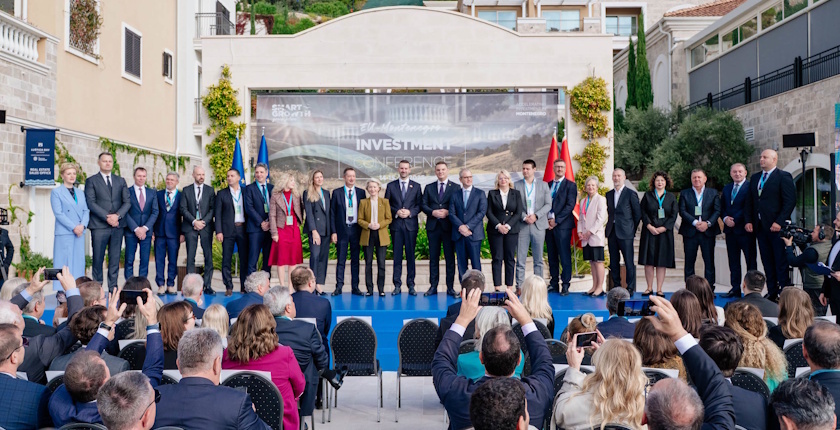
The two-day conference, titled Smart Growth, Green Future: Accelerating Investment in Montenegro, was opened today in Luštica, near Tivat, by the President of the European Commission, Ursula von der Leyen, and the Prime Minister of Montenegro, Milojko Spajić.

Montenegro’s growing potential for strategic, green, and sustainable investments was presented through new partnerships between leading Montenegrin and European companies, according to a press release by the Government of Montenegro.

The Conference was jointly organized by the government and the European Commission, with the support of the Montenegro Investment Agency (MIA).

State power utility EPCG has signed three memoranda of understanding

State-owned power utility Elektroprivreda Crne Gore (EPCG) has signed three memoranda of understanding (MoUs). One was signed with Akuo for the development of several renewable energy projects, including floating solar, a photovoltaic plant, and energy storage.

The second MoU, signed with SS&A Power Group, envisages the development, manufacture, and installation of thermal energy storage, while the third, with Wind Fisher, concerns a new technology for high-altitude wind power generation.

Alcazar Energy signed a memorandum with the government’s project management office for the development and financing of renewable energy projects. CWP Europe and the Montenegrin Investment Agency (MIA) signed a memorandum on the development of the Montečevo solar farm project with battery storage. The company signed a similar agreement for its project in Albania yesterday.

A memorandum was also signed between Čevo Solar and Grawert Jenny & Partner on battery energy storage systems (BESS). A 20 MW/60 MWh battery is being considered.

Four sustainable investment partnerships were also signed

The Ministry of Energy and Mining and EDF will further discuss the issue of modernizing Montenegro’s power distribution network.

Among the signed documents is an MoU on collaboration between the European Bank for Reconstruction and Development (EBRD) and Erste on a Regional Energy Efficiency Program (REEP), as well as cooperation in the field of wastewater management between Suez and MIA.

In addition, four sustainable investment partnerships were also signed: Farm2Fork Montenegro, Station M, Green Logistics Hub, and Northern Investments Compact for Ecology & Resilience (NICER). Green Logistics Hub refers to the Port of Bar, which aims to become the first net-zero port on the Adriatic. NICER concerns the just transition and is led by the Pljevlja Coal Mine.

Von der Leyen: Do not wait for accession to invest in Montenegro

Photo: Bojan Gnjidić/Vlada Crne Gore

The event brought together senior representatives of the Government of Montenegro, the European Union, international financial institutions, as well as prominent European and Montenegrin investors.

“My message is very clear: do not wait for accession to invest in Montenegro, because by then you may miss the opportunities that others will seize,” Ursula von der Leyen noted.

She stressed that by continuing its European journey with determination and speed, Montenegro is making its goal of EU accession attainable.

“Today, we are opening a new chapter of development—we are beginning a major investment cycle, strengthening our ties with the European market even before formally joining the European family. Today, we are bringing our vision of green and smart growth to life. We are doing this together with our most important strategic partner—the European Union, which is also the largest investor in our country,” Prime Minister Milojko Spajić said.

He recalled that the country plans to close all negotiating chapters with the EU by the end of 2026 and become its 28th member state in 2028.

Photo: Bojan Gnjidić/Vlada Crne Gore
by in News

North Macedonia receives applications for 4.2 GW of battery projects

North Macedonia has received requests for new wind farms, solar parks and gas power plants of 7,100 MW in total capacity, as well as for standalone batteries and ones that would be co-located with power plants, for 4,172 MW in overall operating power, Minister of Energy, Mining and Mineral Resources Sanja Božinovska revealed.

The Ministry of Energy, Mining and Mineral Resources has received an initiative for a 495 MW gas-fired cogeneration plant. Sanja Božinovska said the details are unknown as the submitted documentation is too extensive and is still being analyzed, state news agency MIA reported.

Of note, there were already proposals for gas-fired power plants in the country. The government has signed a memorandum of understanding with Kazancı Holding on projects for such facilities.

Investors intend to install standalone and co-located BESS

Investors submitted initiatives for wind farms of 1,590 MW altogether, as well as for a total of 402 MW and 1,080 MWh in battery energy storage systems (BESS) that would be co-located with wind farms.

So-called initiatives were also received for solar power projects totaling 5,052 MW and accompanying BESS of 1,174 MW in combined capability and 3,018 MWh in capacity. Investors plan to build standalone batteries of an overall 2,596 MW and 3,094 MWh, respectively.

Božinovska said it is great news, though that it’s more important whether the documentation is valid.

She recalled that the recently adopted Law on Energy introduced an annual construction plan for priority energy projects.

October 1 was the deadline for foreign investors to submit their projects

October 1 was the deadline for foreign investors interested in the construction of power plants to submit documentation, Božinovska noted. The ministry received a huge number of documents and it will take time to process them, she stressed.

Batteries became all the rage in the renewable energy sector worldwide. North Macedonia is set for a landmark achievement in its region.

YESS Power plans to commission a 60 MW BESS in the country next month. It would be the first large facility of its kind in the Western Balkans.

by in News

Policy changes in US will have marginal impact on global energy transition

Policy changes in the United States introduced by the administration of President Donald Trump will have only a marginal impact on the global energy transition, according to the latest Energy Transition Outlook, produced by DNV.

Norwegian consulting firm DNV pointed out in a report that energy use by artificial intelligence may seem alarming, but that it is projected to stay below booming sectors like electric vehicle (EV) charging and cooling of buildings.

“DNV’s annual Energy Transition Outlook has consistently forecast a shift from today’s 80/20 fossil/non-fossil primary energy mix to a 50/50 mix by 2050. That is still our prediction this year. Although some aspects of the transition are supercharged and progressing rapidly, other aspects have hit turbulence and are delayed. This leads to a marginally slower transition than our forecast last year,” CEO Remi Eriksen said.

According to the report, in the US, fossil fuel promotion and the reversal of clean energy support policies are slowing the nation’s transition.

However, China continues to set renewables buildout records with 390 GW of solar PV (56% share of new global capacity) and 86 GW of wind (60% share) expected to be installed this year. The country is also fueling the transition in the rest of the world with its cleantech exports.

In the meantime, Europe is seeking to balance climate action with competitiveness, the report reads.

The continent is having a slow success with harder-to-decarbonize sectors, but renewable energy buildout remains relatively strong.

In the rest of the world, most countries are embracing competitive Chinese technologies, with year-on-year growth in installations at around 25%, data showed.

Eriksen said cheap renewable electrons stored when necessary in ever-cheaper batteries are already an unstoppable force.

“We forecast that solar – both with and without storage – and wind will be 32% of the global power mix by 2030. We expect a resurgence in offshore wind by 2030, such that variable renewables will provide more than 50% of all electricity by 2040,” he stated.

Solar power is 10% of all power produced worldwide today, and DNV projected it will be 20% in 2029 and 40% in 2045. Renewables would reach 65% in the global electricity mix by 2040, the firm added.

AI’s energy demand would be lowered by efficiency effects

According to Eriksen, soaring power demand from AI data centers is placing additional strain on already congested grids, particularly in North America.

DNV ‘s analysis finds that AI’s energy demand growth is likely to become more linear over time, outpaced, for instance, by EV charging and cooling demand, even as the cognitive services of AI expand exponentially. The main reason is growing efficiency.

AI’s energy use is forecasted at only 3% of global electricity by 2040. Data center energy use will quintuple by 2040, equalling 5% of all global electricity. AI’s share would be 3%, with the remaining 2% for general purpose data centers.

The report highlighted large regional variations – AI is the biggest driver of electricity consumption growth in North America, compared to EV charging in Europe and EVs and cooling in China and India.

For the first time, this year’s analysis extends to 2060

The report noted that this year, the world reached the milestone of more than 50 million EVs on the road. Most of them, 60%, are in China, with Europe at 21%, and North America at 13%.

The point of inflection — EVs at 50% of global new passenger vehicle sales — will be reached in 2032, the report projected.

For the first time, this year’s analysis extends to 2060 to reflect the continued transformation of the energy system after 2050. The report recalled that it is now widely acknowledged that the world will not achieve net zero emissions by 2050, meaning warming would exceed 1.5 degrees Celsius.

A decarbonization of energy mix is unstoppable but too slow, setting up grave risks for future generations, Eriksen concluded.

by in News

Turkey’s TEİAŞ signs USD 750 million loan contract with World Bank

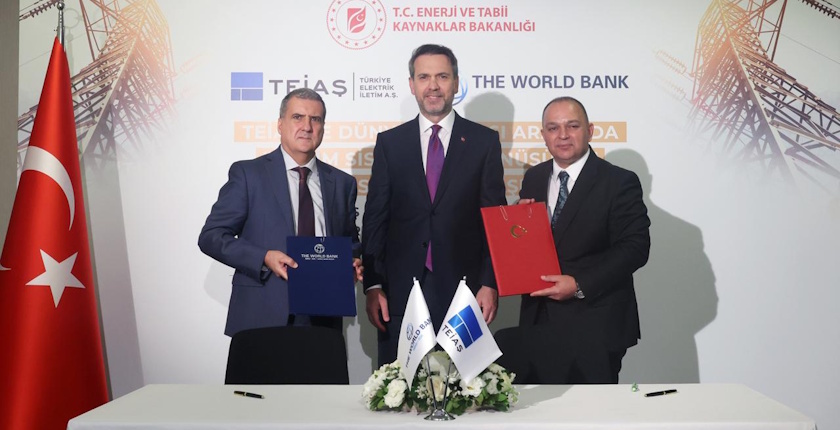
Turkish Electricity Transmission Corporation and the World Bank signed a USD 750 million loan agreement.

A USD 750 million loan will be used for the Transforming Power Transmission System Project. It would make the country’s energy future more reliable and efficient, Turkey’s transmission system operator (TSO) TEİAŞ said.

The agreement was signed in Istanbul vby the bank’s Country Director Humberto Lopez and Orhan Kaldırım, the company’s Chairman of the Board, in the presence of Minister of Energy and Natural Resources Alparslan Bayraktar, at the 11th Energy Efficiency Forum and Exhibition.

Bayraktar: Turkey plans to invest USD 28 billion in the transmission grid

“The World Bank and international financial institutions have a significant interest in Turkey’s energy infrastructure, particularly its electricity and natural gas sectors. Turkey is a hub country,” Bayraktar stated.

He recalled that the country plans to invest USD 28 billion in electricity transmission infrastructure by 2035.

The minister revealed that discussions on such projects are ongoing with financial institutions from both Asia and the West. Financing agreements can be expected in the foreseeable future, he added.

Lopez: The transition requires reliable transmission

World Bank Country Director Humberto Lopez stressed that Turkey’s clean energy ambitions depend on strong transmission infrastructure.

“Turkey has one of the most ambitious renewable energy plans, and this transition requires reliable transmission,” he said, as quoted by Anadolu Agency.

Lopez explained that it is very difficult for a new company to install solar or wind power facilities without a transmission grid connection secured. The USD 750 million investment aims to address the need and it is central to the government’s energy transition plan, he underlined.

The Transforming Power Transmission System Project marks the first phase of a USD 1.5 billion financing package aimed at expanding grid capacity, enhancing digital management, and accelerating the integration of renewable energy.

It will include feasibility studies for Turkey’s first high-voltage direct current (HVDC) transmission line, according to the article.

by in News

EU solar jobs headed to first decrease in decade

Jobs in the European Union’s solar industry reached a record level last year, however they are dropping in 2025.

Nevertheless, the decrease in solar jobs this year could be only temporary, according to SolarPower Europe’s latest report.

Europe’s green job expansion continued in 20254, with EU solar jobs rising to a record high of 865,000. The sector’s 5% increase outperformed the wider EU labour market’s 0.8% growth, the EU Solar Jobs Report 2025 showed.

Most jobs, 86%, are provided by the solar deployment sector.

EU solar employment will face a temporary drop in 2025, of 5% decline to 825,000 jobs, due to slower solar deployment and manufacturing challenges, the update reads.

Nevertheless, the association expects solar workforce to grow over the coming years and reach 916,000 by 2029.

Solar delivers 825,000 quality jobs for Europe in 2025, said Walburga Hemetsberger, CEO of SolarPower Europe. It is incredible, she added.

“However, this falls short of the one million solar job mark we were hoping to reach by now, and for the first time in a decade, solar jobs growth has halted. We can’t ignore this warning. EU leaders have the opportunity to reverse course, stabilise the market, support EU solar manufacturers, and strengthen its skills strategy,” Hemetsberger stated.

The main reason for the decrease this year is a slowdown in residential solar. The share of EU rooftop solar workforce has been shrinking for the last three years, from 73% in 2022, to 59% in 2024, and it is projected to land at 56% in 2029, according to the report.

In July, the association estimated that the EU’s annual solar installations would come in weaker year-on-year in 2025 for the first time in a decade. The warning coincided with the month when solar power became the EU’s biggest electricity source for the first time.

Germany remained the leading EU country for employment

The largest national solar markets also represented the largest sources of solar employment in the EU.

Germany remained in the lead in employment last year, with around 128,000 direct and indirect full-time equivalent (FTE) jobs. However, the level tumbled from 154,000, registered in 2023, despite a jump in new installations to 17.2 GW from 15.1 GW.

Spain ranked second, with 122,000 FTEs. Italy saw significant growth, with the solar job market surpassing 100,000 workers, placing it third in the EU. Other top markets included Poland (90,000), France (66,000), Romania (62,000), and Hungary (47,000), the report adds.

SolarPower Europe issued ten policy recommendations for maintaining job growth:

  1. Establish a European solar skills intelligence hub.
  2. Scale and stabilize funding for renewable skills, with simplified access for small and medium-sized enterprises (SMEs).
  3. Map existing skills initiatives.
  4. Conclude sectoral agreements to enable large-scale retraining.
  5. Run coordinated campaigns to improve the attractiveness of technical green careers as well as apprenticeships and vocational training.
  6. Promote gender balance and diversity in solar careers.
  7. Develop cross-renewable career pathways and portable competence frameworks.
  8. Introduce a European solar skills passport.
  9. Adopt an electrification skills strategy that links photovoltaics with heat, mobility and storage.
  10. Invest in advanced digital and artificial intelligence (AI) training.
by in News

Slovenia allocates EUR 375 million for sustainable mobility

Slovenia has allocated EUR 835 million from the Climate Fund for climate change mitigation and adaptation. The funds should be used over the period 2025-2028.

The Government of Slovenia has adopted a decree on the allocation plan for the Climate Fund for 2025-2028. The plan follows the key measures from the previous plan for the period 2023-2026 and adds funds for 2027 and 2028. The amount is determined based on expected revenues from emission allowance auctions.

Emission allowances are part of the European Union Emissions Trading System (EU ETS).

The funds will be directed to sectors addressing the main climate challenges, both in mitigation and adaptation to climate change. Measures supporting the green transition and increasing the country’s resilience to climate change will also be supported, according to the Government of Slovenia.

EUR 121 million was allocated for decarbonizing the economy

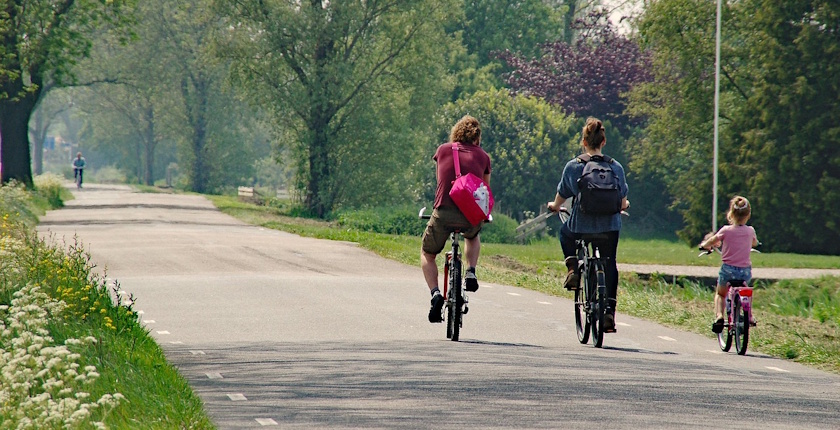
The largest chunk will go to sustainable mobility – EUR 375 million. The funds will be used for investments in public transport – purchase of new trains and buses, renovation of ticketing and information systems, co-financing of zero-emission vehicles and charging infrastructure, promotion of cycling and walking, and shifting freight transport from roads to rail.

EUR 121 million is designated for decarbonizing the economy. The government will co-finance successful European Union projects, support the introduction of a circular economy and sustainable reporting for small and medium-sized enterprises, as well as investments in industrial decarbonization.

Energy renovation of public and residential buildings, measures to reduce energy poverty, and the construction of nearly zero-energy buildings are also part of the allocation plan. There is EUR 111 million for such activities.

EUR 26 million is set for awareness raising and education

EUR 95 million is designated for renewable energy sources. The funds will be used to replace outdated household heating devices with modern ones and heat pumps, as well as for energy storage, geothermal energy, and measures to increase the energy self-sufficiency of buildings.

The Climate Fund will support additional climate change adaptation measures. The activities include reducing flood risks, preserving biodiversity, adaptation in forestry and agriculture, and strengthening the resilience of local communities. The allocated funds amount to EUR 49 million.

Slovenia has envisaged EUR 12 million for international climate change financing and EUR 26 million for awareness raising and education.

by in News

City of Pirot in Serbia plans solar power plant on remediated unsanitary landfill

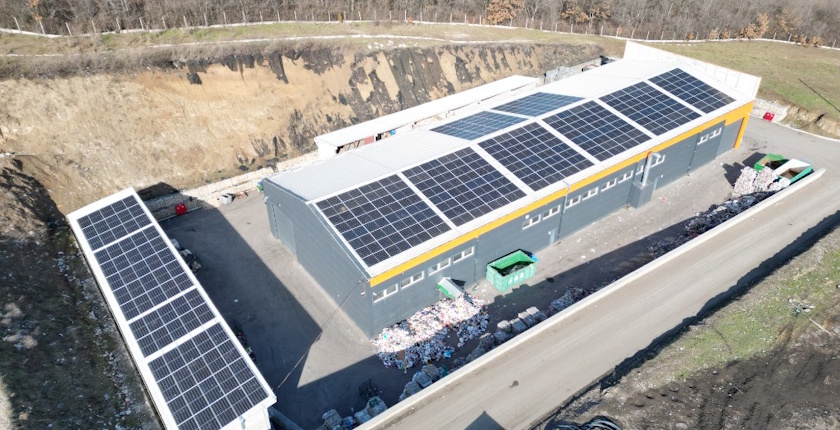
The City of Pirot plans to build a solar power plant on the site of a former unsanitary landfill when it is remediated. The move would strengthen its leadership position in Serbia regarding the use of renewable energy and environmental protection.

In 2013, Pirot opened a regional sanitary landfill, which cost EUR 11 million. It enabled the local authority to shut down an unsanitary landfill on the right bank of the Nišava river. However, the land still hasn’t been remediated and reclaimed.

Now the Ministry of Environmental Protection of Serbia has approved EUR 2 million for the works, Serbia’s public broadcaster RTS reported. With the completion of remediation, the possibility opens up for the six hectares of land in the country’s southeast to be repurposed.

Solar panels would be installed on three hectares

Mayor of Pirot Vladan Vasić said that the documentation for the remediation of the landfill is complete. The city intends to add EUR 500,000 to the EUR 2 million received from the government and complete the first phase. He plans for the second phase to be approved next year, to solve the decades-long issue in an environmentally acceptable way.

Vasić revealed one and a half to two hectares would be allocated for businesses, adding that the purpose of the remaining land is still under consideration.

A photovoltaic plant would be the most cost-effective solution

One idea is to install a 3 MW solar power plant that would supply electricity to the city authority, he pointed out.

Other ideas are a football stadium, a golf course, afforestation, and a park. The photovoltaic plant would be the most cost-effective solution, Vasić added.

Of note, there is a solar power plant on the roof of the building of public waste utility Regional Landfill Pirot. The 150 kW facility began operating in August last year. The city officials claim it is the largest PV plant in Pirot county.

The first cooperative solar power plants in Serbia are located on the Stara Planina mountain

Pirot is also developing a regional waste management center. In 2022, the city signed a contract for the construction of the second landfill body, a composting plant, and a biogas facility.

The additional segment would extend the operation of the sanitary landfill by 20 years, while the biogas collection system would enable the collection of methane from the landfill.

A system for treating construction waste to enable material recycling is planned as well.

As for solar energy, not far from the city, the Stara Planina mountain is the home of the first cooperative solar power plants in Serbia. The local authority participated in the project. They were put into operation last year.

In mid-2023, PV projects were under development for over 125 MW in total capacity on the city’s territory. Of note, this year Pirot became the 13th local authority to join the Clean Air Regions Initiative, initiated by the Energy Community Secretariat.

by in News

Croatian company Brodosplit delivers equipment for French floating wind farm pilot project

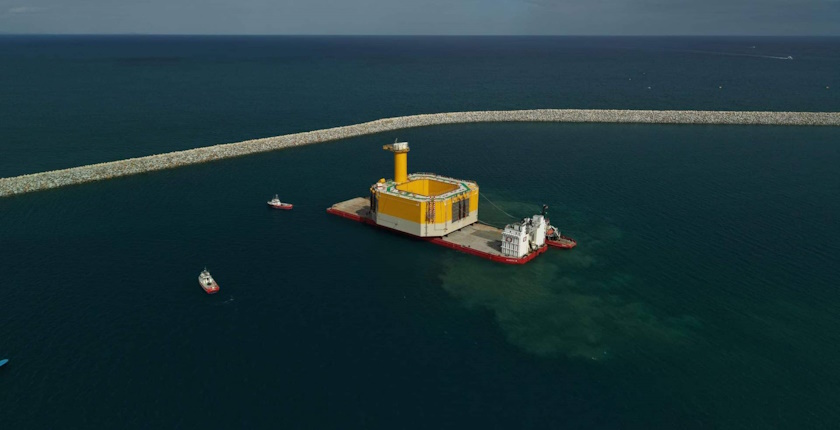
Croatian shipbuilding company Brodosplit has manufactured steel structures for the floating foundations of an offshore wind farm in one of the first such pilot projects in France.

The site for the EolMed project is approximately 18 kilometers from the coastal town of Gruissan in the Occitanie region of southern France.

Qair is leading the consortium, which includes oil and gas giant Total Energies and floating platform provider BW Ideol as its partners. The three 10 MW wind turbines, supplied by Vestas, are about to be installed at a spot where the sea is 55 meters deep.

According to Brodosplit, the project has entered its final phase after the successful launch of the three floating platforms in September.

It isn’t Brodosplit’s first floating wind farm project

The Croatian firm said it manufactured and delivered the metal structures for the floating foundations, in line with the highest quality and safety standards.

Before joining the EolMed project, it entered the floating wind farm segment through cooperation with Ocergie. Brodosplit has created an innovative measuring buoy, OCG-Data, for the France-based company’s Blue Oracle project.

The EolMed project received state support as part of the investments for the future program

The buoy is equipped with a LiDAR (light detection and ranging) system and advanced sensors for monitoring wind, waves, currents, and sea biodiversity, enabling the collection of crucial data for the development of floating wind farms and the preservation of the marine environment, Brodosplit pointed out.

Since EolMed’s initial design in 2016, it has been adjusted and adapted to incorporate the latest technologies. Initially comprising four wind turbines, the number has since been reduced to three for equivalent capacity.

The change also affected the choice of material for the floats – now steel instead of concrete. Construction began in April 2023, and completion is planned for this year.

The project received state support through the Investments for the Future Programme (Programme d’Investissements d’Avenir – PIA). The goal is to demonstrate the economic viability of floating wind farm technology.

Photo: Brodosplit
by in News

Croatia’s HEP to install 90 solar power plants on rooftops of its facilities

Croatia’s power utility Hrvatska Elektroprivreda intends to install 90 solar power plants on its facilities across Croatia.

HEP ESCO, a subsidiary of Hrvatska Elektroprivreda (HEP), has launched a public procurement for the installation of 90 photovoltaic plants under a design-and-build model and on a turnkey basis.

The firm develops, implements, and finances energy efficiency projects based on the ESCO model.

The investment is estimated at EUR 5.3 million, and the deadline for submitting bids is November 3.

HEP ESCO plans to sign a contract with the best bidder within 90 days after selecting it. The deadline for the completion of works will be 18 months, according to the public call.

Five groups of solar power plants

The public call is divided into five geographical groups in Croatia.

Group 1 is for Zagreb and its surroundings. Solar panels would be installed at ten locations, with an estimated investment of EUR 1.2 million. Group 2 covers hydropower plants Zavrlje, Orlovac, Peruća, and Zakučaci in the coastal region of Dalmatia, as well as power distribution facilities. The works in the segment are valued at EUR 770,000, local media reported.

Four cities in the region of Slavonia make up the third group, with 20 locations. Solar panels would be installed for EUR 1.21 million in Virovitica, Požega, Vinkovci, and Vukovar.

HEP has over 50 solar power plants on the rooftops of its buildings and facilities

A total of 15 locations in the areas of Međimurje and Zagorje and the Sisak-Moslavina county, and including hydropower plant Ozalj, all in northwestern Croatia, are in the fourth group. The estimated value is EUR 1.1 million.

The value of the investment in Istria, Primorje, and Gorski Kotar is EUR 1.03 million. It entails the Fužine hydropower plant, Rijeka, Vinodol, and electricity distribution facilities.

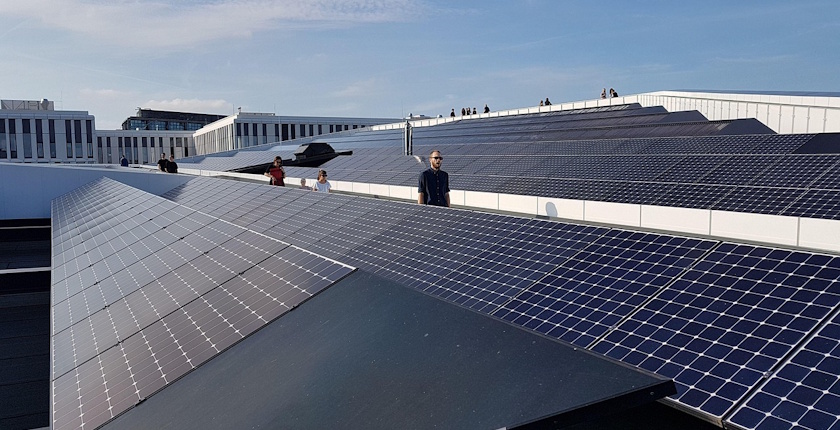
Of note, HEP has more than 50 solar power plants on the rooftops of its buildings and facilities.

HEP Proizvodnja, HEP’s power production arm, has 12 PV plants on administrative buildings, thermal power plants and hydropower plants. The total capacity is about 1.5 MW. HEP ODS, the country’s distribution system operator, has another 44 solar power plants with a total capacity of 1.1 MW on its roofs.

by in News

Hydropower plant Dabar to be completed by end-2027

The Dabar hydropower plant is expected to be completed by the end of 2027, according to Petar Đokić, Minister of Energy and Mining of the Republic of Srpska.

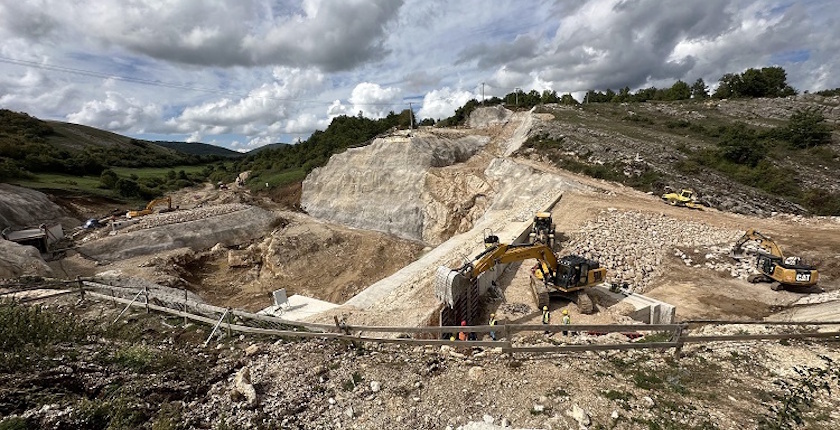
The operation of the Dabar hydropower plant, the most complex hydropower facility, in which EUR 339.5 million has been invested, will bring benefits for the entire eastern Herzegovina area, Petar Đokić said during a visit to the construction site, Srna reported.

The works on the 160 MW hydropower plant, with an expected annual production of 500 GWh, began in June 2023.

Đokić noted that the project is located in four municipalities – Nevesinje, Bileća, Berkovići, and Ljubinje – spanning 40 kilometers. As a key part of the project, Đokić highlighted a 12-kilometer tunnel, which is nearly finished.

Đokić: It is an exceptional construction undertaking, the first of its kind in the world in the 21st century

It is an exceptional construction undertaking, the first of its kind in the world in the 21st century, the minister said and added that he is proud to be part of the project from the beginning of its implementation.

Photo: Ministry of Energy and Mining

He spoke with the representatives of China-based Gezhouba Group Co., the main contractor, and Integral and Elnos, its domestic subcontractors.

Đokić stressed that some issues regarding the construction were discussed. HPP Dabar is a financially demanding project, he noted.

Photo: Ministry of Energy and Mining

Wind farm Grebak will be completed by 2027

Minister Đokić recalled that projects for solar power plants and wind farms with a capacity of 680 MW are under development in the territory of Nevesinje municipality, with investments estimated at an overall EUR 409 million.

He underlined that one of the projects, the Grebak wind farm, has experienced delays. Numerous companies, including the investor in the Grebak project, are hostages to the European policies mistrustful of Bosnia and Herzegovina, Đokić claimed.

Of note, the Republic of Srpska is one of the two political entities of BiH. The concession for the Grebak wind farm was granted in April 2019.

The minister expressed hope that the investor would overcome the challenges, conclude a financing agreement, secure equipment, and start construction work, expected to be finished by late 2026 or early 2027.

Investors in solar projects in Nevesinje are currently preparing documentation and purchasing equipment, Đokić said.