by in News

Celje, Šoštanj among Slovenian municipal authorities pursuing energy independence

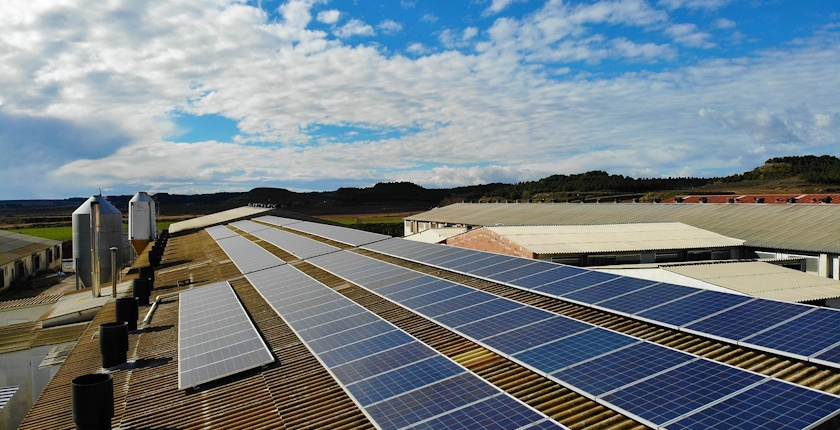
The City of Celje in Slovenia plans to install 11 solar power plants on its public buildings, and the Municipality of Šoštanj agreed contracted four such units. The photovoltaic systems would be part of energy communities. Šoštanj expects to save EUR 70,000 per year while Celje is counting on EUR 200,000.

Novo Mesto, another municipality in Slovenia, recently made a similar move toward achieving energy independence.

The total capacity of the solar power plants in Celje and Šoštanj is 1.9 MW. They have signed contracts with ECE, a subsidiary of state-owned power utility Holding Slovenske Elektrarne (HSE). The projects are funded from the National Recovery and Resilience Plan (NRRP) and by the two municipal authorities.

Šoštanj is set to get solar power plants with a capacity of 500 kW altogether, at four locations: the sports hall of the Karel Destovnik Kajuh elementary school, a music school, health center, and the Pilon Center.

The total investment is EUR 500,000, with the local authority receiving a EUR 450,000 grant via the NRRP.

Both municipal authorities now have energy communities

In Celje, approximately 1.4 MW would be installed at several locations including the Z’dežele Stadium, Celje Summer Pool, Celje Health Center, elementary schools and kindergartens.

The City of Celje secured a EUR 1 million grant from NRRP, and the total investment is estimated at EUR 1.4 million.

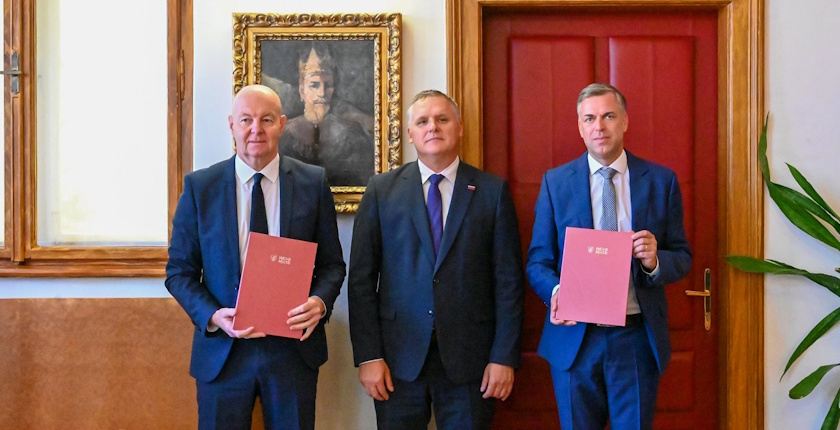
Sebastijan Roudi and Boris Goličnik (photo: Municipality of Šoštanj)

In addition to building solar power plants, the contract includes five years of maintenance, offtaking surplus electricity production, and supply during insufficient power generation. It also involves managing the energy community.

In Šoštanj, the energy community would involve more than 15 public buildings, and the one in the City of Celje would consist of PV units on more than 40 public buildings.

The two projects are scheduled for completion in December and November, respectively.

Šoštanj aims to produce 70% of the electricity consumed by its public buildings

When the power plants are built, the municipality expects to cover 70% of the consumption of all public buildings, and the third-largest city in Slovenia aims for a 15% share.

The Šoštanj project is envisaged for 500 MWh of clean electricity output per year, reducing electricity costs by about EUR 70,000. Total savings over the entire lifespan of the solar power systems is seen at EUR 2 million.

Celje’s PV plants would produce 1,462 MWh of energy annually and save approximately EUR 200,000, translating to around EUR 5 million throughout their service life.

Investment for the long-term benefit of the community

Mayor of Šoštanj Boris Goličnik said the contract signifies the continuation of the municipality’s vision of energy independence.

“This is an investment in the future, in the green transition, and for a permanent benefit of our community,” he stated.

According to Celje’s Mayor Matija Kovač, it is a strategic decision on managing energy, costs, and the environment in the future. He said the planned PV units are just the beginning.

Sebastijan Roudi, ECE CEO, asserted that as part of the HSE group, the firm places grea t emphasis on demanding energy projects, developing new billing models, and seeking ways to accelerate the green transition.
by in News

Slovenia’s TSO ELES joins forces with army to develop hydrogen technologies

Slovenia’s transmission system operator ELES and the Ministry of Defence have signed a cooperation agreement for the Defence Resilience Hub Network in Europe – RESHUB project.

Last year, the Ministry of Defence of Slovenia initiated the Defence Resilience Hub Network in Europe (RESHUB) project, which aims to establish self-sufficient energy hubs in Slovenian military barracks.

As part of the initiative, the military barracks in Kranj will be transformed into a demonstration center for energy self-sufficiency, integrating military infrastructure with innovative solutions in renewable energy and hydrogen technologies.

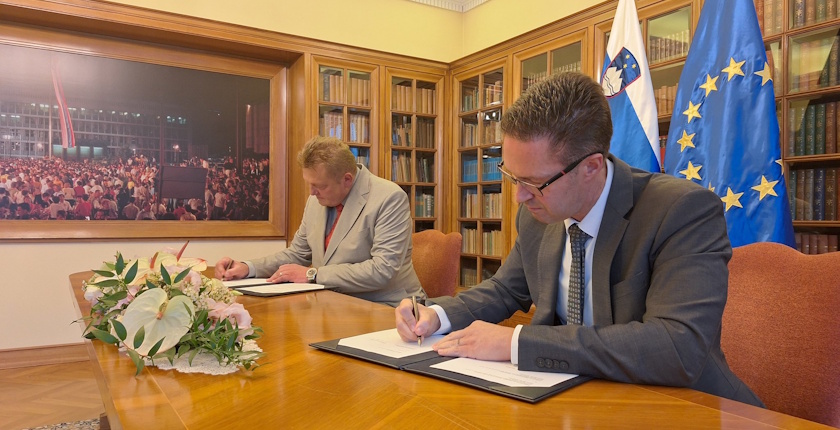
Aleksander Mervar, CEO of ELES, and Marko Lovše, State Secretary of the Ministry of Defence, now signed the agreement, during the Slovenia-Japan Business Conference.

The deal outlines cooperation in the field of energy self-sufficiency and the development of hydrogen technologies, according to state-owned ELES.

The Kranj military barracks will be converted into a demonstration center for energy self-sufficiency

The project will turn the Kranj military barracks into a demonstration center for energy self-sufficiency by integrating military infrastructure with innovative technology for renewables and hydrogen.

ELES will contribute to the development of the RESHUB (Resilience Hub) pilot project concept, which focuses on the production, storage, and use of hydrogen, the country’s TSO noted.

The company will be involved in all phases of the project — from preparing expert studies and technical groundwork to providing professional support for documentation development.

ELES considers hydrogen a potential key energy carrier for storing surplus energy from low-carbon sources

“At ELES, we recognize hydrogen as a potentially key energy carrier for storing surplus energy from low-carbon sources, which can later be reused in the energy sector, transport, and industry,” according to the company.

ELES recalled that in 2024 it established a consortium to build a hydrogen ecosystem based on low-carbon sources.

Collaboration with Japanese partners, who have been actively developing and, in some cases, successfully deploying hydrogen technologies for decades, is essential for the company. ELES has already established several partnerships with Japanese companies and is now exploring new opportunities for deeper cooperation in the further development and application of hydrogen technologies.

In recognition of Mervar’s outstanding contribution to strengthening bilateral economic and technological ties, Japanese Ambassador to Slovenia Akiko Yoshida awarded him an honorary recognition at the business conference.

Akiko Yoshida and Aleksander Mervar (photo: ELES)
by in News

Slovenia’s Novo Mesto makes important step on path to energy independence

The Municipality of Novo Mesto has made an important step toward becoming the first major local authority in Slovenia to achieve energy independence.

In the presence of Minister of the Environment, Climate and Energy Bojan Kumer, Mayor of Novo Mesto Gregor Macedoni and President of the Management Board of Petrol Sašo Berger signed an agreement on the construction of solar power plants on municipal land and structures.

The Municipality of Novo Mesto estimated that the new photovoltaic units would get it to a nearly 80% energy self-sufficiency.

The Ministry of the Environment, Climate, and Energy supported the project with co-financing of EUR 882,000 from the European Union’s Recovery and Resilience Facility. The total cost of the project is EUR 1.1 million. The municipality secured support from the ministry and Petrol is covering the remainder.

The collaboration will be implemented as a public-private partnership

Within the public-private partnership (PPP), Petrol will build ten new solar power plants and will also operate them.

Mayor Gregor Macedoni explained that the new investment will include the construction of solar power plants at the Portoval sports center, primary schools Stopiče, Otočec, Bršljin, Dragotin Kete, and Brusnice, as well as kindergartens Pedenjped, Ostržek, Ciciban, and Videk.

The municipality also plans to install a community solar power plant on the old CEROD landfill and additional ones on the remaining municipal facilities and parking canopies.

Total production in the municipality would be 2.5 GWh annually

“This year, we have already installed six solar power plants, and together with four facilities from 2010 and planned additional capacities, the total production in our municipality will reach 2.5 GWh per year,” Macedoni stated.

According to the mayor, the goal remains clear – to achieve complete self-sufficiency of the municipality with electricity from renewable sources

Minister Bojan Kumer underlined that the signing demonstrates that the path set by the ministry, more than three years ago, was the right one.

The projects, in his words, are primarily beneficial for the citizens. “Together, we will all be better prepared for future energy challenges,” Kumer stated.

According to him, the municipality has become a good example, and it will continue on the same path.

by in News

RES Croatia to Brussels: Renewables have no future in Croatia

RES Croatia, together with SolarPower Europe and WindEurope, has sent a letter to the European Commission to raise concerns about the crisis in Croatia’s renewable energy sector.

The three associations emphasized that for several years, 60 projects for investments in solar, wind, geothermal, and batteries have been blocked, and that if nothing is done, many of them would soon be abandoned.

Without urgent deblocking of renewable energy projects, Croatia will lose investments, increase fossil fuel imports, which already exceed 25%, and miss the European Union’s and national target of at least 42.5% of energy consumption coming from renewables by 2030, according to Renewable Energy Sources of Croatia (RES Croatia), SolarPower Europe and WindEurope.

The national organization warned that the government is gradually phasing out subsidies for electricity prices for citizens and entrepreneurs. At the same time, the development of renewable energy sources as the only sustainable solution for lower bills and lowering imports is at a complete standstill, it added.

Projects with a total capacity of 3.5 GW and investments of EUR 3 billion are blocked

Croatia is currently subject to infringement proceedings due to delays in implementing the European Union’s RED II and RED III directive. They aren’t just a piece of paper, but a mechanism to ensure energy security and independence, which is of strategic interest for Croatia and its citizens, RES Croatia underscored.

The organizations are urging the European Commission to use its tools to demand from the government to determine the grid connection fee, but at EUR 0 per kWh, open up the balancing market for renewable energy producers, and integrate battery energy storage systems (BESS) and electrification into national planning.

Currently, 60 projects for solar power plants, wind farms, geothermal power plants, and batteries with a total capacity of 3.5 GW and investments of EUR 3 billion are blocked, according to the letter, accompanied by an annex.

The domestic industry is unable to sign long-term PPAs

For these projects, the state has already charged EUR 25 million through energy approvals— the first in a series of documents that requires payment to the state, which, due to the blockage, are beginning to expire at the end of this year.

Organizations stressed that these projects are permanently losing the paid money, while local communities are losing significant revenues that would have been allocated to them from the implementation of renewable energy projects.

They also drew attention to the domestic industry’s inability to sign long-term power purchase agreements (PPAs) with renewable energy producers, securing more favorable market conditions and thereby increasing its competitiveness in European and global markets.

Of note, the European Commission advised Croatia in June to speed up the installation of renewable energy capacities.

If nothing is done, projects of as much as 2.5 GW overall will be abandoned as early as next week

The associations pointed out that the development of new projects larger than 10 MW has stalled since 2022 because the Croatian Energy Regulatory Agency (HERA) has not set a transmission network connection fee for renewable power plants.

Instead, they added, Croatia’s transmission system operator (TSO) HOPS is trying to shift the costs of network modernization – planned over ten years ago and not related to new projects – to new renewable energy projects.

The minister of economy said in March that the upcoming connection fee would be EUR 0 per kW

It is increasing the project cost by 30% to 40%, making them unprofitable, RES Croatia said.

Such a model for financing the network is not from European practice, because 80% of member states rely on EU funds and their national budgets, rather than on producers.

They also recalled that the minister of economy announced in March that a connection fee would be set at EUR 0 per kW and that developers would be offered flexible contracts to encourage investment in battery storage. But that promise has not yet been fulfilled.

The three organizations warn that if nothing is done, projects of up to 2.5 GW altogether would be abandoned as early as next week after HOPS’s decision,. It means companies would withdraw from the Croatian market and lose millions in investments that would have permanently lowered energy prices in the country, RES Croatia claimed.

The balancing market is not functional

An additional problem is the non-functional balancing market, according to the letter.

HEP Proizvodnja, a subsidiary of state-owned utility Hrvatska Elektroprivreda (HEP), is the dominant provider of balancing services, and often the only one. HOPS is legally obliged to ensure market-based procurement of these services, yet it is itself a wholly owned subsidiary of HEP.

It creates an obvious conflict of interest and undermines market competition, the signatories underlined.

“Despite the demonstrated technical ability of solar and wind power plants to provide balancing services, HOPS doesn’t allow these plants to participate in balancing markets. As a result, HOPS frequently activates extremely expensive balancing resources, often at maximum regulated prices even during hours of high renewable generation and positive market prices,” the letter reads.

Croatia has no serious electrification plan

The organizations pointed out that such pricing constitutes a clear violation of the EU principle that balancing services must reflect only the actual costs incurred by the TSO.

They also stressed that Croatia lacks a concrete electrification plan. In 2022, renewable energy accounted for only 2.4% of final energy consumption in transport, with electricity from renewables contributing just 0.2%.

The target for renewable electricity in transport by 2030 is only 5.8%, reflecting limited ambition compared to the EU ambitions, according to the letter.

Electrification of railways could significantly reduce emissions and accelerate the transition, however, it remains an untapped potential, the signatories organizations noted.

by in News

Power the Balkans: Optimizing Solar & BESS projects with RatedPower – webinar announcement

RatedPower, a leading provider of software for solar plant design and optimization, is organizing a free webinar to present its solutions that boost the efficiency and profitability of PV and battery storage projects. The online event, to be held on October 13 at 3 pm CEST, comes at a time when renewables are gaining momentum in the Balkans, increasing the need for complex planning and engineering and making digital solutions essential for project optimization.

In the upcoming webinar, which you can register for using the REGISTRATION LINK,  experts will showcase how RatedPower solutions automate and streamline the design of solar power plants and battery energy storage systems (BESS), maximize efficiency and return on investment, provide accurate reports for better decision-making, and enable seamless collaboration across teams, according to an announcement from the company.

“Digital solutions are becoming essential to streamline processes – from design and engineering to operations, reporting, and collaboration. By integrating advanced software tools, developers and engineers can save time, reduce costs, and maximize the efficiency and performance of their assets,” reads the statement.

RatedPower’s advanced software tools save time, reduce costs, and maximize performance

RatedPower, part of Enverus, a global software-as-a-service (SaaS) platform for the energy sector, offers a one-stop cloud-based solution for PV plant and BESS design and engineering as well as hybrid systems. Its end-to-end platform offers integrated services that cover design, engineering, procurement, and even operational optimization, ensuring a seamless lifecycle approach.

According to the statement, users have confirmed to have doubled their portfolio, increased their profitability by over 20%, and reduced the levelized cost of energy (LCOE) by 5%.

RatedPower is not limited to traditional solar. Its model adapts to hybrid renewable energy systems, BESS integration, and smart grid optimization, positioning it as a strategic partner for the next generation of sustainable energy solutions.

By harnessing real-world performance data and predictive analytics, it helps developers, investors, and operators make smarter, more profitable decisions, mitigating risk and maximizing ROI, reads the statement. The platform enables renewable energy professionals to automatically design, simulate, and optimize PV plants and storage systems.

Unlocking the Balkans’ renewables potential with RatedPower solutions

Headquartered in Madrid, Spain, RatedPower has a portfolio of thousands of projects across Europe, the Americas, Asia, and Africa, with a client base that includes leading developers, utilities, EPC (engineering, procurement, and construction) companies, and engineering firms.

Serving more than 480 companies and 5,800 users worldwide, RatedPower has designed over 64,000 projects worldwide and produced simulations for a total of 5.1 TW of capacity. The projects are supplying green energy to 13 million households, mitigating 18 million tons of CO₂ emissions.

RatedPower has a global footprint, but it views the Balkans as a key region for renewable energy growth.

“RatedPower is committed to empowering renewable energy professionals worldwide – and the Balkans represent one of the most exciting regions for renewable growth,” said Emil Trepin, Account Executive at RatedPower.

Photo: Emil Trepin, Account Executive at RatedPower

“Our software provides the precision, efficiency, and collaboration tools needed to take PV and BESS projects from concept to completion, helping to unlock the region’s true potential,” he stressed.

by in News

Von der Leyen: EU needs more homegrown renewables with nuclear as baseload

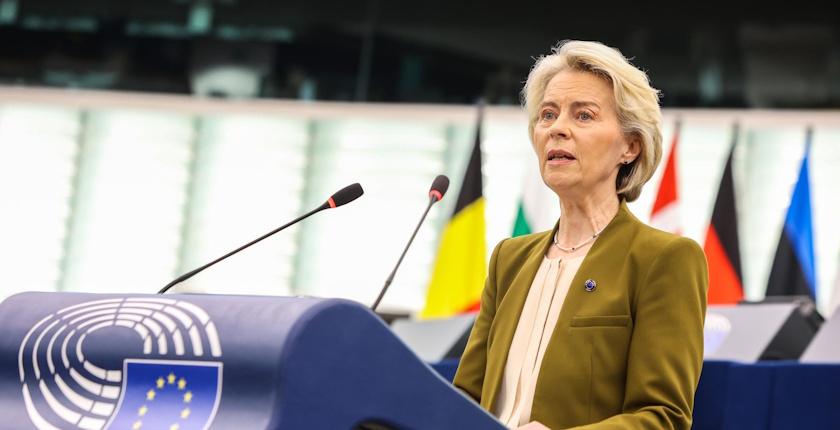
European Commission President Ursula von der Leyen delivered her 2025 State of the Union address at the European Parliament in Strasbourg. She said the single energy market would be completed and pointed out that clean homegrown energy is a tool to lower energy prices.

Ursula von der Leyen said the European Union’s greatest asset is the single market, but that it remains incomplete. The IMF, she noted, has estimated that the internal barriers within the single market are equivalent to a 45% tariff on goods, and 110% on services.

Most gaps are in three domains: finance, energy, and telecommunications.

“We need clear political deadlines. This is why we will present a single market roadmap to 2028. On capital, services, energy, telecoms,” she stated.

Energy bills are still a real source of anxiety for millions of Europeans

The EU’s top official said the commission would put forward a series of packages on affordability and the cost of living. One would be for energy.

Von der Leyen recalled that the EU managed to stabilize prices and secure supply during the energy crisis, and insisted that the 27-member bloc is now on the path to energy independence.

But, she told EU lawmakers, energy bills are still a real source of anxiety for millions of Europeans.

Von der Leyen unveiled an initiative called Energy Highways

“We know what drove prices up: dependency on Russian fossil fuels. So it is time to get rid of dirty Russian fossil fuels. And we know what brings prices down: clean homegrown energy. We need to generate more homegrown renewables – with nuclear as a baseload,” Von der Leyen stressed.

She reiterated that the commission would propose a grids package to strengthen infrastructure and speed up permitting.

Von der Leyen unveiled an initiative called Energy Highways. “We have identified eight critical bottlenecks in our energy infrastructure. From the Øresund Strait to the Sicilian Canal. We will now work to remove these bottlenecks one by one,” the European Commission president asserted.

by in News

Japan inaugurates world’s second osmotic power plant

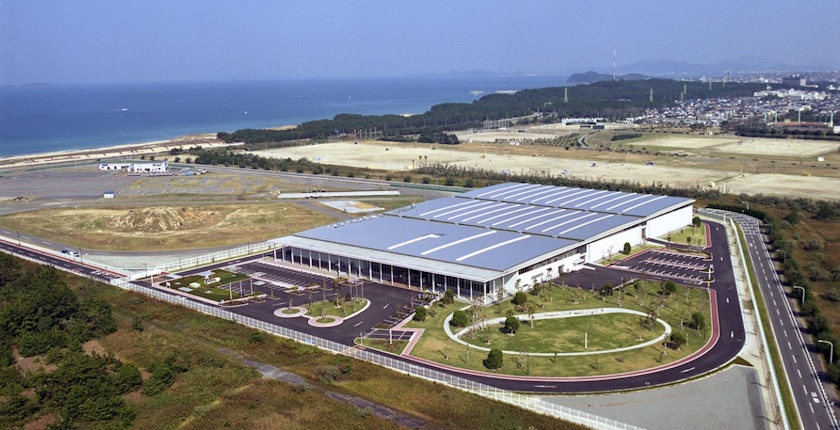
Japan’s first osmotic power plant began operations in early August. The facility in Fukuoka harnesses the natural process of osmosis.

Operated by the Fukuoka District Waterworks Agency, this is only the second such commercial plant in the world, according to Science Japan. The first plant, commissioned by Danish firm SaltPower in 2023, is located in Mariager, Denmark.

The agency estimates the plant will generate 880,000 kilowatt-hours annually. The electricity will be used to power a local desalination facility, providing a sustainable energy source for the region’s freshwater supply.

A next-generation renewable energy source unaffected by weather or time of day

It is “a next-generation renewable energy source that is not affected by weather or time of day and emits no carbon dioxide,” according to the Fukuoka District Waterworks Agency.

The facility utilizes the salinity difference between fresh and saltwater to generate energy. This difference causes water to move across a semipermeable membrane from freshwater to saltwater, balancing the concentration on both sides.

Electricity is produced by using a permeable membrane to separate concentrated seawater from treated freshwater sourced from a local sewage treatment facility. The membrane allows only water molecules to pass through it.

Expert: This successful implementation is a major achievement

The pressure created as freshwater moves through the membrane toward the saltwater side spins a turbine, which in turn powers a generator to produce electricity.

According to Akihiko Tanioka, an expert in the field, this successful implementation is a major achievement. He hopes it will be replicated globally.

Apart from the two osmotic power plants in Japan and Denmark, pilot-scale projects and prototypes are being implemented in Norway, South Korea, Australia, Spain, and Qatar, according to a report by the Guardian.

The Japanese plant marks an exciting moment for osmotic power, because it offers further proof that the technology can be used for large-scale energy production, according to the news outlet.

by in News

Renewables keep top spot in Greece’s power mix despite surge in curtailments

Renewable energy sources continued to rank first in Greece’s electricity mix despite significant curtailments in the first half of 2025, which more than doubled against the same period a year earlier. At the same time, gas-fired power generation hit a 10-year high, while coal’s share in covering domestic demand fell to the lowest level in at least a decade, according to a recent analysis by the Green Tank.

In the year through June, curtailments totaled 1,327 GWh, equivalent to 9.6% of Greece’s overall renewables output, compared to 513 GWh in the same period last year and 899 GWh in the whole of 2024.

Curtailments in June 2025 reached 351.7 GWh, which means renewable energy generation could have been 12.3% higher. The level compares to only 59.5 GWh, or 2.5%, rejected in June 2024. Most curtailments in June occurred between 10 am and 3 pm, with the highest daily amount, of 32.7 GWh, recorded on June 1.

In May 2025, curtailments were 382.5 GWh, up from 127.3 GWh a year earlier, and in April they totaled 359.1 GWh, compared to 253.3 GWh in the same month of 2024. In March, the grid rejected 229 GWh of renewable electricity, up from 73.3 GWh in March 2024, while curtailments in February and January amounted to 3.4 GWh and 1.3 GWh, respectively, compared to zero in the first two months of 2024.

Renewables covered 46% of Greece’s electricity demand in H1 2025

Greece’s electricity demand in the first half of 2025 reached 27,038 GWh, with renewables covering 46%. The only equivalent period so far when the share was higher was last year. In June, electricity demand jumped 22% against May, to 5,094 GWh. The average market price remained low, at EUR 85.4 per MWh, the Green Tank noted.

Renewables ranked first in electricity generation in H1 2025, with a total of 12,435 GWh, a marginal increase from 12,354 GWh in H1 2024.

Gas-fired power generation reached 10,925 GWh in the first half of 2025 or 19.3% more than one year before, hitting a 10-year high. The rise was mostly driven by an increase in net exports and electricity demand. A drop in output in the segments of hydropower lignite and oil also contributed, together with an expansion of the gas power fleet.

Gas covered 40.4% of electricity demand in the first six months of the year, after 34.1% in the comparable period of 2024.

Coal power production fell steadily from January to June

Coal, on the other hand, covered just 5.2% of Greece’s power demand in H1 2025. It was the lowest share in at least a decade. Electricity production from lignite declined steadily in the first six months of the year, from 511 GWh in January to just 66 GWh in June.

by in News

New systems protecting birds from wind turbine collisions

Wind power technology is often criticized because birds collide with turbine blades. As the number of wind farms in Southeast Europe grows, bird protection is increasingly important. A solution exists. Croatian environmental consultancy Oikon has become the regional representative for three systems that detect the presence of birds and temporarily halt wind turbines to prevent collisions and reduce the impact on biodiversity.

Wind farms produce clean energy and contribute to the fight against climate change. On the other hand, wind turbines can often harm biodiversity. Birds’ vision has evolved toward finding food and detecting predators—but not for avoiding tall turbine towers with fast-spinning blades. To help prevent bird collisions, so-called shutdown on demand (SDOD) solutions stop turbines when necessary.

SDOD refers to the temporary shutdown of turbines when individuals from protected or sensitive bird species are detected entering a high-risk collision zone.

Oikon is the regional representative for three bird detection and turbine control systems

Bird protection is increasingly important amid the wind energy expansion in Southeast Europe. Croatian environmental consultancy Oikon Ltd. – Institute of Applied Ecology announced that it has become the regional representative for three internationally recognized systems for bird detection and turbine control technologies.

SDOD is rapidly becoming a standard requirement for wind projects operating near sensitive bird habitats, Oikon’s CEO Dalibor Hatić says. “These technologies are already being requested by permitting authorities. We’re helping developers access proven and reliable systems to fulfil those obligations,” he asserted.

One of the systems that Oikon provides to its clients is IdentiFlight from the United States. It is three-dimensional, with artificial intelligence and high-speed cameras to identify birds in real time. Installed on separate towers, it gives optimal coverage of protected areas.

Photo: Identiflight (Ryan Luttrell / Oikon)

Max, developed by Dutch company Robin Radar Systems, uses a 3D radar specifically designed for bird monitoring. It enables the tracking of birds and bats over long distances, both day and night. The technology can simultaneously monitor and log thousands of flights with high precision.

Photo: Dutch company Robin Radar Systems named its solution Max (Oikon)

AVES Wind, the third system in the portfolio, was developed by German company ProTecBird. The device is installed on the turbine itself. It combines pan-tilt-zoom cameras, real-time tracking software and AI to detect and identify bird species, calculate their 3D position, control turbine operations and generate documentation for regulatory compliance.

Photo: AVES Wind system, developed by German company ProTecBird (Oikon)

SDOD reduces bird mortality and energy production losses

Unlike long turbine curtailments or seasonal restrictions, SDOD is activated only when needed – when birds enter a risk zone. The approach reduces both bird mortality and energy production losses.

“Oikon’s role is to make these internationally proven technologies available in Southeast Europe and ensure their integration aligns with local ecological, technical, and regulatory conditions. The company supports developers in meeting the requirements set by the European Union and national nature protection laws, including mitigation measures often mandated by environmental authorities,” the company said.

It pointed out all SDOD systems can be used for research purposes and that they utilize high-quality military-grade resilient components and technology, ensuring their functionality regardless of weather conditions.

by in News

EU’s Modernisation Fund disburses EUR 3.66 billion for clean energy projects in nine countries

Energy modernization projects in nine member states of the European Union will receive a total of EUR 3.66 billion from the Modernisation Fund, in the largest disbursement to date from the facility financed by carbon pricing revenues, according to a press release from the European Commission. The selected projects focus on renewable energy, grid upgrades, energy storage, and energy efficiency.

The largest beneficiary of the latest disbursement is Poland, which will receive EUR 1.33 billion for its projects, followed by the Czech Republic, with EUR 1.05 billion, and Romania, with EUR 712.3 million. Hungary will get EUR 181.3 million, Croatia EUR 170 million, and Greece EUR 113.6 million. The rest will go to Latvia (EUR 40 million), Lithuania (EUR 37 million), and Slovenia (EUR 19.7 million).

Croatia will finance renewable heat production and zero-emission transportation, and Slovenia will upgrade power grid to integrate renewables

In Croatia, EUR 80 million will be used for the production and use of heat from renewable energy sources and energy efficiency improvement in heating and cooling systems. The rest will go to investments in zero-emission transportation. In Slovenia, the funding will facilitate renewables integration through the modernization and development of the electricity transmission and distribution network.

Greece, which became a Modernisation Fund beneficiary in January 2024, intends to replace urban diesel buses with new electric buses, improve energy efficiency in municipal swimming pools, and switch the heating and cooling systems in its greenhouse infrastructure to renewables.

In Romania, the funding will help improve the energy efficiency of facilities covered by the European Union’s Emissions Trading System (EU ETS), support the contract-for-difference (CfD) scheme for onshore wind and solar, and finance the installation of solar and wind power plants for self-consumption in the agricultural and food sectors and public institutions. It is also intended for investments in new solar, wind, and hydropower capacities and to support the modernization and rehabilitation of the district heating network.

In the Czech Republic and Lihtuania, the funding will support energy storage projects

Other example projects include investments in storage capacity for renewable electricity in the Czech Republic, investments in large-scale energy storage capacities in Lithuania, and a clean air program in Poland that focuses on energy efficiency improvements and heat source replacements in single-family houses, according to the press release.

The investments will reduce greenhouse gas emissions in the energy, industry, and transportation sectors, improve energy efficiency, and help the beneficiary states meet climate and energy targets, the commission said.

The projects will also help improve people’s everyday lives, by reducing bills, improving public services, creating jobs, and making the energy transition real, fair, and beneficial for all, according to Teresa Ribera, the European Commission’s Executive Vice-President for Clean, Just and Competitive Transition.

With this latest round of funding, the total disbursements from the Modernisation Fund since January 2021 have climbed to EUR 19.1 billion. The fund is financed by revenues from the auctioning of emission allowances under the EU ETS.