by in News

Turkey earns EUR 84.8 million upfront from solar power auction

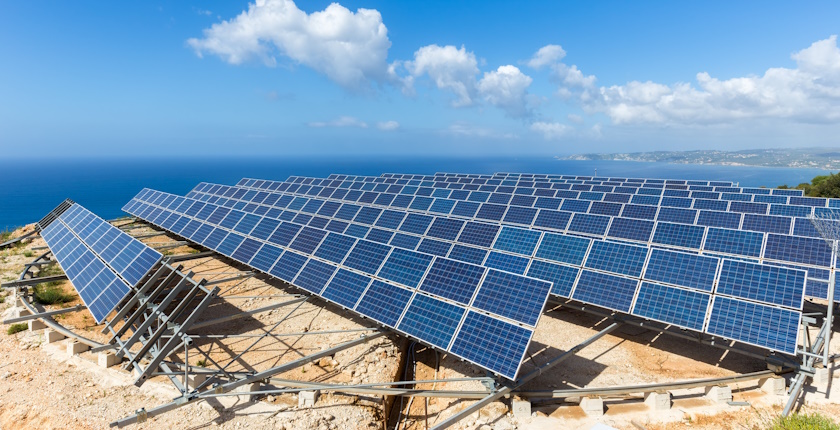
Investors in photovoltaic projects were mostly willing to pay large sums at Turkey’s latest YEKA auction to secure a minimum guaranteed price for five years, followed by 20-year power purchase agreements. The government earned EUR 84.8 million overall from the secondary bidding for 650 MW, split into six areas. One zone is for a floating solar power plant.

According to Turkey’s Minister of Energy and Natural Resources Alparslan Bayraktar, domestic electricity demand is on a trajectory to triple to 1.05 PWh in the next 30 years. It follows an almost threefold jump of the last two decades, while natural gas is rising even faster, he pointed out.

The minister has urged investors to keep up the momentum, noting that the national goal for 2035 for solar and wind power is 120 GW in total.

One of the pillars of the government’s measures to incentivize such endeavors are renewable energy auctions. Notably, the obligatory domestic content rates are high, to boost manufacturing in the sector.

The latest solar power auction under the Renewable Energy Zones (REZ) state support mechanism even brought substantial earnings for Turkey, for the second time. The bidding was initiated at the ceiling price, EUR 55 per MWh, and when the floor level was reached at EUR 32.5 per MWh, the remaining competitors were switched to another auction.

They offered so-called contribution shares, starting at a stunning 10,000 per MW of planned connection capacity. The quota for the REZ SPP 2025 (YEKA GES 2025) round was 650 MW, split into eight zones. Two zones were taken off the table after the call, due to delays in permitting.

Highest fee was EUR 285,000 per MW

In total, Turkey cashed in EUR 84.8 million or EUR 130,400 per MW of connection capacity, excluding value-added tax.

The Eskişehir zone, 260 MW, went for EUR 105,000 per MW to Efor Holding. The company was successful at the previous wind power auction as well, early this year.

Stone Enerji won the Erzurum 1 segment, of 100 MW, by pledging EUR 100,000 per MW. Sertaş Turizm took Erzurum 3, at 85 MW, for EUR 120,000 per MW.

The Ministry of Energy and Natural Resources included a floating solar power plant project for the first time

The 50 MW Bolu zone went to Ecogreen Enerji. The company is paying 44,000 per MW, the least of all winners.

Kahramanmaraş, of 40 MW, was awarded to Güçlü GES Enerji. It pledged EUR 285,000 per MW, which was the highest contribution fee. Aydede Enerji has obtained the Mardin zone for EUR 208,000 per MW while Zincir GES Enerji managed to win the Van solar power project for EUR 187,000 per MW. Both are for 40 MW.

The auction also featured the first zone for a floating solar power plant. Demirköprü Yüzer GES in Manisa province, for 35 MW, was taken by a firm with the same name. It is paying EUR 225,000 per MW, the ministry has revealed.

Solar power auction facilitates USD 400 million in investments

There were 77 applications altogether, from 38 companies.

The winners will be able to sell electricity on the free market for five years. However, they are guaranteed at least their contracted price, which in all cases is the floor price – EUR 32.5 per MWh. The second period, 20 years, is with a power purchase agreement.

Bayraktar estimated that the solar power auction facilitated investments worth a combined USD 400 million. The projected annual output is equivalent to the electricity needs of half a million households.

The minister pointed out that 8 GW of solar and wind power would come online this year in total. The combined capacity on the grid from the two technologies amounts to some 39 GW out of 121 GW overall.

Also of note, the Energy Storage Industries Association (EDEDER) has forecasted that 1.5 GWh of storage capacity would be commissioned next year in Turkey.
by in News

Kosovo* becomes full member of Association of Issuing Bodies

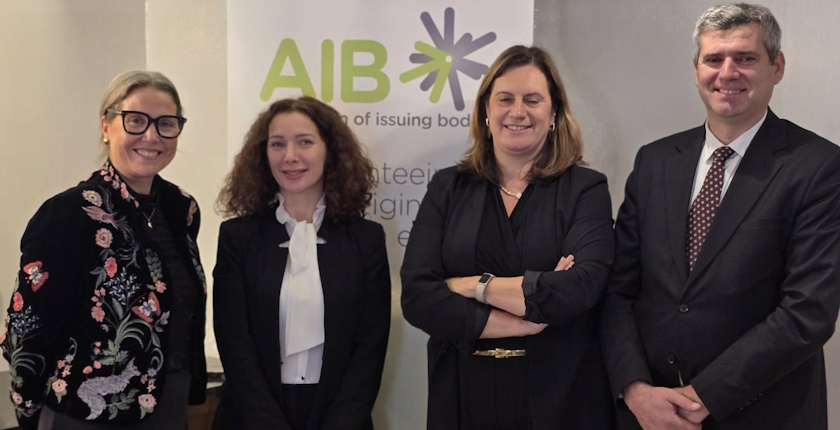
Kosovo* joined the Association of Issuing Bodies (AIB) as a full member at the last meeting of the organization’s general assembly. However, the Western Balkans and other Energy Community contracting parties require full alignment with the European Union’s regulations to enable cross-border trading in renewable electricity.

The Energy Regulatory Office (ERO or ZRrE) of Kosovo* said its request to become a full member of the Association of Issuing Bodies (AIB) has been approved. It is now part of the European platform for guarantees of origin, the update reads.

It increases the transparency and credibility of renewable energy certification, enabling more efficient cross-border trade and paving the way for new investments in the renewable energy sector, ERO pointed out. The membership also confirms Kosovo’s* commitment to the energy transition path and harmonization with the European Union’s acquis communautaire, according to the announcement.

ERO added that AIB approved the application at the latest meeting of its general assembly, in Lisbon, Portugal. By joining the organization, Kosovo* has adopted its European Energy Certificate System (EECS), ensuring that guarantees of origin issued in Kosovo* are recognized throughout Europe, the regulatory body stressed.

LuxDev assisted ERO in AIB bid

Chair of ERO’s Board Ymer Fejzullahu and Lindita Daija from LuxDev Kosovo, a branch of the Luxembourg Development Cooperation Agency, attended the event. The membership strengthens institutional capacities, increases transparency in renewable energy certification and positions Kosovo* as a reliable partner in the European energy market, Fejzullahu asserted. LuxDev supported the initiative.

In other news from Southeastern Europe, the National Energy Regulatory Authority (ANRE) of Romania obtained the status of an observer in AIB, both in the electricity and gas schemes. Albania and Bulgaria became members and applied to join the electricity scheme group last year, after which North Macedonia became an observer in the electricity segment.

Mutual recognition of GOs with EU possible in 2026

One guarantee of origin or GO certifies that 1 MWh was generated from renewable sources. Nearly all issuing bodies in the Western Balkans have established national electronic registries for issuing GOs.

However, cross-border trade in renewable energy will be enabled only when they become fully aligned with EU legislation and requirements.

Energy Community Secretariat Director Artur Lorkowski recently said in an interview with Balkan Green Energy News that he hoped for a decision on mutual recognition of GOs next year.

* This designation is without prejudice to positions onstatus and is in line with UNSCR 1244/99 and the ICJ Opinion on the Kosovo declaration of independence.
by in News

Just Transition Forum unites regional leaders to tackle energy poverty, shape fair energy future

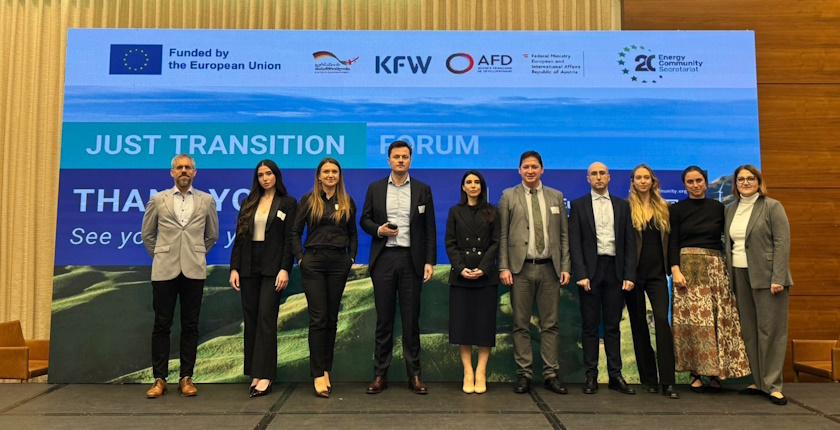
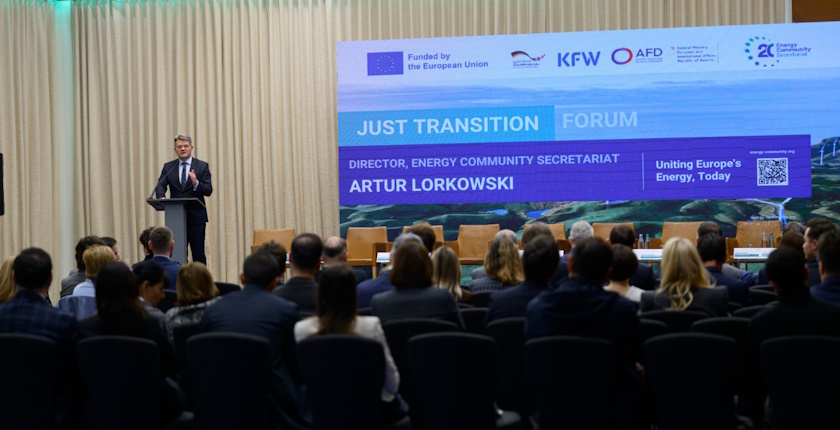
Governments, partners, civil society and community leaders from across Europe gathered in Tbilisi for the Energy Community’s Just Transition Forum to explore how energy efficiency can help end energy poverty and strengthen public trust in the clean-energy transition.

The forum delivered a clear message: a just transition cannot succeed without meaningful dialogue with diverse civil society and non-governmental partners, whose expertise and perspectives must be integrated into planning. As contracting parties begin preparing their new national energy and climate plans (NECPs), embedding just transition in transparent frameworks and long-term strategies is key to turning decarbonization commitments into real benefits for people and communities.

This principle is further reflected in the Energy Community’s newly published Just Transition Policy Guidelines, which guide governments in integrating just transition elements into energy and climate planning – ensuring that decarbonization goes hand in hand with social protection, local opportunity, and public trust, while supporting alignment with the European Union’s clean energy and climate objectives.

Lorkowski: New NECPs should tell story of just, sustained transition

Opening the forum, Energy Community Secretariat Director Artur Lorkowski underscored the importance of the current moment for regional energy and climate planning. The new NECPs, he stressed, should tell the story of a just and sustained transition.

“We are entering a pivotal moment for the region’s energy and climate future. With just transition principles at the core, they can pave the way toward EU energy market integration and turn the green transition into an engine of investment, inclusion, and shared prosperity,” Lorkowski stated.

Critically, the Energy Community’s Governance Regulation requires contracting parties to assess and address energy poverty in their NECPs. It is an opportunity to ensure that energy-poor households receive targeted support and remain central to energy efficiency and decarbonization efforts.

Just Transition Forum unites regional leaders energy poverty fair energy future

Energy Efficiency First for Energy Poverty

To drive the agenda forward, forum participants drew on insights from the secretariat’s study Energy Efficiency First for Energy Poverty. It reveals that 30% to 40% of households in Kosovo*, Albania, North Macedonia, and Georgia face energy poverty, and shows how targeted energy efficiency investments can transform lives across the region – making homes warmer, healthier, and more affordable to run.

By prioritizing vulnerable households, establishing renovation funds, and applying the Energy Efficiency First (EE1st) principle, contracting parties could cut household energy demand by more than 60%, create up to 19 local jobs for every EUR 1 million invested, and triple the wider benefits through improved well-being, comfort, and productivity.

Energy Community contracting parties could cut household energy demand by more than 60%

Emphasizing the importance of a people-centred transition, Head of EU Delegation to Georgia Paweł Herczyński stated: “For the European Union, a just transition is not only an environmental goal. It is a commitment to people, fairness and long-term resilience. This transformation must be built through dialogue, transparency and the active participation of communities. Ensuring that this transition succeeds, it will depend on transparent governance, democratic credibility and alignment with the EU standards.”

The forum also celebrated the winners of this year’s Just Transition Young Voices Awards. Their work highlighted how listening to those most affected by the transition — and youth, who will carry it forward — is essential to understanding the diverse realities of communities navigating the shift to a greener economy.

Cooperating partners for the forum included the Delegation of the European Union to Georgia, KfW on behalf of the German government, AFD – Agence Française de Développement, and the Federal Ministry for European and International Affairs of Austria.

* This designation is without prejudice to positions onstatus and is in line with UNSCR 1244/99 and the ICJ Opinion on the Kosovo declaration of independence.
by in News

Enery to start building Europe’s largest solar power plant in Romania

Austria-based Enery is preparing to begin construction works early next year on a photovoltaic facility of 750 MW in peak capacity just outside of Bucharest. It would currently be Europe’s largest solar power plant. A few other megaprojects are underway, too, but the Ogrezeni facility is planned with a battery energy storage system that would match its grid connection capacity.

Enery, which operates a range of wind, photovoltaic and small hydropower plants and battery storage across Romania, has only a few final steps before the start of construction of a giant solar farm in Giurgiu county, the company’s Head of Romania Liviu Gavrilă revealed to Profit.ro. The launch of the works is due early next year, he added.

With its 750 MW in peak capacity, the solar park in Ogrezeni, just west of the capital Bucharest, would be Europe’s largest at this moment. The company obtained a grid connection approval for 534 MW in 2023, the article adds.

Europe’s largest PV plant is Witznitz in Germany’s east. It has 650 MW in peak capacity. There is also an 850 MW cluster of 17 units in Spain, called Escatrón-Chiprana-Samper Solar Farm.

If the Asian part of Turkey is included, Kalyon Karapınar is at the top of the list. It has 1.35 GW in peak capacity and a 1 GW grid connection. Already one of the largest in the world outside China, the solar park is due for expansion into a complex of 1.85 GW in peak capacity.

Romania hosting two projects for Europe’s largest solar parks

Of note, Rezolv Energy and Monsson are about to build a solar farm in northwestern Romania of 1.04 GW in peak capacity. The site is in the communes of Pilu and Grăniceri in Arad. The Dama Solar system is envisaged with a battery energy storage system (BESS) of 500 MW.

But Austria-based Enery is planning a BESS with 534 MW in operating power, matching the grid connection. The unit would have a two-hour duration, translating to a storage capacity of 1.07 GWh.

Both Ogrezeni and Dama Solar are planned as hybrid power plants, with giant batteries

Both Dama Solar and Ogrezeni, also known as Baboia Solar Plant, won state support at Romania’s second solar power auction.

Spanish Iberdrola is preparing a bigger project, Fernando Pessoa in Portugal, though it has suffered delays over environmental concerns and disputed permits.

Enery to equip all its power plants in country with battery storage

Some negotiations remain to be completed before the groundbreaking, Gavrilă said. Enery is targeting a commercial operations date in the fourth quarter of 2027. In comparison, Dama Solar is scheduled to come online in the third quarter of 2028.

Enery has completed a PV plant of 54 MW in Titu, Dâmbovița county. The company is preparing it for a test run. It has 167 MW in operation in Romania, of which the Sărmășag solar park accounts for 51.4 MW in peak capacity.

“We want to install batteries for all our production capacities in Romania. But we are also active in the area of ​​stand-alone storage installations,” Gavrilă asserted.

In addition, the company manages electricity supply for others as a balance responsible party, using the SmartPulse platform.

by in News

Renewables investors are seeking tailored financing services as they add BESS, adapt to risks

Market conditions have become challenging for renewables in the CEE region, alongside uncertainties in the regulatory sphere, which calls for advanced and tailored financing solutions, according to participants in UniCredit Serbia’s workshop on navigating capital flows in the segment, including mergers and acquisitions (M&A). Investors, UniCredit’s clients, highlighted the growing importance of battery energy storage systems – and especially adding co-located storage to photovoltaics.

The renewable energy market is evolving in Central and Eastern Europe, as large players join the game and developers emerge as producers. With its surge in photovoltaic capacity and the revival in the construction of wind power plants, Romania has become a frontrunner. In neighboring Bulgaria, the first power purchase agreements (PPAs) are indicating a strong perspective, while Serbia might become more relevant soon, investors agreed at an event that UniCredit Bank Serbia organized in Belgrade.

M&A and financing trends in the region were the central topics. The idea was to have an open discussion with industry players active in the region about their investment strategies and the bank support, said the Head of Specialized Lending in UniCredit Serbia Svetlana Cerović, who moderated a panel within the conference.

A stable top line and a legal framework is the key driver for investments, with a particular emphasis on grid connections

Cerović pointed out that volatility has been on the rise for the last couple of years, after a huge wave of investments that followed the Paris Agreement and the European Green Deal. Sound and predictable regulatory framework along with stable revenues is key. To assure market flexibility and grid stability, new investments in western Europe and in the region are supported with the government programs including investments in battery energy storage systems (BESS). Thus, one of the prerequisites for the execution of future projects in local market will be certainty regarding the third auction timeline and availability of the longer term PPAs.

The participants at the workshop on navigating capital flows in renewables said a stable legal framework is the key driver for investments – grid connections especially, and permitting as a whole. On that note, developers will lean on the slowly maturing PPA market, though support from banks is necessary in the equation. Battery energy storage systems are a game changer, particularly colocated with solar parks for the optimization of the project returns.

UniCredit is strongest player in renewables financing in Serbia

UniCredit has a wide set of tailor-made project finance loans as well as a full range of services from advisory to various financing solutions, Head of Project and Structured Finance in Serbia Jelena Nestorović said.

The Italy-based bank has financed a string of major wind power and photovoltaic projects in the region, including facilities with colocated BESS, like Sunterra RE’s Galabovo in Bulgaria.

As for Serbia, it is the strongest player in the renewable energy segment. UniCredit financed six wind parks in the country, of 430 MW in total, and of which three as the sole lender. Notably, Čibuk 1 and 2 are the largest in Serbia.

UniCredit Bank Serbia is financing the country’s biggest wind power plants – Čibuk 1 and 2

Some of the participants and winners at the first two domestic auctions for contracts for difference (CfDs) are among the bank’s clients as well. Nestorović stressed that Bank is financing in total 30MW of smaller scale solar power plants .

She pointed to one of the largest industrial rooftop solar power plants in the region. UniCredit provided EUR 3.1 million facility and acts as a hedging and account bank for CWP Europe and Resalta’s project company. It built a PV system of 6 MW on a rooftop of Henkel Serbia facility in Kruševac, under an ESCO (energy service company) model.

Since 2019, the bank has participated in the financing of first waste-to-energy cogeneration plant,  located just outside of Belgrade. UniCredit is financing energy efficiency projects in the country, too.

Jelena Nestorovic UniCredit Renewables investors tailored financing services BESS adapt risks
Photo: UniCredit’s Jelena Nestorović presenting

Priority in Europe shifted from energy transition to energy security

Maria Vastola, Managing Director of UniCredit’s Energy Advisory Team covering Power & Utilities across the Group’s core countries, said valuations for renewable energy stocks on public markets are strongly down compared to 2021-2022 period and below the 3Y historical average. Independent power producers (IPPs) are factoring in a great uncertainty related to the permitting process, the regulatory framework in certain countries and the macroeconomic environment, she explained.

The bottom line is the shift in the European paradigm from the energy transition to energy security, due to geopolitical tensions, Vastola underscored. On the other hand, M&A still has good valuations, she said at the panel discussion.

Investors are focusing on operational quality, meaning high-quality assets, returns and value creation, as opposed to growing at any cost, Vastola added.

“There are more investors ready to put capital in projects and in the region. Private capital flow is a good bridge and a complementary tool for banks’ balance sheets,” she asserted and placed an emphasis on large corporations, private equity and M&A.

Scale creates efficiency, and efficiency and flexibility create value in a challenging market, Vastola stressed, highlighting investments in hybrid power plants that include battery storage. Over the past few years, corporates, traders and utilities are flocking into the renewables realm in “a big shift from big oil to big energy,” she said.

Actis to invest in infrastructure projects across region

Vice President for Energy Charles Lachapelle from Actis agreed with the other panelists about the significance of hybrid power plants and underscored that the sustainable infrastructure investment firm is mostly doing very large projects as they are much more competitive.

“Definitely, for solar, I think having a BESS is a must,” he said and added that “it goes without saying at this point.” As for batteries with wind parks, they enable flexibility for offtake, Lachapelle noted.

Actis is a growth market investor in the infrastructure and energy space, best known in the region for Rezolv Energy. In Romania, the company obtained a financing package for the first phase of its giant Vifor wind farm via PPAs with companies in the commercial and industrial (C&I) sector. The second part was secured thanks to the CfD from a renewable energy auction.

The next chapter for Actis could involve more than a billion euros

Among other investments in Romania, Rezolv has the Dama Solar project for 1.2 GW in peak capacity. It would currently be one of the biggest in Europe. The company is also active in Bulgaria.

Actis is looking at a pipeline of projects across the region, including in Serbia, Lachapelle revealed. Asked about the next auction that the country is planning, he said a wind power project in the 200 MW range would be suitable.

Lachapelle specified that the next chapter may involve over EUR 1 billion and that Actis would require support in financing.

On the subject of power purchase agreements, he said the optimal tenure is longer than ten years, with more than 70% of output contracted. “However, we’ve done cross-border PPAs. We’ve looked at solutions, in the past, combining wind, solar and BESS. We can be creative on that front,” Lachapelle stated.

Regulatory stability is essential for investor-friendly countries

While the PPAs of 70% and at least 10 years are necessary for non-EU countries, banks in the EU are more risk-hungry, according to CWP Europe’s General Counsel Jovana Rubežić.

One of the most important factors is how investor-friendly a country is, she added. “When I say investor-friendly, I mean the regulatory framework… The next thing we look at is whether we can connect our project and can the power markets absorb the power,” Rubežić said.

The rules have basically stayed the same in all of CWP Europe’s key markets, except with respect to grid connection, as transmission system operators are becoming stricter, she underscored. The company is transitioning from project development to the IPP sector, Rubežić said. She pointed to the need for support in regulatory matters, especially in sleeved PPAs, both from the government and government-owned utilities such as Elektroprivreda Srbije (EPS) in Serbia.

Structured portfolio transactions are facilitating growth for companies with multiple projects

Bankers generally seem to prefer co-located batteries to standalone ones, UniCredit’s Head of Infrastructure and Export Financing Lazar Nikolić said.

The main reason is the more diversified revenue stack, as a combination of BESS and a renewable electricity plant is effectively a single asset. With global battery storage capacity on a steep growth trajectory, banks and investors will need to look for bankable solutions to enable that.

Firstcomers in the standalone battery segment may have an extremely short payoff period ahead, but the bank needs a revenue stack

Nikolić stressed that developers need advanced capital solutions such as structured portfolio transactions, saying that they pave the way for renewables platforms to grow. Namely, firstcomers in the standalone battery segment may have an extremely short payoff period ahead, however a solid revenue stack remains key for the bank to take on risk. Countries with strong state support schemes will enable standalone BESS faster, he added.

In structured portfolio financing, the client company has different BESS, power plants and projects grouped.

“The assets can be different in terms of technology, they can be different in terms of location, they can be different in terms of offtake, in terms of also the cycle of the assets. We pack them together, bundle assets and structure debt solution on top of them, significantly enhancing portfolio diversification,” Nikolić said.

Lazar Nikolic UniCredit
Photo: UniCredit’s Lazar Nikolić presenting structured portfolio financing options

Battery storage is natural hedge for green power production

Enery, headquartered in Austria, decided at one point to add battery storage across its power plants as well as both mature and greenfield projects in Romania, Vice President for Financing Sebastian Staicu said. BESS is “a natural hedge” and it has become very cheap, he noted.

UniCredit acted as the lead bank for the company’s 230 MW portfolio of wind, photovoltaics and battery storage in the country. “That’s a smart structure where, instead of having to negotiate financing for each project, you have this wholesale facility and you just bring in new projects, which contribute to the diversification element,” Staicu said.

by in News

One of biggest PV parks on Earth expanding to 1.85 GW

A solar power plant of 500.5 MW in peak capacity will be built just south of the existing Kalyon Karapınar photovoltaic park in Turkey’s Konya province. It is already one of the biggest in the world, especially excluding China. Kalyon Enerji said it would become a 1.85 GW complex.

Turkey hosts Europe’s largest solar power plant. Or rather, it hosts the largest PV plant among all European countries, because Kalyon Karapınar is located in Konya province in Asia Minor.

At 1.35 GW in peak capacity and a 1 GW grid connection, it is one of the biggest in the world, especially if China is excluded. Namely, according to available data, most of the top 20 PV parks are located there. Kalyon Enerji, a joint venture of Kalyon Holding and International Holding Co. (IHC), based in the United Arab Emirates, completed the facility in 2023.

The company recently began groundworks on its expansion by 500.5 MW in peak terms, translating to 385 MW on the high-voltage network. Kalyon Enerji expects to finish it by the end of next year. It is already building the transformer as well.

Spanning 643 hectares, the site is just south of Kalyon Karapınar. The company expects the new unit to account for over 1 TWh of the estimated 4 TWh in annual output at the solar power complex.

With nearly one million new panels, total number would climb to more than four million.

Kalyon Karapınar introduced agrisolar concept to Turkey

Kalyon Karapınar was the winning project at Turkey’s first renewable energy auction, in 2017. The company won state support for the 500.5 MW extension in February this year, also under the Renewable Energy Zones (REZ or YEKA) mechanism.

Construction of the existing facility started in August 2020 on degraded and desert land. The operator’s affiliate Kalyon PV manufactured the solar panels, with a content rate of 80%. In the meantime, it reportedly climbed to some 90%.

Kalyon PV manufactures solar panels with a 90% domestic content rate

The solar power plant features single-axis trackers, moving the panels east to west along the sun’s path.

According to Kalyon Enerji, increased shading and the soil’s higher water retention capability enabled the creation of a microclimate with lower temperatures and more biodiversity. The giant PV system in Konya was the first in Turkey to allow farmers in the area to use it for sheep grazing, the company said

Wind, solar reach 39 GW in total

Notably, another round of auctions was completed this week, with 650 MW awarded across seven provinces. The authorities earlier canceled the bidding for two YEKA zones due to permitting delays.

Minister of Energy and Natural Resources Alparslan Bayraktar said the combined capacity of wind and photovoltaics in Turkey has reached 39 GW. It means that solar power climbed to around 25 GW.

by in News

Serbia’s EPS starts trial operation of its first wind park Kostolac

Serbia’s state-owned power utility Elektroprivreda Srbije put the 66 MW Kostolac wind farm into trial operation.

The construction of Kostolac is complete, and Elektroprivreda Srbije’s (EPS) first wind farm has generated its first megawatt-hours, EPS announced.

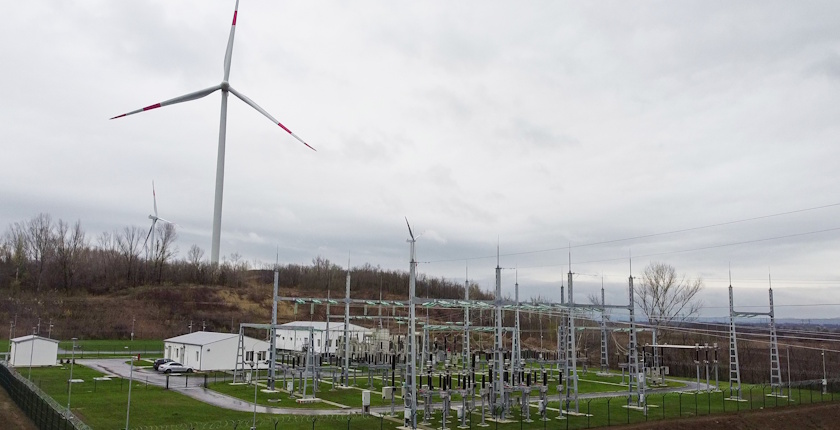
Upon receiving approval for connecting to the transmission system, the substation was energized and the blades of wind turbine 1 began to spin. It marked the start of the trial operation of the new generation capacity, the company said, and added that the kickoff of the remaining wind turbines is underway.

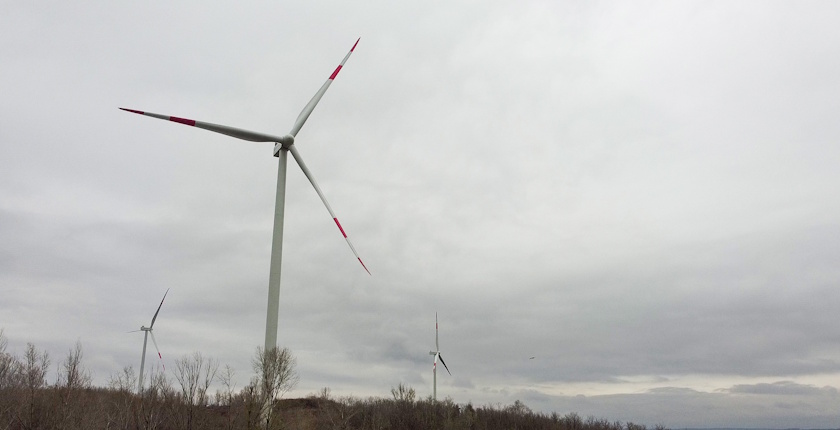
EPS’s first wind power plant, with 20 generators, is located at sites called Drmno, Petka, Ćirikovac and Klenovnik, at an area of closed open-pit mines of its subsidiary Termoelektrane i kopovi Kostolac (TE-KO Kostolac). It operates coal-fired power plants and open-pit coal mines.

Živković: It is a historic moment for EPS

Closed coal mines are ideal locations for installing wind farms and solar power plants, due to existing infrastructure. The concept has become widespread in Balkan countries.

“This is a historic moment for EPS. In addition to energy from water, coal, and the sun, now the first wind farm is online. This is a big step toward increasing the share of renewable energy and achieving sustainable energy development for EPS and the entire Serbian energy sector,” CEO Dušan Živković underlined.

He pointed out that the wind farm is just the beginning of future intensive development of new green capacities. It is very significant that it was built on the site of an old mining landfill and that the space has been given a completely new, sustainable purpose, he added.

The wind farm is expected to produce 187 million kWh annually

serbia eps wind farm Kostolac trial operation coal mine
Photo: EPS/Zoran Gavrilović

Živković recalled that the construction of the wind farm was a major challenge, but also a real opportunity for experienced engineers and young, new professionals at EPS to gain new knowledge and experience for future projects.

The planned annual production of the wind farm is 187 million kWh, which is enough to supply about 30,000 households with green electricity, according to EPS.

The project is financed by a EUR 110 million loan from Germany’s KfW Development Bank and a EUR 30 million grant from the European Union via the Western Balkans Investment Framework (WBIF), while the company provided a part of the needed funds, EPS said.

Serbia’s Minister of Mining and Energy, Dubravka Đedović Handanović said in January 2024, at the signing of an agreement with the EU for the EUR 30 million grant, that it has completed the financing of the project.

According to WBIF’s update from December 2024, the project was valued at EUR 145.1 million. It comprised EUR 81.8 million from a KfW loan and EUR 31 from WBIF in the form of a grant, while EPS provided EUR 32.3 million.

by in News

Voltalia receives license for Spitalla PV plant in Albania

French renewable energy company Voltalia obtained a 30-year license for its Spitalla solar park at the Albanian port city of Durrës. It won the project at a renewable energy auction in 2021.

In its latest update, the Energy Regulatory Authority (ERE) of Albania authorized Spitalla Solar to generate electricity from a photovoltaic plant of 90 MW. France-based Voltalia has established the firm for a project for which it won state support in 2021.

The solar power auction for the Spitalla site, just north of Durrës, a port city on the Adriatic Sea, was for 100 MW in peak capacity. The renewable energy company started construction works late last year. At the time, it scheduled the commissioning of the facility for the second half of 2027.

Similarly, Voltalia developed and built its Karavasta PV plant of 140 MW in peak terms, won at a previous solar power auction. It is the largest in Albania.

The auctions are for contracts for difference (CfDs), but the winners are actually working with power purchase agreements (PPAs) with fixed prices. A procedure is underway to secure market liquidity, which would enable the switch. Notably, the Albanian Power Exchange (ALPEX) was launched already in April 2023.

Spitalla’s CfD is for 15 years and 70 MW in peak capacity. Voltalia, headquartered in Paris, earlier said it would sell the rest of the output under a long-term contract with buyers in the private sector.

Since last year, there is more electricity generation capacity in private ownership in Albania than in the system under state-controlled utility KESH. Growth in the solar power segment is the biggest factor behind the change.

by in News

Montenegro drafts green hydrogen development program with 2026-2028 action plan

Montenegro has drafted a program for the development of green hydrogen with an action plan for the period 2026-2028 and a strategic environmental impact assessment report.

The public discussion is underway about the draft green hydrogen development program with an action plan for the period 2026-2028 and strategic environmental assessment report. It lasts 20 days from the publication of the public call – November 25.

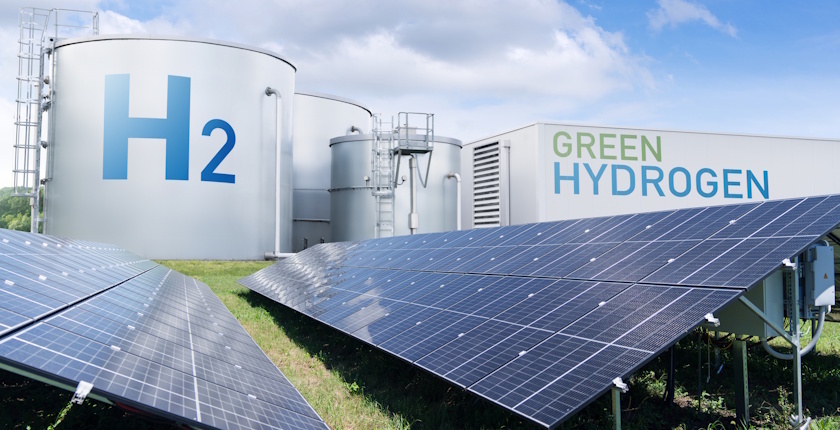
Green hydrogen is a strategic priority for Montenegro by 2030 as a key energy fuel for transition, decarbonization, and security, the document reads.

The program defines four operational goals

Its use is planned in the energy, transportation, and industry sectors, with production based on excess electricity from wind and solar power plants and the development of grid balancing activity and charging infrastructure in line with the EU regulations, the draft underlines.

The document defines four operational goals.

The first is the establishment of an institutional, regulatory, and standardisation framework for the development of the hydrogen economy. It would include a national hydrogen council.

The plan is to produce a feasibility study with a financial assessment for a green hydrogen pilot project

Strengthening administrative capacity is the second goal. The activities include staff training and the adoption of guidelines and regulatory adjustments by the local authorities in line with the national green hydrogen policy.

The third objective is to plan and develop infrastructure for the integration of green hydrogen. The program envisages the creation and adoption of a national hydrogen infrastructure map, as well as a feasibility study with a financial assessment for a pilot project for the production of green hydrogen.

The final goal is to develop science, innovation, education, and promotion in the field of green hydrogen, for which educational programs at the high school and university levels would be developed.

NECP examined two scenarios for hydrogen

The program aims to increase the competitiveness of the Montenegrin economy and achieve carbon neutrality in line with the Paris Agreement, as well as other EU strategic documents, including the European Green Deal and the New Industrial Strategy for Europe.

The country’s National Energy and Climate Plan (NECP) has outlined two hydrogen scenarios – a moderate one (MH2E) and an ambitious one (AH2E).

Pilot projects are planned by 2030, while investments are estimated at EUR 127 million to EUR 212 million by 2050, according to the NECP.

by in News

GGF ushers in new wave of energy transition investments in Western Balkans with eight deals

The Green for Growth Fund has signed a series of agreements on green lending and support for major solar power and energy storage projects throughout the Western Balkans. The new commitments, backed by an investment from KfW, will lift its green financing portfolio in the region by up to EUR 176 million.

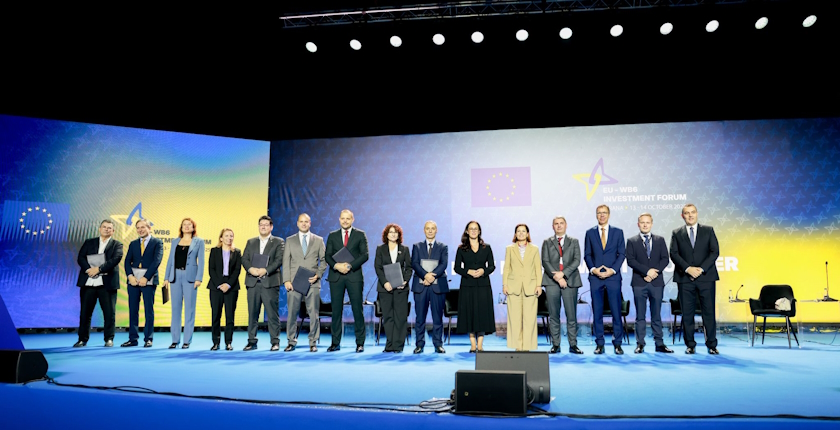
At the EU–Western Balkans Investment Forum in Tirana, held in October, GGF announced the European Union’s EUR 20 million investment in its class C shares, via Germany’s KfW Development Bank. It was accompanied by a EUR 4 million donation to the climate action fund’s capacity building and advisory facility, its advisor Finance in Motion said.

The proceeds are set to mobilize more private capital for renewable energy, energy efficiency and climate resilience across the region, the update revealed.

The Green for Growth fund signed a series of agreements at the forum for green lending, and for financing solar power and battery projects in North Macedonia, Kosovo* and Albania.

Von der Leyen: The time to invest in the Western Balkans is now

The event was attended by European Commission President Ursula von der Leyen and Albanian Prime Minister Edi Rama.

“Your economies are already set to grow rapidly in the coming years. We established the Western Balkans Growth Plan for exactly that. The EU opens sectors of its economy for your business. Together, we work on reforms for a level playing field. And alongside reforms comes investment. The Western Balkans Growth Plan aims at doubling regional GDP in the next decade. So my message to investors today is straightforward: Do not let this opportunity pass by. The time to invest in the Western Balkans is now,” Von der Leyen said.

The commitments signed within a special segment of the Tirana conference are boosting the fund’s cumulative investments into the region to more than EUR 850 million. Earlier it provided over EUR 675 million overall in green finance in the Western Balkans in support of climate action, energy security and sustainable industry.

The new commitments are expected to avoid emissions of some 175,000 tons of CO2. It is equivalent to 400,000 barrels of oil not being burnt.

Trailblazing investments ahead in photovoltaics, BESS

The Green for Growth Fund intends to provide funding for one of the first grid-scale battery projects in North Macedonia and the Western Balkans.

Renalfa IPP is about to expand its 50 MW photovoltaic plant in Oslomej, on the site of a former coal mine, with a 200 MWh battery energy storage system (BESS). GGF has already provided debt financing for the solar installation, and the two sides signed a mandate letter for EUR 24 million for the BESS investment. It is one of the investments for the transformation of the REK Oslomej coal mine and power plant complex.

Renalfa IPP’s pioneering PV plant Oslomej on coal land will get a battery facility

GGF also signed a term sheet for Quant Renewables’ solar power project in Kosovo* for 142.2 MW in peak capacity. It comprises PV plants Tucep (98.5 MW) and Veriq (43.7 MW) on land previously designated for lignite mining.

The Green for Growth Fund would support it with up to EUR 12 million in preferred equity, complementing senior debt financing led by the European Bank for Reconstruction and Development (EBRD). Set to become Kosovo’s* biggest solar park, its estimated annual output would match the electricity needs of 63,000 households.

The facility would save an estimated 168,138 tons of carbon dioxide equivalent per year (22,529 tons prorated to GGF’s investment).

The third renewables project is HD Solar Park in Albania. Through a letter of intent, GGF expressed its goal to provide up to EUR 30 million in senior debt financing. Bindi, the developer, has envisaged 60 MW of peak capacity and a co-located 120 MWh battery system. It would be one of the first large-scale solar-plus-storage initiatives in the country.

Five new deals with financial institutions for as much as EUR 110 million in total

The partner financial institutions that signed agreements with the Green for Growth Fund will channel the financing to their clients for investments in renewables, sustainable mobility, and energy and resource efficiency in buildings and industrial production.

There are five new deals for as much as EUR 110 million in credit lines and subordinated loans.

Two credit lines for partners in Kosovo*

The KRK microfinance institution in Kosovo* aims to utilize a new credit line, of EUR 5 million, for efficiency refurbishments and retrofits of the residential sector as well as small-scale renewable energy. It would be its sixth investment with the Green for Growth Fund since establishing the partnership in 2017.

BpB, the first bank in Kosovo* founded with fully local capital, finances households and small and medium-sized enterprises. Building on a previous partnership, it will channel GGF’s senior credit line of EUR 5 million into energy efficiency and renewable energy.

It will particularly benefit SMEs, including clients in the agricultural sector seeking to upgrade energy systems or invest in low-carbon vehicles, efficient equipment and modern irrigation systems, the fund added.

EUR 95 million in total for Serbian lenders

The Green for Growth Fund signed a loan agreement with UniCredit Bank Serbia for a EUR 50 million senior credit line. The focus is on commercial-scale solar and wind power, helping decarbonize Serbia’s coal-dependent electricity system.

GGF expects it to become one of the fund’s most impactful investments, by avoiding 84,550 tons of emissions in CO2 equivalent terms – equivalent to taking 44,500 cars off the road. The fund has invested EUR 115 million in UniCredit Bank Serbia to decarbonize the country’s electricity system.

Another Serbian lender in the group is AikBank, eligible for a EUR 45 million subordinated loan. The deal is for financing renewables and energy efficiency projects of corporate clients.

The bank will additionally benefit from GGF’s technical assistance for technical due diligence and environmental and social assessments, for the implementation of green energy projects in line with the best practices, the partners stressed.

ProCredit Bank in BiH is eyeing solar power projects

ProCredit Bank in Bosnia and Herzegovina is getting a subordinated loan of up to EUR 5 million, following two such facilities in 2022 and last year. The Green for Growth Fund’s investment is for maintaining the partner’s capital position and supporting the expansion of its green portfolio. The bank especially sees opportunities in solar power, where there is significant potential for BiH to catch up with regional leaders.

“We thank our investors for their continued confidence. This kind of catalytic capital drives tangible impact in Southeast Europe and shows how aligning investment with ambitious climate goals accelerates the green transition,” Finance in Motion said.

* This designation is without prejudice to positions onstatus and is in line with UNSCR 1244/99 and the ICJ Opinion on the Kosovo declaration of independence.