by in News

Electrica and Liberty Galați to Jointly Develop Up to 500 MW of Solar and Storage

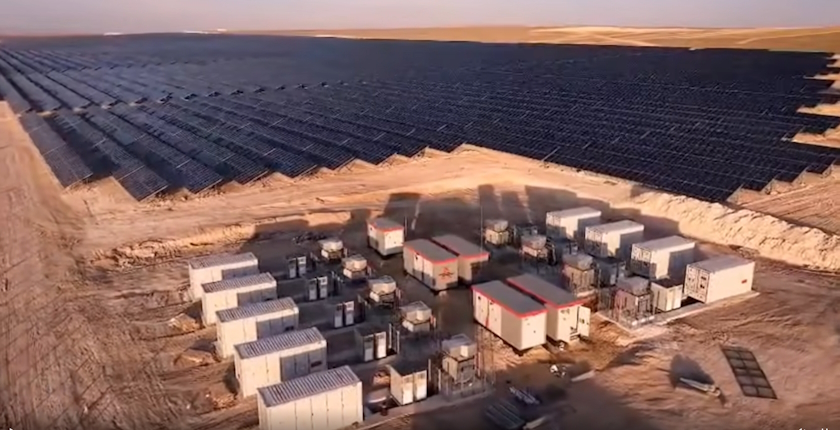
Electrica — in which the Romanian Government holds a 49.8% stake — has signed a memorandum of understanding with Liberty Galați to develop up to 500 MW of combined solar generation and energy storage on land owned by the currently inactive steel works. The agreement, disclosed in a stock-exchange filing, sets out an operating model intended to maximise self-consumption, strengthen supply reliability and optimise long-term costs, the company said.

The proposed structure seeks to capitalise on the strategic complementarities between the two firms: Electrica brings experience as an electricity supplier, distributor and renewable investor, while Liberty Galați contributes the site footprint and industrial scale. The memorandum follows Electrica’s recent emergency move to assume the plant’s electricity supply contract — a step taken two weeks earlier to prevent disconnection over unpaid bills.

Electrica noted that cutting power to a blast furnace would effectively shut the facility down permanently. The steel works is the country’s largest, but is currently inactive, insolvent and carrying substantial debt.

Next steps include feasibility studies for the sites, which are located on land beside the Danube in eastern Romania, near the border with Moldova and Ukraine. According to Electrica’s update, the two parties would develop solar and storage assets with combined capacity of up to 500 MW, with detailed terms to be defined after the feasibility work is completed.

Electrica’s chief executive, Alexandru-Aurelian Chiriță, said the partnership is intended to leverage both companies’ technological and financial capabilities as a catalyst for change in Romania’s energy sector. “Final partnership terms are to be defined following feasibility studies and will be implemented once all corporate approvals are secured,” he said, adding that the initiative aims to create “a model of excellence adapted to current sustainability requirements” and to set a new performance benchmark for the national energy industry.

Earlier, Liberty Galați — part of the Liberty Steel Group — outlined a EUR 1 billion plan to reach carbon neutrality by 2030. When Electrica announced it would take over the plant’s power contract, Chiriță emphasised the strategic importance of preserving the works: “Not now, when Europe is rearming. Not now, when the reconstruction of Ukraine will require millions of tons of steel from our border. Not now, when European steel production can be a real competitive advantage for the first time in decades.”

Electrica supplies electricity to about four million end customers across 18 counties in Northern Transylvania, Southern Transylvania and Northern Muntenia. The group recently reported record preliminary results: consolidated net profit jumped 159% in 2025 to RON 1.22 billion (EUR 239 million), while EBITDA rose to RON 2.38 billion — 64.5% higher than the previous year.

On the renewables and storage front, Electrica currently operates 46.5 MW within a 307.5 MW renewables portfolio. The company also plans 19 energy storage facilities totalling 1.17 GWh and three modular, interoperable data centres as part of its broader transition strategy.
by in News

Montenegro Achieves Regulatory Milestone: Full Alignment with EU Electricity Integration Package

In a significant leap toward European energy integration, Montenegro has officially completed the transposition of the European Union’s Electricity Integration Package (EIP). According to the Energy Community Secretariat, this regulatory alignment positions Montenegro alongside Moldova and Serbia as frontrunners in the Western Balkans’ effort to merge with the European single electricity market.

The move is designed to catalyze Montenegro’s energy transition by enhancing market competitiveness and ensuring the country can participate in regional power exchanges even before formal EU accession.

The Gateway to Market Coupling: SDAC and SIDC

The primary objective of transposing the EIP is to enable Market Coupling. By harmonizing its domestic laws with EU standards, Montenegro is preparing to join two critical pillars of the European energy infrastructure:

  • Single Day-Ahead Coupling (SDAC): A mechanism that optimizes electricity prices and cross-border flows across Europe for the following day.

  • Single Intraday Coupling (SIDC): A continuous trading environment that allows market participants to adjust their positions as close to real-time as possible.

This integration is expected to lower costs for consumers, provide clearer signals for renewable energy investors, and significantly bolster the security of the national supply.

The Legislative Roadmap

The finalization of this process occurred on February 15, 2026, when the Montenegrin government adopted two pivotal decrees governing:

  1. System Operation: Establishing technical rules for grid stability.

  2. Emergency and Restoration: Outlining protocols for grid recovery during unforeseen outages.

These decrees complement existing legislation, including the Law on Energy and the Law on Cross-Border Exchanges in Electricity and Natural Gas. Together, these legal frameworks form the “four pillars” identified by the Secretariat as essential for a cost-efficient clean energy transition:

  • Clear investment signals.

  • Strengthened regional cooperation.

  • Reinforced fair competition.

  • Enhanced security of supply.

The Path to Verification

While the legislative work is complete, Montenegro now enters the Verification Phase. This process involves a rigorous audit by the Energy Community Secretariat and the European Commission to ensure that the laws on paper translate into functional market practices.

Country Status of EIP Transposition Verification Phase
Serbia Completed In Progress (Started Oct 2025)
Moldova Completed Initiating
Montenegro Completed Pending Request
North Macedonia Partial Pending Legislation

“Montenegro is now stepping up efforts to submit a formal request initiating the verification process,” the Secretariat noted, echoing recent sentiments from Director Artur Lorkowski regarding the rapid progress of the “Vienna Group” of energy reformers.

Expert Analysis: What This Means for the Region

For a small economy like Montenegro, market coupling is a “force multiplier.” By removing the barriers to cross-border electricity trade, the country can better manage the intermittency of new wind and solar projects. This regulatory bridge to the EU not only modernizes the grid but also makes Montenegro a more attractive destination for “green” capital, as energy produced domestically can now be more easily sold into the massive European market.

by in News

KESH partners with France’s EDF and AFD to develop Albania’s Energy Storage Roadmap

Tirana — In a decisive move toward modernizing its national grid, the Albanian state-owned power utility, KESH (Albanian Electric Power Corp), has finalized a strategic partnership with Électricité de France (EDF) and the French Development Agency (AFD). The collaboration focuses on the development of a comprehensive energy storage strategy, underpinned by a €400,000 grant earmarked by the AFD.

This initiative arrives at a critical juncture for Albania. While the country boasts a near-total reliance on renewable hydropower for domestic production, its lack of grid-scale energy storage remains a significant structural vulnerability. As the global energy transition demands higher flexibility, the partnership aims to bridge the gap between Albania’s current hydro-centric model and a diversified, resilient future.

Engineering Flexibility: The Scope of the Partnership

The primary objective of the agreement is to identify and evaluate the most effective storage technologies suited for Albania’s existing infrastructure. The resulting study will serve as a technical blueprint for the nation’s Energy Storage Strategy, focusing on several key pillars:

  • Renewable Integration: Facilitating the entry of solar and wind energy into a grid historically dominated by water power.

  • System Modernization: Increasing the security of supply and enhancing operational flexibility.

  • Climate Resilience: Improving the long-term sustainability and management of Albania’s vital water resources and assets.

The technical expertise for this transition will be provided by the French state-owned giant EDF, a global leader in low-carbon energy, while the AFD continues to expand its financial and developmental footprint across the Western Balkans.

High-Level Diplomatic Support

The signing ceremony was attended by Nicolas Forissier, the French Minister Delegate for Foreign Trade and Economic Attractiveness. Minister Forissier emphasized that this agreement underscores Albania’s status as a priority partner for France, reflecting Paris’s commitment to supporting the country’s integration into the European Union through the mobilization of technical and financial instruments.

Under the leadership of Viola Haxhiademi, who assumed the role of CEO in late December, KESH is positioning itself to manage significant future capacities. Currently, planned projects—including KESH’s pumped storage capacity in the Drin (Drim) cascade and Statkraft’s Moglica project—represent a potential 1.6 GW of storage capacity.

A Continuing Collaboration

This latest deal builds upon an existing relationship between KESH and the AFD. Last year, the two entities signed an agreement focused on the advanced management of the Drin River cascade, the backbone of Albania’s energy sector. By adding a formal storage strategy to this framework, Albania is taking a sophisticated step toward aligning its energy sector with EU standards and the exigencies of the green transition.

by in News

GCL Moves Knjaževac Solar Project Forward as Serbia’s Large-Scale PV Pipeline Expands

Chinese energy group GCL has advanced its plans for the Knjaževac solar power plant, a major photovoltaic project proposed for eastern Serbia and among the country’s largest developments currently in the pipeline.

The Municipal Council of Knjaževac has launched the process to draft a detailed regulation plan for the facility. A public consultation on the draft decision was held from February 3 to 5. Once the decision to prepare the plan is formally adopted, authorities will open a second public discussion lasting 15 days.

According to the draft decision, the initiative was filed by the prospective investor, Central Europe Energy Company, a Belgrade-registered entity. The company is 90% owned by China’s GCL Intelligent Energy (Suzhou), with the remaining 10% held by Central Europe Consulting Company, also based in Belgrade.

The project has already cleared an important grid-related milestone. In May 2025, Central Europe Energy Company signed a grid connection agreement with Serbia’s transmission system operator, Elektromreža Srbije (EMS). The signing was part of a broader package of 11 renewable energy projects contracted by EMS at the time. EMS said that, among nine solar projects included in that round, the Knjaževac photovoltaic plant carried the highest proposed capacity at 136 MW.

Municipality head Milan Đokić described the development as the largest investment in Knjaževac’s history, estimating its value at EUR 200 million, as reported by local outlet Knjaževačke Novine.

Planning documentation will cover roughly 267 hectares, spanning parts of the cadastral municipalities of Krenta, Ponor, Mučibaba, and Miljkovac within the municipality of Knjaževac. The preparation deadline for the detailed regulation plan is set at 12 months, and the decision also предусматривает a strategic environmental assessment.

Serbia’s solar market is growing from a relatively low base. The country’s largest operating solar park is currently the 27 MW facility installed by Nofar Energy, while the biggest project by planned capacity is CWP Europe’s 150 MW Solarina development.

GCL is active across most continents, with a core business centered on solar module and energy storage battery manufacturing, alongside the development of low-carbon energy solutions.

by in News

ContourGlobal enters Greece with battery projects, small PV plants purchase

KKR-owned ContourGlobal bought a group of small solar power plants in Greece, alongside a portfolio of battery storage projects totaling 500 MW in operating power and 2 GWh in capacity. It is the company’s debut in the country’s energy sector.

Right after the inauguration of its standalone battery energy storage system in Bulgaria of 202 MW and 500 MWh, ContourGlobal revealed that it entered neighboring Greece through three acquisitions. The London-based company said it acquired photovoltaic systems of 37 MW in overall peak capacity and a group of mature projects for battery energy storage systems (BESS).

There are 26 solar power plants, commissioned between 2011 and 2022. They were owned by Quest Energy, a subsidiary of Quest Holdings, listd on the Athens Stock Exchange. The assets are contracted under feed-in tariff (FiT) and feed-in premium (FiP) supporting schemes, providing both predictable and premium revenues, ContourGlobal pointed out.

Expected yearly output is 51 GWh, enough to power as many as 15,000 Greek households per year.

ContourGlobal has acquired in recent months the full ownership of six battery storage projects through two different transactions with FRV (Fotowatio Renewable Ventures) from Spain and Greek developer Zephiros, the announcement adds. They total 500 MW in capability and 2 GWh of storage capacity.

ContourGlobal is breaking ground for its first BESS plant in Greece this quarter

The ready-to-build (RtB) Taxiarches project is for 100 MW and 400 MWh, respectively. The site is in Farkadona in the Trikala regional unit in Thessaly. Construction is scheduled to begin before the end of March and commercial operation is expected by early 2027.

“Building on our experience operating large-scale BESS projects from Chile to Bulgaria and on the developments already underway in the United States, we see Greece as a key market to scale our battery storage portfolio in Europe and support the country’s energy transition,” Chief Executive Officer Antonio Cammisecra said.

All BESS projects have permits

All projects have secured environmental approvals and key permits, and have applied for grid connection, ContourGlobal stressed.

Although Greece is a relatively small power market in Europe with 24 GW of installed capacity, it is the second-largest in the Balkan region and is experiencing rapid growth in renewables, the company added.

“While historically dominated by lignite and gas, the country is accelerating renewable development, with solar and wind capacity projected to reach around 60 GW by 2060. At the end of the current decade, nearly 70% of installed capacity and electricity generation are expected to come from renewable sources, increasing the need for flexible, grid-scale storage. Moreover, the country is projected to become a net exporter of electricity from 2026,” the update reads.

Expansion ambitions for Greece, Europe

The company said it is assessing further development opportunities in Greece as part of its long-term growth strategy in renewables and battery storage.

ContourGlobal underscored that the new transactions are strengthening its European platform for further growth in renewables and battery storage, building on its established presence in Italy, Spain and Austria.

As for Southeastern Europe, Bulgaria is booming with BESS throughout, Romania is gaining momentum, while Greece is taking a long jump approach, with some administrative hurdles continuing. Turkey is commissioning its first hybrid power plants.

Of note, ContourGlobal was involved in a coal power project in Kosovo* but eventually decided to quit, citing political issues.

* This designation is without prejudice to positions onstatus and is in line with UNSCR 1244/99 and the ICJ Opinion on the Kosovo declaration of independence.
by in News

BIG Mega Renewable Energy secures financing for Văcăreni wind farm project

BIG Mega Renewable Energy, a renewable energy developer and a joint venture between BIG Shopping Centers and MEGA OR Holdings, has reached financial close for its Văcăreni onshore wind project in Tulcea county in Romania. The package, amounting to over EUR 100 million, will support the development, construction and operation of the future 102 MW facility.

The financing was provided by Erste Group Bank and Intesa Sanpaolo, which have extensive experience with large-scale renewable energy projects in Central and Eastern Europe, BIG Mega Renewable Energy pointed out.

The Văcăreni wind farm project is backed by a 10-year power purchase agreement (PPA) with a major European energy trader, the update reads. It is providing long-term revenue stability and underpinning the project’s financial structure, the company underscored.

“The financial close of the Văcăreni project, with financing exceeding EUR 100 million, alongside the completion of the Urleasca wind farm, both with an installed capacity of 102 MW, demonstrates our strong execution capabilities in delivering large-scale, complex projects and our commitment to supporting Romania’s transition to green, sustainable energy.” Chief Executive Officer Eran Davidi said.

The Văcăreni site is in Romania’s main wind power area

The Văcăreni commune is in Tulcea county in Northern Dobruja, or Dobrogea, in the country’s southeast. It is one of the windiest parts of Romania and the main hub for a long time for such projects.

BIG Mega Renewable Energy has obtained a senior loan for Urleasca of up to EUR 45.9 million from the European Bank for Reconstruction and Development, and EUR 92 million overall. The project got its name after a village in Traian commune, in the vicinity of the city of Brăila.

For both projects, the developer has hired CJR Renewables for the balance of plant (BoP) scope. It covers access roads, turbine foundations and other accompanying equipment and infrastructure.

BIG Mega acquired Urleasca in late 2021. BIG Shopping Centers is an Israeli shopping mall developer.

by in News

Enercon inks first delivery of its 7 MW wind turbines to Turkey

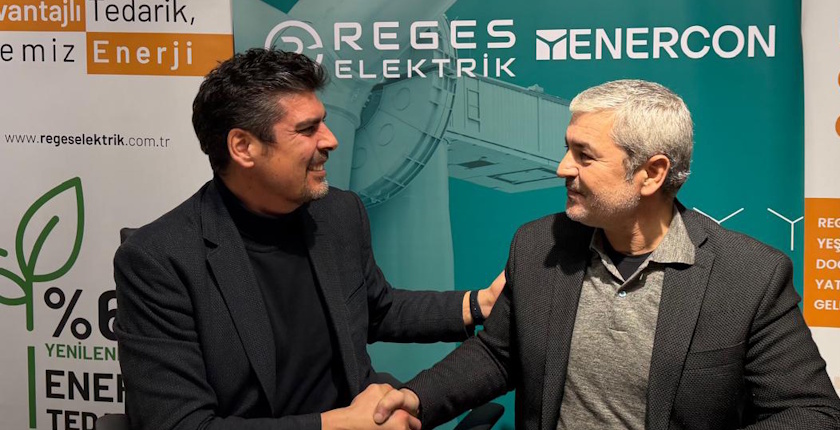
Enercon received the first order from Turkey for its latest, 7 MW wind turbines, from Reges Elektrik.

The agreement with Reges Elektrik is for the first deployment of Enercon’s 7 MW onshore turbine in Turkey, according to the German wind turbine producer. At the same time, it is the Turkish company’s first wind energy investment.

Enercon and Reges Elektrik have launched a strategic partnership by signing a turbine supply agreement for the Demirli wind farm to be constructed in Kırşehir.

Under the deal, Enercon will supply ten of its new E‑175 EP5 E2 wind turbines, totaling 70 MW of installed capacity.

The new top model is among the highest yielding onshore wind turbines in Europe

It is the first collaboration between the two companies. The agreement was signed at Reges Elektrik’s headquarters in Istanbul.

According to Enercon, featuring a large rotor diameter of 175 meters, advanced engineering solutions, and high energy yield, the E‑175 EP5 E2 stands as its most powerful and efficient onshore turbine to date.

turkey enercon reges elektrik contract Arif Günyar Mustafa Ünal
Arif Günyar and Mustafa Ünal (photo: Enercon)

It is among the highest-yielding onshore wind turbines in Europe, the German company claimed.

Ünal: The agreement represents a significant milestone for Reges Elektrik as it makes its first investment in wind energy

Arif Günyar, Enercon Regional Head for Central Asia, the Middle East and Africa (CAMEA), thanked Reges Elektrik for its trust in his company’s technology.

“We look forward to strengthening our cooperation through future projects,” he added.

According to Mustafa Ünal, Chairman of the Board of Reges Elektrik, the agreement represents a significant milestone for his firm as it makes its first investment in wind energy.

“Partnering with Enercon and deploying the E-175 EP5 E2 turbines aligns perfectly with our long-term vision to expand our renewable energy portfolio with high-efficiency, future-proof technologies,” he stressed.

Of note, Enercon has installed wind turbines with a total capacity of 60 GW in more than 50 countries around the world.

by in News

North Seas region signs landmark offshore wind deal

Seven heads of state and government and energy ministers of nine countries gathered in Hamburg today to boost the expansion of offshore wind. Together with industry and transmission system operators, the countries launched the Offshore Wind Investment Pact for the North Seas. They envisage cross-border projects totaling 100 GW.

Nine European countries committed to building 15 GW of offshore wind per year over 2031-2040 and derisking offshore wind investments. The industry, in return, pledged cost reductions, 91,000 additional jobs and EUR 1 trillion of economic activity.

Europe is charting the massive offshore wind buildout it needs to deliver on its energy security and competitiveness objectives, WindEurope said.

At the North Sea Summit in Hamburg today, Belgium, Denmark, France, Germany, Ireland, Luxembourg, the Netherlands, Norway and the United Kingdom confirmed their ambition to build 300 GW of offshore wind in the so-called North Seas by 2050.

Over one hundred companies participate in offshore wind pact

Governments, the wind industry and transmission system operators (TSOs) signed the Offshore Wind Investment Pact for the North Seas. The agreement is underpinned by separate declarations of the heads of state, energy ministers and the industry. The last of the three is an undertaking by more than 100 offshore wind companies across the value chain, the update adds.

Offshore wind has been a European success story with 37 GW installed across 13 countries, WindEurope stressed.

“That’s more than 6,000 turbines providing homegrown, clean and competitive electricity at scale. But deployment has been dragged by suboptimal auction design, increased costs of capital and lack of visibility for the supply chain due to an uncertain project pipeline,” the organization pointed out.

Two-sided CfDs to be auction standard

In the Investment Pact, governments pledge to provide planning and investment security and derisk offshore wind projects. It involves two-sided contracts for difference (CfDs) as the standard for offshore wind auction design, for visibility on revenue. The countries agreed to remove any regulatory obstacles to power purchase agreements (PPAs) – direct agreements between electricity producers and corporate end-consumers.

A steady pipeline of offshore wind projects will bring the needed confidence to invest in new capacity for manufacturing, ports infrastructure and vessels, according to WindEurope.

In return, Europe’s offshore wind industry pledges to drive down costs of offshore wind by 30% towards 2040 against the 2025 levels. The cost reduction would be driven by scale effects, lower costs of capital and further industrialization underpinned by clarity and visibility on the project pipeline.

The industry vowed to create lasting value for the economy, communities and consumers. It also said it would invest EUR 9.5 billion in the value chain including manufacturing, port infrastructure and vessels.

The TSOs intend to identify cost-effective cooperation opportunities and 20 GW of economically promising cross-border endeavors by 2027 for deployment in the 2030s. It includes offshore projects with interconnections to more than one country. The operators are about to develop cost-sharing principles.

The new partnership will secure 100 GW of joint offshore wind projects, Britain said.

by in News

Turkey’s first large solar-BESS power plant inaugurated

Oze Grup has built a 49 MW photovoltaic facility with a 34 MWh battery storage system southwest of Ankara. It is the first such hybrid power plant in Turkey.

Energy storage systems are indispensable for grid security and price stability, according to Chairman of Turkey’s Energy Market Regulatory Authority (EMRA or EPDK) Mustafa Yılmaz. “Energy is no longer just about production. The real issue is ensuring that the electricity produced is integrated into the system at the right time, in the right place, and safely,” he said at the inauguration of the country’s first large solar power plant with energy storage, built by Oze Grup.

The site is in Sivrihisar in Eskişehir, some one hundred kilometers southwest of Ankara. The solar power plant has 49.2 MW in peak capacity. Its 29 MW grid connection matches the capability of the battery energy storage system (BESS), which has 34.1 MWh in capacity.

Oze Grup got the first project approval and the trial permit in the DGES category. The acronym is for licensed solar-storage systems, as opposed to self-consumption facilities. It was the Ankara-based construction company’s first energy project.

PVI Enerji designed and built the facility for Oze İnşaat ve Beton Sanayi. BS Distributed Energy Systems (BS DES) was involved in all stages. The other contractors are ELIN Enerji, HMK Demir Çelik, Sunroof Enerji and Solex Energy.

The chief regulator said the new hybrid power plant marks a vision change. “The sun doesn’t always shine, the wind doesn’t always blow. Renewable energy can only become a primary driver through storage,” Yılmaz stated.

He added that Turkey is now fully prepared for investments in renewable electricity plants with storage. The process has been rather slow, as the legislation for fast-tracking such projects was issued more than three years ago.

Oze Grup completed the hybrid power plant late last year. Notably, Polat Enerji received the approval from the Ministry of Energy and Natural Resources for its licensed wind-storage system (DRES), the first in Turkey.

by in News

Slovenia opens its first highway solar power plant

Slovenia’s road management firm Družba za Avtoceste v Republiki Sloveniji has installed a solar power plant on a noise barrier alongside a highway. It is the first such photovoltaic system in the country.

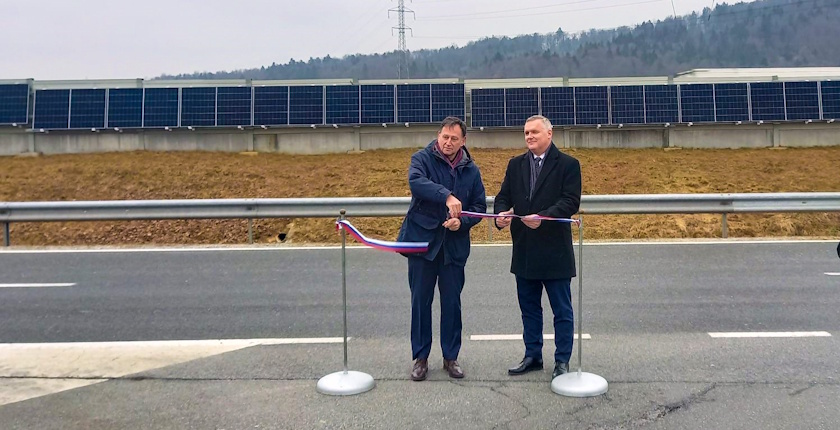
Družba za avtoceste v Republiki Sloveniji (DARS) has officially opened its first photovoltaic plant on a noise barrier at the Šmarje Sap West rest area. It is about ten kilometers from Ljubljana on the motorway connecting the Slovenian capital and Zagreb.

According to DARS, the project is part of a series of activities to achieve the company’s strategic goals in sustainable development, decarbonization, and efficient energy use.

The firm announced the development of such projects in July 2023. A pioneering idea in the region, it was later followed by Bosnia and Herzegovina, Montenegro, and Croatia.

Ribič: An example of thoughtful siting of renewable power plants

The opening ceremony was attended by the Chairman of the Management Board of DARS Andrej Ribič, Minister of the Environment, Climate and Energy Bojan Kumer, representatives of the contractor – Solvera Lynx, and representatives of distribution system operator Elektro Ljubljana.

Andrej Ribič stressed that the project is significant for electricity production but also as an example of thoughtful siting of renewable energy power plants without impacting traffic safety or routine highway maintenance.

The electricity generated by the PV system will be used for DARS’s own consumption, including public lighting and tunnel systems, he explained. This will ensure greater energy independence and more rational management of the energy system, Ribič added.

DARS plans to continue building PV plants

In line with its strategy, DARS aims to gradually reduce energy consumption from the grid and lower CO2 emissions in scopes 1 and 2. By 2030, the goal is to reduce energy consumption and carbon emissions by 30% from the 2024 levels, according to the firm.

Based on its revised strategy, DARS adopted several energy measures in 2024. They included the establishment of an energy department and the implementation of the first phase of solar installations across its five facilities, with a total capacity of 420 kW.

These plants can cover approximately 2% of the company’s annual electricity consumption.

DARS intends to further expand its solar energy projects. The plan includes building bigger plants in degraded areas and more PV systems on buildings and along highway tunnels.

The electricity produced would primarily power lighting and other road systems to ensure the safe and smooth operation of the motorway network, the company added.

Careful site selection for solar plants is crucial

In July 2023, DARS and state-owned hydropower operator Soške Elektrarne Nova Gorica (SENG) announced plans to build solar power plants along highways.

The first one was planned in the Slovenian Littoral and Coastal-Karst area. However, the new solar power plant is not located there.

The two firms later established similar cooperation with the Ministry of Defense and the Municipality of Vipava.

Solar energy use is expanding all over the planet. Experts warn that the optimal siting of PV panels is crucial to avoid occupying large areas of arable land or harming the environment. Therefore, the best solution is to install solar panels in locations that cannot be used for other purposes, such as alongside railways and roads, or on rooftops.