by in News

UAE, Montenegro establish strategic green energy partnership

A new agreement between the UAE and Montenegro will facilitate connecting the energy sector with financial technologies and artificial intelligence. The two countries are also considering to deploy solar, wind, hydropower, green hydrogen and battery projects.

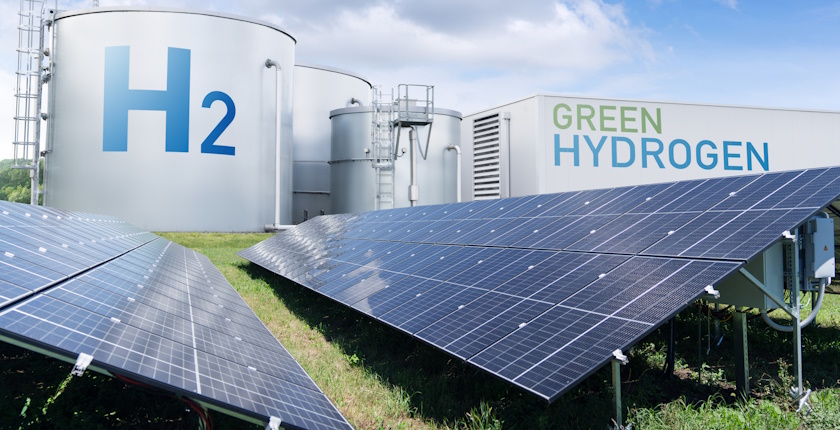
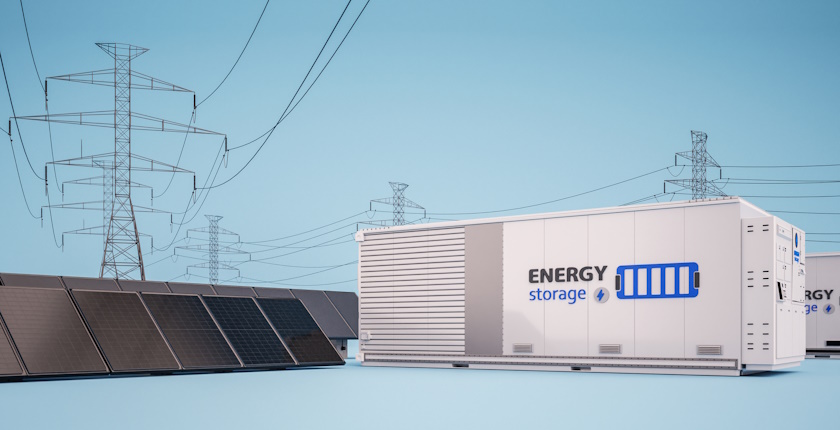
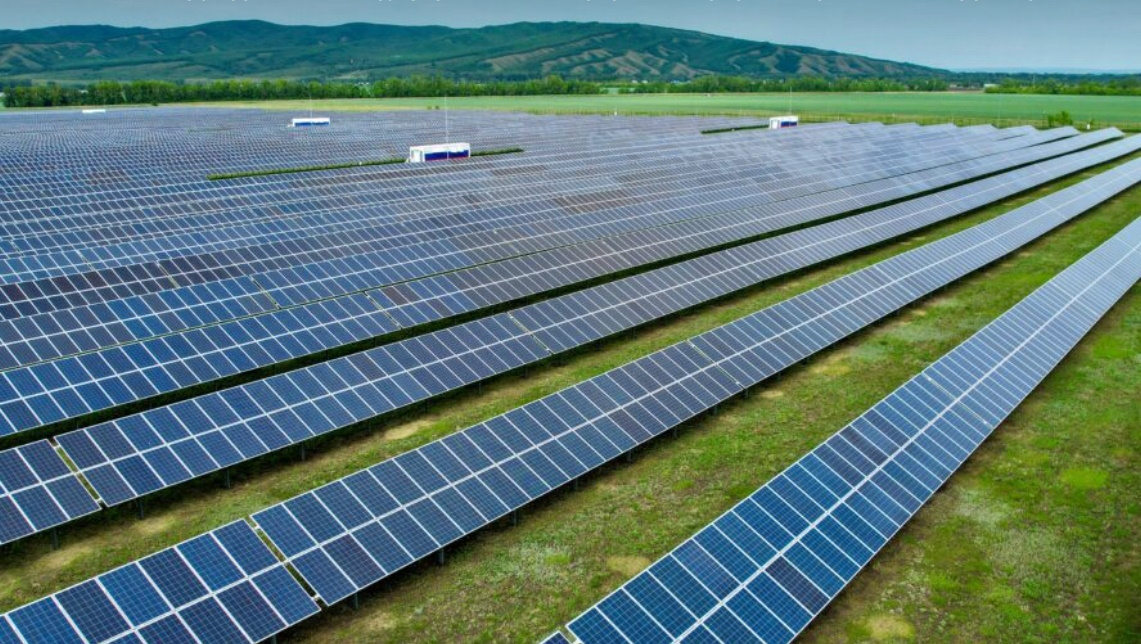
The United Arab Emirates and Montenegro agreed to cooperate in the energy sector, setting up a bilateral strategic partnership for the development of renewables, modern energy infrastructure and advanced technologies. The deal envisages joint contribution to projects of strategic significance to Montenegro from solar, wind and hydropower plants to the application of battery energy storage systems and the development of the green hydrogen technology.

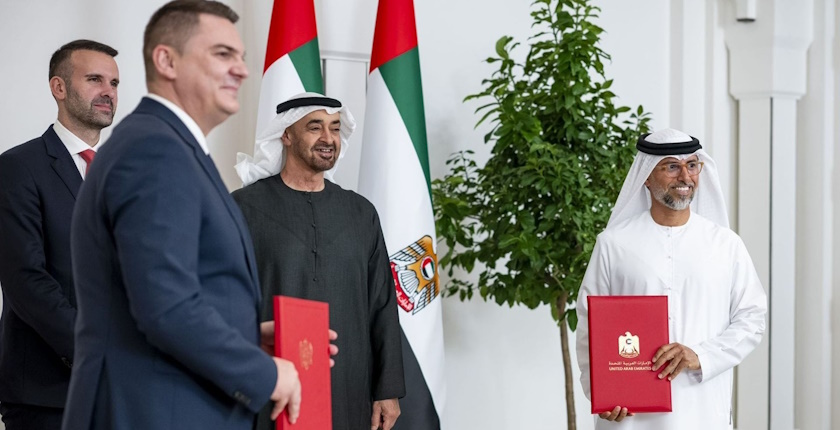
Minister of Energy and Mining Admir Šahmanović signed the agreement with UAE’s Minister of Energy and Infrastructure Suhail Mohamed Al Mazrouei. Montenegrin Prime Minister Milojko Spajić and the President of the UAE Mohamed bin Zayed al-Nahyan attended the ceremony.

Montenegro aspires to become digital hub

The agreement is especially significant for connecting the energy sector with financial technologies and artificial intelligence, the Ministry of Energy and Mining of Montenegro said. The country is aspiring to position itself as a regional hub for innovation, digital transformation and the energy transition, it added.

Within their strategic partnership, the two countries are looking to establish a fintech and AI council. It would consist of representatives of the public and private sector and work on the development of innovative solutions, attracting investments and strengthening the domestic economy through the implementation of progressive technologies.

Joint vision of sustainable development, energy security

The agreement is a new step in the partnership between Montenegro and the UAE, founded on a joint vision of sustainable development, energy security and economic progress, the ministry pointed out.

“The partnership confirms that foreign partners recognize Montenegro as a safe and attractive place for investment in energy and advanced technologies. Our goal is to, through cooperation with the United Arab Emirates, open a new chapter in the development of renewable energy sources, digital infrastructure and innovation,” Šahmanović stressed.

The agreement will facilitate faster materialization of projects strengthening energy security and contributing to the decarbonization of the economy and job creation in the sector of the future, the ministry said.

by in News

OMV, Masdar to build 140 MW green hydrogen plant in Austria

OMV and Masdar are setting up a joint venture for the development and operation of the fifth-largest electrolyzer plant in Europe. The facility is already under construction in Austria. The UAE-based company would be a minority shareholder, with 49%.

Austrian integrated energy, fuels and chemicals company OMV and Masdar – Abu Dhabi Future Energy Co. signed a binding agreement to establish a joint venture for the financing, construction and operation of the 140 MW green hydrogen electrolyzer plant in Bruck an der Leitha, Austria.

It would be one of Europe’s largest green hydrogen production facilities, marking a major step in OMV’s commitment to decarbonizing its Schwechat refinery, the update adds. Construction of the facility began in September. The companies expect it to become operational in 2027.

OMV to procure electricity, own green hydrogen produced in Bruck an der Leitha

The JV will be majority-owned by OMV, with the clean energy giant from the United Arab Emirates holding 49%. The partnership combines the Austrian company’s integrated fuels and chemicals business and Masdar’s commercial, financial and technical expertise.

The two companies said they would explore opportunities for green hydrogen, e-SAF and synthetic chemicals

OMV, which is already running a 10 MW electrolyzer plant for green hydrogen in Schwechat, will procure the renewable electricity for production and own the green hydrogen produced in the new facility, the announcement reads. Bruck an der Leitha is near the borders with Hungary and Slovakia.

The partnership lays the foundation for strategic collaboration to explore green hydrogen, synthetic sustainable aviation fuels (e-SAF) and synthetic chemicals production in both the UAE and Central and Northern Europe, following the signing of a letter of intent in April. The joint venture would be set up early 2026, conditional on completion of final documentation, shareholders’ approvals and regulatory approvals.

Photo: OMV, Masdar

Hattmannsdorfer: Austria aims to become Europe’s leading hydrogen hub

The binding agreement was signed at the ADIPEC conference and exhibition in Abu Dhabi. The ceremony was held in the presence of UAE’s Minister of Industry and Advanced Technology and Chairman of Masdar Sultan Ahmed Al Jaber, Austria’s Federal Minister of Economy, Energy and Tourism Wolfgang Hattmannsdorfer, Chairman of the Executive Board and Chief Executive Officer of OMV Alfred Stern and CEO of Masdar Mohamed Jameel Al Ramahi.

“We can only secure jobs and prosperity in Austria if we stand firmly for open trade and build successful international partnerships. Together with strategic partnership between OMV and Masdar, we have brought one of the largest direct investments of recent years to Austria. OMV and Masdar are jointly constructing the fifth-largest hydrogen plant in Europe – right here in Austria. This project further strengthens Austria’s leading role in a key technology of the future. Our goal is clear: Austria aims to become Europe’s leading hydrogen hub,” Minister Wolfgang Hattmannsdorfer stated.

By combining Masdar’s global expertise in developing and scaling clean energy projects with OMV’s industrial and technological capabilities, the joint venture will accelerate the decarbonization of hard-to-abate industries, according to Masdar’s CEO Al Ramahi.

by in News

Romania to roll out flexibility market where you get paid to consume less power

Companies and, eventually, households will be able to participate in the Romanian flexibility services market, getting compensated for cutting their electricity use at a time scheduled one day earlier. The aim is to prevent power outages during peak loads in the transmission grid.

The National Energy Regulatory Authority (ANRE) of Romania published a draft regulation that would allow payments to electricity consumers – companies or, in the future, even households – for temporarily reducing their consumption. The mechanism is called the consumption flexibility service. Its purpose is to balance the grid and prevent power outages during peak consumption.

Romania’s transmission system operator Transelectrica would be able to purchase consumption reduction services from market participants: large companies, suppliers and aggregators. They would commit to temporarily limiting energy use.

Demand response also replaces expensive emergency power imports.

Day-ahead market for demand response

Transelectrica will schedule the service through auctions organized a day earlier. Market participants would be able to bid with available consumption capacity reductions and prices.

The proposed regulation requires providers or aggregators to transfer at least half of the revenues to their end customers who contributed to the consumption cut.

Renewable electricity production – especially solar – has increased significantly over the previous years. During the day, Romania sometimes produces more energy than it consumes, but in the evening, when people return home and consumption increases sharply, production no longer covers demand.

The trend is known as the duck curve, per the shape of the daily chart of demand and solar power production. It leads to imbalances and bolsters the risk of grid overload. Through flexibility services, Transelectrica will be able to shave the peaks.

Households to eventually join through their aggregators

In the first stage, the mechanism will involve large consumers such as factories, retail chains, logistics operators and office buildings. They would be able to bid with a minimum of 500 kW. Households could join at some point through so-called flexibility aggregators.

It is also important that demand response decreases balancing costs, which spill over to electricity bills.

The draft regulation is undergoing a public consultation process until December 3. According to the schedule, the flexibility market will be established in the spring.

by in News

Green light in Greece for expansion of future photovoltaic, green hydrogen complex

Greece approved the request of a firm developing a project for a giant solar park with a green hydrogen plant to double the electrolyzer capacity. The site is in the vicinity of the village of Mantasia in the Phthiotis regional unit.

The Ministry of Environment and Energy in Athens signed off on a proposed change in the project for a complex that would consist of a photovoltaic plant of a whopping 251.9 MW in peak capacity and a system for the production of green hydrogen, Newmoney reported. Mantasia Energeiaki, the project firm, is controlled by German companies Altus and Yamko Energy and France-based Omnes Capital, according to the article.

They can build a 100 MW green hydrogen unit, instead of the initially planned 50 MW. Altus is a subsidiary of Kraftwerke Mainz-Wiesbaden AG (KMW).

The project developers are planning to produce hydrogen in PEM electrolyzers

The site, Karahasan, is near Mantasia, a village in the municipality of Domokos in the Phthiotis (Fthiotida) regional unit. Most of the area is in the territory of the community of Fyliadonos. The proton exchange membrane (PEM) electrolysis facility would comprise ten units of 10 MW.

Total area envisaged for the project in Central Greece spans ​​427 hectares, of which 1.1 hectares for green hydrogen production. It would be stored in several units of 40 tons overall.

The project includes a 400/33 kV substation, with a capacity of 600 MVA, equivalent to 600 MW, as two similar projects would be connected through it. As for the PV plant, it would have 530 W monocrystalline silicon modules and 48 Sunny Central 4600 UP inverters.

by in News

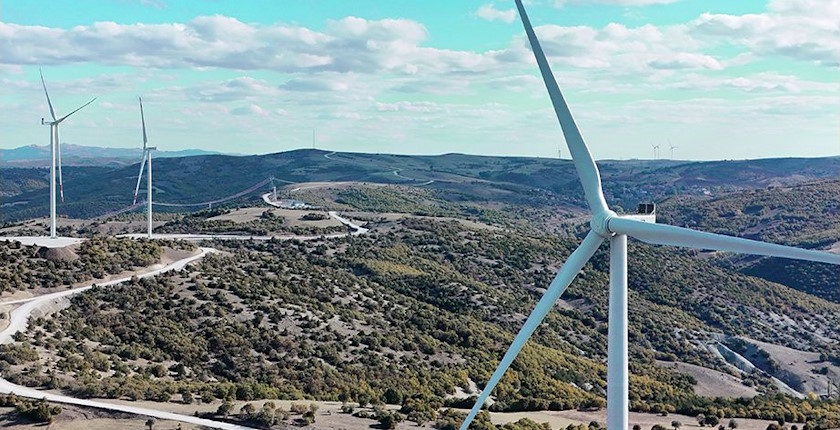
Eksim Energy launches production at its Yozgat wind park in central Turkey

Eksim Energy, which operates one of the biggest solar power plants in Turkey, commissioned the first part of its Yozgat wind farm. The company based in Istanbul has surpassed 1 GW in installed capacity.

Eksim Energy (Enerji) is accelerating its expansion in the green energy sector in Turkey – the company said it has received all permits for the first four turbines at its Yozgat wind farm in Central Anatolia. Now half of the planned 56 MW in capacity is online, less than a year since the start of construction.

The company, part of Eksim Holding and headquartered in Istanbul, revealed that 135 people worked 140,000 hours so far. Yozgat is its ninth wind power plant and thirteenth renewable energy facility, the update reads.

With the commissioning of the four turbines, Eksim Energy’s capacity topped 1 GW.

Just within the past year, the company also completed the expansion of its Gevye wind power plant, added a solar power segment to its Susurluk wind park and built the Viranşehir photovoltaic plant, one of the largest in Turkey.

Eksim Energy almost doubled its capacity since the end of 2024

Notably, Eksim Energy finished last year with only 569 MW, data from the annual MW100 Turkey report showed. The Uzundere hydropower plant accounts for 63 MW. The rest was wind power, making the company sixth in the segment in Turkey in 2024.

In the Gevye district in Sakarya in northwestern Turkey, the utility tripled its wind farm’s capacity to 150.2 MW. The additional investment amounted to EUR 80 million. The entire facility, which generated its first megawatt-hour in 2020, cost EUR 195 million in total.

The Viranşehir PV system in Şanlıurfa in the country’s southeast has 191.3 MW in peak capacity. The investment was worth USD 150 million.

“Our next focus will be to accelerate our integrated energy storage investments, in addition to our power plant projects, and to expand hybrid generation, where we combine solar and wind power in suitable locations, Chief Executive Officer Arkın Akbay.

by in News

Cypriot firm preparing to build several solar parks with batteries

Public consultation is underway in Cyprus for environmental impact assessment (EIA) studies for three projects for photovoltaic units, of 14.5 MW in total peak capacity, with 40 MWh in battery storage. The developer, SAOLA, plans several such investments. It is facing opposition from the local population and environmentalists.

The electricity system in Cyprus is severely strained due to the lack of interconnections and energy storage and amid a photovoltaics boom and power demand surge. Even though the installation of the required battery capacity depends on substantial grid investments as well, investors are lining up to seize the opportunity in the budding market as soon as possible. Larnaca-based SAOLA opted for a group of hybrid power plants consisting of small photovoltaic units and battery energy storage systems (BESS) with a matching operating power.

Public consultation is underway for environmental impact assessment (EIA) studies that the firm submitted to the Department of Environment for three such projects. The sites are on the territory of the Agios Theodoros community, in Larnaca district.

SAOLA has vowed to apply a range of mitigation measures

One investment would involve the installation of a solar park of 5 MW in peak capacity together with a 5 MW / 15 MWh BESS. The second project is for 5.5 MW in photovoltaic panels and a battery system with a 5.5 MW capability and 15 MWh in storage capacity. The remaining facility would have 4 MW in peak PV capacity and BESS operating power, and 10 MWh of storage capacity.

The company owns the land. Suggestions and comments will be received until November 26.

Earlier, residents from the affected area raised concerns because the facilities would be on agricultural land, as well as about the impact on the rural landscape. Environmental groups and hunters pointed out that wildlife habitats would be affected.

SAOLA has vowed to conduct mitigation measures. According to the EIA studies, it would plant trees, preserve animal migration corridors and, after decommissioning, recycle equipment and return the area to its original state.

The company is preparing several other investments in photovoltaics with BESS, including in Alaminos and Anafotia in the same district.

by in News

R.Power completing its first solar parks in Romania while more assets enter construction phase

Poland-based R.Power began work on its Lazuri photovoltaic plant of 55 MW in peak capacity in Satu Mare county in northwestern Romania. The company is energizing four solar parks of more than 23 MW overall, its first operational assets in the country. In addition, it is about to break ground on its 254 MWh Scornicești battery energy storage system.

Notably, Electrica recently commissioned its Satu Mare 2 solar power plant, of 21.7 MW.

Romania is set to appear on the map of renewable energy plants and battery energy storage systems (BESS) operated by Poland-based R.Power. The company also has such assets in its home market and Portugal and projects under development in Germany, Spain and Italy. In line with the schedule, R.Power is energizing its first photovoltaic plants in Romania – Stâlpu, Suseni, Dudești and Punghina – and is preparing to begin the construction its first BESS in the country, in Scornicești.

The four solar parks in central and eastern Romania have more than 23 MW altogether in peak capacity. R.Power’s contractors are Nomad Electric and Waldevar. The former has also just begun the construction of the Lazuri solar park in northwestern Romania for the same client.

The PV park in the commune of the same name in Satu Mare county would have 55 MW in peak capacity. The company won a 15-year contract for difference (CfD) for 48 MW in connection terms at Romania’s first renewable energy auction.

Lazuri was part of a group of five solar power projects with support approved for 73.1 MW, or 85 MW in peak capacity. Its annual output is estimated at 70 GWh, equivalent to the consumption of more than 48,000 households in the country.

Major BESS project up for sale

The Scornicești project in Olt county, west of Bucharest, is for 127 MW in operating power. The BESS would have a duration of two hours, translating to 254 MWh in capacity. The project received EUR 15 million in funding via the National Recovery and Resilience Plan (NRRP or, in Romanian, PNRR).

R.Power has sold a 49.99% stake last month to Eiffel Investment Group. The transaction follows the two companies’ previous cooperation in photovoltaic projects.

The Polish firm recently said it would divest of a ready-to-build project for a battery energy storage system of 200 MW and 400 MWh. The move is part of an asset rotation and portfolio diversification strategy, according to the update.

The company added that the future facility near Bucharest would provide flexibility for the grid. It is known as Project Tessara.

Solar-battery hybrids in project pipeline

As of August, R.Power had over 1.2 GW of projects for standalone BESS in Romania. It said it would set up PV-BESS hybrid configurations as well.

“The start of construction of the Lazuri solar farm highlights our commitment to expanding operations in Romania, which is one of our key markets. Alongside Lazuri, we are developing additional photovoltaic and battery energy storage (BESS) projects there,” the company’s Chief Executive Officer and Co-founder Przemek Pięta said.

Satu Mare county also hosts several new solar parks. Romanian power supplier and distributor Electrica recently commissioned its Satu Mare 2 unit of 27.1 MW in peak capacity, in the Botiz commune.

The company partially funded the investment, worth more than EUR 20 million, from NRRP. The project included a 110/20 kV transformer station and grid connections.

by in News

EPS to help SEEPEX strengthen Serbia’s intraday power market

Serbia’s power exchange, SEEPEX, has reached an agreement with state-owned utility Elektroprivreda Srbije to work together on strengthening the intraday electricity market.

SEEPEX is proud to announce the signing of a strategic agreement with Elektroprivreda Srbije (EPS), Serbia’s largest power utility company, aimed specifically at securing its support for the organized intraday continuous (IDC) electricity market, the power exchange said.

SEEPEX is part of ADEX, which was established in 2022 through a corporate merger between Slovenian energy exchange BSP SouthPool and its Serbian counterpart. In December 2024, ADEX Group completed a merger with the Hungarian Power Exchange (HUPX).

The agreement between SEEPEX and EPS marks an important step forward in strengthening SEEPEX’s organized IDC electricity market, which will also help improve the integration of renewable energy sources, according to the update.

EPS will actively support and participate in the SEEPEX IDC market

Through this partnership, EPS will actively support and participate in the SEEPEX IDC market, enhancing its liquidity and encouraging engagement from all 32 IDC members.

“We believe this collaboration will position the SEEPEX IDC market as a trusted and dynamic platform for electricity trading across the region and beyond,” SEEPEX stressed.

SEEPEX launched the intraday market in July 2023

The contract aims to secure daily offers from EPS to encourage other participants to access the market and start trading, Balkan Green Energy News has learned.

In October 2023, SEEPEX signed a market-maker agreement with EPS for the intraday continuous market.

SEEPEX launched the intraday market in July 2023, with 16 out of 20 registered participants active on the first trading day. The participants came from Serbia, neighboring countries, and the European Union. The SEEPEX intraday market now has 32 participants.

With the launch of the IDC market, SEEPEX became the first organized market in the region to fully implement all aspects of an organized market, according to company’s CEO Miloš Mladenović.

by in News

PPC building three battery storage facilities in Greece

PPC Group has launched the construction of a battery energy storage system in the area of its Amyntaio coal plant. The company is also building BESS facilities at its thermal power plants Kardia and Meliti, as it is preparing to end coal use in Greece. One BESS unit is under construction in Bulgaria, as well. In Romania, PPC is expanding its wind park project Deleni, which would bring its operational portfolio in the country to over 1.5 GW.

Public Power Corp. – PPC Group is investing in energy storage in Greece and surrounding countries, complementing its solar and wind power investments and contributing to the transformation of coal regions. The government-controlled utility revealed that its future battery energy storage system near the Amyntaio coal plant in the Western Macedonia region is under construction.

The new station will consist of batteries with 50 MW in operating power and a duration of four hours, translating to a capacity of 200 MWh. Wholly-owned subsidiary PPC Renewables is responsible for the project. It is for liquid-cooled batteries of the LFP (lithium iron phosphate) technology.

The construction of two more electrochemical storage stations is already underway in the same northern region, in the areas of the Kardia and Meliti thermal power plants, the company pointed out. Their combined capability would be 98 MW, for 196 MWh in capacity.

Western Macedonia region to host 860 MW of energy storage

The role of energy storage units for the system is critical, as they aim to support the operation of adjacent photovoltaic power plants and contribute to the stability of the electricity system, PPC Group added. It is planning 860 MW of energy storage in the Western Macedonia coal region. The company said it would create 1,300 jobs in the construction phase and hundreds during operation.

Two pumped storage hydropower projects are included in the portfolio. The one that would transform the Kardia mine is for 320 MW and eight hours, and the facility at the South Field mine would have 240 MW and a 12-hour duration. PPC Group said it has completed the permitting process for the latter.

Solar power plants of 2.13 GW in northern Greece nearing completion

Earlier this month, the utility said its solar power projects in Western Macedonia of 2.13 GW overall are moving ahead at a fast pace and within schedule, in areas around coal plants Ptolemaida, Kardia, Agios Dimitrios and Amyntaio. Overall, upon their completion, the photovoltaic clusters in the region, largest ones in the entire Europe, will generate almost 3.15 TWh of electricity per year, the company added.

Coal land in the Western Macedonia region is turning into endless solar parks

It is equivalent to over 6% of the annual energy consumption in the Greek mainland. Utilising the land of the former lignite mines of Ptolemaida, Kardia, and Agios Dimitrios, PV plants totaling 1.19 GW are being installed, of which 90% is complete and some is in operation.

The clusters include PPC Group’s flagship project, of 550 MW. It would be the biggest facility of its kind in Southeastern Europe excluding Turkey.

In cooperation with the German company RWE, the construction of photovoltaic plants in Amyntaio of 940 MW overall is also advancing rapidly toward completion, the latest update reads.

Advancing investments in Bulgaria, Romania

In addition, the company said it is building a BESS unit of 25 MW and 55 MWh in neighboring Bulgaria.

As for other recent news, PPC said it is expanding its Deleni wind park project in Vaslui county in northwest Romania. The first phase, 140 MW, is supposed to be completed by the end of the year. The addition would amount to 85 MW, consisting of 14 turbines, the Greek company added.

The site is at the Bogdănița commune. With the 225 MW in Deleni, PPC in Romania would reach 1.5 GW in operational capacity.

by in News

Enery, SmartPulse launch regional partnership for multi-market optimization

Austrian green energy producer Enery and Turkish software company SmartPulse have entered a strategic partnership to deliver advanced solutions for the management and trading of renewable energy and storage assets. The collaboration aims to amplify market results for renewable energy producers and battery owners, while strengthening integration into the regional energy markets.

Enery Portfolio Optimization (EPO) – the licensed power trader of Enery managing a portfolio of over 750 MW of renewables assets and 700 MWh of battery capacity, will enhance its services through SmartPulse’s multi-market optimization platform, which automates trading, delivers real-time dispatch, and provides analytics and forecasting. The Turkish software company’s services coupled with EPO’s market know-how accelerate revenue growth and strengthen financial outcomes, according to the announcement.

The combined offering will be available for standalone and co-located storage assets on the Romanian market as part of a wider regional partnership. The platform aims to ensure the highest profitability from day-ahead, intraday and ancillary services markets, while ensuring the optimal physical dispatch of the asset, the Austrian company pointed out.

Balancing group members gain access to market opportunities

The service captures the full spectrum of financial arbitrage opportunities, reserve and balancing energy market participation to maximize revenue potential, Enery added. By joining its balancing group, renewables producers and battery storage owners gain access to all markets opportunities, reduced balancing costs, and 24/7 monitoring and trading through an artificial intelligence–powered platform, the update reads.

The offering in Romania will be part of a wider regional partnership

“Our international expertise in storage and renewables optimisation combined with SmartPulse’s innovative platform allows us to be more flexible and deliver tailored solutions for each asset. This partnership ensures that our Romanian clients will receive the highest quality services and optimised profitability from their assets,” said Enery’s Head of Energy Trading Petya Dimova.

Romania is among most dynamic power markets in Europe

The two companies stressed that they are bringing international experience and know-how in optimizing the value of large-scale renewables and storage assets to the Romanian market. The joint approach ensures clients can focus on business development, operations, and maintenance, while entrusting the financial realization of their electricity to expert hands, they said.

“Romania is one of the most dynamic power markets in Europe, and we are proud to make it a priority in our growth journey. By partnering with Enery, we bring our technology together with their strong local expertise to deliver advanced optimization and trading solutions,” Head of Global Growth at SmartPulse Uygar Yörük stated.

Enery, an independent power producer, operates a diversified portfolio of 511 MW and has 212 MW under construction. Its development pipeline amounts to almost 10 GW across 10 countries in Central and Eastern Europe. In the region that Balkan Green Energy News covers, the company is active in Romania, Bulgaria and Slovenia.

SmartPulse, founded in 2018 in Istanbul, focuses on short-term power trading automation. The firm has just been acquired by Volue.