by in News

Romania issues call for additional wind power auction for 290 MW

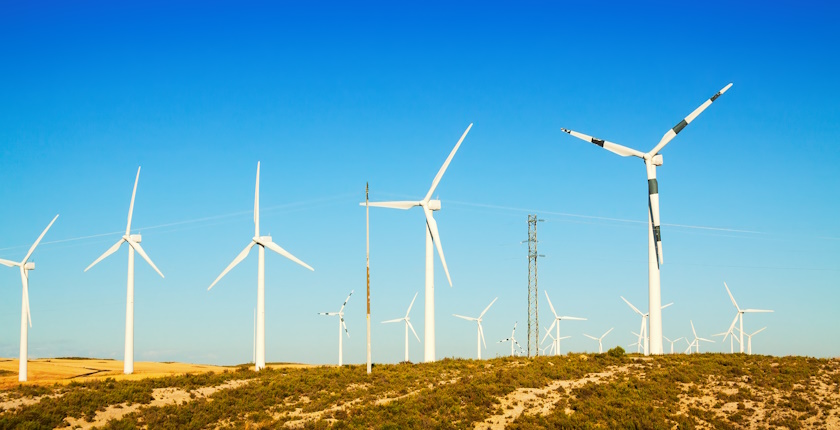
Wind farm project developers in Romania can bid by November 24 for state aid in the form of contracts for difference (CfDs). The call was issued for an additional auction, for 290 MW, after the regular round was completed with more than a third of the quota remaining unallocated.

The Ministry of Energy of Romania and transmission system operator Transelectrica formally launched their third auction today under the CfD state aid scheme for renewable energy. The additional round is only for wind power projects.

Only 1.26 GW was allocated of the available 2 GW in the second, regular auction. It was held within a EUR 3 billion renewable energy program under the European Union’s Modernisation Fund and Romania’s National Recovery and Resilience Plan (NRRP or PNRR).

Aurora Energy Research has interpreted the lack of interest as an indication that developers may have seen more value outside the CfD framework: in power purchase agreements (PPAs) and merchant options. The firm recently said it expected strike prices near the EUR 80 per MWh ceiling.

Financial offers will be opened on December 2, the calendar shows

The maximum price is the same as the last time. Notably, the quota for the additional auction is just 290 MW. Developers have until November 24 to apply with projects of at least 5 MW each. In addition to the bid, they need to submit a technical offer proving eligibility.

Transelectrica, the CfD scheme operator, is due to open the technical offers on November 17. Financial offers of the qualified applicants will be opened on December 2, according to the schedule. The winners would need to sign their contracts for difference by December 18.

The CfDs are for a 15-year period. When the market price of electricity is lower than the price in the contract, the government pays the private operator the difference for the electricity that the beneficiary sells. When it’s the other way around, the producer returns the difference.
by in News

Montenegro, Italy sign memorandum on electricity market coupling

A memorandum of understanding on Italy and Montenegro’s electricity market coupling was signed in Rome. It also paves the way for the installation of the second cable of the Monita interconnector, which runs under the Adriatic Sea.

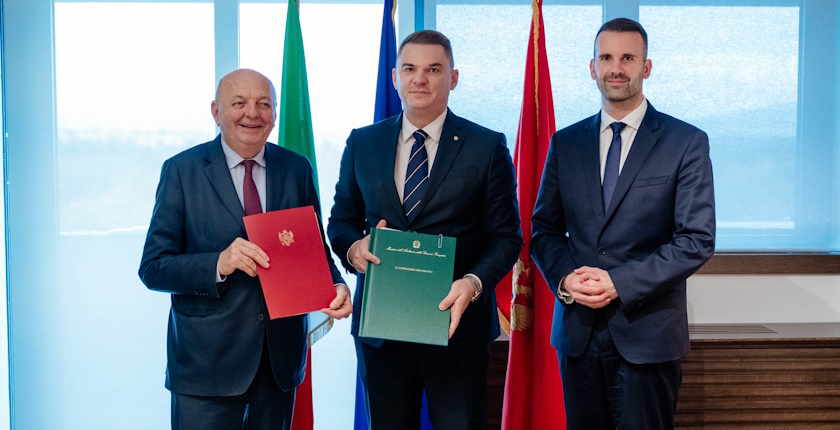
Minister of Energy and Mining of Montenegro Admir Šahmanović (pictured middle) and Italian Minister of the Environment and Energy Security Gilberto Pichetto Fratin (left) pointed out that energy links mean a more secure future, more stable supply and more development possibilities. They signed a bilateral memorandum of understanding on electricity market coupling.

Montenegrin Prime Minister Milojko Spajić (right) attended the ceremony together with Minister of Public Works, Spatial Planning and State Property Majda Adžović. The agreement is opening a new chapter in cooperation between the two countries and further strengthens Montenegro’s position on the European energy map, the Ministry of Energy and Mining said.

Market coupling alongside strengthening interconnection with second cable

Montenegro and Italy are linked with the Monita electricity interconnector, laid below the Adriatic Sea. In the new phase of their cooperation, they intend to couple their electricity markets for a freer power flow and safer functioning of the system, the ministry’s announcement reads.

“With this agreement, Montenegro is confirming its status as a reliable partner and energy bridge between the region and Europe. After several years of stagnation, this is a bit step forward, as it enables us to initiate the continuation of the project and the construction of the second wire of the subsea cable toward Italy. It opens the possibilities for our green, clean energy to become a distinguished export product, which means new income for companies and greater competitiveness in the European market. Today we once again confirmed good neighborly relations with Italy and we are showing that Montenegro is, slowly but firmly, entering the European family through concrete projects and partnerships. This is a step that brings our citizens long-term energy security and new opportunities for development to our companies,” Šahmanović stated.

Trade at Montenegro’s wholesale electricity market is expected to triple

There are 29 companies from 13 countries participating in Montenegro’s electricity market. Since the day-ahead market was established at the Montenegrin Power Exchange (MEPX or Belen) in April 2023, some 900 GWh of electricity changed hands, while the entire volume, together with the long-term market, amounts to about 3 TWh, the statement adds.

The memorandum’s implementation will create the conditions for at least three times higher trading volume, clearer price signal for new investments and a direct contribution to improving the security of supply, the ministry claimed.

National transmission system operators (TSOs) Terna and CGES have commissioned the first part of the interconnection in 2019. The current plan is to double the capacity to 1.2 GW. Šahmanović recently said the second line should be installed by 2031.

The project is valued at EUR 500 million. A double cable enables a two-way exchange at the same time.

by in News

SANY International takes over large PV-BESS project in southwestern Romania

Renewable energy company Sany International (Singapore) has completed the acquisition of a project for a solar power plant of 95 MW in peak capacity combined with 218 MWh in battery storage. The location is in Romania’s Dolj county.

SANY Renewable Energy signed power purchase agreements (PPAs) and contracts for difference (CfD) earlier this year in Serbia for its wind power projects Alibunar 1 and Alibunar 2. Just before that, and through another subsidiary, SANY Group secured its entry into the European market for solar power plants with energy storage

Renewable energy company SANY International (Singapore) is now the owner of a project for a solar power plant of 95 MW in peak capacity combined with 218 MWh in battery storage. The location is in Dobrești in Romania’s southwest.

Deal was signed in April

The shares transfer ceremony took place in Bucharest on October 15 in the presence of representatives of domestic developer Enero and local energy officials, the company said, as quoted by Economica.net. It is its first acquisition of such a project outside China.

SANY Singapore’s representative Xu Zhongtian signed the share purchase agreement in April. After that, the Commission for the Examination of Foreign Direct Investments (CEFDI or CEISD) approved the transaction.

Dobrești project is at ready-to-build stage

The project at a site 45 kilometers from Craiova in southwestern Romania is at a ready-to-build stage, Sany International (Singapore) revealed.

It is one of the largest hybrid projects integrating photovoltaics with a battery energy storage system (BESS) in Romania, the company added. Of note, Dolj is one of Romania’s coal regions, which are transitioning to cleaner energy sources.

“This investment reflects the growing interest in the clean energy sector in Central and Eastern Europe, in a context in which countries in the region accelerate efforts to achieve EU energy and climate targets. At the same time, SANY strengthens its strategic focus on renewable energy investments at the European level, aiming to expand its presence in fast-growing green energy markets,” the announcement reads.

SANY Group is an industrial conglomerate, established in 1989 in China. It is mostly known for construction machinery, but SANY Renewable Energy is one of the world’s biggest wind turbine manufacturers, too.

by in News

Two large photovoltaic parks commissioned in Albania in 2025

In the first eight months of this year, Albania added two solar power plants of an overall 150 MW and a hydropower facility of 48.9 MW to its transmission grid.

Hydropower plants account for almost all electricity production in Albania, but the share of photovoltaics is gradually growing. Several major solar parks already online – the Karavasta facility is the biggest in the Western Balkans. Conversely, there is not a single wind turbine in operation in the country.

According to the Energy Regulatory Authority (ERE), renewable electricity plants of 225 MW in total capacity have been put into operation in the first eight months of this year.

Project Blue completed

Five solar parks came online, with 156 MW altogether. The largest one is Sunny Side Solar (100 MW). The domestic Kastrati Group, which is active in construction and the oil business, built the facility in the Fier area in western Albania.

The Spv Blue 2 solar power plant has 50 MW. It is a joint project of Blessed Investment and Matrix Konstruksion. The location is in Sheq Marinas in Fier. Their Blue 1 PV park, in the same area, is the first fully privately financed solar park in Albania. The two companies commissioned it last year.

Sunny Side Solar and Blue 2 both began operating in August, as did one of the three remaining new units, of 2 MW each. The other two started generating electricity in April and June.

Gostimat hydropower complex launches production

Of the overall 69.2 MW in new hydropower plants, the Gostimat facility has 48.9 MW. Notably, ERE’s earlier updates show the project was for a complex of seven units on the river Gostima in the Shkumbin basin. The operator is Egnatia Hydropower.

MC Inerte’s project firm M.C. Energji Gojan built its 15 MW hydropower plant Gojan in the Puka area in northern Albania.

In addition, the regulatory body said nine hydropower plants of 26.4 MW in combined capacity have switched to the free market.

The country’s total electricity generation capacity was 3.2 GW at the end of last year.

by in News

Romania’s coal town Turceni starts EUR 380 million green energy transformation

Turceni is dependent on the local coal power plant, so the municipal authority is turning to agrivoltaics, energy storage and green hydrogen to replace it. The small town in southwestern Romania is kickstarting a EUR 380 million project.

The coal plant in Turceni used to be one of the biggest in Europe, at 2.3 GW. Located next to the eponymous town in Romania’s Gorj coal region, only two units of 660 MW in total are still operational. At the same time, dozens of such facilities across Europe are shutting down ahead of schedule. The power plant and its associated mines within Complexul Energetic Turceni have been essential for the local economy, which is under threat of devastation amid the country’s coal phaseout.

As with other coal regions in the European Union, the solution is in green energy and new technologies. The town hall has signed a contract with the European Investment Bank for agrisolar parks, energy storage units and the production and storage of green hydrogen.

Turceni town hall secures municipal land for green energy projects

The project is worth a whopping EUR 380 million, Mayor Constantin Popescu revealed. Turceni and its administrative area have fewer than seven thousand inhabitants.

More than 123 hectares of municipal land (pastures) and more than 200 hectares of private land were designated for the renewable energy hub, the mayor stressed.

Bankwatch: The coal region is transitioning to a future based on innovation, sustainability and strong partnerships

Partners in the project are Bankwatch Romania and GAL Sudul Gorjului, the so-called local action group for southern Gorj. Bankwatch said over 370 hectares would be switched to clean and sustainable energy production.

“We are glad that we had an important role in developing the project plan and aligning it with European environmental policies, as well as in applying for technical assistance. For a region that has been, for decades, a pillar of coal-fired energy, this project marks a strategic transformation: a transition to a future based on innovation, sustainability and strong partnerships,” the organization added.

Investments to start in 2026

Implementation is scheduled to begin next year. The project will contribute to a just transition of the region by increasing the production of electricity from renewable energy sources, Popescu asserted. In his words, it will be complementary to the local authority’s other ongoing and future decarbonization investments.

The mayor also highlighted the plans to use geothermal energy for district heating and agriculture.

Complexul Energetic Turceni is part of state-owned Complexul Energetic Oltenia (CE Oltenia). According to the company’s restructuring and decarbonization plan, the coal business will be separated from green energy and other investments.

They include projects for CCGT (combined-cycle gas turbine) power plants of 475 MW in Turceni and 800 MW in nearby Ișalnița, as the main replacement for coal plants. Both are suffering heavy delays.

Minister of Energy Bogdan Ivan said last week that CE Oltenia’s Ișalnița coal plant in neighboring Dolj county would be closed on January 1. Romania has asked the European Commission to delay the closure of several coal plant units, scheduled for this year, until 2030.

Earlier this year, a joint venture between CE Oltenia and OMV Petrom hired contractors for four solar power plants at former coal land, with a combined capacity of about 550 MW. One of the sites is in Ișalnița.

by in News

Energy Community’s CBAM Readiness Tracker: Western Balkans still far from exemption as full implementation nears

With less than three months remaining until the European Union’s Carbon Border Adjustment Mechanism (CBAM) is fully implemented, none of the Energy Community’s contracting parties has yet qualified for an exemption in the electricity segment, according to the 2025 CBAM Readiness Tracker. However, the Energy Community’s report suggests that efforts to meet the are gaining momentum, with Serbia, Moldova, North Macedonia, and Montenegro leading the way to market coupling with the EU, and almost all contracting parties planning to introduce carbon pricing.

These efforts signal a growing readiness across the Energy Community to turn CBAM into a catalyst for deeper regional energy market integration and decarbonization, according to the annual report.

“The progress reflected in this year’s tracker underlines that CBAM can drive – not deter – regional cooperation on the energy transition,” Energy Community Secretariat Director Artur Lorkowski stressed and added that the scheme should “serve as a bridge into the EU, not a barrier.”

Lorkowski: CBAM should serve as a bridge into the EU

Starting on January 1, 2026, the EU will charge fees on the CO2 emissions of goods imported from countries that don’t apply matching carbon pricing schemes. In addition to electricity, the carbon border tax will cover cement, iron and steel, aluminum, fertilizers, and hydrogen.

Serbia faces the highest exposure to CBAM costs

Estimates based on 2024 data show the CBAM exposure of EU electricity importers could reach around EUR 1.17 billion a year. Serbia accounts for the largest share, with an estimated EUR 612.5 million in annual CBAM costs, followed by North Macedonia, with about EUR 200 million, Montenegro, EUR 190 million, and Bosnia and Herzegovina, EUR 158 million. Moldova’s exposure is about EUR 6 million, while Albania, which has an electricity mix almost entirely dominated by renewables, faces no CBAM-related costs, according to the report.

The estimated average CBAM cost per megawatt-hour is EUR 33.14 for Moldova, EUR 59.71 for North Macedonia, EUR 62.45 for Montenegro, EUR 66.71 for Serbia, and EUR 73.37 for Bosnia and Herzegovina.

The criteria for a CBAM exemption for electricity include integrating the power market with the EU and introducing a carbon pricing system. A contracting party must also adopt EU regulations on energy, electricity, environment, and competition, increase the share of renewables in its energy mix to align with the EU’s 2030 targets, commit to climate neutrality by 2050 and submit a related roadmap to the EU, and implement measures to prevent indirect electricity imports from non-compliant countries.

Advances evident in emissions, renewables, and market coupling

The 2025 CBAM Readiness Tracker shows that last year alone, carbon intensity across the contracting parties’ power sectors fell by an average of 11%. At the same time, capacity from renewables, excluding large hydro, surged to 5.1 GW from 2 GW between 2020 and 2024. The expansion was driven almost entirely by solar and wind, helped by renewable energy auctions.

When it comes to electricity market integration, no contracting party has completed market coupling with the EU. However, Serbia, Moldova, North Macedonia, and Montenegro are approaching a “point of no return,” which represents a full transposition of EU regulations relevant for market coupling, according to the tracker.

The energy transition unfolding across the Energy Community contracting parties is both tangible and measurable, Adam Cwetsch, Head of the Green Deal Unit at the Energy Community Secretariat, told Balkan Green Energy News. “Carbon intensity in electricity production and economic output continues to fall, while renewable energy deployment accelerates through competitive auctions. This progress reflects a clear commitment to European decarbonisation goals and lays the foundation for deeper energy market integration and long-term climate neutrality,” he stressed.

The secretariat remains committed to ensuring the process continues smoothly – without obstacles from possible unintended impacts of CBAM, Cwetsch said.

Even though no contracting party has introduced a carbon pricing instrument for electricity, almost all of them have outlined plans to establish domestic systems that reflect their specific circumstances.

“This is a crucial step toward alignment with the EU’s carbon pricing framework under CBAM. The rollout of monitoring, reporting, and verification systems across the region is laying the groundwork for implementation and demonstrates growing readiness and credibility, even as timelines remain tight and challenges persist,” Cwetsch stated.

Available carbon pricing models are carbon taxes, ETS and a combination of the two

The available models are a carbon tax, an emissions trading system (ETS), and a hybrid version. The only contracting party that has no plans to introduce carbon pricing is Kosovo*, according to the report.

All contracting parties have concluded agreements to apply EU law in the fields of energy, electricity (including renewable energy), the environment, and competition. In each of them, the implementation of renewable energy legislation is either underway or showing visible progress, the report shows.

No Western Balkan country has included the EU’s 2050 climate goals into national legislation

On the other hand, Ukraine and Moldova are the only ones that have included the 2050 climate neutrality objective in national legislation, while no contracting party has submitted a corresponding roadmap to the EU.

Another requirement that no one has yet fulfilled is the establishment of an effective system to prevent indirect import of electricity into the EU from other third countries or territories that do not meet the CBAM exemption criteria for electricity.

* This designation is without prejudice to positions onstatus and is in line with UNSCR 1244/99 and the ICJ Opinion on the Kosovo declaration of independence.
by in News

NGEN inaugurates Austria’s most powerful battery energy storage system

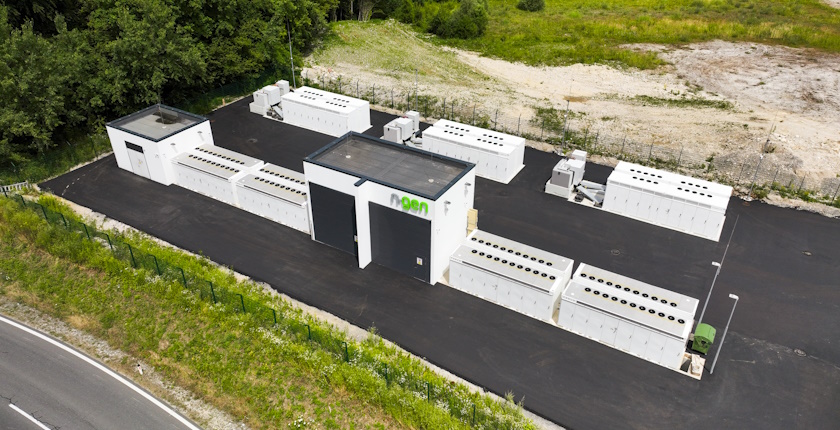
NGEN Group inaugurated its battery storage system in Austria’s Carinthia province after expanding it. At 21.9 MW in operating power and 43.8 MWh in capacity, it is again the country’s largest grid-supporting BESS.

With the official commissioning of the Arnoldstein-Gailitz battery energy storage system (BESS) in the Carinthia province, the NGEN Group has set another milestone in Austria’s energy transition. Following the completion of its second expansion phase in 2025, the facility now boasts 21.9 MW and 43.8 MWh in capacity, making it the country’s largest and most powerful grid-supporting battery storage power plant.

The project marks a significant step toward a sustainable, secure, and climate-neutral energy future and stands as a strong symbol of innovation, energy security, and technological excellence Made in Carinthia, the company stressed. NGEN is headquartered in Žirovnica in Slovenia, just across the border from Arnoldstein.

NGEN’s software contributes to grid stability, renewables deployment

NGEN Group developed the energy storage project and completed the standalone facility in 2023 as Austria’s first large-scale investment of its kind.

The company stressed that the BESS makes a crucial contribution to grid stability and the integration of renewable energy sources through its innovative software solutions. They enable peak shaving – to reduce load peaks and ease grid congestion – and the provision of balancing reserves for grid stability.

The company’s proprietary software enables trading optimization, peak shaving and balancing services

NGEN’s proprietary software also optimizes intraday and day-ahead trading on the power exchange. The Arnoldstein-Gailitz BESS enhances the security of supply by providing flexibility and helps accelerate the integration of renewables.

The company pointed out that the facility has a minimal impact on the landscape. NGEN Group offers rapid project implementation in urban environments and power supply support for charging stations, including lower electricity costs, around-the-clock availability of renewable energy and blackout resilience.

Redispatch capabilities prevent local supply bottlenecks through load flow balancing, the update adds.

Carinthia pioneering resilient, sustainable energy infrastructure

NGEN is already planning a four times larger BESS facility in Upper Austria.

“With the Arnoldstein-Gailitz battery storage power plant, we are sending a clear signal: Carinthia is becoming a pioneer of a modern, resilient, and sustainable energy infrastructure. This facility demonstrates what is possible when technology, political will, and local commitment come together. It bridges the gap between generation and consumption, makes solar energy reliably available, and ensures true energy security,” managing directors of NGEN Austria Matija Dolinar and Andreas Ljuba explained in a joint statement.

The expanded BESS underscores Carinthia’s role as a hub of innovation and demonstrates that grid-stabilizing storage technologies are decisive for the energy transition, not only in Austria but across Europe, the company said.

“Our vision is a fully digitalized and decentralized European electricity system that keeps pace with the rapid growth of renewable energy and sustainably reduces CO2 emissions,” said Chief Executive Officer and Founder of NGEN Group Roman Bernard.

Since 2019, the company has been combining its expertise in engineering, procurement and construction (EPC) services with cutting-edge storage technology and advanced energy market connectivity. NGEN Group currently employs over 200 people across nine countries, including 40 in Austria. It has an annual turnover of EUR 100 million, of which EUR 60 million in Austria.

by in News

Principia builds CfD-backed battery storage facility in Greece

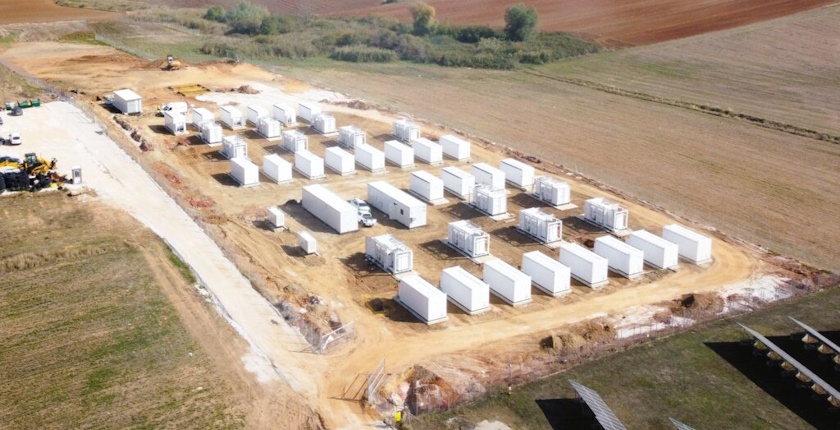
Principia built its first battery system in just six months. The Themelio facility in Chalkidiki in northern Greece, with 49 MW in operating power, will help reduce curtailments from wind and solar power plants and contribute to grid stability.

One of the first standalone battery energy storage systems (BESS) in Greece is coming online in December. Principia said it built the Themelio facility in the Vouno area of Chalkidiki peninsula, aligned with the national plan for grid stability and electrification.

The BESS has 49 MW in capability and a two-hour duration, translating to a guaranteed capacity of 98 MWh, while the nominal capacity is 127 MWh.

Principia is an equally-owned joint venture of Italy-based Enel and funds managed by Macquarie Asset Management, headquartered in Australia. The company said the name Themelio, foundation, symbolizes the beginning of its new era, diversifying beyond renewables.

The construction of the battery system near the town of Polygyros in the Central Macedonia region began in April. It will help reduce curtailments from wind and solar plants, especially in grid-congested areas, by absorbing excess electricity and injecting it back into the system when needed, Principia explained.

The battery energy storage system features a guaranteed capacity of 98 MWh

BESS also enhances system stability by providing power during peak demand and ensuring smooth grid operation. In addition, the unit promotes energy decentralization, as it is located close to renewable energy production sites, contributing to the creation of a more flexible and intelligent energy environment, the joint venture pointed out.

Eurobank financed half of the EUR 28 million project.

The new system in northern Greece consists of 26 Sungrow battery containers, each with a maximum capacity of 5 MWh and equipped with advanced CALB 314 Ah cells. Themelio includes 13 Sungrow power stations, containing 5,140 kW transformers and 33 kV medium-voltage switchgear, as well as two medium-voltage terminal substations.

The project won government support last year, in the form of a contract for difference (CfD), in Greece’s second auction for standalone energy storage systems. Almost all other beneficiaries of the program are struggling with strict deadlines.

by in News

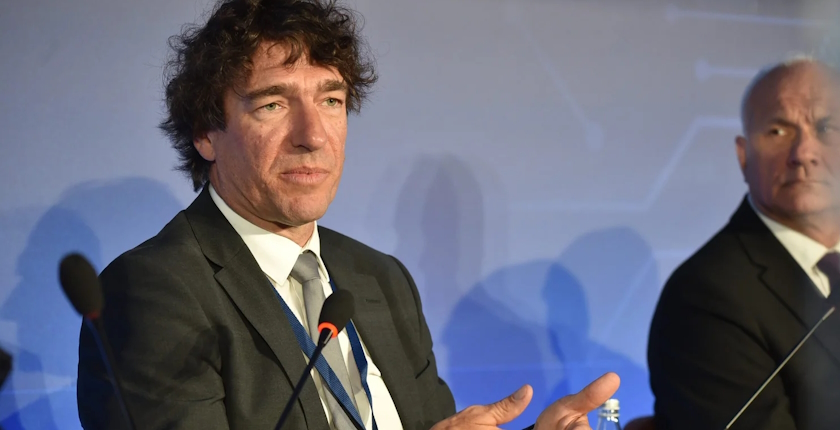
UPDATE: CEO Dejan Paravan leaving Slovenian state-owned GEN energija

CEO of Slovenian state-owned energy utility GEN energija Dejan Paravan has resigned. According to a news report, he is joining NGEN, but the company still didn’t comment on the speculation.

GEN energija, which is developing a project for Slovenia’s second nuclear power plant, is about to appoint a new CEO. After necenzurirano.si reported that Dejan Paravan, the current head of the government-controlled energy company, has quit, the supervisory board officially acknowledged that he submitted his resignation on October 10.

The news website also learned that he would assume a position at privately owned NGEN, which didn’t issue any statements yet on the matter. The same media outlet later wrote that Paravan has agreed to step down at the end of November.

Nada Drobne Popović and Bruno Glaser, the other two members of the board, allegedly offered their resignations and they were rejected.

Paravan has been a close associate of Prime Minister Robert Golob for two decades. The government appointed him as CEO in October 2022.

GEN energija holds the Slovenian half of the Krško nuclear power plant (NEK or, in Slovenian, JEK), and owns hydropower plant operators Savske elektrarne Ljubljana (SEL) and Hidroelektrarne na Spodnji Savi (HESS), and the Brestanica gas-fired power plant.

GEN-I, which was co-founded by Prime Minister Golob, is also part of GEN Group. He was the firm’s CEO until 2021.

As GEN energija’s chief, Paravan is responsible for the NEK 2 (JEK 2) project, for another nuclear power plant. The investment is valued at between EUR 9 billion and EUR 16 billion.

A referendum was scheduled about the proposal, but the National Assembly canceled the vote a year ago.

NGEN builds and operates battery energy storage systems (BESS), and develops software and hardware for running decentralized systems, cybersecurity and access to all segments of the energy market.

Of note, both Dejan Paravan and Co-Founder and CEO of NGEN Group Roman Bernard spoke at this year’s Belgrade Energy Forum (BEF 2025), organized by Balkan Green Energy News.

by in News

Renalfa IPP expands its Tenevo, Kaolinovo PV plants in Bulgaria with batteries

Vienna-based Renalfa IPP commissioned a 65 MW / 260 MWh battery energy storage system within its hybrid power plant project in Tenevo. Also in Bulgaria, the joint venture expanded its Kaolinovo solar power plant to 33 MW and added a BESS of 33 MW in operating power and 110 MWh in capacity.

One of the biggest hybrid power plants in Southeastern Europe is gradually coming together. Renalfa IPP, which last year marked the start of the BESS boom in Bulgaria, said it added a battery system of 65 MW in capability and 110 MWh in capacity to the Tenevo solar power plant.

Project firm Tenevo Solar Technologies is a joint venture with Denmark-based Eurowind Energy. Renalfa IPP, headquartered in Austria’s capital city, is itself a joint venture, established by clean energy and e-mobility company Renalfa Solarpro Group and French renewable energy infrastructure fund manager RGreen Invest.

Ultimately, the plan is to build a 250 MW wind farm at the Tenevo site, in Yambol province in Bulgaria’s southeast. The first 69 MW in peak capacity of the solar power plant came online two months ago, within a 237.6 MW project.

Tenevo BESS to grow to 315 MW

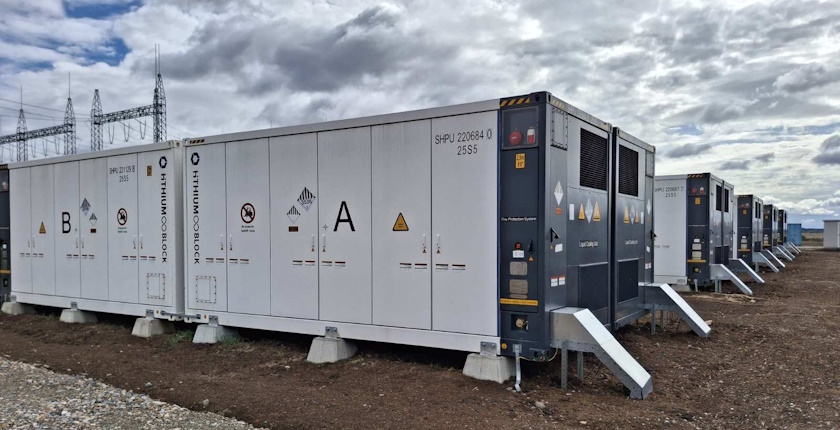
Tenevo is one of the biggest co-located BESS projects in Europe to date, according to Renalfa IPP, which added that it surpassed 1 GWh of energy storage in operation.

The firm aims to increase the battery facility to 315 MW and 760 MWh by early next year, when it expects to complete the solar park as well.

Solarpro Bulgaria builds both battery storage facilities

The project manager for the Tenevo BESS is Solarpro Bulgaria, part of Renalfa Solarpro Group, while Hithium and Kehua supplied the equipment. Solarpro and Hithium established cooperation two years ago and recently expanded it.

The same affiliate was the project manager and engineering, procurement and construction (EPC) contractor for the expansion of the Kaolinovo photovoltaic park in northeastern Bulgaria. Renalfa IPP said it grew to 33 MW in peak capacity from 10 MW, while a BESS of 33 MW and 110 MWh was also added. The facility was built in 2012.

Renalfa IPP is also active in Hungary, Romania, and North Macedonia, where it is about to add batteries to its Oslomej PV plant. In the last update, it said it has 554 MW in operational generating assets, BESS of 455 MW and 1.01 GWh in total, and over 1 GW of projects in late-stage development.