by in News

Türk Telekom puts solar power plant into operation as part of 530 MW project

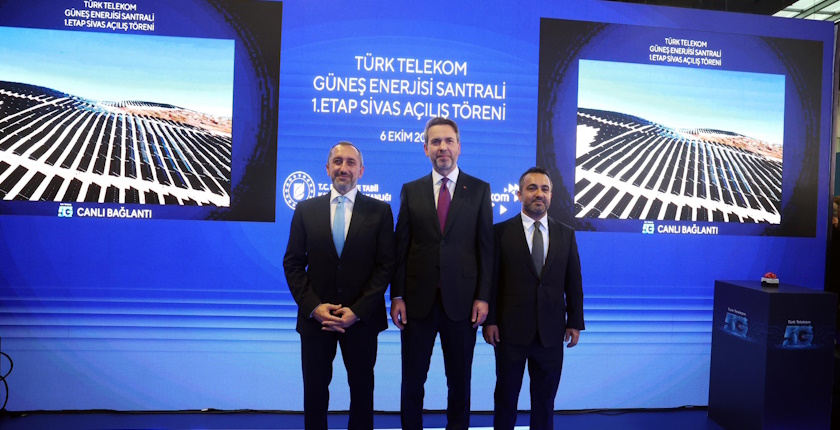
Telecommunications operator Türk Telekom has inaugurated the first part of a solar power plant of 128 MW in peak capacity. The facility in Sivas province in Central Anatolia is one of the company’s three planned photovoltaic systems, totaling 530 MW.

Solar power, affordable and easy to install, is cost-effective for nearly all social and economic activity. In Southeastern Europe and beyond, it has become a mainstream technology, from municipal authorities and local institutions to industrial production. Türk Telekom stands out in the region as a major telecommunications company investing massively in photovoltaics.

The Turkish state-owned firm commissioned the first part of a solar power plant of 128 MW in peak capacity. Earlier it integrated 1.2 MW of solar energy with its 370 base stations and reached 5.5 MW overall.

The new solar park is on 130 hectares in the Zara district in Sivas province, Central Anatolia. When completed, it will cover 15% of the company’s consumption with its estimated annual output of 196 GWh.

Bayraktar: Many companies transformed from energy consumers to producers

At a ceremony at the 11th Energy Efficiency Forum and Exhibition in Istanbul, Minister of Energy and Natural Resources Alparslan Bayraktar put the completed segment into operation using a remote-controlled 5G wireless system. The energy revolution in Turkey has transformed many companies from energy consumers to producers, he pointed out.

Recalling that renewable electricity plants of more than 6 GW in total were completed last year, the minister expressed confidence that 2025 would be a record year. Turkey is heading toward 9 GW or 10 GW, striving to increase the newly installed capacity every year, Bayraktar said.

Türk Telekom to cover two thirds of its electricity needs with photovoltaics

ZTE won the tender late last year for the 128 MW project. The contractor installed mono-crystalline bifacial double-glass N-type PV panels and 350 kW inverters.

According to Türk Telekom’s Chief Executive Officer Ümit Önal, the Sivas plant and two other future solar parks, in Malatya and Ağrı, would meet 65% of the company’s electricity demand. Spanning 600 hectares, they would have 530 MW in combined peak capacity and generate an estimated 800 GWh per year.

Together with its affiliate TT Ventures, Türk Telekom has set up 114 electric vehicle charging units in 40 locations in 11 provinces. The number, within their E4 Charging project, is estimated to grow to more than two hundred this year, at more than 90 sites in 33 provinces.
by in News

International Power Supply inaugurates Bulgaria’s first battery gigafactory

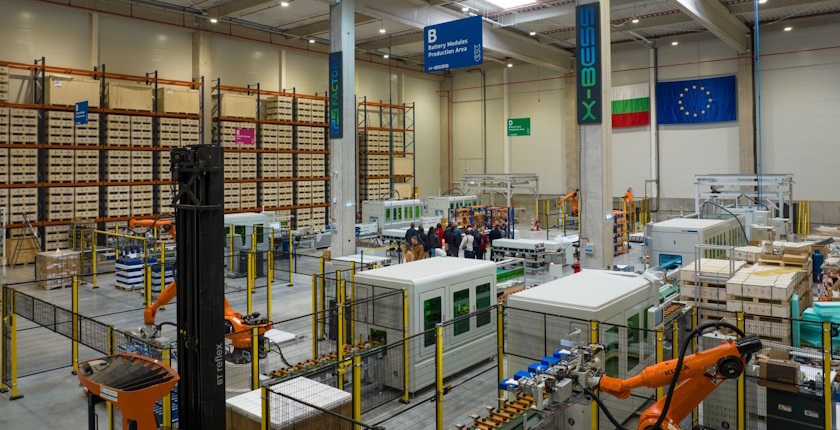
International Power Supply (IPS) opened its Factory X1, with a capacity of 3 GWh per year. It is the first gigafactory in Bulgaria for battery energy storage systems (BESS).

Recognized by the European Commission as a strategic project for a net zero industry, Factory X1 officially began production. International Power Supply (IPS) held the inauguration ceremony at the site in Chelopechene in the Kremikovtsi industrial district, part of the territory of Bulgaria’s capital Sofia.

The first battery energy storage gigafactory in the country is part of the Hemus high-tech industrial park. The facility will manufacture X-BESS modular systems of 8.2 MWh. Its annual capacity is 3 GW but IPS plans to lift it to 5 GW by the middle of next year.

Everything made in Europe except for battery cells

The company’s portfolio includes a proprietary battery management system (BMS). Actually, more than 70% of the supply chain is based in Europe, according to IPS. It includes distributed liquid cooling systems, mechanical structures, housings, electronics, control units, and inverters, the announcement reads.

“Made in Europe – the mission is possible. European know-how, European technology and IP, European sovereign BESS Gigafactory recognized as strategic manufacturing project from the European Commission. Today, it all starts – right here in Bulgaria,” said Chief Executive Officer Alexander Rangelov.

The lithium ion systems feature Chinese EVE and Cornex battery cells.

Power Technology Investment Group holds almost two thirds of IPS. It is controlled by the family of the founder Stoil Rangelov Trifonov. SIL Energy Invest is a minority partner.

Another factory could revive one of Bulgaria’s coal regions

Another manufacturing project is in the pipeline, worth EUR 160 million. It is for 10 GWh. IPS is seeking financial support from the European Union for the endeavor.

Locations in the vicinity of coal plants in the Maritsa East complex and Bobov Dol are under consideration, Economic.bg reported.

CEO Alexander Rangelov revealed that MM Energy decided to build a 10 GWh manufacturing facility in Poland using IPS’s technology.

by in News

CJR Renewables completes construction of 102 MW Urleasca wind farm in Romania

The Urleasca wind farm in Brăila county in eastern Romania is complete, contractor CJR Renewables said. The 102 MW facility owned by BIG Mega Renewable Energy will generate an estimated 277 GWh.

Wind power investments are returning to full speed in Romania, following a decade-long break and a stellar expansion in the photovoltaics segment over the past several years. Portugal-based CJR Renewables, the contractor in the Urleasca project, announced that the 102 MW facility is complete.

Urleasca is a village in Traian commune, in the vicinity of the city of Brăila, northeast of Bucharest. The developer, BIG Mega Renewable Energy, secured EUR 92 million in financing last year from the European Bank for Reconstruction and Development (EBRD) and OTP Bank. It earlier valued the investment at EUR 109 million,

The Israeli firm achieved a deal in 2021 to purchase the project in Romania. CJR Renewables pointed out that the wind farm would generate an estimated 277 GWh per year, which would displace 115,000 tons of CO2 emissions.

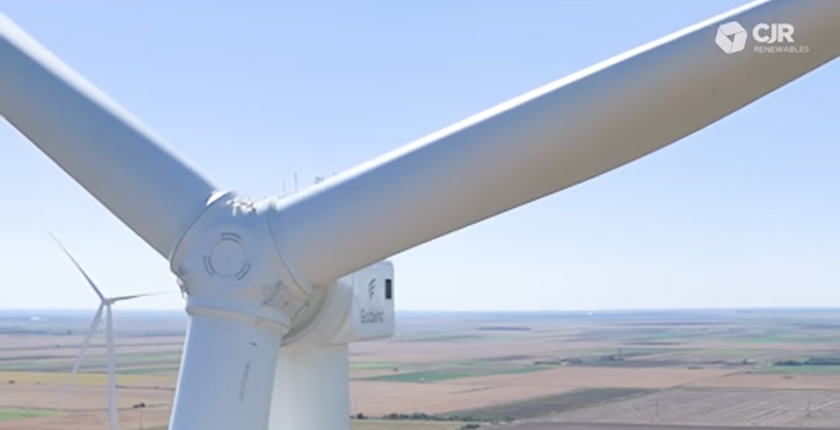
Urleasca consists of 17 wind turbines, Goldwind GW 165-6.0, each of 6 MW. The contractor also built 20.2 kilometers of internal and local roads.

BIG Mega Renewable Energy is fully owned by BIG Energia Holdings, established in Hungary, which is in turn a subsidiary of BIG Shopping Centers and Mega OR.

A different wind power project for a site in Urleasca won state support in August at Romania’s second renewable energy auction.

by in News

Karatzis, Metlen to install Greece’s largest battery in joint venture

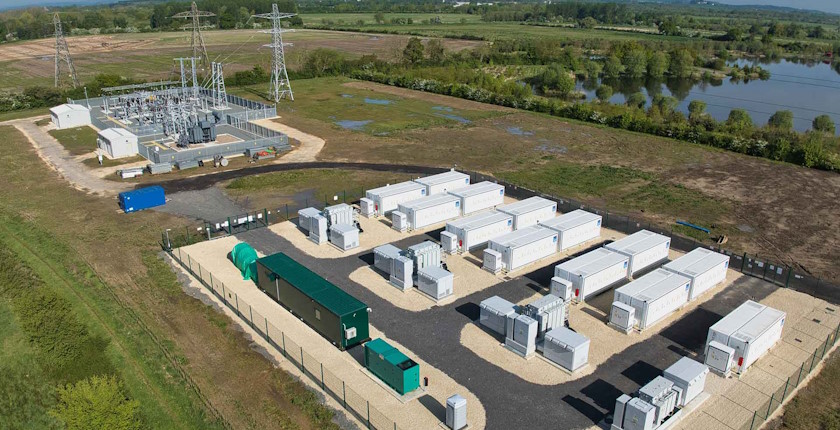
Karatzis Group of Companies and Metlen are establishing a joint venture for a standalone battery energy storage system (BESS) of 330 MW and 790 MWh. It is the biggest project in Greece so far and one of the biggest in Europe.

Metlen said it is entering into a new strategic partnership in Greece with Karatzis Group of Companies, through a joint venture with ownership stakes of 49% and 51% respectively, for the development, construction, operation, and energy management of a BESS with 330MW in operating power and a capacity of 790 MWh. The site is in Thessaly.

The two Greek companies are building upon their cooperation in the sale and purchase of green energy. Since August 2024, it has involved the implementation of a portfolio of solar power plants with a total capacity of 262 MW in the same region, the update adds.

The partners value their BESS investment at EUR 170 million

The BESS would be the largest standalone storage unit planned to date in Greece and one of the biggest in Europe, Metlen said. Total investment amounts to some EUR 170 million.

Karatzis and Metlen expect to complete it in the second quarter of next year. The partners expect no further grants or tax reliefs for the project, according to the announcement.

Metlen is tasked with full construction, operation, and maintenance of the unit through its M Renewables segment. It has presence and projects on five continents, the company pointed out. In 2024 alone, Metlen said it completed storage projects with a total capacity of 0.7 GWh and is in the final stages of agreements for third-party projects totaling 2.2 GWh.

Karatzis, based in Crete, manufactures a variety of netting products. It has five plants. In recent years it expanded to the construction of photovoltaic plants. The Metlen conglomerate produces metals and has a vertical presence in the energy market, being one the largest producers and suppliers in Greece.

by in News

Policy changes in US will have marginal impact on global energy transition

Policy changes in the United States introduced by the administration of President Donald Trump will have only a marginal impact on the global energy transition, according to the latest Energy Transition Outlook, produced by DNV.

Norwegian consulting firm DNV pointed out in a report that energy use by artificial intelligence may seem alarming, but that it is projected to stay below booming sectors like electric vehicle (EV) charging and cooling of buildings.

“DNV’s annual Energy Transition Outlook has consistently forecast a shift from today’s 80/20 fossil/non-fossil primary energy mix to a 50/50 mix by 2050. That is still our prediction this year. Although some aspects of the transition are supercharged and progressing rapidly, other aspects have hit turbulence and are delayed. This leads to a marginally slower transition than our forecast last year,” CEO Remi Eriksen said.

According to the report, in the US, fossil fuel promotion and the reversal of clean energy support policies are slowing the nation’s transition.

However, China continues to set renewables buildout records with 390 GW of solar PV (56% share of new global capacity) and 86 GW of wind (60% share) expected to be installed this year. The country is also fueling the transition in the rest of the world with its cleantech exports.

In the meantime, Europe is seeking to balance climate action with competitiveness, the report reads.

The continent is having a slow success with harder-to-decarbonize sectors, but renewable energy buildout remains relatively strong.

In the rest of the world, most countries are embracing competitive Chinese technologies, with year-on-year growth in installations at around 25%, data showed.

Eriksen said cheap renewable electrons stored when necessary in ever-cheaper batteries are already an unstoppable force.

“We forecast that solar – both with and without storage – and wind will be 32% of the global power mix by 2030. We expect a resurgence in offshore wind by 2030, such that variable renewables will provide more than 50% of all electricity by 2040,” he stated.

Solar power is 10% of all power produced worldwide today, and DNV projected it will be 20% in 2029 and 40% in 2045. Renewables would reach 65% in the global electricity mix by 2040, the firm added.

AI’s energy demand would be lowered by efficiency effects

According to Eriksen, soaring power demand from AI data centers is placing additional strain on already congested grids, particularly in North America.

DNV ‘s analysis finds that AI’s energy demand growth is likely to become more linear over time, outpaced, for instance, by EV charging and cooling demand, even as the cognitive services of AI expand exponentially. The main reason is growing efficiency.

AI’s energy use is forecasted at only 3% of global electricity by 2040. Data center energy use will quintuple by 2040, equalling 5% of all global electricity. AI’s share would be 3%, with the remaining 2% for general purpose data centers.

The report highlighted large regional variations – AI is the biggest driver of electricity consumption growth in North America, compared to EV charging in Europe and EVs and cooling in China and India.

For the first time, this year’s analysis extends to 2060

The report noted that this year, the world reached the milestone of more than 50 million EVs on the road. Most of them, 60%, are in China, with Europe at 21%, and North America at 13%.

The point of inflection — EVs at 50% of global new passenger vehicle sales — will be reached in 2032, the report projected.

For the first time, this year’s analysis extends to 2060 to reflect the continued transformation of the energy system after 2050. The report recalled that it is now widely acknowledged that the world will not achieve net zero emissions by 2050, meaning warming would exceed 1.5 degrees Celsius.

A decarbonization of energy mix is unstoppable but too slow, setting up grave risks for future generations, Eriksen concluded.

by in News

Bulgaria’s BEH wants direct link to future Black Sea cable to participate in project

Executive Director of Bulgarian Energy Holding (BEH) Valentin Nikolov hinted that the country would opt for the alternative electricity corridor to the Caucasus, via Turkey, if the proposed interconnector under the Black Sea doesn’t include a direct link to the Bulgarian grid.

Turkey, Azerbaijan, Georgia and Bulgaria formalized an initiative in April for an electricity corridor that would run through Turkey. It appeared to rival the Black Sea Submarine Cable (BSSC) project for a submarine cable between Georgia and Romania. The investment is managed by the Green Energy Corridor Power Co. (GECO), founded by transmission system operators of Romania, Georgia, Azerbaijan and Hungary.

Bulgaria has expressed the intention to join the project for the link under the Black Sea. However, state-owned BEH wants a direct connection to the country’s grid, Executive Director Valentin Nikolov says, hinting that otherwise Bulgaria wouldn’t participate.

Nikolov: Political interests are beginning to prevail

The options are for the cable to branch out and land in both countries or only in Romania, Economic.bg reported.

It is important for deciding whether to participate in the project, Nikolov pointed out. “There is no great interest” for Bulgaria if the interconnector enters Romania and extends to Bulgaria from there, and to Hungary, he claimed. Then it is better to go through Turkey, the power utility’s CEO said.

Route through Bulgaria would enable access to European funds for national grid

The feasibility study underway will lay out options and information on where it would be most profitable to lay the cable. According to Nikolov, it is through Bulgaria.

“If we want to develop our grid and use European funding, it must go through Bulgaria, and the connection with Romania can be paid for with European funds,” he added.

“Political interests are beginning to prevail,” in his words.

Black Sea interconnector to consist of three cables

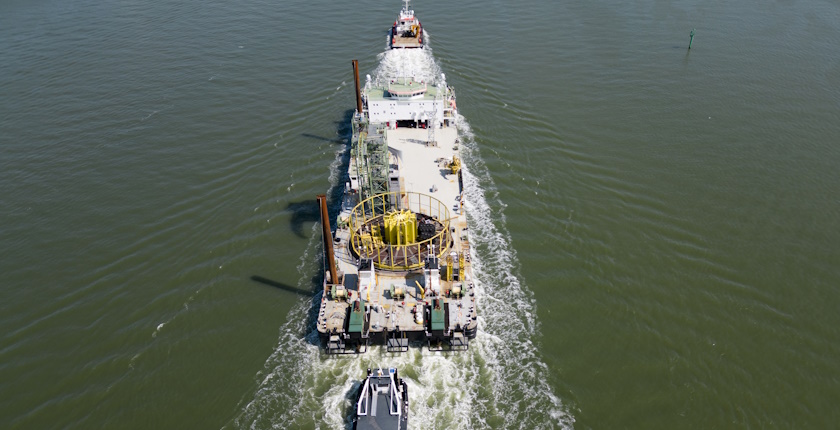
Azerbaijan is planning to export 4 GW through the corridor from the Caspian Sea via the Black Sea to Europe. The idea is for the link to consist of three cables, in fact, the article reads. Only a handful of manufacturers in the world can manufacture them for depths of up to 2,000 meters, and the number of ships that can lay them is limited, the news website added.

Kazakhstan and Turkmenistan and other Central Asian countries are interested in producing renewable electricity for exports to Europe, too.

The Black Sea submarine link project is valued at EUR 3.5 billion and it is expected to require up to four years, the media outlet noted. The European Commission is considering to fund the investment with EUR 2.3 billion.

by in News

Montenegrin TSO CGES buying power transmission lines from its Serbian counterpart EMS

Serbian transmission system operator (TSO) Elektromreža Srbije (EMS) and Montenegrin TSO CGES agreed that each would become the owner of the parts of overhead transmission lines on its country’s territory, and signed a contract.

EMS and CGES signed a contract on the purchase of electricity infrastructure. The two state-owned TSOs said it is the confirmation of their many years of cooperation and of their joint commitment to the development of a stable and reliable regional electricity system.

The reason for such an arrangement is that maintenance and utilization of transmission lines on the other country’s territory is complex and demanding, both from the technical and legal perspectives, the announcement reads.

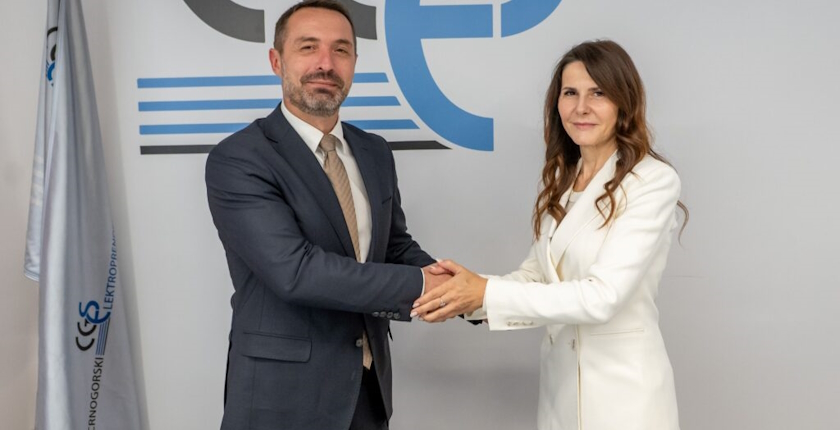
Contract was signed by CEOs Jelena Matejić, Ivan Asanović

CGES will become the owner of the parts of EMS’s interconnector power lines of 220 kV and 110 kV that are located in Montenegro, they said, without revealing the purchase sum.

CGES is taking over the parts of EMS’s interconnector power lines that are on the territory of Montenegro

The contract was signed by General Manager of EMS Jelena Matejić and Executive Director of CGES Ivan Asanović. The two companies explained that they have initiated the search for a sustainable solution for interconnector power lines of 220 kV from Pljevlja in Montenegro to Bajina Bašta in Serbia and from Pljevlja to Bistrica in Serbia, and the one from Pljevlja 1 to Potpeć in Serbia, of 110 kV, all owned by EMS, and for CGES’s internal overhead power line Mojkovac-Pljevlja of 220 kV, which has a section in neighboring Serbia.

Deal aimed at simplifying operations, greater legal clarity

They adopted a model under which each TSO is becoming the owner of transmission lines on the territory of its country. It is a principle enabling simpler management, more efficient maintenance and greater legal and operational clarity for transmission systems, the operators said.

“With this contract we are creating a more stable basis for a technically and legally regulated transmission system, additionally strengthening the reliability and safety of the electricity grid in the region,” Jelena Matejić stated.

The companies showed that they are able to solve complex issues jointly and in the interest of both countries and all users of the electricity system, according to CGES head Ivan Asanović.

Of note, EMS has a 15% share in CGES, while the Government of Montenegro controls 55.4%. Jelena Matejić is a member of the board of directors. Italian TSO Terna owns 22.1%.

by in News

Romania’s Hidroelectrica to equip hydropower plants with battery storage

Romanian state-owned power utility Hidroelectrica will install storage on all its run-of-river hydropower plants, to be able to switch the supply of surplus electricity to the evening peak, according to interim CEO Bogdan Nicolae Badea.

Hybrid power plants are all the rage. Two- and even three-way combinations between batteries and solar and wind power plants have become more and more popular over the past few years, as they enable steadier and more predictable supply. But energy storage can have a meaningful role in tandem with hydropower as well, and interim President of the Board of Directors of Hidroelectrica Bogdan Nicolae Badea revealed plans for such investments.

Namely, impoundment hydroelectric plants control the flow from the reservoir through the dam, so much of their production can be adjusted to demand. Run-of-river facilities can store little to no water, which is why the Romanian state-owned hydropower plant operator intends to add energy storage to its entire operational portfolio in the segment, Badea explained.

Goal is to lower daily price spreads at power exchange

The idea is to switch the supply of electricity from times of surplus within the day to the evening peak, the interim CEO stressed at the Profit Energy.forum. There are seven to eight slots a day at the electricity exchange with very low or negative prices, and others with excessive prices, Badea pointed out.

“Even in free market conditions and affected by external crises, the cost borne by consumers could be somewhat lower than today if Romania had energy storage capacities, so that daily consumption peaks are in balance with production peaks,” the interim CEO underscored.

Price caps hurting Romanian state budget

Romania caps power prices, which harms the state budget, Badea noted and said there are two ways to achieve a balance.

“The first solution is a systemic one – and here all the important participants in the energy sector must invest – and Hidroelectrica is doing this, investing primarily in diversification. We have a wind farm in operation today. We are investing a lot in the storage area and we are trying to combine renewable sources, hydro, photovoltaics, floating photovoltaics,” he stated.

Hidroelectrica signed a contract in April with a consortium of Romanian companies Prime Batteries Technology and Enevo Group, for a lithium ion battery energy storage system at its Crucea Nord wind farm.

Hidroelectrica is investing in storage, solar power and hybrid power plant projects

The company also plans to integrate a BESS with hydropower plant Iron Gate 2 (Porţile de Fier 2) on the Danube. The project is valued at EUR 61.2 million. Some hydropower plants are set to be equipped with rooftop photovoltaic systems.

Badea was also the company chief from 2017 to 2023. He was recently reappointed, after he was the chief investment officer for almost two years.

For the first six months of this year, hydrological data shows a situation reminiscent of the critical moment when the company entered insolvency, in 2015, Badea added. However, unlike that period, today Hidroelectrica is a profitable, stable company and a pillar of the energy system, he stressed.

by in News

Under Reform Agenda, BiH commits to aligning electricity prices with market

By adopting the Reform Agenda, Bosnia and Herzegovina committed to liberalizing the electricity market, aligning electricity prices with market levels, and supporting the green transition through renewable energy sources and energy efficiency.

The Council of Ministers of Bosnia and Herzegovina adopted the Reform Agenda, after a delay longer than one year, and submitted it to the European Commission. It made the move just as the deadline, set by the commission, was about to expire on September 30.

If it failed to adopt the document, BiH would have lost EUR 108 million out of a total of EUR 976.6 million that was allocated to the country under the Growth Plan for the Western Balkans, worth around EUR 6 billion overall. Due to the delay, BiH already lost EUR 108 million in July.

The first step in price harmonization is to conduct a study on different scenarios

One of the obligations from the Reform Agenda is to align household electricity prices with market prices in the region and the European Union by 2027, domestic media reported.

The measure is aimed at making price formation more transparent and integrating BiH better into the regional and European electricity markets.

The first step in price harmonization would be to conduct a study on different scenarios for price deregulation for households. It will serve as a tool to plan price increases. The study is expected to be completed before the end of the year.

The current price of electricity in BiH is below ten eurocents

According to the latest Eurostat data, for the second half of last year, the price of electricity for households in BiH was below ten eurocents. Prices in the European Union ranged from ten eurocents in Hungary to 40 in Ireland.

The European Commission is required to assess the Reform Agenda and approve it if it matches expectations. Payments are directly linked to the measures that governments in the region vow to implement.

Of note, in early July, the European Commission proposed the first tranches from the support package, worth EUR 87.7 million in total, for projects in Albania, Montenegro, and Serbia.

by in News

Powering the Future with Sustainable Energy – North Macedonia to host 14-IFESD forum on October 28-30

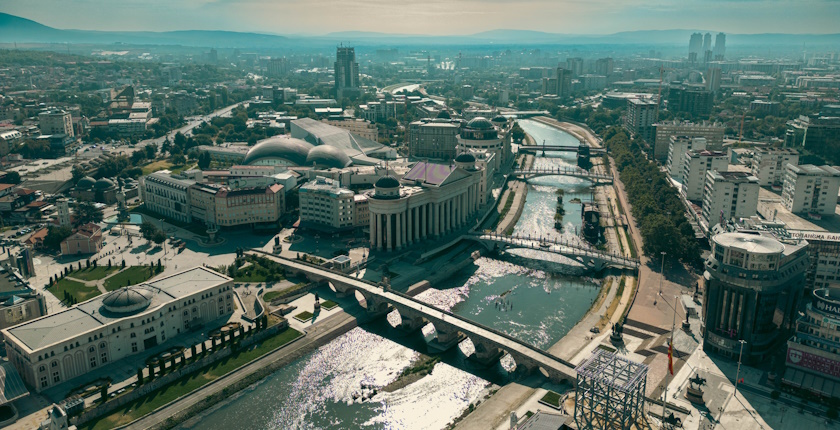
Over 300 officials, policymakers, experts, business leaders, scholars and civil society representatives are gathering in Skopje on October 28 at the three-day International Forum on Energy for Sustainable Development (14-IFESD). Key topics include energy connectivity, energy security, a just energy transition and international energy cooperation.

The 14th International Forum on Energy for Sustainable Development (14-IFESD) will be held from October 28 to 30 at the Hotel Holiday Inn Skopje in North Macedonia. This year’s theme, From Goals to Action: Powering the Future with Sustainable Energy, will guide discussions among more than 300 participants, including officials, policymakers, energy experts, business leaders, scholars and civil society representatives.

They will discuss critical topics such as energy connectivity, energy security, just energy transition, international energy cooperation and collective efforts to accelerate the implementation of the United Nations 2030 Agenda for Sustainable Development.

The forum will serve as a platform for shaping actionable strategies to accelerate progress toward global sustainable energy goals

The Ministry of Energy, Mining and Mineral Resources is organizing the event in collaboration with the UN Development Programme (UNDP) Country Office in North Macedonia and the five regional commissions: UN Economic Commission for Europe (UNECE), UN Economic and Social Commission for Asia and the Pacific (UNESCAP), UN Economic Commission for Latin America and the Caribbean (UNECLAC), UN Economic Commission for Africa (UNECA) and Economic and Social Commission for Western Asia (ESCWA).

Last year’s IFESD was held in Bangkok.

The speakers list includes Prime Minister Hristijan Mickoski, Minister of Energy, Mining and Mineral Resources Sanja Božinovska, Energy Community Secretariat Director Artur Lorkowski and Minister of Energy and Mining of Montenegro Admir Šahmanović.

The forum will serve as a platform for shaping actionable strategies to accelerate progress toward global sustainable energy goals, the organizers said.

One of the segments on the first day of 14-IFESD is dedicated to opportunities for the mitigation of methane emissions from the coal sector. It will take place in a hybrid format – onsite and online.