by in News

Eurowind Energy’s solar power project in Romania gets CfD thanks to auction list dropouts

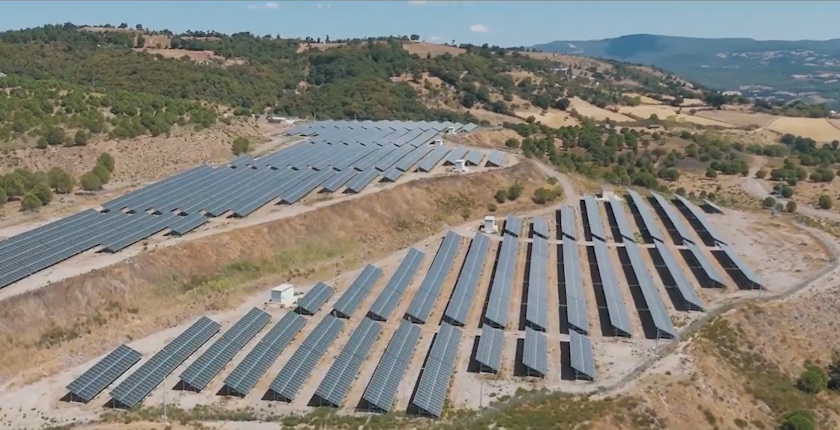
Eurowind Energy’s Ewe Solar Project in Romania, of 110 MW, is now eligible for government support in the form of a contract for difference (CfD), even though it landed just below the line in the last renewable energy auction. It got upgraded from the reserve list as the developer of two winning photovoltaic endeavors has decided to exclude some sections.

Depending on the policy framework and market conditions, renewable energy investors sometimes opt for power purchase agreements (PPAs) or the electricity exchange instead of locking in a fixed price for the long term in a government support scheme. Enery Element, which won CfDs in Romania’s last solar power auction, decided not to sign some of the contracts. It means Eurowind Energy, the first in the reserve list with its Ewe Solar Project, can now fill the quota instead of its competitor.

Enery Element has obtained the rights to the CfDs with two projects that it conveniently split into several sections each. It enabled it to withdraw only parts of the future photovoltaic plants.

Enery Element cancels three sections of 46 MW altogether

Enery Element pulled away two of the 11 lots that its subsidiary Baboia Solar Plant won for a facility in Ogrizeni in Giurgiu county.

They were the lowest strike prices in the entire auction: EUR 35.77 per MWh and EUR 36.33 per MWh. The proposed two sections, for a combined capacity of 25.9 MW, lowered the total to 324.2 MW.

According to an earlier update, the solar power plant would have 535 MW in peak capacity. The project firm also won a grant of EUR 6.1 million for a 121.9 MWh battery energy storage system.

Baboia Solar Plant, also known as Ogrizeni, would include a subsidized BESS of 121.9 MWh

Enery Element is a joint venture between Austrian renewable energy company Enery Development and its Bulgarian partner Element Power Group.

Conversely, with Siret Solar Plant, Enery Element canceled the part with the highest strike price of the four that were selected. The levels were from EUR 38.76 per MWh to EUR 38.79 per MWh.

It slashed the part of the capacity qualified for CfDs in the Dumbrava 2 project to 88.5 MW from 108.6 MW. The developer didn’t reveal the reason for its move.

Eurowind Energy lifts auction’s highest strike price to EUR 46 per MWh

The Ministry of Energy said it would replace the canceled capacity with Ewe Solar Project of 110 MW. It is a special purpose vehicle, working under Denmark-based Eurowind Energy.

The accepted price is EUR 46 per MWh, while the new lowest level on the list is EUR 36.69 per MWh, for a segment of the Baboia Solar Plant.

by in News

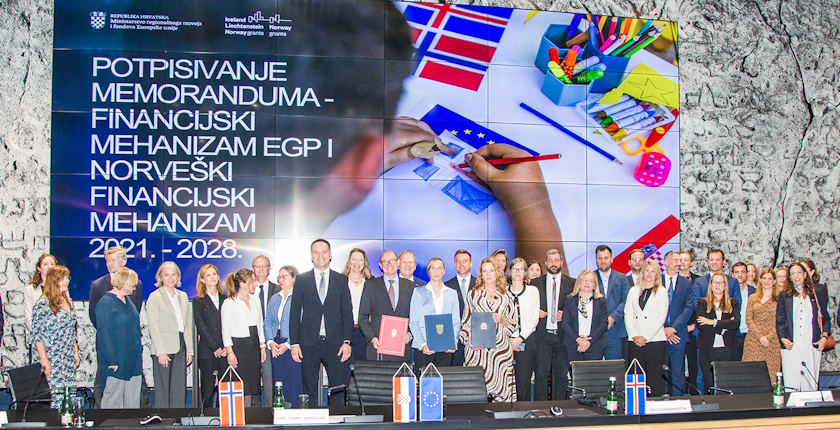
Croatia to get EUR 44 million in green transition grants

Under the European Economic Area and Norway Grants, Croatia is entitled to EUR 21.6 million from the Green Transition Programme and EUR 22 million from the Green and Blue Business Innovation Programme in the period until 2028. The funding is part of a EUR 111 million mechanism, which includes support for local development and the judiciary.

Minister of Regional Development and European Union Funds Nataša Mikuš Žigman, Ambassador of Iceland Helga Hauksdóttir and Ambassador of Norway Arne Sannes Bjørnstad signed memoranda of understanding on the implementation of the European Economic Area (EEA) and Norway Grants for the period until 2028.

Croatia is entitled to EUR 111 million for investments in the green transition, local development, innovation in green and blue business, and the judiciary.

EEA Financial Mechanism to bolster transition to more sustainable society

It confirms the country’s continuous and successful cooperation with Norway, Iceland, and Liechtenstein, Mikuš Žigman asserted.

“Through projects funded by the EEA and Norway Grants, we are strengthening institutional capacities, supporting sustainable development, inclusiveness, and innovation, and contributing long-term to improving the quality of life of our citizens. These mechanisms also enable us to jointly develop solutions for key social and economic challenges and to build the foundations for further cooperation with partner countries,” she stated.

Projects worth more than EUR 103 million were implemented in Croatia in the previous funding period

In the new programming period, the EEA Financial Mechanism is set to fund projects worth EUR 21.6 million under the Green Transition Programme, aimed at accelerating the transition towards a more sustainable society. A further EUR 33 million would be invested through the Local Development Programme, including projects to improve access to STEM education in less developed regions. STEM is an acronym for integrated science, technology, engineering and mathematics.

Hauksdóttir said the cooperation reflects solidarity and helps support equal opportunities and living standards across the EEA. She added that such projects strengthen public institutions, support vulnerable communities, encourage innovation, and establish lasting ties between researchers, local communities, civil society and artists across borders.

Norway Grants helping foster low-carbon circular economy

From the Norway Grants segment, EUR 22 million is earmarked for the Green and Blue Business Innovation Programme, fostering sustainable and competitive development of Croatia’s economy through green and blue innovation, including low-carbon circular economy models.

Through the Justice Programme, there is EUR 21.55 million for improving access to an independent, accountable and efficient judicial system, as well as to enhance correctional institutions in line with international and European standards.

“For many years, Croatia and Norway have been working side by side to build a stronger Europe – one that is more competitive, but also more inclusive and greener, and thus more technologically and economically efficient. In a world marked by uncertainties such as the war in Ukraine, climate change, and global instability, it is clear that European countries are stronger when we act together, in solidarity, defending shared interests and values,” Ambassador Bjørnstad stressed.

In the previous funding period, projects worth more than EUR 103 million were implemented in Croatia, including the establishment of four regional science centres and the construction of a major geothermal well in Bjelovar. The Energy and Climate Change Programme was for a cleaner environment, strengthening energy security and resilience, reducing costs in public institutions and buildings, and raising awareness of energy efficiency.

Norway Grants and EEA Grants are segments of the EEA Financial Mechanism. Its beneficiaries are in EU member states with a gross national income (GNI) per capita below 90% of the average. The current seven-year funding period began in May 2021 and it lasts until April 2028.

by in News

German startups want to seize historic opportunity: first commercial fusion power plant by end of 2030s

German nuclear fusion startups expect the first industrial pilot plants by 2030 and the first commercial one by the end of the 2030s. Leading European startups have called on the German government to provide support to seize the historic opportunity.

Nuclear fusion is seen as a silver bullet for the growing energy demand and energy transition. However, experts believe commercial power plants are still a long way away. But United States Energy Secretary Chris Wright recently said there is no reason to worry too much about emissions and claimed that within five years, artificial intelligence (AI) would enable harnessing nuclear fusion.

German startups Proxima Fusion, Marvel Fusion, and Focused Energy presented a joint roadmap on the development of Germany’s fusion industry – Drei Punkte für Deutschlands Chance auf die eigene Fusionsindustrie: Jetzt oder nie. It aims to help the country make the leap from research to industrial application. Complementing the High-Tech Agenda of the Federal Ministry of Research, Technology and Space, the three companies are calling for concrete measures and appropriate funding instruments.

The US, UK, and China are creating a clear regulatory framework and attracting private capital

According to the document, Germany boasts a unique diversity in fusion technology.

Proxima Fusion relies on the latest stellarator technology, while Marvel Fusion and Focused Energy focus on the newest concepts for laser fusion. The diversity is highlighted as a strategic advantage that must be leveraged through consistent technology openness.

The group said the German fusion industry has set specific milestones aligned with the High-Tech Agenda. The first industrial pilot plants could be materialized by 2030, and the first commercial fusion power plant could be put into operation by the late 2030s, the firms claimed.

Three measures were proposed

With the agenda and one of the strongest fusion ecosystems worldwide, including three leading European fusion companies, Germany has a unique, historic opportunity to develop its own fusion energy industry and secure its long-term economic and technological sovereignty, the document reads. It adds that a political decision must be made in the coming months.

The startups noted that the global race for expertise in fusion is gaining momentum, with the US, the United Kingdom, and China establishing regulatory frameworks and attracting private capital.

The federal government is set to discuss fusion energy on October 1, so the three companies are calling for three key measures:

  • Implement the High-Tech Agenda, kicking off Germany’s fusion industry with clearly defined goals and a roadmap to demonstrator facilities in the 2030s.
  • Strengthen the industrial base: initial state funding of at least EUR 3 billion by 2029, opening the way for 20% to 50% more in private capital, and funding based on achieved goals through instruments such as SPRIND and KfW.
  • Create regulations: Clear distinction from nuclear fission, without applying the Atomic Energy Act, but instead a legal framework compatible with European standards.

Time to turn scientific excellence into commercial technological leadership

Francesco Sciortino, Proxima Fusion CEO, underlined that a relentless pioneering spirit, a decade of work, and billions in investments have brought Germany to the forefront of fusion science. Now is the time to translate this strength into commercial technological leadership, he added.

According to Moritz von der Linden, CEO of Marvel Fusion, his company is ready with scalable technology, a world-class team, and a clear plan for the first laser-based fusion power plant.

Günter Kraft, Chief Government Affairs and Communications Officer of Focused Energy, expressed the belief that Germany needs to create clear regulations and frameworks. It is the only way to turn scientific excellence into industrial reality, he pointed out.

by in News

Bulgaria to start talks with developers of small modular reactors

Bulgaria should discuss the possibility of installing small modular reactors on its territory with companies developing the technology, according to Minister of Energy Zhecho Stankov. In his view, it is a logical step after the country signed a memorandum of understanding with the United States on nuclear energy and assistance in preliminary studies.

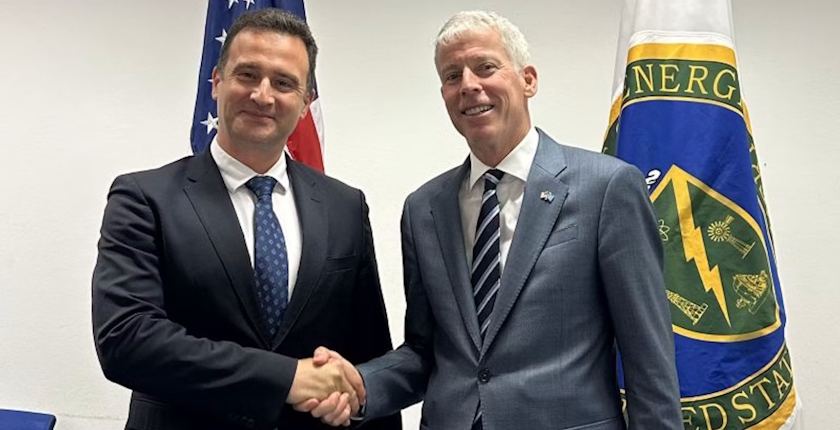
Minister of Energy of Bulgaria Zhecho Stankov said that during his forthcoming visit to Ontario, Canada, he is going to a site where the first four small modular reactors (SMRs) are being built. Last week, he signed a memorandum of understanding with United States Secretary of Energy Chris Wright reaffirming the objectives of the bilateral agreement to strengthen cooperation in civil nuclear energy use.

Bulgaria’s government considers the SMR technology a tool for long-term stability, predictability and affordable low-emission electricity production.

“After signing a joint statement last week with the US Secretary of Energy Chris Wright on that country’s assistance for sites on Bulgarian territory for small modular reactors – it is a new, modern technology, very flexible, which attracts investments in data centers and artificial intelligence centers – the normal next step for the Bulgarian side is to start talks with potential companies that develop this type of technology,” Stankov told reporters in New York City.

US to assist Bulgaria in prefeasibility studies

The memorandum envisages cooperation in the development and deployment of innovative technologies for nuclear reactors, aimed at enhancing Bulgaria’s economic security and energy resilience with the support of the US Department of Energy’s Office of Nuclear Energy.

Minister Stankov called for regional cooperation to reduce vulnerabilities and form a sustainable energy market

The Balkan country would benefit from the expertise of US laboratories in conducting preliminary studies of the feasibility and suitability of potential sites for the deployment of small modular reactors. The US Trade and Development Agency has said it is prepared to fund the assessment of SMR technologies to identify the ones most adequate for Bulgaria, the ministry added.

Speaking in New York City, Stankov also outlined the priorities – new energy corridors, investments in green energy and balancing capacities including pumped storage hydropower plants and battery energy storage systems (BESS), the projects for units 7 and 8 at the Kozloduy nuclear power plant, and regional cooperation for reducing vulnerabilities and forming a sustainable energy market.

Prime Minister Zhelyazkov endorses both rival projects for electricity corridors

Notably, Prime Minister Rosen Zhelyazkov said that he spoke with President of Azerbaijan Ilham Aliyev about the supply of green energy from the Caspian region to Europe. The plans involve 6 GW from Azerbaijan or, potentially, 10 GW if Kazakhstan and Turkmenistan are involved, he added

The proposed subsea power interconnector under the Black Sea is increasingly realistic and so is an onshore corridor from Armenia and Georgia through Turkey, according to Zhelyazkov.

by in News

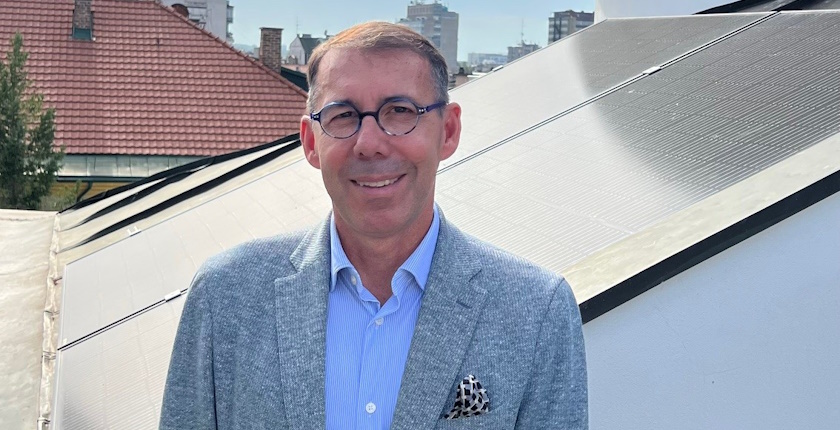
CMS committed to sustainability – first law firm in Belgrade with solar power plant on its rooftop

CMS is the first law firm in Belgrade to install a solar power plant on the roof of its own building. The plant has been in operation for nine months now.

Two months ago, it also obtained official status as a prosumer (buyer-producer) of electricity. It is an important milestone in CMS Belgrade’s transition to more sustainable energy use, according to the announcement.

Since reaching full operating capacity, the solar plant has covered around 50% of its total electricity consumption.

The long-term goal is ambitious yet achievable, according to CMS Belgrade: 70% of electricity consumption from solar by the end of 2025, and 100% within the next three years.

“Sustainability is not just a goal — it’s a responsibility, and one we are committed to integrating into every part of our business,” the announcement reads.

Radivoje Petrikić, the Managing Partner at CMS Belgrade (Petrikić & Partneri AOD in cooperation with CMS Reich-Rohrwig Hainz), said: “We are committed to integrating eco-friendly practices into every aspect of our business. By embracing sustainability in our daily operations, we are not only shaping a brighter future for our firm but also contributing to a greener planet for generations to come.”

The office is part of international law firm CMS CEE, based in Vienna.

by in News

Aurora: Romania’s third CfD auction is key for 2030 targets as solar outpaced wind

Aurora Energy Research expects strike prices at the additional renewable energy auction in Romania, for the remaining wind power quota, to land near the ceiling, set at EUR 80 per MWh. In the previous round, there was strong competition between the bidders for the photovoltaic segment, while developers of wind energy projects may have seen more value in PPAs and merchant options.

Increased costs and stricter eligibility rules constrained wind participation in Romania’s second contracts-for-difference (CfD) round in August, which fell short of the 2 GW wind target. Developers may have seen more value outside the CfD framework, according to Aurora experts, who stressed that power purchase agreements (PPAs) and merchant options offer higher returns than the capped CfD strike prices.

Solar projects showed stronger economics, with strike prices between EUR 35 per MWh and EUR 45 per MWh, compared to wind at EUR 65 per MWh to EUR 79.5 per MWh.

“Using the same commercial operation date for both PV and wind projects has disincentivised wind participation in CfD rounds, since wind developments are far more complex. Their permitting, grid connection, and EPC timelines are significantly longer than solar, making the uniform deadline misaligned with project realities,” said Project Leader at Research Associate at Aurora Energy Research Filippos Falieros.

Dedicated auctions can influence market dynamics

As wind is essential for achieving 2030 renewable targets, the Romanian Ministry of Energy invited developers to submit expressions of interest for mature wind projects only, with contracts expected to be signed by the end of 2025. The third auction will focus on wind energy solely, with a maximum strike price set at EUR 80 per MWh, and Aurora expects strike prices near the ceiling.

In the second auction, accepted wind power bids were between EUR 65 per MWh and EUR 79.5 per MWh

The move underscores the growing divergence in Romania between solar’s strong economics and wind’s slower progress, while also showing how policy adjustments – such as dedicated auctions – can influence market dynamics.

CfD state aid scheme was approved through Modernisation Fund

The overall CfD scheme is supported by EUR 3 billion in total state aid that the European Union approved through the Modernisation Fund, aiming to keep costs low for consumers.

Established in 2013, Aurora Energy Research provides power market forecasting and analytics for critical investment and financing decisions. Headquartered in Oxford, it operates out of 17 offices worldwide covering Europe, North and South America, Asia and Australia.

The firm’s comprehensive services include market outlook packages for energy industry participants, advisory support, and software solutions. Aurora fosters diversity with a team of one thousand experts with backgrounds in energy, finance, and consulting, offering expertise across power, renewables, storage, hydrogen, carbon, and fossil commodities.

by in News

EPBiH receives EUR 2 million from KfW for green, market-oriented transformation

Germany’s KfW Development Bank is donating EUR 2 million to Elektroprivreda Bosne i Hercegovine (EPBiH). The funding is for the acceleration of the energy transition and strengthening market mechanisms in Bosnia and Herzegovina’s state-owned power utility. The grants cover monitoring carbon dioxide emissions and related reporting as well as the development of a decarbonization roadmap and a virtual power plant project.

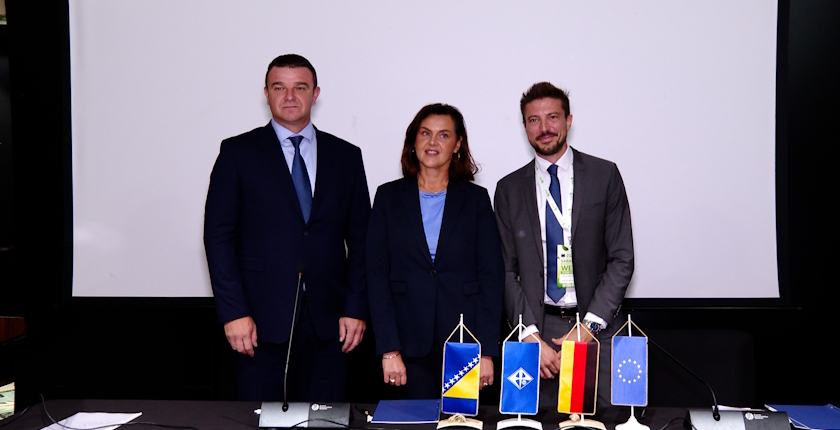
General Manager of Elektroprivreda BiH Sanel Buljubašić and the company’s Executive Director for Economic Affairs Sanela Jurišić signed an agreement with KfW’s Head of the Division of Energy and Transport in Southeast Europe and Turkey, Pablo Obrador, on EUR 2 million in grants.

Germany’s development bank approved the funds within the program Supporting Market-Oriented Green Transformation in the Eastern Neighbourhood and Western Balkans, on behalf of the European Union. It is supported by European Fund for Sustainable Development Plus.

EPBiH committed to sustainable decarbonization

The deal is aimed at supporting the institutional capacities of EPBiH for managing its green transition and corporate transformation.

The funding is part of the program Supporting Market-Oriented Green Transformation in the Eastern Neighbourhood and Western Balkans

“The project that we are developing with KfW bank represents an important step toward speeding up the energy transition and strengthening sustainable market mechanisms in our company. With this milestone, Elektroprivreda BiH confirms its commitment to sustainable decarbonization as well as strengthening competitiveness through investments in green technology,” CEO Buljubašić stated.

Experts to participate in development of CO2 emissions tracking plan, establishment of virtual power plant

The grants are earmarked for technical support, which includes financing the services of expert consultants for a plan for monitoring CO2 emissions and related reporting, their support in producing a decarbonization roadmap, in corporate sustainability reporting and the establishment of a virtual power plant. Additionally, a part of the funds will be for technical support in the materialization of strategic guidelines defined in EPBiH’s energy transition and decarbonization strategy until 2050.


“We have invested in renewable energy sources before, and the signing of the contract represents a new chapter in our cooperation. I express hope that the new systems will be implemented soon and I express the bank’s preparedness to support Elektroprivreda BiH’s new green energy business models,” KfW’s representative Pablo Obrador said, as quoted by Bosnia and Herzegovina’s state-owned utility.

Alongside supporting EPBiH’s corporate reforms, the grant funding will be used for improving the company’s commercial efforts aimed at strengthening market preparedness and the improvement in strategic positioning within the rapidly developing energy sector.

by in News

Turkey starts building solar parks on former coal land

After the first two units of 5 MW each, state-owned Turkish Coal Enterprises (TKI) is planning two solar power plants of 14 MW in combined peak capacity at sites of its previous mining operations.

Former coal mines and their tailings dumps, together with the ash disposal fields of thermal power plants, are among the most convenient areas for solar power plants, unlike fertile agricultural land. In Southeastern Europe, Greece is leading the way by transforming its coal land into industrial hubs with cutting-edge technologies, with the focus remaining on energy – mostly solar power plants. Their capacity is among the highest in the world.

Other countries in the region are advancing slowly in such decarbonization projects, with the exception of North Macedonia, or are still in the planning stage, but Turkey announced that it intends to speed up the construction of photovoltaic units on sites of former coal mining operations.

The Ministry of Energy and Natural Resources said the capacity would reach 24 MW next year

Turkish Coal Enterprises (TKI) is revitalizing the areas of depleted open pit mines also through afforestation, the Ministry of Energy and Natural Resources said. The company planted just over 12 million trees on 6,265 hectares last year.

With photovoltaic projects, such areas are contributing to the country’s economy again. The state-owned company’s Aegean region subsidiary ELI operates a self-consumption unit of 5 MW in Manisa. Another firm, ÇLI, based in Çanakkale, further to the north, has installed a 5 MW solar park.

The two facilities generate 18 GWh of electricity per year, supplying businesses, the update adds.

Preparations are underway for the construction of a 5 MW photovoltaic plant in the Tavşanlı district of Kütahya province in Turkey’s west. Another project is for 9 MW in the Afşin district in Kahramanmaraş, in the Mediterranean region in the country’s south. TKI plans to complete them next year.

The four solar parks will produce some 41 GWh per year, according to the ministry.

by in News

BiH’s power utility ERS sees EUR 14.8 million loss in 2025

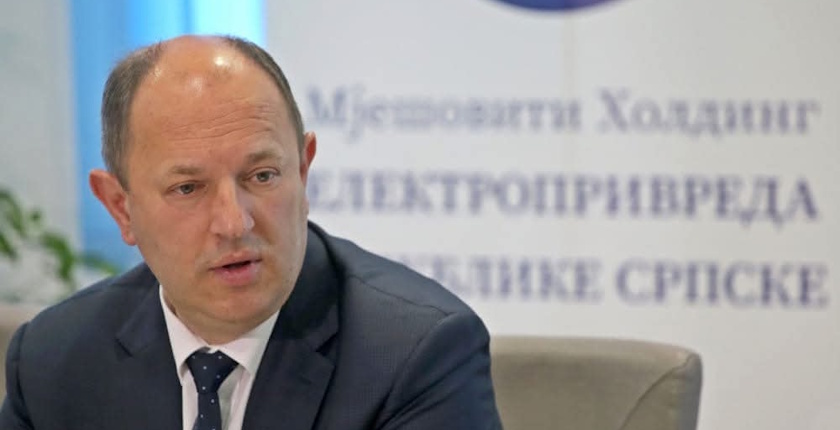
Elektroprivreda Republike Srpske expects a loss of BAM 29 million (EUR 14.8 million) this year, according to the power utility’s CEO Luka Petrović.

The reasons for the poor business results of Elektroprivreda Republike Srpske (ERS) are bad hydrological conditions and an increase in electricity imports, Luka Petrović said, as quoted by news agency Srna.

ERS is one of the three state-owned power utilities in Bosnia and Herzegovina. It is in charge of the electricity production and supply in the Republic of Srpska, one of the country’s two political entities.

Of note, a week ago, the new Prime Minister of the Republic of Srpska Savo Minić called the situation in the electricity sector extremely complex. He has also set a 15-day deadline for setting up plans to overcome the issues.

Petrović: Electricity is imported for EUR 72 per MWh and sold to citizens for EUR 34 per MWh

Following the meeting of ERS’s management in Trebinje, Luka Petrović emphasized that the company’s electricity production would be significantly reduced, to 4,500 GWh. He previously said hydropower output decreased by 50% this year on an annual basis.

He recalled that ERS already purchased about 13% of electricity for domestic supply at high prices. The difference between purchase and sales prices will produce a loss of about BAM 29 million (EUR 14.8 million), Petrović added.

He noted that in 2023, when the hydrological situation was good, ERS achieved a record profit of BAM 146 million (EUR 74.6 million).

Of note, the company recorded a BAM 3.2 million (EUR 1.6 million) profit in 2024.

Petrović stressed that the electricity deficit would have to be purchased on the power exchange, at EUR 72 per MWh, while it is sold to citizens for EUR 34 per MWh, compared to the price for businesses of EUR 75 per MWh.

Imports this year reached BAM 60 million to BAM 70 million (EUR 30.7 million to EUR 35.8 million)

Two consecutive years with drought can disrupt the cash flow because there is no export capacity, Petrović explained.

He asserted that ERS’s electricity exports over the past few years were worth BAM 100 million to BAM 200 million (EUR 51.1 million to EUR 102.2 million) per annum, while imports were between BAM 30 million and BAM 60 million. This year, electricity bought abroad amounted to between BAM 60 million and BAM 70 million (EUR 30.7 million to EUR 35.8 million).

Of note, in previous years, BiH was the largest net exporter of electricity in the region. However, imports were nearly 4.5 times higher in the first half of the year than in the same period of 2024. Another power utility, Elektroprivreda BiH (EPBiH), is increasing losses.

Government to hold a session about ERS

Petrović noted that the company has repaid a loan of BAM 78 million (EUR 39.9 million) and another of BAM 60 million (EUR 30.7 million).

A government session about ERS is planned. He will propose that it be held at the Ugljevik thermal power plant, from which a third of the electricity is delivered to Slovenia.

In addition, the management of ERS has requested further rationalization of all operating costs.

by in News

Half of EU auction-backed hydrogen projects pull out

Seven projects for 1.88 GW of total electrolyzer capacity turned out to be unfeasible even with grants won at the second European Hydrogen Bank auction, out of 2.34 GW overall. The developers withdrew, with some citing policy and infrastructure delays and uncertainty. A project from the first renewable hydrogen auction also pulled out.

The European Commission has invited ten projects from the reserve list of the second European Hydrogen Bank auction to start preparing documentation for signing grant agreements, after seven that were initially selected withdrew. The round, completed in May, resulted in 15 projects for renewable hydrogen winning support, for 2.34 GW of total electrolyzer capacity.

Five endeavors remained in the general category, for just 453.46 MW overall, and the remaining three are in the maritime segment. They account for 108.5 MW. The ten reserve projects envisage 774 MW, compared to the 1.88 GW that dropped out, including the three biggest proposed systems.

Stuck at completion guarantees

Some developers of the withdrawn proposals weren’t able to provide completion guarantees. Completion guarantees are worth 8% of the grant, S&P Global noted in a report. Companies cited policy and infrastructure delays and uncertainty.

Four sites are in Spain, two in Germany and the seventh one is in the Netherlands: the Zeevonk electrolyser, the largest of all. It would have 560 MW and produce 411,000 tons over ten years, receiving EUR 0.6 per kilogram.

Beneficiaries receive premiums from the European Hydrogen Bank budget that compensate for the difference between the production price and the amount that buyers offer.

European Hydrogen Bank mechanism designed to weed out unfeasible investments

Before the end of the year, the European Commission expects to publish the final list for the said IF24 auction. One project recently dropped out from the first round as well.

“The auction’s completion guarantee is working as expected in weeding out companies that have bid too low, or were forced to reassess their project maturity or financial viability between bidding and having to provide the completion guarantee,” EU Innovation Fund Policy Officer Johanna Schiele said.

The withdrawn projects could still head for implementation if they complete the financing structure.

Under the second round within the European Hydrogen Bank mechanism, EUR 1.2 billion was available, but only EUR 992 million rewarded.