by in News

Bajramović: Investments of BAM 1.4 billion needed for distribution grids in BiH

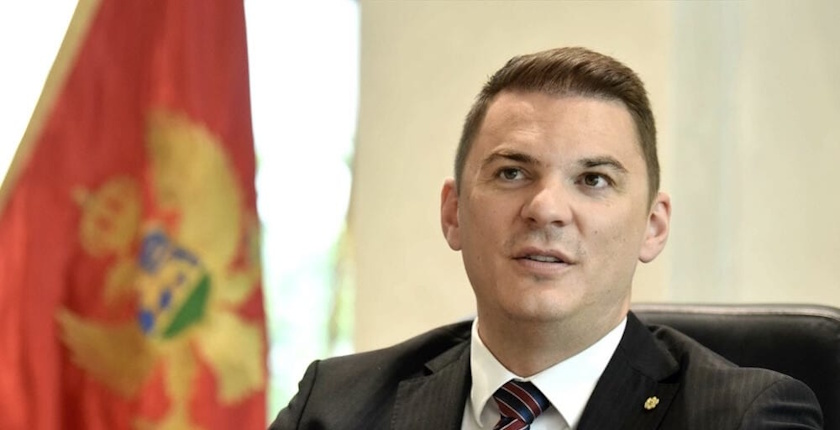
Necessary investments in Bosnia and Herzegovina’s electricity distribution grids by 2030 amount to BAM 1.4 billion (EUR 716 million), according to Zijad Bajramović, chairman of the Bosnia and Herzegovina committee of the International Council on Large Electric Systems (CIGRE).

The growing installation of power plants utilizing renewable energy sources is creating congestion in transmission and distribution networks, so the limited available capacity for their connection is an issue across the entire region, Zijad Bajramović told state news agency Fena. Nezavisne Novine republished the report.

An additional burden on the distribution network is expected from the electrification of transportation and increased electricity use for heating and cooling.

Energy storage is a solution for the problems emerging in the grid

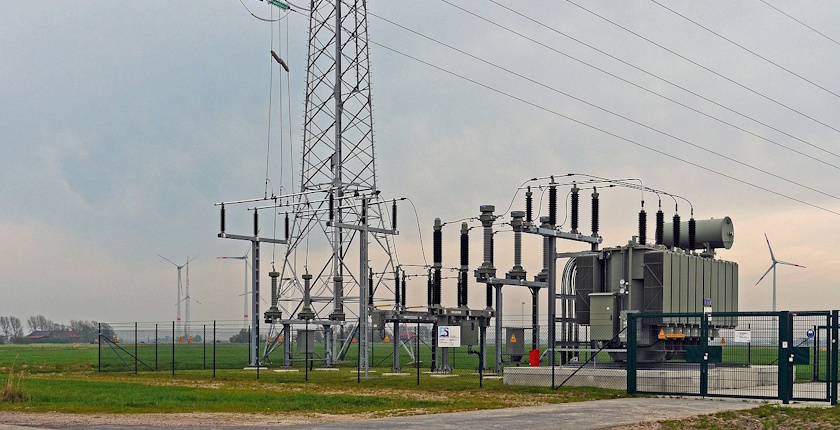
Bajramović explained that new 110 kV substations are necessary, as is the completion of the ongoing transition to the 20 kV voltage level. Attention should also be paid to integrating prosumers, especially the households that both produce electricity, with solar panels on their roofs, and consume it.

He highlighted balancing as well as maintaining voltage conditions and supply quality as the main challenges from the rise in renewable electricity capacity on the grid. Energy storage is a solution for the issues.

Batteries can prevent renewables generation curtailments

Bajramović expects battery energy storage systems to play an increasingly significant role in relieving network congestion.

BESS, in his words, are a flexibility tool for absorbing excess generation locally, and temporarily easing the pressure on the transmission grid. They can prevent curtailments of power generation from variable renewable sources, he added.

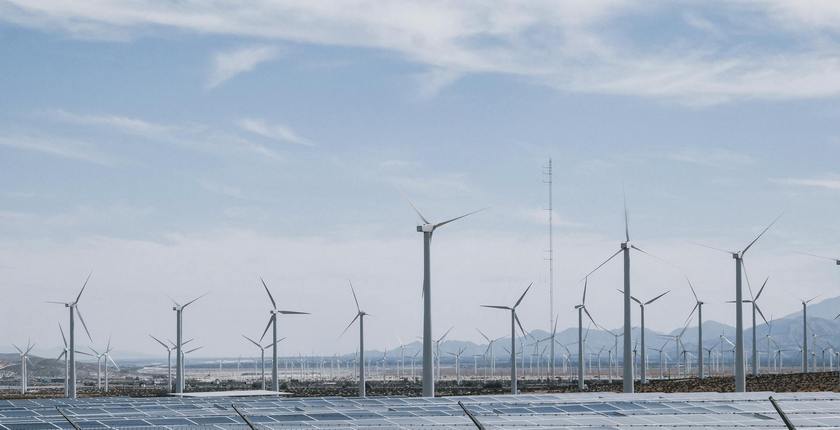
Bajramović recalled that calculations have showed batteries of 225 MW / 450 MWh in total would be necessary to connect 1,500 MW of solar power capacity and 1,000 MW of wind power to the transmission network.

An increase in distribution network tariffs would provide funds for investment in strengthening and modernizing the distribution network, in his view.

Batteries are being installed at a rapid rate around the world as well as in the region. Not only private companies, but also state-owned utilities such as Romania’s Hidroelectrica and Montenegro’s Elektroprivreda Crne Gore (EPCG) are investing in such projects.
by in News

Abu Dhabi’s Mubadala buys into renewables developer Rezolv Energy

Mubadala Investment Company, a sovereign investment fund from Abu Dhabi, is acquiring a stake in Rezolv Energy, a major renewable energy investor in Romania, which is developing the largest solar park in Europe.

Mubadala is setting up a joint venture with Rezolv Energy’s owner, sustainable infrastructure investment fund Actis, for joint control of the firm, whose ongoing projects in the country exceed 2 GW, according to a report by Profit.ro.

The Mubadala-Actis joint venture, which has received the green light from the European Commission, will be created through the purchase of shares and securities.

Mubadala, with assets under management of USD 300 billion as of the end of 2024, is wholly owned by the government of Abu Dhabi, the United Arab Emirates (UAE).

The transaction has been cleared by the European Commission

Rezolv Energy’s ongoing projects in Romania include the construction of a photovoltaic park with an installed capacity of 1,044 MW in Arad County, called Dama Solar. Once in operation, it is expected to be the largest solar park in Europe. The investment envisages a battery energy storage system (BESS) with 500 MW of operating power.

Rezolv Energy is developing the 1,044 MW Dama Solar project and over 1 GW of wind farms in Romania

Its portfolio in Romania also includes a 600 MW wind project in Constanța county and a 461 MW wind park in Buzău county. The company has already signed a grid connection agreement for the facility in Constanța.

The company won four contracts for difference (CfD), for a total capacity of 951.2 MW, in the first two auctions organized by the Romanian Ministry of Energy, according to Profit.ro.

Rezolv Energy was launched by Actis in 2022, with an initial investment of EUR 500 million. It is now active in Romania, Croatia, the Czech Republic, Luxembourg, Bulgaria, and Slovakia, with a total portfolio of 2.5 GW of solar and wind projects.

by in News

Europe’s wind installations in H1 2025 insufficient to meet EU’s 2030 targets – WindEurope

Europe installed 6.8 GW of new wind farms in the first six months of the year. According to WindEurope, it isn’t nearly enough to deliver the EU’s 2030 energy security and climate targets.

WindEurope has also reduced the 2025 outlook for wind investments. In its latest wind energy data for Europe, the organization highlighted the increase in turbine orders and investments as positive signals.

Out of 6.8 GW of new wind, 5.3 GW was in the European Union, and 89% was onshore wind. Europe now has a total of 291 GW of wind capacity – 254 GW on land and 37 GW at sea, according to the data.

In the first half of 2024, Europe installed 6.4 GW. To achieve the 2030 targets, the EU needs to install about 30 GW of wind power every year.

Germany is by far the most successful country in Europe. It is set to install 5 GW of onshore wind this year, nearly three times as much as it has been building over the last five years. WindEurope attributed the success to the fact that the country was the first to rigorously implement the EU’s excellent new permitting rules.

Germany permitted a record 15 GW of new onshore wind farms in 2024 and is on track to beat that in 2025, with 8 GW of onshore wind permits granted in the first half of 2025, the report revealed.

While on average German authorities grant permits within 18 months, none of the other 26 EU countries permits new wind farms within the REDIII deadline of 24 months. WindEurope highlighted slow expansion of electricity grids, stagnating efforts to electrify Europe’s economy, and suboptimal auction design as key obstacles for faster wind deployment.

Dickson: Governments must get their act together on wind energy

WindEurope CEO Giles Dickson said that governments must get their act together on wind energy.

“Wind is competitive – it brings down electricity costs for citizens and businesses. Wind is secure – home-grown wind turbines reduce costly and dangerous dependencies on fossil fuel imports. And wind is good for the economy – it creates jobs and tax income. Around 400,000 people in Europe work in wind already, and each new wind turbine contributes €16m to Europe’s GDP. But Governments are still failing to get wind permitted and built fast enough,” Dickson noted.

The organization stressed that Europe will build less new wind capacity in 2025 than it previously expected. At the start of the year, WindEurope estimated new wind installations at 22.5 GW, and now at 19 GW. The forecast for the EU is lowered from 17 GW to 14.5 GW.

It expects the EU to have 344 GW of wind energy capacity by 2030, compared to the 2030 target of 425 GW.

Two bright spots

Two bright spots are wind turbine orders and investments in new wind farms. Europe took EUR 34 billion worth of final investment decisions (FIDs) in new wind farms with a total capacity of 14 GW in the first half of 2025. It represented more than the total FIDs in 2024.

The majority of investments are for offshore wind, with six new projects, three of which in Poland, including the country’s largest-ever private investment, according to WindEurope.

Wind turbine orders have increased 19% and reached 11.3 GW.

According to Dickson, less new wind is bad news for Europe’s wider competitiveness. Industry in Europe is craving cheap electricity to compete with China and the US, he stressed.

“But too many governments remain half-hearted in their expansion of wind. This is not only threatening the wind sector. It’s also jeopardizing jobs and growth more widely – in steel, chemicals, and ICT. Doing business in Europe is so much harder for them if the EU can’t deliver on its energy targets”, Dickson underlined.

by in News

Wind installations in Greece remain low this year as new applications drop

WindEurope expects Greece to add 300 MW of wind capacity in 2025, after installing 152 MW during the first half of the year.

This is an improvement on the mere 108 MW added in 2024, but still far below previous years. For example, in 2023, the country added 544 MW of new wind farms.

According to the European wind industry association’s latest report, Greece is expected to install more wind farms from now on, with 490 MW in 2026 and 350-450 MW each year until 2030.

Cumulative installed capacity currently stands at 5,506 MW

Cumulative installed capacity currently stands at 5,506 MW and is projected to reach 7,480 MW by the end of this decade. This is not enough to meet the National Energy and Climate Plan’s (NECP) goal, which calls for 8,900 MW.

At the same time, WindEurope expects zero offshore installations, as efforts to develop this sector have been delayed despite a national goal of 1.9 GW by the beginning of the next decade.

The report also highlights that applications for new wind farms dropped 65% this year, from 618 MW to just 214 MW.

Support measures still absent

The Greek government has identified wind energy development as a priority from now on. Currently, the energy mix is dominated by photovoltaics, leading to high curtailments and an anomalous production curve.

The idea is to promote wind investments through regulatory changes, such as a higher priority in the connection queue. Furthermore, Greece must fully apply the European directive for a simpler licensing process. The European Commission recently announced that Greece would face referral to the European Court if it delays any further.

Recently, there have been cases of companies leaving the Greek market, which has raised concerns regarding investment profitability.

Therefore, there is much to be done for the sector in the coming months and years to reverse the course and increase installations.

by in News

Abu Dhabi’s Mubadala buys into Romanian renewables developer Rezolv Energy

Mubadala Investment Company, a sovereign investment fund from Abu Dhabi, is acquiring a stake in Rezolv Energy, a major renewable energy investor in Romania, which is developing the largest solar park in Europe.

Mubadala is setting up a joint venture with Rezolv Energy’s owner, sustainable infrastructure investment fund Actis, for joint control of the Romanian firm, whose ongoing projects in the country exceed 2 GW, according to a report by Profit.ro.

The Mubadala-Actis joint venture, which has received the green light from the European Commission, will be created through the purchase of shares and securities.

Mubadala, with assets under management of USD 300 billion as of the end of 2024, is wholly owned by the government of Abu Dhabi, the United Arab Emirates (UAE).

The transaction has been cleared by the European Commission

Rezolv Energy’s ongoing projects in Romania include the construction of a photovoltaic park with an installed capacity of 1,044 MW in Arad County, called Dama Solar. Once in operation, it is expected to be the largest solar park in Europe. The investment envisages a battery energy storage system (BESS) with 500 MW of operating power.

Rezolv Energy is developing the 1,044 MW Dama Solar project and over 1 GW of wind farms in Romania

Its portfolio in Romania also includes a 600 MW wind project in Constanța county and a 461 MW wind park in Buzău county. The company has already signed a grid connection agreement for the facility in Constanța.

The company won four contracts for difference (CfD), for a total capacity of 951.2 MW, in the first two auctions organized by the Romanian Ministry of Energy, according to Profit.ro.

Rezolv Energy was launched by Actis in 2022, with an initial investment of EUR 500 million. It is now active in Romania, Croatia, the Czech Republic, Luxembourg, Bulgaria, and Slovakia, with a total portfolio of 2.5 GW of solar and wind projects.

by in News

Montenegro’s power utility gets EUR 25 million loan to expand Gvozd wind farm

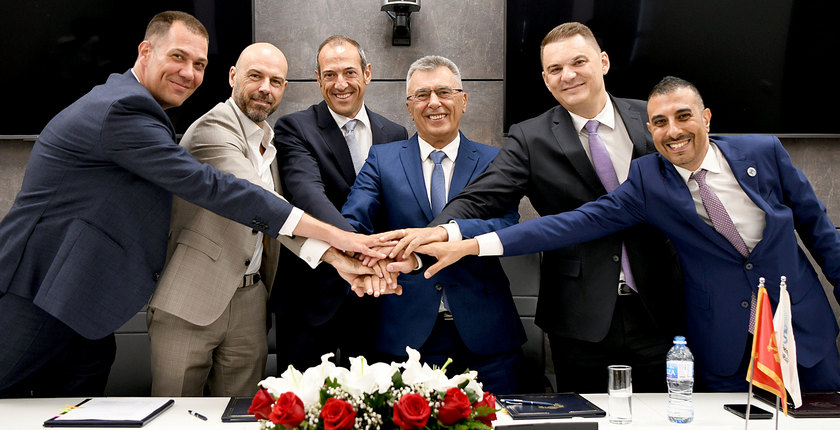
Montenegrin state-owned power utility Elektroprivreda Crne Gore (EPCG) said it signed a EUR 25 million loan contract with the European Bank for Reconstruction and Development (EBRD) for expanding the Gvozd wind farm to 75.6 MW. Once fully operational, it will be the largest wind farm in Montenegro.

The Gvozd 2 project involves the installation of three additional wind turbines, with a combined capacity of 21 MW. It will increase the wind farm’s total projected annual production to over 210 GWh, enough to cover the needs of about 36,000 households and reduce CO2 emissions by almost 137,000 tons a year, EPCG said following the signing of the loan agreement.

The expansion project involves three additional wind turbines with a combined capacity of 21 MW

An EUR 82 million loan for the first, 54.6 MW phase of the wind farm, including the grid connection infrastructure, was signed with the EBRD in June 2023. Gvozd will be EPCG’s first large-scale power generation facility built in more than 40 years.

Construction on the first phase, featuring eight turbines, began in November 2024. EPCG expects the power plant to enter trial operation by the end of this year, with a projected annual electricity output of 150 GWh.

Construction on the first, 54.6 MW phase of wind farm Gvozd was launched in late 2024

Commissioning of the full 75 MW capacity is expected by the end of 2026, according to a press release from the EBRD.

A key step in Montenegro’s energy transition

Milutin Đukanović, President of EPCG’s Board of Directors, described the expansion of Gvozd as a key step in Montenegro’s energy transition. In the press release, EPCG stated that the wind park would significantly contribute to achieving the European goal to produce electricity exclusively from clean sources by 2050 at the latest.

Minister of Energy and Mining Admir Šahmanović noted that the Gvozd project would strengthen Montenegro’s energy security, reduce CO2 emissions, and pave the way for sustainable development.

Francesco Corbo, the EBRD’s Regional Head of Energy for the Western Balkans and Croatia, recalled that the bank, through its Renewable Energy Market Accelerator (REMA) program, helped the Montenegrin authorities organize the country’s first renewable energy auction, for solar projects totaling 250 MW.

by in News

German startup Voltfang turning used EV batteries into energy storage for solar, wind

German startup Voltfang has opened a plant to manufacture energy storage units for solar and wind from used electric vehicle batteries. The company says the facility is the largest of its kind in Europe, with annual output set to reach 250 MWh in 2026.

The plant in Aachen will produce second-life battery storage systems for commercial, industrial, and large-scale applications. Its annual output is planned to rise to 1 GWh by 2030.

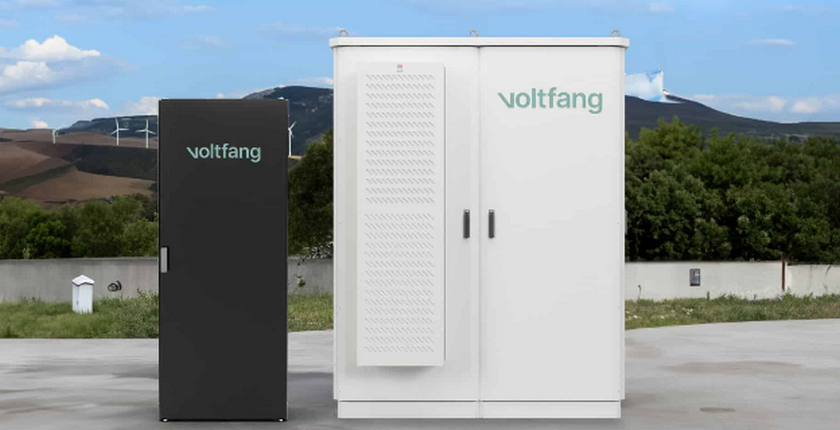
The facility will assemble fridge-sized energy storage units that households and companies can use to store excess electricity generated by solar panels or wind turbines.

Voltfang’s batteries can be used by homes and businesses to store energy from solar or wind facilities

The plant employs around 100 people, and Voltfang claims it is the largest facility in Europe for repurposing lithium-ion batteries.

David Oudsandji, co-founder and managing director of Voltfang, said the company’s goal is to develop high-performance battery storage systems for German and European industry.

Voltfang hopes to turn a profit by next year, but Oudsandji noted that the supply of used EV batteries is still small, as most such vehicles are only a few years old.

The supply of used electric vehicle batteries is still limited

Another obstacle is that new batteries, mainly from China, are becoming increasingly efficient and affordable, while refurbishing old ones is a complex process.

On the other hand, it is more sustainable and helps create a circular economy and ensure energy independence, according to Oudsandji.

by in News

Šahmanović: Montenegro expects first large private wind and solar plants to be online in 2026

Over the past year, Montenegro has adopted two reform laws – on energy and on renewable energy sources – and scheduled its first auctions for market premiums. Admir Šahmanović, Minister of Energy and Mining, told Balkan Green Energy News that the new regulations fully align the sector with the European Union acquis, sending a clear signal to investors that Montenegro now has a stable regulatory framework and market-based prices that safeguard citizens’ interests. Becoming part of the European energy space, he added, is not only a political goal but also the path Montenegro should follow to ensure cleaner and more secure energy for future generations.

Admir Šahmanović served as Minister of Mining, Oil and Gas in the government of Prime Minister Milojko Spajić. In February this year, he became the coordinator of the Ministry of Energy, and since April, he has served as Montenegro’s Minister of Energy and Mining. In an interview with Balkan Green Energy News, Šahmanović discusses his plans to mobilize larger investments, Montenegro’s timeframe for coupling its electricity market with Italy and the EU, the ministry’s steps to prepare the country for the EU’s carbon border tax, and plans for investments in the natural gas sector.

What are the key innovations introduced by Montenegro’s law on renewable energy sources?

The law on renewable energy sources introduced, for the first time, a clear, competitive and fully transparent support mechanism for green energy production – an auction scheme.

Over the past months, we have worked hard to ensure the law really takes hold. We have prepared about 15 by-laws that enabled us to launch the first auctions. I believe this is one of the most important contributions of the new law, as it sends a clear message to investors that Montenegro has a stable framework and market-based prices that safeguard citizens’ interests.

In this way, we are laying a solid foundation for a rapid energy transition, which is both our strategic choice and our responsibility to future generations.

Montenegro has also adopted a new law on energy. What does this regulation bring?

The Law on Energy is our umbrella regulation, providing a framework that fully aligns the sector with the EU acquis. It introduces stricter standards, greater protection of end consumers, better competition, and stronger institutional oversight.

It also opens Montenegro’s energy sector to the European market and creates a stable, predictable environment. This is important not only for investors but also for all consumers, as people are ultimately the ones affected by any change in the system.

You stated that these reforms set a clear strategic path for Montenegro, which sees its energy future within the European market. What will this future bring to Montenegro, its economy, and its citizens?

Our ambition is to make Montenegro a country with clean energy and a stable system. Being part of the European energy space ensures greater security of supply, lower costs in the long term, and a strong inflow of investments. Our economy will have access to a larger market, and our citizens will benefit from safe, sustainable, and environmentally friendly energy.

It is not just a political goal – it is a path I want us to follow in our development, so that we leave our children a country with cleaner and more secure energy.

Admir Šahmanović visiting northern Montenegro with EPCG Director Ivan Bulatović

Applications have been invited for Montenegro’s first auctions for market premiums. What benefits do you expect from auctions?

The auction mechanism allows us to select the most favorable and serious investors through a fair and competitive process. Projects are implemented without budget subsidies and with minimal risk to the state.

We expect auctions to ensure new capacities, create jobs, improve the use of our natural resources, and strengthen overall energy stability. These are the benefits citizens will feel, both on their electricity bills and through new opportunities that will open up in local communities.

Investor interest in wind and solar is strong, with requests to build power plants totaling around 5.5 GW. When do you expect these projects to be realized?

Such strong interest is the best proof that the reforms are yielding results. We expect the first large projects to be online in 2026, with significant capacities ready by 2030. Transparent procedures, good cooperation with local communities, and improved grid infrastructure will be key to making these investments a reality.

What are the main obstacles to these projects? How to remove them?

The biggest challenges are administrative procedures, transmission network limitations, and spatial planning documents. We are working to address them through interdepartmental cooperation, digitalization of processes, and the state’s commitment.

We are strengthening capacities, speeding up permitting, and modernizing regulations. I want to ensure that investors coming to Montenegro know they can work in a clear, predictable, and fair environment.

Admir Šahmanović at the ministerial panel at Belgrade Energy Forum 2025 in May

Preparations are underway to link Montenegro’s electricity market with the EU via Italy, with 2027 featuring as the target year.

Yes, we are working diligently on institutional and market integration. This involves harmonizing the rules, passing the remaining by-laws, and preparing the market operator. With the support of the EU and the Energy Community, I am confident that 2027 will remain the year when we will fully open our market to Europe.

All countries in the region are facing CBAM. How prepared is Montenegro?

CBAM will change the rules for electricity exports to the EU, bringing new costs as well as opportunities. We are aware that it will be a financial burden on our economy, but that is precisely why we view it as an additional incentive to accelerate the implementation of renewable energy projects and increase our own production of green electricity.

We are working on adjusting the regulatory framework, harmonizing economic activities, and ensuring the largest possible share of clean energy to remain competitive and maintain full access to the European market while reducing emissions.

Montenegro also has ambitious plans in the natural gas sector – a gas pipeline, a terminal for liquefied natural gas (LNG), and gas-fired power plants. How far along are these projects?

I see gas as a development opportunity – to ensure greater security of supply, diversification, and new opportunities for the economy. But I also believe that such strategic projects must be developed through dialogue with local communities, with full respect for their views.

We are currently preparing and developing the Ionian Adriatic Pipeline (IAP) project and assessing the potential for an LNG terminal. We are doing this responsibly, one step at a time, and in line with the EU’s energy transition goals.

by in News

Hidroelectrica seeks to buy wind, solar projects totaling 520 MW

Romanian state-owned hydropower plant operator Hidroelectrica, the largest electricity producer in the country, is looking to take over a 250 MW wind farm project under development and a total of about 270 MW of solar projects.

Hidroelectrica’s plan is to acquire the companies that own the rights, permits, land, and other assets related to the renewable energy projects under development, according to a report by Profit.ro.

The plan is to acquire the companies developing the wind and solar projects

The Romanian power utility is currently selecting consultants to conduct due diligence on the projects and the development companies, before making acquisition decisions.

Hidroelectrica operates 188 hydropower plans, with a combined capacity of 6.4 GW, and only one wind park, of 108 MW. The wind park, Crucea Nord, should soon get a battery energy storage system of 36 MW under a contract signed in April this year.

In May, Hidroelectrica hired a contractor for installing its first photovoltaic plants. The solar panels, with a total capacity of 2.96 MW, are to be deployed on the roofs of 20 hydroelectric plants, in an investment valued at EUR 1.77 million.

Hidroelectrica plans to install photovoltaic panels at 20 hydropower plants and build a floating solar plant

In June, the company selected a contractor for its first floating solar power plant, of 10 MW, which would be installed on the reservoir of the Ipotești hydroelectric plant. Hidroelectrica said at the time that it intended to obtain know-how from the construction and operation of the pilot floating solar system and replicate the concept elsewhere.

Hidroelectrica has also invited bids for installing a battery energy storage system (BESS) with a nominal power of 64 MW at the Iron Gate 2 (Porțile de Fier 2) hydropower plant on the Danube. It would be used to provide balancing services to the national electricity system and adjust the time intervals of hydropower production at Iron Gate 2.

The company’s profit in the first half of 2025 dropped 41% against the same period a year earlier, to RON 1.587 billion (EUR 313.6 million) as revenue fell 16% to RON 4.315 billion (EUR 852.7 million). Its total power output decreased 27% year-on-year to 6,068 GWh, pushing electricity purchases up 62% to 674 GWh, according to Profit.ro.

by in News

WindEurope urges Germany to drop negative bidding in wind auctions, switch to CfDs

Germany’s second offshore wind auction in 2025 failed to attract bids from developers, sending a clear signal that the country’s wind auction design, which relies on negative bidding, is not fit for purpose, WindEurope has warned. Instead of swimming against the tide, Germany should follow in the footsteps of other European countries and switch to contracts for difference (CfDs), according to the European wind industry association.

The auction covered two offshore wind sites in the North Sea with a combined capacity of 2.5 GW, but no developer placed a bid. That should be a wake-up call for the German government, according to Viktoriya Kerelska, Director of Advocacy & Messaging at WindEurope.

In negative bidding, developers offer the amount of money they are willing to pay for the right to build a wind farm, with the highest bid most likely to win. In the CfD model, on the other hand, they bid the electricity price they need, and receive compensation from the government if the market price falls below that level.

Kerelska: Negative bidding reduces the number of companies willing to participate in auctions

Negative bidding does not offer any revenue stabilization and exposes bidders to risks that go beyond their control. The uncapped negative bidding further intensifies the financial pressure on offshore wind developers by asking them to pay high sums for the right to develop an offshore wind farm, according to WindEurope.

“Negative bidding adds costs that make offshore wind more expensive and reduces the number of companies willing and able to participate in auctions,” Kerelska stated, adding it is time to amend the auction model so Germany can deliver on its offshore wind targets and industrial competitiveness.

Wind energy provides 30% of all electricity consumed in Germany, making it crucial for ensuring competitive prices for households and industry as well as energy security, WindEurope noted.

CfDs ensure lower financing costs and more predictable revenues

Most countries in Europe have introduced two-sided CfDs as a revenue stabilization mechanism for offshore wind development. It ensures lower financing costs and more visibility on future revenues, WindEurope said, noting that Denmark was the latest country to switch to CfDs after its 3 GW negative bidding offshore wind tender failed to attract any bids last December.