by in News

New auction announced in Greece for 600 MW for electricity for vulnerable households

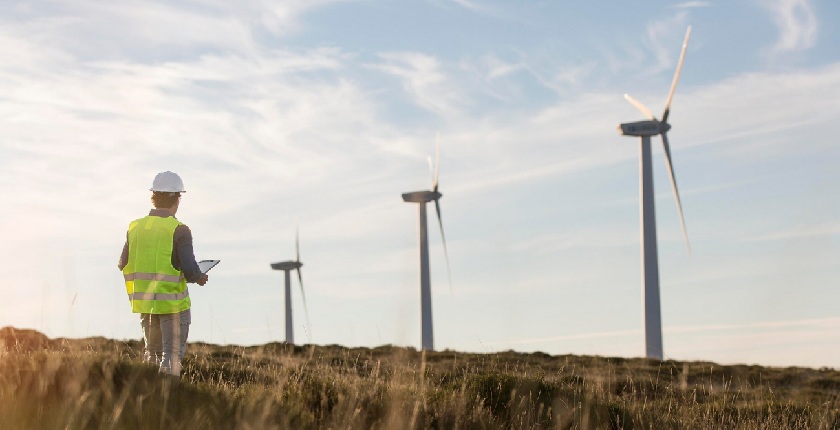
The Greek government specified terms and conditions for participation in a new kind of renewable energy auction, covering both wind and solar energy.

The auction comes as part of the Apollo initiative, aimed at reducing energy costs for vulnerable households across the country and fighting energy poverty. In total, 200 MW of solar plus batteries and 400 MW of wind will be auctioned.

Wind power projects of at least 60 kW may participate, with no limit set for photovoltaics. All applicants must have final connection terms from the distribution or transmission operator. Their remuneration will be based on a contract for difference (CfD). Investors can also gain a grant from European Union programs, the National Development Plan or other sources, according to the decree.

This will be a single-step static auction, with the offer price ceiling set at EUR 80 per MWh for wind projects and EUR 75 per MWh for photovoltaics with battery storage.

Equally important, the competition level is 40%, meaning that 60% of the offered capacity will be awarded up to a maximum of 600 MW. On top of that, at least three projects from different investors must participate in the process. Furthermore, no participant can apply for more than 25% of the total offered capacity, to ensure a level playing field.

Steep timeframe for selected projects

Concerning next steps, the Regulatory Authority for Energy, Waste and Water (RAEWW or RAAEY) is expected to officially proclaim the auction in the next few weeks, before the end of January. The regulator will also specify the letter of guarantee investors will have to submit, as well as the rest of the details. The submission of offers is expected to last by the end of February.

The ministry said the construction of solar farms with batteries must be completed by the end of 2027, while wind farms need to come online by September 2028.

Consumers who will benefit from cheaper renewable electricity will be notified via their power suppliers about their eligibility.

by in News

New auction announced in Greece for 600 MW for electricity for vulnerable households

The Greek government specified terms and conditions for participation in a new kind of renewable energy auction, covering both wind and solar energy.

The auction comes as part of the Apollo initiative, aimed at reducing energy costs for vulnerable households across the country and fighting energy poverty. In total, 200 MW of solar plus batteries and 400 MW of wind will be auctioned.

Wind power projects of at least 60 kW may participate, with no limit set for photovoltaics. All applicants must have final connection terms from the distribution or transmission operator. Their remuneration will be based on a contract for difference (CfD). Investors can also gain a grant from European Union programs, the National Development Plan or other sources, according to the decree.

This will be a single-step static auction, with the offer price ceiling set at EUR 80 per MWh for wind projects and EUR 75 per MWh for photovoltaics with battery storage.

Equally important, the competition level is 40%, meaning that 60% of the offered capacity will be awarded up to a maximum of 600 MW. On top of that, at least three projects from different investors must participate in the process. Furthermore, no participant can apply for more than 25% of the total offered capacity, to ensure a level playing field.

Steep timeframe for selected projects

Concerning next steps, the Regulatory Authority for Energy, Waste and Water (RAEWW or RAAEY) is expected to officially proclaim the auction in the next few weeks, before the end of January. The regulator will also specify the letter of guarantee investors will have to submit, as well as the rest of the details. The submission of offers is expected to last by the end of February.

The ministry said the construction of solar farms with batteries must be completed by the end of 2027, while wind farms need to come online by September 2028.

Consumers who will benefit from cheaper renewable electricity will be notified via their power suppliers about their eligibility.
by in News

Greece reboots Apollo program against energy poverty

The Greek government has redesigned and rebooted the Apollo self-consumption program, aimed at reducing energy costs for vulnerable consumers.

Initially, Apollo was introduced to support households, municipalities, water utilities and local irrigation organizations. Each of Greece’s 13 regions, also known as peripheries, would have a green power plant, and eligible consumers who join a local energy community get discounted electricity bills.

However, the first part, which included households, was not realized in time to draw EUR 100 million from the European Union’s Recovery and Resilience Facility (RRF). It expires in June 2026.

Tsafos: Both segments set for completion

“Apollo was one of the plans that we could not carry out in time, therefore we excluded it from RRF and increased funding to other initiatives, such as energy efficiency in houses,” Deputy Minister of Environment and Energy Nikos Tsafos explained earlier in December.

Now the government announced that the first phase would be continued using different funding sources, according to the new joint ministerial decree. In fact, the number of beneficiaries is higher than in the original version. A second phase would follow to support remaining consumer categories, based on a different decree.

“Our goal remains to complete both segments and we are trying to find new funding tools”, Tsafos added.

New auctions and deadlines

Based on the new plan, auctions will take place for 400 MW in wind farms and 200 MW in solar farms, with the second category being combined with battery storage. Selected wind power projects must be completed by September 30, 2028, and the ones for photovoltaics have until the end of 2027.

The decree also stipulates that auction participants may not be selected for more than 25% of total capacity offered in each auction. Every project must be mature, with final connection terms from a network operator.

Last but not least, solar farms without storage may also participate in the auction, as long as they include a battery afterwards in their license.

by in News

Greece reboots Apollo program against energy poverty

The Greek government has redesigned and rebooted the Apollo self-consumption program, aimed at reducing energy costs for vulnerable consumers.

Initially, Apollo was introduced to support households, municipalities, water utilities and local irrigation organizations. Each of Greece’s 13 regions, also known as peripheries, would have a green power plant, and eligible consumers who join a local energy community get discounted electricity bills.

However, the first part, which included households, was not realized in time to draw EUR 100 million from the European Union’s Recovery and Resilience Facility (RRF). It expires in June 2026.

Tsafos: Both segments set for completion

“Apollo was one of the plans that we could not carry out in time, therefore we excluded it from RRF and increased funding to other initiatives, such as energy efficiency in houses,” Deputy Minister of Environment and Energy Nikos Tsafos explained earlier in December.

Now the government announced that the first phase would be continued using different funding sources, according to the new joint ministerial decree. In fact, the number of beneficiaries is higher than in the original version. A second phase would follow to support remaining consumer categories, based on a different decree.

“Our goal remains to complete both segments and we are trying to find new funding tools”, Tsafos added.

New auctions and deadlines

Based on the new plan, auctions will take place for 400 MW in wind farms and 200 MW in solar farms, with the second category being combined with battery storage. Selected wind power projects must be completed by September 30, 2028, and the ones for photovoltaics have until the end of 2027.

The decree also stipulates that auction participants may not be selected for more than 25% of total capacity offered in each auction. Every project must be mature, with final connection terms from a network operator.

Last but not least, solar farms without storage may also participate in the auction, as long as they include a battery afterwards in their license.

by in News

North Macedonia’s first annual construction plan for energy projects envisages EUR 1.4 billion in investments

The annual construction plan for energy projects for 2025 envisages the installation of power plants with a capacity of 1,265 MW, according to Minister of Energy, Mining and Mineral Resources Sanja Božinovska.

North Macedonia has introduced an annual construction plan for the energy projects with the new Law on Energy, adopted this year. The goal is to bring order to the approval and construction of new power plants.

According to the new regulation, October 1 was the deadline for investors to submit the documentation for their projects for the first annual plan. The review of all documents is in the final phase, according to Božinovska.

The construction of the power plants from the annual plan represents investments of around EUR 1.4 billion, Sanja Božinovska stressed, local media reported.

Solar power plants in the plan have the largest capacity – 812 MW, followed by wind farms  with 426 MW, biomass power plants with 11 MW, and hydropower plants with 15 MW.

Investors have submitted applications for the construction of energy facilities with a capacity of 10,950 MW

She recalled that for the first time, requests were received for the installation of standalone batteries and ones that would be co-located with power plants. The capacity of the standalone battery systems is 675 MW, and of the co-located is 93 MW, Božinovska added.

North Macedonia has received requests for the construction of energy facilities with a total capacity of 10,950 MW.

Investors submitted photovoltaic projects with a capacity of 4,758 MW and wind farms with a capacity of 1,697 MW. Investors were also interested in building gas-fired power plants.

Requests were also submitted for standalone battery energy storage systems (BESS) with a capacity of 2,573 MW and co-located with a capacity of 1,405 MW.

The annual plan should be adopted by January 31, 2026

Božinovska pointed out that 10,950 MW represents a large capacity. The transmission system operator (TSO) MEPSO will have to make a plan to strengthen the grid, she underlined.

The Government of North Macedonia should adopt the annual plan for the construction of energy facilities by January 31, 2026.

The minister recalled that the regulation for the construction of energy facilities has also been adopted. It precisely defines what every potential investor must submit, starting with a feasibility study, regardless of the type of facility, Bozinovska explained.

She said that the adoption of the law on renewable energy sources is expected in the first quarter of next year.

by in News

Engie Romania to double its renewables capacity with 253.1 MW wind farm project

Engie Romania, a subsidiary of French energy giant Engie, has bought a 253.1 MW wind farm project in Ialomiţa County. The wind farm, currently under construction, will double the company’s renewable energy portfolio in Romania to over 500 MW.

The Ialomiţa Nord wind farm project was acquired from the Romanian subsidiary of Portugal-based Greenvolt, owned by US investment fund KKR. The value of the transaction was not disclosed. According to earlier reports, the project is valued at EUR 400 million.

With 42 turbines, Ialomiţa Nord will be among the largest wind farms in Romania. It is expected to become fully operational in 2027, local media reported, and sell electricity through a 15-year contract for difference (CfD).

The project will benefit from a 15-year contract for difference

Engie Romania currently owns and operates a total of 248 MW of renewable energy facilities – three wind farms, with a total capacity of 178 MW, and six solar power plants, totaling 70 MW. Ialomiţa Nord will increase its total renewables generation capacity in the country to 501.1 MW.

“With this acquisition, Engie continues to make significant progress in achieving its development plans in Romania, doubling its installed capacity for renewable energy production and consolidating its position in a market with remarkable potential,” said Cristian Buzan, Executive Vice President of Engie Romania.

The company has also secured CfDs for two other projects – one wind farm and one solar park – with a combined capacity of 224 MW. Earlier this year, it completed the acquisition of a 54 MW wind power project. The site is in Mereni in central Romania.

Engie plans to boost its renewables production and energy storage capacity in Romania to 1 GW

Engie’s objective is to increase its renewable energy production and storage capacity in Romania to 1 GW by 2030. The company supplies natural gas and electricity to over 2.3 million customers in Romania.

by in News

Global wind installations jump 64% in H1 2025

Global wind power installations have risen by 64% in the first half of 2025 from the same period of last year, according to the latest report from the World Wind Energy Association. It expects 2025 to be a record year for new wind farms.

A total of 72.2 GW of new capacity was added between January and June, following 44.1 GW installed in the first half of the previous year, reads the World Wind Energy Association’s (WWEA) Half-year Report 2025.

By the end of June, total installed wind power capacity reached 1.25 TW, with wind energy now supplying approximately 12% of global electricity demand.

According to the report, the first half of 2025 demonstrates continued momentum and resilience of the global wind power sector.

“Driven by strong growth in China and steady expansion across major markets, wind energy is on course for its strongest year ever. With a record 150 GW expected to be installed in 2025 and a global total surpassing 1.3 TW, wind power continues to play a central role in the world’s renewable energy transformation,” WWEA said.

China continues to lead the global wind power deployment. In the first six months of the year, it installed 51.4 GW, compared to 25.8 GW from the same period of 2024 and 23.8 GW in 2023.

The country’s total capacity is over 600 GW, the report adds.

Five countries recorded more than 1 GW of new installations: India (3.5 GW), the United States (2.1 GW), Germany (1.9 GW), France (1.7 GW), and Brazil (1.3 GW).

According to WWEA President Irfan Mirza, the first half of 2025 was a defining period for the global wind energy sector – not only for its record-breaking growth but for the clarity it provides about the world’s energy direction.

“The addition of over 72 GW of new capacity globally demonstrates the sector’s resilience and the trust that governments, investors, and communities continue to place in wind power as a cornerstone of sustainable progress,” he added.

by in News

Serbia’s power utility EPS adopts Decarbonization Action Plan

Power utility Elektroprivreda Srbije has developed its Decarbonization Action Plan, said Executive Director for Investments and Development Aleksandar Jakovljević.

The Decarbonization Action Plan of Elektroprivreda Srbije (EPS) involves the gradual reduction of electricity production from coal, the construction of pumped storage hydropower plants, and over 20 GW of new capacity from renewable energy sources, Aleksandar Jakovljević explained.

For EPS, the energy transition is not only a challenge but also a great opportunity to improve the company in the process of Serbia’s industrial and technological transformation, in Jakovljević’s view.

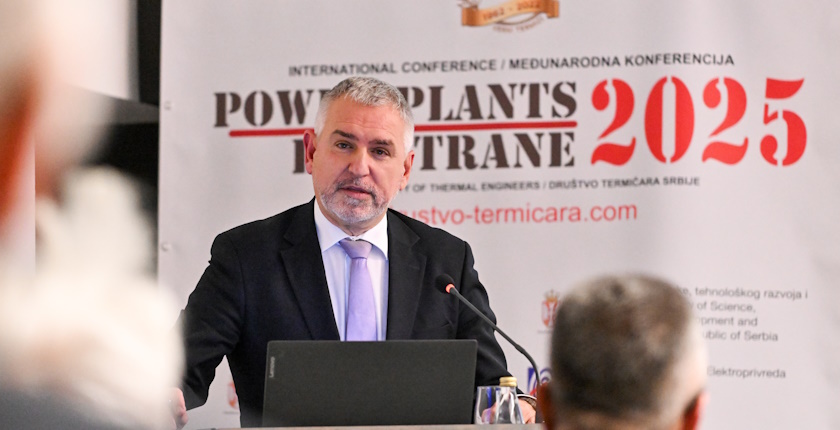
The energy transition isn’t just a matter of adaptation and transformation of one company, but the entire energy sector, the economy, as well as society, he said at the Power Plants 2025 conference, organized by the Society of Thermal Engineers of Serbia.

Jakovljević: It is important to analyze the experiences of other countries that started the energy transition before us

Jakovljević noted that it is important to analyze the experiences of countries that started the energy transition before Serbia, to apply proven solutions and avoid mistakes. However, in his words, it is also necessary to consider the characteristics of Serbia’s power sector.

Photo: EPS/Danilo Mijatović

​The decarbonization of EPS is already underway with various projects, he asserted and added that by the end of the year, the company’s green portfolio would increase by 76 MW.

The 10 MW Petka solar power plant has been completed, and soon the trial operation of EPS’s first wind farm – Kostolac, with a capacity of 66 MW, will kick off.

Jakovljević recalled that the company is preparing to build pumped storage hydropower plant Bistrica, with a capacity of 650 MW, saying it is a key facility for the integration of renewable sources and for energy stability. He added it is also developing photovoltaic projects, including one for 1 GW and a 200 MW battery energy storage system (BESS).

From 2026, every ton of CO2 produced in EPS’s plants will be priced

EPS is developing renewable energy projects at locations near mines and coal power plants, where existing infrastructure can be utilized, and connections to transmission and distribution networks are available, Jakovljević explained.

He noted that Europe has set the climate neutrality goal for 2050, and that Serbia has committed to reducing carbon dioxide emissions by at least 33% and to produce 45% of its electricity from renewable sources by 2030.

From 2026, every ton of CO2 produced in EPS plants will be priced, exposing coal production to additional challenges, Jakovljević stressed.

However, in his words, EPS’s goal remains clear – reliable and sustainable energy for Serbia and a profitable EPS as a secure support for consumers, and energy independence in the future.

by in News

North Macedonia’s ESM needs investments of EUR 3 billion to replace coal power

Power utility Elektrani na Severna Makedonija estimated that it requires EUR 3 billion by 2040 to replace electricity from its lignite-fired power plants. According to member of the Board of Directors Ivan Stojanovski, the state-owned company is preparing investments in gas power plants, solar, wind, hydropower and energy storage. He highlighted its plans for a 300 MWh battery and the Bogdanci hybrid energy park.

North Macedonia’s utility Elektrani na Severna Makedonija (ESM), the country’s main electricity producer, generated 60% of the 2024 output in the Bitola and Oslomej coal plants.

A rough estimate is that ESM would have to invest around EUR 3 billion in the next 15 years to replace its power production from lignite, which is baseload energy, Ivan Stojanovski, a member of the Board of Directors and the company’s Chief Financial Officer, told Balkan Green Energy News on the sidelines of the International Forum on Energy for Sustainable Development (IFESD-14).

He explained that the transition to green energy is quite expensive. ESM needs to replace the 840 MW in baseload production that the Bitola and Oslomej thermal power plants provide, the executive added.

Hydropower is a domestic electricity source, unlike natural gas

The company opted for investments in diverse energy sources to achieve it, Stojanovski stressed.

Gas power plants provide baseload energy, but at the same time, they turn the spotlight on national security as well as the security of supply, in his words.

Lignite is currently mined in North Macedonia while natural gas must be imported, so gas supply interruption is possible, ESM’s CFO added.

Gas power plants are required, but it is necessary to invest in hydropower as it is a domestic resource, Stojanovski said. On the other hand, hydroelectric plants are more expensive and it takes longer to build them, he noted.

ESM launched the Bitola 3 solar power project

ESM is developing wind and solar power projects as well. Stojanovski highlighted the planned expansion of its Bogdanci wind farm. The European Bank for Reconstruction and Development (EBRD) is participating in the development of the Miravci wind power project, of at least 100 MW, he recalled.

The company is working on solar power projects Oslomej 1 (10 MW), Oslomej 2 (10 MW), Bitola 1 (20 MW) and Bitola 2 (60 MW), Stojanovski asserted. Bitola 3 endeavor is underway, too, and the financing contract is expected to be signed by the end of the year, he revealed.

The photovoltaic system will have at least 100 MW, Stojanovski asserted.

“We plan to sign a contract next year with Agence Française de Développement (AFD) for a solar power plant in Bogdanci of at least 30 MW and to create a hybrid energy park there – wind, solar, and a battery,” he stated.

According to Stojanovski, the company is developing a battery energy storage project with the EBRD, for up to 300 MWh in capacity. The site is within the REK Bitola coal complex and the facility will be a systemic solution for all the solar power plants there, he explained.

Blended financing as a solution

“EUR 1 billion to EUR 1.3 billion is needed just for solar, wind and batteries. We will need between EUR 500 million and EUR 700 million for gas power plants. Another EUR 1 billion to EUR 1.3 billion would be for large hydropower plants such as Čebren and Vardar Valley, and some smaller projects,” Stojanovski explained.

Asked how the company plans to secure financing, he pointed to blended financing – own sources combined with some participation from international financial institutions. It is important to diversify the sources by opening cooperation with as many financial institutions as possible, in Stojanovski’s view.

ESM traditionally cooperates with the EBRD and KfW. Stojanovski announced that the company would diversify financing by launching cooperation with the World Bank, Italy’s development bank Cassa Depositi e Prestiti, and AFD.

“It will enable us to access more sources and complement them with financing from local banks. We also tend to obtain support from the state budget over a longer period, 10-15 years, and state guarantees, but also additional funds. This is a financial model that can secure long-term and sustainable financing of infrastructure projects,” Stojanovski said.

by in News

Božinovska: Solar overtakes hydro in North Macedonia

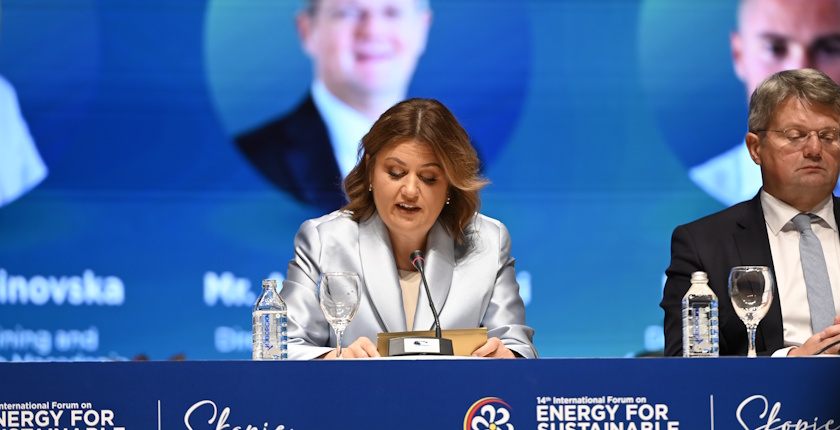
The share of solar power plants’ capacity in North Macedonia has surpassed hydropower plants in 2024, Minister of Energy, Mining and Mineral Resources Sanja Božinovska said at the 14th International Forum on Energy for Sustainable Development in Skopje.

The three-day International Forum on Energy for Sustainable Development (IFESD-14) started yesterday. Its theme is From Goals to Action: Powering the Future with Sustainable Energy. The event was organized by the Ministry of Energy, Mining and Mineral Resources of North Macedonia, in cooperation with the United Nations Development Programme (UNDP) and the UN’s five regional commissions – UNECE, UNESCAP, UNECLAC, UNECA, and UNESCWA.

According to Sanja Božinovska, Minister of Energy, Mining and Mineral Resources, North Macedonia has taken decisive steps in recent years to transform its energy system and align it with the principles of sustainability, security, and affordability.

The reforms are already delivering measurable results, with renewables now accounting for more than half of the country’s total installed electricity capacity – 56% in 2024, she noted.

North Macedonia is moving from goals to action

“The structure of that progress is even more striking. Photovoltaic power plants now represent 28% of installed capacity, surpassing large hydropower, which is at 24%. For the first time in our history, solar has overtaken hydro – a symbolic and practical milestone in our path toward decarbonization,” the minister stated.

In 2024 alone, solar output grew by 186%, she underlined at the first high-level plenary session.

Photo: Ministry of Energy, Mining and Mineral Resources

The numbers speak louder than words: they highlight a nation that is not just planning a transition, but living it, in Božinovska’s view.

Of note, at the end of 2024 the capacity of solar power plants was 848 MW. The year-on-year was higher than 340 MW. Hydropower capacity was 720 MW, at the end of last year.

Božinovska: We are supporting over 5,000 workers and communities affected by the coal phaseout

“The numbers confirm it — North Macedonia is moving from goals to action,” Božinovska stressed.

She added that the country is investing in new solar and wind projects, expanding energy storage, and modernizing the national grid to absorb growing renewable capacity. “These investments are essential for maintaining reliability and flexibility as we integrate more clean energy sources,” she explained.

Božinovska pointed out that the commitment to a just energy transition is equally important.

“We are supporting over 5,000 workers and communities affected by the coal phaseout, helping them to retrain, diversify local economies, and secure green jobs,” she underlined.

Joksimović: Serbia to reach 2030 renewables target

Sanja Božinovska and Jovana Joksimović (photo: Ministry of Energy, Mining and Mineral Resources)

According to Jovana Joksimović, Serbian Assistant Minister of Mining and Energy for International Cooperation and European Integration, coal is still the backbone of the energy system in Serbia, while the share of energy from renewables is significant and growing, and it reached 38% in 2023.

The government plans that one in two megawatt-hours would be produced from renewables by 2030, she underlined.

“Existing valuable resources will need to remain the foundation of Serbia’s electricity sector until renewable energy, transmission and distribution infrastructure, as well as storage capacities and ability to integrate renewables, are sufficiently developed and aligned to reliably and securely replace coal-based electricity generation,” the assistant minister told the audience during the second high-level plenary session.

It is necessary to diversify supply channels but also the energy mix

Joksimović stressed that the increased capacity for clean energy, secured from the two very successful rounds of the auctions, would contribute to reaching 2030 targets.

When it comes to advancing the energy transition and powering the future, it is necessary to think outside the box, she added. Supply channels should be diversified but so does the energy mix, to be as self-sustainable as possible, in Joksimović’s view.

There is huge support for it from relevant international financial institutions – IFIs, but more is needed, in her words.

“If we are going to reach the targets that we set for us, I believe that the European Commission would be partnering with us in all efforts that we are taking,” she concluded.

Photo: Ministry of Energy, Mining and Mineral Resources