by in News

WindEurope to Greece: Accelerate licensing, reintroduce wind energy auctions

WindEurope has advice for Greece to accelerate wind power installations, given the country’s sluggish performance.

WindEurope expects Greece to add 300 MW of wind capacity in 2025, after 152 MW came online in the first six months. It is an improvement from the mere 108 MW of the entire 2024, but still far below previous years. For example, in 2023, the country added 544 MW of wind power. WindEurope’s Director of Advocacy and Messaging Viktoriya Kerelska has suggested solutions to increase the pace.

Greece needs to integrate the latest version of the European Union’s Renewable Energy Directive – RED3 – to facilitate faster and simpler licensing, she said at the Renewable and Storage Forum in Athens.

Other member states are behind schedule with the legislation as well. The European Commission opened infringement procedures in July by sending letters of formal notice to 26 of them – all except Denmark.

Kerelska: Do it like Germany

Furthermore, WindEurope believes that the concept of superior national interest must be applied in Greece, according to Kerelska.

Based on European law, it would allow easier wind farm deployment, while overriding unjustified public reactions that delay the process.

Kerelska added that Germany already applied the principle with great success.

Power purchase agreements (PPAs) are underutilized in Greece.

Therefore, the country should reintroduce wind power auctions, which it held until 2022, for support under contracts for difference (CfDs), according to the association.

One last issue is the delay in the national offshore wind program, which the government has not submitted yet to parliament for adoption, Kerelska noted.

HWEA: Time is running out

Easy times for renewable energy are over, Chairman of the Hellenic Wind Energy Association (HWEA or ELETAEN) Panagiotis Ladakakos said. The sector faces difficult decisions and potential hidden costs, while time is running out to make changes in the regulatory and legal framework, he claimed.

HWEA called on the government to introduce a curtailment allocation mechanism within which curtailed energy would be calculated. Namely, the cuts are not spread evenly, and wind farms connected to the transmission network suffer higher costs. The government has promised to introduce a mechanism by the end of 2025.

The organization said energy storage facilities should be able to have joint grid connection points with renewable energy plants. It referred to projects where the battery’s capability or operating power can be as high as the installed capacity for electricity production.

HWEA added that Greece requires to enact its national offshore wind plan and a special purpose vehicle (SPV) to carry out offshore studies. Moreover, it urged for the development of a new renewable energy spatial plan and more incentives for consumers in areas hosting renewable energy plants.
by in News

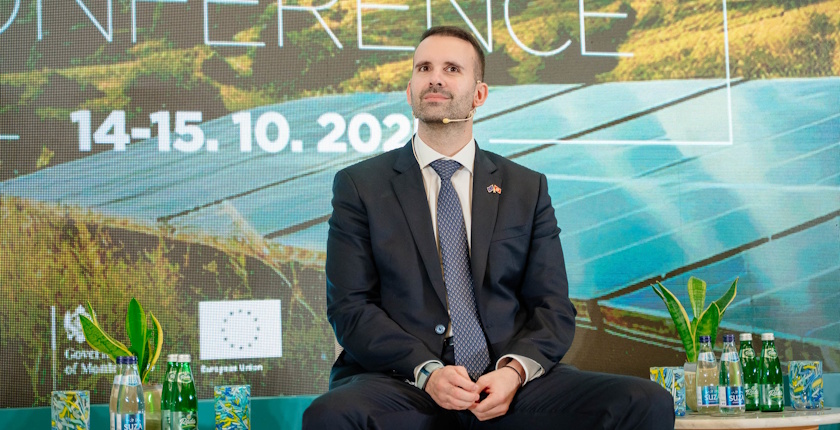
Spajić: Montenegro wants to be country of green data centers

Montenegro plans to become a country of green data centers, according to Prime Minister Milojko Spajić.

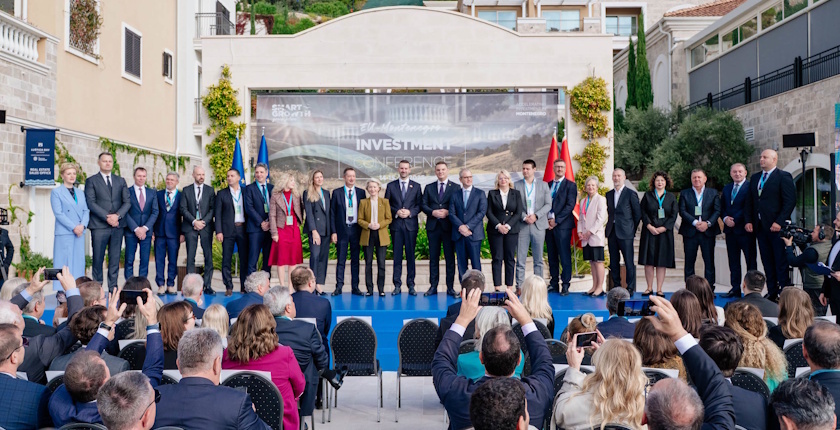
Milojko Spajić was one of the speakers at the keynote panel Accelerating the Western Balkans’ Green and Smart Growth, within the European Union – Montenegro Investment Conference in Luštica, near Tivat.

Earlier, European Commission President Ursula von der Leyen and the prime minister of Montenegro opened the two-day event, titled Smart Growth, Green Future: Accelerating Investment in Montenegro.

Spajić said energy is a cornerstone of the country’s strategy for connecting the region but also something in which Montenegro could be very competitive, helping the EU become even more competitive on the global stage.

Spajić: We can offer to Europe a possibility to get inexpensive electricity and stable supply

“We have dozens of amazing projects for hydro, wind, solar energy at very competitive rates. We can offer to Europe a possibility to get inexpensive electricity and stable supply. Baseload energy as well. For example, hydro is baseload energy,” he stated.

Photo: Bojan Gnjidić / Government of Montenegro

The prime minister recalled that his country is interconnected with Italy and that the project for the installation of the second line of the subsea cable is in the pipeline. But he also highlighted the significance of digital connections with Italy, where Milan is one of the biggest data center hubs in the EU, providing connections to Frankfurt and London.

Montenegro, in Spajić’s words, intends to be a part of the data highway. Data centers are basically the hardware for artificial intelligence, he explained and added that AI is going to be strong in big markets, not in small ones.

Partners from the US, UAE, and other countries, are interested in the development of the data centers

“But where we can actually be involved as a small country are data centers providing infrastructure for the EU’s AI to be strong and competitive,” Spajić underlined.

Therefore the country intends to focus on providing a very good environment for global data center operators, to come from all around the world. Spajić revealed that partners from the United States, United Arab Emirates, and other countries are interested in joining the opportunities for the development of the data centers.

“We want Montenegro to be the country of green data centers. We have water for hydropower. We have a lot of solar potential and a lot of wind. We are very fortunate to have such diversity,” Spajić said.

He invited investors to come to Montenegro: “Don’t waste your time, come as soon as possible.”

Participants at the panel included the Director of Enlargement Coordination, Strategy and Investments at the EU’s Directorate-General for Enlargement and Eastern Neighbourhood, Mathieu Bousquet, WizzAir CEO József Váradi, Akuo President Eric Scotto, and Charlotte Ruhe, Managing Director for Central and South-Eastern Europe in the European Bank for Reconstruction and Development (EBRD).

Of note, fourteen cooperation projects between Montenegrin and European companies have been initiated at the conference. Some of them involve investments in wind farms, solar parks, energy storage, and grids.

by in News

Šahmanović: Second submarine cable line with Italy to be installed by 2031

The second line of the submarine cable connecting Montenegro and Italy is expected to be completed by 2031, Montenegro’s Minister of Energy and Mining Admir Šahmanović said at the European Union – Montenegro Investment Conference.

The two-day conference, titled Smart Growth, Green Future: Accelerating Investment in Montenegro, was opened yesterday in Luštica, near Tivat, by European Commission President Ursula von der Leyen and Prime Minister of Montenegro Milojko Spajić.

Fourteen cooperation projects between Montenegrin and European companies have been initiated at the conference, including investments in wind farms, solar parks, energy storage, and grids. It shows the great significance of the energy sector for investments.

A panel called Renewables: Scaling Montenegro’s Energy Transition examined the possibilities for accelerating the country’s energy transition and enhancing the sector’s attractiveness for investment in renewables.

Šahmanović: Montenegro strives to position green energy as an export product

Prominent international experts and investors took part in the discussion. Representing the Government of Montenegro, Minister of Energy and Mining Admir Šahmanović outlined the country’s renewable energy priorities and highlighted Montenegro’s role as a regional leader in clean energy.

Montenegro has fully harmonized its legislation with EU standards, creating a stable and predictable investment environment, in his words. Šahmanović highlighted the launch of the first solar power auction as a significant step forward in the development of renewables.

Photo: Đorđe Cmiljanić/Government of Montenegro

“The government invests in battery energy storage systems (BESS), ensuring the flexibility and stability of the grid. Montenegro strives to position green energy as a recognizable export product, thereby strengthening the country’s economic sustainability,” Šahmanović stated.

He revealed that Montenegro is about to sign a memorandum of understanding with Italy that would additionally position Montenegro as an energy bridge between the Western Balkans and the EU.

Montenegro is looking for strategic partners and investors ready to jointly implement capital projects in the energy sector

The government is wrapping up the work concerning the oil and gas sector to close chapter 15 in its accession negotiations with the EU, further strengthening investor trust, Šahmanović said.

“The implementation of the project for the construction of the second phase of the subsea cable link with Italy is expected by 2031, which will further strengthen Montenegro’s role in regional and European energy connectivity. Montenegro is looking for strategic partners and investors ready to jointly materialize capital projects in energy and contribute to regional energy stability,” the minister underlined. The investment is estimated at EUR 500 million, he asserted.

In a message to investors, Šahmanović said Montenegro is open for investments and added: “Now is the time for you to invest. We will be your service 24 hours a day, seven days a week.”

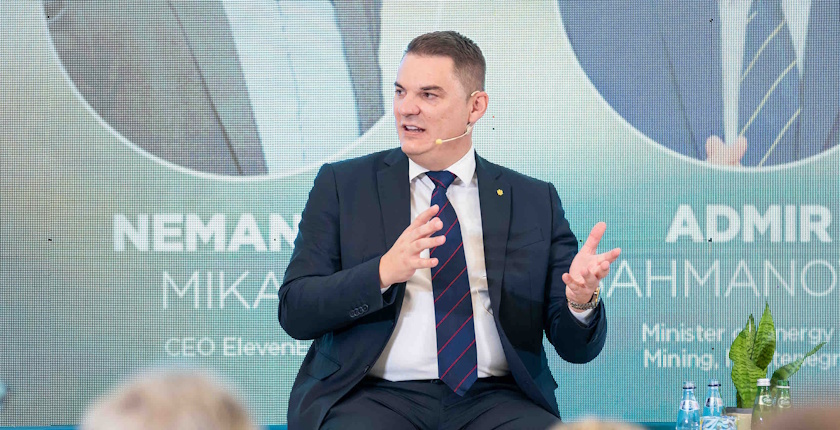
Participants at the panel included Daniel Calderon, Alcazar Energy Co-Founder and Managing Partner, Yann Guinard, EDF Director of Development for Europe, Louis Blanchard, Qair Energy President, and Nemanja Mikać, ElevenEs CEO.

Memorandum with EDF

Admir Šahmanović and Yann Guinard (photo: Ministry of Energy and Mining)

Within the conference, the Ministry of Energy and Mining of Montenegro and EDF International Networks signed a memorandum of understanding. It establishes a framework for future cooperation on modernizing the distribution network, digitizing smart grids, and integrating renewable energy sources, according to the ministry.

The memorandum foresees the implementation of pilot projects and feasibility studies that will contribute to the acceleration of the energy transition of Montenegro.

Admir Šahmanović said the deal is an important step towards strengthening green and innovative energy projects. Cooperation with EDF confirms the position of Montenegro as a country with a clear vision and open opportunities for investors, he underscored.

“EDF International Networks, as part of the global EDF Group, brings international expertise in the sector of power distribution, grid upgrade and digital transformation, which opens up space for new strategic partnerships and capital infrastructure projects,” the minister pointed out.

The memorandum confirmed the joint commitment to sustainability, integrity and energy security, with a clear focus on the well-being of citizens and the economy of Montenegro, the ministry said.

by in News

EU-Montenegro Investment Conference: 14 partnerships, MoUs signed for energy, sustainable projects

A total of 14 cooperation projects between Montenegrin and European companies have been initiated at the ongoing European Union-Montenegro Investment Conference, including investments in wind farms, solar parks, energy storage, and grids.

The two-day conference, titled Smart Growth, Green Future: Accelerating Investment in Montenegro, was opened today in Luštica, near Tivat, by the President of the European Commission, Ursula von der Leyen, and the Prime Minister of Montenegro, Milojko Spajić.

Montenegro’s growing potential for strategic, green, and sustainable investments was presented through new partnerships between leading Montenegrin and European companies, according to a press release by the Government of Montenegro.

The Conference was jointly organized by the government and the European Commission, with the support of the Montenegro Investment Agency (MIA).

State power utility EPCG has signed three memoranda of understanding

State-owned power utility Elektroprivreda Crne Gore (EPCG) has signed three memoranda of understanding (MoUs). One was signed with Akuo for the development of several renewable energy projects, including floating solar, a photovoltaic plant, and energy storage.

The second MoU, signed with SS&A Power Group, envisages the development, manufacture, and installation of thermal energy storage, while the third, with Wind Fisher, concerns a new technology for high-altitude wind power generation.

Alcazar Energy signed a memorandum with the government’s project management office for the development and financing of renewable energy projects. CWP Europe and the Montenegrin Investment Agency (MIA) signed a memorandum on the development of the Montečevo solar farm project with battery storage. The company signed a similar agreement for its project in Albania yesterday.

A memorandum was also signed between Čevo Solar and Grawert Jenny & Partner on battery energy storage systems (BESS). A 20 MW/60 MWh battery is being considered.

Four sustainable investment partnerships were also signed

The Ministry of Energy and Mining and EDF will further discuss the issue of modernizing Montenegro’s power distribution network.

Among the signed documents is an MoU on collaboration between the European Bank for Reconstruction and Development (EBRD) and Erste on a Regional Energy Efficiency Program (REEP), as well as cooperation in the field of wastewater management between Suez and MIA.

In addition, four sustainable investment partnerships were also signed: Farm2Fork Montenegro, Station M, Green Logistics Hub, and Northern Investments Compact for Ecology & Resilience (NICER). Green Logistics Hub refers to the Port of Bar, which aims to become the first net-zero port on the Adriatic. NICER concerns the just transition and is led by the Pljevlja Coal Mine.

Von der Leyen: Do not wait for accession to invest in Montenegro

Photo: Bojan Gnjidić/Vlada Crne Gore

The event brought together senior representatives of the Government of Montenegro, the European Union, international financial institutions, as well as prominent European and Montenegrin investors.

“My message is very clear: do not wait for accession to invest in Montenegro, because by then you may miss the opportunities that others will seize,” Ursula von der Leyen noted.

She stressed that by continuing its European journey with determination and speed, Montenegro is making its goal of EU accession attainable.

“Today, we are opening a new chapter of development—we are beginning a major investment cycle, strengthening our ties with the European market even before formally joining the European family. Today, we are bringing our vision of green and smart growth to life. We are doing this together with our most important strategic partner—the European Union, which is also the largest investor in our country,” Prime Minister Milojko Spajić said.

He recalled that the country plans to close all negotiating chapters with the EU by the end of 2026 and become its 28th member state in 2028.

Photo: Bojan Gnjidić/Vlada Crne Gore
by in News

Apple signs PPAs in Greece, Romania as part of drive to green its devices’ consumption

As part of efforts to ensure that all electricity consumed by Apple devices is matched with green energy, the United States–based tech giant is facilitating 650 MW of renewables projects across Europe, including through power purchase agreements (PPA). By 2030, wind and solar power plants in Spain, Greece, Italy, Latvia, Poland, and Romania are expected to generate over 1 TWh of clean electricity on behalf of Apple users, the company said.

“By 2030, we want our users to know that all the energy it takes to charge their iPhone or power their Mac is matched with clean electricity,” said Lisa Jackson, Apple’s vice president of environment, policy, and social initiatives.

In Greece, Apple has signed a long-term PPA to procure power from a 110 MW solar project owned by HELLENiQ Energy. The plant, which is already fully operational, is located in Kozani in northern Greece.

Apple has signed a long-term power purchase agreement for a 110 MW solar plant in Greece

In Romania, the company plans to procure power from the 99 MW Green Breeze wind farm, located in Galați County, through a long-term virtual power purchase agreement (vPPA). The facility, which is scheduled to start operations in the first half of 2026, was initiated by Sweden-based OX2 and later sold to Nala Renewables.

In Italy, Apple is supporting the development of a 129 MW portfolio of solar and wind projects. The first of the facilities, a photovoltaic plant in Sicily, is expected to come online this month.

The project backed by Apple in Poland is for Econergy’s 40 MW solar array, which is expected to be operational later this year. In Latvia, the tech giant has signed one of the country’s first corporate PPAs. It will procure electricity from European Energy’s 110 MW solar power plant, set to be one of the largest in Latvia once completed.

The 131 MW Castaño solar farm in Spain came online earlier this year

The 131 MW Castaño solar farm in Segovia in Spain, operated by ib vogt, became operational earlier this year.

by in News

Đokić: We expect EU to accept request to postpone CBAM implementation

Minister of Energy and Mining of the Republic of Srpska Petar Đokić expressed belief that the European Commission would postpone the implementation CBAM, set for January 1, 2026.

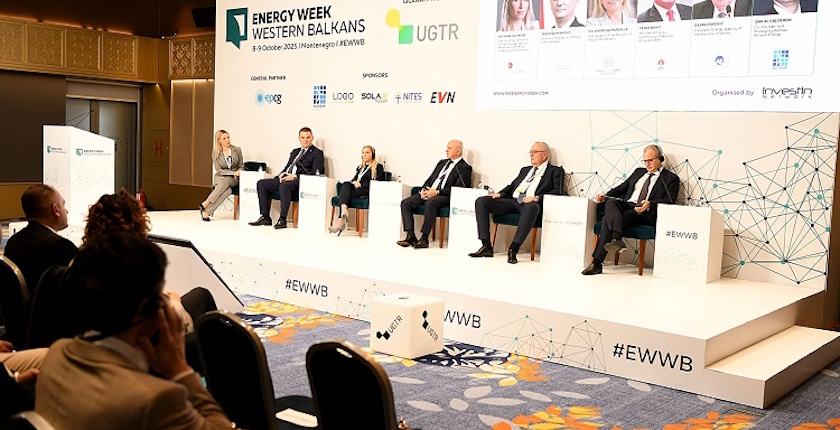
Minister Petar Đokić participated in the Energy Week Western Balkans 2025 conference, where he recalled that the Republic of Srpska has signed several contracts with domestic and foreign partners for the construction of renewable power plants totalling 2,170 MW. The investments are estimated at BAM 5 billion (EUR 2.56 billion).

Đokić noted that the construction of two hydropower plants, of 159 MW and 34 MW, is underway, as well as of the Buk Bijela hydropower plant, in cooperation with Serbia.

Đokić: The rest of the world no longer follows European politics

So far, two contracts have been signed for the construction of wind farms, of which one is in an advanced stage of construction, he underlined. The plan is to complete all contracted projects within three years, according to Đokić.

It will further increase the share of clean energy in total production.

He highlighted the challenges posed by the European Union’s policies, including the Carbon Border Adjustment Mechanism (CBAM), a cross-border emissions tax. Its application could have a very negative impact on the local economy, Đokić noted.

As the rest of the world no longer follows European policies, the question arises whether Europe has the right to impose new obligations on its members, especially if such obligations cause economic disruptions, he claimed.

Đokić: The request of the Republic of Srpska to postpone the implementation of CBAM is justified

Đokić said that the request of the Republic of Srpska to postpone the implementation of CBAM is justified. According to him, Bosnia and Herzegovina has fulfilled the last condition, the adoption of the law on the electricity regulator, transmission, and market, as it is now in parliamentary procedure.

CBAM brings fees on the CO2 emissions of goods imported to the EU from countries that don’t have equivalently priced carbon schemes. They include the Western Balkans.

The tax will cover cement, iron and steel, aluminum, fertilizers, electricity, and hydrogen.

Serbia, which is also part of the Western Balkans region, launched public consultations last week on its draft Law on Greenhouse Gas Emissions Tax and the Law on Carbon-Intensive Product Imports Tax.

Đokić spoke at a panel with Minister of Energy and Mining of Montenegro Admir Šahmanović, Ambassador of Italy to Montenegro Andreina Marsella, President of the Energy Agency of the Republic of Serbia (AERS) Dejan Popović, and co-founder and managing partner of Alcazar Energy Daniel Calderon.

by in News

North Macedonia receives applications for 4.2 GW of battery projects

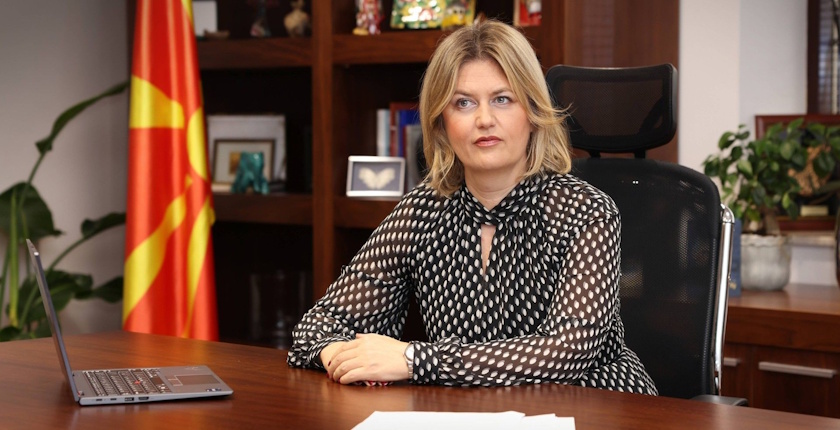
North Macedonia has received requests for new wind farms, solar parks and gas power plants of 7,100 MW in total capacity, as well as for standalone batteries and ones that would be co-located with power plants, for 4,172 MW in overall operating power, Minister of Energy, Mining and Mineral Resources Sanja Božinovska revealed.

The Ministry of Energy, Mining and Mineral Resources has received an initiative for a 495 MW gas-fired cogeneration plant. Sanja Božinovska said the details are unknown as the submitted documentation is too extensive and is still being analyzed, state news agency MIA reported.

Of note, there were already proposals for gas-fired power plants in the country. The government has signed a memorandum of understanding with Kazancı Holding on projects for such facilities.

Investors intend to install standalone and co-located BESS

Investors submitted initiatives for wind farms of 1,590 MW altogether, as well as for a total of 402 MW and 1,080 MWh in battery energy storage systems (BESS) that would be co-located with wind farms.

So-called initiatives were also received for solar power projects totaling 5,052 MW and accompanying BESS of 1,174 MW in combined capability and 3,018 MWh in capacity. Investors plan to build standalone batteries of an overall 2,596 MW and 3,094 MWh, respectively.

Božinovska said it is great news, though that it’s more important whether the documentation is valid.

She recalled that the recently adopted Law on Energy introduced an annual construction plan for priority energy projects.

October 1 was the deadline for foreign investors to submit their projects

October 1 was the deadline for foreign investors interested in the construction of power plants to submit documentation, Božinovska noted. The ministry received a huge number of documents and it will take time to process them, she stressed.

Batteries became all the rage in the renewable energy sector worldwide. North Macedonia is set for a landmark achievement in its region.

YESS Power plans to commission a 60 MW BESS in the country next month. It would be the first large facility of its kind in the Western Balkans.

by in News

Croatian company Brodosplit delivers equipment for French floating wind farm pilot project

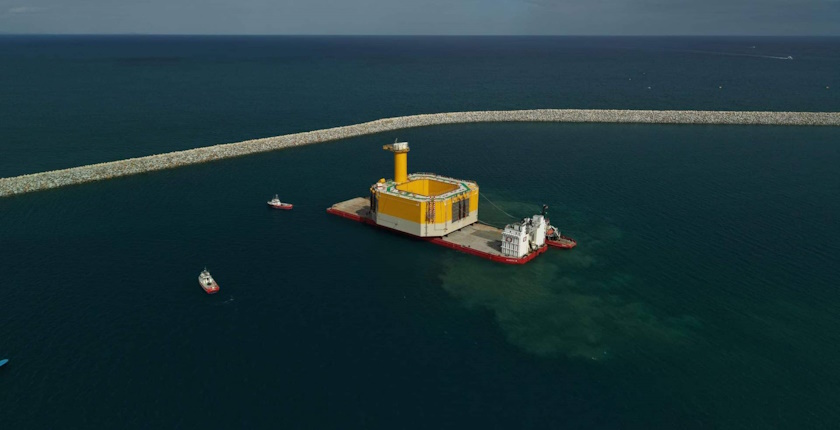
Croatian shipbuilding company Brodosplit has manufactured steel structures for the floating foundations of an offshore wind farm in one of the first such pilot projects in France.

The site for the EolMed project is approximately 18 kilometers from the coastal town of Gruissan in the Occitanie region of southern France.

Qair is leading the consortium, which includes oil and gas giant Total Energies and floating platform provider BW Ideol as its partners. The three 10 MW wind turbines, supplied by Vestas, are about to be installed at a spot where the sea is 55 meters deep.

According to Brodosplit, the project has entered its final phase after the successful launch of the three floating platforms in September.

It isn’t Brodosplit’s first floating wind farm project

The Croatian firm said it manufactured and delivered the metal structures for the floating foundations, in line with the highest quality and safety standards.

Before joining the EolMed project, it entered the floating wind farm segment through cooperation with Ocergie. Brodosplit has created an innovative measuring buoy, OCG-Data, for the France-based company’s Blue Oracle project.

The EolMed project received state support as part of the investments for the future program

The buoy is equipped with a LiDAR (light detection and ranging) system and advanced sensors for monitoring wind, waves, currents, and sea biodiversity, enabling the collection of crucial data for the development of floating wind farms and the preservation of the marine environment, Brodosplit pointed out.

Since EolMed’s initial design in 2016, it has been adjusted and adapted to incorporate the latest technologies. Initially comprising four wind turbines, the number has since been reduced to three for equivalent capacity.

The change also affected the choice of material for the floats – now steel instead of concrete. Construction began in April 2023, and completion is planned for this year.

The project received state support through the Investments for the Future Programme (Programme d’Investissements d’Avenir – PIA). The goal is to demonstrate the economic viability of floating wind farm technology.

Photo: Brodosplit
by in News

RES Croatia to Brussels: Renewables have no future in Croatia

RES Croatia, together with SolarPower Europe and WindEurope, has sent a letter to the European Commission to raise concerns about the crisis in Croatia’s renewable energy sector.

The three associations emphasized that for several years, 60 projects for investments in solar, wind, geothermal, and batteries have been blocked, and that if nothing is done, many of them would soon be abandoned.

Without urgent deblocking of renewable energy projects, Croatia will lose investments, increase fossil fuel imports, which already exceed 25%, and miss the European Union’s and national target of at least 42.5% of energy consumption coming from renewables by 2030, according to Renewable Energy Sources of Croatia (RES Croatia), SolarPower Europe and WindEurope.

The national organization warned that the government is gradually phasing out subsidies for electricity prices for citizens and entrepreneurs. At the same time, the development of renewable energy sources as the only sustainable solution for lower bills and lowering imports is at a complete standstill, it added.

Projects with a total capacity of 3.5 GW and investments of EUR 3 billion are blocked

Croatia is currently subject to infringement proceedings due to delays in implementing the European Union’s RED II and RED III directive. They aren’t just a piece of paper, but a mechanism to ensure energy security and independence, which is of strategic interest for Croatia and its citizens, RES Croatia underscored.

The organizations are urging the European Commission to use its tools to demand from the government to determine the grid connection fee, but at EUR 0 per kWh, open up the balancing market for renewable energy producers, and integrate battery energy storage systems (BESS) and electrification into national planning.

Currently, 60 projects for solar power plants, wind farms, geothermal power plants, and batteries with a total capacity of 3.5 GW and investments of EUR 3 billion are blocked, according to the letter, accompanied by an annex.

The domestic industry is unable to sign long-term PPAs

For these projects, the state has already charged EUR 25 million through energy approvals— the first in a series of documents that requires payment to the state, which, due to the blockage, are beginning to expire at the end of this year.

Organizations stressed that these projects are permanently losing the paid money, while local communities are losing significant revenues that would have been allocated to them from the implementation of renewable energy projects.

They also drew attention to the domestic industry’s inability to sign long-term power purchase agreements (PPAs) with renewable energy producers, securing more favorable market conditions and thereby increasing its competitiveness in European and global markets.

Of note, the European Commission advised Croatia in June to speed up the installation of renewable energy capacities.

If nothing is done, projects of as much as 2.5 GW overall will be abandoned as early as next week

The associations pointed out that the development of new projects larger than 10 MW has stalled since 2022 because the Croatian Energy Regulatory Agency (HERA) has not set a transmission network connection fee for renewable power plants.

Instead, they added, Croatia’s transmission system operator (TSO) HOPS is trying to shift the costs of network modernization – planned over ten years ago and not related to new projects – to new renewable energy projects.

The minister of economy said in March that the upcoming connection fee would be EUR 0 per kW

It is increasing the project cost by 30% to 40%, making them unprofitable, RES Croatia said.

Such a model for financing the network is not from European practice, because 80% of member states rely on EU funds and their national budgets, rather than on producers.

They also recalled that the minister of economy announced in March that a connection fee would be set at EUR 0 per kW and that developers would be offered flexible contracts to encourage investment in battery storage. But that promise has not yet been fulfilled.

The three organizations warn that if nothing is done, projects of up to 2.5 GW altogether would be abandoned as early as next week after HOPS’s decision,. It means companies would withdraw from the Croatian market and lose millions in investments that would have permanently lowered energy prices in the country, RES Croatia claimed.

The balancing market is not functional

An additional problem is the non-functional balancing market, according to the letter.

HEP Proizvodnja, a subsidiary of state-owned utility Hrvatska Elektroprivreda (HEP), is the dominant provider of balancing services, and often the only one. HOPS is legally obliged to ensure market-based procurement of these services, yet it is itself a wholly owned subsidiary of HEP.

It creates an obvious conflict of interest and undermines market competition, the signatories underlined.

“Despite the demonstrated technical ability of solar and wind power plants to provide balancing services, HOPS doesn’t allow these plants to participate in balancing markets. As a result, HOPS frequently activates extremely expensive balancing resources, often at maximum regulated prices even during hours of high renewable generation and positive market prices,” the letter reads.

Croatia has no serious electrification plan

The organizations pointed out that such pricing constitutes a clear violation of the EU principle that balancing services must reflect only the actual costs incurred by the TSO.

They also stressed that Croatia lacks a concrete electrification plan. In 2022, renewable energy accounted for only 2.4% of final energy consumption in transport, with electricity from renewables contributing just 0.2%.

The target for renewable electricity in transport by 2030 is only 5.8%, reflecting limited ambition compared to the EU ambitions, according to the letter.

Electrification of railways could significantly reduce emissions and accelerate the transition, however, it remains an untapped potential, the signatories organizations noted.

by in News

Zen Energy Group kicks off construction of hybrid PV-BESS project in North Macedonia

Luxembourg-based Zen Energy Group has started the installation of a hybrid energy project in North Macedonia, combining a solar power plant and a battery energy storage system.

A solar power plant with a battery energy storage system (BESS) could become the country’s second hybrid power plant, with Fortis Energy installing energy storage near Oslomej solar park.

Zen Energy Group kicked off the construction of a landmark solar plus storage project in North Macedonia, Yossi Edelstein, Chief Executive Officer of Zen Energy Group, wrote on LinkedIn.

From concept to construction, Zen Energy Group is making the future of energy a reality in the country, he added.

“We are proud to share that our 82 MW utility-scale solar project with 50 MWh BESS in North Macedonia has officially entered the construction phase,” Edelstein stated.

The PV plant will use LONGi bifacial solar panels

The company’s team kicked off earthworks, development of access roada and cut-and-fill activities. The project is scheduled to start delivering green electricity to the national grid by late April 2026 and to achieve full commercial operation date in August 2026, according to Edelstein.

The project marks another significant step toward advancing clean energy generation in the region, he added.

According to the firm’s website, the photovoltaic plant will be located near Negotino. It will use LONGi bifacial solar panels for the expected annual production of 124,198 MWh.

The financing was secured from NLB bank, the website reads.

The developer revealed that it has signed a power purchase agreement (PPA) for 10 years in total, with a six-year fixed price period.

Seven projects in the pipeline

Works near Negotino (photo: Zen Energy Group/LinkedIn)

Zen Energy Group is developing seven energy investments – for three solar parks, two wind farms, a standalone BESS, and a commercial and industrial (C&I) portfolio in the UK.

Wind farms Unirea (102 MW) and Traian (78 MW) are located in Romania, while two PV facilities in North Macedonia would have a total capacity of 137 MW. The Negotino endeavor is for 82 MW and the Armatus investment envisages 55 MW.

Solar project Hajdučica of 125 MW is planned in Serbia. All three PV plants would have BESS. The company is developing the Lacu Sarat standalone battery facility in Romania. If it were in operation now, it would be the largest BESS in Europe.