by in News

With 152 MW of wind power installed in H1 2025, Greece continues low trajectory

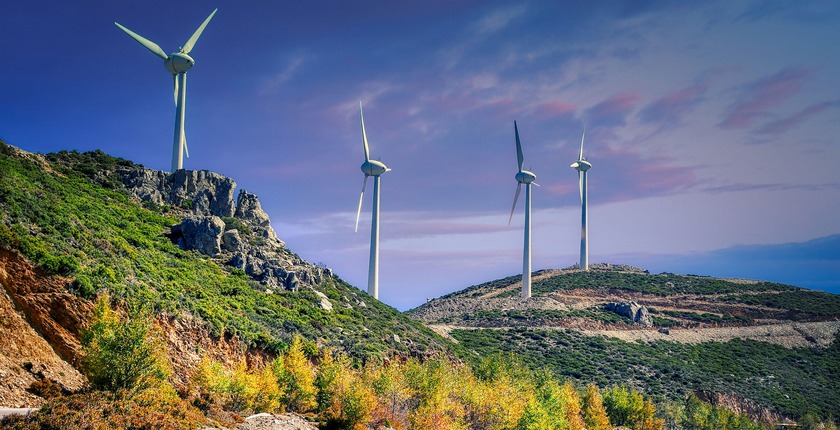
Just 152.2 MW of wind farms were installed in Greece in the first half of 2025, thus continuing the low trajectory of recent years.

According to the Hellenic Wind Energy Association (HWEA or ELETAEN), total wind capacity in the country reached 5,507 MW at the end of June. In the first six months of the year, 37 new wind turbines were installed in Greece, with a capacity of 152.2 MW, representing a total investment of EUR 180 million.

New capacity doubled compared to the same period of 2024, but is not enough to support a more balanced renewable mix, HWEA said. In comparison, photovoltaics consistently add similar capacity in just one month on average.

The association also mentioned that currently there is 1 GW of wind projects under construction, or contracted. The majority are expected to launch operations within the next 18 months. There is another 300 MW selected through auctions for which letters of guarantee were submitted, and it is expected to reach completion. As a result, total capacity is projected to reach 6.5 GW within the period.

HWEA: Red tape is delaying 846 MW of wind projects

HWEA stressed that due to red tape, the construction of over half of the wind power capacity awarded at renewable energy auctions in the period 2018-2022 has been delayed. Namely, 1.592 MW was selected, but just 746 MW is operational today.

“If they had been completed on time, these wind projects, with a total capacity of 846 MW, would have provided more cheap energy and permanent relief to Greek consumers and the national economy,” HWEA pointed out.

Terna Energy and Vestas lead the pack

When it comes to wind energy’s geographical dispersion, Central Greece (Sterea Ellada) leads with 2.427 MW, followed by 709 MW in the Peloponnese and 535 MW in Eastern Thrace.

The top 5 market players are Terna Energy (1,034 MW – 18.8%), owned by Masdar, Motor Oil Hellas’s subsidiary MORE (774 MW – 14.1%), Iberdrola Rokas (409 MW – 7.4%), Principia (368 MW – 6.7%) and PPC Renewables (308 MW – 5.6%), which operates within state-controlled Public Power Corp. or PPC).

The most prominent wind turbine suppliers are Vestas, with 45.1% of the market, followed by Enercon, with 25.7%, and Siemens Gamesa, with 16.4%. They are trailed by Nordex, with 7.6%, GE Renewable Energy (now GE Vernova), with 3.7%, and EWT, Goldwind and Leitwind.

by in News

Construction of largest wind farm in Western Balkans kicks off in Štip in North Macedonia

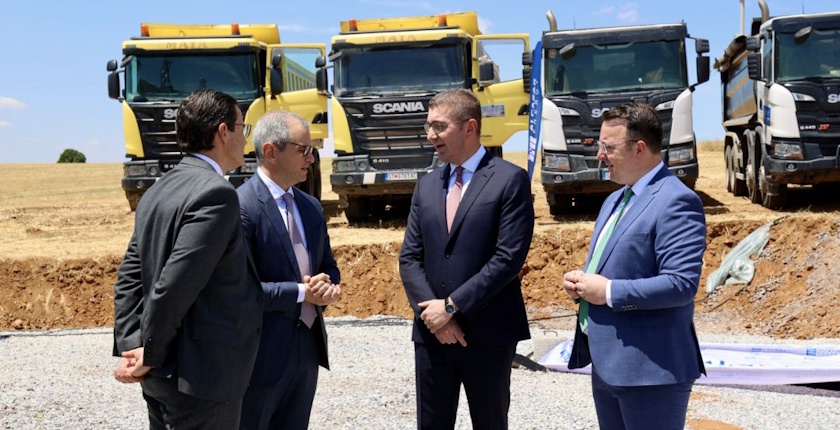
The construction of the largest wind farm in the Western Balkans region has begun in North Macedonia. The Government of North Macedonia and investor Alcazar Energy Partners held a groundbreaking ceremony near the city of Štip for the 400 MW facility.

The Štip wind farm will cover an area of 326 hectares in the municipalities of Karbinci, Radoviš, and Štip, southeast of the capital city of Skopje. Alcazar Energy Partners, which is developing the largest renewable energy platform in the Western Balkans, plans to invest USD 500 million and install 55 wind turbines, which would generate electricity equivalent to the needs of 100,000 households.

The largest operational wind farm in the Western Balkans is Čibuk 1, with a capacity of 158 MW, while the largest project in the pipeline is Maestrale Ring, also in Serbia, for 854 MW.

Co-Founder and Managing Partner of Alcazar Energy Daniel Calderon praised North Macedonia’s readiness to launch such a large-scale project.

The investment will create 600 jobs

The foundation is being laid for a project worth over USD 500 million, which will create 600 jobs, provide clean energy, and reduce carbon dioxide emissions, he stated.

Photo: Government of North Macedonia

Calderon also recalled that in a Bloomberg analysis, investments in renewable energy in the Western Balkans were estimated at USD 11 billion. Due to its advantages, including location, North Macedonia can expect to receive 30% to 40% of it.

North Macedonia’s Prime Minister Hristijan Mickoski noted that the ceremony represents the fulfillment of what the newly formed government promised and agreed with the investor a year ago. He added it is only the first phase.

The power plant will produce 1 TWh of electricity per year

There are many more ideas on how the investment can add even greater value and be more significant both for the investor and for North Macedonia, but it will be discussed at a later stage, according to Mickoski.

He added that the power plant would generate 1 TWh of electricity per year.

North Macedonia currently has two wind farms – Bogdanci, with a capacity of 36.8 MW and a 15 MW expansion underway, and Bogoslovec, of 36 MW, in which the Green Growth Fund (GGF) is a minority shareholder.

The largest wind farm in Europe has a capacity of 2,000 MW

In mid-April, Alcazar Energy Partners signed a development support agreement for the Štip project with the International Finance Corporation, a member of the World Bank Group. The company has a 1.6 GW pipeline of greenfield onshore wind and solar assets,

Of note, the largest operational wind farm in Europe is Markbygden in Sweden, with a capacity of 2,000 MW. Among the top ten, there is another wind farm in Sweden and one in Norway, while the others are in the United Kingdom. The list also includes the 600 MW Fântânele-Cogealac-Gradina wind park in Romania.

by in News

Three quarters of global solar, wind capacity under construction is in China

China continues to dominate the renewable energy landscape, representing 29% of all planned wind and solar capacity and a staggering three quarters of the segment under construction, according to the Global Energy Monitor.

All prospective projects in the world would have 4,484 GW in total capacity, of which 1,302 GW is in China. Next are Brazil, Australia and the United States.

The group consists of announced projects and the ones in the pre-construction phase and under construction. The list comprises solar projects of 20 MW or more and wind projects of at least 10 MW, both in terms of connection capacity.

There is 689 GW of new wind farms and photovoltaic plants in the world under construction. China accounts for 74% or 510 GW, the data reads.

According to Global Energy Monitor’s Global Solar Power Tracker, China has over 709 GW of prospective solar capacity, representing over one third of the global pipeline in 2025.

The country’s wind capacity has a similar rate of growth as solar, per Global Energy Monitor’s Global Wind Power Tracker. There is over 590 GW in prospective phases — nearly 530 GW onshore and 63 GW offshore. China’s prospective capacity accounts for about one third of the worldwide total.

The rapid buildout underscores China’s drive to accelerate its renewable energy development, with at least 205 GW slated to come online by the end of the year, though the total capacity is expected to be even higher, the update shows.

“China is fast-tracking a 1.3 TW pipeline of utility-scale solar and wind projects. Of this, 510 GW is already under construction, primed to be added to China’s 1.4 TW solar and wind capacity already in operation,” Global Energy Monitor said.

As of March 2025, China is the world’s offshore wind powerhouse, growing from under 5 GW in 2018 to 42.7 GW in 2025 (50% of global capacity).

China’s 1.4 TW in operating solar and wind parks outstrips thermal power

In Q1 2025, China’s combined wind and solar capacity surpassed its total coal and gas segment for the first time, supplying nearly 23% of the country’s total electricity consumed, compared to roughly 18% in Q1 2024, the National Energy Administration (NEA) revealed.

Moreover, the increase in output from solar, wind, and other non-fossil energy met China’s additional electricity demand in Q1 2025. Its operating solar and wind capacity soared to 1.4 TW altogether, now accounting for 44% of the global total. It is also more than the combined total of the European Union, United States, and India, the Global Energy Monitor underscored.

by in News

Danish Eurowind Energy to build 220 MW solar park in Romania

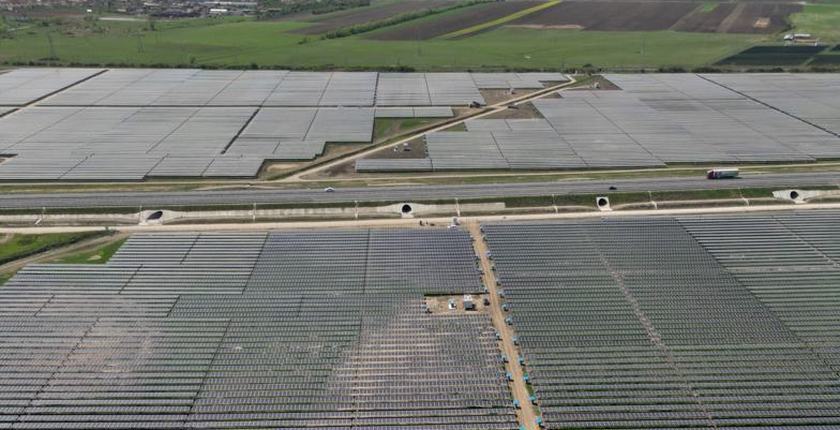
Denmark-based renewable energy company Eurowind Energy has announced plans to develop a 220 MW solar park in Romania in an investment valued at EUR 174.8 million. It would be its largest solar park in Romania and one of the biggest in the country. In addition, the company ordered wind turbines from Vestas for its three projects in Romania.

Eurowind’s future solar park, located in Vișina in Dâmbovița County, will span 345 hectares, comprising over 400,000 photovoltaic panels. Its projected annual electricity output is 400 GWh, equivalent to the consumption of around 150,000 Romanian households.

The Vișina solar park is the fifth photovoltaic project developed by Eurowind in Romania, following those in Hălchiu, Măgurele, Pufești, and Teiuș. By the end of 2025, the company plans to operate a local portfolio of 124 MW, alongside a pipeline of about 7.5 GW of solar, wind, hybrid, and storage solutions, according to its website.

Vișina is Eurowind’s fifth solar project in Romania

The Teiuș Solar Park, with a capacity of 60.2 MW, was commissioned in April this year. The EUR 55 million project was developed in collaboration with local firm Teiuș Solar. Its planned annual production is 103.59 GWh of electricity.

Also in April, Eurowind signed a 12-year virtual power purchase agreement (PPA) in Romania for the supply of electricity from its Pecineaga wind park. The contract was signed with Sweden-based automotive manufacturer Autoliv.

Eurowind has ordered 143 MW of Vestas wind turbines for its wind farms in Romania

Wind turbine manufacturer Vestas said yesterday that Eurowind Energy has placed a 143 MW order for its Frumușița, Vector, and Pecineaga Northeast (NordEst) wind power projects in Romania. The contract includes the supply and installation of 23 wind turbines from the EnVentus platform, Vestas added.

In addition to wind and solar, Eurowind Energy’s portfolio includes hydrogen, biogas, power-to-heat, and battery storage projects. It operates in 16 markets across Europe and the United States, according to the Danish company’s website.

by in News

Montenegrin power utility to borrow EUR 25.6 million for phase 2 of Gvozd wind farm

Montenegro’s state-owned power utility Elektroprivreda Crne Gore (EPCG) plans to take out a EUR 25.6 million loan from the European Bank for Reconstruction and Development (EBRD) to finance the second phase of the Gvozd wind farm project, with an installed capacity of 21 MW. The first phase of wind farm Gvozd, which is under construction, will have a capacity of 54.6 MW.

Announcing its request for government consent, EPCG stated that the capacity increase through the second phase of Gvozd would improve the security of electricity supply, increase the share of renewable energy in the country’s energy mix, and help Montenegro meet its international climate policy commitments.

EPCG previously announced that it expected the start of construction of the Gvozd 2 wind farm in early 2026.

The new document also states that EPCG has submitted a viability assessment of the Gvozd 1 and Gvozd 2 projects, prepared by German consultancy Fichtner GmbH & Co. KG for the purpose of securing financing from the EBRD.

The first phase of wind farm Gvozd will cost EUR 82 million

The first phase of the Gvozd wind farm, with eight turbines, is financed by an EUR 82 million loan from the EBRD. The groundbreaking ceremony was held in November 2024, and EPCG expects the power plant to enter trial operation by the end of this year. Its planned annual electricity output is 150 GWh.

A contract for the design, procurement, supply, and installation of equipment, as well as the commissioning and long-term maintenance of the future wind power plant, was signed with German company Nordex. EPCG said at the time that wind farm Gvozd would be its first large-scale power generation facility built in more than 40 years.

SCADA and ADMS will be introduced through a EUR 35 million project

In the announcement, EPCG also says it signed an agreement with the EBRD in January on financing a project to introduce the SCADA and ADMS systems into Montenegro’s power system. The implementation of SCADA (supervisory control and data acquisition) and ADMS (advanced distribution management system) is a key step towards modernizing the electricity distribution network, the document states.

SCADA enables remote control, monitoring, and automation of electricity distribution, while ADMS supports the integration of renewable energy sources. Together, these systems significantly improve the reliability, efficiency, and security of the power system, EPCG explains.

by in News

Hitachi Energy: Game-changing solutions for a sustainable energy future

Hitachi Energy, a global leader in energy technology, develops system solutions and offers products and services that actively contribute to sustainable energy and a better future, Igor Anđelković, the company’s Country Marketing and Sales Leader in Serbia, said at Belgrade Energy Forum 2025. Game-changing technologies for high-voltage grids and transportation, along with solutions for renewables integration, support decarbonization efforts and deliver added value to both clients and local communities.

Multinational company Hitachi Energy, a silver sponsor of the BEF 2025 conference, is present in the Southeast Europe region through its Balkan Cluster, which covers seven markets – Albania, Bosnia and Herzegovina, Montenegro, Croatia, Kosovo*, North Macedonia, and Serbia.

[wpcc-iframe title=”Igor Andjelkovic, Country Lead Serbia, Hitachi Energy at the Belgrade Energy Forum 2025″ width=”500″ height=”281″ src=”https://www.youtube.com/embed/KVbO8HI5oLk?feature=oembed” frameborder=”0″ allow=”accelerometer; autoplay; clipboard-write; encrypted-media; gyroscope; picture-in-picture; web-share” referrerpolicy=”strict-origin-when-cross-origin” allowfullscreen=””]

Inspiring the next era of sustainable energy

Since 2010, Hitachi Energy has implemented eco-efficient solutions for high-voltage grids of up to 550kV. The company’s innovative and eco-efficient EconiQ® high-voltage portfolio applies revolutionary technology free of sulfur hexafluoride (SF6) and proven to significantly reduce carbon footprint throughout the life cycle.

The high-voltage EconiQ® roadmap demonstrates the scalability of this technology, which allows customers and industry to quickly transition to eco-efficient solutions.

Photo (Hitachi Energy): Hitachi Energy has implemented eco-efficient solutions for high-voltage grids of up to 550kV

Now more than ever, pioneering technologies like EconiQ are needed to advance a sustainable energy future, says Anđelkovic.

Efficient renewables integration

In the renewable energy segment, Hitachi Energy offers a range of substation solutions that help to efficiently integrate renewable energy into the transmission grid and distribution network. This includes grid connection solutions for all types of renewables power plants.

Hitachi solutions are used in a large number of wind projects in Southeast Europe

The major projects in Southeast Europe, completed or in the implementation phase, which use Hitachi Energy’s technology are wind farms Pupin and Crni Vrh in Serbia, Gvozd in Montenegro, Komanje Brdo and Ivan Sedlo in Bosnia and Herzegovina, and Pometeno Brdo and Korlat in Croatia.

Photo (Hitachi Energy): Hitachi Energy offers a range of substation solutions that help to efficiently integrate renewable energy into the transmission grid and distribution network

Driving transportation and energy towards carbon neutrality

Hitachi Energy is also committed to decarbonizing the transportation sector. Its revolutionary ‘grid-to-plug’ electric vehicle charging system, called Grid-eMotion® Fleet, is a smart mobility solution that enables operators to efficiently scale up their operations and is expected to contribute to sustainable society for millions living in urban areas.

Grid-eMotion® Fleet marks a game-changing shift from a charger-product based approach to a charging-system based approach, which helps to accelerate the future of smart mobility.

Hitachi Energy has been pioneering EV charging solutions since 2013, when it first introduced innovative flash-charging eBus solutions in Geneva and Nantes.

Advanced technologies for smart airports

With its innovative solutions, Hitachi Energy has made significant advancements in air traffic as well, with the development of smart airports being one of its key innovations. This includes advanced technologies such as artificial intelligence (AI), video analytics, and 3D LiDAR to improve the passenger experience and improve airport operational efficiency.

Hitachi Energy also helps airport to decarbonize and become more sustainable with its electrification and digitization solutions.

* This designation is without prejudice to positions onstatus and is in line with UNSCR 1244/99 and the ICJ Opinion on the Kosovo declaration of independence.
by in News

Serbia shelves plan for strategic partnership for 1 GW in wind farms

Serbia has revised its Baselines of the Energy Infrastructure Development Plan and Energy Efficiency Measures for the period up to 2028, with projections up to 2030. It defines priority projects in the energy sector.

The Baselines of the Energy Infrastructure Development Plan and Energy Efficiency Measures were adopted in mid-2023 at the proposal of the Ministry of Mining and Energy. In the new document, the construction of 1 GW wind farms is no longer among the priority projects. The plan was to involve with a strategic partner, similar to the project for 1 GW of solar power plants, which is currently being developed by state-owned power utility Elektroprivreda Srbije (EPS) with a strategic partner.

The development plan serves as a basis for the implementation of Serbia’s Energy Development Strategy and the National Energy and Climate Plan (NECP).

The ministry outlined projects across six sectors

The investment cycle planned for the upcoming strategic period represents the backbone of the Energy Development Strategy. It provides the foundation for further assessments and projections of the targeted energy mix through 2030 and 2050. It aligns with the international commitments undertaken in the process of European Union accession as well as with the obligations within the Energy Community, the document reads.

The plan includes projects in six sectors: electricity generation, transmission network, distribution network, natural gas, oil and petroleum products, and energy efficiency. It ranks the projects within each sector.

The most significant change in renewable energy is that the construction of wind farms with a combined capacity of 1 GW is no longer on the list of priority projects.

Solar power plants Kolubara and Morava on the priority list

The 1 GW of solar power and the Kostolac wind farm remained among the four most important endeavors, while the new items are the Morava and Kolubara photovoltaic projects. The Klenovnik solar power plant has been removed from the list. According to the document, the projects on the list are the most advanced.

In total, EPS has 41 projects for power generation or 20 less than in the original document.

Fewer projects, but more realistic

The authors explained that the number of renewable energy projects is lower, but more realistic and better optimized. The entire EPS investment portfolio across all areas requires significant funds and loans, so it would not be realistic to pursue a larger number of high-value projects that cannot be financially or physically implemented within a reasonable timeframe, the document underlined.

It was also taken into account that many private projects, mainly wind farms, are being developed through the auction system, so the focus of EPS’s projects is primarily on solar power plants, to create a balanced ratio between wind and solar power plants in the system. The company’s project for the wind farms with a strategic partner remained a backup option, in case an additional capacity is needed, according to the document.

There are new items on the list for the electricity distribution network

There were no changes in the transmission network segment. The priority projects are the third and fourth sections of the Trans-Balkan Corridor, the Pannonian Corridor, and Beogrid 2025. The list contains 66 investments, five fewer than in the original plan.

Changes have been made regarding investments in the power distribution network. The most important projects now are the 110/10 kV substations National Stadium and Surčin. Automation of the medium-voltage network was kept, together with the ongoing replacement of wooden poles with concrete ones and the replacement of electricity meters with smart ones.

The integrated system for remote monitoring, diagnostics, and control of the low-voltage distribution network has been removed from the list. Instead of replacing transformers at 10 kV, 20 kV, 35 kV, and 110 kV voltage levels, the new focus is on the reconstruction of 25 substations of 110/35 kV.

Planning the first district cooling systems

The energy efficiency part of the baselines was changed the most.

The previous document was primarily focused on reviewing and securing financial support for ongoing projects, while the current one is envisaging expanding the scope and considering new financial mechanisms and sectors that require additional support.

Among other initiatives, the Strategic Plan for the Decarbonization Policy of the District Heating and Cooling Sector in the Republic of Serbia is being prepared. It is a joint endeavour of the European Bank for Reconstruction and Development (EBRD), the Association of Serbian Heating Plants, and the Ministry of Mining and Energy.

The project aims to define steps to improve the district heating system, including heat storage, the use of heat pumps, utilization of heat generated from waste treatment, and the development of the first district cooling systems, according to the document.

Special attention will be devoted to developing guidelines for expanding the district heating system by connecting new users while simultaneously shutting down fossil fuel boilers. It will directly contribute to reducing CO2 emissions and pollution, the authors noted.

by in News

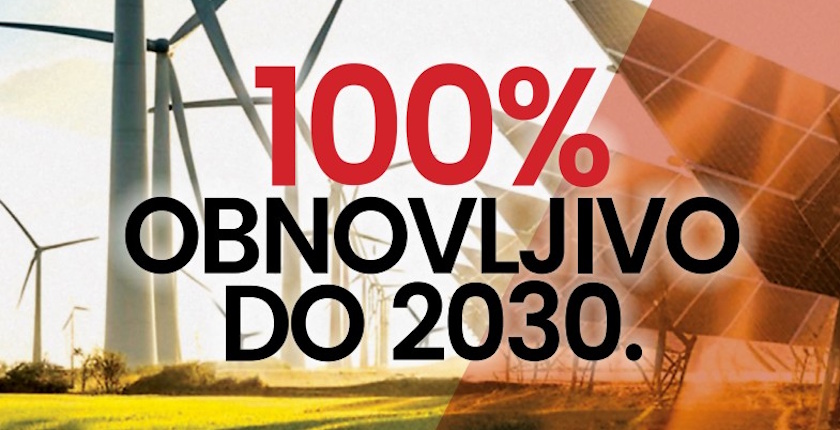
Greenpeace maps Croatia’s path to 100% renewable power by 2030

Croatia can fully transition to using only renewable electricity by 2030, according to Greenpeace. The organization presented its study: 100% Renewable by 2030 – A Plan for the Green Transition of Croatian Power Sector in the country’s capital Zagreb. Political will is the precondition for materializing the goal, it said.

The study was conducted by an expert team led by Professor Goran Krajačić from the Faculty of Mechanical Engineering and Naval Architecture in Zagreb. Of note, at the end of 2023, the share of electricity produced from renewables in total power consumption in the country exceeded 55%.

Greenpeace Croatia said the climate crisis, fueled by the fossil fuel industry, affects the entire world, including Europe and Croatia. The results are lost human lives and increasing material damage caused by extreme weather conditions, the organization noted.

Its ambitious goal for Croatia, to source all electricity from renewables by 2030, is based on a shift to solar and wind energy, as well as investments in the transmission network. The study puts the necessary solar power capacity at 5 GW, compared to 4.2 GW from wind.

In just five years, Greece, installed 7 GW of solar capacity, and Hungary added 5.5 GW

Greenpeace cites examples from the region. Croatia has five years until 2030, and the same period was enough for Greece to install 7 GW of solar capacity, while Hungary added 5.5 GW. Croatia has only recently reached 1 GW from photovoltaic system, despite ranking among the top countries in Europe in terms of solar potential, Greenpeace said.

According to Professor Goran Krajačić, the results of the study indicate that a firm political decision is needed to achieve 100% renewable electricity consumption in Croatia.

Andrić: A strong shift toward renewable energy is a strategic move for energy security, reduced dependence on fossil fuels, and economic opportunities

“Such a decision should include clear signals toward improving the power system, building and strengthening the grid and ensuring energy storage. Renewables also promote the democratization of society by involving citizens in energy communities to produce, store, and share energy,” Krajačić said.

Petra Andrić, program lead at Greenpeace in Croatia, stressed that a strong shift toward renewable energy as an ecologically sound decision. But it is also a strategic move for strengthening energy security, reducing dependence on fossil fuels, and creating economic opportunities, she added.

Calculation: large investments but even greater savings


Power generation mix

The authors estimate the costs of building facilities and underwater cables and strengthening cross-border grid capacities at EUR 12.2 billion by 2030. If it were financed through commercial loans at a 5% interest rate with a 25-year repayment period, the annual payment would be EUR 864 million, according to the calculation.

The repayment would be financed from savings and additional revenues, the study revealed.

Savings from allowances for CO2 emissions from electricity production, using 2023 as a reference year with a CO2 price of EUR 83 per ton, would amount to EUR 198 million by 2030.

The presentation of the study also featured a panel discussion

Fuel cost savings for electricity production were estimated at EUR 231.2 million in 2030, and profits from net exported electricity would bring in EUR 360 million.

The savings and profits would cover the annual repayments of loans needed to build the facilities, making them financially viable under commercial terms, the study claimed.

The event also hosted a panel discussion featuring Professor Krajačić, member of the Croatian Parliament Dušica Radojčić, Mario Stipetić (Ministry of Environmental Protection and Green Transition), Davor Škrlec (Faculty of Electrical Engineering and Computing – FER), Melani Furlan (Green Energy Cooperative – ZEZ), and Nina Domazet (Croatian Chamber of Commerce – HGK). It was moderated by Robert Pašičko from the United Nations Development Programme (UNDP).

by in News

Billot: Balkans is key region for Nordex

This year Nordex Group is celebrating its 40th anniversary as one of the largest wind turbine manufacturers in the world. “We’re number one in Europe and the Balkans is actually a key region for us,” Christopher Billot, Sales Director for the Mediterranean region of Nordex Group, said at Belgrade Energy Forum 2025.

Nordex installed its first N27 turbine with a capacity of 250 kW in 1986, just one year after the company was founded. In 1995, it became the first in the world to start serial production of a megawatt-class turbine. Today, the capacity of its units ranges from 4 MW to 7 MW.

Christopher Billot noted that the company has been manufacturing wind turbines for the last 40 years.

Nordex entered the Balkans 10 years ago

“We’re number one in Europe and the Balkans is actually a key region for us where we focus intensively. We’ve been there for the last 10 years, and so far we have achieved up to 1 GW of wind turbine installation but also construction across Croatia, Montenegro, and Serbia,” Billot stated.

Nordex is spreading within the region and that’s key, in his words, for the company and its future in the region and overall.

[wpcc-iframe title=”Christopher Billot, Director Sales Region Mediterranean, Nordex Group at Belgrade Energy Forum 2025″ width=”500″ height=”281″ src=”https://www.youtube.com/embed/rUDrekSnYGI?feature=oembed” frameborder=”0″ allow=”accelerometer; autoplay; clipboard-write; encrypted-media; gyroscope; picture-in-picture; web-share” referrerpolicy=”strict-origin-when-cross-origin” allowfullscreen=””]

“We’re happy to be a silver sponsor of the Belgrade Energy Forum. This is for us a great opportunity to network and to basically partner with all the institutions, clients, and continue to grow and build the network for growth in the Balkans,” Billot stressed.

The global company has marked its 40th anniversary at the recently held Belgrade Energy Forum 2025 (BEF 2025), affirming its commitment to the region.

Helping the pioneering steps in renewables development

Nordex installed and contracted an overall 1 GW in Croatia, Montenegro, and Serbia, encompassing 222 wind turbines across 16 wind farms. Looking at the company’s portfolio, it can be said that it plays a pioneering role in the development of renewable energy sources in the region.

Here are a few examples.

In November last year, it signed an agreement with Montenegro’s state-owned power utility Elektroprivreda Crne Gore (EPCG) for its first wind farm, Gvozd, with a capacity of 54.6 MW. The contract is worth EUR 46.4 million.

A few months earlier, it was announced that Nordex would participate in the expansion of the largest wind farm in Serbia. It received an order for 22 turbines with a total capacity of 154 MW for the Čibuk 2 project. The investors are Masdar and Taaleri SolarWind III Fund.

Nordex was also a partner to Croatian state-owned Hrvatska Elektroprivreda (HEP) in building its first wind power plant. The contract for the delivery of 18 wind turbines with a total capacity of 58 MW for the Korlat wind farm was signed in July 2019.

by in News

Eric Scotto: Falling storage and renewables costs will help meet rising electricity demand

Declining energy storage costs and expanding renewables capacity will enable Europe to meet the challenge of intensified electrification and rising consumption, according to Eric Scotto, CEO of Akuo Energy. Thanks to falling costs, renewable energy has already won the race against nuclear power, he emphasized at Belgrade Energy Forum 2025.

The price of energy storage today is ten times lower than it was ten years ago, and the density of storage has tripled in the last three years, Eric Scotto said. Speaking at a panel on decarbonization in Southeast Europe, he explained that the operating power of a battery system in a standard TEU container, twenty feet or 6.1 meters long, now reaches 6 MW.

“Today, the challenge is flexibility. We know how to produce cheap, but what is important is to reconcile offer and demand… Thanks to storage, we can do that today,” Scotto said on the sidelines of the conference.

Renewables have already won the race against nuclear energy

Talking about the cost of generation from renewable sources and nuclear power, he argued that the race has already been decided. “It’s over. We won the race. Renewable is the cheapest way to produce energy,” he underscored.

[wpcc-iframe title=”Eric Scotto, CEO, Akuo Energy at the Belgrade Energy Forum” width=”500″ height=”281″ src=”https://www.youtube.com/embed/ZVg8ole0VaM?feature=oembed” frameborder=”0″ allow=”accelerometer; autoplay; clipboard-write; encrypted-media; gyroscope; picture-in-picture; web-share” referrerpolicy=”strict-origin-when-cross-origin” allowfullscreen=””]

Scotto emphasized that the Balkan region, which is lagging in the energy transition, can now enjoy the benefits of the latest and cheapest renewable energy and storage technologies. “This morning, some people were saying that we are late in the Balkans, and that’s the best news we could get this morning because renewables are the cheapest way to produce energy, so we’re going to benefit from the latest and most efficient technologies… from solar, from wind, from hydro, and storage,” claims the top man of the French renewable energy company.

The slow energy transition is good news for the Balkans

Scotto stressed the importance of collaboration among Western Balkan countries, adding that he hopes to see more of it in the coming days, weeks, and months. “We have the skills and we have the know-how in those countries. We need to share, we need to work more together, and, of course, we need more international interconnection,” he said.

Akuo Energy has secured a PPA for its Bela Anta 2 wind project in Serbia

Talking about Akuo Energy, Scotto said that it brings to the region its knowledge and experience from numerous project around the world. The France-based independent global renewable energy producer recently signed a power purchase agreement (PPA) with Serbia’s state-owned power utility Elektroprivreda Srbije (EPS) for the Bela Anta 2 wind project.

With a total installed capacity of 80 MW, Bela Anta 2 was among the awarded projects in Serbia’s second round of renewable energy auctions, held in early 2025, securing a contract for difference (CfD).