by in News

Enercon inks first delivery of its 7 MW wind turbines to Turkey

Enercon received the first order from Turkey for its latest, 7 MW wind turbines, from Reges Elektrik.

The agreement with Reges Elektrik is for the first deployment of Enercon’s 7 MW onshore turbine in Turkey, according to the German wind turbine producer. At the same time, it is the Turkish company’s first wind energy investment.

Enercon and Reges Elektrik have launched a strategic partnership by signing a turbine supply agreement for the Demirli wind farm to be constructed in Kırşehir.

Under the deal, Enercon will supply ten of its new E‑175 EP5 E2 wind turbines, totaling 70 MW of installed capacity.

The new top model is among the highest yielding onshore wind turbines in Europe

It is the first collaboration between the two companies. The agreement was signed at Reges Elektrik’s headquarters in Istanbul.

According to Enercon, featuring a large rotor diameter of 175 meters, advanced engineering solutions, and high energy yield, the E‑175 EP5 E2 stands as its most powerful and efficient onshore turbine to date.
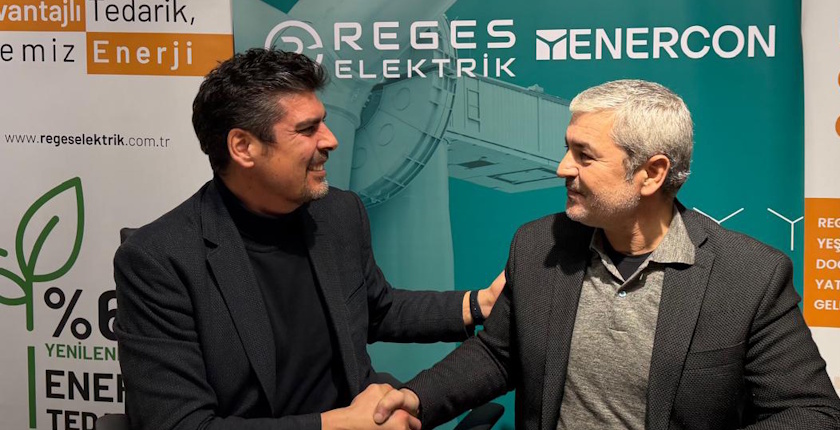
turkey enercon reges elektrik contract Arif Günyar Mustafa Ünal
Arif Günyar and Mustafa Ünal (photo: Enercon)

It is among the highest-yielding onshore wind turbines in Europe, the German company claimed.

Ünal: The agreement represents a significant milestone for Reges Elektrik as it makes its first investment in wind energy

Arif Günyar, Enercon Regional Head for Central Asia, the Middle East and Africa (CAMEA), thanked Reges Elektrik for its trust in his company’s technology.

“We look forward to strengthening our cooperation through future projects,” he added.

According to Mustafa Ünal, Chairman of the Board of Reges Elektrik, the agreement represents a significant milestone for his firm as it makes its first investment in wind energy.

“Partnering with Enercon and deploying the E-175 EP5 E2 turbines aligns perfectly with our long-term vision to expand our renewable energy portfolio with high-efficiency, future-proof technologies,” he stressed.

Of note, Enercon has installed wind turbines with a total capacity of 60 GW in more than 50 countries around the world.
by in News

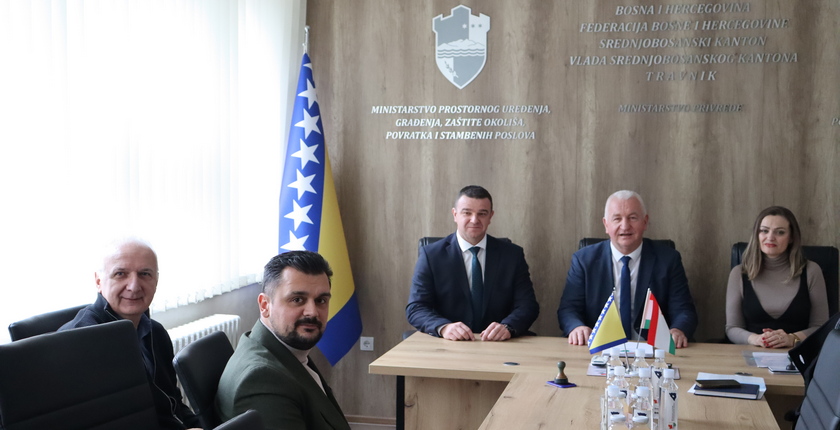
Concession agreement signed for 50 MW Vlašić wind farm in BiH

State-owned power utility Elektroprivreda Bosne i Hercegovine (EPBiH) and the Central Bosnia Canton have signed a concession agreement for the Vlašić wind farm near Travnik, along with annexes to the concession agreements for solar power plants Gračanica 1 and Gračanica 2 in the municipality of Bugojno.

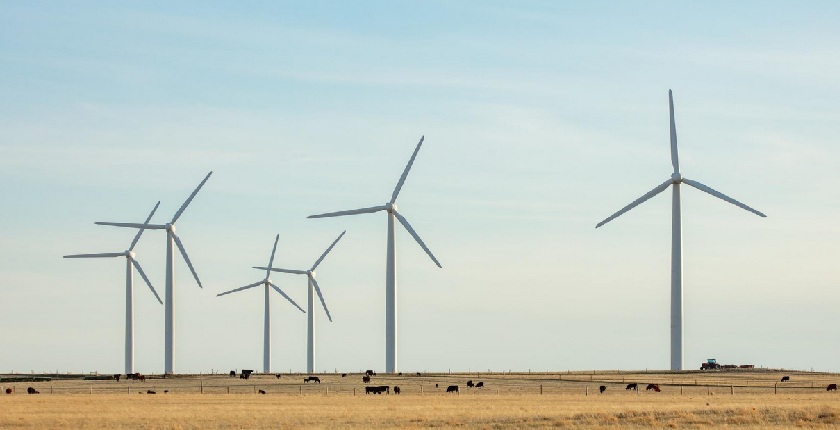
The Vlašić wind farm will have up to nine wind turbines with a total capacity of 50 MW, installed at an elevation of 1,850 meters. The projected annual electricity output is between 112 GWh and 116 GWh, and the investment is estimated at EUR 90 million, according to a statement by EPBiH.

Wind farm Vlašić is expected to generate up to 116 GWh of electricity annually

Germany’s KfW Development Bank is providing a loan and grants for the project totaling EUR 38.43 million, and the Council of Ministers of Bosnia and Herzegovina, the country’s central government, adopted draft agreements for the arrangement in late December 2025.

The concession agreement, signed by EPBiH General Manager Sanel Buljubašić and Minister of Economy of the Central Bosnia Canton Sedžad Milanović, covers the construction, operation, and maintenance of the Vlašić wind power plant, reads the statement.

The first wind farm in Bosnia and Herzegovina, Mesihovina, was inaugurated in 2018, followed by Jelovača in 2019 and Podveležje in 2021.

Last year, wind farms Ivovik and Ivan Sedlo were put into operation. In addition, EPBiH plans to build a 90 MW wind park called Bitovnja, while Elektroprivreda Republike Srpske (ERS), the state-owned power utility of the Republic of Srpska, has reactivated the 60 MW Hrgud wind farm project.

Bosnia and Herzegovina consists of two entities: the Republic of Srpska and the Federation of BiH, which controls EPBiH.

Solar plants Gračanica 1 and Gračanica 2 will have a total capacity of 45 MW

The statement recalls that the Gračanica 1 and Gračanica 2 solar power plants would have a combined capacity of 45 MW and notes that a building rights agreement was concluded in December 2025. It also states that activities related to grid connection are currently underway, alongside procedures concerning land expropriation and repurposing.

EPBiH has secured loans for the project from the European Bank for Reconstruction and Development (EBRD) and UniCredit Bank’s subsidiary in BiH. The sites are at a rehabilitated tailings dump of the Gračanica coal mine.

As part of the EPBiH Solar Transition Programme, implemented in cooperation with the EBRD, the state-owned power utility plans to build 13 solar power plants with a total capacity of around 195 MW.

by in News

Greece adds 340 MW of wind farms in 2025, acceleration seen for this year

New wind capacity came in at 340 MW in Greece last year, with 76 onshore turbines installed, according to the Hellenic Wind Energy Association (HWEA or ELETAEN).

Installations increased by 6.4% on an annual scale and represented EUR 420 million in investment. Total wind capacity reached 5,695 MW in the country, with HWEA expecting a 900 MW rise in 2026.

Papastamatiou: 2 GW await connection

Based on these numbers, the wind sector appears to be going through rebirth, after several years of low to average installations. Currently, 1.1 GW of new projects are under construction or contracted and the majority is expected to come online within the next 18 months.

Added on top are 200 MW from previous auctions, which took place during the period 2018-2022. HWEA said that even though 1,592 MW was awarded, only 852.4 MW managed to connect to the grid by the end of 2025.

“Right now, about 2 GW of wind farms have an installation license, but have not been completed. Half of those are under construction or contracted. There are also 3 GW who have completed environmental licensing and await grid connection terms. Naturally, there are even more projects that go through the licensing jumble. All of them – especially the most efficient – constitute national wealth and can reduce energy costs for consumers,” said HWEA’s General Director, Panagiotis Papastamatiou.

Terna Energy and Vestas top the charts

The top 5 operators by capacity in Greece are Terna Energy (18.2%), MORE (13.6%), Iberdrola Rokas (7.2%), Principia (6.5%) and PPC Renewables (5.6%).

Vestas has the highest share among manufacturers, 44%. Enercon accounts for 25%, followed by Siemens Gamesa with 15.8% and Nordex, which is at 9.2%.

Notably, the day with the highest hourly wind share in power production was April 28, 2025, when wind farms supplied 97.2%. In total, these units covered more than 50% of the demand for 616 hours of the year.

by in News

Greece adds 340 MW of wind farms in 2025, acceleration seen for this year

New wind capacity came in at 340 MW in Greece last year, with 76 onshore turbines installed, according to the Hellenic Wind Energy Association (HWEA or ELETAEN).

Installations increased by 6.4% on an annual scale and represented EUR 420 million in investment. Total wind capacity reached 5,695 MW in the country, with HWEA expecting a 900 MW rise in 2026.

Papastamatiou: 2 GW await connection

Based on these numbers, the wind sector appears to be going through rebirth, after several years of low to average installations. Currently, 1.1 GW of new projects are under construction or contracted and the majority is expected to come online within the next 18 months.

Added on top are 200 MW from previous auctions, which took place during the period 2018-2022. HWEA said that even though 1,592 MW was awarded, only 852.4 MW managed to connect to the grid by the end of 2025.

“Right now, about 2 GW of wind farms have an installation license, but have not been completed. Half of those are under construction or contracted. There are also 3 GW who have completed environmental licensing and await grid connection terms. Naturally, there are even more projects that go through the licensing jumble. All of them – especially the most efficient – constitute national wealth and can reduce energy costs for consumers,” said HWEA’s General Director, Panagiotis Papastamatiou.

Terna Energy and Vestas top the charts

The top 5 operators by capacity in Greece are Terna Energy (18.2%), MORE (13.6%), Iberdrola Rokas (7.2%), Principia (6.5%) and PPC Renewables (5.6%).

Vestas has the highest share among manufacturers, 44%. Enercon accounts for 25%, followed by Siemens Gamesa with 15.8% and Nordex, which is at 9.2%.

Notably, the day with the highest hourly wind share in power production was April 28, 2025, when wind farms supplied 97.2%. In total, these units covered more than 50% of the demand for 616 hours of the year.

by in News

From Austria to Albania: Verbund, Nordex to deploy 105 wind turbines across Europe

Verbund Green Power has forged a partnership with Nordex Group for the potential procurement of wind turbines.

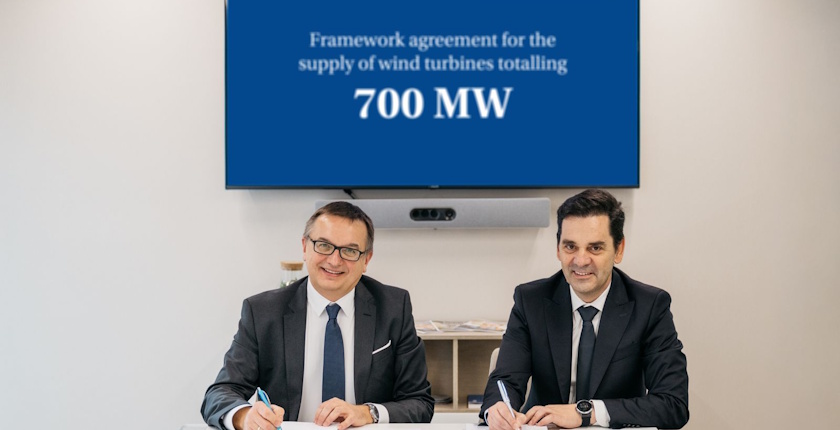
Verbund Green Power, a subsidiary of Austrian state-owned energy utility Verbund, has entered into a multiyear framework agreement with leading wind turbine producer Nordex Group for the potential procurement of wind turbines of up to 700 MW in total capacity, according to a joint press release.

The agreement runs through 2030.

The power plants are planned in six markets

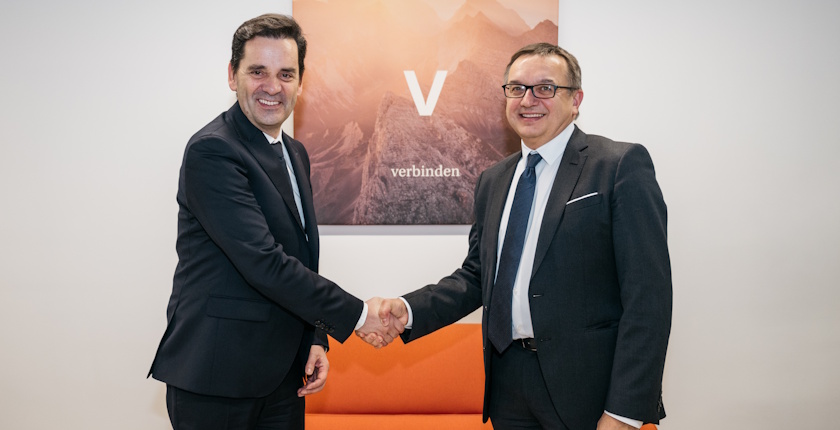
The agreement was officially signed in Verbund Green Power’s Madrid office by Dietmar Reiner, Managing Director of Verbund Green Power, and José Luis Blanco, CEO of Nordex Group.

They expressed willingness to facilitate the supply and delivery of up to 105 Nordex onshore wind turbines for Verbund Green Power’s wind projects. They are are planned in Austria, Germany, Spain, Italy, Romania and Albania, the update reads.

europe verbund nordex Dietmar Reiner José Luis Blanco
José Luis Blanco and Dietmar Reiner (photo: Verbund)

Of note, Christopher Billot, Sales Director for the Mediterranean region of Nordex Group, said at Belgrade Energy Forum 2025 that the Balkans is a key region for his company.

The deal would cover approximately 50% of Verbund Green Power’s wind project pipeline.

Blanco: We’re creating a clear path to deliver reliable, cost-efficient wind energy together with Verbund

Nordex Group CEO José Luis Blanco explained that through this multi‑year framework, the company would provide the turbine capacity to convert an ambitious pipeline into clean generation across six multi‑country markets in Europe.

“With up to 700 MW of our latest 7 MW class onshore turbines slated across Austria, Germany, Spain, Italy, Romania and Albania, we’re creating a clear path to deliver reliable, cost-efficient wind energy together with Verbund through 2030,” he stressed.

Strugl: The collaboration with Nordex strengthens our supply options as our projects mature

Blanco recalled that late last year Nordex received a first order from Verbund for nine N175/6.X turbines for Romania. “We’re expanding our footprint in this country,” he added.

According to Verbund CEO Michael Strugl, the collaboration with Nordex supports his company’s strategic objective of scaling up renewable generation across Europe.

“It strengthens our supply options as our projects mature, allowing us to secure the supply chain in a very competitive environment and deliver on Mission V targets, contributing to a secure and accelerated energy transition in our markets,” Strugl added.

by in News

From Austria to Albania: Verbund, Nordex to deploy 105 wind turbines across Europe

Verbund Green Power has forged a partnership with Nordex Group for the potential procurement of wind turbines.

Verbund Green Power, a subsidiary of Austrian state-owned energy utility Verbund, has entered into a multiyear framework agreement with leading wind turbine producer Nordex Group for the potential procurement of wind turbines of up to 700 MW in total capacity, according to a joint press release.

The agreement runs through 2030.

The power plants are planned in six markets

The agreement was officially signed in Verbund Green Power’s Madrid office by Dietmar Reiner, Managing Director of Verbund Green Power, and José Luis Blanco, CEO of Nordex Group.

They expressed willingness to facilitate the supply and delivery of up to 105 Nordex onshore wind turbines for Verbund Green Power’s wind projects. They are are planned in Austria, Germany, Spain, Italy, Romania and Albania, the update reads.

europe verbund nordex Dietmar Reiner José Luis Blanco
José Luis Blanco and Dietmar Reiner (photo: Verbund)

Of note, Christopher Billot, Sales Director for the Mediterranean region of Nordex Group, said at Belgrade Energy Forum 2025 that the Balkans is a key region for his company.

The deal would cover approximately 50% of Verbund Green Power’s wind project pipeline.

Blanco: We’re creating a clear path to deliver reliable, cost-efficient wind energy together with Verbund

Nordex Group CEO José Luis Blanco explained that through this multi‑year framework, the company would provide the turbine capacity to convert an ambitious pipeline into clean generation across six multi‑country markets in Europe.

“With up to 700 MW of our latest 7 MW class onshore turbines slated across Austria, Germany, Spain, Italy, Romania and Albania, we’re creating a clear path to deliver reliable, cost-efficient wind energy together with Verbund through 2030,” he stressed.

Strugl: The collaboration with Nordex strengthens our supply options as our projects mature

Blanco recalled that late last year Nordex received a first order from Verbund for nine N175/6.X turbines for Romania. “We’re expanding our footprint in this country,” he added.

According to Verbund CEO Michael Strugl, the collaboration with Nordex supports his company’s strategic objective of scaling up renewable generation across Europe.

“It strengthens our supply options as our projects mature, allowing us to secure the supply chain in a very competitive environment and deliver on Mission V targets, contributing to a secure and accelerated energy transition in our markets,” Strugl added.

by in News

Zhongbo group advances in preparation for construction of Leotar wind park

Zhongbo Group has taken another step in preparing for the construction of its Leotar wind farm near Trebinje, in the southeastern part of Bosnia and Herzegovina (BiH). It would be the largest wind power plant in the Western Balkans by capacity and one of the largest in Southeast Europe.

Zhogbo Group has conducted research and preparatory works on the site and obtained approval from electricity transmission company Elektroprenos BiH. In June last year, the Assembly of the City of Trebinje approved the proposition to develop a zoning plan.

The company has now submitted a request to the Ministry of Spatial Planning, Construction, and Ecology of the Republic of Srpska, one of the two entities in BiH, to determine whether an environmental impact assessment (EIA) will be required.

“We are informing the public and interested parties that the project developer Zhogbo Group, Banja Luka, has submitted a request to the ministry for a preliminary environmental impact assessment for the Leotar wind farm project, with an installed capacity of 537.5 MW,” the ministry said.

The deadline for comments is 15 days

The public can review and send suggestions within 15 days from January 12, when the notice was published.

The construction of the Leotar wind farm is planned on Leotar mountain. The facility would consist of 86 wind turbines, each with a capacity of 6.25 MW, which will be placed on sites that depend on the terrain configuration and main wind directions, the accompanying document reads.

The expected annual production of the wind farm is 1.5 TWh per year. The plant’s utilization factor is 32.4%.

Of note, last year the owner of Zhongbo Group, registered in Banja Luka, was Everest Power Pte. Ltd., headquartered in Singapore, according to the business registry. Now, according to the registry, the owner is Zodic Energy PTE LTD, headquartered in Singapore.

The company is expected to obtain a concession for the wind farm

Back in September 2024, the Republic of Srpska signed an agreement on strategic cooperation in the field of renewable energy sources with Zhongbo Group and China Power. Zhongbo Group is expected to be awarded a concession for the Leotar project.

The largest wind farm in the Western Balkans is Čibuk 1 in Serbia, with a capacity of 158 MW. However, it won’t hold that title for long, as Alcazar Energy Partners began the construction of its Štip wind power plant, of 400 MW, in July last year in North Macedonia.

In the wider region of Southeast Europe, the largest is Romania’s Fântânele-Cogealac-Gradina, with 600 MW. In Europe, the top spot is held by Markbygden in Sweden, with a capacity of 2,000 MW.

by in News

Zhongbo group advances in preparation for construction of Leotar wind park

Zhongbo Group has taken another step in preparing for the construction of its Leotar wind farm near Trebinje, in the southeastern part of Bosnia and Herzegovina (BiH). It would be the largest wind power plant in the Western Balkans by capacity and one of the largest in Southeast Europe.

Zhogbo Group has conducted research and preparatory works on the site and obtained approval from electricity transmission company Elektroprenos BiH. In June last year, the Assembly of the City of Trebinje approved the proposition to develop a zoning plan.

The company has now submitted a request to the Ministry of Spatial Planning, Construction, and Ecology of the Republic of Srpska, one of the two entities in BiH, to determine whether an environmental impact assessment (EIA) will be required.

“We are informing the public and interested parties that the project developer Zhogbo Group, Banja Luka, has submitted a request to the ministry for a preliminary environmental impact assessment for the Leotar wind farm project, with an installed capacity of 537.5 MW,” the ministry said.

The deadline for comments is 15 days

The public can review and send suggestions within 15 days from January 12, when the notice was published.

The construction of the Leotar wind farm is planned on Leotar mountain. The facility would consist of 86 wind turbines, each with a capacity of 6.25 MW, which will be placed on sites that depend on the terrain configuration and main wind directions, the accompanying document reads.

The expected annual production of the wind farm is 1.5 TWh per year. The plant’s utilization factor is 32.4%.

Of note, last year the owner of Zhongbo Group, registered in Banja Luka, was Everest Power Pte. Ltd., headquartered in Singapore, according to the business registry. Now, according to the registry, the owner is Zodic Energy PTE LTD, headquartered in Singapore.

The company is expected to obtain a concession for the wind farm

Back in September 2024, the Republic of Srpska signed an agreement on strategic cooperation in the field of renewable energy sources with Zhongbo Group and China Power. Zhongbo Group is expected to be awarded a concession for the Leotar project.

The largest wind farm in the Western Balkans is Čibuk 1 in Serbia, with a capacity of 158 MW. However, it won’t hold that title for long, as Alcazar Energy Partners began the construction of its Štip wind power plant, of 400 MW, in July last year in North Macedonia.

In the wider region of Southeast Europe, the largest is Romania’s Fântânele-Cogealac-Gradina, with 600 MW. In Europe, the top spot is held by Markbygden in Sweden, with a capacity of 2,000 MW.

by in News

Romania plans to lease unproductive land for renewable energy projects

Romania is drafting legislation that would enable granting concessions for the construction of renewable energy plants on unproductive and degraded state-owned agricultural land. The initiative aims to establish fast-track areas for renewable energy projects, with all necessary permitting procedures limited to 12 months.

The legislation would allow the State Domains Agency (ADS), which manages state-owned agricultural land, to grant concessions on areas of land that are not suitable for agriculture, but can be used for green energy production, according to a report by Profit.ro. The initiative is part of the RePowerEU component of Romania’s National Recovery and Resilience Plan (NRRP).

These areas should be officially designated following a mapping process to identify available land, subsurface, marine, or inland water areas needed for developing renewable energy power plants, as well as related grids and energy storage facilities, including thermal storage, to support achieving the 2030 renewable energy target.

The areas for renewable energy projects will be designated after a mapping process

The deadline to designate these areas is February 21, but it is unlikely to be met, given that a contract to procure the necessary geospatial data management software has been partially cancelled. The ADS has now launched a new tender for the geospatial data system, valuing the job at RON 7.7 million (around EUR 1.51 million), according to Profit.ro.

In the so-called “areas suitable for accelerating renewable energy projects,” the procedures for granting all necessary legal authorizations would not take more than 12 months in total, according to the report.

The Romanian Government has long planned to amend the law on the ADS to give it the authority to award concessions to public and private entities for the purpose of producing energy from renewable sources such as hydro, solar, wind, biomass, and geothermal, the news portal recalled.

State-owned power utility Hidroelectrica, the largest electricity producer in Romania, intended to build a photovoltaic park of 1.5 GW on thousands of hectares of land managed by the ADS. It would be the largest in Europe.

by in News

Romania plans to lease unproductive land for renewable energy projects

Romania is drafting legislation that would enable granting concessions for the construction of renewable energy plants on unproductive and degraded state-owned agricultural land. The initiative aims to establish fast-track areas for renewable energy projects, with all necessary permitting procedures limited to 12 months.

The legislation would allow the State Domains Agency (ADS), which manages state-owned agricultural land, to grant concessions on areas of land that are not suitable for agriculture, but can be used for green energy production, according to a report by Profit.ro. The initiative is part of the RePowerEU component of Romania’s National Recovery and Resilience Plan (NRRP).

These areas should be officially designated following a mapping process to identify available land, subsurface, marine, or inland water areas needed for developing renewable energy power plants, as well as related grids and energy storage facilities, including thermal storage, to support achieving the 2030 renewable energy target.

The areas for renewable energy projects will be designated after a mapping process

The deadline to designate these areas is February 21, but it is unlikely to be met, given that a contract to procure the necessary geospatial data management software has been partially cancelled. The ADS has now launched a new tender for the geospatial data system, valuing the job at RON 7.7 million (around EUR 1.51 million), according to Profit.ro.

In the so-called “areas suitable for accelerating renewable energy projects,” the procedures for granting all necessary legal authorizations would not take more than 12 months in total, according to the report.

The Romanian Government has long planned to amend the law on the ADS to give it the authority to award concessions to public and private entities for the purpose of producing energy from renewable sources such as hydro, solar, wind, biomass, and geothermal, the news portal recalled.

State-owned power utility Hidroelectrica, the largest electricity producer in Romania, intended to build a photovoltaic park of 1.5 GW on thousands of hectares of land managed by the ADS. It would be the largest in Europe.