by in News

Investment risk highest for nuclear power, lowest for solar

Nuclear power plants have the highest construction cost overrun and the longest time delays of all energy projects. In the clean energy sector, the worst marks for violation of set construction cost and timelines go to hydrogen, carbon capture and storage as well as gas power plants, according to a study by the Boston University Institute for Global Sustainability.

The average project costs 40% more than expected for construction and takes almost two years longer than planned, the Boston University Institute for Global Sustainability (IGS) said.

Its researchers used an original dataset 50% larger than the ones in previous literature. They examined cost overrun risks for 662 energy infrastructure projects across 83 countries built between 1936 and 2024, covering USD 1.358 trillion in investment and a total capacity of more than 400 GW.

In total, the study evaluated ten types of projects: coal-, oil-, and natural gas–fueled power plants; nuclear reactors; hydropower plants; utility-scale wind farms; utility-scale solar photovoltaic and concentrated solar power (CSP) facilities; high-voltage transmission lines; bioenergy and geothermal power plants; hydrogen production units; and carbon capture and storage (CCS) facilities.

Both hydrogen and CCS projects exhibited significant time and cost overruns

“We found that more than three fifths of the projects experienced cost overruns, with these overruns being particularly prominent in projects exceeding 1,561 MW in capacity. Positively, the escalation rate in cost overruns has been declining since 1976,” reads the study, published in the Energy Research & Social Science journal.

However, the findings show patterns of cost overruns varied by fuel source. Nuclear and fossil thermal projects exhibited higher cost escalation rates over time, whereas solar power projects showed a decline.

Critically, both hydrogen and CCS projects exhibited significant time and cost overruns, casting doubt on their ability to be rapidly scaled up, to address climate change or meet energy and climate policy priorities, the authors underlined.

The average nuclear power plant has a construction cost overrun of 102.5% and ends up costing USD 1.56 billion more than expected, IGS said.

Red flag for efforts to substantially push forward a hydrogen economy

“Worryingly, these findings raise a legitimate red flag concerning efforts to substantially push forward a hydrogen economy,” said Benjamin Sovacool, lead and first author of the study, director of IGS, and professor at Boston University’s Department of Earth and Environment.

In the results, solar energy and electricity grid transmission projects have the best construction track record and that they are often completed ahead of schedule or below expected cost.

Wind farms also performed favorably in the financial risk assessment, according to the study, called ‘Beyond economies of scale: Learning from construction cost overrun risks and time delays in global energy infrastructure projects’.

“Low-carbon sources of energy such as wind and solar not only have huge climatic and energy security benefits, but also financial advantages related to less construction risk and less chance of delays,” Sovacool stated.

For him, it’s further evidence that such technologies have an array of underrated and underappreciated social and economic value.
by in News

BEF 2025: Corporates’ education, product diversification crucial to speed-up PPA uptake

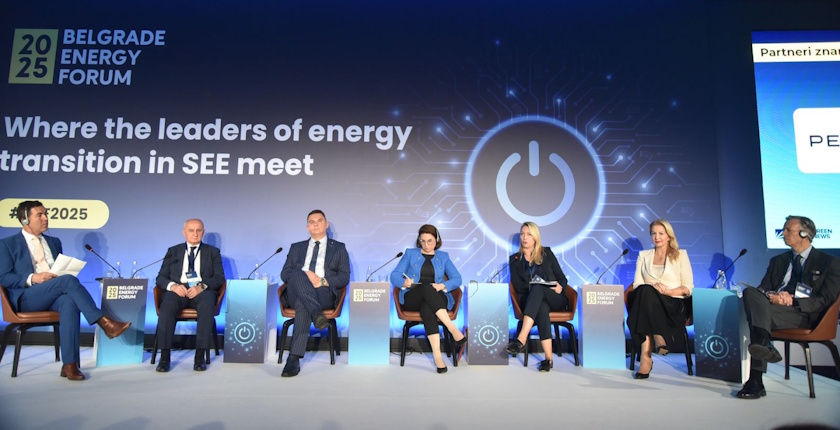
Capacity building and education for corporates, together with product diversification and an upgrade of the regulatory framework, could clear the obstacles for power purchase agreements in the Western Balkans, which are lagging behind the other countries in Southeast Europe. In addition to their other benefits, such contracts could contribute to securing baseload energy from hybrid facilities, given that baseload is a key issue for the decarbonization of the region, according to the participants of a panel on power purchase agreements, held at Belgrade Energy Forum 2025 (BEF 2025).

BEF 2025 has gathered four hundred participants from more than 30 countries in the region, Europe, and beyond.

The panel PPAs as a key to renewable energy growth in SEE featured stakeholders from all segments of the PPA market: developers, corporates, utilities and consultants. The discussion comprised five segments – the global trends, main drivers, the region’s specifics, challenges and trends, and the implications of the model.

The panel’s moderator was Mislav Slade-Šilović, Energy, Utilities & Resources Consulting Leader for Southeast Europe and member of the core PPA team at the consultancy PwC.

Global trends: PPAs are hot, but the solar capture rate is becoming an issue

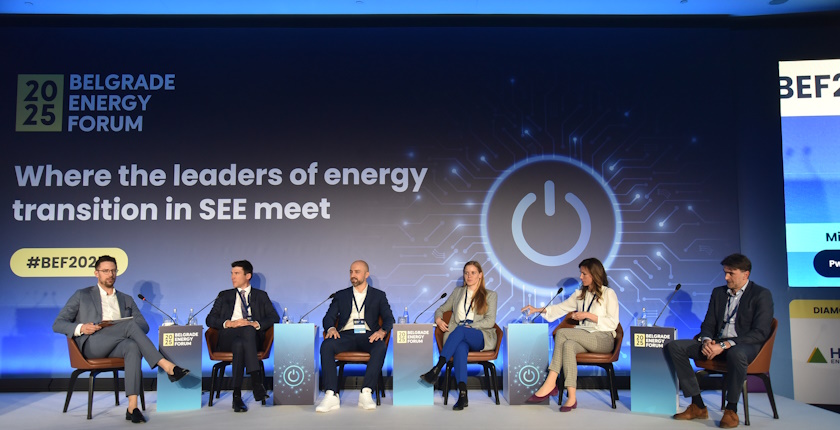
Mislav Slade-Šilović, Joffroy Beckers and Nikola Gazdov

According to Natalija Ljubić, Manager of PPA & BESS Transactions at Pexapark, PPAs are still hot in Europe. On a monthly basis, between 500 MW and 2,000 MW of new PPAs are signed (15 to 30 deals). She referred to long-term, fixed-price PPAs considered bankable and publicly announced. There is much more together with short-term PPAs, for two to three years.

There is an impression that everything comes down to corporate PPAs, but there are many utility PPAs that aren’t always made public, she added.

The majority are physical PPAs but Pexapark is registering more and more financial PPAs. In 2025, almost 20% of all the announced PPAs were financial, whereas a couple of years ago, they made up 5% to 10%. There are more pay-as-produced contracts than the monthly ones for baseload energy.

Mislav Slade-Šilović (PwC) added that 70% of PPAs in SEE are virtual or financial.

It’s quite challenging in the region to find a creditworthy counterparty on the consumer side

For developer Joffroy Beckers, Head of PPA at DRI, it’s quite challenging to find a creditworthy counterparty on the consumer side of the market in the region comprising Greece, Bulgaria and Romania. So when the firm wants to speed things up with selling its electricity, it goes to utilities or traders.

Negative prices are emerging in the region, with much more cannibalization for solar in the long term, he added.

According to Bulgaria’s Association for Production, Storage, and Trading of Electricity – APSTE, the situation in the region is different than five years ago. “There were zero PPAs in the region, but now they start to get common. Paradoxically, the conditions start getting much more and more complex,” chairman Nikola Gazdov said.

Mislav Slade-Šilović (PwC) pointed to the decline in the solar capture rate – the ratio of the price of solar power and wholesale price. It is spilling over to the PPA price and increasing its complexity, and solar PPAs are generally more complex than the ones for wind power, he added.

Main drivers: Different priorities ask for different PPA models

Natalija Ljubić, Ivana Đurović and Davor Pupovac

For Ivana Đurović, Category Manager Renewable Energy at Knauf Group, PPAs are a game changer in energy procurement because essentially it’s no longer just about buying energy or hedging. “Now corporate PPAs bring the long-term deal, so they even extend the tenure for those hedging, and they also allow us to achieve our sustainability targets,” she explained.

PPAs aren’t for companies with consumption below 30 GWh or 40 GWh per year, while branding and cost savings are often the reasons for companies to sign them.

Such factors determine the PPA product that the offtaker opts for, Mislav Slade-Šilović (PwC) stressed.

According to Nikola Gazdov (APSTE), in the region comprising Bulgaria, Romania, and Greece, PPAs are usually signed by corporates that have some ESG commitments or want to show their clients and customers that they are thinking green.

The key feature of a PPA is the partnership between two companies

As examples of the various kinds of deals, he mentioned a physical PPA with an electricity-intensive consumer, virtual PPA with a telecom and a PPA with a big international company producing tires, combining the two types.

As a developer, DRI is modifying its strategy toward a mixed portfolio. Instead offering a solar asset for a PPA, it adds wind power plants and combines different technologies into a single contract. “It allows us to capture a better price, and this is also usually more beneficial for the off-taker. The second thing is that we’re trying to keep this upside in our PPA by entering a floor price instead of a fixed price,” Joffroy Beckers (DRI) revealed.

For Mislav Slade-Šilović (PwC) the key characteristic of a PPA is the partnership between two companies. It needs to be balanced, to ensure that both parties can fulfill throughout the tenure. If one goes bankrupt, then it doesn’t make sense for both parties, he underlined.

The specifics in the region: Corporates need to learn, PPAs should be more diverse

Nikola Gazdov, Natalija Ljubić and Ivana Đurović

Serbia’s state-owned power utility Elektroprivreda Srbije (EPS) has been signing a lot of PPAs. However, the difference from the conventional deals is that they are based on premiums. But according to Davor Pupovac, head of the company’s market analysis and risk management, it is interested in corporate PPAs that don’t include government support. There is not much interest among consumers for corporate PPAs with EPS, he revealed.

Mislav Slade-Šilović (PwC) said the role of EPS and big power utilities is very important in developing the PPA market. A dominant supplier in a market has a critical role, either as a sleever or as someone that will provide B2B products to off-takers and developers or producers for entering the market, he said.

Joffroy Beckers (DRI) agreed with him about the role of big utilities in facilitating PPAs and expressed the belief that in the near future, they would get a larger share as intermediaries.

Asked if corporate PPAs are coming anytime soon in Serbia, Davor Pupovac (EPS) said: “Not so soon.” However, he claimed EPS wouldn’t lose consumers regardless of the fact that it has no such product.

Corporates aren’t super ready for PPAs because they are seeking stability when it comes to the energy price

In Ivana Đurović’s (Knauf) view, there are several reasons for the slow uptake of corporate PPAs in the Western Balkans. Corporate buyers aren’t super ready for PPAs because they are seeking stability when it comes to the energy price, but the pay-as-produced PPA model is dominant in the market, which doesn’t ensure price stability. Monthly baseload deals would enable more price stability.

A bigger offtake through PPAs requires corporates to build their capacity for closing such deals and for the offer to be more diverse, she stressed.

Natalija Ljubić (Pexapark) agreed with her and suggested that companies need to understand more about the risks and accounting. Also, not many corporates are willing to enter five- to ten-year agreements as they don’t know their demand or costs that far ahead, Ljubić underlined.

Challenges, risks: Management boards are delving into energy-related topics in detail

Ivana Đurović and Davor Pupovac

Creditworthiness is one of the key challenges, Joffroy Beckers (DRI) said. As he sees it, credit insurance could be key, providing a kind of a state guarantee. Nikola Gazdov (APSTE) again stressed education. He also recalled that all European countries needed time to get along with PPAs.

“But coming to credit risk, I think that now we also see the European Commission taking note of the situation,” Gazdov noted.

As for education, Mislav Slade-Šilović (PwC) said it requires one to two years. Management boards of companies from different industries on the offtake side are forced to delve into energy-related topics in detail, he noted.

There are practically no obstacles for PPAs in Serbia

Slade-Šilović asked EPS’s representative whether the utility is prepared to offer B2B products, arguing that they go hand-in-hand with PPA market development.

Davor Pupovac (EPS) responded that there are practically no obstacles to PPAs in Serbia. Namely, there is an electricity exchange, EPS is willing to sign contracts with developers for sleeving or balancing, the guarantees of origin (GO) system is in place, and EPS is active on power exchanges in the region as a producer and supplier.

“EPS could also offer a route to market to the off-taker. However, currently, it cannot offer access to the spot or forward market,” he explained.

Coming from a corporate electricity consumer, Ivana Đurović (Knauf) was curious what EPS could offer to a perfect corporate off-taker asking for a physical PPA. Pupovac answered that currently it would be a pay-as-produced deal.

What does the implementation bring us: hybrid combinations open the room for innovative deals

Joffroy Beckers, Nikola Gazdov and Natalija Ljubić

Mislav-Slade Šilović (PwC) summarized the landscape. “If you look at the broader EU situation and challenges, especially with solar capture rates, negative prices, we are now already discussing technology advanced structures including batteries and other hybrid solutions on the PPA side,” he underlined.

Natalija Ljubić (Pexapark) pointed out that last month in Germany the solar capture rate was just 40%, calling it almost unbearable for photovoltaic projects. All developers or energy producers, especially in the solar power sphere, are seriously considering adding batteries, while projects for standalone battery storage facilities are appearing, in her words.

She and Nikola Gazdov (APSTE) agreed that the outcome is a lot of interesting innovative structures, room for different solutions.

BESS with solar reduces cannibalization and increases capture rates

Ljubić said it is a challenge to maximize revenues from a battery system and make it bankable. Gazdov pointed to the dilemmas of a single company owning different assets versus a big utility combining and aggregating everything, and whether the producers or optimizers manage the revenue streams.

When it comes to standalone storage units, he sees a perspective only in arbitrage and, perhaps, system services further down the road.

Joffroy Beckers (DRI) explained the main purpose of a battery energy storage system (BESS) in Romania, from the point of view of a developer and power producer. A BESS combined with solar power reduces cannibalization and increases capture rate, whereas wind lowers the balancing cost, he stressed.

“If you co-locate a battery next to solar, you will be in a position to negotiate a higher price on the off-take side,” he pointed out.

A combination of wind, solar and batteries is equivalent to a new power plant

In the future, he anticipates more PPAs with a pay-as-nominated structure rather than pay as produced, arguing that it enables more flexibility for monetizing batteries on different markets.

“With those combinations of wind, solar, and battery, basically you have a new power plant, baseload structure,” Mislav Slade-Šilović (PwC) stated.

That way PPAs fit into the broader discussion on the energy transition and decarbonization. EPS is decarbonizing its production through its role as a renewable energy offtaker.

“Hybrid combinations are partly addressing the baseload needs. So, many different technologies, including storage, can provide a part of the answer this region heavily needs, and this is the baseload substitution problem,” Slade-Šilović concluded.

by in News

BEF 2025: Technologies for energy transition are here, getting cheaper every day

Technologies for the energy transition already exist, and their use is increasing thanks to falling costs. Investors and bankers claim they are ready to invest and that money isn’t an issue. The missing part are upgraded transmission grids, along with policies and regulations to integrate everything into a suitable environment, according to investors and lenders gathered at Belgrade Energy Forum 2025.

The third Belgrade Energy Forum, BEF 2025, welcomed four hundred participants from more than 30 countries from the region, Europe, and beyond. The two-day conference was organized by Balkan Green Energy News.

Participants in the panel Energy revolution underway – uniting efforts to deliver green, intelligent, and sustainable energy solutions were Maja Turković, Senior Vice President of CWP Europe, Aleš Prešern, Vice President and Head of Southeast Europe of Siemens Energy, and Christian Beynio, Head of Advisory of Kommunalkredit Austria AG.

According to panel moderator Mirza Kušljugić, a member of the Board of the Regional Center for Sustainable Energy Transition (RESET) from Bosnia and Herzegovina, the energy transition is actually a revolution, given the technological changes.

“The region is still burdened by tradition. We know the transition is inevitable, but we aren’t fully aware that it will be disruptive,” Kušljugić stated.

Technology is here, and so is financing

Mirza Kušljugić, Aleš Prešern and Maja Turković (photo: Balkan Green Energy News)

Maja Turković, Senior Vice President of CWP Europe, stressed that technology, currently undergoing a revolution, is the best card the world has in the transition. She even suggested that financing isn’t a problem and that there are more financial resources available than projects qualified to receive funding.

However, she is surprised by the rapid growth in solar power installations. Turković argued that market-based projects cannot achieve double-digit internal rates of return on equity. Part of the explanation may lie in the fact that panel prices have dropped by 60% over two years.

Battery prices have also fallen. The largest drop was last year, 40%, with a further 5% decline this year alone, according to Turković. Prices have slipped below EUR 100,000 per MWh.

Turković: Regarding CAPEX and technology, we’re ready

The latest trend is the integration of batteries with solar power plants. While transmission system operators in the region still don’t allow it, in some countries a grid connection approved for solar can also be used for batteries. “Regarding CAPEX and technology, we’re ready,” Turković underlined.

Aleš Prešern, Vice President and Head of Southeast Europe in Siemens Energy, is particularly impressed with the speed of change.

“We who are working in the energy sector are used to very slow changes. Energy was a conservative industry. In 2004, 1 GW of solar was built, but now data shows that it is how much is installed in one day. Batteries cost EUR 1 million per MWh not that long ago, and now they are ten times cheaper,” he noted.

Prešern: Transmission networks are the bottleneck of the transition

They are indeed dramatic changes, for which the existing power system wasn’t prepared. It is clear why Siemens Energy, as a technology company, considers transmission networks to be the bottleneck in the transition, Prešern said.

To illustrate the slowness of grid investments, he pointed to Austria, as one of the examples, where it took 10 years to build one important segment of the 400 kV network.

Both Turković and Prešern agree that nowadays the keyword is flexibility.

Maja Turković and Christian Beynio (photo: Balkan Green Energy News)

She explained there are operating battery management systems at low voltage levels that incorporate artificial intelligence and use market signals for activation when prices are low.

Prešern added that the required stability through balancing could be provided by gas power plants. Siemens Energy has never seen such high demand for gas turbines like today, he asserted.

Beynio: Don’t forget the non-banking institutions when looking in new financing

“If you ask about availability of financing, yes, it’s there,” Christian Beynio, Head of Advisory at Kommunalkredit Austria AG, confirmed. In his view, prices or, rather, the drop in prices of equipment, is the biggest innovation. Earlier, he said, it was a completely different game, heavily subsidized, while nowadays no subsidies are required per se.

The trend that Kommunalkredit Austria AG identified is the pooling of smaller assets, and a shift from financing projects toward financing developers and companies as corporates. It is yet to come to the region, he added.

Investment in grids, in his words, has to be initiated by the government. They have two solutions – go to the sovereign debt market or engage private investors. “Don’t forget the non-banking institutions when looking for new financing. This is a trend across Europe, and it will be relevant for the Balkans,” Beynio advised.

Battery projects won’t go so smoothly

Aleš Prešern (photo: Balkan Green Energy News)

Maja Turković expressed the belief that installing batteries won’t go as smoothly as solar. The main reason is the difficulty of securing a stable cash flow for batteries, unlike for production facilities. Cash flow enables financing, so batteries will likely need to be financed with internal funds, she underlined.

Turković noted that batteries are best monetized by providing system services and arbitrage, but pointed out they can also participate in capacity mechanisms, a scheme that could involve power purchase agreements (PPAs).

She said the development of the regulatory framework should be faster, to facilitate investments in batteries. Investors are ready to commit their funds to battery installation, and everyone in the market agrees that batteries are essential, Turković stressed.

Prešern: People and not technology are a guarantee that networks will exist and function properly

Amid the widespread discussions about technology and regulations, Aleš Prešern highlighted another issue. Energy, in his opinion, has always been an exciting sector, but the message hasn’t been getting through to young people in recent years. It was the case not only in the region but also in Europe, and beyond, leading to a shortage of skilled personnel.

However, he expressed the belief that things are changing and enthusiasm is returning. Prešern even suggested it could be a major advantage for the region, well known for its high-quality engineers.

Siemens Energy strives to employ as many good engineers as possible because, ultimately, people and not technology are a guarantee that networks will exist and function properly, he stressed.

The solution is also in using new technologies to better utilize existing grids

Christian Beynio (photo: Balkan Green Energy News)

The combination of rapid changes in the energy sector and slow investments in the grids threatens to put the transition to a standstill.

Better utilization of existing infrastructure could be the solution. Siemens Energy fits well there, as several years ago it established a division called Digital Grid. According to Prešern, the idea was to be quicker in data utilization, something that other sectors like automotive have long advanced, while energy has lagged.

The company recently acquired a Slovenian-Austrian firm that produces sensors installed directly on power lines, a technology called dynamic line rating. The devices provide real-time data about the conditions in power lines, potentially enabling their use beyond original design limits.

“With this technology, we believe we can increase the capacity of existing networks by an average of 30%,” Prešern revealed.

New technologies have changed bankers’ jobs as well

New technologies have changed bankers’ jobs as well, Christian Beynio admitted. He recalled that it was easy to finance wind farms in Serbia because they had feed-in tariffs from the government. The only risk element was the wind blowing or not blowing, Beynio said.

Nowadays there are merchant power producers that combine their facilities with batteries and use algorithms in electricity trading, he added. It means bankers need to sit with market consultants to identify all outcomes, he stressed.

“You won’t find singular cash flow streams. It’s going to be multi-dimensional and people simply need to adjust. It’s going to be more short term also on the lending side. It’s rather going to be corporate lending to people and companies who know what they are doing and can credibly demonstrate that with a track record. That is the digitalization impact we see”, Beynio said.

Maja Turković (photo: Balkan Green Energy News)
by in News

BEF 2025: Regional cooperation can facilitate energy transition, energy security

Montenegro, Serbia, and the Republic of Srpska don’t have a problem attracting investments in electricity production, but they do have issues when it comes to investments in transmission networks. If the introduction of CBAM is not postponed, it will greatly burden their economies. Hungary is interested in strengthening energy ties with them as well as the rest of the Western Balkans, which would bolster energy security for the whole region. Croatia could also assist it in strengthening employment in the green technologies sector, to counter the loss of jobs due to decarbonization. These are the main messages from the High-ministerial panel on SEE regional cooperation and energy transition strategies.

The ministerial panel was the first of eight at this year’s Belgrade Energy Forum 2025 (BEF 2025). The conference, organized by Balkan Green Energy News, welcomed four hundred participants from more than 30 countries from the region, Europe, and beyond.

The panel featured representatives of the governments of Montenegro, Croatia, Hungary, the Republic of Srpska – one of the two political entities in Bosnia and Herzegovina – Serbia, and the United Nations Economic Commission for Europe (UNECE). The moderator of the panel was Dirk Buschle, who until recently was a key figure in the Energy Community Secretariat, and now is a partner at law firm Becker Büttner Held.

He noted it is a mistake to say that the contracting parties of the Energy Community are lagging behind EU countries in the energy transition. They all face the same issues, which are energy accessibility, supply security, and sustainability, Buschle added.

Additional proof, in his words, are the similar issues faced by investors – in grid connections and permitting.

Investments in production are coming, the issues are grids, CBAM

Dirk Buschle, Petar Đokić and Admir Šahmanović

According to Minister of Energy and Mining of the Republic of Srpska Petar Đokić, the entity has made significant progress in defining a regulatory framework that aligns with the rules of the Energy Community and the European Union.

He noted that with the help of the Energy Community Secretariat, the two entities of BiH recently reached an agreement on adopting a law on the electricity regulator, transmission, and market. It is one of the cornerstones for establishing an organized electricity market.

The Republic of Srpska was successful in attracting investments in green energy in recent years, Đokić added. It established concessions and partnerships for the construction of 2,200 MW of renewable energy power plants – wind, solar, and hydropower.

However, large investments in transmission networks are also necessary, he pointed out and said he expects assistance from the European Union’s financial institutions such as the European Bank for Reconstruction and Development (EBRD) and the European Investment Bank (EIB), as well as the World Bank.

Đokić: CBAM to hit hard BiH’s economy

The minister called on them to set up such partnerships.

Regarding the EU’s Carbon Border Adjustment Mechanism (CBAM), he said that measures have been taken to change the domestic energy mix. Until recently, the share of fossil fuels was 62%, but it has now dropped to 54%, he recalled.

By 2028, the Republic of Srpska will have two new hydropower plants, of 159 MW and 36 MW, and new solar power plants with a total capacity of 250 MW, the minister asserted. It would additionally green the energy mix, Đokić said.

CBAM, in his words, could harm the economy of the Republic of Srpska and BiH.

If it is applied the way it is apparently envisaged, it would result in a significant increase in costs, with a severe negative impact, he underlined. Đoković expressed hope that the rollout would be separately discussed in the case of BiH.

Šahmanović: Montenegro is finishing its NECP

Montenegro also enjoys great interest from investors. It has received applications for building solar power plants and wind farms with a total capacity of 5.5 GW, said Admir Šahmanović, Minister of Energy and Mining.

The country’s current capacity is slightly over 1 GW.

It is, in his words, the result of improving the regulatory framework including the adoption of laws on renewable energy sources and energy. However, investment in the transmission grid is also necessary. The government plans to discuss with Italy the possibility of installing another subsea cable for electricity transmission, while the national energy and climate plan (NECP) will be completed by the end of next month, the minister revealed.

Montenegro is requesting a postponement of CBAM until 2030

In addition, renewable energy auctions are being prepared with the EBRD, and a memorandum on market coupling with Italy will be signed, he added.

As for CBAM, the minister stressed that Montenegro doesn’t believe the EU wants to harm its economy, but argued that the country isn’t ready for the mechanism’s implementation.

“Perhaps we are now in a situation similar to where our EU partners were 20 years ago. So, we need to invest a lot in our production capacities, grid, storage. It will take years, so if we don’t receive an exemption by 2030, I believe we won’t be able to handle this challenge,” Šahmanović stressed.

Secure supply of the national market is the highest priority

Boglárka Illés, Admir Šahmanović and Jovana Joksimović

Jovana Joksimović, Serbian assistant minister of mining and energy for international cooperation, European integration, and project management, expressed the opinion that the energy transition is a long and intensive process, technically, operationally, and financially.

Since October 2022, renewable energy in the energy mix has increased by 83%, which demonstrates the progress of the energy transition in Serbia, Joksimović asserted.

“We need to be realistic, as well as socially aware, because a fair and sustainable transition is something that should be carefully considered when changing the energy mix, where coal accounts for 60%,” she noted.

Joksimović: The priority is to ensure a sufficient supply of electricity at the most affordable prices for citizens and the economy

It is necessary, in her words, to be ambitious and dedicated to the energy transition goals, but she is convinced that there is a higher objective.

At the country level, it is to ensure enough electricity at the most affordable prices for both citizens and the economy, she underlined. “That’s what our top priority is,” Joksimović underscored.

Guided by the said goal, Serbia is also considering the use of nuclear energy and a study on possible options is currently being prepared.

Boglárka Illés, State Secretary for Bilateral Relations at Hungary’s Ministry of Foreign Affairs and Trade, also stressed that the government’s primary duty is to ensure not only climate neutrality and sustainable energy but also affordable energy with a stable supply for households and businesses.

She pointed out that diversifying energy imports and the energy mix plays a key role in securing energy sovereignty. It is the reason why cooperation with the Western Balkans, and especially Serbia, is important to Hungary, Illés asserted.

Illés: Europe’s energy security has been demolished

A few days before, Hungary’s Prime Minister Viktor Orbán said the EU has abandoned a successful economic strategy, based on cheap Russian gas and advanced German technology.

“And now we don’t see any other strategy within the EU,” she stated.

Due to ideologically driven sanctions against Russia, and the European Green Deal, the energy security of Europe is demolished, in Illés’s opinion. The region is located at the intersection of essential energy routes, connecting the East and the West, and also South and North, she underlined.

“We, as an EU member country, can act as a bridge between non-EU member countries and also the EU,” the state secretary stressed.

As an example of good cooperation with Serbia, she highlighted the supply of gas through the TurkStream pipeline and the Pannonian Corridor project for doubling the capacity for power exchange between the two countries.

The energy transition is an opportunity

Jovana Joksimović, Marija Pujo Tadić and Dario Liguti

In one respect, Marija Pujo Tadić, Special Envoy for Climate Action from the Government of Croatia, doesn’t share the opinion of the Hungarian official. She argued it isn’t true that Europe lacks a plan.

The EU has a clear plan and a well-defined strategy – it is the Clean Industrial Deal, she stressed.

She highlighted two important strategies relevant to the region: the Paris Agreement and the Green Agenda for the Western Balkans.

As a member of the scientific advisory board for the COP 29 presidency, she recalled that this year a review of nationally determined contributions (NDCs) would be conducted. It is an assessment of how countries are meeting their plans for lowering CO2 emissions.

Pujo Tadić: Education and workforce specialization are essential

She underlined the Green Agenda for the Western Balkans also envisages reducing net greenhouse gas emissions to zero by 2050, which is essentially the shared goal of the EU.

However, Pujo Tadić expressed the belief that policies and laws alone are not enough. Public education and workforce specialization are also necessary because the transition will create many new jobs, she added.

Croatia could be of great support to the Western Balkans, having launched such educational programs five years ago, according to Pujo Tadić.

The link between the energy transition and the creation of new jobs was also stressed by Dario Liguti, Director of Sustainable Energy at UNECE. In his view, the region has a huge opportunity to become part of the supply chains for green technologies by greening the domestic power generation and by leaning on the EU’s energy transition.

He sees the main factors for it in the region’s geographic proximity to the large European market, and the large, skilled workforce that can be educated for other tasks. Liguti drew a connection with the expected job loss from decarbonization measures and the related need for a just transition.

Liguti: There is great potential for energy efficiency in the region

Liguti praised the forthcoming investments in renewable energy production, but warned it is only one side of the story, arguing that the other one is energy efficiency. He reminded the audience that the region’s energy intensity is high, saying there is room for savings.

The installation of big solar plants and wind farms, in his words, is great because it’s very visible.

“It’s a great investment and makes a lot of sense. The harder part is making energy efficiency investments, whether in buildings or the industrial processes in large, small, or medium enterprises,” Liguti stated.

As an example, he recalled that UNECE is running a project with the EBRD in North Macedonia to support households and small and medium enterprises to lower the costs of liquid fuels and electricity.

by in News

Wind farms turn Greece into net exporter of electricity

Wind energy played a crucial role in turning Greece into a net electricity exporter last year, for the first time since 2000.

The country used to import a significant part of its electricity in previous years. Back in 2019, net imports amounted to 10 TWh or 18% of total consumption, according to Minister of Environment and Energy Nikos Tsafos. The situation changed and Greece became a net exporter in 2024 with 307 GWh.

The economic benefits are important. The balance was a negative EUR 400 million in 2019, compared to EUR 122 million on the upside last year.

The change is also evident in wholesale electricity prices. Greece used to be 34% more expensive than Bulgaria six years ago. Now the price is about 2% lower.

Tsafos added that wind energy has been the secret behind the trend. Greece has different wind characteristics compared to the rest of Southeastern Europe. At times, wind farms produce large quantities while in neighboring markets their output is low.

Offshore wind to further increase exports

Indeed, Greece aims to utilize its advantage even further by developing offshore wind farms. The National Energy and Climate Plan (NECP) foresees the installation of 1.9 GW by 2030 and 6.2 GW by 2035.

So far, progress has been slow apart from a few pilot projects currently underway. Initial offshore development zones have been identified and the national plan has been updated. However, a presidential decree has yet to be signed to define the exact terms for offshore projects.

Stefatos: Benefits from balancing renewable energy through offshore wind

After the latest geopolitical and trade developments, the global offshore wind power market faces issues regarding increased costs and uncertainty. However, the head of the Hellenic Hydrocarbons and Energy Resources Management Company (HEREMA), Aristofanis Stefatos, believes the potential benefits in Greece outweigh such concerns. “We should include in our calculation the benefit of balancing renewable energy in our energy mix through offshore wind,” he said recently.

Given their large capacity factor, offshore wind parks are expected to operate more as base capacity power plants than the traditional intermittent renewable energy units. A large part could go to exports.

by in News

Investors seek to install 5.5 GW of renewables in Montenegro – minister

Montenegro has received applications for building solar power plants and wind farms with a total capacity of 5.5 GW, Admir Šahmanović, the Minister of Energy and Mining, said at Belgrade Energy Forum 2025.

Montenegrin Minister of Energy and Mining Admir Šahmanović said the country has made significant progress in shaping its regulatory framework.

Montenegro has passed new laws on energy and renewable energy sources, while a draft law on the exchange of electricity and natural gas has been prepared.

“We are currently drafting a national energy and climate plan, which will be finalized by the end of next month,” Šahmanović stressed.

Montenegro currently has about 1,000 MW of renewable energy capacity

He also recalled that the government is preparing renewable energy auctions in collaboration with the European Bank for Reconstruction and Development (EBRD). The minister expects these auctions will significantly boost investments in renewables.

According to Šahmanović, the country has made considerable efforts to improve the investment climate.

“As a result, we have received 45 applications for the construction of renewable power plants with a combined capacity of 5.5 GW. For comparison, the country’s current capacity is slightly over 1 GW, which demonstrates our success,” he explained.

A memorandum on market coupling with Italy would be signed very soon

He said that a memorandum on market coupling with Italy would be signed next month. “We will also discuss the installation of another subsea cable for electricity transmission between Montenegro and Italy,” Šahmanović noted.

Montenegro plans to couple its day-ahead electricity market with Italy, linking it to the single European market. It previously considered two options for its first market coupling: with Serbia and with Albania, Kosovo*, North Macedonia, and Greece.

The third Belgrade Energy Forum 2025 (BEF 2025), started today welcoming four hundred participants from more than 30 countries from the region, Europe and beyond. The two-day conference is organized by Balkan Green Energy News.

by in News

Everything is ready for Belgrade Energy Forum 2025 – welcome!

Everything is ready for the third Belgrade Energy Forum – BEF 2025. On May 14 and 15, the conference will gather four hundred participants from more then 30 countries from the region, Europe, and beyond.

Participants of the Belgrade Energy Forum 2025 (BEF 2025) will have the opportunity to hear from speakers from the European Union and five countries in the region and exchange views. Eight panels featuring more than 50 officials, executives and prominent energy experts will try to untangle the currently most important issues in the energy sector.

Representatives of governments, regulatory agencies, regional and international institutions and organizations as well as the business community will outline their future moves, which is invaluable information given the new reality of a turbulent geopolitical landscape.

Latest information on the largest project for the installation of solar power plants in the region and beyond

Energy Community Secretariat Director Artur Lorkowski and Serbian Minister of Mining and Energy Dubravka Đedović Handanović will open the event. One of the key speakers is Christian Zinglersen, director of the EU Agency for the Cooperation of Energy Regulators (ACER).

The ministerial panel consists of ministers and other officials from Montenegro, Croatia, Hungary, Serbia, and the Republic of Srpska, which is one of the two entities making up Bosnia and Herzegovina.

Representatives of the Hyundai Engineering – UGT Renewables consortium will summarize the next steps in the largest solar power project in the region and beyond. The consortium is the diamond sponsor of the event this year as well.

It entails solar power plants with a total connected power of 1,000 MW, and battery energy storage systems (BESS) of 200 MW in overall capability and 400 MWh in capacity.

It is a joint project with Serbian state-owned power utility Elektroprivreda Srbije. The partners took another important step this week by signing a grid connection contract with the country’s transmission system operator Elektromreža Srbije.

Hitachi’s cutting-edge technological solutions are indispensable in Southeast Europe

Keynote speakers Seung-Won Lee, Vice President of Hyundai Engineering, and Chan Wo Park, Global Executive Advisor at UGT Renewables, will present the project.

Hitachi Energy‘s cutting-edge technological solutions are indispensable in Southeast Europe. Some examples of its contribution to the energy transition of the region are the largest solar power plant in the Balkans – Apriltsi in Bulgaria, of 250 MW, as well as the second wind farm in North Macedonia – Bogoslovec, with a capacity of 36 MW.

Together with the Association of Serbian Energy Intensive Industry, Hitachi Energy is in the group of silver sponsors of BEF 2025.

The association was founded by Metalfer Group, Elixir Group, Lafarge Serbia, Moravacem (part of CRH) and TITAN Cementara Kosjerić. They are producers of steel, fertilizers and cement driven by a vision of sustainable development, industrial innovation and regulatory clarity.

Zečević: Decarbonization must be shaped by strategy, not imposed by circumstance

BEF 2025 will be attended by the association’s manager Stanislava Simić, Metalfer Group president, Branko Zečević and Lafarge Serbia CEO Dimitrije Knjeginjić.

“As Europe enforces carbon accountability through CBAM, Serbia and the Western Balkans must not remain a regulatory blind spot. Without our own regionally adapted carbon border policy, we risk being overwhelmed by carbon-intensive imports, eroding both our industry and climate goals,” Zečević stressed.

The association calls for a regional, synchronized approach – one that levels the playing field, accelerates innovation, and positions the Western Balkans as a credible partner in Europe’s green transition, he added. Decarbonization must be shaped by strategy, not imposed by circumstance, according to Zečević.

Batteries are the stars of BEF 2025

The panel ‘Energy storage system market in SEE: trends and forecasts’ has attracted great interest.

One of the panelists is Ioanna Barouni, Research Associate in Aurora Energy Research, a reliable energy market analyst and a knowledge partner of the forum. The company’s analysis unveils answers to questions that everybody asks – politicians, investors and regulators alike. For instance, one burning issue is the effect of cannibalization in solar power on wholesale power prices.

Aurora recently presented its first forecast for the Western Balkans, based on investment activity. The firm now provides forecasting services for Albania, Kosovo*, North Macedonia, Montenegro, and Bosnia and Herzegovina.

Cerović: BEF is a key event bringing together industry experts

Financing battery energy storage systems is a job banks such as UniCredit Bank Serbia, a bronze sponsor of the conference.

“I’m delighted to once again represent UniCredit Bank Serbia, in BEF, a key event that brings together industry experts and leaders in the energy transition in Southeast Europe. As the global market moves towards decarbonization and greater use of renewable sources, the role of energy storage systems becomes increasingly important,” said Svetlana Cerović, Head of Specialized Lending at UniCredit Bank Serbia.

She is also last year’s winner of the Female Leader in Sustainable Energy award.

Fortis brings its vast experience in investments in energy storage

Fortis is bringing its vast experience in investments in energy storage. In February, the firm inked a deal for batteries for North Macedonia’s largest PV plant, Oslomej, while a 36 MWh battery in Serbia is in the pipeline. Fortis has also signed a framework agreement with PowerChina on joint investments in renewable energy projects.

Nikola Oklobdžija, CEO of Fortis Energy for Eastern Europe, will present the company’s vision.

Renewable Energy Insurance Broker, a bronze sponsor, was one of the key factors for the largest photovoltaic plant in Romania. It provided insurance packages for every phase of development of the 155 MW Rătești facility. REIB is a specialized insurance intermediary focused exclusively on the renewable energy sector.

Tailored insurance solutions improve project bankability and long-term security, according to the firm.

Four companies are exhibitors

BEF 2025 has an exhibition segment, too. One of the companies showcasing its activities is ScadaWatt, which develops smart and reliable solutions for power plants. The company provides remote monitoring, real-time control, and AI-powered analytics to improve efficiency and reduce losses.

SciEngineer and Zarja Elektronika will also present their services and solutions. SciEngineer is the exclusive representative of MathWorks, COMSOL, and Speedgoat in Central and Eastern Europe. Their solutions reduce development time, cut costs, improve reliability, and accelerate time-to-market.

Zarja Elektronika is a leading Slovenian company specializing in advanced fire detection and alarm systems. With over 40 years of experience, it provides innovative, reliable, and tailor-made safety solutions for industrial, commercial, and residential environments.

DRI and YEO are friends of the conference

The Chinese company SANY Renewable Energy, which owns the Alibunar 1 and Alibunar 2 wind farms, will also have an exhibition stand.

DRI and YEO are joining the group of the friends of the conference. DRI is an Amsterdam-headquartered renewables developer and a subsidiary of the DTEK Group, one of the biggest private investors in Ukraine’s energy sector.

Joffroy Beckers, Head of PPA, will speak at a panel dedicated to the topic.

In January, DRI said it planned to start building the 120 MW Ljubovo wind power plant in Croatia in 2027. It revealed it right after it completed a 60 MW solar power plant in Romania.

Turkey-based YEO is active in more than 30 countries, delivering turnkey solutions in energy and industrial systems. In the Balkans, in addition to its energy expertise role, the company invests in renewable energy projects.

* This designation is without prejudice to positions onstatus and is in line with UNSCR 1244/99 and the ICJ Opinion on the Kosovo declaration of independence.
by in News

Serbia’s TSO EMS signs grid connection contracts for 11 renewable power plants

Serbia’s transmission system operator Elektromreža Srbije signed grid connection contracts today for 11 renewable power plants.

TSO Elektromreža Srbije (EMS) noted that the contracts were signed after the second interval for the preparation of studies for the connection of power plants to the transmission grid. The total capacity of the facilities within the new deals is 2,052 MW, the company added.

They include four self-balancing solar power plants that state-owned power utility Elektroprivreda Srbije (EPS) is developing with the consortium Hyundai Engineering – UGT Renewables under a strategic partnership. The contracts were signed by EMS CEO Jelena Matejić and EPS CEO Dušan Živković.

The grid connection contracts were signed for Salaš and Sikole (490 MW in combined capacity), Jablanica (421.5 MW), Bački Gračac (65.9 MW) and Srpska Kuća (27 MW). Their total approved connection capacity is 1,004.4 MW.

Two projects with grid connection contracts are for hybrid power plants

Five other projects on the list are also for photovoltaic plants: East One (49.5 MW), South Two (44 MW), Erdevik (74 MW), Solar Knjaževac (136 MW) and Palić (110 MW). Two are for energy parks – hybrid power plants combining wind and solar energy – Vida Power with 150 MW and Equinox with 277 MW.

Projects East One and South Two are developed by Hive Energy, Erdevik by Fortis and Solar Knjaževac by Central Europe Energy Company, owned by China’s GCL. CWP Europe is in charge for two hybrid power plants.

Of note, in October 2024, the Government of Serbia launched the strategic partnership with the consortium Hyundai Engineering – UGT Renewables, which was selected at a tender for the investment. It envisages solar power plants with a total connected power of 1,000 MW, or 1,200 MW in nominal terms, and battery energy storage systems (BESS) of 200 MW in overall capability and 400 MWh in capacity.

UGT Renewables CEO Adam Cortese told Balkan Green Energy News that the consortium’s strategic partnership with Serbia for the six photovoltaic facilities is worth EUR 1.6 billion.

Minister of Mining and Energy Dubravka Đedović Handanović said in January that the first works on the project are expected by early 2026.

EMS has two intervals per year for the preparation of grid connection studies

Every year EMS organizes two intervals for grid connection studies: from March 1 to June 30 and from September 1 to December 31. After the contract for the grid connection study is signed and the study is completed, investors must submit bank guarantees to sign the grid connection contract.

The grid connection contract that has been signed now is part of the interval initiated on September 1, 2024.  The contracts for the grid connection studies have been signed for 22 projects, and grid connection contracts have been signed for 11.

In the next interval that started on March 1, 2025, EMS has received eight applications, including two for batteries, the first such projects in Serbia.

In July of last year, EMS announced that September 1 would mark the start of the new interval for the preparation of studies for the connection of power plants and other facilities to the transmission grid.

In the previous interval, bank guarantees for solar, wind and hydropower projects and substations, within the transmission system in Serbia, were provided for 28 facilities with an overall capacity of 4,000 MW, according to EMS.

by in News

Engie Romania takes over 54 MW wind power project

Engie Romania has completed the acquisition of a 54 MW wind power project located in Mereni in central Romania.

Engie Romania said the Mereni wind project is located in Constanța county, an area with high wind potential, recognized for its superior yields in green energy production.

The project represents a strategic step in expanding the company’s renewable energy portfolio and supports its goal of reaching an installed capacity of 1 GW by 2030, according to Engie Romania, a subsidiary of the French energy giant Engie.

The project was acquired in a “ready-to-build” stage, with all necessary building permits in place to begin construction. Installation is scheduled to begin later this year, with commissioning scheduled for 2027, according to a press release.

The Mereni wind farm will deliver 180 GWh of renewable energy annually

With an estimated annual production of 180 GWh, the Mereni wind farm will deliver renewable energy equivalent to the annual consumption of approximately 90,000 households. Engie estimates that this amount of electricity can support the operation of about 20 medium-sized data centers with 1 MW of continuous power each.

Cristian Buzan, Deputy General Manager of Engie Romania, underlined that this acquisition reflects the company’s constant commitment to actively contributing to the energy transition by developing a diversified portfolio of renewable projects.

Engie Romania currently operates an installed capacity of 211 MW from renewable sources

“We continue our evolution with concrete steps, supported by the ambition to be a trusted partner for our customers, offering sustainable and competitive solutions, adapted to their long-term needs,” Buzan noted.

Engie Romania currently operates an installed capacity of 211 MW from renewable sources. The portfolio comprises three wind farms with a combined capacity of 178 MW and five photovoltaic plants totaling 33 MW. These assets are located in different regions of the country.

The company’s latest projects are its first 57 MW hybrid power plant and the acquisition of an operational 80 MW wind farm.

Its next move is to put into operation a 37.2 MWp solar power plant in Ariceștii Rahtivani, Prahova County.

by in News

Supreme Court of Federation of BiH annulls urban permit for Poklečani wind farm

The Supreme Court of the Federation of Bosnia and Herzegovina has annulled the urban planning permit for the proposed Poklečani wind farm on Štitar mountain, located in the municipality of Posušje in Herzegovina. The project is being developed by Elektroprivreda HZHB, one of the three state-owned power utilities in Bosnia and Herzegovina.

Wind power investments in BiH are facing increasing opposition. For example, in November last year, the Orlovača project was halted.

The Supreme Court has ruled in favor of a complaint of local activist Iva Miličević, who challenged the urban planning permit for the project, according to Aarhus Centre in Bosnia and Herzegovina.

The plaintiff has raised concerns about the impact on the environment, cultural and historical heritage, and implications regarding human rights if the 132 MW wind farm were built. The investment is estimated at EUR 200 million.

The court has mandated a revision. The outcome creates an opportunity for further legal review of all aspects of the project to ensure environmental protection and compliance with legal standards, Aarhus said.

The process for awarding urban permit was illegal and irregular

According to the ruling, the Federal Ministry of Spatial Planning made procedural and legal errors when issuing the urban permit. It was the crucial reason to annul the decision and order a reevaluation of the case.

The Supreme Court did acknowledge that the approval issued to the investor, EPHZHB, contained numerous conditions regarding environmental protection, infrastructure safety, and other technical and administrative requirements.

The Aarhus Centre and residents of Poklečani have opposed the project from the start

Nevertheless, it determined that the process was conducted unlawfully and irregularly in some aspects, the organization added.

Aarhus Centre and the locals in Poklečani have opposed the project from the start, citing concerns about its impact on the environment, health, and the quality of life within the community.

The proposed wind farm’s location near a protected area has raised fears regarding its potential effects on biodiversity and the local economy.

Poklečani is the second wind project of EPHZHB. The company operates BiH’s first one – the 50.6 MW Mesihovina facility. The utility is also developing its first solar power project, Hodovo, for 150 MW.

Miličević: There is a possibility of balancing energy needs with nature conservation

Iva Miličević, the representative of a group of citizens in Poklečani, underlined that the court’s ruling demonstrates there are still institutions in BiH that uphold the law and protect citizens’ interests.

“We, the residents of Poklečani, ask for nothing else except to respect the law and rulebooks that protect our environment and resources. Green energy is, of course, important and necessary, but it shouldn’t cost the destruction of natural resources, forests, protected landscapes, and especially drinking water. There are values that, once lost, can never be regained. This ruling is a victory for us and for everyone who believes it is possible to balance energy needs with nature conservation,” Miličević stressed.

Emina Veljović, executive director of the Aarhus Center in BiH, pointed out that the judgment highlights the need for strict compliance with a law regulating the temporary prohibition of using state property.

“Currently, state property is being defended by activists and the judiciary. Other institutions are waiting for something, and we wonder what they are waiting for,” she stated.