by in News

Climate won’t suffer if Romanian coal power plants keep running – energy minister

The Romanian government is in talks on postponing the coal power plant closures envisaged under the National Recovery and Resilience Plan (NRRP), according to Energy Minister Bogdan Ivan. The current deadline for decommissioning these plants is the end of 2025, but Romania is hoping to push it back to 2030.

Ivan noted that Romania’s gas and coal power generation has dropped by 56% over the past decade, with around 7,000 MW of capacity closed and only 1,200 MW replaced.

“Now I am convinced that the world’s climate will not suffer so much if Romania continues to keep its coal-fired power plants in the Jiu Valley,” the minister said, according to Profit.ro.

Ivan: Keeping the Jiu Valley coal power plants operational will not hurt the global climate

He also stressed that Romania has pursued the most aggressive decarbonization policy in the European Union, choosing 2025 as a deadline to eliminate coal-fired electricity generation, compared to Poland or Germany, which intend to use coal until 2040–2050.

Ivan explained that wind and solar capacity in Romania has been growing, but that the country needs more battery storage to better utilize its output.

Romania needs more battery storage for the growing wind and solar capacities

Romania’s former energy minister, Sebastian Burduja, said earlier this year that the country intended to extend the operation of coal-fired power plants because there was no other option to ensure energy security and replace existing capacities.

He said in January that the operating period of coal-fired power plants was expected to be extended by three years.

According to earlier reports, Romania intends to stop coal mining by 2032 at the latest, while replacing conventional power plants in the meantime. Romania’s largest producer of coal-based electricity is state-owned power utility CE Oltenia, based in Târgu Jiu. It is also the country’s third-largest producer of electricity.
by in News

Serbia’s power utility to take no loans in 2025, fund coal projects on its own

For the first time, Elektroprivreda Srbije (EPS) will not take out loans this year, but will finance all investments from its own resources, according to General Manager Dušan Živković. However, it has affected the financial performance of Serbia’s state-owned power utility, with profit in the first half of 2025 coming in lower than in the same period last year.

One of the major investments underway is in coal mining, including the construction of several systems needed to enable the opening of the Radljevo open pit mine in the Kolubara mining basin. However, since financial institutions are unwilling to finance fossil fuels, EPS must rely entirely on its own funds, Živković told national broadcaster RTS.

EPS is financing the coal mine on its own, as financial institutions are unwilling to invest in fossil fuels

To ensure sufficient coal supplies, EPS has contracted imports from Indonesia, which Živković explained as a strategy to diversify sources. He described it as the best way to ensure the security of supply.

He said that the installation of machinery at Radljevo is underway and that EPS expects the mine to start producing overburden and coal early next year.

EPS posted a RSD 27.4 billion (EUR 233.8 million) profit in the first half of 2025, compared to RSD 32.8 billion (EUR 280.3 million) in the same period last year.

Kostolac wind farm set to begin operation

Speaking about other key projects, Živković revealed that the commissioning of the 66 MW Kostolac wind power plant is in the final phase and expressed hope that electricity production would begin within a month. He also recalled that the 10 MW Petka solar power plant, built at the tailings dump in the Kostolac coal complex, was put into trial operation about a month ago.

He also said pumped storage hydropower plant Bistrica and the planned 1 GW of solar facilities could come online in the medium term.

Commenting on the announced 7% electricity price increase in October, Živković stressed the process has been initiated and that he expects it to be completed within one to one-and-a-half months.

Electricity consumption during the summer is lower than last year

On the surge in electricity consumption during the summer months, he said the situation this year has been “calmer” than in 2024, with consumption at around 90 GWh, compared to 114 GWh in 2024. It means total demand can be covered from EPS’s own capacities, according to him.

by in News

Bulgaria, Romania offer much higher renewable energy project returns than Greece – HELLENiQ Energy

The newly purchased wind and solar projects in Romania and Bulgaria will bring much higher returns than ones in the Greek market, claims George Alexopoulos, Deputy Chief Executive Officer of HELLENiQ Energy.

HELLENiQ Renewables Romania, operating under Greece-based HELLENiQ Energy, bought a wind project in Scânteiesti in Galaţi in eastern Romania, with a licensed capacity of 96 MW, and a wind project in the Vaslui region, with a licensed capacity of 186 MW.

In addition, HELLENiQ Energy completed the purchase of a photovoltaic project of 123 MW in Haskovo region in southern Bulgaria, which marks the company’s entry into the country.

The company is facing delays in the Greek renewables market

“We achieved deals on three new projects at a ready-to-build phase in Romania and Bulgaria, which are effectively consistent with our announced strategy and they allow us to have better visibility of the achievement of the interim target of 1.5 GW in operation in the next few years,” the company’s CEO Andreas Shiamishis stressed at the presentation of the financial results from the second quarter and first half of 2025.

Unfortunately, he added, when it comes to the Greek renewables market, the company is facing delays, primarily because of Greek connection terms clarity.

The three new projects are much less susceptible to future curtailment

In the view of George Alexopoulos, Deputy CEO and GM Group Strategic Planning & New Activities, the three said projects are much less susceptible to future curtailment. They also bring notably much higher financial returns than what the company is observing in the Greek market, he said.

Alexopoulos stressed the construction of one project in Romania is starting immediately and that the company expects all the assets to be operational by 2028.

“We expect returns of 10% to 12%, which is considerably higher than Greece, and capex of approximately EUR 0.5 billion, which will be financed on a project finance basis, for the most part,” Alexopoulos explained.

by in News

World far off track from tripling renewables by 2030

Two years after a pledge at COP28 to triple global renewables capacity to 11 TW by 2030, a new analysis by Ember shows the world is only on track to double it, to 7.4 TW. The report finds that national targets have increased globally by just 2% since 2023 and that only 22 countries have updated their goals since COP28, mostly in the European Union.

Bruce Douglas, CEO of the Global Renewables Alliance (GRA), said it is “crazy to see how far off track” the world is from tripling renewables. In a LinkedIn post, he warned that despite renewable energy breaking records every year and the energy transition being inevitable, countries are not moving fast enough.

Douglas: Despite renewable energy breaking records, countries are not moving fast enough

The International Energy Agency (IEA) and the International Renewable Energy Agency (IRENA) have both confirmed that doubling energy efficiency and tripling renewables capacity is the fastest and cheapest way to decarbonize and deliver energy security in this decade, he wrote.

The new data, according to him, should be used to double global efforts, hold governments to account for what they signed up to, and encourage all stakeholders to seize this once-in-a-generation opportunity. Ember’s report states that increases in national commitments, followed by swift implementation, can help bring the global tripling goal within reach.

Ember: Increased targets and swift implementation can help triple renewables

According to Ember, among the top 20 electricity producers globally, national ambition remains largely unchanged.

The United States does not have a national target for renewable energy by 2030 and is not expected to set it in the near future. India’s target of 500 GW remains unchanged, while Russia does not have a 2030 target and is not expected to publish one.

China is currently finalizing its 15th five-year energy plan, which is expected to include a renewable energy target by 2030, according to Ember.

Its analysis comes at a time when countries are preparing for COP30 in Brazil in November.

by in News

IRENA: 91% of new renewables units are more cost-effective than fossil fuel alternatives

The fossil fuel age is crumbling, according to UN Secretary-General António Guterres. Renewables maintained their cost leadership in global power markets, the International Renewable Energy Agency said in an annual report. In 2024, onshore wind farms were the cheapest of all versus the lowest-cost fossil fuel alternatives, by 53% on average, while photovoltaic systems were 41% cheaper.

Onshore wind power was also the cheapest in levelized cost of electricity (LCOE) terms, followed by solar power. At the same time, 91% of newly commissioned utility-scale capacity was delivering power at a cost lower than for the cheapest electricity from new fossil fuel–fired units.

The Renewable Power Generation Costs in 2024 report confirmed the price advantage of renewables over fossil fuels, with cost declines driven by technological innovation, competitive supply chains and economies of scale, the International Renewable Energy Agency said. IRENA expects cost reductions to continue, but highlighted the short-term challenges.

Geopolitical shifts including trade tariffs, raw material bottlenecks, and evolving manufacturing dynamics, particularly in China, could temporarily raise costs.

Asia, Africa and South America, with stronger learning rates and high renewable potential, could see pronounced cost declines.

Higher costs are likely to persist in Europe and North America, driven by structural challenges such as permitting delays, limited grid capacity, and higher balance-of-system expenses, according to the update. In contrast, regions like Asia, Africa and South America, with stronger learning rates and high renewable potential, could see pronounced cost declines.

The organization pointed to the need for stable and predictable revenue frameworks to lower investment risk and attract capital.

“Clean energy is smart economics – and the world is following the money,” United Nations Secretary-General António Guterres stressed. In his view, the fossil fuel age is crumbling.

Capital costs inflating LCOE in developing countries

Mitigating financing risk is central to scaling renewables in both mature and emerging markets. Instruments such as power purchase agreements (PPAs) play a pivotal role in accessing affordable finance, while inconsistent policy environments and opaque procurement processes undermine investor confidence, IRENA added.

In many developing countries of the Global South, high capital costs, influenced by macroeconomic conditions and perceived investment risks, significantly inflate the levelized cost of electricity (LCOE) of renewables.

Onshore wind power production cheapest by far of all kinds of electricity

In 2024, onshore wind farms were the cheapest of all versus the lowest-cost fossil fuel alternatives, by 53% on average, while photovoltaic facilities were 41% cheaper. Of note, the cost of battery energy storage systems (BESS) declined by 93% from 2010 to 2024, to USD 192 per kWh.

Onshore wind remained the most affordable source of new renewable electricity, with a global weighted average LCOE at USD 0.034 per kWh (USD 34 per MWh), followed by new solar, at USD 0.043 per kWh, and new hydropower plants, USD 0.057 per kWh.

Again per the levelized cost of electricity, 91% of newly commissioned utility-scale renewables capacity was delivering power at a lower cost than the most affordable new fossil fuel–based units.

That said, LCOE increased slightly for solar power, by 0.6%. Onshore wind power was 3% more expensive than in 2023, compared to 4% for offshore wind and 13% for the bioenergy segment. Meanwhile, costs declined for concentrated solar power (CSP), by 46%, followed by electricity from geothermal units, 16%, and hydropower, which slipped 2%.

Solar and wind energy prices have begun to stabilize, which is a natural sign of market maturity, the authors underscored.

Photo: Renewable energy LCOE 2010-2024, in United States dollars per kilowatt-hour (IRENA)

Clear path to affordable, secure, sustainable energy

The addition of 582 GW of renewables capacity in 2024 led to significant cost savings, avoiding fossil fuel use valued at about USD 57 billion, new data shows. Looking at all renewables in operation, the avoided fossil fuel costs in 2024 reached up to USD 467 billion, IRENA’s Director-General Francesco La Camera stated.

New renewable power outcompetes fossil fuels on cost, offering a clear path to affordable, secure and sustainable energy, he pointed out.

by in News

Energy Community marks 20th anniversary as integration pillar for Southeastern Europe

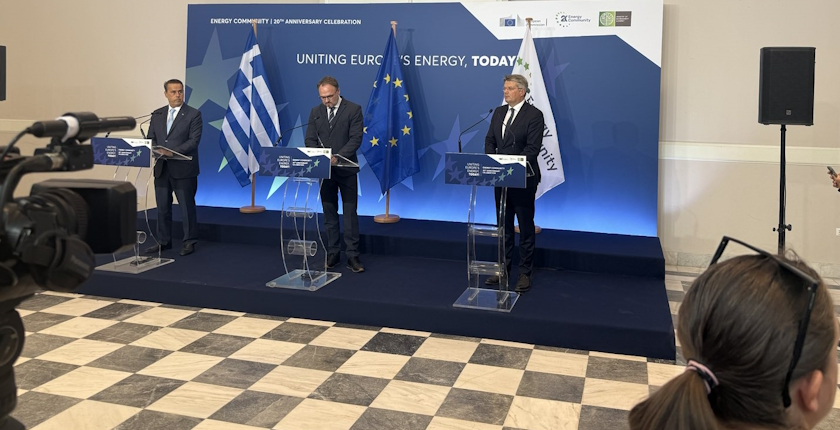
The Energy Community Ministerial Council held its annual informal meeting in Athens, where the organization was founded twenty years ago. No contracting party is expected to meet the criteria for exemption from the Carbon Border Adjustment Mechanism (CBAM) in the electricity sector – the European Union is due to start charging the CO2 tax on January 1 – but the European Commission could propose amendments.

The Energy Community promotes integration, reforms and investments across the region, top officials stressed.

Ministers from the Energy Community contracting parties convened today at the Informal Ministerial Council in Athens to mark the organization’s 20th anniversary. The Energy Community Treaty, establishing the Energy Community, was also signed in the Greek capital. The purpose of the organization is to create a more integrated market, help attract investment and speed up decarbonization by aligning with the European Union’s rules on energy, environment and competitiveness.

In recent years, close cooperation has enabled the contracting parties to strengthen the security of supply, particularly against the backdrop of the ongoing Russian war in Ukraine, the Energy Community Secretariat said. During the annual gathering, hosted by the Greek Ministry of the Environment and Energy, the ministers underlined the need for an accelerated integration with the EU, grounded in delivering a secure, resilient energy transition.

Ministers agreed to revise capacity calculation regions

Many contracting parties are close to completing the reforms needed to launch the 18-month countdown to electricity market coupling – including full legal alignment under the Energy Community’s Electricity Integration Package and the appointment of nominated electricity market operators (NEMOs). If transposition is verified as compliant by the European Commission and the Energy Community Secretariat, integration will be initiated with the EU’s Single Day-Ahead Coupling (SDAC) and Single Intraday Market Coupling (SIDC).

Ministers made a breakthrough in regional coordination, backing a proposal by EU transmission system operators to revise capacity calculation regions (CCRs), now under review by the EU energy regulator ACER – Agency for the Cooperation of Energy Regulators. Recognizing the proposal’s importance for an effective operation of the interconnected grid, they called for swift follow-up, including the operationalization of regional coordination centers (RCCs) and system operation regions (SORs).

The aim is to boost electricity flows and grid security, especially along the north-south corridor of the Balkans, while laying the groundwork for full EU market coupling.

Decarbonization must accelerate ahead of CBAM implementation in 2026

To avoid disruptions to regional electricity trade, clarifying CBAM rules for electricity is a priority for the ministers, the secretariat pointed out. The EU is set to begin charging the carbon border tax on January 1.

Lorkowski: Electricity market integration and decarbonisation are two sides of the same coin

As no contracting party is expected to meet the exemption criteria by then, a proportionate and context-sensitive application of the mechanism is essential, as supported by active engagement in the European Commission’s ongoing call for evidence that precedes the future amendments of the CBAM regulation to be possibly proposed by the European Commission, in the secretariat’s view.

“Electricity market integration and decarbonisation are two sides of the same coin. The green energy transition unlocks meaningful integration with the EU market – and vice versa. Only by aligning policy, infrastructure, and pricing can contracting parties fully realise the benefits of clean, secure, and affordable energy,” said Energy Community Secretariat Director Artur Lorkowski.

The ministers called for carbon revenues to support vulnerable communities and mobilize investment in clean energy, stressing that just transition financing must go hand in hand with policy reforms.

Energy Community Treaty is now cornerstone of Europe’s energy architecture

Born out of crisis and shaped by cooperation, the Energy Community Treaty has become a cornerstone of Europe’s energy architecture, Lorkowski stressed. What began as an unlikely experiment in regional integration has grown into a dynamic framework – extending the EU’s internal energy market, strengthening energy security, and advancing the clean energy transition across South-Eastern and Eastern Europe, he asserted.

Energy Community contracting parties can fully integrate their electricity markets with the EU before joining it

“Our contracting parties are now on the cusp of a major breakthrough: full electricity market integration with the EU – even ahead of accession. This is the product of two decades of reform, dialogue, and trust-building. With the right political will, we can move from transposition to transformation,” Lorkowski stated.

In his view, Greece is the window for the Energy Community contracting parties to the liquefied natural gas (LNG) market and the access point to the European electricity system. Close cooperation with the Western Balkans has economic benefits for Greece – but beyond the economy, it is also about security and stability, Lorkowski said at the event.

Energy Community pioneered extension of EU energy market

Over the past two decades, the Energy Community has brought the EU closer to its neighbours, pioneering the extension of the trade bloc’s energy market across its borders, promoting integration, reforms and investments across the region, according to European Commissioner for Energy and Housing Dan Jørgensen.

“Now it is time to look ahead at our shared future based on a greener, sustainable and resilient system which will bring cheaper energy and more security to all,” he said.

Separately, in an interview with Kathimerini, Jørgensen noted that Southeastern Europe experienced electricity price spikes last summer, mainly in the evening hours, due to a lack of cross-border capacity and sufficient flexibility. The only solution is further infrastructure and market integration, as costs are separated and benefits are multiplied, he opined.

For every EUR 2 billion invested annually in cross-border infrastructure, the potential benefits reach up to EUR 5 billion, the commissioner added.

Papastavrou: Southeastern Europe’s is at disadvantage as its electricity market is not fully integrated with EU

Southeastern Europe is still not fully integrated with the EU, which is a structural disadvantage for citizens, said Minister of Environment and Energy of Greece Stavros Papastavrou.

“I am very optimistic after the first session of the meeting, because all the contracting parties expressed commitment, a strong commitment, to market coupling,” he stated. Papastavrou said a lot of work is required in the electricity sphere to bridge the gap for the prosperity of citizens and the entire region.

Energy integration is one of the pillars of EU accession

Energy integration is not just a technical issue – it is one of the fundamental pillars of the EU accession process, the minister told his counterparts from the Energy Community.

“Greece, too, has faced the same challenges that many of you are experiencing today. Back in 2005, our energy system was almost entirely dependent on lignite, by more than 60%. Today, we have reduced lignite use by an impressive 91% – a clear demonstration of our strong commitment to a clean, sustainable, and resilient energy future,” he stated.

Serbia’s Đedović Handanović sees possibility for market coupling with Hungary already next year

Serbia was the first in the region to fulfill the conditions for market coupling with the EU, the country’s Minister of Mining and Energy Dubravka Đedović Handanović said. She urged for the verification process to be accelerated, so that Serbia can connect with the Hungarian market in 2026 and, through it, with the other EU member states.

The minister acknowledged the challenge of the upcoming full implementation of CBAM.

Photo: Minister Dubravka Đedović Handanović (Nenad Kostić / Ministry of Mining and Energy)

Serbian institutions analyzed the available options from the study that the European Commission published. “We think that carbon pricing should be introduced gradually, in phases and fairly, with support from funds from the European Union,” she said.

The minister stressed that revenues from carbon taxes would be directed, like in the EU, to decarbonization, renewables, energy efficiency, just transition and support to companies.

“Without an adequate period of time for the transition from coal to renewable energy sources, without modernizing the network, increasing RES capacities and adjusting the industry, higher carbon costs can only increase the financial pressure on our industry and consumers, which is already happening in the EU, instead of resulting in a significant emissions reduction in the short term. Solving these issues requires careful planning, a phasein and the EU’s targeted financial support, so that climate goals would be aligned with the economic reality,” Đedović Handanović said.

She recalled that EU member states had more than two decades to gradually adjust to carbon emission levies. Đedović Handanović affirmed that Serbia is willing to continue its alignment with the EU’s energy and climate policy.

“All the reform measures that we are conducting are primarily for the benefit of our citizens and companies, and we won’t make decisions overnight that would jeopardize our energy stability,” she said.

by in News

Greece to participate in European Nuclear Alliance

Greece is going to explore its options for the introduction of nuclear energy, according to Prime Minister Kyriakos Mitsotakis.

Speaking during the Energy Transition Summit in Athens, Mitsotakis expanded on his previous statements about nuclear energy and its possible role in the Greek energy mix.

“We are ready to join the Nuclear Alliance. This is not something that is going to happen tomorrow, but Greece must be a part of the discussion,” said the prime minister. The European Nuclear Alliance, launched in 2023, is an initiative of 13 European Union member states. Among them are Bulgaria, Croatia and Romania.

Its goal is to promote nuclear energy and help maintain its role in Europe. Italy has just joined the group.

It is not the first time that Greece has shown interest in the technology. The current government has floated the idea of co-financing a new nuclear power plant in Bulgaria, as part of the deal that would include guaranteed power imports. So far, nothing has materialized.

Mitsotakis also mentioned small modular reactors (SMRs) again as a possible solution, as well as installing reactors in ships to help the sector decarbonize. “We must explore how a naval nation such as Greece can utilize nuclear energy in its fleet,” Mitsotakis noted.

Mitsotakis: Net zero is impossible without nuclear

He added that the world would not be able to cut net greenhouse gas emissions to zero without the technology. According to the prime minister, nuclear fusion is very promising.

Public mistrust and cost issues

There are difficult obstacles to the government’s ambitions. Greek people remain heavily opposed to the installation of nuclear facilities, both inside and near the country. The energy crisis made public opinion only a bit more favorable.

Furthermore, Greece has no experience with nuclear energy and no people engaged in the sector. Everything would have to be created from scratch, from the regulatory framework to the technical knowhow.

Then there is the matter of cost. Even though many voices around the world support a nuclear revival, few new commercial projects have been initiated for traditional nuclear stations. Most new reactors, like in China, are subsidized by the state. Even in Europe, a large part of the discussion concerns renewing and upgrading existing reactors.

The Greek government has raised energy costs as a primary issue for the country and Southeastern Europe. It remains to be seen whether such power plants could operate on a purely commercial basis or if a support scheme could be used.

by in News

Billot: Balkans is key region for Nordex

This year Nordex Group is celebrating its 40th anniversary as one of the largest wind turbine manufacturers in the world. “We’re number one in Europe and the Balkans is actually a key region for us,” Christopher Billot, Sales Director for the Mediterranean region of Nordex Group, said at Belgrade Energy Forum 2025.

Nordex installed its first N27 turbine with a capacity of 250 kW in 1986, just one year after the company was founded. In 1995, it became the first in the world to start serial production of a megawatt-class turbine. Today, the capacity of its units ranges from 4 MW to 7 MW.

Christopher Billot noted that the company has been manufacturing wind turbines for the last 40 years.

Nordex entered the Balkans 10 years ago

“We’re number one in Europe and the Balkans is actually a key region for us where we focus intensively. We’ve been there for the last 10 years, and so far we have achieved up to 1 GW of wind turbine installation but also construction across Croatia, Montenegro, and Serbia,” Billot stated.

Nordex is spreading within the region and that’s key, in his words, for the company and its future in the region and overall.

[wpcc-iframe title=”Christopher Billot, Director Sales Region Mediterranean, Nordex Group at Belgrade Energy Forum 2025″ width=”500″ height=”281″ src=”https://www.youtube.com/embed/rUDrekSnYGI?feature=oembed” frameborder=”0″ allow=”accelerometer; autoplay; clipboard-write; encrypted-media; gyroscope; picture-in-picture; web-share” referrerpolicy=”strict-origin-when-cross-origin” allowfullscreen=””]

“We’re happy to be a silver sponsor of the Belgrade Energy Forum. This is for us a great opportunity to network and to basically partner with all the institutions, clients, and continue to grow and build the network for growth in the Balkans,” Billot stressed.

The global company has marked its 40th anniversary at the recently held Belgrade Energy Forum 2025 (BEF 2025), affirming its commitment to the region.

Helping the pioneering steps in renewables development

Nordex installed and contracted an overall 1 GW in Croatia, Montenegro, and Serbia, encompassing 222 wind turbines across 16 wind farms. Looking at the company’s portfolio, it can be said that it plays a pioneering role in the development of renewable energy sources in the region.

Here are a few examples.

In November last year, it signed an agreement with Montenegro’s state-owned power utility Elektroprivreda Crne Gore (EPCG) for its first wind farm, Gvozd, with a capacity of 54.6 MW. The contract is worth EUR 46.4 million.

A few months earlier, it was announced that Nordex would participate in the expansion of the largest wind farm in Serbia. It received an order for 22 turbines with a total capacity of 154 MW for the Čibuk 2 project. The investors are Masdar and Taaleri SolarWind III Fund.

Nordex was also a partner to Croatian state-owned Hrvatska Elektroprivreda (HEP) in building its first wind power plant. The contract for the delivery of 18 wind turbines with a total capacity of 58 MW for the Korlat wind farm was signed in July 2019.

by in News

Montenegro preparing first renewable energy auction to accelerate green transition

A model for Montenegro’s first auction for market premiums for solar power was outlined at an event in the capital Podgorica. The new legal framework for the green energy transition includes guarantees of origin, citizen energy communities and streamlined permitting. Stakeholders will be able to participate with their comments and suggestions in the renewables auction design.

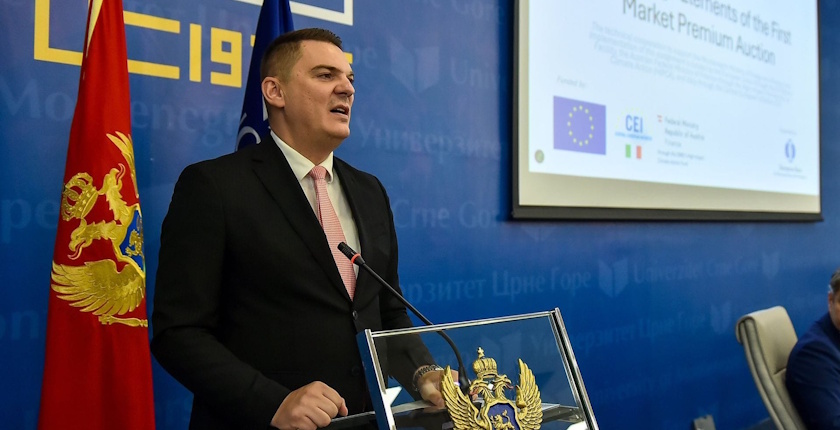
The Ministry of Energy and Mining of Montenegro organized a conference today to present the key design elements of the first market premium auction for renewables. The competitive bidding process for wind and solar power is part of the reform agenda within the European Union’s Growth Plan for the Western Balkans.

The country’s new legal framework includes guarantees of origin, citizen energy communities and simplified permitting aimed at facilitating investment. They were defined with the new laws on energy and renewables.

The ministry said the first auction would be for photovoltaics. Solar power is the segment with the greatest potential and the lowest share in domestic electricity production, it explained.

EBRD’s Zakaria: First auction should match market needs

The Head of Montenegro in the European Bank for Reconstruction and Development (EBRD) Remon Zakaria urged stakeholders to send their comments and suggestions. The design of the first auction should match the needs of the market as much as possible, he argued.

EBRD participated in drafting the model. The ministry also thanked the Ministry of Finance of Austria, Central European Initiative (CEI) and other partners for their assistance.

At the event in Podgorica, a team of experts presented the technical matters concerning the upcoming auction.

Montenegro to boost renewables’ share in electricity output to 70% by 2030

This is not just the beginning of a technical process – it is a strategic leap, according to Minister of Energy and Mining Admir Šahmanović. He pointed out that Montenegro is transitioning from state incentives to a market-based support model, saying it aligns with the best European practices.

“We know our ambitions and goals for 2030 – a 50% share of renewable energy sources in final consumption and 70% of electricity to be produced from renewable sources. They are indeed demanding targets, but reachable – especially with support from international partners and the private sector,” Šahmanović added.

Montenegro has demanding, but achievable green energy targets, Minister Admir Šahmanović said

Montenegro doesn’t see itself isolated in its energy future but as an integral part of the European market, the minister asserted. With the forthcoming auction, the country is sending a clear message that it is ready for the next steps in the green transition, in his view.

The government is committed to decarbonization, digitalization and preparations for the European Union’s instruments like the emissions trading system (ETS) and Carbon Border Adjustment Mechanism (CBAM), Šahmanović underscored.

“We don’t see this process as a political goal – but as an economic opportunity and social imperative,” the minister said.

by in News

ACER’s Zinglersen: Integrate electricity markets to bolster flexibility as new era is already here

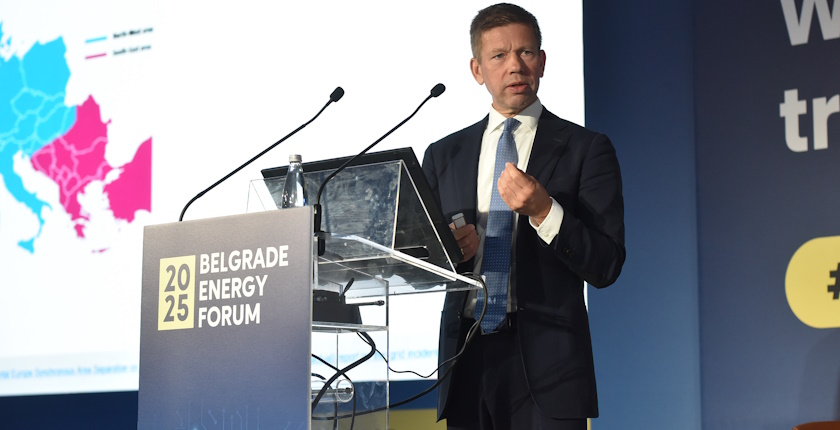
The surge in the number of hours with negative wholesale electricity prices in Europe made 2024 the second consecutive record year. According to ACER’s Director Christian Zinglersen, it means a new era is here. Speaking at Belgrade Energy Forum – BEF 2025, he called on governments, regulators and system operators to tackle the issue with more flexibility and reap the benefits of integrated electricity markets.

At EUR 81 per MWh, the average day-ahead power price in the European Union and Norway was lower last year than in 2021, when the energy crisis began. This is good news, but there are significant differences in price averages across the continent, Director of the EU Agency for the Cooperation of Energy Regulators (ACER) Christian Zinglersen asserted.

In a keynote speech at Belgrade Energy Forum, BEF 2025, he also pointed out that the percentage of days with significant price swings remained elevated. “This suggests that we need much more short-term flexibility in the system,” Zinglersen said.

[wpcc-iframe title=”Belgrade Energy Forum 2025 Christian Zinglersen, Director, ACER” width=”500″ height=”281″ src=”https://www.youtube.com/embed/c2JGLvLEInQ?feature=oembed” frameborder=”0″ allow=”accelerometer; autoplay; clipboard-write; encrypted-media; gyroscope; picture-in-picture; web-share” referrerpolicy=”strict-origin-when-cross-origin” allowfullscreen=””]

Prices in Romania, Bulgaria, Greece, Hungary among highest in Europe

In 2024, the share of time when prices were above EUR 150 per MWh landed at 6.1%, compared to 11.3% in the previous year and 66.7% in 2022. The number of days with price swings greater than EUR 50 per MWh accounted for a strong 70.4% of the total, though down from 77.1% in 2023 and 87.8% one year before.

The average price in Romania was virtually unchanged in 2024. It fell only 1% in Bulgaria and 5% in Hungary. Conversely, the drop was the strongest in Sweden, Norway, France and Belgium: 22% to 39%.

The average day-ahead electricity price in Romania was virtually unchanged last year, while in several countries it tumbled by at least 22%

Last year, prices were the highest across Italy, between EUR 106 per MWh and EUR 112 MWh, in Ireland (EUR 109 per MWh), Romania (EUR 104 per MWh), Bulgaria (EUR 103 per MWh) and Greece and Hungary (both EUR 101 per MWh).

Importantly, 2024 was the second consecutive record year in the number of hours with negative wholesale prices. Their share jumped to 2.8% from 1.9%.

“This is very significant and it shows we are already, in my view, in a new era. We’re not just embarking upon it. We’re there,” Zinglersen stressed.

Photo: ACER

Share of very low wholesale prices rallies back to level from 2020

As for the share of time with very low wholesale prices, it surged last year to 8.8%. The level was last seen in 2020, when the pandemic erupted and resulted in an unprecedented demand shock, ACER’s chief noted. He called on governments, regulators and system operators to tackle the issues with more flexibility.

Grid tariffs increasingly need to show what the system needs, in his view: more time nuance and more locational nuance. “That combination of an energy signal and a tariff signal should hopefully enable us to build more of what we need in the right places, as opposed to build what we don’t need, in the wrong places,” Zinglersen stated.

Integrated markets bring benefits

A policy brief that Brussels-based think tank Bruegel published last year pointed to the benefits of the integration of electricity markets. Among other factors, there is more security with fewer backup power plants and more flexibility with less investment in energy storage, together with lower capital costs. In 2022, ACER, based in Ljubljana, estimated benefits from cross-border trade alone at EUR 34 billion in the EU.

“It has very significant security of supply implications as well, to be in a very integrated-type jurisdiction,” Zinglersen underscored. But integrated markets come with tradeoffs, he said.

One of the examples is an incident in 2021 that split the Continental Europe synchronous area into two parts for an hour and reserves were pulled from across the continent. “But you can also bring the system much more quickly back together again,” Zinglersen said at the conference.

The same goes for the June 2024 blackout in the Balkans.

There are many solutions in Europe, but they are not evenly distributed

ACER’s director also recalled the power price decorrelation that affected Southeastern Europe and Hungary from July to September. He attributed some of the spikes in day-ahead prices to the lack of short-term flexibility, for instance batteries.

There are lots of technical solutions and frameworks in place across Europe, but they are not very evenly distributed, he added.

Zinglersen pointed to the opportunities and benefits of further integrating the electricity market of the Western Balkans region and the EU.