by in News

Vučić: Serbia ready to offer premium to buy oil company NIS from Russia

Potential European and Asian investors will speak about a takeover with Russian owners of Serbian oil refiner and service station chain operator NIS, President of Serbia Aleksandar Vučić said. If the talks fail, Serbia “should offer a better price… whatever it costs” to avoid “nationalization, confiscation and property usurpation,” he stressed, but also warned that “the refinery must work and the oil industry must work.”

Minister of Mining and Energy Dubravka Đedović Handanović said she doesn’t see a way to overcome the blow from US sanctions against NIS and added that she is prepared to resign.

The Government of Serbia held an emergency meeting as the sanctions that the United States imposed on NIS, the owner of the country’s sole oil refinery and the largest service station chain, are threatening to cripple the economy. Since October 9, the company has been unable to draw oil through the Croatian Jadranski naftovod (JANAF) pipeline.

Gazprom is the majority owner of NIS, also known as Naftna industrija Srbije – oil industry of Serbia. Gazprom Neft, which is the one actually under direct US sanctions, has 44.5%, while Intelligence, the Russian state-controlled gas giant’s other subsidiary, holds an 11.3% stake. Serbia owns 29.9%.

A decision must be made within seven days, according to President of Serbia Aleksandar Vučić, who attended the cabinet session. He revealed that potential European and Asian partners are about to speak with the Russian side about a takeover.

If a deal doesn’t come through, Serbia “should offer a better price,” even if it would need to pay for it on its own, he underscored and pointed out that the authorities have been planning a “special operation” for financing. “If we don’t have another solution, whatever it costs, as high as it costs, we will find the money,” the president claimed. He went on to say Serbia is ready to “overpay” to take the company back.

Reserves won’t matter as soon as the first delays become evident

Vučić told relevant ministers to obtain additional quantities of diesel, for EUR 40 million, gasoline, for EUR 60 million and fuel oil, in the meantime.

“I want to avoid nationalization, confiscation and property usurpation at any cost,” like what “the Bulgarians and the Romanians did,” the president asserted. Nevertheless, he warned, “the refinery must work and the oil industry must work.”

Fuel reserves are “full to the brink” and the country won’t feel any consequences for more than thirty days from now, in the president’s view, who urged against panic.

Vučić: Without any fault of our own, we were crushed like grass in a collision of elephants

“However, these reserves won’t save us the very second when they see that we have a delay for five trucks, when people don’t get bread in the morning in two bakeries. The destruction or closure of the refinery, the lack of fuel, pushes us to a total disaster,” Vučić stated.

The army will cede diesel to the healthcare sector if necessary, he added.

The situation with the US has nothing to do with Serbia, Vučić said. “It has to do with their relations with the Russians and geopolitics. Without any fault of our own, we were crushed like grass in a collision of elephants,” in the words of the head of state.

Vučić also highlighted the fact that Serbian financial institutions are at risk because of the government’s “relations with the Russians.” He said he asked US officials to allow seven to eight more days and that they accepted, though unofficially.

No choice but to act now, ministers warn

There is “no more time,” according to Minister of Mining and Energy Dubravka Đedović Handanović. Serbia must take necessary measures, she warned.

“Leading the energy sector in a situation where the oil industry is sanctioned is almost impossible. I am ready even to submit my resignation, because I don’t see a way to overcome this situation. Because, simply, there is no life for us without the refinery in Pančevo. It is vital for our citizens, for our companies, for our healthcare, for our police, for our schools, for our kindergartens. Because without fuel, simply, maybe even bakeries can’t get bread every day. Just to be aware of the complexity of the situation we are in. We waited for a long time. We were very patient. We were very loyal. We spoke multiple times with our Russian partners,” she stated.

Serbia has no choice but to act, said First Deputy Prime Minister and Minister of Finance Siniša Mali.

“This situation with NIS jeopardizes everything for us. But absolutely everything. Our gas. Our stability. Our credit rating,” he stressed and added that it also impacts attracting foreign investors.

by in News

Romania to take control of Lukoil’s assets

Romania wants to take control of Lukoil’s operations to prevent an imminent freeze from the sanctions imposed by the United States. Bulgaria is already putting the Russian company’s refinery, the largest in the Balkans, under a trusteeship. Serbia announced that similar measures have been proposed to exempt Gazprom-owned NIS and its refinery, the only one in the country, from the sanctions.

Minister of Energy of Romania Bogdan Ivan seems to have endorsed neighboring Bulgaria’s approach to the issue of US sanctions against Lukoil. He said the government has to take control of the Russian company’s operations, Profit.ro reported.

The minister didn’t clarify whether it would be a temporary trusteeship. But President Nicușor Dan, who took the helm half a year ago, said there is an option for Romania to assume control for a limited period.

“We protect Romania’s energy security and firmly enforce international sanctions targeting Lukoil. My colleagues in the Ministry of Energy continue to work, together with all relevant authorities, on creating legislation that will ensure, on the one hand, full compliance with the sanctions regime established by the United States, and on the other hand, the continuity of Petrotel Ploiești’s refining activities, as well as the placement of petroleum products, without jeopardizing the supply of the national fuel market,” Ivan stated.

Minister Ivan turns more hawkish regarding sanctions against Russia

The minister claimed he would not request an extension of the November 21 deadline from the US. “Moreover, I will support the replication and uniform application of the sanctions initiated by the US throughout the European Union,” he stressed.

It marks a shift from the stance that the ministry expressed late last month, saying that the EU needs to adopt a position before Romania decides to move. Notably, Ivan held talks on November 8 in Washington with senior US officials, the article notes.

Ivan held talks on November 8 in Washington with senior US officials

“Romania must take control of the company to guarantee the full implementation of international measures, to protect the jobs of the 5,000 employees and to ensure the stability and security of the national energy system,” Ivan said.

However, the Petrotel Lukoil refinery had 542 employees on average in 2023 and another 203 worked at the company’s gas stations. Altogether, its six firms have a total payroll of under nine hundred, the article notes.

Germany placed Rosneft under state administration in 2022.

Bulgaria, Serbia struggling to keep Russian-owned refineries in operation

Nationalization could backfire because of property rights, though imposing state management is also a complicated matter. Romania earlier signaled that nationalization would be the last option.

Bulgaria has urgently adopted a law facilitating a takeover of Lukoil’s refinery in Burgas, the largest in the region. The state administrator would be authorized to sell it. It is unclear whether the measure could postpone or prevent the sanctions.

President Rumen Radev refused to sign the law and returned it to the National Assembly. It would “undermine the legal order” through “indirect nationalization” and expose public finances to a high risk, he warned.

Oil refiner and service stations operator NIS in Serbia is already under US sanctions. Russian state-owned Gazprom holds a majority stake in the company through two subsidiaries.

Serbian Minister of Mining and Energy Dubravka Đedović Handanović said yesterday that the “Russian owners” sent a request to the US Office of Foreign Assets Control (OFAC) to renew the company’s license due to “negotiations with a third party.”

The government in Belgrade has supported the request, she added. The Russian side is prepared to cede control and influence over NIS to a third party, Đedović Handanović revealed.

According to media speculations, one of the candidates is Hungary-based MOL, given that the country managed to obtain a one-year exemption from the US for Russian oil and gas.

Lukoil is operating in Serbia as well, where it has a chain of fuel stations.

by in News

One megawatt per day: North Macedonia enjoys strong renewable energy growth

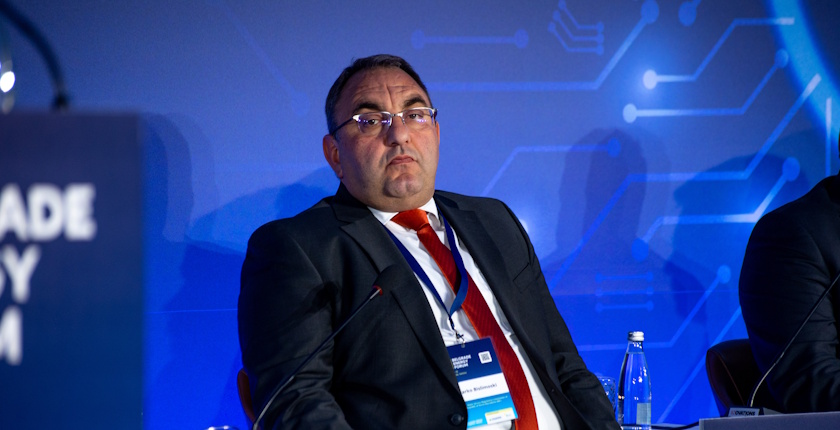
Over the past four years, North Macedonia has achieved strong growth in renewable energy sources. A total of 1,200 MW of capacity has been connected to the grid, marking a new phase of the country’s energy transition, according to Marko Bislimoski, President of the Energy, Water Services, and Municipal Waste Management Services Regulatory Commission of the Republic of North Macedonia (ERC or RKE).

According to ERC data, almost 1 MW of renewable capacity has been added to the grid every day over the past four years.

Between 2022 and October 2025, North Macedonia built 1,200 MW of renewable power generation capacity, Bislimoski said at the Regional Conference on Green Transformation of the Western Balkans, held in Tirana, Albania.

“Electricity generation from solar power has become a reality – the El Dorado of photovoltaic plants has heralded the country’s energy transition, initiating a transformation of the power sector. The figures are encouraging, but the period ahead will be full of challenges, among which is balancing the system, when it comes to renewable electricity generation,” Bislimoski said.

Solar power capacity has overtaken hydropower

At the recently held 14th International Forum on Energy for Sustainable Development (IFESD-14), Sanja Božinovska, Minister of Energy, Mining and Mineral Resources, said that renewable energy sources account for more than half of North Macedonia’s total installed electricity generation capacity – 56% as of 2024.

Solar power plants account for 28%, while large hydropower plants have a 24% share.

“For the first time in our history, solar has overtaken hydro – a symbolic and practical milestone in our path toward decarbonization,” Božinovska stated.

Need for investments in baseload generation

Bislimoski emphasized that in the current phase of the energy transition, it is necessary to encourage investments in energy facilities that produce baseload energy.

The use of battery storage has its role, but it is essential to implement projects that will replace coal-fired power generation with gas or biomass, he added

The digitalization of administrative procedures for obtaining the necessary permits and documentation was highlighted as a key prerequisite for increasing the number of green investments, according to the panel How to Create Zones for Faster Implementation of Green Projects.

Speakers, including energy experts, economists, and representatives of national and local authorities, agreed that the energy transition will only be successful if households also feel its benefits, not just industry. Policies and reforms aimed at building a smart and green energy future must be a priority for regional governments to facilitate integration into the European energy market.

by in News

North Macedonia’s ESM needs investments of EUR 3 billion to replace coal power

Power utility Elektrani na Severna Makedonija estimated that it requires EUR 3 billion by 2040 to replace electricity from its lignite-fired power plants. According to member of the Board of Directors Ivan Stojanovski, the state-owned company is preparing investments in gas power plants, solar, wind, hydropower and energy storage. He highlighted its plans for a 300 MWh battery and the Bogdanci hybrid energy park.

North Macedonia’s utility Elektrani na Severna Makedonija (ESM), the country’s main electricity producer, generated 60% of the 2024 output in the Bitola and Oslomej coal plants.

A rough estimate is that ESM would have to invest around EUR 3 billion in the next 15 years to replace its power production from lignite, which is baseload energy, Ivan Stojanovski, a member of the Board of Directors and the company’s Chief Financial Officer, told Balkan Green Energy News on the sidelines of the International Forum on Energy for Sustainable Development (IFESD-14).

He explained that the transition to green energy is quite expensive. ESM needs to replace the 840 MW in baseload production that the Bitola and Oslomej thermal power plants provide, the executive added.

Hydropower is a domestic electricity source, unlike natural gas

The company opted for investments in diverse energy sources to achieve it, Stojanovski stressed.

Gas power plants provide baseload energy, but at the same time, they turn the spotlight on national security as well as the security of supply, in his words.

Lignite is currently mined in North Macedonia while natural gas must be imported, so gas supply interruption is possible, ESM’s CFO added.

Gas power plants are required, but it is necessary to invest in hydropower as it is a domestic resource, Stojanovski said. On the other hand, hydroelectric plants are more expensive and it takes longer to build them, he noted.

ESM launched the Bitola 3 solar power project

ESM is developing wind and solar power projects as well. Stojanovski highlighted the planned expansion of its Bogdanci wind farm. The European Bank for Reconstruction and Development (EBRD) is participating in the development of the Miravci wind power project, of at least 100 MW, he recalled.

The company is working on solar power projects Oslomej 1 (10 MW), Oslomej 2 (10 MW), Bitola 1 (20 MW) and Bitola 2 (60 MW), Stojanovski asserted. Bitola 3 endeavor is underway, too, and the financing contract is expected to be signed by the end of the year, he revealed.

The photovoltaic system will have at least 100 MW, Stojanovski asserted.

“We plan to sign a contract next year with Agence Française de Développement (AFD) for a solar power plant in Bogdanci of at least 30 MW and to create a hybrid energy park there – wind, solar, and a battery,” he stated.

According to Stojanovski, the company is developing a battery energy storage project with the EBRD, for up to 300 MWh in capacity. The site is within the REK Bitola coal complex and the facility will be a systemic solution for all the solar power plants there, he explained.

Blended financing as a solution

“EUR 1 billion to EUR 1.3 billion is needed just for solar, wind and batteries. We will need between EUR 500 million and EUR 700 million for gas power plants. Another EUR 1 billion to EUR 1.3 billion would be for large hydropower plants such as Čebren and Vardar Valley, and some smaller projects,” Stojanovski explained.

Asked how the company plans to secure financing, he pointed to blended financing – own sources combined with some participation from international financial institutions. It is important to diversify the sources by opening cooperation with as many financial institutions as possible, in Stojanovski’s view.

ESM traditionally cooperates with the EBRD and KfW. Stojanovski announced that the company would diversify financing by launching cooperation with the World Bank, Italy’s development bank Cassa Depositi e Prestiti, and AFD.

“It will enable us to access more sources and complement them with financing from local banks. We also tend to obtain support from the state budget over a longer period, 10-15 years, and state guarantees, but also additional funds. This is a financial model that can secure long-term and sustainable financing of infrastructure projects,” Stojanovski said.

by in News

Several EU member states face uncertainty amid looming Russian gas ban

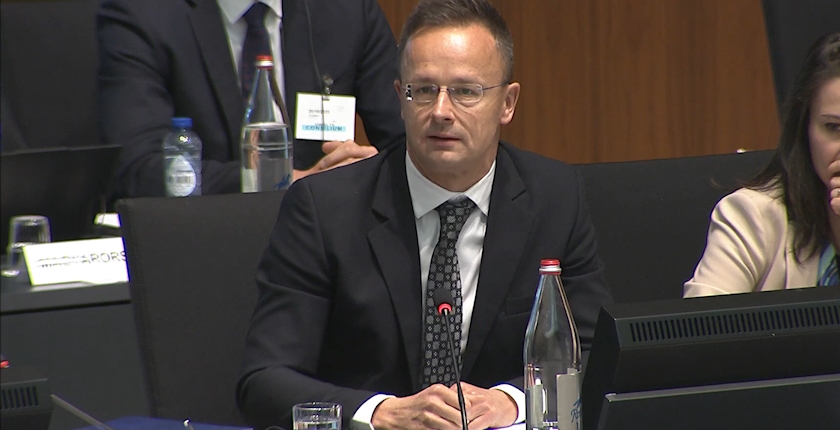
The European Union’s proposed measures to phase out imports of Russian oil and gas would destroy Hungary’s security of supply, according to Minister of Foreign Affairs and Trade Péter Szijjártó, who spoke at the meeting of energy ministers in Luxembourg. Slovakia is in a similar situation, while Romania pointed to the difficulty of proving the origin of foreign gas.

The draft regulation that the Council of the EU adopted doesn’t explicitly call for a ban on the transit of gas to third countries, while it foresees a temporary suspension for member states in case of supply disruption. The proposal also allows the possibility of importing non-Russian gas through the TurkStream pipeline.

The meeting of the so-called Energy Council highlighted several issues and concerns among EU member states about the proposed ban on Russian natural gas, including liquefied natural gas (LNG). Energy ministers in the Council of the EU adopted their position ahead of negotiations with the European Parliament on measures that they plan to introduce on January 1.

There would be a transition period for existing contracts for Russian fossil gas. Short-term ones concluded before June 17 this year would remain in force until June 17, 2026. Long-term contracts may run until January 1, 2028. It is also the targeted date for ending imports of Russian oil.

Szijjártó: The remaining infrastructure, physically and capacity-wise, is not able to supply Hungary

“The real impact of this regulation is that our safe supply of energy in Hungary is gonna be killed,” the country’s Minister of Foreign Affairs and Trade Péter Szijjártó stressed at the meeting.

He clarified that he wasn’t speaking about prices, and warned of damage from the proposed regulation – in the name of diversification.

“As now we are phasing out supply routes towards Hungary, the remaining infrastructure, physically and capacity-wise, is not able to supply the country. This has nothing to do with politics. This has nothing to do with Russia. This has nothing to do with the war in Ukraine. This is mathematics and physics,” Szijjártó stressed.

He also reiterated that his country would be left dependent on one oil supply route, via Croatia. It would leave Hungary “totally defenseless to a monopoly” as the transit fee doubled since the start of the war and it is five times higher than the current European benchmark, the minister underscored.

Bulgaria asks for protection from arbitration for gas TSOs

Slovak Deputy Prime Minister and Minister of Economy Denisa Saková said the supply of gas to her country is limited. There are interconnections with all neighbors, but external capacity bottlenecks remain, she argued. Bulgaria asked for provisions protecting gas transmission system operators (TSOs) from arbitration and financial penalties.

Romania voted for the draft regulation, but warned that identifying the origin of imported gas would be difficult

Secretary of State in Romania’s Ministry of Energy Cristian Bușoi urged for a workable and harmonized verification system and for the development of clear guidelines.

“This is not a matter of energy policy, but of strategic autonomy and European solidarity. At the same time, as we move from political vision to implementation, we believe it is important that the new authorization and verification system remains practical, transparent and proportionate. The additional requirements to demonstrate the exact country of production represent a new level of responsibility that, while understandable, and we support this in principle, may be difficult to fulfill in practice, particularly for pipeline [and] natural gas traded on hubs, and shipments transport, including LNG cargos that involve multiple sources and blending,” Bușoi told the ministers.

Council of EU proposes suspension clause

Notably, the Energy Council’s position, part of the REPowerEU plan and sanctions against Russia, is that the regulation should contain a suspension clause. The European Commission could temporarily lift the ban on Russian gas and LNG in case of significant disruptions of supply.

Another important element is the possibility of importing non-Russian gas through the TurkStream pipeline if the fuel’s origin is proven.

Gas transit through EU not subject to prohibition

Energy ministers said the EU should ensure that natural gas which crosses the 27-member bloc under a transit procedure is not ultimately entering into free circulation in the union.

It would imply that Serbia, Bosnia and Herzegovina and North Macedonia, non-EU countries, could continue to buy Russian gas that is delivered through Balkan Stream. It is the extension of TurkStream running through Bulgaria and Serbia to Hungary.

“Any gas which, before its import into the EU, was exported from the Russian Federation, either via direct export from Russia to the EU or via indirect export through a third country, should, except in case of transit, be subject to the prohibition”, the document reads.

Serbia still hasn’t signed a long-term gas supply contract with the Russian side, and the previous one expired in May. Moreover, the United States have imposed sanctions on Gazprom-controlled NIS, Serbia’s national oil importer, refiner and operator of a chain of service stations.

On top of it all, hydropower output is at a record low due to chronic drought, while coal is being imported as domestic mines don’t produce enough lignite.

by in News

Domac: No energy transition without much stronger grid investments

Croatia is investing only half as much in the electricity network as Slovenia and Austria, said Managing Director of North-West Croatia Regional Energy and Climate Agency (REGEA) Julije Domac. He warned that without an acceleration in grid investments, there are no renewable sources and no energy transition.

Croatia is about to overcome one of the biggest obstacles to investments in green energy, with its proposed methodology for the grid connection fee. However, there are several more bottlenecks in the sector, and they mostly also concern the electricity network.

The grid is apparently not among priority segments in Croatia, which depends to a large extent on electricity imports. The situation is similar throughout the Balkans and Europe, and beyond, and the basic question is who will cover the expenses as well as which projects are the most important for enabling the deployment of renewables. Among other difficulties, the administrative capacity for permitting for grid improvements and expansion is too weak, alongside complex environmental and spatial planning requirements.

Managing Director of REGEA Julije Domac outlined his view on the matter in a LinkedIn post. “Without an electricity network, there are no grid connections, no RES, no transition… There is more than 13 GW of solar and wind power projects under development today, but the network cannot integrate it without accelerated investments,” he wrote.

Photo: Julije Domac (REGEA)

Grid operators reacting with emergency measures instead of long-term strategy

The free capacity in the power distribution grid is estimated at 3.7 GW, but a large part is in areas with low interest for investing, Domac pointed out. Of note, he is also Croatian President Zoran Milanović’s special advisor on energy and climate.

“In the coastal area and Dalmatia, where the resources are the best, the network is near the maximum load in many parts – it means a malfunction of one element could jeopardize the system’s stability. To avoid that, the operators are already often turning to emergency measures in dispatching now: shutting down parts of the network, redirecting flows, pausing works. It is ‘putting out fires’ – and not a long-term strategy,” the head of REGEA said.

The regulated income from tariffs limits investments as the transition’s urgency isn’t acknowledged

Domac stressed that Croatia is investing less than EUR 20 per customer per year, only half as much as Slovenia and Austria. In his opinion, the tariff-based methodology is limiting investments. Namely, Croatian Transmission System Operator (HOPS) and HEP-ODS, the national distribution system operator, are funded through regulated income under the Croatian Energy Regulatory Agency (HERA), and the mechanism doesn’t acknowledge the urgency of the transition, according to the energy expert.

Another point is delayed digitalization, as Croatia has a much lower share of smart meters than neighboring Slovenia, where it surpassed 99%, or Italy, where the level is around 95%, he underscored. There is no domestic market for flexibility and no contracts with batteries and with consumers that could help ease the pressure on the grid, Domac claims.

In addition, he highlighted the sluggish grid connection procedure, saying it lasts ten years for wind power plants and four years for photovoltaics, the most in all European Union.

Grid connection costs can be covered with EU funding, green bonds

Domac is recommending to the authorities to introduce temporary connection points, with a controlled power delivery – limited until network enhancements are completed. HERA did envisage such a possibility in its draft methodology.

The grid connection fee for renewable electricity plants should be abolished, which was already promised, Domac recalled. It is an obstacle blocking 60 projects for 3.5 GW in total, he noted. It is the grid operator that should bear the cost and, aside from the tariff items, it can finance them through EU funds and green bonds, like most member states do, Domac added.

He expressed the belief that ten or so most important grid interventions should be accelerated – transformer stations and transmission lines in particular and especially in Dalmatia. Pilot projects for batteries and flexibility would pave the way for more grid connections without the wires, and public procurements need to be streamlined as well for works worth up to EUR 1 million, for instance, so that the replacement of one transformer doesn’t last twelver months, Domac asserted.

by in News

Von der Leyen: EU is guarantee that Serbian families will be warm in winter

The European Union is connecting Serbia to its energy market, and it is the true guarantee that Serbian families will be safe and warm in winter, European Commission President Ursula von der Leyen said in Belgrade. She expressed preparedness to invest further in the country’s gas interconnector with Bulgaria.

In her speech during the visit to Serbia, European Commission President Ursula von der Leyen didn’t address the looming energy crisis caused by the sanctions that the United States imposed on Russian-owned oil company NIS. Moreover, she demanded greater alignment with the EU foreign policy from President of Serbia Aleksandar Vučić, including on sanctions against Russia.

“The EU membership offer is an opportunity. It is the promise of peace. Of prosperity. And of solidarity. Especially in times of crisis. You have seen this in practice,” she stated and pointed to the energy crisis of 2022.

EU showed equal solidarity with Western Balkans

After Russia invaded Ukraine, the EU introduced the same measures of solidarity to its Western Balkan partners as to its own member states, Von der Leyen stressed. “This is what it means to be a reliable partner. You can continue to count on us. We are connecting Serbia to the EU’s energy market. This is the true guarantee that Serbian families will be safe and warm in winter,” she stated.

The head of the 27-member bloc’s executive body pointed to ongoing investments like the Trans-Balkan Electricity Corridor. The mostly completed route stretches from Romania to Bosnia and Herzegovina and Montenegro and its MONITA undersea link with Italy.

Von der Leyen: Collective market power to secure better energy prices

Von der Leyen highlighted the Serbia-Bulgaria gas interconnector as well. The pipeline was completed almost two years ago. “We are prepared to invest further in it. We also invited Serbia to join the EU’s joint gas procurement mechanism. Together we are using our collective market power to secure better energy prices,” she said.

The administration in Brussels introduced the AggregateEU platform for joint procurement of gas in 2023. It expired earlier this year, but the EU is preparing another mechanism.

Serbia is planning an oil interconnector with Hungary and gas links with Romania and North Macedonia. Vučić said the upcoming winter would not be an easy one for Serbia.

by in News

Serbia warns of gas crisis as EU transit ban threatens Balkan Stream supply

Serbia is in a very difficult situation because, as of January 1, 2026, it won’t be able to receive Russian natural gas via Bulgaria, according to the Ministry of Mining and Energy.

Serbia receives natural gas from Russia via the Balkan Stream. The pipeline is an extension of TurkStream that passes through Bulgaria and Serbia. Bosnia and Herzegovina and Hungary, Serbia’s neighbors, are also supplied via Balkan Stream. TurkStream delivers gas from Russia across the Black Sea to Turkey.

Serbia is facing a very difficult and almost dead end situation due to the European Union’s ban on the transit of Russian gas through the EU to third countries, which will come into effect on January 1, 2026, according to Serbia’s Minister of Mining and Energy Dubravka Đedović Handanović.

Đedović Handanović: Bulgaria won’t allow the flow of Russian gas through the Balkan Stream

Bulgaria won’t allow the flow of Russian gas through Balkan Stream, which will negatively impact Serbia, she stressed.

The European Commission set out a plan in May to phase out the purchases of Russian natural gas, including in liquefied natural gas (LNG), and oil, by the end of 2027. The council now confirmed that imports of Russian gas will be prohibited from January 1, 2026, while maintaining a transition period for existing contracts.

Đedović Handanović: We are doing everything in our power, but the situation is almost hopeless, considering the current situation regarding NIS

Yesterday, the Council of the European Union agreed on its negotiating position on the European Commission’s draft regulation to phase out imports of Russian natural gas. When the European Parliament adopts its own position, it can start negotiating with the council.

When the two institutions approve a regulation, it directly applies to all member states.

Đedović Handanović expressed hope that a solution would be found due to, as she put it, President Aleksandar Vučić’s excellent relations with world leaders.

“We are doing everything in our power, but it is an almost dead end situation, considering the current situation regarding Naftna industrija Srbije [NIS]. Our country, which is not involved in any conflict, has found itself affected through no fault of its own. Despite everything, we will do our best, as we have so far, so that citizens don’t feel the problems we are facing,” Đedović Handanović underlined.

Namely, the United States imposed sanctions on October 9 against NIS, Serbia’s national oil importer, refiner, and operator of a chain of service stations.

by in News

Šušnjar: Croatia prepared to buy oil company NIS in Serbia

Minister of Economy Ante Šušnjar has said that Croatia is prepared to acquire Russian-owned oil company NIS in Serbia, which came under US sanctions today. Croatian state-owned oil pipeline operator Jadranski naftovod (JANAF) relies heavily on deliveries to NIS, and Šušnjar believes the acquisition would benefit both Croatia and Serbia.

The US sanctions against the Serbia-based oil company took effect after nine months of delays. JANAF stated yesterday that it had a license to continue deliveries to NIS until October 15, but Minister of Economy Ante Šušnjar said today that everything from the terminals and the pipeline had already been transported and that there were no more deliveries to Serbia.

Šušnjar: Croatia’s plan to buy NIS is not aimed at dominating Serbia’s retail market

Asked about plans to buy NIS, Šušnjar said that Croatia is prepared to do so to protect JANAF, whose business has relied on ties with NIS for the past 40 years. He emphasized that there is no intention to dominate Serbia’s retail market.

US sanctions against NIS will affect Croatia, Serbia, and BiH

According to Šušnjar, if Croatia were to take over NIS, it would ease the situation for both Croatia and Serbia. The sanctions also pose an additional challenge for Bosnia and Herzegovina, given that 20% of the country’s oil derivatives market is supplied by NIS’ refinery in Pančevo, he noted.

Business with NIS accounts for more than 30% of JANAF’s revenue, and suspending deliveries until the end of this year alone would cost Croatia around EUR 18 million, according to Stjepan Adanić, chairman of JANAF’s management board.

The US imposed sanctions on Russian state-owned Gazprom Neft, which until recently held a 50% stake in NIS, with its parent company Gazprom controlling a further 6.2%. After a reshuffle, Gazprom Neft now owns 44.9%, and Intelligence, a firm within Gazprom’s system, 11.3% of NIS. Serbia’s stake is 29.9%.

by in News

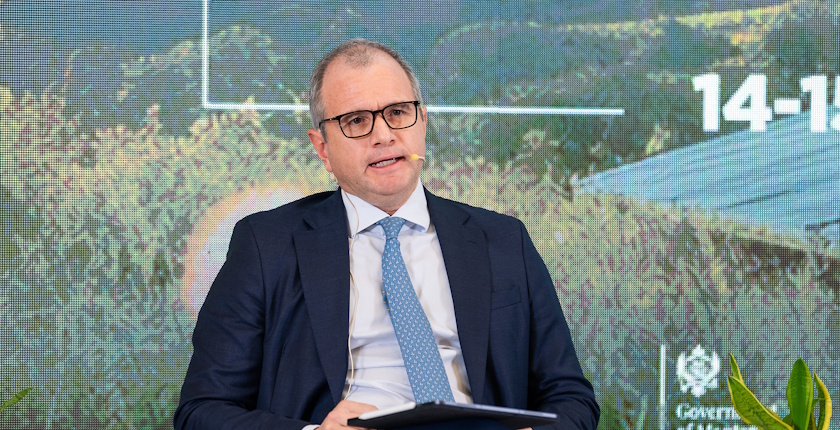
Alcazar Energy plans to boost its Montenegro investments to USD 500 million

Alcazar Energy intends to increase its investments in Montenegro from USD 200 million to USD 500 million, according to Co-Founder and Managing Partner Daniel Calderon.

Alcazar Energy is one of the companies with which Montenegro has signed memoranda of understanding on projects in the energy sector. It was done today at the EU-Montenegro Investment Conference in Luštica. The company recently began construction on the largest wind farm in the Western Balkans, located in North Macedonia.

Daniel Calderon, Alcazar Energy’s Co-Founder and Managing Partner, told Balkan Green Energy News that the construction of the Bijela wind farm is scheduled to begin in the first quarter of 2026.

The investment in the 118.8 MW wind farm is estimated at USD 200 million, he added.

Alcazar is currently preparing the land and conducting procurement for this major project, which represents the first part of its investment in Montenegro.

The investment in the Bijela wind farm is valued at USD 200 million

Alcazar has now signed a memorandum of understanding with the Government of Montenegro to increase investments from USD 200 million to USD 500 million.

The country’s leadership is creating a good and consistent climate for foreign investments, Calderon stressed.

The company, in his words, sees the potential for its investments to increase to USD 500 million over the next five years.

Alcazar estimates that investments in renewables in Montenegro could reach USD 4-5 billion by 2040, and would like to be a part of it. Its investments would be around 10% of that amount, representing the first investments in this large endeavour, Calderon underlined.

Several projects in Montenegro are being considered

When asked to elaborate on these new projects, he replied that the company is considering several projects, but that he cannot disclose any details at this time.

Today, Calderon was one of the speakers at a panel titled Renewables: Scaling Montenegro’s energy transition.

At the EU-Montenegro Investment Conference, a total of 14 joint projects between Montenegrin and European companies have been initiated, including investments in wind farms, solar parks, energy storage, and power grids.

Alcazar plays a significant role in the development of the renewable energy sector in MENAT (Middle East, North Africa, and Turkey) and the Balkans, including through projects in Montenegro, Serbia, and North Macedonia.