by in News

GGF’s Kostadinov: Western Balkans responded to energy crisis with innovation, ambition (video)

The past three to four years have been nothing short of transformational when it comes to the energy transition in the Western Balkans, said Borislav Kostadinov, Finance in Motion’s Fund Director for the Green for Growth Fund, in a keynote address at Belgrade Energy Forum. The region has responded to the energy crisis with innovation, ambition and resilience, he pointed out. The challenge in the energy transition is understood and so is the solution, Kostadinov stressed.

Borislav Kostadinov, a Fund Director at Finance in Motion, gave a keynote speech at Belgrade Energy Forum (BEF 2025). He leads the Green for Growth Fund, or GGF, the company’s flagship green finance fund.

Finance in Motion is an impact asset manager based in Frankfurt with over 20 years of experience and more than EUR 4 billion in assets under management (AUM). It specializes in blended finance vehicles that deliver positive social and environmental impact. GGF has delivered over EUR 500 million in green finance to almost 50,000 beneficiaries in the Balkans. As of the end of last year, it was above EUR 1 billion in size.

Renewables have become mainstream investments

The breadth and flexibility of the fund’s model allow it to support a wide spectrum of the energy transition, which has enabled it to expand to over 19 markets along the European Union’s borders, Kostadinov explained.

The past three to four years have been nothing short of transformational when it comes to the energy transition in the Western Balkans, he underscored.

“I would not be the first to say that we are at a key juncture in the energy transition. At this stage, the challenge is understood and so is the solution. Renewables have become mainstream investments, championed by the public and private sectors, and are the foundation of a future that is not only sustainable but cost-efficient, competitive, and secure. The question now becomes how quickly and how completely we can deliver on this vision over the next five, fifteen and 25 years,” Kostadinov stated. In terms of energy systems and climate change, it is not much time, he pointed out.

[wpcc-iframe title=”Belgrade Energy Forum 2025 Borislav Kostadinov, Fund Director Green for Growth Fund, Finance in Moti” width=”500″ height=”281″ src=”https://www.youtube.com/embed/TJFTOD-1keQ?feature=oembed” frameborder=”0″ allow=”accelerometer; autoplay; clipboard-write; encrypted-media; gyroscope; picture-in-picture; web-share” referrerpolicy=”strict-origin-when-cross-origin” allowfullscreen=””]

Western Balkans are broad-based renewables growth story

For several years now, there has been a broad-based renewables growth story across the region: from utility-scale project finance transactions, to large installations for captive use by industry and manufacturing, to photovoltaics on the roofs of households, Kostadinov recalled.

“What is driving this shift? Certainly, the energy crisis jolted all of Europe, and the Western Balkans have responded with innovation, ambition, and resilience. In a short time, we have improved policy, strengthened regulatory frameworks and prioritized the sector with clearer strategies and market mechanisms,” he said.

GGF’s director praised the countries in the region for embracing transparent, competitive auctions as a foundation for market-based deployment of renewables.

Kostadinov particularly highlighted Serbia for leading the way. “Its recent auctions for wind and solar have been consistent, well-communicated, credible and investor friendly, drawing broad investor participation. Most importantly, they’ve been successful, and we are proud to have contributed to this achievement alongside our longstanding partner UniCredit Bank, through its investment in the landmark Čibuk 2 wind farm,” he told the audience at BEF 2025.

Corporate PPAs, guarantees of origin deepen markets while also expanding them

The public sector must continue strengthening markets and frameworks and develop and roll out mechanisms such as corporate power purchase agreements (PPAs) and guarantees of origin, which deepen and expand markets, Kostadinov said.

“We need more purely private projects, such as the GGF-backed 50 MW Project Blue solar plant in Albania. As the largest non-subsidized solar project in the Western Balkans, and developed without a long-term PPA from the utility, it is the type of investment that we hope to increasingly catalyse in the region,” he asserted.

The three principles for the next five years are speed, integration, and resilience, Kostadinov says

In Kostadinov’s view, the three principles for the next five years are speed, integration, and resilience.

“We must continue to improve the speed, transparency and bureaucratic process when it comes to permitting, approving and bringing projects online. This is true in the EU, and it is true in the Western Balkans, in particular for construction permitting and grid connections,” he said.

The necessary investments in the integration of energy markets in the EU and the region will create scale, meaning larger markets, deeper spot markets, and more varied offtake, Kostadinov added. His message to energy producers in the Balkans is that they would be able to diversify and address a larger market by supplying Europe’s industrial base.

The recent blackout in Spain is a cautionary tale, but the story is not a failure of renewables but rather a failure of grid resilience, Kostadinov said.
by in News

Weakness in Serbian energy system is no option

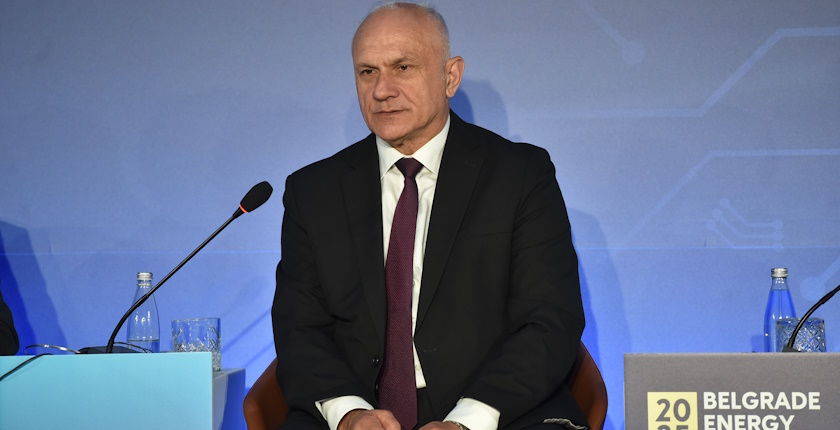
Serbia’s state-owned power utility Elektroprivreda Srbije (EPS) is committed to its own and the country’s goals for green energy and emission cuts, but it is sustainable only if it doesn’t jeopardize energy security, Chief Executive Officer Dušan Živković said. Weakness in the energy system is not an option, he underscored.

The recent blackout in entire Spain and Portugal and the one last year in the Balkans have imposed the topic of large energy storage facilities which would support the integration of renewables, CEO of EPS Dušan Živković said at Belgrade Energy Forum (BEF 2025). The company is committed to its own and the country’s goals for green energy and emission cuts, he asserted.

“We will work on that, of course, believing in these objectives, but without compromising energy security and the energy sovereignty of the state of Serbia. It was proven to be the only sustainable path and that if we don’t follow it, it can result in situations that are not a good message toward consumers, and they are not a good message toward investors either. Weakness in the energy system is certainly not an option”, Živković stated.

In its Integrated National Energy and Climate Plan (INECP or NECP), Serbia is targeting for 2030 a 45.2% share of renewable energy sources in electricity production and a decrease of greenhouse gases by 40.3% from the 1990 level.

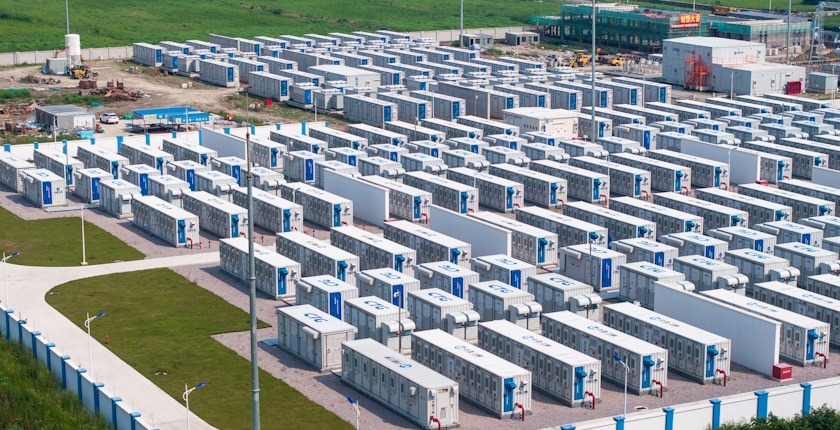
Decarbonization is not easy without serious storage

Among its other activities, EPS is working on its small green energy projects on open cast coal mines, while the strategic partner, a consortium of UGT Renewables (UGTR) and Hyundai Engineering, is tasked with building a group of solar power plants of 1 GW in combined connection capacity alongside 200 MW of battery energy storage, and transfer them to Serbia’s government-controlled power utility, Živković noted. But the process of decarbonization with necessary renewable energy capacity won’t be easy “without serious storage,” he stressed.

Serbia hosts fossil fuel power plants of 4 GW in total

Big energy storage projects are financially challenging, only marginally cost effective, and they are not easy to build, EPS’s head claims. They are necessary to be able to draw enough baseload energy, and in Serbia they need to contribute replacing a large fossil fuel capacity – currently it amounts to 4 GW, Živković said.

Pumped storage hydropower project Bistrica, existing facility Bajina Bašta enable comfort for signing PPAs

EPS primarily focuses on the Bistrica pumped storage hydropower project and the possibility to develop the one for Đerdap 3, he added. That way conditions would be created for the facilities to provide new services in the market, so “the region feels safer, too,” Živković underscored.

Counting on Bistrica and the existing pumped storage hydropower plant, Bajina Bašta, EPS is in “a comfortable zone” for signing power purchase agreements (PPA) with companies for their green power plants, Živković explained. Bajina Bašta is undergoing the second half of reconstruction works.

Turning back to the April 28 collapse of the Iberian electricity system, Živković pointed to the adverse interest of private investors – get profit in the short term – and companies responsible for energy security. In his view, it is necessary to act “more intergenerationally responsibly” and very important to find balance in relation to profits.

by in News

Belgrade Energy Forum 2025 – energy market reforms accelerate integration into EU

Electricity market coupling with neighbors in the European Union is a major factor in the EU integration of Energy Community contracting parties and the Western Balkans, alongside deeper coordination within the region, the establishment of energy interconnections, investments in renewables and progress in carbon pricing, top officials pointed out at the opening of Belgrade Energy Forum – BEF 2025.

Founder and Editor of Balkan Green Energy News Branislava Jovičić said the current changes in the energy sector can already be called an energy revolution.

The third Belgrade Energy Forum, BEF 2025, started today in Serbia’s capital city, welcoming four hundred participants from more than 30 countries from the region, Europe and beyond. The two-day conference, organized by Balkan Green Energy News, features eight panels with over 50 officials, executives and prominent energy experts.

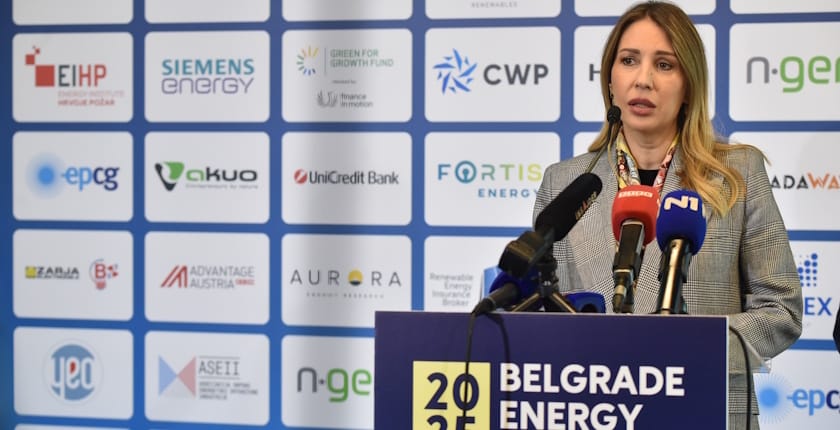
Serbia was the first in the region to meet the preconditions for electricity market coupling with neighboring countries in the European Union and Energy Community, said Minister of Mining and Energy Dubravka Đedović Handanović. She added that the technical process would be completed within 18 months after the EU Agency for the Cooperation of Energy Regulators (ACER) and European Network of Transmission System Operators for Electricity (ENTSO-E) conduct the necessary steps.

Electricity market coupling will be completed within 18 months when the technical process starts

“It will be a historic event for our country for its benefits for citizens and companies, as it will ensure a more stable electricity supply and access to more affordable energy prices. It will turn us into an equal member within the region but also the EU as concerns the energy sector,” Đedović Handanović stated.

The SEEPEX power exchange has already prepared implementation projects with its counterparts in Hungary and Bulgaria for market coupling on their borders, the minister stressed.

Up to EUR 15 billion needs to be invested in energy

Đedović Handanović also pointed out that domestic and European regulators certified Serbia’s gas transmission system operator Transportgas for the first time. The start of construction of the Serbia-Hungary oil pipeline is expected to begin early next year at the latest, the minister said.

The baseline for the development plan for energy infrastructure and energy efficiency should be completed by the end of May, she revealed. It identifies the need for EUR 14 billion to EUR 15 billion in investments in the next ten years, according to Đedović Handanović. Renewables and new hydropower potential account for EUR 7 billion, she said.

Serbia will double the electricity transmission capacity with Hungary and increase it with Bulgaria, the minister asserted.

Serbia is frontrunner in region with its progress toward market coupling

As the Western Balkan region confronts the trailing trilemma of decarbonization, affordability, and energy security, the need for an accelerated integration with the European Union has never been more urgent, Energy Community Secretariat Director Artur Lorkowski said.

The organization provides a platform for the process, a strategic window of opportunity to inspire market confidence now, not in years or months to come, he explained. Lorkowski said it implies deeper coordination among Energy Community contracting parties in removing cross-border bottlenecks and harmonizing market operations.

Above all, there is an urgent need to move forward on electricity market integration with the EU, so the region can fully benefit from it in 2027, he noted, underscoring that Serbia is the frontrunner.

Exporters of electricity to the EU can attend a technical consultative meeting in Brussels on July 1

The Carbon Border Adjustment Mechanism (CBAM) is another urgent priority, Lorkowski said. He announced that the Energy Community Secretariat and European Commission would organize a technical consultative meeting in Brussels on July 1 for electricity exporters to the EU.

The establishment of domestic carbon pricing mechanisms is inevitable, Lorkowski warned. The question is how to introduce domestic carbon pricing and keep energy prices affordable for households and competitive for businesses, he told the audience at BEF 2025.

“The way forward is clearly defined, and the conditions linked to energy market reform and decarbonization are well known. And I’m, frankly speaking, very optimistic that progress on these issues can be substantive in months and years to come,” the secretariat’s head stressed.

Jovičić: Energy revolution underway

Energy and climate issues are among the most important ones in the world today, as well as in Southeastern Europe, Founder and Editor of Balkan Green Energy News Branislava Jovičić said. All stakeholders, aware of the necessity of rapid changes and prudent solutions, are working toward a secure energy supply and decarbonization, she added.

“Last year we spoke about the energy transition. This year we can freely call the changes in the energy sector an energy revolution,” Jovičić stated. The five pillars of the energy revolution are solar and wind power, battery storage, digitalization, nuclear energy and decentralized generation and consumption, she stressed.

Balkan Green Energy News is a leading energy media website in the region and one of the top 50 in the world, Branislava Jovičič said.

by in News

Europe has record battery storage capacity growth in 2024 but expansion slows

New battery storage installations last year in Europe came in at an all-time high 21.9 GWh in capacity, though the leap wasn’t as impressive as in the previous years. The total reached 61.1 GWh. “If Europe has already entered the solar age, the battery storage age is just beginning,” said Walburga Hemetsberger, CEO of SolarPower Europe, which issued the annual report.

Europe marked the eleventh consecutive year of record-breaking battery storage installations – in capacity terms, the addition was 21.9 GWh. According to SolarPower Europe’s update, the new capacity was 15% bigger than in 2023, after effectively doubling for several years in a row.

The battery fleet ended December at 61.1 GWh. The growth rate in 2024 was 56%, compared to the 94% registered one year before.

The region that was tracked consists of the European Union, United Kingdom and Switzerland. The EU alone closed 2024 with 18.5 GWh in newly installed battery storage capacity.

“If Europe has already entered the solar age, the battery storage age is just beginning. With solar energy mainstreaming across the continent, now is the time for European decision makers to put batteries at the centre of a flexible, electrified energy system,” the organization’s Chief Executive Officer Walburga Hemetsberger stated.

She urged the European Commission to double down on its efforts and adopt an action plan as part of a broader energy system flexibility package. “The recent electricity outage in the Iberian Peninsula is a stark reminder of why this is important,” Hemetsberger pointed out.

BESS projection puts EU likely below 2030 target

In the most likely scenario, 29.7 GWh of battery storage will be installed this year, translating to a 36% annual growth in new capacity and 49% in total. The report anticipates a sixfold increase to 118 GWh added in 2029. It would bring the entirety of battery energy storage systems (BESS) to 399 GWh, of which 334 GWh in the EU.

However, it is far below the levels required to meet flexibility needs in a renewables-driven energy system, the annual report’s authors warned. A study showed that the EU needs 780 GWh by 2030 to fully support the transition.

This year the share of the new front-of-meter BESS, in the utility scale segment, is seen at 55%, against last year’s 40%. The absolute level would nearly double. As for behind the meter, commercial and industrial (C&I) systems grow to 12% from 10% of the new fleet while residential installations decline from 50% to 33% in 2025.

Drop in power prices from crisis levels faded appeal of battery storage capacity

Residential battery deployment declined by 11% in 2024 after years of rapid growth. The report attributes it to the drop in electricity prices when the energy crisis subsided, the removal or reduction of subsidies in key markets and a parallel decline in the deployment of residential solar power units.

Home batteries account for 57% of the whole cumulative level.

New large-scale grid batteries surged 79% against 2023, marking a turning point for utility-scale storage.

Last year new C&I installations were 17% bigger, remain below their potential and holding at one tenth of the whole capacity for several years now, the document shows. Companies in the segment generally invest in battery storage to maximize self-consumption from on-site photovoltaics, avoid peak demand charges and reduce reliance on backup diesel generators.

Additionally, solar and storage allow businesses to meet corporate sustainability targets by reducing carbon footprint of operations. Lastly, the electrification of production processes, heating, and transport fleets is driving unique use cases and a need for storage.

Spain lags but seen rebounding, reaching top five in 2025

The top growers and their positions in the chart were the same as in 2023: Germany (6.2 GWh), Italy (6 GWh), the United Kingdom (2.9 GWh), Austria (1.1 GWh) and Sweden (1 GWh). Together they had a 78% share in both new and cumulative installations.

Germany added slightly less on an annual scale than in 2023 amid a drop in newly installed residential units. Italy’s home battery segment also decreased, but the large-scale segment’s capacity surge brought the market to new heights. The UK experienced a temporary slump due to project delays at the large-scale level.

Last year Spain added less than 250 MWh in battery storage capacity, making it the 14th-biggest market in Europe. Overall it reached 1.7 GWh, of which 90% were small-scale systems.

The country’s new battery installations were 41% lower than in 2023. The Spanish market has been declining since 2022, but it is expected to enter the top five this year, with 1.3 GWh, amid a utility-scale segment’s revival.

BESS market requires level playing field

SolarPower Europe said the authorities need to encourage the participation of hybrid projects of solar and BESS in renewable energy auctions.

“Contracts for difference must be settled based on energy production rather than energy injection. This will allow the asset operator to receive the CfD for the PV asset while generating additional market-based revenues from the BESS. These extra revenues will eventually lead to lower bids from developers and reduce the support costs for society,” the document reads.

The EU must ensure transmission system operators (TSOs) procure balancing services in market-based procedures in which batteries can compete on a level playing field, the organization added. Some EU markets still rely on bilateral contracts that limit fair competition and exclude smaller storage assets, it underscored.

by in News

Three hydropower plants on Bistrica river to be finished by end-2026

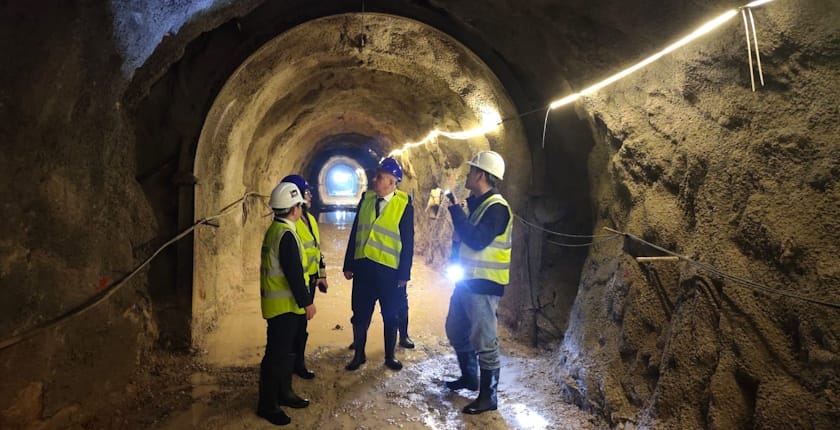
Three hydropower plants on the Bistrica river near Foča are expected to be completed by the end of 2026, according to Petar Đokić, the Minister of Energy and Mining of the Republic of Srpska, one of the two entities of Bosnia and Herzegovina.

Chinese company AVIC is in charge of building the three hydropower plants, with a total capacity of 39 MW. State power utility Elektroprivreda Republike Srpske (ERS) will operate the facilities once they are completed, according to public broadcaster RTRS.

The three small hydropower plants on the Bistrica river, a tributary of the Drina, are being intensively built, with all works targeted for completion by the end of 2026, said Minister Petar Đokić, who will be among the speakers at Belgrade Energy Forum 2025 (BEF 2025).

The Hidroelektrane Bistrica hydropower system will consist of three cascading plants installed in the river canyon along the Foča-Sarajevo road. The construction of the facilities officially began in December 2021.

The total project cost is estimated at EUR 103 million

Once completed, the system will have a total installed capacity of 39 MW and an annual electricity output of 152 GWh. Đokić also said that the signed contract values the project at EUR 102.8 million.

Last year, the Government of the Republic of Srpska and the Chinese contractor AVIC signed an agreement on financing the construction of the three hydropower plants on the Bistrica.

Photo: The Ministry of Energy and Mining of the Republic of Srpska

During a visit to the construction site, Đokić revealed that there may be certain changes during implementation, but noted that the project will provide exceptional value for the energy system of the Republic of Srpska.

The three hydropower plants include nearly ten kilometers of tunnels

Site manager Feng Xiong from AVIC noted that the project encompasses three hydropower plants with a total of 9,800 meters of tunnels. Only 600 meters of tunnel work remains unfinished, he said, adding that he believes the project will be completed as scheduled.

Dejan Pavlović, CEO of Hidroelektrane Bistrica, stated that 9.2 kilometers of tunnels has been completed. Bistrica’s high water levels have slowed down the construction, he noted.

The companies investing in the three hydropower plants include Hidroelektrane Bistrica and Hidroelektrane na Drini, the majority owner of the project. The financial backing was secured by ERS.