by in News

Đokić: We expect EU to accept request to postpone CBAM implementation

Minister of Energy and Mining of the Republic of Srpska Petar Đokić expressed belief that the European Commission would postpone the implementation CBAM, set for January 1, 2026.

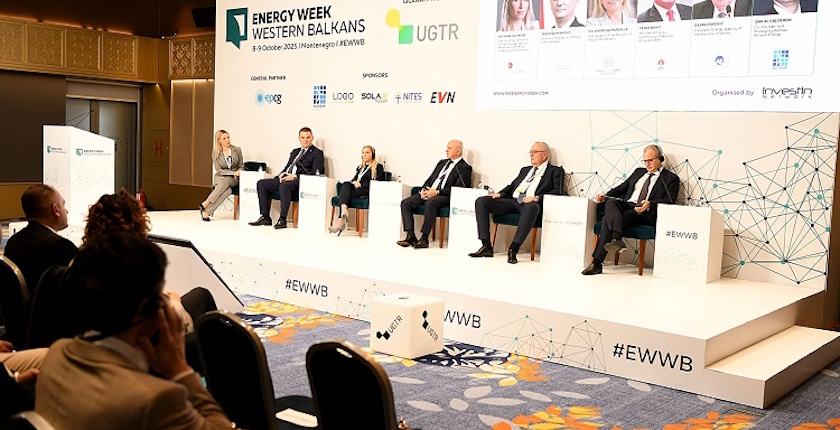
Minister Petar Đokić participated in the Energy Week Western Balkans 2025 conference, where he recalled that the Republic of Srpska has signed several contracts with domestic and foreign partners for the construction of renewable power plants totalling 2,170 MW. The investments are estimated at BAM 5 billion (EUR 2.56 billion).

Đokić noted that the construction of two hydropower plants, of 159 MW and 34 MW, is underway, as well as of the Buk Bijela hydropower plant, in cooperation with Serbia.

Đokić: The rest of the world no longer follows European politics

So far, two contracts have been signed for the construction of wind farms, of which one is in an advanced stage of construction, he underlined. The plan is to complete all contracted projects within three years, according to Đokić.

It will further increase the share of clean energy in total production.

He highlighted the challenges posed by the European Union’s policies, including the Carbon Border Adjustment Mechanism (CBAM), a cross-border emissions tax. Its application could have a very negative impact on the local economy, Đokić noted.

As the rest of the world no longer follows European policies, the question arises whether Europe has the right to impose new obligations on its members, especially if such obligations cause economic disruptions, he claimed.

Đokić: The request of the Republic of Srpska to postpone the implementation of CBAM is justified

Đokić said that the request of the Republic of Srpska to postpone the implementation of CBAM is justified. According to him, Bosnia and Herzegovina has fulfilled the last condition, the adoption of the law on the electricity regulator, transmission, and market, as it is now in parliamentary procedure.

CBAM brings fees on the CO2 emissions of goods imported to the EU from countries that don’t have equivalently priced carbon schemes. They include the Western Balkans.

The tax will cover cement, iron and steel, aluminum, fertilizers, electricity, and hydrogen.

Serbia, which is also part of the Western Balkans region, launched public consultations last week on its draft Law on Greenhouse Gas Emissions Tax and the Law on Carbon-Intensive Product Imports Tax.

Đokić spoke at a panel with Minister of Energy and Mining of Montenegro Admir Šahmanović, Ambassador of Italy to Montenegro Andreina Marsella, President of the Energy Agency of the Republic of Serbia (AERS) Dejan Popović, and co-founder and managing partner of Alcazar Energy Daniel Calderon.
by in News

North Macedonia receives applications for 4.2 GW of battery projects

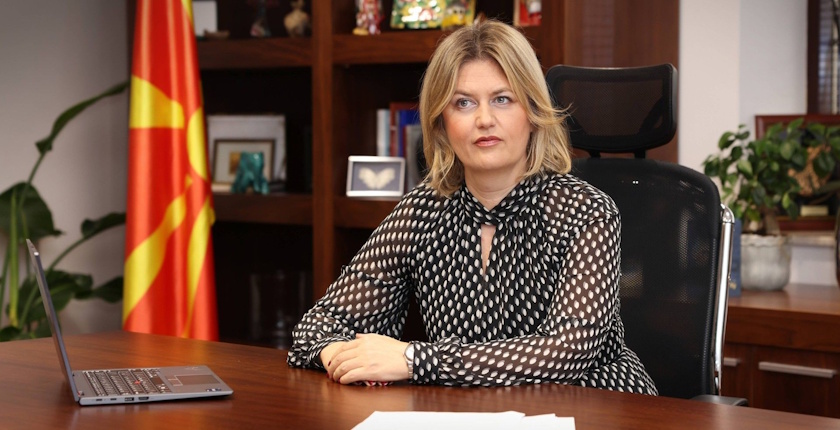
North Macedonia has received requests for new wind farms, solar parks and gas power plants of 7,100 MW in total capacity, as well as for standalone batteries and ones that would be co-located with power plants, for 4,172 MW in overall operating power, Minister of Energy, Mining and Mineral Resources Sanja Božinovska revealed.

The Ministry of Energy, Mining and Mineral Resources has received an initiative for a 495 MW gas-fired cogeneration plant. Sanja Božinovska said the details are unknown as the submitted documentation is too extensive and is still being analyzed, state news agency MIA reported.

Of note, there were already proposals for gas-fired power plants in the country. The government has signed a memorandum of understanding with Kazancı Holding on projects for such facilities.

Investors intend to install standalone and co-located BESS

Investors submitted initiatives for wind farms of 1,590 MW altogether, as well as for a total of 402 MW and 1,080 MWh in battery energy storage systems (BESS) that would be co-located with wind farms.

So-called initiatives were also received for solar power projects totaling 5,052 MW and accompanying BESS of 1,174 MW in combined capability and 3,018 MWh in capacity. Investors plan to build standalone batteries of an overall 2,596 MW and 3,094 MWh, respectively.

Božinovska said it is great news, though that it’s more important whether the documentation is valid.

She recalled that the recently adopted Law on Energy introduced an annual construction plan for priority energy projects.

October 1 was the deadline for foreign investors to submit their projects

October 1 was the deadline for foreign investors interested in the construction of power plants to submit documentation, Božinovska noted. The ministry received a huge number of documents and it will take time to process them, she stressed.

Batteries became all the rage in the renewable energy sector worldwide. North Macedonia is set for a landmark achievement in its region.

YESS Power plans to commission a 60 MW BESS in the country next month. It would be the first large facility of its kind in the Western Balkans.

by in News

Bulgaria’s BEH wants direct link to future Black Sea cable to participate in project

Executive Director of Bulgarian Energy Holding (BEH) Valentin Nikolov hinted that the country would opt for the alternative electricity corridor to the Caucasus, via Turkey, if the proposed interconnector under the Black Sea doesn’t include a direct link to the Bulgarian grid.

Turkey, Azerbaijan, Georgia and Bulgaria formalized an initiative in April for an electricity corridor that would run through Turkey. It appeared to rival the Black Sea Submarine Cable (BSSC) project for a submarine cable between Georgia and Romania. The investment is managed by the Green Energy Corridor Power Co. (GECO), founded by transmission system operators of Romania, Georgia, Azerbaijan and Hungary.

Bulgaria has expressed the intention to join the project for the link under the Black Sea. However, state-owned BEH wants a direct connection to the country’s grid, Executive Director Valentin Nikolov says, hinting that otherwise Bulgaria wouldn’t participate.

Nikolov: Political interests are beginning to prevail

The options are for the cable to branch out and land in both countries or only in Romania, Economic.bg reported.

It is important for deciding whether to participate in the project, Nikolov pointed out. “There is no great interest” for Bulgaria if the interconnector enters Romania and extends to Bulgaria from there, and to Hungary, he claimed. Then it is better to go through Turkey, the power utility’s CEO said.

Route through Bulgaria would enable access to European funds for national grid

The feasibility study underway will lay out options and information on where it would be most profitable to lay the cable. According to Nikolov, it is through Bulgaria.

“If we want to develop our grid and use European funding, it must go through Bulgaria, and the connection with Romania can be paid for with European funds,” he added.

“Political interests are beginning to prevail,” in his words.

Black Sea interconnector to consist of three cables

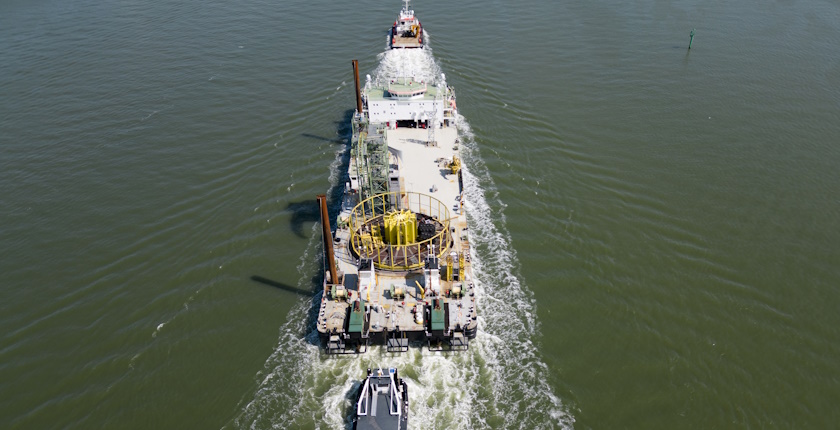
Azerbaijan is planning to export 4 GW through the corridor from the Caspian Sea via the Black Sea to Europe. The idea is for the link to consist of three cables, in fact, the article reads. Only a handful of manufacturers in the world can manufacture them for depths of up to 2,000 meters, and the number of ships that can lay them is limited, the news website added.

Kazakhstan and Turkmenistan and other Central Asian countries are interested in producing renewable electricity for exports to Europe, too.

The Black Sea submarine link project is valued at EUR 3.5 billion and it is expected to require up to four years, the media outlet noted. The European Commission is considering to fund the investment with EUR 2.3 billion.

by in News

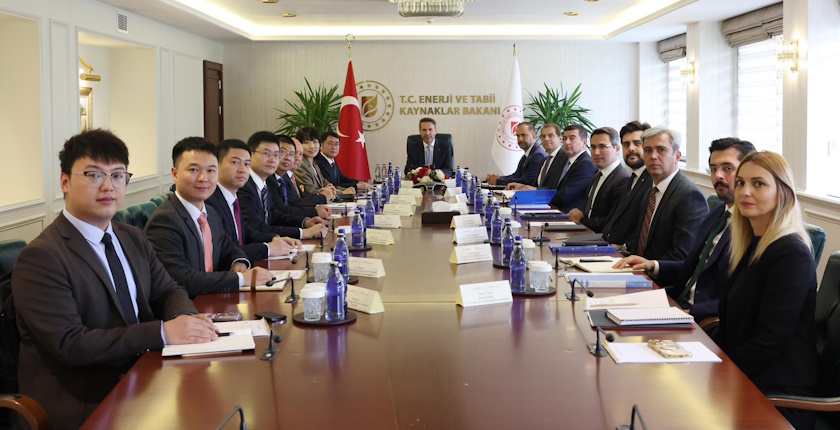
Bayraktar: Dongfang plans 2 GW wind turbine factory in Turkey

China-based Dongfang Electric plans to build a wind turbine production facility in Turkey, said Minister of Energy and Natural Resources Alparslan Bayraktar. It would have an annual capacity of 2 GW.

Turkey is pushing ahead with its ambition to reach 120 GW in combined solar and wind power capacity by 2035. Following a meeting with the top executives of Dongfang Electric Corp., Minister of Energy and Natural Resources Alparslan Bayraktar pointed out that, at the same time, the domestic manufacturing potential in the two segments needs to be increased.

“We evaluated the Chinese company’s plan to establish a wind turbine production facility with an annual capacity of 2,000 MW in our country, with an initial investment of approximately USD 250 million,” he revealed.

Dongfang Electric installed the world’s largest wind turbine last month for testing. The 26 MW behemoth is on the Bohai Sea at the coast of Shandong province in China’s east.

The company is also active in the Western Balkans. Dongfang Electric is leading the consortium reconstructing the Pljevlja coal power plant in Montenegro. In Bosnia and Herzegovina, it has built solar power plant Bileća, of 60 MW in peak capacity, and the Stanari coal plant, both for EFT.

Dongfang Electric could cover Turkey’s annual wind power capacity additions by itself with future factory

At the end of July, electricity capacity in Turkey totaled 120.2 GW. Hydropower accounted for 26.9% or 32.3 GW, compared to 23.4 GW of photovoltaics (19.5%) and 13.7 GW of wind power, translating to 11.4%.

There are 150 manufacturers of wind turbine components and accompanying gear in the country, covering 65% of the technology, according to a recent report. Data from early this year showed there were seven production facilities for towers, four plants were making blades, and another four were manufacturing generators and gearboxes.

Wind power plants of 1.3 GW in total were installed last year. The annual expansion could top 2 GW in 2026.

Government conditions renewable energy auction participants with high domestic sourcing rates

While awarding large wind and PV capacities through renewable energy auctions, the Ministry of Energy and Natural Resources requires high domestic content rates from the bidders.

As for PV panels, there were 75 active manufacturers at the beginning of 2025. Put together, their annual capacity was 44.5 GW. Three were making solar cells and their overall capacity was 6.1 GW per year.

The country is also strong in other technologies, like for geothermal power plants.

by in News

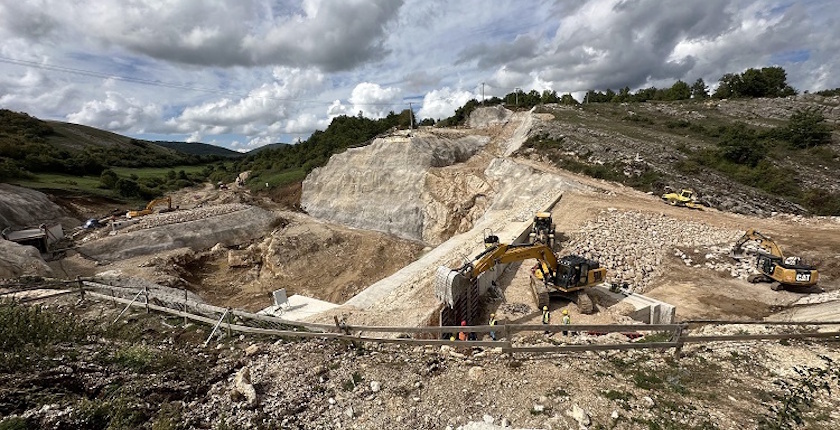
Hydropower plant Dabar to be completed by end-2027

The Dabar hydropower plant is expected to be completed by the end of 2027, according to Petar Đokić, Minister of Energy and Mining of the Republic of Srpska.

The operation of the Dabar hydropower plant, the most complex hydropower facility, in which EUR 339.5 million has been invested, will bring benefits for the entire eastern Herzegovina area, Petar Đokić said during a visit to the construction site, Srna reported.

The works on the 160 MW hydropower plant, with an expected annual production of 500 GWh, began in June 2023.

Đokić noted that the project is located in four municipalities – Nevesinje, Bileća, Berkovići, and Ljubinje – spanning 40 kilometers. As a key part of the project, Đokić highlighted a 12-kilometer tunnel, which is nearly finished.

Đokić: It is an exceptional construction undertaking, the first of its kind in the world in the 21st century

It is an exceptional construction undertaking, the first of its kind in the world in the 21st century, the minister said and added that he is proud to be part of the project from the beginning of its implementation.

Photo: Ministry of Energy and Mining

He spoke with the representatives of China-based Gezhouba Group Co., the main contractor, and Integral and Elnos, its domestic subcontractors.

Đokić stressed that some issues regarding the construction were discussed. HPP Dabar is a financially demanding project, he noted.

Photo: Ministry of Energy and Mining

Wind farm Grebak will be completed by 2027

Minister Đokić recalled that projects for solar power plants and wind farms with a capacity of 680 MW are under development in the territory of Nevesinje municipality, with investments estimated at an overall EUR 409 million.

He underlined that one of the projects, the Grebak wind farm, has experienced delays. Numerous companies, including the investor in the Grebak project, are hostages to the European policies mistrustful of Bosnia and Herzegovina, Đokić claimed.

Of note, the Republic of Srpska is one of the two political entities of BiH. The concession for the Grebak wind farm was granted in April 2019.

The minister expressed hope that the investor would overcome the challenges, conclude a financing agreement, secure equipment, and start construction work, expected to be finished by late 2026 or early 2027.

Investors in solar projects in Nevesinje are currently preparing documentation and purchasing equipment, Đokić said.

by in News

Bulgaria to start talks with developers of small modular reactors

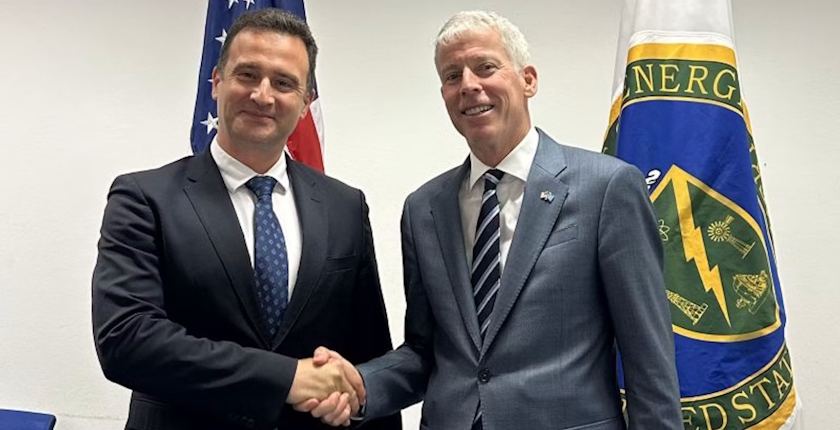
Bulgaria should discuss the possibility of installing small modular reactors on its territory with companies developing the technology, according to Minister of Energy Zhecho Stankov. In his view, it is a logical step after the country signed a memorandum of understanding with the United States on nuclear energy and assistance in preliminary studies.

Minister of Energy of Bulgaria Zhecho Stankov said that during his forthcoming visit to Ontario, Canada, he is going to a site where the first four small modular reactors (SMRs) are being built. Last week, he signed a memorandum of understanding with United States Secretary of Energy Chris Wright reaffirming the objectives of the bilateral agreement to strengthen cooperation in civil nuclear energy use.

Bulgaria’s government considers the SMR technology a tool for long-term stability, predictability and affordable low-emission electricity production.

“After signing a joint statement last week with the US Secretary of Energy Chris Wright on that country’s assistance for sites on Bulgarian territory for small modular reactors – it is a new, modern technology, very flexible, which attracts investments in data centers and artificial intelligence centers – the normal next step for the Bulgarian side is to start talks with potential companies that develop this type of technology,” Stankov told reporters in New York City.

US to assist Bulgaria in prefeasibility studies

The memorandum envisages cooperation in the development and deployment of innovative technologies for nuclear reactors, aimed at enhancing Bulgaria’s economic security and energy resilience with the support of the US Department of Energy’s Office of Nuclear Energy.

Minister Stankov called for regional cooperation to reduce vulnerabilities and form a sustainable energy market

The Balkan country would benefit from the expertise of US laboratories in conducting preliminary studies of the feasibility and suitability of potential sites for the deployment of small modular reactors. The US Trade and Development Agency has said it is prepared to fund the assessment of SMR technologies to identify the ones most adequate for Bulgaria, the ministry added.

Speaking in New York City, Stankov also outlined the priorities – new energy corridors, investments in green energy and balancing capacities including pumped storage hydropower plants and battery energy storage systems (BESS), the projects for units 7 and 8 at the Kozloduy nuclear power plant, and regional cooperation for reducing vulnerabilities and forming a sustainable energy market.

Prime Minister Zhelyazkov endorses both rival projects for electricity corridors

Notably, Prime Minister Rosen Zhelyazkov said that he spoke with President of Azerbaijan Ilham Aliyev about the supply of green energy from the Caspian region to Europe. The plans involve 6 GW from Azerbaijan or, potentially, 10 GW if Kazakhstan and Turkmenistan are involved, he added

The proposed subsea power interconnector under the Black Sea is increasingly realistic and so is an onshore corridor from Armenia and Georgia through Turkey, according to Zhelyazkov.

by in News

Romania risks blackouts if it shuts coal plants as scheduled

Minister of Energy Bogdan Ivan claims that energy poverty or even blackouts could hit Romania if it proceeds with the closure of coal plants. Namely, the gas power projects for replacing them are suffering severe delays.

The European Commission has become flexible for the first time in the last four years, said Romania’s Minister of Energy Bogdan-Gruia Ivan. He has asked for a postponement of the deadline for shutting down a group of coal power plants.

They need to be closed by the end of the year. If the coal plants, run by state-owned Complexul Energetic Oltenia (CE Oltenia) go before gas power plants Iernut and Mintia are commissioned, Romania is jeopardized, according to the minister.

Ivan told Digi24.ro he was negotiating with the European Commission on delaying the closure by “a few months.” Romgaz decided last week to cancel the contract with Duro Felguera, the contractor for the Iernut facility.

Energy poverty risk increasing

A study conducted with Romania’s transmission system operator Transelectrica has shown that Romania can otherwise end up in energy poverty and even risk a blackout, he underscored. “Especially in the winter, when we have no solar, when we have no wind power,” Minister Ivan explained.

Furthermore, Romania would like to keep three large coal units and another two in technical reserve for replacement them in case of damage, Ivan revealed. It would ensure a 1 GW minimum coal power supply, he asserted.

Romania requires at least 1 GW in baseload energy from coal for two more years, according to Minister Bogdan Ivan

Simulations showed that the group would need to operate for two years more, at least, until Iernut and Mintia are completed.

“We are pressed for time. We need to conclude contracts for next year. We need to conclude contracts for energy supply, contracts with suppliers, coal stocks. It is a complex of factors that must be organized very well from now on. It is already late, for Romania and for our energy companies,” Ivan stated.

Gas power projects in constant delay

Additionally, gas power plants Turceni (475 MW) and Ișalnița (850 MW) are supposed to replace some of the capacity in the Oltenia complex. The two projects suffered constant delays. The deadlines in the tenders for construction have been pushed back to September 30 and November 14, respectively.

Romania has received billions of euros from the European Union for gas power plants to substitute coal, the minister noted separately. He acknowledged that the projects are still on paper. That’s why today Romanians have almost the highest electricity price in Europe, Ivan claimed.

by in News

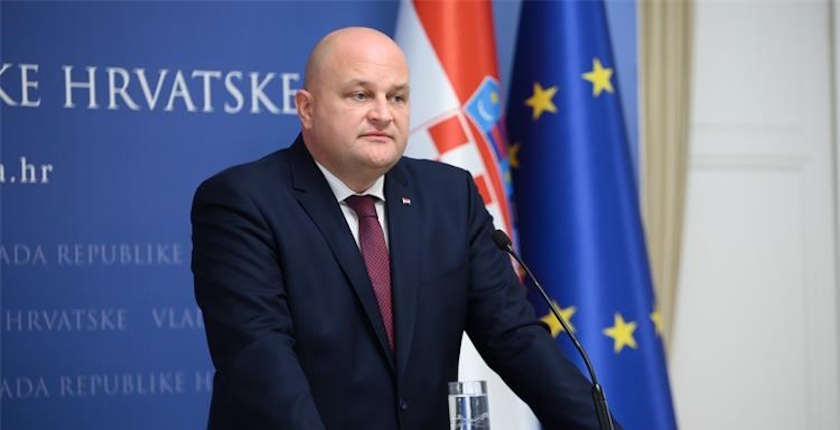
Croatia considering nuclear power plant on its territory – minister

Croatia is considering the possibility of building a nuclear power plant on its territory, according to Minister of Economy Ante Šušnjar.

Experts will decide whether it will be small modular reactors (SMRs) or a conventional nuclear power plant, Ante Šušnjar stressed, as quoted by Novi List.

He opined that building a nuclear power plant is a geopolitical and security gain for a country. The minister suggested that Croatia could apply for funds from the European Union’s Multiannual Financial Framework – the seven-year budget.

Three locations were considered in former Yugoslavia

Šušnjar said multiple sites were being considered for the nuclear plant, but he wouldn’t reveal details. He recalled that when Croatia was part of the Socialist Federal Republic of Yugoslavia, which fell apart in the early 1990s, the authorities were examining locations in Ivanić Grad, Erdut, and Vir island. The last of the three was rejected due to tourism.

Croatia and Slovenia jointly operate the Krško nuclear power plant, and cooperation on building a second unit is also possible.

Meetings about cooperation have already taken place with the US

Šušnjar’s claims that everyone in the world and the EU considers nuclear energy a low-carbon source for the transition to renewables. He added it is baseload energy that can power the production of green hydrogen.

In February, the ministry established a working group for analysis and legislation that could enable the introduction of nuclear energy in the country Croatia has already held meetings with United States officials on possible cooperation in the nuclear energy sector.

Of note, just a week ago, Germany and France agreed to work together on shaping a common European energy policy that would include nuclear power as a low-carbon energy source.

by in News

Von der Leyen: EU needs more homegrown renewables with nuclear as baseload

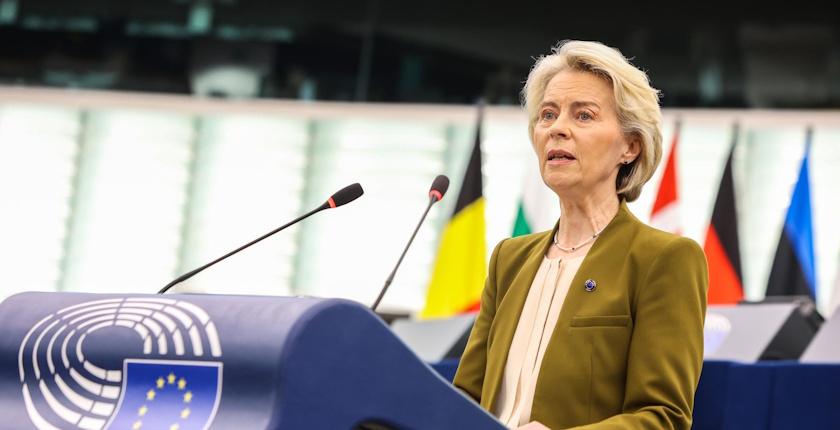
European Commission President Ursula von der Leyen delivered her 2025 State of the Union address at the European Parliament in Strasbourg. She said the single energy market would be completed and pointed out that clean homegrown energy is a tool to lower energy prices.

Ursula von der Leyen said the European Union’s greatest asset is the single market, but that it remains incomplete. The IMF, she noted, has estimated that the internal barriers within the single market are equivalent to a 45% tariff on goods, and 110% on services.

Most gaps are in three domains: finance, energy, and telecommunications.

“We need clear political deadlines. This is why we will present a single market roadmap to 2028. On capital, services, energy, telecoms,” she stated.

Energy bills are still a real source of anxiety for millions of Europeans

The EU’s top official said the commission would put forward a series of packages on affordability and the cost of living. One would be for energy.

Von der Leyen recalled that the EU managed to stabilize prices and secure supply during the energy crisis, and insisted that the 27-member bloc is now on the path to energy independence.

But, she told EU lawmakers, energy bills are still a real source of anxiety for millions of Europeans.

Von der Leyen unveiled an initiative called Energy Highways

“We know what drove prices up: dependency on Russian fossil fuels. So it is time to get rid of dirty Russian fossil fuels. And we know what brings prices down: clean homegrown energy. We need to generate more homegrown renewables – with nuclear as a baseload,” Von der Leyen stressed.

She reiterated that the commission would propose a grids package to strengthen infrastructure and speed up permitting.

Von der Leyen unveiled an initiative called Energy Highways. “We have identified eight critical bottlenecks in our energy infrastructure. From the Øresund Strait to the Sicilian Canal. We will now work to remove these bottlenecks one by one,” the European Commission president asserted.

by in News

Šahmanović: Masdar ready for new investments in Montenegro’s energy sector

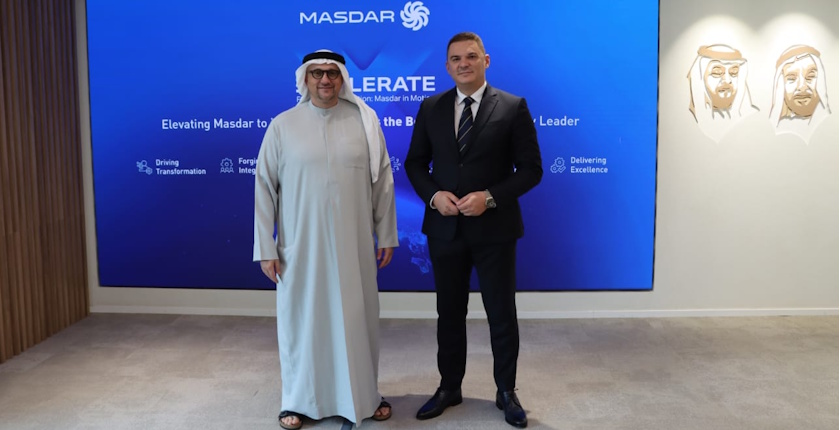
Montenegrin Minister of Energy and Mining Admir Šahmanović has met with Mohamed Jamel al-Ramahi, CEO of Masdar, a United Arab Emirates state-owned renewable energy company. During the meeting in Abu Dhabi, Šahmanović highlighted the energy sector as Montenegro’s biggest development opportunity, while Masdar’s top man confirmed the company’s readiness to expand its operations in Southeast Europe.

As part of his visit to the United Arab Emirates (UAE), Minister Admir Šahmanović held talks with representatives of Masdar, one of the global leaders in renewable energy.

“Montenegro undeniably has the potential and natural resources, but we are equally aware of our financial limitations. Investments in capital energy infrastructure projects are measured in hundreds of millions of euros, which requires strong partnerships and the pooling of resources,” Šahmanović said at the meeting.

Šahmanović: Energy is Montenegro’s greatest development opportunity

According to him, Montenegro sees the energy sector as the greatest development opportunity, which can trigger economic growth, create new jobs, and ensure long-term stability.

“To achieve this, we choose strategic partners carefully – those who share our vision and are ready to invest in a sustainable and strong energy sector,” he said.

The Montenegrin minister and Masdar representatives discussed opportunities to further strengthen cooperation and develop new projects. Šahmanović stressed that cooperation with Masdar so far – on the Krnovo wind farm – provides a solid foundation for even more ambitious projects.

Masdar is looking to expand its business in Eastern Europe

Masdar’s CEO confirmed that the company has the capital, know-how, and interest for significant business expansion in Eastern Europe, with Montenegro taking priority in its investment plans.

Šahmanović emphasized that the Government of Montenegro is committed to creating a favorable business environment – through clear procedures, a stable regulatory framework, and more efficient administration – to ensure security and predictability for investors.

That, he noted, is not only a prerequisite for attracting new investments but also a guarantee that the energy sector will become a pillar of the country’s economic growth and energy independence.