by in News

EU presents European Grids Package: faster permitting, stronger interconnections, lower energy bills

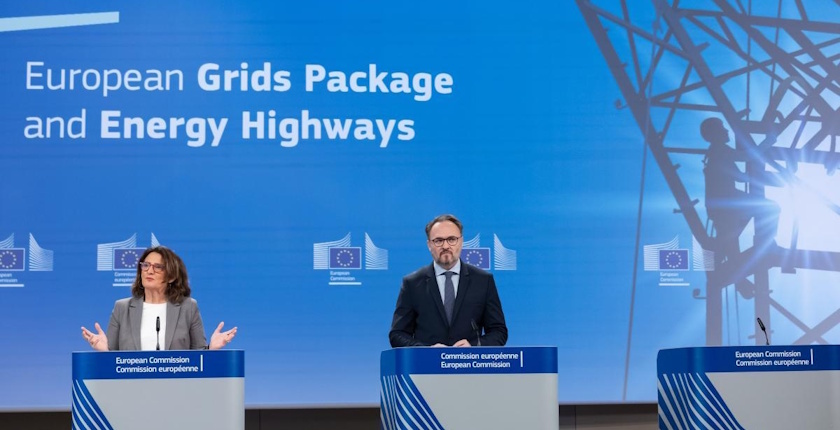
The European Commission presented the European Grids Package, a comprehensive plan to modernise transmission infrastructure, accelerate permitting procedures, and overcome bottlenecks in Europe’s electricity networks. It also unveiled the Energy Highways initiative, which consists of eight major infrastructure projects critical for energy security, renewable energy integration, and cross-border electricity market connectivity.

Energy infrastructure is the backbone of the energy system. Yet the EU’s energy network remains insufficiently integrated, and investment levels fall short of what is needed, a situation that directly affects household energy bills.

Ageing infrastructure and limited interconnection capacity are creating bottlenecks that slow the energy transition. Although some progress has been made within the existing EU legislative framework, the level of interconnection among member states remains inadequate. Several countries are not on track to meet the 15% interconnection target by 2030.

To address these challenges, the European Commission has presented the European Grids Package and Energy Highways initiative. The aim is to enable a more efficient flow of energy across the EU, integrate greater volumes of renewable energy into the system, and accelerate electrification.

Jørgensen: A truly interconnected energy system is the foundation of a strong and independent Europe

The Grids Package is designed to speed up permitting and ensure a fairer distribution of costs for cross-border infrastructure. It should also improve the use of existing infrastructure and accelerate the development of networks and other physical energy assets across the EU.

Among the measures is a new mechanism that allows the commission to initiate the search for additional infrastructure projects when existing initiatives do not cover identified cross-border needs.

“A truly interconnected and integrated energy system is the foundation of a strong and independent Europe. To achieve it, we need an energy infrastructure network of cables, pipes and grids that is up to date, fully interconnected, and that enables clean, affordable, homegrown energy to flow freely and securely to every corner of our union. This is exactly what we are proposing today: a common European energy project that supports affordable living, economic competitiveness, security, and decarbonisation,” said Dan Jørgensen, European Commissioner for Energy and Housing.

Permitting reform

Slow permitting remains one of the biggest bottlenecks for energy infrastructure and renewable energy projects in the EU.
Obtaining permits for transmission infrastructure currently takes more than five years on average, while renewable energy projects may face delays of up to nine years.

The Grids Package introduces simplified and accelerated permitting procedures. The commissioners have proposed setting time limits within which decisions must be taken for all types of projects. If the competent authority fails to respond within the deadline, the permit would be considered granted.

Permits for smaller projects would be issued through faster and more streamlined procedures

Permits for smaller projects would be issued through faster and more streamlined procedures. All processes would have to be fully digitalised, and national administrations would be required to have adequate staffing and technical capacity to process applications.

The commission is proposing to move away from the current first-come, first-served model and introduce a system that ensures timely and non-discriminatory access to the grid, one that balances social acceptance and industrial competitiveness.

Public and private financing

According to the commission’s estimates, EUR 1.2 trillion in investment will be needed for Europe’s electricity grid by 2040. Distribution networks account for EUR 730 billion within the sum, compared to EUR 240 billion for hydrogen infrastructure.

The commission said additional financing tools are required, including cost-sharing arrangements, arguing that cross-border infrastructure generates benefits that extend beyond the territory in which a project is located.

Another suggested solution is the formation of project firms (special purpose vehicles – SPVs) to attract additional private investment.

Given that grid infrastructure is largely financed through network tariffs, part of the burden falls on consumers. To ease this pressure, the commission announced it would boost financial support through the Multiannual Financial Framework (MFF), the EU’s regular seven-year budget, including a significant expansion of the Connecting Europe Facility (CEF). The tool is designed to support investments in new cross-border energy infrastructure and upgrades or rehabilitation of existing assets.

The current 2021–2027 EU budget contained EUR 5.8 billion for cross-border projects under CEF. For the 2028–2034 period, the commission said the amount would be raised almost fivefold, to EUR 29.91 billion.

On the private side, the EU is working on its Clean Energy Investment Strategy, to launch it in 2026 by outlining measures for private sector participation including institutional investors, as well as additional support from the European Investment Bank (EIB).

Energy Highways

The Energy Highways initiative comprises eight of the EU’s largest and most critical infrastructure projects, essential for energy security, renewable energy integration, and cross-border electricity market connectivity.

They have already been already listed as Projects of Common Interest (PCI) or Projects of Mutual Interest (PMI), but under the new initiative, they would receive elevated political priority, accelerated financing, and faster permitting.
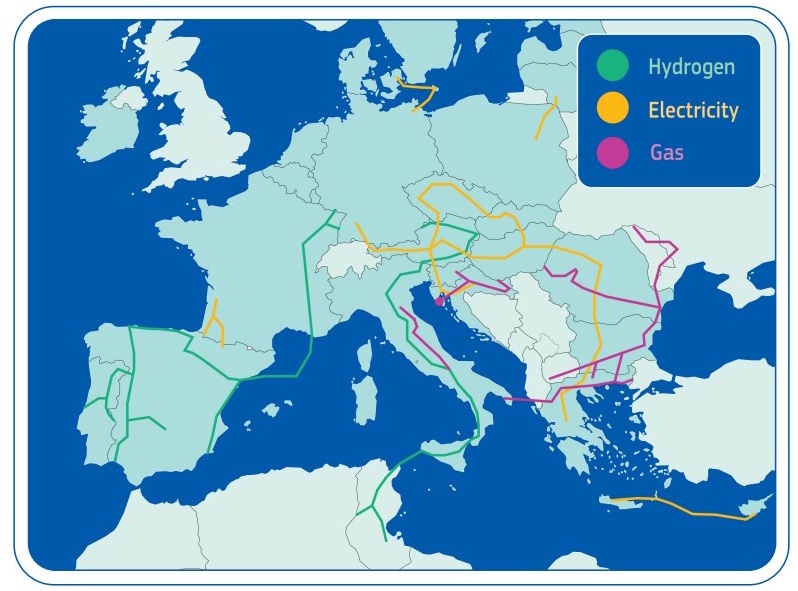
Energy Highways
Photo: European Commission

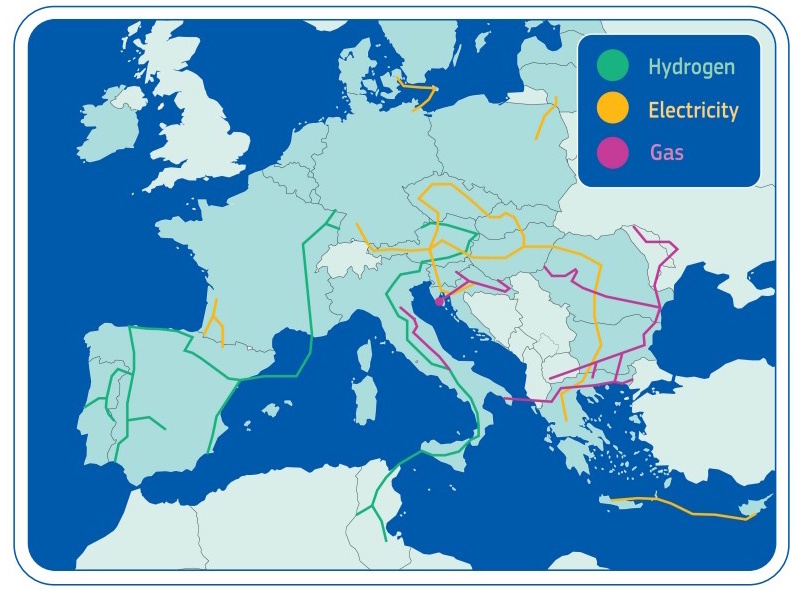
Among the projects are the reinforcement of interconnections across the Pyrenees to improve the integration of the Iberian Peninsula, the connection of Cyprus with continental Europe through the Great Sea Interconnector, as well as an upgrade of electricity links between the Baltic states, including the Harmony Link to Poland, which is essential for the full synchronisation of the region with the European grid.

The commission has also endorsed the establishment of Denmark’s hub on the island of Bornholm, which could, in the coming years, be connected to additional locations in the Baltic Sea.

Among the priorities are strengthening energy storage capacity in South-Eastern Europe

Among the priorities are strengthening energy storage capacity in South-Eastern Europe, as well as the modernisation of the Trans-Balkan Pipeline (TBP) for gas.

The list includes two hydrogen corridors. The southern one would connect Tunisia, Italy, Austria, and Germany, and the south-western corridor is a planned link between Portugal, Spain, France, and Germany. The commission has announced strong coordination and political support for the latter.

The commission views these projects as pillars of Europe’s future energy network, essential for lower electricity prices, greater system stability, and reduced dependence on fossil fuels.

In a regular legislative procedure, the proposals now move to the European Parliament and the Council of the EU for further deliberation.

by in News

Israel, Greece, Cyprus reaffirm commitment to joint energy projects

Amid chronic delays in the projects for offshore gas and the Great Sea Interconnector and Turkey’s warnings, the leaders of Israel, Greece and Cyprus said after a trilateral summit that they would safeguard their sea lanes and critical infrastructure against emerging threats.

Prime Minister of Israel Benjamin Netanyahu, Prime Minister of Greece Kyriakos Mitsotakis and President of Cyprus Nikos Christodoulides agreed to reinforce trilateral cooperation on security, defense and military matters. In a declaration from their summit in Jerusalem, they reaffirmed the importance of the dialogue in a 3+1 format with the United States.

The joint statement came amid chronic delays in the projects for offshore gas and the Great Sea Interconnector. The latter, an undersea electricity link, is planned to run from the island of Crete in Greece to Cyprus and, from there, to Israel.

Turkey has been openly opposing such projects and even sending its navy to disturb research and exploration. Countering the Great Sea Interconnector, the government in Ankara is apparently planning to establish a power link with the northern Cypriot Turkish-dominated entity.

Netanyahu, Mitsotakis and Christodoulides particularly emphasized the importance of the Great Sea Interconnector project

“Today’s trilateral summit reaffirms our unwavering commitment to strengthen our cooperation, enhancing the security and resilience of our nations for generations to come… We reaffirm our determination to advance joint energy projects, including natural gas development, electricity interconnectors, and renewable energy initiatives, as a solid foundation for cooperation in the region, based on international law, including the law of the sea and the respect of all states to exercise their rights in their respective EEZ / continental shelf,” the document reads.

EEZ is exclusive economic zone, a maritime area in which a country claims exclusive rights. Netanyahu, Mitsotakis and Christodoulides particularly emphasized the importance of the Great Sea Interconnector project.

“We underscore the importance of maritime security and pledge to deepen collaboration in safeguarding sea lanes and critical infrastructure against emerging threats,” they said. The three leaders added they would collaborate regional interconnectivity projects within the so-called India – Middle East – Europe Economic Corridor (IMEC).

by in News

North Macedonia’s first annual construction plan for energy projects envisages EUR 1.4 billion in investments

The annual construction plan for energy projects for 2025 envisages the installation of power plants with a capacity of 1,265 MW, according to Minister of Energy, Mining and Mineral Resources Sanja Božinovska.

North Macedonia has introduced an annual construction plan for the energy projects with the new Law on Energy, adopted this year. The goal is to bring order to the approval and construction of new power plants.

According to the new regulation, October 1 was the deadline for investors to submit the documentation for their projects for the first annual plan. The review of all documents is in the final phase, according to Božinovska.

The construction of the power plants from the annual plan represents investments of around EUR 1.4 billion, Sanja Božinovska stressed, local media reported.

Solar power plants in the plan have the largest capacity – 812 MW, followed by wind farms  with 426 MW, biomass power plants with 11 MW, and hydropower plants with 15 MW.

Investors have submitted applications for the construction of energy facilities with a capacity of 10,950 MW

She recalled that for the first time, requests were received for the installation of standalone batteries and ones that would be co-located with power plants. The capacity of the standalone battery systems is 675 MW, and of the co-located is 93 MW, Božinovska added.

North Macedonia has received requests for the construction of energy facilities with a total capacity of 10,950 MW.

Investors submitted photovoltaic projects with a capacity of 4,758 MW and wind farms with a capacity of 1,697 MW. Investors were also interested in building gas-fired power plants.

Requests were also submitted for standalone battery energy storage systems (BESS) with a capacity of 2,573 MW and co-located with a capacity of 1,405 MW.

The annual plan should be adopted by January 31, 2026

Božinovska pointed out that 10,950 MW represents a large capacity. The transmission system operator (TSO) MEPSO will have to make a plan to strengthen the grid, she underlined.

The Government of North Macedonia should adopt the annual plan for the construction of energy facilities by January 31, 2026.

The minister recalled that the regulation for the construction of energy facilities has also been adopted. It precisely defines what every potential investor must submit, starting with a feasibility study, regardless of the type of facility, Bozinovska explained.

She said that the adoption of the law on renewable energy sources is expected in the first quarter of next year.

by in News

Fearful about oil sanctions, Serbia’s Vučić seeks support from EU leaders

Facing an imminent halt of the Gazprom-owned Serbian oil company NIS due to US sanctions, President Aleksandar Vučić met with EU leaders António Costa and Ursula von der Leyen in Brussels. “I don’t have such a strong fear regarding gas as I do about oil,” he revealed and said they spoke about the possibilities for importing derivatives from Romania, Bulgaria and other countries in the region. Costa and Von der Leyen urged Serbia to further align with the EU’s foreign and security policy.

Serbia hasn’t received a single drop of crude oil for two months, President Aleksandar Vučić noted as he addressed the press in Brussels after meeting European Council President António Costa and European Commission President Ursula von der Leyen. The country’s only refinery is run by NIS (Naftna industrija Srbije), which Russian state-owned Gazprom controls through its subsidiaries. Entirely stripped of oil supply since United States sanctions against the Serbian company kicked in, the facility recently ground to a halt.

There is apparently no progress in talks about the sale of Gazprom’s share. The authorities expect that Serbia will have to freeze NIS completely in the next few days, for its financial system to avoid secondary sanctions.

NIS and Lukoil together hold over one quarter of fuel stations in Serbia

The company, which is also present in some neighboring countries, supplied 80% of derivatives in the domestic market. Moreover, one in five fuel stations in Serbia is branded NIS or Gazprom. They account for more than a quarter together with Russia-based Lukoil. It is also under US sanctions, though able to operate almost until the end of April.

Vučić: It will only get harder each coming day

Vučić said he and Costa and Von der Leyen spoke about the key energy concerns that Serbia is facing. “It’s not easy for us already today, and it will only get harder each coming day… I don’t have such a strong fear regarding gas as I do about oil. Of course I am fearful, as a responsible man. I am always fearful, but we sought solutions and worked on it and I hope we will have EU’s support in these very important matters,” he stated.

Namely, Serbia is dependent on Russian gas and its transit through Bulgaria. The fuel comes via the Balkan Stream pipeline, an extension of TurkStream. If NIS is nationalized, the Kremlin could slash or even end the supply in case. Serbia is buying gas under short-term arrangements since May. The EU has launched measures to end most of the remaining supply from Russia next year.

According to the president, possibilities were discussed at the meeting of importing oil derivatives from Romania, Bulgaria and other countries in the region.

There was also word about where Serbia would build gas and oil pipelines, Vučić added and hinted at projects for liquid fuel pipelines as well. He mentioned the possibility of transporting diesel that way from Constanța, Romania’s Black Sea port city. Near it is the Petromidia refinery, owned by Rompetrol, a 100% subsidiary of Kazakhstan’s state-owned KazMunayGas (KMG).

Vučić said he spoke with the two top officials about the plan for a gas interconnector with North Macedonia.

Europe has consistently shown solidarity with Serbia, according to both top officials

Costa and Von der Leyen issued short and essentially identical messages after the meeting with the Serbian president. They highlighted the importance of accelerating reforms in the country, particularly with regard to the rule of law and media freedom.

“We stressed that enlargement is a geostrategic imperative and the need for Serbia to further align with the EU’s foreign and security policy. We also welcomed Serbia’s steps to diversify its energy sources and routes and to reduce dependency on Russia, whose unreliability has been repeatedly demonstrated. Europe has consistently shown solidarity with Serbia through major investments in energy infrastructure and support to vulnerable households,” they wrote on social media.

Two months ago, Von der Leyen said the EU is a guarantee that Serbian families would be safe and warm in winter and that the country can enter its joint gas procurement mechanism.

by in News

MOL in talks about possibility of purchasing stake in Serbian NIS

Hungary acknowledged that state-controlled oil and gas company MOL is in discussions aimed at exploring the possibility of acquiring a stake in NIS. Based in neighboring Serbia, the oil refiner and service station chain operator is under sanctions that the United States imposed on its owner, Russian Gazprom Neft.

Gergely Gulyás, chief of staff of Hungarian Prime Minister Viktor Orbán, revealed today that integrated oil and gas company MOL, headquartered in Budapest, is conducting talks about the possibility of taking over an ownership stake in NIS – Naftna industrija Srbije. Speaking at a media briefing, he added that it is in the Serbian company’s interest to end Russian ownership, pointing out that US sanctions are jeopardizing its operations.

NIS, which runs the only refinery in the country and a service station chain, hasn’t received any oil in a month and a half. The facility, located in Pančevo near Belgrade, is about to halt its operations. NIS came under sanctions because it was majority-owned by Gazprom Neft.

Its parent company Gazprom later reduced Gazprom Neft’s stake to 44.5% and switched the remainder to another subsidiary. The US apparently demands a complete Russian exit.

MOL, not Hungarian government, is in discussions concerning NIS

Gulyás clarified that MOL, a public company, is the one in discussions about a potential stake purchase – not the government. Notably, Hungary controls the company indirectly, through several entities.

The government is ready to help neighboring Serbia with regard to a deal with MOL, the official stressed. Gulyás didn’t confirm or deny speculation that his prime minister would travel to Moscow tomorrow to meet with Vladimir Putin.

Orbán visited Serbia and met with President Aleksandar Vučić today. The Hungarian leader, who managed to get an exemption earlier from the US sanctions on Russian oil and gas, said he would engage in negotiations “in the coming days or tomorrow” to secure the actual supply and “not just papers and permits.”

Russian oil and gas will continue to flow to Hungary, so Serbia will be getting it, too, Orbán claimed.

Gulyás: Fuel export boost to Serbia not to disturb domestic supply

According to earlier media reports, Abu Dhabi National Oil Co. (ADNOC) from the United Arab Emirates is among the suitors for NIS.

Serbia has asked the US to suspend sanctions for 50 days. Vučić said the government would take over NIS if a buyer isn’t found.

Hungarian Minister of Foreign Affairs and Trade Péter Szijjártó said yesterday that MOL’s fuel deliveries to Serbia have been doubled and that they would be 2.5 higher in December on an annual scale.

Gulyás denied that the increase in exports to the neighboring country would disturb domestic supply.

by in News

EU presents European Grids Package: faster permitting, stronger interconnections, lower energy bills

The European Commission presented the European Grids Package, a comprehensive plan to modernise transmission infrastructure, accelerate permitting procedures, and overcome bottlenecks in Europe’s electricity networks. It also unveiled the Energy Highways initiative, which consists of eight major infrastructure projects critical for energy security, renewable energy integration, and cross-border electricity market connectivity.

Energy infrastructure is the backbone of the energy system. Yet the EU’s energy network remains insufficiently integrated, and investment levels fall short of what is needed, a situation that directly affects household energy bills.

Ageing infrastructure and limited interconnection capacity are creating bottlenecks that slow the energy transition. Although some progress has been made within the existing EU legislative framework, the level of interconnection among member states remains inadequate. Several countries are not on track to meet the 15% interconnection target by 2030.

To address these challenges, the European Commission has presented the European Grids Package and Energy Highways initiative. The aim is to enable a more efficient flow of energy across the EU, integrate greater volumes of renewable energy into the system, and accelerate electrification.

Jørgensen: A truly interconnected energy system is the foundation of a strong and independent Europe

The Grids Package is designed to speed up permitting and ensure a fairer distribution of costs for cross-border infrastructure. It should also improve the use of existing infrastructure and accelerate the development of networks and other physical energy assets across the EU.

Among the measures is a new mechanism that allows the commission to initiate the search for additional infrastructure projects when existing initiatives do not cover identified cross-border needs.

“A truly interconnected and integrated energy system is the foundation of a strong and independent Europe. To achieve it, we need an energy infrastructure network of cables, pipes and grids that is up to date, fully interconnected, and that enables clean, affordable, homegrown energy to flow freely and securely to every corner of our union. This is exactly what we are proposing today: a common European energy project that supports affordable living, economic competitiveness, security, and decarbonisation,” said Dan Jørgensen, European Commissioner for Energy and Housing.

Permitting reform

Slow permitting remains one of the biggest bottlenecks for energy infrastructure and renewable energy projects in the EU.
Obtaining permits for transmission infrastructure currently takes more than five years on average, while renewable energy projects may face delays of up to nine years.

The Grids Package introduces simplified and accelerated permitting procedures. The commissioners have proposed setting time limits within which decisions must be taken for all types of projects. If the competent authority fails to respond within the deadline, the permit would be considered granted.

Permits for smaller projects would be issued through faster and more streamlined procedures

Permits for smaller projects would be issued through faster and more streamlined procedures. All processes would have to be fully digitalised, and national administrations would be required to have adequate staffing and technical capacity to process applications.

The commission is proposing to move away from the current first-come, first-served model and introduce a system that ensures timely and non-discriminatory access to the grid, one that balances social acceptance and industrial competitiveness.

Public and private financing

According to the commission’s estimates, EUR 1.2 trillion in investment will be needed for Europe’s electricity grid by 2040. Distribution networks account for EUR 730 billion within the sum, compared to EUR 240 billion for hydrogen infrastructure.

The commission said additional financing tools are required, including cost-sharing arrangements, arguing that cross-border infrastructure generates benefits that extend beyond the territory in which a project is located.

Another suggested solution is the formation of project firms (special purpose vehicles – SPVs) to attract additional private investment.

Given that grid infrastructure is largely financed through network tariffs, part of the burden falls on consumers. To ease this pressure, the commission announced it would boost financial support through the Multiannual Financial Framework (MFF), the EU’s regular seven-year budget, including a significant expansion of the Connecting Europe Facility (CEF). The tool is designed to support investments in new cross-border energy infrastructure and upgrades or rehabilitation of existing assets.

The current 2021–2027 EU budget contained EUR 5.8 billion for cross-border projects under CEF. For the 2028–2034 period, the commission said the amount would be raised almost fivefold, to EUR 29.91 billion.

On the private side, the EU is working on its Clean Energy Investment Strategy, to launch it in 2026 by outlining measures for private sector participation including institutional investors, as well as additional support from the European Investment Bank (EIB).

Energy Highways

The Energy Highways initiative comprises eight of the EU’s largest and most critical infrastructure projects, essential for energy security, renewable energy integration, and cross-border electricity market connectivity.

They have already been already listed as Projects of Common Interest (PCI) or Projects of Mutual Interest (PMI), but under the new initiative, they would receive elevated political priority, accelerated financing, and faster permitting.

Energy Highways
Photo: European Commission

Among the projects are the reinforcement of interconnections across the Pyrenees to improve the integration of the Iberian Peninsula, the connection of Cyprus with continental Europe through the Great Sea Interconnector, as well as an upgrade of electricity links between the Baltic states, including the Harmony Link to Poland, which is essential for the full synchronisation of the region with the European grid.

The commission has also endorsed the establishment of Denmark’s hub on the island of Bornholm, which could, in the coming years, be connected to additional locations in the Baltic Sea.

Among the priorities are strengthening energy storage capacity in South-Eastern Europe

Among the priorities are strengthening energy storage capacity in South-Eastern Europe, as well as the modernisation of the Trans-Balkan Pipeline (TBP) for gas.

The list includes two hydrogen corridors. The southern one would connect Tunisia, Italy, Austria, and Germany, and the south-western corridor is a planned link between Portugal, Spain, France, and Germany. The commission has announced strong coordination and political support for the latter.

The commission views these projects as pillars of Europe’s future energy network, essential for lower electricity prices, greater system stability, and reduced dependence on fossil fuels.

In a regular legislative procedure, the proposals now move to the European Parliament and the Council of the EU for further deliberation.

by in News

Brazil’s COP of Truth leaves out fossil fuels, deforestation from final deal

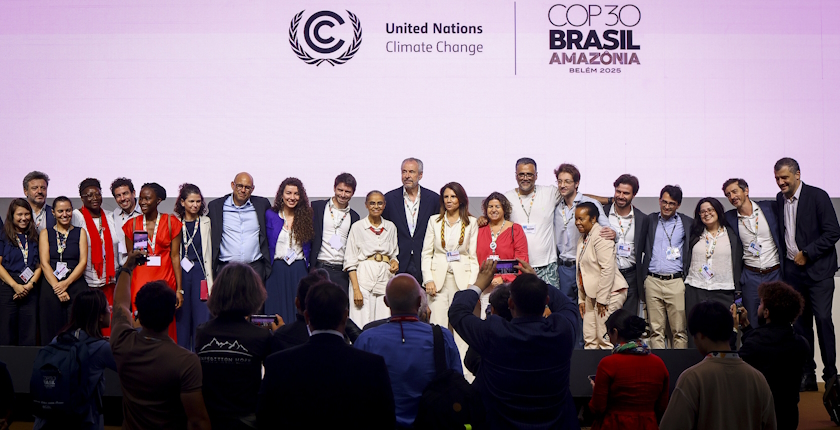
The United Nations Climate Change Conference COP30 was concluded with a deal to keep the world’s ambitions similar, after modest progress on some issues. In a last-minute compromise between the delegates of the wealthy, the poor and the countries most in jeopardy, the declaration from the so-called COP of Truth contains no explicit reference to fossil fuels and deforestation.

Participants at the Conference of the Parties of the UN Framework Convention on Climate Change (UNFCCC) in Belém, Brazil, acknowledged that the world is heading for a temporary overshoot above 1.5 degrees Celsius in warming, according to UN Secretary-General António Guterres.

“I cannot pretend that COP30 has delivered everything that is needed. The gap between where we are and what science demands remains dangerously wide. I understand many may feel disappointed – especially young people, indigenous peoples and those living through climate chaos. The reality of overshoot is a stark warning: we are approaching dangerous and irreversible tipping points,” he stated.

It’s difficult to reach a consensus in a period of deep geopolitical divide, Guterres pointed out. Nevertheless, he praised the final agreement for “delivering progress and showing that multilateralism works.”

Global Mutirão

The hosts nicknamed COP30, this year’s UN Climate Change Conference, the COP of Truth. Ironically, due to a last-minute compromise, or maybe consensus, the declaration contains no explicit reference to a fossil fuel phaseout and halting and reversing deforestation. They were left for separate roadmaps.

In the document, the signatories only refer to the COP28 decision, also known as the UAE Consensus, which called for transitioning away from fossil fuels.

The headline of the overarching deal adopted in Belém is Global Mutirão: Uniting humanity in a global mobilization against climate change. The Portuguese word mutirão originates from the indigenous Tupi-Guarani language and roughly means collective effort.

UN’s Stiell vows to keep up climate fight

All in all, delegates from all over the world, except the United States, left the desired decarbonization trajectory little changed. The countries most at risk of the climate disaster are generally poor. They depend on mitigation aid and investments from the wealthy part of the world.

“We knew this COP would take place in stormy political waters. Denial, division and geopolitics has dealt international cooperation some heavy blows this year,” UN Climate Change Executive Secretary Simon Stiell said at the closing.

Denial, division and geopolitics has dealt international cooperation some heavy blows this year, UN Climate Change Executive Secretary Simon Stiell said

In his view, nations chose solidarity, science, and economic common sense.

“COP30 showed that climate cooperation is alive and kicking, keeping humanity in the fight for a livable planet, with a firm resolve to keep 1.5 Celsius within reach. I’m not saying we’re winning the climate fight. But we are undeniably still in it, and we are fighting back,” Stiell stated.

The world’s top climate official noted that, for the first time, 194 countries agreed that the global transition to low greenhouse gas emissions and climate resilience is irreversible and the trend of the future, referring to a line from the deal.

COP30 pledges to triple adaptation funds by 2035

In the decision, the signatories kept the target USD 1.3 trillion per year that needs to be mobilized for climate action by 2035. USD 300 billion would be mostly grants and subsidized loans, while private financing and climate taxation dominate the rest.

The parties voted for a goal to provide three times more per year for climate adaptation from the smaller pot by 2035, instead of the initially proposed 2030 deadline. They failed to determine a figure, but it is mostly estimated at USD 120 billion per year.

One of the novelties is a pledge to promote information integrity regarding climate, which would also imply countering disinformation.

by in News

Šahmanović: Montenegro is facing its most challenging year for energy sector

Montenegro is facing its most challenging year for the energy sector, Minister of Energy and Mining Admir Šahmanović stressed.

State-owned power utility Elektroprivreda Crne Gore (EPCG) will suffer a loss of around EUR 80 million given that the Pljevlja coal power plant is offline, while electricity consumption is rising amid increases in prices of other energy sources, Admir Šahmanović told TV Vijesti.

He explained that development is focusing on the reconstruction of the thermal power plant, addressing delays in connecting solar power plants to the grid, and plans for projects including within cooperation with the UAE and an agreement with Italy on a second subsea cable.

Šahmanović: We entered this year quite wounded

The priority will be price stability and increasing the use of renewable sources, along with strengthening Montenegro’s position as an energy hub between the region and the European Union, he added.

“I can freely say that, regarding this year, it is perhaps the most challenging year in the modern history of Montenegro, exactly for the energy sector. We entered this year quite wounded given the fact that last year the hydrological conditions were the worst in the country’s history,” he asserted.

Šahmanović added the electricity demand in Montenegro has jumped 6%.

Climate change is playing its part

One of the reasons is the increase in the price of energy sources such as wood and coal, according to the minister.

He pointed to climate change as another factor. There is a growing need to install air conditioning units even in northern Montenegro, where there was previously no need for it, he added.

Therefore, in the minister’s words, the construction of other production facilities is inevitable.

Of note, EPCG’s executive manager of supply Jovan Kasalica said in April that electricity consumption in Montenegro has risen by 25% over the previous four years.

by in News

Serbia’s EPS starts trial operation of its first wind park Kostolac

Serbia’s state-owned power utility Elektroprivreda Srbije put the 66 MW Kostolac wind farm into trial operation.

The construction of Kostolac is complete, and Elektroprivreda Srbije’s (EPS) first wind farm has generated its first megawatt-hours, EPS announced.

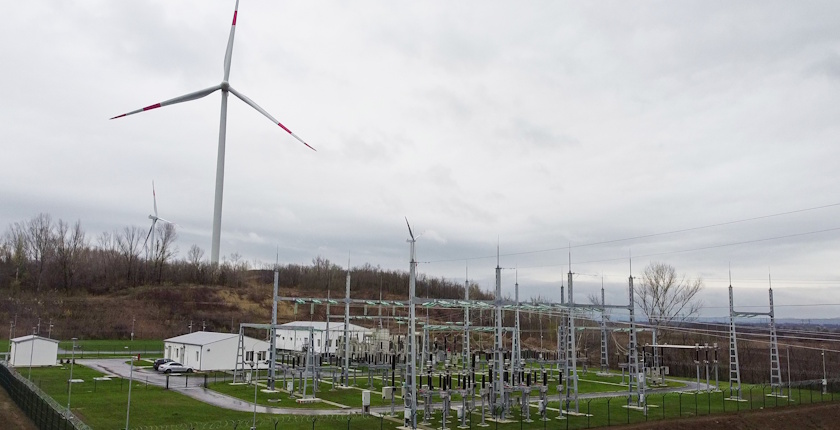
Upon receiving approval for connecting to the transmission system, the substation was energized and the blades of wind turbine 1 began to spin. It marked the start of the trial operation of the new generation capacity, the company said, and added that the kickoff of the remaining wind turbines is underway.

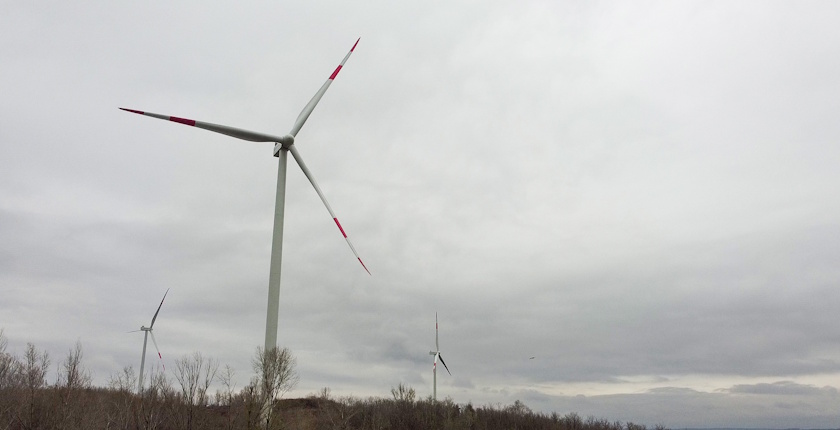
EPS’s first wind power plant, with 20 generators, is located at sites called Drmno, Petka, Ćirikovac and Klenovnik, at an area of closed open-pit mines of its subsidiary Termoelektrane i kopovi Kostolac (TE-KO Kostolac). It operates coal-fired power plants and open-pit coal mines.

Živković: It is a historic moment for EPS

Closed coal mines are ideal locations for installing wind farms and solar power plants, due to existing infrastructure. The concept has become widespread in Balkan countries.

“This is a historic moment for EPS. In addition to energy from water, coal, and the sun, now the first wind farm is online. This is a big step toward increasing the share of renewable energy and achieving sustainable energy development for EPS and the entire Serbian energy sector,” CEO Dušan Živković underlined.

He pointed out that the wind farm is just the beginning of future intensive development of new green capacities. It is very significant that it was built on the site of an old mining landfill and that the space has been given a completely new, sustainable purpose, he added.

The wind farm is expected to produce 187 million kWh annually

serbia eps wind farm Kostolac trial operation coal mine
Photo: EPS/Zoran Gavrilović

Živković recalled that the construction of the wind farm was a major challenge, but also a real opportunity for experienced engineers and young, new professionals at EPS to gain new knowledge and experience for future projects.

The planned annual production of the wind farm is 187 million kWh, which is enough to supply about 30,000 households with green electricity, according to EPS.

The project is financed by a EUR 110 million loan from Germany’s KfW Development Bank and a EUR 30 million grant from the European Union via the Western Balkans Investment Framework (WBIF), while the company provided a part of the needed funds, EPS said.

Serbia’s Minister of Mining and Energy, Dubravka Đedović Handanović said in January 2024, at the signing of an agreement with the EU for the EUR 30 million grant, that it has completed the financing of the project.

According to WBIF’s update from December 2024, the project was valued at EUR 145.1 million. It comprised EUR 81.8 million from a KfW loan and EUR 31 from WBIF in the form of a grant, while EPS provided EUR 32.3 million.

by in News

Serbia deciding whether to nationalize Gazprom-owned oil company NIS

As the United States, which imposed sanctions on Serbian oil company NIS, rejected a proposition for a change in management, difficult decisions are ahead, according to Minister of Mining and Energy Dubravka Đedović Handanović. The government in Belgrade is holding an emergency meeting tomorrow, she added and pointed out that it needs to decide whether to nationalize the business. NIS runs the country’s only refinery.

US sanctions against Serbian oil refiner and fuel distributor NIS – Naftna industrija Srbije came into force on October 9, after they were postponed several times for nine months overall. Its majority owner is Russian state-controlled Gazprom, through two subsidiaries.

The Government of Serbia didn’t succeed in securing any kind of deal that could enable a smooth transition. The company owns the only refinery in the country and the biggest chain of service stations.

Minister of Mining and Energy Dubravka Đedović Handanović said the US rejected NIS’s proposal of a contract for a change in management. “The difficult message for us is that we didn’t even get one day for Naftna industrija Srbije to continue working. Citizens, you understand that it is impossible to change ownership in seven or eight days,” she stressed, apparently referring to how long the refinery’s dwindling oil reserves would last.

There was speculation earlier that Hungary-based MOL could assume control, given that the country, Serbia’s northern neighbor, managed to obtain a one-year exemption from the US for Russian oil and gas.

US demands Russia’s complete exit from NIS

The US administration wants a complete exit of Russian ownership from NIS, according to Đedović Handanović. “There can be no hiding of any Russian associate, Gazprom or the Russian government behind that,” she added.

There is only approval for talks about a change in ownership and it expires on February 13, the minister explained.

“I believe that there are difficult decisions ahead of us. Namely, whether to conduct a takeover of the company, after which the damages would be determined and compensated. I know that President Vučić is against nationalization, as are many of us in the Government of Serbia and beyond and we repeated that several times,” Đedović Handanović stated.

Đedović Handanović: We hope that our Russian friends will understand the gravity of the situation

An emergency cabinet session is scheduled for tomorrow at 11 am local time, she announced and revealed that President Aleksandar Vučić would attend it.

“What I can tell you is that we won’t let our country come into jeopardy and that some of the most difficult decisions in our history are ahead of us in the following days. We hope that our Russian friends will understand the gravity of the situation and that they will help us overcome it. Because without any fault of our own, we have found ourselves in a dire situation. A political war is at hand, a geopolitical war is at hand, and we, as a small country, need to pay a high price. A small country that only wanted to be fair and just to everyone. Both to all our partners and all our friends,” Đedović Handanović underscored.

Oil crisis could turn to gas crisis

To make matters worse, Serbia is dependent on Russian gas, which comes via the Balkan Stream pipeline, an extension of TurkStream. The main question is whether the Kremlin would slash or even end the supply in case NIS is nationalized. Serbia is buying gas under short-term arrangements since May.

Furthermore, Lukoil, which operates a gas station network in the country, is also under US sanctions.