by in News

Two PV parks of 117 MW in total coming online near Bucharest

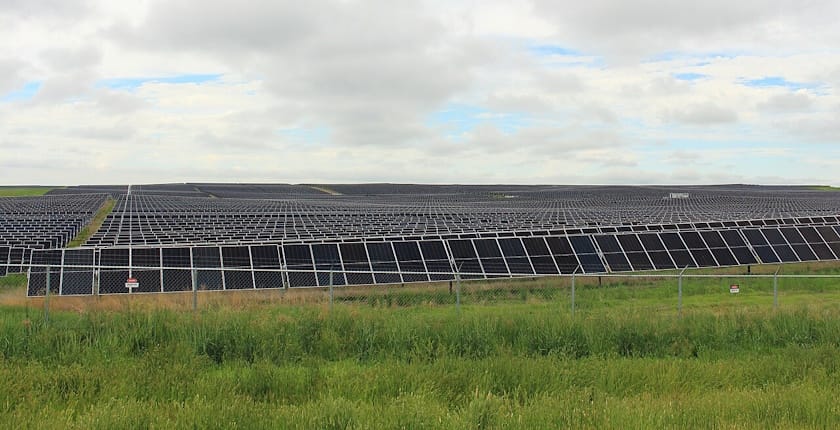
Eximprod Grup is about to commission a 65 MW photovoltaic facility in Prahova county, north of Bucharest, before adding a battery system, and Simtel obtained financing for the completion of a 52 MW solar power plant in Giurgiu, south of Romania’s capital city. Additionally, the developer of a project of a similar size in Alba county in Transylvania, including energy storage, applied for an environmental permit.

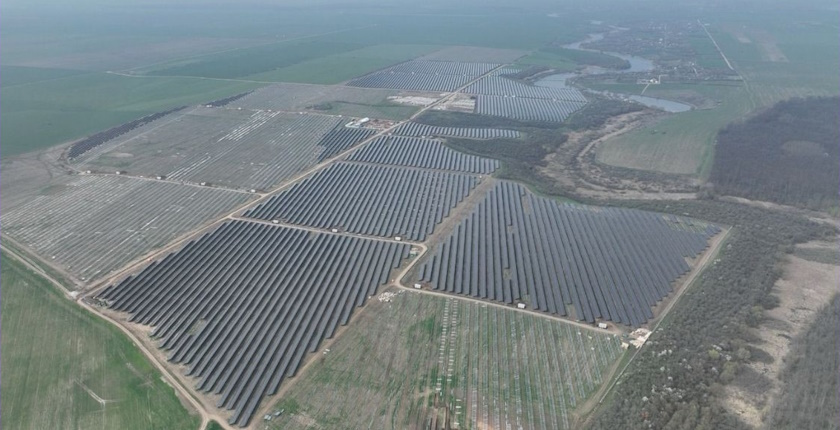
Eximprod Group said it completed a solar park of 49.5 MW in connection capacity in Ciorani, Prahova county, north of Bucharest. Commissioning and grid integration are underway.

According to its documentation, the facility has 65 MW in peak capacity. It consists of five units with 9.9 MW in grid connections each.

The PV plant is coming online through a 20/110 kV power station and a single metering point. Eximprod, controlled by investors Manole Gheorghe and Vasile Domente, thanked Transelectrica, DEER, Ostenweg Sysplan SRL and Alive Capital for cooperation in the project. The company bought 590 W solar panels.

Eximprod has won a EUR 13.4 million grant for the Ciorani project from NRRP

The EUR 56.2 million endeavor includes a grant of EUR 13.4 million from the National Recovery and Resilience Plan (NRRP or, in Romanian, PNRR). It is part of the European Union’s Recovery and Resilience Facility (RRF).

Eximprod invested in the solar park, which features trackers, through its project firm Solar System Project. The facility was built on an 89-hectare land plot. It is located next to a solar power plant of the same owners, with a 15.5 MW connection and 20 MW in peak capacity.

The company plans to add a 21 MW battery energy storage system to the Ciorani PV park. Eximprod recently completed the first of seven foundations of a 38.4 MW wind park in Galați county in the region of Western Moldavia.

Banca Transilvania approves loans for large solar power project in Giurgiu

The Giurgiu county, west and south of Romania’s capital city, is emerging as one of the country’s solar power and energy storage hubs. Major projects are being materialized in other areas around Bucharest as well. Engineering company Simtelhttps://balkangreenenergynews.com/imports-from-china-dont-exceed-26-of-pv-project-costs-in-romania/ said it has signed financing contracts for a PV plant of 52 MW in peak capacity, which is 80% finished.

Annual output is estimated at 69 GWh.

Banca Transilvania, Romania’s largest, has approved a ten-year investment loan of EUR 16 million and a bridge loan of EUR 12.2 million. The latter is denominated in local currency and matures in March 2026.

Simtel has completed its first three smaller PV plants

“Since 2023, with the completion of our first proprietary photovoltaic park in Pleșoiu, our company has entered a new stage of development, becoming an electricity producer. The Giurgiu project represents an important step in this direction, as it covers more than half of the total capacity we aim to have completed and operational in our portfolio by mid-2026,” said Simtel Team’s Chief Executive Officer Mihai Tudor.

Romania has supported the investment in Giurgiu through NRRP. The bridge loan covers the financing needs before the company collects the grant.

Simtel, which is also a contractor, has completed three of its PV projects – in Pleșoiu, Salonta, and Iacobeni. Four others are in various stages of construction or permitting – in Anina, Ianca, Mangalia, and Movilița. Together with the facility in Giurgiu, their combined peak capacity is above 83 MW. The eight units will generate an estimated 111 GWh per year.

The company is listed on the main market of the Bucharest Stock Exchange (BSE). Simtel offers consultancy services, authorization, design, engineering, construction, maintenance, operation, measurement, control, and energy supply. It was founded in 2010 by Iulian Nedea, Sergiu Bazarciuc and Radu Vilău.

Solar-BESS hybrid power plant project on monastery land in Alba is worth EUR 53.1 million

As for other relevant news in Romania, Bucharest-based Ponor Energy requested an environmental approval for a solar power project of 56.7 MW in peak capacity, which would include batteries. The site is in Ponor commune in Transylvania’s Alba county, spanning 48.6 hectares. The firm leased monastery land for 25 years.

The facility would consist of 166 Huawei inverters of 49.8 MW in total and Trina Solar’s 85,852 bifacial panels of 660 W. The battery segment would have 81.5 MWh in capacity.

Excluding value-added tax, the investment is worth an estimated EUR 53.1 million.
by in News

Bulgaria grants EUR 587 million to 82 battery storage projects

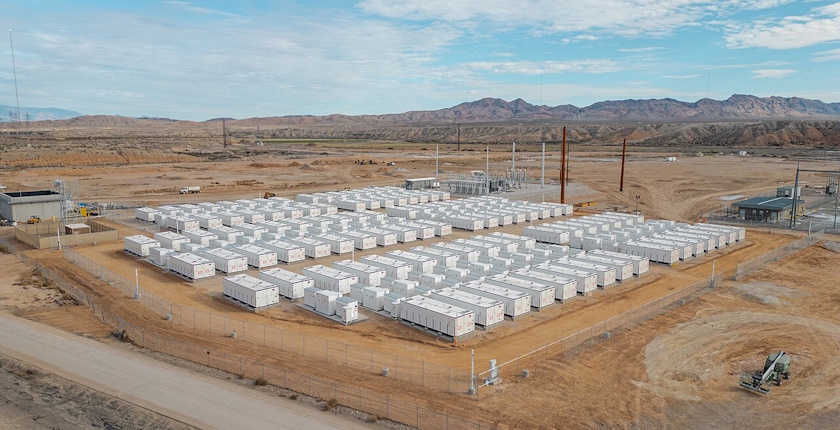
Developers of 82 standalone battery storage projects in Bulgaria, for an overall 9.71 GWh in capacity, got approval for EUR 587 million in subsidies from the Ministry of Energy. Another 30 landed below the line, but the government intends to boost the program by EUR 120 million.

More than four months after the deadline for applications, the Ministry of Energy of Bulgaria ranked 112 projects for standalone battery energy storage systems (BESS). Through the RESTORE call for grants, it approved EUR 587 million for 82 of them, exhausting the budget.

The scheme is part of the National Recovery and Resilience Plan (NRRP), under the Recovery and Resilience Facility (RRF), which the European Commission controls.

The selected investments envisage an overall 9.71 GWh of storage capacity, compared to the target of at least 3 GWh. The aim is to provide balancing to enable a significant increase in the share of wind and solar power in the energy mix, as well as to ensure the security and stability of the country’s electricity system. The facilities will be connected to the grid at both the transmission and distribution levels.

Notably, Bulgaria is struggling to meet the conditions and deadlines for NRRP funding, including for battery projects. Moreover, the ministry apparently decided not to move forward with a second call for subsidies for households for solar panels with or without batteries, and for solar collectors. It risks losing the European Union’s funding.

Project underway for 125 MW battery system in Burgas

The largest selected investment is BESS Burgas. The project is worth EUR 90 million, of which the grant would cover 26.5%. The proposed facility would have 125 MW in operating power and a four-hour duration, translating to 500 MWh.

The list lacks data on planned capacities for many of the projects. Among them is the one from ContourGlobal Maritsa East 3 (Maritsa iztok 3), the operator of a coal power plant that recently ceased operations. The company intends to invest EUR 74.5 million, the fifth-highest amount. The ministry said it would provide 40% of the total.

The owner of the recently closed Maritsa East 3 coal power plant won a 40% subsidy for its EUR 74.5 million BESS proposal

Weapons and ammunition producer Arsenal 2000 won a 44% subsidy for its EUR 48.9 million project. It intends to install a BESS of 80 MW and 350 MWh. One of the selected proposals is called Verila Solar Park 2. The share of the approved grant in the EUR 65.7 million investment is 32%.

Toki Storage stands out among the beneficiaries with 11 approved projects of the same size and valuation: 10 MW, 40 MWh and EUR 6 million each. The grants would cover 30% to 39.3%.

NEK fails to qualify with its project for battery system at Topolnitsa hydropower plant

Out of 151 applications, 118 initially passed to the ranking stage. The ministry said they were worth a combined EUR 838 million. The 30 projects in reserve are worth EUR 212 million, it added.

They include proposals from coal plant operators Toplofikatsiya Pernik and Bobov Dol. The ministry rejected four projects, of which one from state-owned National Electricity Co. (NEK), for a 20 MWh battery unit at its Topolnitsa hydropower plant.

According to consulting firm New I, involved in more than 40% of the winners in the call, they are worth EUR 1.59 billion altogether, Bulgarian language EU Funds website reported. Requested support ranges between just below EUR 40,000 per MWh and EUR 80,000 per MWh, and the weighted average came in at EUR 60,000 per MWh, it revealed.

Many of the 151 projects were duplicated, the article adds.

Importantly, the government has proposed increasing the RESTORE program by EUR 120.6 million, which would be sufficient for at least 20 projects in the reserve group.

The ministry was supposed to select the beneficiaries by January. The deadline for drawing the EU funds is June next year, so the developers must rush to install their battery systems – but first they need to sign contracts with the government.

by in News

Nofar Energy inks deal for 265 MW solar power plant near Bucharest

The operator of the biggest solar power plant in Romania is about to start building a much bigger facility. Nofar Energy signed a turnkey contract including operation and management for a 265 MW system in Corbii Mari in Dâmboviţa County.

Just west of Bucharest, one of the largest photovoltaic projects in Romania is nearing materialization. A consortium of COX Energy from Spain and domestic firm AJ Construction, part of AJ Brand, is the designated contractor and operator for a proposed 265 MW solar power plant in Corbii Mari. A multijurisdictional team of Clifford Chance lawyers, coordinated by its Bucharest office, advised Nofar Energy, the developer, and revealed the news.

The small commune is in Dâmboviţa county. The Israeli company acquired the project in late 2023.

The Clifford Chance Badea law office said the Corbii Mari endeavor is the fourth engineering, procurement and construction (EPC) and operation and maintenance (O&M) contract in which it assists Nofar Energy. The overall collaboration concerns renewable energy projects in Romania for over 650 MW, it added.

Nofar recently said is meeting the timelines for its key projects in the country including Ghimpați (146 MW) and Iepurești (169 MW) and Slobozia, of 74 MW. The last of the three won government support through a contract for difference (CfD) at the country’s first auction. The Israeli company added that it has a project portfolio of 970 MW and 120 MWh. The latter item apparently concerns battery storage.

In addition, Nofar Energy said last month that it connected to the electricity grid its solar park in Ada, the largest such system in neighboring Serbia.

by in News

Solar park of 46.6 MW integrated with Turkey’s fifth-largest wind farm

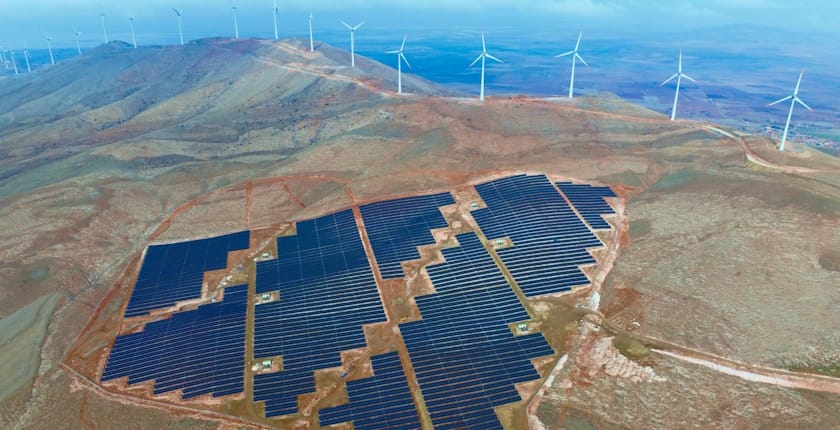
The newest hybrid power plant in Turkey consists of wind turbines of 168 MW and a solar park with 46.6 MW in capacity. Polat Enerji is about to expand the Geycek facility with a 10 MW battery energy storage system.

Hybrid power plants are all the rage in Turkey and the ones coming online are bigger and bigger. The latest addition to the fleet is Polat Enerji’s Geycek facility. It is the country’s fifth-largest wind park, and now it also features a 46.6 MW photovoltaic unit. It is classified as an auxiliary source in domestic law.

That’s not all. The company, which has been pioneering the technology in Turkey, contracted a battery energy storage system (BESS) two months ago. T Dinamik Enerji’s subsidiary Tegnatia is tasked with installing a Sungrow unit with 10 MW in operating power and 13.4 MWh in capacity.

Polat Enerji is turning Geycek into Turkey’s first utility-scale hybrid of wind, solar power and BESS

It would be the country’s first wind-solar-battery hybrid on a utility scale. Polat Enerji said it would be commissioned “in the near future.”

Geycek is in Mucur district in the province of Kırşehir, southeast of Ankara. The wind park has 168 MW.

The contractor for the solar power segment was SPI (Schmid Pekintaş Investments) Energy Solutions. The Schmid Pekintaş joint venture supplied the PV panels.

Polat also operates Turkey’s largest wind power plant – Soma. It recently expanded it by 8.4 MW in nameplate capacity, or 8 MW effectively, reaching 328.9 MW and 304.1 MW, respectively. It is the first such facility in the country with over 300 MW on the grid.

The Soma wind park includes a small BESS unit – 4 MW of capability and a one-hour duration, translating to 4 MWh.

Polat Enerji is a joint venture of Polat Holding and İş Enerji Yatirimlari, each holding 50%. The latter is a subsidiary of Türkiye İş Bankası, the largest private sector bank in Turkey.

by in News

Elektroprivreda BiH seeks contractor for three solar power projects

Power utility Elektroprivreda BiH (EPBiH) called on companies to apply for designing and building three solar power plants. Two sites are on depleted coal land and the third one could become a hybrid power plant with existing wind farm Podveležje.

Within a project called EPBiH Solar Transition Programme, Bosnia and Herzegovina’s state-owned company Elektroprivreda BiH launched a tender for three photovoltaic facilities of 28 MW in total. The public call is on the EBRD Client e-Procurement Portal (ECEPP) of the European Bank for Reconstruction and Development. The lender pointed out it is the first phase of the first tranche.

EBRD is considering financing the investment valued at EUR 80.8 million with a EUR 36.5 million loan. EPBiH would provide EUR 7.7 million and secure the rest from other sources.

The tender consists of two stages while applications are received until May 26. The company selected for the first phase would be tasked with designing and building solar power plants Gornja Breza (15 MW), Višća (8 MW) and Podveležje 3 – with 5 MW in capacity.

EPBiH has 30-year concession for its PV project Podveležje 3

Phase 2 of the second tranche, for 56 MW, would comprise the proposed facilities Potočari 1, of 16 MW, Bedrock 1-3 (two times 8 MW plus 16 MW) and Banovići Selo, of 8 MW. Combined with the second tranche, the plan envisages 13 solar power plants of 195 MW overall.

Gornja Breza is on a former dump of the Breza coal mining complex north of the capital Sarajevo. Višća is at a depleted open cast coal mine on the territory of the city of Živinice near Tuzla.

The Podveležje 3 solar power project is colocated with the Podveležje wind power plant, owned by Elektroprivreda BiH. If the two systems are connected to the same infrastructure and digitally integrated, together they will become a hybrid power plant. The company won a concession last year for 30 years for 4.8 MW in the photovoltaic segment.

Abandoned coal land to host PV plants of Elektroprivreda BiH

EPBiH intends to build its other PV units in the first tranche also at abandoned parts of its mining complexes.

EBRD and UniCredit are financing the Gračanica 1 and 2 projects, located at a former tailings dump of the Gračanica mine. They are for 25 MW each and the connection capacity of the solar park would be 45 MW.

Notably, the company has been reporting losses quarter after quarter. It concluded last year with EUR 29.4 million in the red, compared to EUR 170 million in 2023. However, the company said in December that Chinese contractors have returned the advance payment of EUR 127 million that it payed them for the failed Tuzla 7 coal-fired power plant project.

Elektroprivreda BiH is planning another two wind farms: Vlašić and Bitovnja.

by in News

Eurowind Energy completes its 60.2 MW solar park in Romania

Eurowind Energy’s 60.2 MW photovoltaic park in Transylvania will be put into operation in late April, Minister of Energy Sebastian Burduja said. The facility is joining the almost 600 MW in new capacity funded from the National Recovery and Resilience Plan. In addition, the ministry prepared a EUR 450 million package of grants for companies for energy efficiency and self-consumption.

After 14 years of doing business in Romania, Denmark-based European Energy is materializing its first major endeavors in the country. Minister of Energy Sebastian Burduja revealed that the company’s solar power plant in Teiuş would be commissioned by the end of the month.

The location is in the Transylvania region. Eurowind Energy received EUR 15 million from the government for the project. It costs EUR 47.2 million in total, or EUR 55 million with value-added tax. Construction began a year ago. The system in Alba county will generate an estimated 104 GWh per year.

Burduja said almost 600 MW of capacity has been commissioned within the projects that Romania funds through the National Recovery and Resilience (NRRP or, in Romanian, PNRR).

Eurowind Energy has major renewables projects lined up in Romania, Bulgaria

Eurowind Energy, based in Hobro, Denmark, is one of the biggest wind and solar power developers in Romania.

The Danish company recently signed a 12-year virtual power purchase agreement (PPA) with Autoliv in Romania, for the supply of electricity from the Pecineaga wind park. Eurowind Energy is preparing to put the facility into operation.

It is also building a 238 MW solar power plant in Yambol in neighboring Bulgaria, with Renalfa IPP. They plan to add wind turbines and batteries.

EUR 450 million available for firms for energy efficiency, self-consumption

At the same event, Burduja said the ministry is launching two calls worth EUR 450 million combined. They are intended for support to the energy-intensive industry.

The package for is for companies. It consists of EUR 150 million for energy efficiency – the replacement of outdated equipment – and more than EUR 300 million for the production of electricity for self-consumption.

The Ministry of Energy has set an extremely ambitious target of 2.5 GW of new capacity to be put into operation this year, Burduja stressed. It is two times more than in 2023. Active energy storage capacity is nearing 400 MWh, he added.

In the energy efficiency call, fims can receive as much as EUR 30 million each from the Modernisation Fund. The self-consumption segment is for the ones with available land and projects for photovoltaic parks or even wind farms and micro hydropower plants.

According to the International Renewable Energy Agency (IRENA), Romania increased its solar power capacity at the end of last year by 57% to 4.7 GW. Most of it is from prosumers. The wind power segment is picking up, but slowly, after a stagnation that began a decade ago.

by in News

Bulgaria suspends ill-designed solar energy support program

The Ministry of Energy of Bulgaria doesn’t intend to publish the second call for subsidies for households for solar panels with batteries and solar collectors. The program is partly covered by the European Union’s Recovery and Resilience Facility, so now the country risks losing the funds.

The Ministry of Energy of Bulgaria told Kapital that it does not plan to launch a second procedure to support households in purchasing and installing rooftop photovoltaic panels and solar water heaters. The measure was one of the few for citizens in the National Recovery and Resilience Plan (NRRP) rather than businesses or municipalities.

Through the first call, 1,500 households were selected for grants, worth some EUR 20.5 million in total. There is EUR 123 million for the entire scheme, called Support for Renewable Energy for Households. The solar power panel segment includes an option to install batteries as well.

Procedure too complicated

Initially there were fears that there would be more applications than the sum can cover, the article adds. But the procedure turned out to be so complicated that few people actually submitted documentation, the news outlet wrote. So now Bulgaria is about to lose the funds, after the European Commission already blocked the second NRRP tranche late last year.

The Ministry of Energy said it expects all the remaining contracts from the first round to be signed by the end of the month.

The program covers up to 70% of the costs for PV panels and 100% for solar collectors

According to Balin Balinov from Greenpeace, the government is once again demonstrating lack of commitment when it comes to energy poor households.

The program covers up to 70% of the costs for PV panels and 100% for solar collectors. But beneficiaries must buy them on their own and get reimbursed afterward. Notably, people who can afford such devices don’t want to deal with the bureaucracy, the report adds.

Installers struggling with backlogs amid tight deadlines

Moreover, Balinov said, there are hardly any firms available at the moment for installing solar panels, and the deadlines are short. Another issue is the lack of a net metering mechanism for rooftop and balcony photovoltaics. In such a setting, the electricity that beneficiaries generate would be subtracted from their bills.

The draft Law on Energy from Renewable Sources, currently in procedure in the National Assembly of Bulgaria includes the introduction of virtual net metering for prosumers and renewable energy communities. The deadline for approving an application for the installation of a solar power system of up to 20 kW would be just one month, the ministry pointed out.

Moreover, to get a grid connection, prosumers with up to 10.8 kW would only be required to notify the operator.

by in News

Turkey’s renewables failing to cover power demand growth despite solar boom

Turkey switched in 2024 from a net electricity importer to net exporter, but renewables are still not growing fast enough to meet rising domestic power demand – one of the highest in the world, Ember found. The country has become Europe’s biggest coal power producer and there are plans for more such capacity.

Wind and solar generated 18% of electricity last year or 62 TWh, according to data from Ember’s Türkiye Electricity Review 2025. Together they were higher than domestic coal again, at 47 TWh, after surpassing it for the first time in 2023. But imports account for 61% of coal power production in the country.

Solar power growth spiked 39% in Turkey or by 7.3 TWh and the capacity reached 19.8 GW by the end of 2024. It compares to the global rise of 29% in output.

Photovoltaics had a 7.5% share, after 5.7% one year earlier. The wind power item advanced by only 0.1 percentage point, to 10.7%.

Government’s ambitions for renewables would result in 49% combined solar, wind power share in production

At 5.5%, Turkey had one of the highest increases in power demand last year in the world, mostly because of record meteorological heat pushing up cooling needs. The amount was 18 TWh and the total reached 342 TWh.

The rise in domestic electricity generation totaled 23 TWh and Turkey achieved a switch from a net power importer to net exporter. Nevertheless, wind and solar are still not growing fast enough to meet rising demand, translating to costly imported fossil fuel power generation, the report points out. The situation is similar on a worldwide scale.

The 7.3 TWh increase in solar accounted for 32% of the jump in electricity generation, compared to 40.2% on a global scale. The ambitious renewables targets for 2035 would result in a share of fossil fuels of 20%, and wind and solar at 49% in combination.

“Although demand growth has slowed in recent years, it is still outpacing the rate of new wind and solar additions. Demand increased by 42 TWh in the last five years, compared to 31 TWh of additional wind and solar. The rest of demand is met by imported coal and gas,” said Ufuk Alparslan, the report’s author and the energy think tank’s regional lead for Turkey and the Caucasus.

‍Romania beats Turkey in solar power production share

In the group of 20 countries with the highest electricity demand in Europe, Turkey surpassed Switzerland in solar electricity generation in 2024. On the other hand, it fell one position behind Romania, which is ranked 12th, as it doubled its solar power share to 7.8% in 2024.

The first in the list is Hungary, with 24.9%, followed by Greece (21.5%) and Spain (21.2%).

Adding solar to hydroelectric plants with dams mitigates drought impact

From 2020, solar power plants can be installed as an auxiliary source in power plants in Turkey, which creates hybrid power plants. Making more use of solar and wind power plants, which have a complementary generation profile to hydroelectricity, will play a key role in ensuring Türkiye’s energy security, the report reads.

Terrestrial and floating solar power plants as secondary sources to existing hydroelectric power plants reduce the risk of a shortfall from hydro in dry years, it added.

Although the amount of incoming water in 2024 was very close to the previous two years, hydroelectric power generation with dams increased by 29%. Total hydropower generation was 75 TWh or 17% more than in 2023 and it was the third-highest result so far.

Turkey is largest coal power producer in Europe

Despite a jump in electricity generation from coal by 3.4% to 122 TWh, its share in electricity mix declined from 36.9% to 35.6%. With coal-fired power generation continuing to decline across Europe, Turkey overtook Germany to become number one. Meanwhile, gas power fell by 4%. It brought the share of fossil fuels in production to 55% — the lowest level since 1993.

There are no coal-fired power plants under construction, but several projects remain. There is a plan to expand the largest facility in the fleet, Afşin Elbistan A (1.36 GW), by two units of an overall 688 MW.

Germany’s coal power output fell 17% to 104 TWh while in Poland, the third in the list, it declined 8% to 91 TWh. As for the share in domestic electricity production, Poland is first, with 53.6%, followed by Czechia (36.5%), Turkey (35.6%), Germany (21.8%), Bulgaria (21.6%), Romania (13%) and Greece, with just 5.7% last year.

As for the Western Balkans, Kosovo* is ranked the highest in the world, now at 92%. Serbia and Bosnia and Herzegovina are fifth and sixth, respectively, both at 63% on a rounded basis.

* This designation is without prejudice to positions onstatus and is in line with UNSCR 1244/99 and the ICJ Opinion on the Kosovo declaration of independence.
by in News

Ember: Warming’s 2024 share of global power demand rise was covered with fossil fuels

According to Ember’s new figures, renewable energy sources met almost three quarters of last year’s increase in the world’s electricity demand. Together with nuclear energy, they would have covered almost the entire jump if it wasn’t for the share attributed to the annual increase in temperatures. Looking at it the other way around, the need for additional cooling accounted for the overwhelming part of the rise in fossil fuel use, and at the same time the resulting additional emissions contributed to the acceleration of global warming.

The share of low-carbon sources rose to a historic 40.9% of global output in 2024. Photovoltaics made up 55.2% of renewable electricity production growth. Hungary, Greece and Bulgaria are among the world’s strongest solar power producers while Turkey has one of the highest power demand growth rates.

Taken together, wind and solar power, hydroelectric plants, other renewables and nuclear energy amounted to 40.9% of global electricity generation in 2024. One year earlier, the level was 39.4%. Last year’s share was the highest since the 1940s, when the global electricity system was fifty times smaller, Ember said in its Global Electricity Review 2025. 

At the time, there was only hydropower and some biomass on the list. Solar power has been the main factor of change over the past several years, and so has China.

Global electricity demand jumped 4% last year or 1.17 PWh, amplified by heatwaves, and reached an all-time high of 30.9 PWh. Periods of higher temperatures in another hottest year ever drove up demand for cooling. The relative increase in 2023 was 2.6%.

Hydropower remained the largest source of low-carbon electricity (14.3%), followed by nuclear (9%). Wind (8.1%) and photovoltaics (6.9%)  are rapidly gaining ground and together they overtook hydro in 2024, while nuclear’s share reached a 45-year low.

Renewables meet 73.2% of growth in world power demand

Renewable power sources accounted for 858 TWh of added output. The previous record of 577 TWh was set two years earlier, as hydropower dropped in 2023, also mostly because of heat.

EVs, heat pumps, data centers and other new drivers of power demand more than doubled their share in annual growth in five years

Renewables met 73.2% of growth in demand and nuclear energy covered 5.9%. Together, they nearly accounted for all growth except the temperature effects, and the rest was from fossil fuels.

Interestingly, looking at it the other way around, the need for additional cooling accounted for the overwhelming part of the rise in fossil fuel use. Of course, the resulting additional emissions contributed to the acceleration of global warming.

Fossil fuel use would have remained almost unchanged if temperatures didn’t grow, the think tank claims. Global power sector emissions rose by 1.6% to a new all-time high of 14.6 billion tonnes of CO2.

But at least the demand for cooling during the day mostly runs in parallel to solar power production. Moreover, the pace of energy storage capacity increase still isn’t keeping up with the growing need to balance photovoltaics and wind power, as they depend on the weather.

However, the update focuses only on one indicator, within the annual growth in power demand. The system is much more complex and fossil fuels weren’t only and directly used for cooling. There is also the matter of distribution across segments from the entire output.

New drivers of demand such as electric vehicles, heat pumps and data centers contributed roughly the same to annual demand growth as the temperature effect, but more than twice as much as they did five years before.

China nearing one third of global electricity demand

China’s electricity demand surged 6.6% or by 623 TWh, which accounted for more than half of the global rise. Its 10.07 PWh in total was 32.6% of the overall figure. Five years before the country was at 28%. Renewables and nuclear energy covered 81% of its demand increase.

China’s per capita electricity use overtook France’s for the first time last year

The United States is number two overall, with 4.4 PWh in 2024 or 14.3% of the global level. China’s per capita electricity use overtook France’s for the first time, and was five times that of India’s.

Turkey’s growth rate, 5.6%, was among the highest on the planet. In absolute terms, demand jumped 18 TWh.

Photovoltaics beat coal power in 2024 in EU

Solar power production spiked by a stunning 29%, which was a six-year high, or by 474 TWh. Photovoltaics were the largest segment of new electricity for the third year in a row and grew the fastest for the 20th straight year. Total output reached 2.13 PWh.

Global solar power capacity reached 1 TW in 2022 after decades of growth, but it surpassed 2 TW only two years later. China amounted to 53% of the increase in PV generation in 2024.

Solar power topped coal power output in the European Union for the first time. As for the share of domestic production, Hungary tops the global list, with 25%. Chile is second at 22%, and Greece is third and best, with 22%, among the countries that Balkan Green Energy News mainly tracks.

Bulgaria is also in the main chart, coming in ninth on a global scale, with 14.4%.

As for solar power production per capita, Australia leads by far with 1.87 MWh, followed by the United Arab Emirates (1.29 MWh) and Greece, also at 1.29 MWh on a rounded basis. Hungary is seventh in the category, at 971 kWh per person.

In the rest of Southeastern Europe, Turkey sticks out as tenth on the planet in hydropower output, at 75 TWh. Albania has the fourth-highest share of domestic production, 97%.

Notably, Kosovo* tops the list of coal’s share in electricity production, with 92%. Bosnia and Herzegovina and Serbia still seem pretty much stuck with the technology. They are fifth and sixth, respectively, both at 63% on a rounded basis.

* This designation is without prejudice to positions onstatus and is in line with UNSCR 1244/99 and the ICJ Opinion on the Kosovo declaration of independence.
by in News

RWE-PPC partnership starting to build 567 MW of PV capacity

Meton Energy has taken the final investment decision for two photovoltaic projects north of Thessaloniki. Through their joint venture, Germany-based RWE and Greek government-controlled utility PPC are about to start construction of 567 MW in total peak capacity.

Most of the 2 GW solar power portfolio that the top tier German-Greek partnership is developing is now materializing. RWE, holding 51% in the Meton Energy joint venture, and Public Power Corp. (PPC), the other co-owner, agreed to move to the construction phase in an investment worth EUR 418 million.

The endeavor consists of two photovoltaic projects in the Central Macedonia region in north Greece. Solar farms Kotyli and Neo Syrakio would have a total peak capacity of 567 MW, translating to 518 MW in grid connection terms.

Commissioning expected in 2027

Construction is planned to start this spring, with commissioning expected in 2027. The two sites are in the Kilkis regional unit north of Thessaloniki. Estimated annual output is equivalent to the electricity demand of more than 140,000 households.

PPC, or DEI in Greek, formally entered its largest joint venture in 2021 with German energy giant RWE. It took the domestic company less than five years to swing from deep losses to a nearly completed coal phaseout and a regional expansion at full speed. It is building some of the largest renewables and gas facilities in Europe. Moreover, PPC is transforming the two areas in Greece that rely on the solid fossil fuel and lignite-fired power plants.

RWE, PPC won EUR 175 million in EU grants for Kotyli, Neo Syrakio

The partners manage their stakes through PPC Renewables and the RWE Renewables Europe and Australia branch.

As they reached their latest final investment decision, the companies pointed out that they secured EUR 175 million in grants for the twin projects from the European Union’s Recovery and Resilience Facility (RRF) and the National Recovery and Resilience Plan (NRRP) Greece 2.0.

They are financing the rest from own funds and with EUR 169 million from commercial banks, the announcement reads. Meton Energy has signed 10-year bilateral power purchase agreements (PPAs) with PPC and RWE Supply and Trading.

“With our latest investment decision, we underpin once again our strong commitment to the Greek market with now roughly 1.5 GW of solar capacity in deployment. This great achievement is the result of the excellent cooperation between the teams involved at RWE and PPC. Together we are accelerating the energy transition in Greece,” said Chief Executive Officer of RWE Renewables Europe and Australia Katja Wünschel.

Amynteo PV clusters coming online by year end

The two partners have so far energized five solar farms with 210 in total peak capacity. The construction of another PV plant with a peak of 105 MW is complete. Three more, of 625 MW in combined peak capacity, are planned to become operational by the end of 2025.

The nine units in three clusters have 940 MW altogether or 870 MW on the transmission grid, as alternating current. They are in the former Amynteo open cast lignite mine in Western Macedonia in the country’s north.

“We are delivering our solar projects at an impressive pace. The first cluster of the Amynteo portfolio is already energised, construction works for Amynteo clusters 2 and 3 are at an advanced stage and we are looking forward to connecting all projects to the grid this year,” said Costas Papamantellos, CEO of RWE Renewables Hellas and Meton Energy.