by in News

EPCG Expands Generation and Storage Portfolio with 639 MW of New Projects

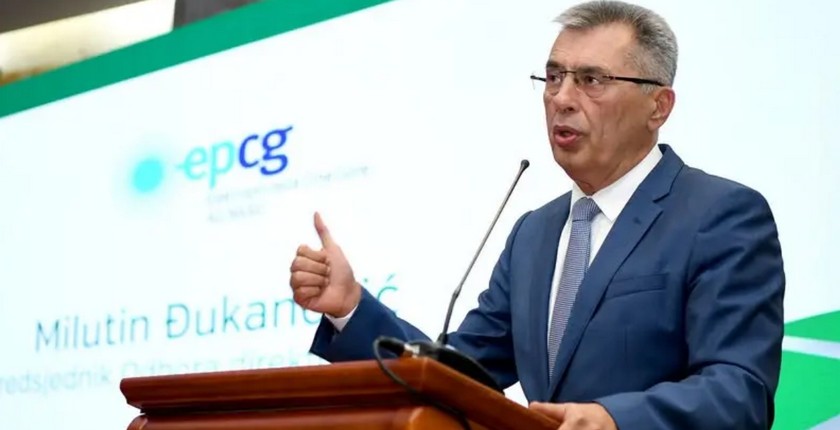
Montenegro’s state-owned utility Elektroprivreda Crne Gore (EPCG) is advancing a broad portfolio of solar, wind, battery storage, and hydropower projects with a combined capacity of 639 MW, and an expected annual electricity output of more than 1 TWh, according to Milutin Đukanović, President of EPCG’s Board of Directors.

In an opinion piece, Đukanović said the company has already completed part of a major investment cycle, including rooftop solar projects, the Gvozd 1 wind farm, the ecological reconstruction of the Pljevlja thermal power plant, and part of the modernization works at the Piva and Perućica hydropower plants. He added that new generation capacities, battery storage systems, hydropower upgrades, rooftop solar, wind projects, and strategic partnerships are EPCG’s response to the operational and market challenges it faced in 2025.

EPCG’s direct project pipeline amounts to around 639 MW/MWp, with estimated investments of approximately EUR 646.5 million and an expected annual output of about 1,024 GWh. Đukanović noted that the investment framework also includes reconstruction and upgrade projects that cannot always be expressed in megawatts.

When strategic and potential private partners are included, the company’s total portfolio rises above 4,636 MW/MWp, with a potential annual electricity generation of more than 8,176 GWh. Đukanović said EPCG is positioning itself for a larger role in Montenegro’s energy transition and in the broader regional power market.

The portfolio includes EPCG-owned solar power plants with a combined capacity of 221.1 MW and projected annual production of 299 GWh, rooftop solar systems for prosumers totaling 209.1 MW and 245 GWh in annual generation, the Gvozd 1 and Gvozd 2 wind farms with a combined capacity of 75.6 MW and expected output of 227 GWh, hydropower projects totaling 71.7 MW and 135 GWh annually, and battery energy storage facilities with an operating power of 60 MW.

A battery energy storage system is also planned at EPCG’s steel plant Željezara Nikšić. The project is estimated at around EUR 48 million and is designed as a 60 MW / 240 MWh system, with an expected annual electricity output of about 118.3 GWh, Đukanović said.

Among the completed investments, EPCG has already added 143.66 MW of new generation capacity, corresponding to around 268 GWh of annual electricity production. The value of these completed projects stands at approximately EUR 258.87 million.

These include rooftop solar systems installed under the Solari 3000+ and Solari 500+ programs, with a total peak capacity of 34.34 MW and expected annual generation of 40.18 GWh, as well as the completed portion of the Solari 5000+ project, which has a total peak capacity of 54.72 MW and expected annual output of 64.02 GWh. A further 20 MW of rooftop solar remains to be installed under the same program.

The 54.6 MW Gvozd 1 wind farm has also been completed, with an investment of EUR 82 million and projected annual output of 163.8 GWh. Together with the second phase, Gvozd 2, the project will raise total wind capacity by about 75.6 MW.

Additional completed investments include the ecological reconstruction of the Pljevlja thermal power plant, valued at EUR 75 million, along with the second phase of reconstruction and modernization works at the Piva hydropower plant, worth EUR 10.83 million, and the second phase at the Perućica hydropower plant, worth EUR 33 million.

Đukanović also noted that the Pljevlja coal mine carried out the diversion of the Ćehotina River during the power plant reconstruction, in a project worth EUR 20 million. The intervention was necessary to secure continued coal mining operations, as available reserves were close to exhaustion.

He said the main reasons for EPCG’s EUR 92.1 million loss in 2025 were the eight-month outage at the Pljevlja thermal power plant due to ecological reconstruction, as well as unfavorable hydrological conditions.

According to Đukanović, once production at Pljevlja resumed, EPCG’s energy balance returned to positive territory. The company then posted a profit of EUR 36.47 million in the first quarter of this year.

by in News

Renalfa Advances Oslomej Solar Project with 50 MW Battery Storage Installation

Austria-based developer and independent power producer Renalfa IPP has commenced the installation of a battery energy storage system (BESS) at its solar power plant in Oslomej, North Macedonia. The system will have an operating power of 50 MW and a storage capacity of 200 MWh, marking a significant step in enhancing grid flexibility and renewable integration.

The co-located BESS is being deployed alongside the 65.8 MW Oslomej solar power plant, which is situated on the site of a former coal mine. The project reflects ongoing efforts to repurpose legacy fossil fuel infrastructure into clean energy assets. The solar facility was developed through a public-private partnership with state-owned utility Elektrani na Severna Makedonija (ESM).

Financing for the solar plant was provided by the Green for Growth Fund, which has also committed €24 million to support the deployment of the battery storage system. The combined investment forms part of a broader initiative to transition North Macedonia’s coal-based energy complex toward sustainable generation.

In 2025, Renalfa secured a €315 million loan facility from a consortium led by the European Bank for Reconstruction and Development. The financing underpins the company’s €1.2 billion regional investment program, which targets the development of approximately 1.6 GW of renewable generation capacity and 3.3 GWh of co-located battery storage across Bulgaria, Hungary, Romania, and North Macedonia.

These assets are expected to produce around 2.3 TWh of green electricity annually—sufficient to meet the energy needs of approximately 920,000 households—while supporting grid stability through integrated storage solutions.

Beyond North Macedonia, Renalfa is also advancing a major hybrid renewable project in Hungary. The company is developing a 450 MW solar power plant in Szihalom, complemented by a BESS with an operating power of 250 MW and a capacity of 1 GWh. The battery system is being supplied by HiTHIUM.

According to Renalfa, the Szihalom project represents the largest hybrid renewable energy development undertaken in Hungary to date and ranks among the most significant such projects in Europe.

by in News

Albania to Launch New Renewable Energy Auction in Q3 2026

Albania is preparing to launch a new renewable energy auction in the third quarter of 2026, as the focus of its energy policy increasingly shifts toward strengthening the transmission grid and international interconnections.

Speaking at an event with foreign investors, the Minister of Energy and Infrastructure, Enea Karakaçi, emphasized that geopolitical developments have rendered the sector one of the most exposed to external shocks. “Dealing with global crises has now become routine; today, once again, due to a war far from our borders, the energy sector is being placed in a stressful and difficult situation,” he stated.

According to the Minister, this situation requires a rapid response and stronger institutional coordination to guarantee energy security. In this regard, the government has undertaken reforms to build a more resilient system and attract investment, moving beyond the standard obligations of European integration. “This is not only a result of the need for EU alignment but also a necessity to attract investments,” the Minister added.

Diversification and Private Investment

One of the primary pillars of this transformation remains the diversification of energy sources. Since 2019, Albania has built a more balanced energy portfolio, where solar energy is steadily gaining ground. “Approximately 10 percent of domestic production now comes from solar energy, reducing our dependence on hydropower plants,” he underlined.

The sector’s development has been increasingly supported by private investments that extend beyond state support schemes. According to the Minister, the market now includes both projects realized through formal auctions and independent private investments.

Strengthening the Transmission Grid

However, recent developments in Europe have highlighted a structural vulnerability: the critical importance of the transmission network. “Energy security is not only about production but also about transmission. If we build generation capacities, we must simultaneously build the corresponding transmission infrastructure,” he said.

In this framework, Albania is accelerating regional interconnection projects, including the link with North Macedonia, the doubling of capacity with Greece, and a strategic project with Italy. These investments aim to increase flexibility and enable more efficient utilization of production resources.

Strategic Goals for 2030

Another strategic objective remains the country’s transformation from a net importer to a net exporter of energy by 2030. “Our goal is for Albania to become a net exporter of energy,” the Minister declared.

In parallel, the government aims to increase energy efficiency through dedicated financial instruments. “We will create a financing fund for energy efficiency,” he said, noting that approximately 400 MW of self-production capacity has already been installed by businesses and households.

Investments will not be limited to infrastructure alone. The Minister emphasized the need for human capital development, announcing the creation of an Energy Academy with international support. Simultaneously, major public projects are being planned, including the development of dams and storage technologies such as “pumped storage,” aimed at increasing overall system flexibility.

The upcoming 2026 renewable energy auction is expected to be a significant step toward market consolidation and capacity growth, reflecting an integrated approach between energy production and transmission.

by in News

Electrica and Liberty Galați to Jointly Develop Up to 500 MW of Solar and Storage

Electrica — in which the Romanian Government holds a 49.8% stake — has signed a memorandum of understanding with Liberty Galați to develop up to 500 MW of combined solar generation and energy storage on land owned by the currently inactive steel works. The agreement, disclosed in a stock-exchange filing, sets out an operating model intended to maximise self-consumption, strengthen supply reliability and optimise long-term costs, the company said.

The proposed structure seeks to capitalise on the strategic complementarities between the two firms: Electrica brings experience as an electricity supplier, distributor and renewable investor, while Liberty Galați contributes the site footprint and industrial scale. The memorandum follows Electrica’s recent emergency move to assume the plant’s electricity supply contract — a step taken two weeks earlier to prevent disconnection over unpaid bills.

Electrica noted that cutting power to a blast furnace would effectively shut the facility down permanently. The steel works is the country’s largest, but is currently inactive, insolvent and carrying substantial debt.

Next steps include feasibility studies for the sites, which are located on land beside the Danube in eastern Romania, near the border with Moldova and Ukraine. According to Electrica’s update, the two parties would develop solar and storage assets with combined capacity of up to 500 MW, with detailed terms to be defined after the feasibility work is completed.

Electrica’s chief executive, Alexandru-Aurelian Chiriță, said the partnership is intended to leverage both companies’ technological and financial capabilities as a catalyst for change in Romania’s energy sector. “Final partnership terms are to be defined following feasibility studies and will be implemented once all corporate approvals are secured,” he said, adding that the initiative aims to create “a model of excellence adapted to current sustainability requirements” and to set a new performance benchmark for the national energy industry.

Earlier, Liberty Galați — part of the Liberty Steel Group — outlined a EUR 1 billion plan to reach carbon neutrality by 2030. When Electrica announced it would take over the plant’s power contract, Chiriță emphasised the strategic importance of preserving the works: “Not now, when Europe is rearming. Not now, when the reconstruction of Ukraine will require millions of tons of steel from our border. Not now, when European steel production can be a real competitive advantage for the first time in decades.”

Electrica supplies electricity to about four million end customers across 18 counties in Northern Transylvania, Southern Transylvania and Northern Muntenia. The group recently reported record preliminary results: consolidated net profit jumped 159% in 2025 to RON 1.22 billion (EUR 239 million), while EBITDA rose to RON 2.38 billion — 64.5% higher than the previous year.

On the renewables and storage front, Electrica currently operates 46.5 MW within a 307.5 MW renewables portfolio. The company also plans 19 energy storage facilities totalling 1.17 GWh and three modular, interoperable data centres as part of its broader transition strategy.

by in News

Scatec Secures €121M Financing to Build 189.7 MW Solar Portfolio in Romania

The Scatec has reached financial close for a 189.7 MW photovoltaic portfolio in Romania, enabling the company to commence construction on the three-site project. Most of the planned capacity—in which Defic Globe is a minority shareholder—is covered by contracts-for-difference (CfDs).

A financing package led by the European Investment Bank (EIB), the European Bank for Reconstruction and Development (EBRD) and Banca Comercială Română (BCR) — part of the Erste Group — underpins the development of the Romanian solar portfolio. Equinor, the Norwegian energy company, is the largest shareholder in Scatec. Total capital expenditure for the portfolio is EUR 121 million, to be financed through a mix of non-recourse project debt and equity with roughly 70% leverage.

EBRD and the EIB each allocated EUR 34 million to the financing, while BCR committed EUR 17.3 million in long-term lending alongside other financing components. Scatec said it will procure key components representing about 35% of total capex and will assume responsibility for operations, maintenance and asset management. The company reported a target commercial-operation date in the second half of 2027.

“Reaching financial close and starting construction of our first projects in Romania confirms the market’s attractiveness and the strength of the CfD framework,” said Terje Pilskog. “With long-term revenue visibility and a robust financing structure, the projects are well positioned for construction and delivery. We look forward to advancing them with our partner Defic Globe and contributing to Romania’s energy transition.”

Scatec secured 15-year CfD contracts covering 70% of production for two of the three projects under the country’s first auction for such contracts; the remaining output will be sold in the wholesale market. The sites are located in southern Romania: one in the commune of Dobrun commune, Olt County, Romania and another in the commune of Sadova commune, Dolj County, Romania. CfD-backed capacity totals 127.8 MW, with a further 61.9 MW planned to operate under full merchant exposure, according to the EBRD.

Defic Globe — a joint venture owned by YEO Technology (51%) and Emsolt Investments — holds a 35% stake in the portfolio and has been appointed to deliver turnkey engineering, procurement and construction (EPC) services. The project companies are registered as Solar World, RB Solar Energy and Energie Soleil.

Listed on the Oslo Stock Exchange, Scatec now has 6.2 GW of capacity in operation and under construction across five continents.

by in News

INOVA Launches €25m Green Grants for SMEs in North Macedonia

North Macedonia’s Agency for Innovation, Scientific and Technological Development and Entrepreneurship has launched a grant program to support small and medium-sized businesses investing in environmental protection and sustainability.

The green business support program for 2026–2030 is valued at €25 million, with €22 million earmarked for direct subsidies, according to the agency (INOVA). Eligible companies can receive between €5,000 and €300,000, provided they co-finance 20% to 50% of the investment, depending on the project type.

The European Union is providing €18 million, while the remaining funding will come from the Government of North Macedonia.

At least 300 companies expected to benefit

INOVA said it expects to support at least 300 companies, focusing primarily on micro, small, and medium-sized enterprises, particularly in manufacturing, while remaining open to applicants from other sectors. The program is designed to back projects that reduce CO₂ emissions and waste and increase the use of renewable energy, with a particular emphasis on solar power, the agency noted.

Through public calls, businesses will be able to apply for technical and advisory assistance, standardization support, and financial backing for the purchase of equipment, deployment of new technologies, and development of new products.

INOVA expects the first public call around mid-year.

Previously, the agency said the initiative would be implemented through three instruments: green startups (grants up to €40,000), green modernization (up to €150,000 per beneficiary), and transformation of industrial systems (subsidies of €300,000 per beneficiary).

Officials frame program as competitiveness and climate action measure

INOVA CEO Daniela Dimovska said the initiative offers both financial and expert support to companies investing in sustainable, environmentally friendly, and innovative solutions, describing it as a step toward an economy guided by long-term thinking and responsible action.

Daniela Dimovska, Hristijan Mickoski, and Michalis Rokas (photo: INOVA/Facebook)

Prime Minister Hristijan Mickoski said the program aims to help the country advance toward the climate neutrality goals set out in the Green Agenda for the Western Balkans, by strengthening the private sector and promoting sustainable business practices. He added that green transformation should be viewed not as a cost, but as an investment in economic resilience, environmental quality, and citizens’ well-being.

EU Ambassador to North Macedonia Michalis Rokas said the program is expected to stimulate innovation and the adoption of green technologies among SMEs, supporting a new stage of development that improves competitiveness and strengthens integration into EU value chains.

by in News

IEA: Power Demand Up 3.6%/yr to 2030 as Renewables Rise

Global electricity demand is projected to grow by an average of 3.6% per year through 2030, propelled largely by industrial electrification, the rapid uptake of electric vehicles, and the expanding power needs of data centres and artificial intelligence, the International Energy Agency (IEA) said.

In its Electricity 2026 report, the IEA expects renewables, natural gas and nuclear to cover all additional demand over the period. Electricity generation from coal is forecast to edge down, leaving CO₂ emissions from power generation broadly flat to the end of the decade. By 2030, renewables and nuclear are set to provide half of global electricity output, up from 42% today, the agency said.

Power Use Accelerates Faster Than Overall Energy Demand

The IEA estimates that electricity demand will expand at least 2.5 times faster than total energy demand. Key drivers include rising electricity use in industry, stronger EV adoption, higher air-conditioning demand, and continued growth in data centres and AI.

Global electricity consumption rose 3% year-on-year in 2025, after a 4.4% increase in 2024, the report notes.

Grid Investment and Flexibility Become the Next Bottlenecks

IEA Director of Energy Markets and Security Keisuke Sadamori said meeting the demand surge will require a significant upgrade of power networks. The IEA expects annual investment in electricity grids to rise by 50% by 2030.

Flexibility measures—such as storage, demand response and other balancing tools—will also be essential as power systems evolve, alongside stronger attention to security and resilience, Sadamori said.

Renewables Overtake Coal on the Back of Record Solar Growth

The IEA said global renewable power generation reached parity with coal in 2025 and is now moving ahead, supported by record solar installations. Renewable electricity output is expected to increase by around 1,000 TWh each year, with solar alone contributing more than 600 TWh annually.

Even so, the agency cautions that coal would still remain the single largest fuel source for electricity generation globally, despite a gradual decline.

EU: Renewables Share Seen at 63% by 2030

In the European Union, electricity demand is increasingly being met by renewables as coal use falls sharply. According to the report, renewables’ share of total EU power generation is expected to surpass all non-renewables combined as early as this year.

The IEA forecasts that renewables will exceed 50% of EU electricity generation in 2026, and rise to 63% by 2030, up from 48% in 2025. Wind and solar are projected to account for 46% of EU power output by 2030, compared with 30% in 2025.

By the end of the decade, the EU is expected to add more than 400 GW of net renewable capacity, around 70% from solar, split roughly evenly between utility-scale and distributed installations.

Nuclear Output Hits Record, Battery Storage Expands

The IEA said nuclear power is regaining strategic importance in many advanced economies. Global nuclear generation set a new record in 2025 and is expected to keep rising steadily through 2030.

The report also highlights rapid growth in utility-scale battery storage, particularly in California, Germany, Texas, South Australia and the United Kingdom, strengthening short-term system flexibility.

Connection Queues and Curtailment Rise as Grids Struggle

Despite strong momentum in renewables and storage, grid congestion is creating delays. The IEA estimates that as of 2025, at least 1,700 GW of advanced-stage renewable projects and more than 600 GW of battery storage projects were waiting in connection queues.

Grid bottlenecks are also driving higher curtailment. In Germany, wind curtailment rates between 2022 and 2024 were above 5%, while solar curtailment climbed to 2% in 2024. In China, 4.1% of wind and 3.2% of solar generation were curtailed in 2024, up from 2.7% and 2% in 2023, with preliminary 2025 data indicating curtailment rose above 5% for both wind and solar.

Coal Declines, Keeping Power-Sector CO₂ Emissions Flat

On the fossil side, the IEA expects natural gas-fired generation to increase, driven by rising demand in the United States and a shift from oil to gas in the Middle East.

Coal-fired generation is projected to fall as renewables expand, returning to 2021 levels by the end of the decade. As a result, global CO₂ emissions from electricity generation are expected to remain broadly flat through 2030.

The IEA forecasts emissions declines in major markets: between 2026 and 2030, China’s power-sector CO₂ emissions are expected to decrease by 0.2% per year on average, the United States by 1.4% annually, and the EU by around 11% per year. India, however, is projected to see emissions rise by an annual average of 2.4% over the same period.

by in News

Saudi Arabia to build 2 GW of solar power in Turkey within 5 GW deal

After extended negotiations, Saudi Arabia has signed an agreement enabling its companies to develop solar power plants totaling 2 GW across two provinces in Turkey. The move forms part of a broader bilateral framework covering 5 GW of photovoltaic and wind capacity.

Turkey’s Minister of Energy and Natural Resources, Alparslan Bayraktar, and Saudi Arabia’s Minister of Energy, Abdulaziz bin Salman Al Saud, signed an intergovernmental agreement focused on renewable electricity generation. Bayraktar said the objective is to deliver a combined 5 GW of solar and wind power plants in Turkey with Saudi Arabian companies.

In the first phase, two 1 GW solar projects are planned: one in Taşeli in Karaman province and another in Sivas province, Bayraktar said.

Bilateral agreements positioned as a new model for large-scale projects

Bayraktar noted that tenders under Turkey’s state-backed Renewable Energy Zones mechanism (REZ/YEKA) are continuing, alongside investments in self-consumption power plants and energy storage projects. He described intergovernmental and bilateral agreements as a new model for delivering large-scale electricity generation projects, adding that such structures can secure electricity at significantly lower prices over long periods. He made the remarks in Riyadh, where the negotiations were concluded.

Bayraktar reiterated Turkey’s target to triple its combined wind and solar PV capacity to 120 GW by 2035.

He also said the investments—described as a major example of foreign direct investment in Turkey’s energy sector—would be financed externally, with loans expected from international financial institutions.

25-year offtake terms and pricing

Bayraktar stated that electricity from the Karaman solar plant would be purchased for 25 years at 1.995 euro cents per kilowatt-hour (EUR 19.95 per MWh), while power from the Sivas project would be priced at 2.3415 euro cents per kilowatt-hour. He said both levels are the lowest among Turkey’s renewable electricity plants.

He added that the projects are expected to support Turkey’s electrical equipment and services sectors through a 50% locality rate. Bayraktar estimated the first two solar power plants will require around USD 2 billion in investment and will cover the electricity needs of 2.1 million households.

According to Bayraktar, foundations are scheduled to be laid in 2027, with overall completion targeted across 2028 and 2029.

Bayraktar previously said Turkey had been in talks with Saudi partly state-owned utility ACWA.

Turkey had 25.1 GW of solar capacity and 14.8 GW of wind capacity at the end of last year, within a total installed power capacity of 122.5 GW. Bayraktar also said last week that 3.5 GW of self-consumption capacity would be allocated this year, prioritising local authorities, public institutions, and strategic and export-oriented sectors.

by in News

ContourGlobal enters Greece with battery projects, small PV plants purchase

KKR-owned ContourGlobal bought a group of small solar power plants in Greece, alongside a portfolio of battery storage projects totaling 500 MW in operating power and 2 GWh in capacity. It is the company’s debut in the country’s energy sector.

Right after the inauguration of its standalone battery energy storage system in Bulgaria of 202 MW and 500 MWh, ContourGlobal revealed that it entered neighboring Greece through three acquisitions. The London-based company said it acquired photovoltaic systems of 37 MW in overall peak capacity and a group of mature projects for battery energy storage systems (BESS).

There are 26 solar power plants, commissioned between 2011 and 2022. They were owned by Quest Energy, a subsidiary of Quest Holdings, listd on the Athens Stock Exchange. The assets are contracted under feed-in tariff (FiT) and feed-in premium (FiP) supporting schemes, providing both predictable and premium revenues, ContourGlobal pointed out.

Expected yearly output is 51 GWh, enough to power as many as 15,000 Greek households per year.

ContourGlobal has acquired in recent months the full ownership of six battery storage projects through two different transactions with FRV (Fotowatio Renewable Ventures) from Spain and Greek developer Zephiros, the announcement adds. They total 500 MW in capability and 2 GWh of storage capacity.

ContourGlobal is breaking ground for its first BESS plant in Greece this quarter

The ready-to-build (RtB) Taxiarches project is for 100 MW and 400 MWh, respectively. The site is in Farkadona in the Trikala regional unit in Thessaly. Construction is scheduled to begin before the end of March and commercial operation is expected by early 2027.

“Building on our experience operating large-scale BESS projects from Chile to Bulgaria and on the developments already underway in the United States, we see Greece as a key market to scale our battery storage portfolio in Europe and support the country’s energy transition,” Chief Executive Officer Antonio Cammisecra said.

All BESS projects have permits

All projects have secured environmental approvals and key permits, and have applied for grid connection, ContourGlobal stressed.

Although Greece is a relatively small power market in Europe with 24 GW of installed capacity, it is the second-largest in the Balkan region and is experiencing rapid growth in renewables, the company added.

“While historically dominated by lignite and gas, the country is accelerating renewable development, with solar and wind capacity projected to reach around 60 GW by 2060. At the end of the current decade, nearly 70% of installed capacity and electricity generation are expected to come from renewable sources, increasing the need for flexible, grid-scale storage. Moreover, the country is projected to become a net exporter of electricity from 2026,” the update reads.

Expansion ambitions for Greece, Europe

The company said it is assessing further development opportunities in Greece as part of its long-term growth strategy in renewables and battery storage.

ContourGlobal underscored that the new transactions are strengthening its European platform for further growth in renewables and battery storage, building on its established presence in Italy, Spain and Austria.

As for Southeastern Europe, Bulgaria is booming with BESS throughout, Romania is gaining momentum, while Greece is taking a long jump approach, with some administrative hurdles continuing. Turkey is commissioning its first hybrid power plants.

Of note, ContourGlobal was involved in a coal power project in Kosovo* but eventually decided to quit, citing political issues.

* This designation is without prejudice to positions onstatus and is in line with UNSCR 1244/99 and the ICJ Opinion on the Kosovo declaration of independence.
by in News

Turkey’s first large solar-BESS power plant inaugurated

Oze Grup has built a 49 MW photovoltaic facility with a 34 MWh battery storage system southwest of Ankara. It is the first such hybrid power plant in Turkey.

Energy storage systems are indispensable for grid security and price stability, according to Chairman of Turkey’s Energy Market Regulatory Authority (EMRA or EPDK) Mustafa Yılmaz. “Energy is no longer just about production. The real issue is ensuring that the electricity produced is integrated into the system at the right time, in the right place, and safely,” he said at the inauguration of the country’s first large solar power plant with energy storage, built by Oze Grup.

The site is in Sivrihisar in Eskişehir, some one hundred kilometers southwest of Ankara. The solar power plant has 49.2 MW in peak capacity. Its 29 MW grid connection matches the capability of the battery energy storage system (BESS), which has 34.1 MWh in capacity.

Oze Grup got the first project approval and the trial permit in the DGES category. The acronym is for licensed solar-storage systems, as opposed to self-consumption facilities. It was the Ankara-based construction company’s first energy project.

PVI Enerji designed and built the facility for Oze İnşaat ve Beton Sanayi. BS Distributed Energy Systems (BS DES) was involved in all stages. The other contractors are ELIN Enerji, HMK Demir Çelik, Sunroof Enerji and Solex Energy.

The chief regulator said the new hybrid power plant marks a vision change. “The sun doesn’t always shine, the wind doesn’t always blow. Renewable energy can only become a primary driver through storage,” Yılmaz stated.

He added that Turkey is now fully prepared for investments in renewable electricity plants with storage. The process has been rather slow, as the legislation for fast-tracking such projects was issued more than three years ago.

Oze Grup completed the hybrid power plant late last year. Notably, Polat Enerji received the approval from the Ministry of Energy and Natural Resources for its licensed wind-storage system (DRES), the first in Turkey.