by in News

Number of prosumers in Romania spikes 79% in one year to 204,000

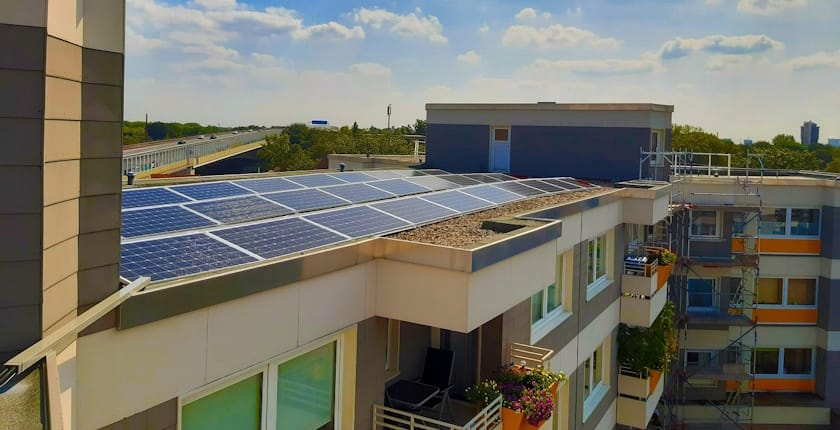
Prosumers in Romania operated 2.44 GW of capacity at the end of January or 63% more than one year before. Their number soared 79% to 203,984 and it is set to keep growing substantially with more government subsidies underway.

Once again, prosumers confirmed their role as the main pillar of Romania’s energy transition. Growth in the segment is fueled by government support, mostly through funds obtained via the European Union. The number of households, small firms and institutions with the status reached 203,984 by the end of January or a stunning 79% more than 12 months earlier. There were only 303 registered at the end of 2019!

Total capacity jumped 63% on an annual basis, to 2.44 GW, the National Energy Regulatory Authority (ANRE) said. Photovoltaic installations in Romania surged 57% last year, to 4.7 GW, according to the International Renewable Energy Agency (IRENA). It means prosumers still account for more than half.

The Environment Fund Administration (AFM) said it would propose a record EUR 442 million budget for the Casa Verde Fotovoltaice subsidy scheme for prosumers

The number of households was 180,617 two months ago, so roughly 2.4% are currently prosumers. They had 1.13 GW installed.

The remaining ones are legal entities, 23,277 of them, with 1.31 GW.

Most prosumers are in Ilfov county, almost 13,783, followed by Timiș (10,007) and Bihor (8,286).

The Environment Fund Administration (AFM) said it would propose a record EUR 442 million budget for Casa Verde Fotovoltaice. It is a subsidy program for the installation of solar panels, mostly for households. Last year the sum amounted to EUR 402 million.

This year the fund is introducing a scheme worth EUR 80.4 million for battery storage for prosumers. More than 66,000 candidates already applied for a maximum of EUR 6,000 per household for solar panels with storage systems.

President of the APCE association of prosumers and energy communities Dan Pîrșan said EUR 80.4 million for 2025-2026 enables one in four existing prosumers to install batteries and become almost energy independent.
by in News

Renewables equipment factory to contribute to just transition of coal region in Romania

Monsson Group is preparing to build a manufacturing facility in Petrila for renewable energy equipment, including robots that clean solar panels. The project received funding to contribute to the just transition of Romania’s coal region Jiu valley – Hunedoara.

An investment of nearly EUR 10 million in the first phase is underway in Transylvania, in the town of Petrila, economically devastated after the closure of a coal mine. The project is aimed at reviving the area with a factory for renewable energy equipment such as enclosures for battery energy storage systems, wiring and robots that clean photovoltaic panels.

Monsson Group revealed its facility would also manufacture gear for monitoring environmental parameters and tracking fauna in the area. The Sweden-based company has said 70% of the investment would be covered from Romania’s Just Transition Program which is in turn part of the European Union’s Just Transition Facility.

Romania is planning to prolong the operation of its coal power plants and mines for a smoother switch to renewable sources, in terms of electricity supply. However, such facilities are becoming less financially viable by the day all across the EU. Coal regions are facing economic blows from early shutdowns of power plants and mines.

First major private investment in Petrila

According to Monsson, the new factory would employ more than fifty people in the first phase. It expects to begin construction mid-year.

It is the first major private investment in Petrila, Mayor Vasile Jurca said. He said the project enables reskilling and sustainable development. The local authority provided the land for the factory. Romania has earmarked substantial funding for the construction of renewable energy equipment plants.

The second part of the plan is to install a 20 MWh battery energy storage system to provide system services to the national grid, followed by a 50 MWh unit.

Reskilling program underway

The group, which includes Wind Power Energy and its RenewAcad network of renewable energy training centers, established cooperation with the University of Petroșani in getting skilled workers. Monsson is one of the biggest renewable energy investors in the country.

Petrila is part of the Jiu Valley in Hunedoara county, Romania’s main coal region. It is located near Oltenia, the other coal complex, in the counties of Gorj and Dolj.

Notably, the Maritsa East 3 coal power plant in neighboring Bulgaria ceased operations yesterday again after it was briefly brought back online to maintain energy security.

by in News

Greek companies expand to Bulgaria with solar power investments

Greece’s government-controlled power utility PPC and Masdar’s subsidiary Terna Energy are separately building two photovoltaic plants in Bulgaria, worth an estimated EUR 190 million in total.

The biggest two renewable energy companies in Greece have taken over one major project each in neighboring Bulgaria, where domestic investors dominated the photovoltaics market until recently. Soon after government-controlled Public Power Corp. (PPC) said it began building a 165 MW solar power plant with batteries, Capital reported that Terna Energy plans to complete a 130 MW project by the end of next year.

The segment appears saturated, given the lack of energy storage capacities in Bulgaria to balance high PV output at times of abundant sunshine. Permits that the Sustainable Energy Development Agency (SEDA) issued show 4 GW in overall installed solar power capacity. Nevertheless, Executive Director of Electricity System Operator (ESO) Angelin Tsachev estimated there is as much as 5 GW, the media outlet noted.

In its annual statistics update, the International Renewable Energy Agency (IRENA) said Bulgaria hosted 3.9 GW of PV capacity at the end of 2024.

Terna Energy bought out initial developer one year ago

Terna Energy became a subsidiary of Abu Dhabi Future Energy Co. (Masdar) last year. The Greek company entered the ownership of the project firm Bio PD Solar Energy for the 130 MW facility three years ago with a 25% stake.

In mid-2024, Terna Energy Overseas Ltd., registered in Cyprus, became the sole owner. It invested some EUR 25 million and bought out Helios Construction Project. According to the article, the previous parent company is associated with businessman Ahmed Dogan. He was the founder and long-time leader of the Movement for Rights and Freedoms party, representing Muslim minorities.

Both projects are on municipal land

The project spanning more than 200 hectares was initially planned at 180 MW. The lot is on municipal land in Kameno in eastern Bulgaria.

According to the news website, the investment amounts to EUR 92 million. The location near the village of Vratitsa isn’t subject to an environmental impact assessment study except for the intended construction of a 33/110 kV substation.

Terna Energy said its former affiliate Terna, part of the GEK Terna conglomerate, is building the solar power plant in Burgas province.

New hybrid power plant in Bulgaria is part of PPC’s regional expansion

PPC is building its PV plant in the Chirpan municipality in Stara Zagora province. Having included a battery energy storage system in the project, and given the power links with its assets in Romania and Greece, the company is counting on a strategic advantage in the market with the new hybrid facility. PPC is pursuing major expansion in the region, including Italy.

The investment is valued at EUR 97 million, of which the energy storage segment accounts for EUR 10.2 million to EUR 12.8 million, the article adds.

The Colosseum site consists of 11 municipal properties formerly designated as agricultural land, on 200 hectares altogether. PPC bought the project from Enery. The company is headquartered in Austria and active in the renewables sector in Romania as well.