by in News

Global solar power capacity hits 2.2 TW in 2024, with Turkey among top growers

The world added 597 GW of photovoltaic capacity last year, achieving an astounding 36% rate of growth, SolarPower Europe found. China accounted for 55.1% of all new installations. Turkey is in the global top ten with its 1.42% annual share, while Greece is sixth in the world in the category of solar capacity per person.

SolarPower Europe calculated a much higher global total, 2.2 TW, for photovoltaic facilities at the end of 2024, than the International Renewable Energy Agency (IRENA) – 1.87 TW. The Global Market Outlook for Solar Power 2025-2029 showed annual growth of 36%, by a record 597 GW. The increase itself was 33% higher than in 2023, the update reads.

Photovoltaics accounted for 81% of all new renewable electricity capacity added worldwide. While remaining a modest contributor to overall electricity generation for now, its share reached 6.9%, nearly doubling in just three years. It took nearly 70 years to reach the first terawatt, but only two to more than double it.

Total global capacity is projected at 7.1 TW by 2030

Other renewables accounted for 25% of electricity output in 2024.

In its “most realistic,” moderate scenario, the report’s authors anticipate a 10% increase in new installations to 655 GW this year. Annual growth rates remain in the low double digits through 2029, reaching 930 GW. Total capacity is projected at 7.1 TW by 2030, compared to the 11 TW renewable energy target from the United Nations Climate Change Conference COP28.

China hosted 44% of global solar fleet at end-2024

A key issue is the uneven distribution of solar market growth, SolarPower Europe pointed out. China grew by 329 GW, which is 30% more than in 2023 and more than the combined total of the other top 10 markets! Of note, IRENA measured just 278 GW.

China’s increase was 55.1% of the global total last year. It hit 985 GW overall, the report reads. It is 44% of the global photovoltaics fleet, after 40% in 2023 and 34% in 2022. In IRENA’s statistics, China topped 50% of all solar power installations in the world.

Turkey spikes 76% to 19.7 GW

Turkey, the largest country in the region that Balkan Green Energy News covers, delivered 8.5 GW, catapulting its capacity by 76% to complete 2024 at 19.7 GW.

Its addition made up 1.42% of the world’s annual increase, earning it the seventh position. Turkey’s absolute increase was five times higher than in 2023. Rooftop photovoltaics attributed a stunning 90%.

There are nearly 70 companies in the country actively engaged in PV module manufacturing, with a total capacity exceeding 40 GW. Several investments in solar cell production increased the segment to 2 GW altogether in annual terms.

The number of countries with expansion greater than 1 GW per year is 35, after 31 in 2023. The group, which includes Greece, Romania and Bulgaria, is seen getting ten more members in 2025.

EU within reach of 2030 target

At the end of last year, Europe had a total installed capacity of 407 GW, which is 25.2% more than in 2023. The European Union accounted for 338 GW, growing 23.9%.

The medium scenario suggests the EU would climb to 797 GW altogether by 2030, exceeding the REPowerEU target of 750 GW. But it is 11% lower than in last year’s outlook.

In 2024, solar power generation in the European Union surpassed coal for the first time. Its share in the electricity mix exceeded 10% and reached 20% or more in markets such as Cyprus, Greece, Hungary and Spain. The last two even touched 25%.

Germany is Europe’s largest solar market for 13 years in a row. Overall capacity surged 21% to 101 GW.

Romania is advancing in 2025 by an estimated 67% to 2.9 GW. The government provided strong backing for the rally, advancing large-scale solar projects.

Greece is sixth in world in watts per capita

The report reveals that Germany became the third country hosting more than 1 kW of solar power per capita. It spiked 20.5% to 1,187 W.

The first is Australia, which leaped 10.9% to 1,521 W per person. The Netherlands advanced 13.4% to 1,491 W.

All other countries in the top 10 chart are in Europe. Greece is in the global vanguard, in the sixth place, after spiking 40.3% to 964 W for every inhabitant.

by in News

Landmark report demonstrates safety, cybersecurity, higher yield of SolarEdge PV systems

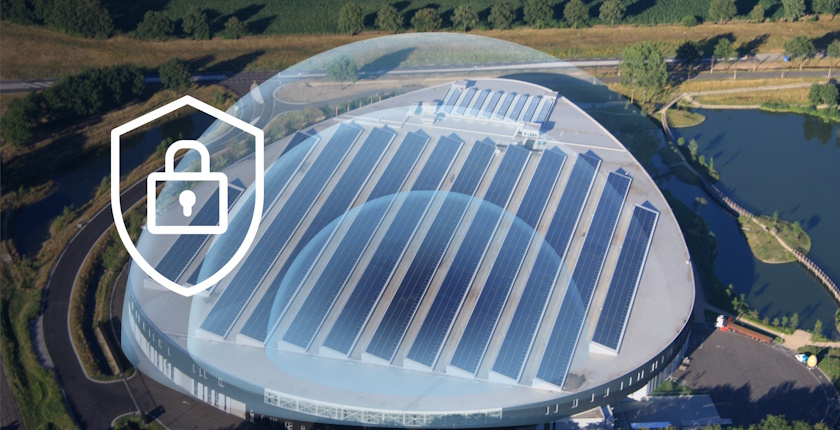
VDE Renewables found in its new report that SolarEdge’s advanced safety capabilities minimize photovoltaic system risks and effectively prevent fire hazards, while exceeding international PV safety regulations. SolarEdge has robust cybersecurity mechanisms, essential to mitigating risks associated with cyberthreats, and its solutions bring higher energy yields for both simple and complex roofs.

A new report by VDE Renewables, a subsidiary of the VDE Group, has demonstrated that SolarEdge’s inverter and Power Optimizer-based PV systems deliver measurable advantages in advanced safety, cybersecurity and higher energy production across a wide range of installation types.

In its in-depth assessment of Module-Level Power Electronics (MLPE) topology and SolarEdge’s approach to PV systems, the report highlights how SolarEdge’s advanced safety features reduce PV system vulnerabilities and exceed international PV safety standards. Reviewed and validated by VDE Renewables, the integration of multiple protective mechanisms including Sense Connect proactively identifies and addresses faulty connections long before abnormal temperature is reached.

SafeDC™, rapid shutdown, and module-level monitoring was reported to provide a proactive approach to risk mitigation to ensure a significantly higher level of protection for system operators, maintenance personnel, and emergency responders.

Photo: SolarEdge’s inverter + Power Optimizer solution shown to produce higher energy yields for both simple and complex roofs (4% and 10.5% more power, respectively)

Unsecure PV systems becoming more vulnerable to cyberthreats

The VDE Renewables report also emphasizes cybersecurity as a top priority in PV systems, noting that as solar technology becomes increasingly digitized and interconnected, unsecure PV systems also become more vulnerable to cyberthreats.

With PV systems now integral to energy infrastructure, the consequences of cyberattacks can extend far beyond individual installations, raising wider concerns around grid security and resilience. In this context, VDE Renewables validated SolarEdge’s strong cybersecurity credentials, recognizing its comprehensive, built-in defence architecture and highlighting its robust cybersecurity mechanisms that mitigate risks associated with cyberthreats.

These mechanisms comply with leading international cybersecurity regulations, including IEC 62443, NIST Cybersecurity Framework, and ISO/IEC 27001. Additionally, SolarEdge’s solution includes encrypted communication protocols, secure remote firmware updates, multi-level access control, continuous monitoring, and penetration-tested system architecture.

SolarEdge provides residential solutions bolstering output on complex roofs by 10.5%

VDE Renewables also validated the performance of SolarEdge’s residential solution against leading traditional string inverter systems, even when using multiple MPPTs. The report confirms results that show a 4% increase in energy production on simple (single facet with no shading) rooftops and an impressive 10.5% increase on complex rooftops.

These gains are attributed to SolarEdge’s use of MLPE-based Power Optimizers and advanced Buck and Boost technology. The VDE Renewables report highlights the SolarEdge ONE energy optimization platform that helps maximize saving potentials with support for both fixed and dynamic electricity tariffs, as well as design advantages such as the ability to use longer strings, enabling lower BoS costs and larger systems within the same roof area – further contributing to overall energy yield.

Gruenewald: SolarEdge’s technology demonstrates its strategic market position in safety, cybersecurity, and performance

The report was sponsored by SolarEdge to evaluate its Power Optimizer-based PV system.

Arne Gruenewald, Project Manager Batteries and Energy Storage Systems, VDE Renewables: “Our assessment shows that SolarEdge’s technology demonstrates its strategic market position in safety, cybersecurity, and performance – criteria that are essential for the technology’s long-term viability and trust.”

VDE Group offers quality assurance services for the global renewable energy sector.

Christian Carraro, General Manager Europe, SolarEdge: “We welcome VDE Renewables’ validation of our technology, being a trusted partner for quality assurance, risk minimization and certification. As the solar industry grows and evolves, it’s essential that we continue to prioritize not just performance, but also safety and cybersecurity. This report encourages us to keep raising the bar and deliver technologies that support more powerful and secure energy solutions.“

About SolarEdge

SolarEdge is a global leader in smart energy technology. By leveraging world-class engineering capabilities and with a relentless focus on innovation, SolarEdge creates smart energy solutions that power our lives and drive future progress.

SolarEdge developed an intelligent inverter solution that changed the way power is harvested and managed in photovoltaic systems. The SolarEdge DC-optimized inverter seeks to maximize power generation while lowering the cost of energy produced by the PV system.

Continuing to advance smart energy, SolarEdge addresses a broad range of energy market segments through its PV, storage, EV charging, batteries, and grid services solutions.

by in News

Electricity system in Spain, Portugal collapses

Power was out today throughout Spain and Portugal as well as in Andorra and parts of southern France, in one of the most serious such incidents so far, on a European scale. The European Commission’s Executive Vice President Teresa Ribera and other officials from the EU and the affected countries said there are no indications of sabotage or cyberattack.

Grid operators and electricity producers are gradually restoring the power supply after a massive outage struck the Iberian peninsula today. Prime Minister of Spain Pedro Sánchez convened the National Security Council. It is one of the most serious blackouts in Europe in many years. The outage spread throughout Spain and Portugal.

Power was out in Andorra and, briefly, in parts of southern France. Transportation and telecommunications were heavily affected.

Spanish TSO Red Eléctrica de España called it a “collapse of the Iberian electricity network.” The company said it would take six to ten hours to restore it. Notably, the production system is relying almost completely on photovoltaics and wind farms at the moment, so just a few hours of solar power production remain.

The outage paralyzed major cities including Madrid, Barcelona and Lisbon and caused disturbances in the European grid. The European Commission’s Executive Vice President for Clean, Just and Competitive Transition and Commissioner for Competitiveness Teresa Ribera said there were no indications that “any kind of sabotage or cyberattack” was behind the grid collapse.

According to the Government of Portugal, the incident started from outside the country

According to the Government of Portugal, the incident started from outside the country and, apparently, in Spain.

Shares of solar, wind power production in Spain breaking records

In the spring and autumn, when there is little to no demand for heating or cooling, electricity grids in most of Europe are sometimes strained from surges in high solar and wind power production, amid a lack of energy storage and flexibility capabilities that would balance the surplus.

On April 16, the Spanish electricity system achieved total coverage for the first time with renewable energy sources. At one point during the day, wind and solar met 100.6% of demand. Then on April 21, solar power generation was equivalent to a record 78.6% of domestic demand for a moment.

Reid: The massive outage occurred while prices are negative in electricity markets across Europe

“Spanish grid operator Red Eléctrica has so far blamed a power ‘oscillation’ on the power outage. We still don’t know the cause but it looks like problems at the Spanish-French power interconnector led to the Spanish grid operator islanding their power system and I would say at this point they lost control,” said Gerard Reid, investor and strategic advisor in energy, finance and geopolitics.

It has also proven difficult to restore power with multiple black start (restart) procedures taking place, but the issue is that at the time of the blackout there were no conventional power units in operation, he pointed out. Reid added it makes the restart complicated and stressed that Europe requires enhanced grid-scale battery storage solutions, including for black start capabilities.

He also highlighted the fact that the massive outage occurred while prices are negative in electricity markets across Europe.

Of note, a grid incident last summer left much of the Western Balkans and parts of Croatia out of power for several hours.

by in News

Electricity system in Spain, Portugal collapses amid extreme temperature variations

Power was out today throughout Spain and Portugal as well as in Andorra and parts of southern France, in one of the most serious such incidents so far, on a European scale. The European Commission’s Executive Vice President Teresa Ribera and other officials from the EU and the affected countries said there are no indications of sabotage or cyberattack.

REN, the transmission system operator (TSO) of Portugal, said extreme temperature variations inside Spain led to anomalous oscillations in 400 kV lines.

Grid operators and electricity producers are gradually restoring the power supply after a massive outage struck the Iberian peninsula today. Prime Minister of Spain Pedro Sánchez convened the National Security Council. It is one of the most serious blackouts in Europe in many years. The outage spread throughout Spain and Portugal.

Power was out in Andorra and, briefly, in parts of southern France. Transportation and telecommunications were heavily affected.

Spanish TSO Red Eléctrica de España called it a “collapse of the Iberian electricity network.” The company said it would take six to ten hours to restore it. Notably, the production system is relying almost completely on photovoltaics and wind farms at the moment, so just a few hours of solar power production remain.

Outage could have originated from power line in France damaged by fire

The outage paralyzed major cities including Madrid, Barcelona and Lisbon and caused disturbances in the European grid. The European Commission’s Executive Vice President for Clean, Just and Competitive Transition and Commissioner for Competitiveness Teresa Ribera said there were no indications that “any kind of sabotage or cyberattack” was behind the grid collapse.

According to the Government of Portugal, the incident started from outside the country

According to the Government of Portugal, the incident started from outside the country and, apparently, in Spain.

Portuguese transmission system operator REN first suggested that damage to a high-voltage line in southwestern France from a fire was a possible cause. The company later blamed extreme temperature variations inside Spain for anomalous oscillations in 400 kV lines.

Shares of solar, wind power production in Spain breaking records

In the spring and autumn, when there is little to no demand for heating or cooling, electricity grids in most of Europe are sometimes strained from surges in high solar and wind power production, amid a lack of energy storage and flexibility capabilities that would balance the surplus.

On April 16, the Spanish electricity system achieved total coverage for the first time with renewable energy sources. At one point during the day, wind and solar met 100.6% of demand. Then on April 21, solar power generation was equivalent to a record 78.6% of domestic demand for a moment.

Reid: The massive outage occurred while prices are negative in electricity markets across Europe

“Spanish grid operator Red Eléctrica has so far blamed a power ‘oscillation’ on the power outage. We still don’t know the cause but it looks like problems at the Spanish-French power interconnector led to the Spanish grid operator islanding their power system and I would say at this point they lost control,” said Gerard Reid, investor and strategic advisor in energy, finance and geopolitics.

It has also proven difficult to restore power with multiple black start (restart) procedures taking place, but the issue is that at the time of the blackout there were no conventional power units in operation, he pointed out. Reid added it makes the restart complicated and stressed that Europe requires enhanced grid-scale battery storage solutions, including for black start capabilities.

He also highlighted the fact that the massive outage occurred while prices are negative in electricity markets across Europe.

Of note, a grid incident last summer left much of the Western Balkans and parts of Croatia out of power for several hours.

by in News

Episodes of negative power prices in Slovenia, Romania spread to workdays

Romania registered the first negative day-ahead electricity price for a workday. The phenomenon, which only used to occur on holidays and weekends, has emerged in Slovenia as well.

In spring and autumn, most of Europe occasionally faces periods of excessive power grid loads. The rapid rise in solar and wind power production and the lack of accompanying energy storage and flexibility capabilities are straining the system at times when demand is low. Advanced electricity markets countered the issue by introducing negative prices.

When prices hit zero or go below zero, the seller delivers electricity without compensation or even has to pay to the buyer, respectively. The phenomenon was normally reserved for holidays and weekends, but more day-ahead markets are now experiencing it for workdays as well.

Downward pressure in Romania from strong inflow of negatively priced electricity via Hungary

Romania saw its first such episode yesterday, on Sunday, in the session for today, Profit.ro reported. Prices in its day-ahead market are negative in five out of 24 periods of one hour, between 11:00 and 16:00.

The country is importing at almost 2 GW via Hungary and exporting at up to 1.5 GW to Bulgaria, the news website added. The article notes that renewable energy producers, especially in Germany, where prices are also negative, are exporting to other markets to ease the impact. They usually benefit from subsidies, so generating electricity isn’t necessarily unprofitable even when they sell at a loss.

In addition, shutting down and restarting power plants can be more costly than paying the other side to take excess output.

The level in Romania went to as low as EUR 6.18 per MWh below zero. But the daily average is EUR 76.54 per MWh. The peak, is EUR 198.16 per MWh, between 20:00 and 21:00, when there is no sunlight and prosumers only consume.

Negative prices turn Slovenia’s HSE into electricity consumer

Prices in Slovenia for today also came in negative between 11:00 and 16:oo, which is very rare for a workday, Naš stik reported. Among other factors, the two-day May 1 holiday shortens the current workweek. The lowest, between 14:00 and 15:00, is EUR 6.18 euros per MWh below zero.

In comparison, the lowest price for Sunday on the BSP Southpool exchange was EUR 104 per MWh under zero.

At one point during the Easter holiday, virtually all HSE’s production capacities were offline and the Avče pumped storage hydropower plant was storing electricity from the grid

“Last year, we had 219 hours in Slovenia when prices were negative. This year, we are already at number 72, and we have only just entered the critical period,” said Deputy Director of System Operations of ELES Aleš Donko. The company is Slovenia’s transmission and distribution system operator.

State-owned power utility Holding Slovenske elektrarne (HSE) found itself in an unusual situation during the Easter holidays because of negative prices.

“For a while, we were actually an energy consumer, not a producer, which is our core mission… Virtually all our power plants were shut down, and the Avče pumped storage hydropower plant was pumping water into the upper reservoir at full capacity,” Head of Operation Planning and Management Jernej Brglez said.

Portugal and Spain, which suffered major outages today together with France, both registered negative prices every day in the third week of April.

Also of note, Greece is preparing to introduce negative prices in the balancing market.

by in News

Horius becomes exclusive distributor of PupinEnergy chargers for Serbia

The company Horius d.o.o. has officially signed an exclusive distribution agreement, making Horius the sole authorized distributor of PupinEnergy AC electric vehicle chargers in the Republic of Serbia. This partnership marks a significant step forward for e-mobility development in the country, providing high-quality and reliable EV charging solutions inspired by the legacy of one of Serbia’s greatest scientists – Mihajlo Pupin.

PupinEnergy draws its inspiration from the work of Professor Mihajlo Idvorski Pupin, a Serbian-American scientist and inventor whose 34 patents – including the famous Pupin coil – still play a crucial role in telecommunications and electrical engineering. Honoring his legacy, PupinEnergy designs advanced chargers that combine technological sophistication, ease of use, and reliability in everyday conditions.

Product line available in Serbia

Through the partnership with Horius, customers in Serbia will have access to three key PupinEnergy charger models:

  • PowerGo MultiPlug 2000 – A portable 11 kW charger, perfect for travel and international use. Equipped with automatic fault detection, overheating protection, and an ergonomic handle for easy handling.
  • SkyCharge 500 (Lite, Ultra, Pro) – A premium ground-mounted charger available in 7 kW to 22kW variants. Designed for both residential and commercial users who demand high performance and easy installation, with weather-resistant construction.
  • WallMax 1000 (Lite, Ultra, Pro) – A wall-mounted home charger offering up to 22 kW charging power. Built for fast and reliable charging, it features a modern design, excellent weather resistance, and a three-year warranty.

Horius – a partner in sustainable energy

Horius has long been a leader in the transition to sustainable energy solutions, offering comprehensive services in the design, construction, and management of solar power plants, as well as energy trading. As PupinEnergy’s exclusive partner in Serbia, Horius further strengthens its mission toward a greener and more energy-efficient future.

With this collaboration, PupinEnergy and Horius send a clear message: the future of mobility in Serbia is electric, sustainable, and powered by cutting-edge technology rooted in local spirit and global quality.

by in News

Project for first gas power plant in Albania enters next stage

In partnership with domestic company Gener 2, Greece-based GEK Terna and DEPA Commercial are preparing to build the first gas power plant in Albania. The current phase involves seeking financing. Separately, Azerbaijan’s SOCAR is expected to start installing the first gas distribution network in Albania, in the city of Korça.

Albania is almost 100% dependent on hydropower plants in domestic electricity production. Efforts are underway to diversify the mix with solar and wind energy and introduce storage capacities. Actually, not a single wind turbine has been built yet, but there is another opportunity for strengthening the energy supply: with gas from the Trans Adriatic Pipeline – TAP. Greek conglomerate GEK Terna and state-owned gas supplier, importer and trader DEPA Commercial intend to build the first gas power plant in Albania, with a local partner.

Late last year, the Council of Ministers, the country’s government, approved the project and determined a three-year deadline for completion. The site for the gas plant is in the municipality of Roskovec in Fier in western Albania. Notably, the county attracts most solar power projects in the country.

Gas facility in western Albania reportedly to have 147 MW in capacity

In the current project development phase, Fier Thermoelectric, the joint venture, is seeking financing, Insider.gr reported. The facility is envisaged to have 147 MW in capacity, according to the article. The government’s decision was for 170 MW.

DEPA Commercial, also known as DEPA Emporias (in Greek), DEPA Commerce and DEPA Trading, entered the project in 2023. It took over a 35% stake from GEK Terna and signed a seven-year gas supply contract for the proposed facility.

They have equal ownership, while Albanian company Gener 2 holds the remaining 30%. It is active in construction, infrastructure, civil works, energy, real estate development, telecommunications and retail in Albania and the broader region.

Both GEK Terna and Gener 2 have solar power projects in Albania as well

Gener 2 has submitted a 50 MW solar power project to the government a year ago. The location is in Bistrica in Finiq municipality, Vlora district.

The government’s approval is not for a concession, but the operator is obligated to either deliver 2% of electricity it produces, as royalty – royal right, or give an equivalent sum for the state budget. The permit is for 49 years since the entry of the decision into force. The firm also needs to sell a share of output to the public power supplier, in accordance with the country’s law.

A group of residents of surrounding villages has repeatedly protested against the investment, arguing that they weren’t consulted. The locals even filed a criminal complaint against Roskovec Mayor Majlinda Bufi.

They claim that the gas facility would pollute the area and jeopardize public health while exporting 90% of the produced electricity.

GEK Terna to benefit from synergies with its gas power plants in Greece

GEK Terna has three gas-fired power plants in Greece. The group’s other energy investment in Albania, through its subsidiary Heron, isn’t without controversy either.

The project is for a 93 MW photovoltaic plant in Libohova, near the Greek border, in Gjirokastër county. Project firm Faethon won approval from the Council of Ministers in Tirana in early 2024. It would be valid for up to 49 years.

GEK Terna’s solar power plant project in Gjirokastër was disrupted last year over fake documentation

Local press wrote last summer that some land documentation for the 122-hectare area was forged, prompting a raid and arrests in the cadastral office in Gjirokastër. The operator of the Libohova plant is obligated to deliver 2% of its electricity for free, too.

First gas distribution network in Albania about to be built in Korça

Albania aims to become a net electricity exporter before the end of the decade. There is also a project for a liquefied natural gas (LNG) terminal in the port city of Vlora, where a gas-fired power plant is planned to be built.

A long-awaited project called Nur, for the gasification of Korça, was presented last week. It would be the first city in Albania with gas.

The final investment decision is expected this year. State Oil Company of Azerbaijan (SOCAR) would be tasked with implementation, with financing from its government. The estimated cost is EUR 21 million. The idea is to then expand the local gas distribution network to nearby Pogradec and Erseka.

Fier and Elbasan are next on the schedule. Azerbaijan and its company are also interested in the project for the LNG terminal in Vlora and to connect the facility with TAP.

by in News

Turkey to manufacture green hydrogen, nuclear, CCS equipment

The 2030 Industry and Technology Strategy includes setting up industrial facilities in Turkey for nuclear energy, green hydrogen, battery storage and carbon capture and storage (CCS). The country is planning to establish a value chain for critical raw materials. The government vowed to support the development of semiconductor technology, autonomous and flying vehicles and cybersecurity solutions, alongside innovations for electric vehicles and solar and wind power.

With its recently unveiled 2030 Industry and Technology Strategy, Turkey announced the ambition to upgrade its industrial production to one of the most advanced in the world. As Russia’s Rosatom is completing the country’s first nuclear reactor in Akkuyu, the government is planning to develop its own technology in the segment.

The strategy involves setting up industrial clusters for equipment and infrastructure. Among the possible technologies are molten salt reactors. The Scientific and Technological Research Council of Türkiye (TÜBİTAK), Turkish Energy, Nuclear and Mineral Research Agency (TENMAK) and Istanbul Technical University (İTÜ) are tasked with establishing a nuclear tech park.

Green hydrogen mostly needed for decarbonizing hard-to-abate industrial production

TÜBİTAK is responsible for developing domestic electrolyzers as well. The national hydrogen program is set to bring support for integrating the production of green hydrogen, storage, transportation and consumption. The last of the four is especially focused on energy-intensive industries such as steel, petrochemicals and fertilizers.

Another segment that would get incentives is the use of hydrogen in fuel cell vehicles including heavy vehicles. The strategy envisages setting up pilot zones for green hydrogen production, with electrolyzers powered by wind and solar energy.

Turkey has high ambitions for high-tech exports

Turkey has revealed the goal of tripling its high-tech exports to USD 30 billion by the end of the decade. It is part of an ambition to lift industrial exports to USD 400 billion from last year’s USD 247 billion. At the same time, the government’s target for the overall valuation of domestic tech startups is USD 100 billion.

The 2030 Industry and Technology Strategy has other chapters, too, like carbon capture, utilization and storage (CCUS or just CCS), access to critical raw materials, semiconductor and battery manufacturing and cybersecurity. Officials vowed to continue prioritizing domestic electric vehicles, but with investments in autonomous operation systems and even flying cars.

Cybersecurity solar and wind turbine technologies. Turkey apparently remains dedicated to expanding the industrial base for solar panels and wind turbines as well.

by in News

MORE puts 43.2 MW wind park in northern Greece into regular operation

Motor Oil Renewable Energy (MORE) received the operating license for its 43.2 MW wind power plant near the border with North Macedonia. The facility was in test operation since the fourth quarter of 2023.

MORE has 839 MW in renewable electricity plants in operation, aiming to reach 2 GW by 2030. There is already almost 3 GW in the project pipeline. The subsidiary of oil refiner Motor Oil Hellas recently received the operating license for its Kellas (Kella) wind park in Amyntaio in the Western Macedonia region.

The facility was in test operation since the fourth quarter of 2023. It has 43.2 MW in nominal capacity, while the maximum is 40 MW. The wind power plant, consisting of nine Nordex N-149 turbines, is near the border with North Macedonia.

The parent company financed the endeavor by buying a EUR 41.3 million bond that a project firm issued. In 2023 it refinanced it with EUR 47 million. MORE said that it recently also completed a wind farm in Phocis (Fokida). The combined capacity with the one in Amyntaio is 65 MW.

Partnership with Terna Energy for Greece’s first offshore wind park

The renewable energy company is planning floating and conventional wind farms as well. Its joint venture with Masdar’s Terna Energy, called Aioliki Provata Traianoupoleos, is developing a 400 MW project for a site on the Ionian Sea between Alexandroupolis and the island of Samothrace. It would be Greece’s first offshore wind power plant.

MORE’s solar power joint venture with PPC Renewables, the green energy branch of government-controlled Public Power Corp., has received final connection offers earlier this month for 882.4 MW. Six locations, for 742.4 MW altogether, are in the Kozani region, a 92 MW project is in Kilkis and another one, of 48 MW, is in Serres, all in northern Greece.

The idea is to sell the electricity to the Greek industry through bilateral power purchase agreements (PPAs), as well as to support farmers participating in the GAIA program, with a special tariff.

The two renewable energy companies already have final connection offers for 300 MW and they expect another 311 MW soon. Separately, PPC and Motor Oil are planning a 50 MW hydrogen production facility, as Hellenic Hydrogen.

MORE invested over EUR 1.6 billion in past two years

MORE said it invested over EUR 1.6 billion in the past two years. It entered a partnership in 2024 in Romania with Premier Energy for solar power plants with storage. MORE’s battery projects are underway in Greece, too.

GEK Terna and Motor Oil have built an 877 MW gas power plant in Komotini, in the region of East Macedonia and Thrace. The facility is about to enter regular operation, Energypress reported.

by in News

Constitutional Court of Bulgaria annuls exemptions for renewables on agricultural land

The Constitutional Court of Bulgaria scrapped a legal provision that enabled investors to build agrivoltaic facilities on high-grade agricultural land without changing its purpose, and one that simplified the procedure of changing the purpose to build renewable energy plants intended for non-agricultural needs.

Authorities can’t simplify procedures for renewable energy plants at the expense of agricultural land, a limited and non-renewable resource, according to the Constitutional Court of Bulgaria. The judges scrapped controversial measures aimed at promoting agrivoltaic and green energy facilities.

President Rumen Radev challenged them a year and a half ago, after the National Assembly changed the Agricultural Land Protection Act. He argued that it increases the risk of uncontrolled land conversion. The amendments have also affected energy legislation.

The court said the country’s constitution obligates the government to protect the environment and biodiversity and ensure the rational use of natural resources. Arable land is only for agricultural purposes and changes are allowed only exceptionally, if there is proven need and in line with the procedure determined by law, it added.

Agrisolar exemption lacked clear, precise criterion

It is unacceptable for basic legal provisions to be introduced in a bylaw to fill gaps in the law, the ruling reads.

The Constitutional Court annulled the exemption for agrivoltaic (agrisolar) projects from the obligation to change the purpose of the land. The definition of the concept in a bylaw, that it allows unhindered use of agricultural land, is insufficient for an exception, judges explained. They said a clear and precise criterion is required.

The other legal provision that the court scrapped was the simplification of the procedure to repurpose agricultural land for investments in renewable energy plants for non-agricultural purposes. Radev has disputed another similar measure, but parliament deleted it from the law in the meantime, so the Constitutional Court rejected his complaint.

Notably, investors now face higher expenses.

Upon Radev’s complaint, lawmakers reinstated rule protecting higher-quality arable land

In 2013, the president also moved to overturn allowing wind, solar, hydropower and geothermal and bioenergy facilities on agricultural land graded 5 to 10.

But lawmakers soon limited the scope to grades 7-10, like before, so the panel rejected his request to determine the constitutionality of the original rule.