by in News

Alteo’s Chikán: Aggregators have AI solutions for grid stability, production optimization (video)

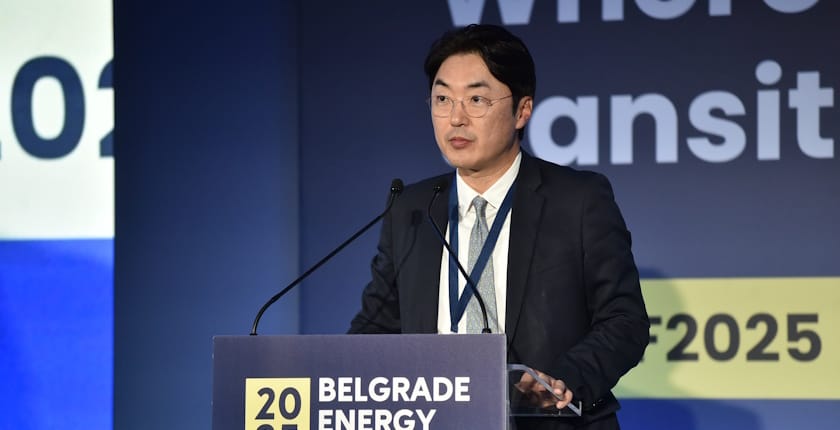
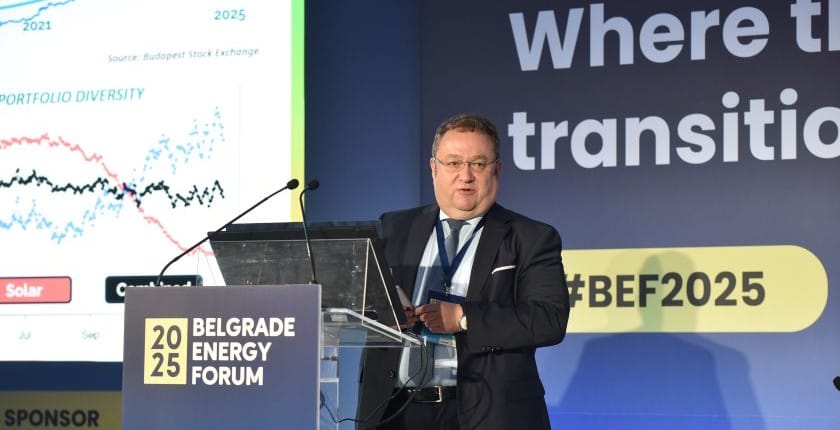
Factors like power price volatility, the global shift in policy making and the need for flexible solutions for the integration of renewables are creating an important momentum for developers and aggregators, Chief Executive Officer of Alteo, Attila Chikán, said at Belgrade Energy Forum 2025. The company is expanding in Central and Southeastern Europe with investments in power plants and its AI-backed platform for operating third-party assets.

The electricity system needs to become more and more flexible to accommodate weather-dependent, intermittent sources – solar, wind and hydropower, Alteo’s CEO and Chairman of the Board Attila Chikán said and pointed out that the outage in Spain and Portugal on April 28 highlighted the need for investing in grid stability and upgrades.

In his keynote speech at Belgrade Energy Forum (BEF 2025), he stressed that a global shift in policy making in the sector, particularly in the United States and Europe, is bringing both challenges and opportunities. In Chikán’s view, the situation creates an important momentum for developers and aggregators.

[wpcc-iframe title=”Belgrade Energy Forum 2025 – Attila Chikan Jr., CEO and President of the Board, ALTEO Plc” width=”500″ height=”281″ src=”https://www.youtube.com/embed/FZCrhx8yh6E?feature=oembed” frameborder=”0″ allow=”accelerometer; autoplay; clipboard-write; encrypted-media; gyroscope; picture-in-picture; web-share” referrerpolicy=”strict-origin-when-cross-origin” allowfullscreen=””]

“In the past five years we have seen a great deal of price volatility on the markets in the region. If you look into the future, taking into account the impact of the ambitious plans of regional countries to expand renewable power, one might expect even more pressure on balancing price volatility,” he asserted.

Role of international initiatives

Alteo’s CEO said tailored incentive mechanisms are essential for developing a balanced energy mix. There are also major endeavors on an international scale, Chikán added: connecting markets with diverse geographical characteristics, power plant portfolios and different supply-demand balances.

He explained that cross-border initiatives such as PICASSO and the Blue Sky project bring electricity exchanges in the region closer together. Interconnectors like the Pannonian Corridor and the proposed Black Sea green cable contribute to balancing and the management of energy price volatility, Chikán noted.

Future-proof tech solutions required for risk mitigation

In risk mitigation, the energy system’s stability benefits from future-proof technological solutions as well, namely smart metering, advanced weather forecasting and artificial intelligence–based production optimization, he said. This is where aggregator companies like Alteo come into the picture, its chief underscored.

As for its hardware, the company based in Budapest operates a diverse and balanced production portfolio of gas power plants and renewables, combined with storage, Chikán added.

Alteo runs a portfolio of gas power plants, renewables and storage facilities

“Sounds good, but without a well-designed and functional software, any hardware is purely a collection of materials. And even if they do operate, for sure they operate in a suboptimal way, without synchronization,” he stated.

That’s why Alteo developed its own production management platform, which it offers as a software-as-a-service (SaaS) solution as well. The company also supports the operation of 2 GW in third-party capacity, mostly photovoltaics.

“We optimize production in an automated way, using artificial intelligence, integrating real-time weather forecast data, capacity data and market data,” Chikán stressed.

The platform includes executing trading activities. The partners don’t have to deal with scheduling and the balancing energy costs, he said. The company makes a renewable electricity product closer to baseload, Alteo’s head asserted.

Slovakia, Croatia, Serbia are primary investment destinations in Alteo’s regional expansion

Early this year, the company unveiled a strategy for expansion in Hungary as well as into Slovakia, Croatia and Serbia as primary investment destinations. Alteo revealed it is interested in Poland, Czechia, Slovenia, Bosnia and Herzegovina, Montenegro and North Macedonia, too.

Chikán said it also aims to position itself in operations and maintenance (O&M), among other segments. Alteo is particularly seeking stable and reliable AI-based aggregator partnerships, he noted. The company has an investment target of up to EUR 3.5 billion by the end of the decade.
by in News

Hidroelectrica picks contractor for PV systems on 20 hydropower plants

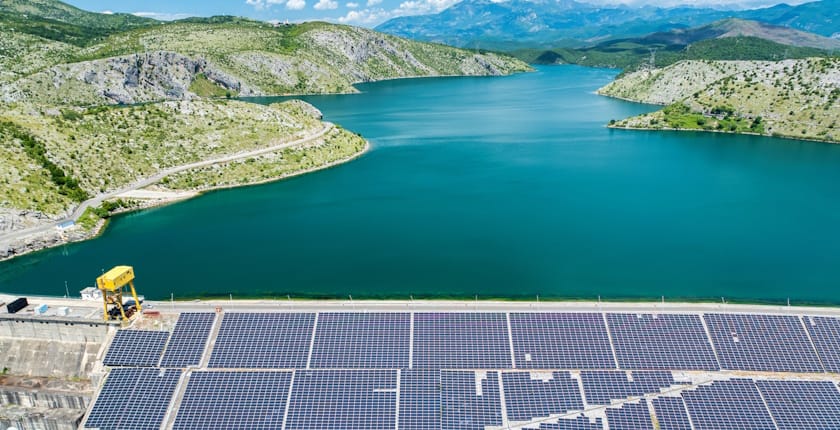
Romanian state-owned hydropower plant operator Hidroelectrica signed a deal with Servelect and subcontractor Electroplus, which need to install solar panels on the roofs of 20 hydroelectric plants. They are on the middle and downstream parts of the Olt river.

Combining hydropower with photovoltaics including floating solar power plants is becoming popular. The two sources are compatible, especially if there is a dam, as it can save water in reservoirs. The grid infrastructure for PV panels is already there and there are usually no land ownership issues. Hidroelectrica, which mostly operates hydropower plants, is about to solarize its existing facilities.

The Romanian state-owned company pursuing diversification signed an agreement with Servelect and its subcontractor Electroplus. There were four bids in the tender.

First solar power project for Hidroelectrica

Solar power systems will be on the roofs of 20 hydropower units on the middle and downstream sections of the Olt river. Hidroelectrica, listed at the Bucharest Stock Exchange since 2023, turnkey deal, said it aims to optimize production costs. However, it didn’t reveal whether it would operate the colocated assets jointly, as hybrid power plants.

Hidroelectrica is the largest electricity producer in the country, but it will be its first solar power units. The deal, for an overall 2.96 MW, is worth EUR 1.77 million excluding value-added tax. The deadline is 24 months, of which four months for the design.

Servelect, Electroplus responsible for all phases from procurement to commissioning

The utility also tasked the two firms, based in Cluj-Napoca, with manufacturing and procurement, transportation, testing and commissioning. The PV systems would consist of 620 W panels and 100 kW inverters. Hidroelectrica estimated the combined annual output at 3.71 GWh.

The company operates 188 hydropower plants, 6.4 GW overall, and the Crucea Nord wind park of 108 MW. Earlier, Hidroelectrica and Masdar were considering a pilot project, under an upcoming joint venture, for floating solar power plants on seven reservoirs, also on the Olt.

Servelect is active in engineering and energy services. It was founded in 2005. Electroplus, which handles electrical installations, operates since 2001.

by in News

North Macedonia adopts Law on Energy

With a majority of votes, 62 out of 120, the Assembly of North Macedonia adopted the Law on Energy. The government’s representatives say it is systemic, comprehensive, and reform-oriented legislation laying the foundation for the country’s new energy policy. The act aligns the country’s legal framework with the European Union.

The new Law on Energy will bring numerous benefits to the country and its energy future, according to the Government of North Macedonia. They include a liberalized, transparent and competitive electricity market ensuring fairer prices and more choice for consumers, the introduction of smart meters for more accurate consumption measurement, and daily insight for consumers into their electricity usage.

The law is compatible with the reform agenda for the Western Balkans and with EU directives. Its pillars are:

  • A significant increase in the share of renewable energy sources in final consumption;
  • Greater energy efficiency and reduction of losses;
  • An open energy market in which citizens become active participants – producers, sellers, and members of energy communities.

The law supports new concepts such as citizen energy communities and demand-side management models, increased market liquidity, and broader access to energy sources for the economy, along with equal investment opportunities.

It addresses infrastructure stability through investments in storage systems and their digitalization, as well as providing a stable, transparent, and predictable framework for domestic and foreign investors. The law strengthens the capacities of regulators and operators, creates conditions for greater integration with regional and European energy networks, and enables new investments in solar, wind and other renewable sources, district heating, gasification, storage and digitalized grid infrastructure.

Božinovska: New law paving way for energy sovereignty for Macedonia

Minister of Energy, Mining and Mineral Resources Sanja Božinovska said in parliament ahead of the vote that the Law on Energy is the foundation of the national transformation toward a clean, sustainable and fair energy future.

„This is a law that creates opportunities but also demands responsibility. Energy is not just the engine of the economy; it is the basis for a quality life. With this law, we are opening the door to an energy sovereign, green and European Macedonia. This law is more than a normative act – it is a signpost for the future. A chance we must not miss,” she said.

Transparent, predictable investment framework

The law includes provisions for protecting vulnerable groups, supporting the fight against energy poverty and ensuring fair access to energy for all.

According to the ministry, the law provides a stable, transparent and predictable framework for domestic and foreign investors.

All EU energy directives have been implemented, said President of the Energy, Water Services and Municipal Waste Management Services Regulatory Commission (ERC or RKE) Marko Bislimoski. Of note, yesterday he spoke at the Belgrade Energy Forum – BEF 2025, organized by Balkan Green Energy News.

The drafting process involved institutions, experts, the business community, operators and the national regulator. A total of 61 amendments were adopted.

Unlike the ruling majority, the Left (Levica), an opposition party, claimed the Law on Energy does not protect consumers or national interests. Out of 11 amendments that it submitted, only four were adopted. They include provisions aimed at protecting consumers from unrealistically high electricity bills.

by in News

Consortium completing spatial plan for solar-BESS strategic partnership in Serbia

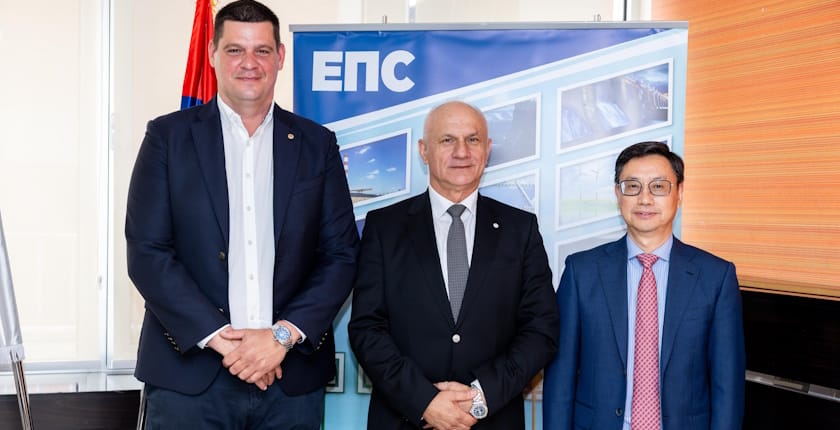
Representatives of Hyundai Engineering and UGT Renewables, the companies developing a solar power project in Serbia of 1.2 GW in total, and with batteries, said the strategic partnership is a step toward expansion in the surrounding region. Spatial planning is nearly complete.

Following the signing of grid connection contracts last week, the Hyundai Engineering – UGT Renewables consortium is advancing the design and permitting procedures within its strategic partnership in Serbia.

The two companies are tasked with building a group of photovoltaic plants of 1.2 GW in total peak capacity and connections of 1 GW overall, alongside battery energy storage systems (BESS) with a combined 200 MW in operational power and a maximum 400 MWh in capacity.

Group of hybrid power plants to be transferred to EPS

In a keynote speech at Belgrade Energy Forum – BEF 2025, Vice President of Hyundai Engineering Seung-Won Lee revealed that the consortium is finalizing the special plans for special purpose areas. The facilities will be handed over to Serbia’s state-owned power utility Elektroprivreda Srbije (EPS), he noted.

The representative of the South Korea–based company added that the PV plants would generate 1.5 TWh per year and offset more than one million tons of carbon dioxide emissions. It is one of the largest renewable energy projects in Europe and a cornerstone for Hyundai Engineering, Lee pointed out.

UGT Renewables has project pipeline of 20 GW

Global Executive Advisor of UGT Renewables Chan-Woo Park said it is the largest renewable energy developer, internationally, in the United States. Its portfolio of companies is operating on four continents, he added. The regions include Southern Africa, the Middle East and Latin America, Park underscored.

The solar power and energy infrastructure projects under development account for 20 GW, UGT’s representative asserted.


It has established partnerships worth over USD 30 billion altogether, with Hyundai Engineering and other companies including Nextracker, Shoals Technologies, Hitachi Energy and Tesla Energy, Park stressed.

According to the update, the strategic partnership in Serbia is the beginning of the consortium’s regional expansion in the surrounding region.

by in News

CWP Europe signs PPA, CfD for its Solarina PV project with Serbia’s EPS

CWP Europe signed a power purchase agreement (PPA), including balancing responsibility, and a contract for difference (CfD) for its Solarina photovoltaic project, with Serbia’s state-owned power utility Elektroprivreda Srbije (EPS).

Solarina is a special purpose vehicle or SPV for a photovoltaic park of 150 MW in connection capacity. Its site is near the city of Zaječar in eastern Serbia. The developer, CWP Europe, won a CfD in February for 105 MW at the country’s second solar power auction. All other projects were for 10 MW at most.

Executive Vice President of CWP Europe Maja Turković signed a PPA and the contracts for difference and balancing responsibility for Solarina with Assistant to CEO of EPS for Power Portfolio Management David Žarković.

Largest single PPA ever signed for solar power with EPS

The agreement marks a major milestone in Serbia’s energy transition – it is the largest single PPA ever signed for a solar project with EPS, Turković pointed out. “We thank the Ministry of Mining and Energy and EPS for their trust and another opportunity to jointly contribute to a more stable and greener energy future for Serbia,” she added.

CWP Europe has a project pipeline of more than 10 GW in Southeastern Europe, Moldova and Ukraine

All green electricity generated by the Solarina solar park will be supplied to the domestic market at a competitive price, enhancing the stability and sustainability of the country’s energy supply, CWP Europe added. Of note, the CfD is for EUR 52.89 per MWh.

“The continuation of the cooperation confirms once more that EPS is a reliable partner and associate to everyone whose business activity involves green energy. In addition, this way we also confirm the joint dedication to Serbia’s energy transition and the development of renewable energy sources, as EPS will offtake all produced energy and it will remain in our country,” Žarković stated.

PPAs for projects Solarina, Vetrozelena are both for entire output

Serbia’s state-owned power utility has the same arrangement since 2023 for the Vetrozelena wind power project, which was developed by CWP Europe and also won market premiums, at the first round of renewable energy auctions. Both PPAs are for the entire output.

The company has a project portfolio of more than 10 GW in total for wind and solar power and battery energy storage systems in Serbia, Bulgaria, Romania, Montenegro, Albania, North Macedonia, Croatia, Moldova and Ukraine.

CWP is a silver sponsor of the two-day Belgrade Energy Forum – BEF 2025, which is starting tomorrow. Maja Turković will participate in the panel discussion ‘Energy revolution underway – uniting efforts to deliver green, intelligent and sustainable energy solutions’.

by in News

Electrohold Trade partners with TMH to optimize 2.5 GWh of battery storage in Bulgaria

Early next year, The Mobility House (TMH) is set to ramp up the aggregation of Electrohold’s energy assets in Bulgaria under a newly signed deal. It focuses on the planned 2.5 GWh in battery energy storage systems (BESS).

Electricity trading firm Electrohold Trade selected The Mobility House (TMH) to provide advanced aggregation and trading software. The solution will optimize the Bulgarian firm’s portfolio, enhance returns from its energy assets, and support the electricity system’s balance and stability, according to the announcement.

The subsidiary of Eurohold Bulgaria’s or Eurohold Group (Evrohold) manages a pool of photovoltaic assets and battery energy storage systems. The assets are expected to reach 1 GW and 2.5 GWh, respectively. The full commercial rollout is targeted to begin in the last quarter of 2025, with further rampup expected into early 2026, the company said.

TMH GOING Far beyond traditional feed-in models

Germany-based TMH is active since 2016. Electrohold Trade said it is leveraging the aggregator’s technology to commercialize energy storage systems and maximize returns on its solar power assets through advanced flexibility and intermittence trading – going far beyond traditional feed-in models.

TMH stressed that Electrohold’s energy storage initiative is the largest in Europe.

Colocation project with signaling impact

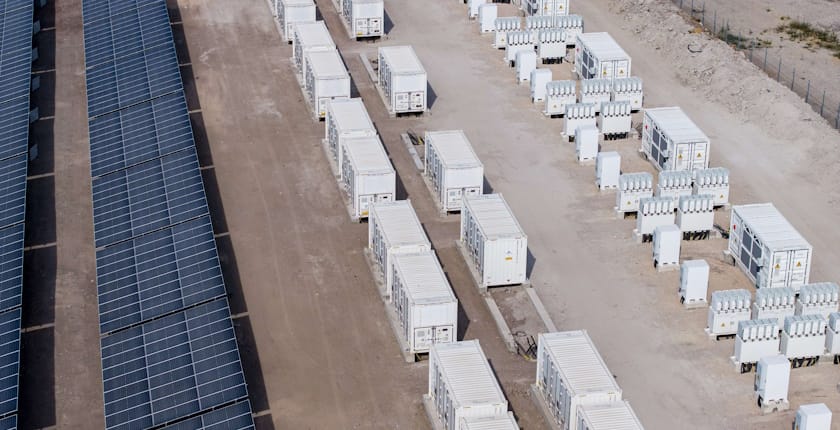
A defining feature of the initiative is its colocation concept, where battery storage systems are installed directly adjacent to solar parks. It enables optimal utilization of both assets, the companies said. By directly linking them, the fluctuating output of renewable energy can be more effectively managed – enhancing grid stability while minimizing the need for expensive grid expansions.

It not only results in improved grid flexibility, but also contributes to the grid’s better balancing, the update reads. The project positions battery storage systems as a central element in Bulgaria’s future energy landscape, leveraging advanced algo trading software and innovative incentive structures to unlock the full potential of renewable integration, the partners added.

“By strategically employing colocation solutions and the latest technology, we are creating a platform that is not only economically attractive but also significantly enhances the technical resilience of the Bulgarian power grid at lower costs,” said Eurohold Bulgaria’s Chair of the Supervisory Board Assen Christov.

by in News

Construction starting in second phase of giant PV plant in Peloponnese coal land

Terna won the contract for the construction of the second of the three parts of a 490 MW solar park in Megalopolis, on former lignite mines. Public Power Corp. – PPC Group said the third phase would begin next year.

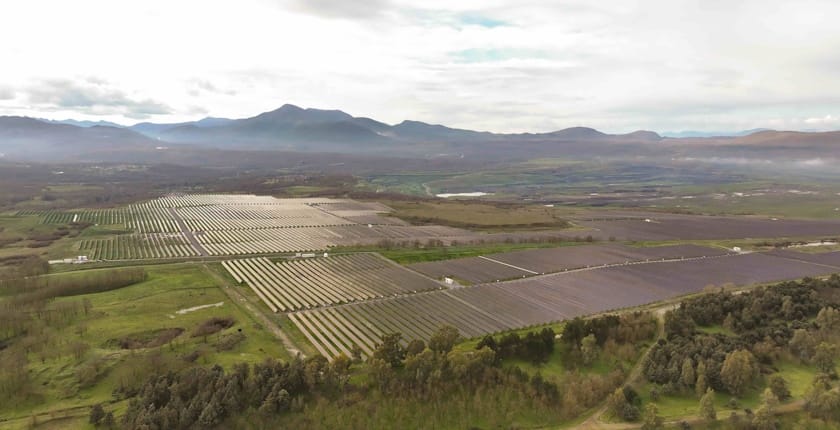
The second phase of the construction of a 490 MW photovoltaic plant in Megalopolis is beginning, transforming former lignite sites in the Peloponnese peninsula into a green energy hub. PPC Group’s subsidiary PPC Renewables signed an engineering, procurement and construction (EPC) contract for 125 MW on 49.4 hectares with Terna, part of the GEK Terna conglomerate.

The first phase, 125 MW, is under construction. PPC intends to complete it by the end of the year. It expects to begin building the third phase, 240 MW, in 2026.

Bifacial panels to be on fixed structures

The second part entails 215,000 bifacial solar panels on fixed structures. The facility would be connected to the Megalopoli Ultra High Voltage Substation via a new high voltage substation at the Neo Choremi site.

The entire 490 MW would generate an estimate 860 GWh per year, the announcement reads. It is equivalent to the electricity needs of 215,000 households. The projected output would prevent carbon dioxide emissions of 430,000 tons per year.

PPC already has a 50 MW photovoltaic plant in Megalopolis, the smaller of the two coal regions in Greece.

Replicating solar makeover from Western Macedonia

Deputy Chief Executive Officer of PPC Group and CEO of PPC Renewables Konstantinos Mavros compared the project in the Peloponnese to the ones in coal land in Western Macedonia in the country’s north. Just like in Ptolemaida, the Megalopoli photovoltaic plant is going to replace the the production of electricity from coal and ensure the historic continuity of the area’s role in energy supply, he pointed out.

The utility’s three-year strategic plan for the period through 2027 is to install 5.6 GW more from renewables in Greece and Southeastern Europe, reaching 11.8 GW in the segment. PPC said it is also looking to expand its portfolio with new technologies such as offshore wind power and floating photovoltaics, also known as floatovoltaics.

by in News

Romania launches renewables auction for 3.5 GW

Following a successful first round, in which developers won government support for projects of 1.53 GW altogether, the Romanian Ministry of Energy issued another call, for 3.47 GW of wind and solar power capacity. The deadline for submissions is July 11.

The Ministry of Energy of Romania issued a public call for the second round of auctions under a mechanism for awarding contracts for difference (CfDs). With EUR 3 billion at hand, via the European Union’s Modernisation Fund, the country is supporting an overall 5 GW of wind and solar power capacity.

Developers can apply by July 11 for the remaining quotas of 2 GW for wind parks and 1.47 GW for photovoltaic facilities. In the first round, 21 participants won the subsidies for 1.1 GW and 432 MW, respectively.

Romania cuts ceiling prices

Ceiling prices for government support are lower this time. Wind power is at EUR 80 per MWh or EUR 2 per MWh under the previous maximum possible bid. The authorities slashed the cap for solar power to EUR 73 per MWh from EUR 78 per MWh.

The contracts for difference would last 15 years. The burden of administrative and electricity transmission expenses is passed on to consumers.

More leeway for large players as they are no longer limited to 25% of quota

Another difference is that the 25% cap on the maximum capacity awarded per applicant was scrapped, the documentation shows. In addition, there is a possibility to award up to 20% more capacity than in the nominal quota. Minister of Energy Sebastian Burduja explained that the idea is to avoid the risk of losing a large project with a marginal bid.

He noted that Radramo Power is developing the largest wind power project from the first auction, 245 MW. The Heliowin project, for 125 MW, is the biggest one in the PV segment. It belongs to Israeli company Econergy. Both proposed facilities will launch production by January 28, according to the schedule.

In the first phase, applicants will qualify with their technical offers. The plan is to open financial bids from eligible entities on August 13, and the winners would have until September 9 to sign the contracts. Romania’s transmission system operator Transelectrica has the task to evaluate the applications.

by in News

Serbia’s EPS signs PPAs for wind parks Alibunar 1, Alibunar 2

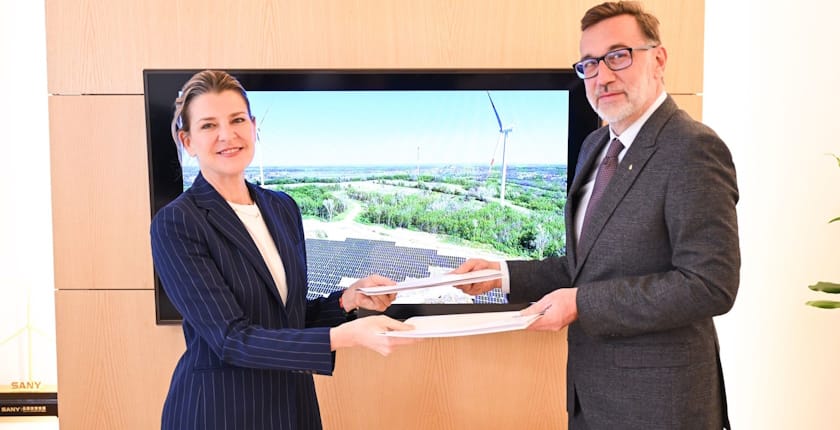
Serbian state-owned power utility Elektroprivreda Srbije will offtake electricity from future wind parks Alibunar 1 and Alibunar 2, of 168 MW in combined capacity. EPS’s Chief Executive Officer Dušan Živković and Project Director of WV-International in Serbia Lazar Lazendić signed today the power purchase agreements (PPAs) and the contracts for difference (CfD) and balancing responsibility.

Wind power projects Alibunar 1 (96.6 MW) and Alibunar 2 (71.4 MW) are among the winners from the latest round of auctions for market premiums for renewable energy in Serbia.

CEO of state-owned power utility Elektroprivreda Srbije (EPS) Dušan Živković signed the power purchase agreements (PPAs) and the contracts for difference (CfD) and balancing responsibility for the two planned facilities with Project Director of WV-International in Serbia Lazar Lazendić.

“EPS is committed to investing in the construction of power plants running on renewable sources, and this way we are strengthening our production portfolio and market position, and we actively support all investors in renewable energy sources. EPS will offtake all the generated electricity, the energy remains in Serbia, and the purchase and balancing price is set according to market principles, which incentivizes investors and enables additional profit for EPS. This energy will also give a substantial, additional security to the operations of our electricity system and to supplying citizens and companies,” Živković asserted.

Commitment to domestic market solidified

At the signing ceremony, Lazar Lazendić pointed out that the said success in auctions represents the materialization of important objectives in the development of the projects Alibunar 1 and Alibunar 2.

“Today’s signing of the contract with Elektroprivreda Srbije, encompassing market premiums, the purchase of electricity, and balance responsibility for our future wind farms solidifies our strong commitment to this market and plays a crucial role in driving Serbia’s energy transition forward,” he added.

Alibunar 1 and Alibunar 2 are SANY Renewable Energy’s first investment in Serbia

The special purpose vehicles, SPVs, or project firms for the two facilities are called Windvision Windfarm A and Windvision Windfarm B, respectively. They are majority owned by SANY Renewable Energy.

“The Alibunar 1 and Alibunar 2 wind farm projects are crucial for our company. SANY Renewable Energy is entering the Serbian market and the Western Balkans region through these projects. This will be the first installation of our wind turbines in these wind farms, serving as a model for our future expansion. We are eager to collaborate with local stakeholders and partners to enhance the country’s energy security,” said Zhou Fugui, Chairman of SANY Renewable Energy and member of the Board and Executive President of SANY Group.

WV-International is the gold sponsor of the Belgrade Energy Forum – BEF 2025, which will be held on May 14 and 15 in Serbia’s capital city, and SANY Renewable Energy is an exhibitor.

Živković: EPS obtained additional 2.6 GW from renewable sources

Živković also said that in the two rounds of auctions facilitated 850 MW of wind and solar power capacity and that, with investors that participated in the two rounds of auctions and other independent producers in Serbia, it already has an additional 2.6 GW from renewable energy sources.

The level will increase by 1 GW in 2028 from the self-balancing solar power plants that the company is developing with its strategic partner, the consortium of UGT Renewables and Hyundai Engineering, he added. “That’s when we expect the production from renewable energy sources to reach 50% of the total electricity production,” the head of EPS underscored.

by in News

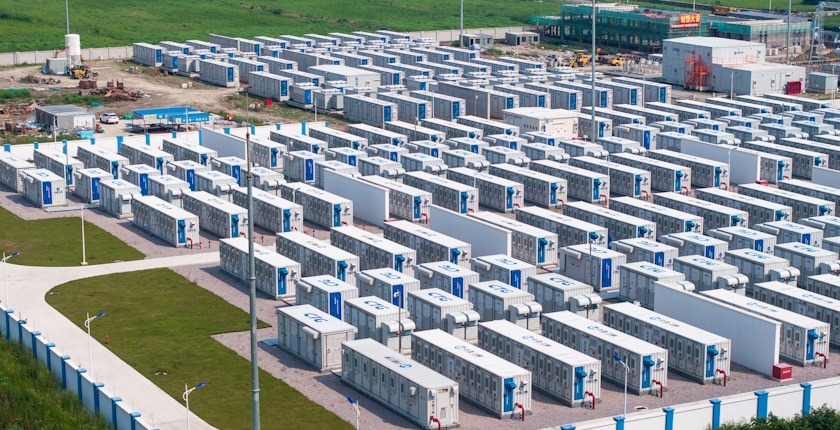
Europe has record battery storage capacity growth in 2024 but expansion slows

New battery storage installations last year in Europe came in at an all-time high 21.9 GWh in capacity, though the leap wasn’t as impressive as in the previous years. The total reached 61.1 GWh. “If Europe has already entered the solar age, the battery storage age is just beginning,” said Walburga Hemetsberger, CEO of SolarPower Europe, which issued the annual report.

Europe marked the eleventh consecutive year of record-breaking battery storage installations – in capacity terms, the addition was 21.9 GWh. According to SolarPower Europe’s update, the new capacity was 15% bigger than in 2023, after effectively doubling for several years in a row.

The battery fleet ended December at 61.1 GWh. The growth rate in 2024 was 56%, compared to the 94% registered one year before.

The region that was tracked consists of the European Union, United Kingdom and Switzerland. The EU alone closed 2024 with 18.5 GWh in newly installed battery storage capacity.

“If Europe has already entered the solar age, the battery storage age is just beginning. With solar energy mainstreaming across the continent, now is the time for European decision makers to put batteries at the centre of a flexible, electrified energy system,” the organization’s Chief Executive Officer Walburga Hemetsberger stated.

She urged the European Commission to double down on its efforts and adopt an action plan as part of a broader energy system flexibility package. “The recent electricity outage in the Iberian Peninsula is a stark reminder of why this is important,” Hemetsberger pointed out.

BESS projection puts EU likely below 2030 target

In the most likely scenario, 29.7 GWh of battery storage will be installed this year, translating to a 36% annual growth in new capacity and 49% in total. The report anticipates a sixfold increase to 118 GWh added in 2029. It would bring the entirety of battery energy storage systems (BESS) to 399 GWh, of which 334 GWh in the EU.

However, it is far below the levels required to meet flexibility needs in a renewables-driven energy system, the annual report’s authors warned. A study showed that the EU needs 780 GWh by 2030 to fully support the transition.

This year the share of the new front-of-meter BESS, in the utility scale segment, is seen at 55%, against last year’s 40%. The absolute level would nearly double. As for behind the meter, commercial and industrial (C&I) systems grow to 12% from 10% of the new fleet while residential installations decline from 50% to 33% in 2025.

Drop in power prices from crisis levels faded appeal of battery storage capacity

Residential battery deployment declined by 11% in 2024 after years of rapid growth. The report attributes it to the drop in electricity prices when the energy crisis subsided, the removal or reduction of subsidies in key markets and a parallel decline in the deployment of residential solar power units.

Home batteries account for 57% of the whole cumulative level.

New large-scale grid batteries surged 79% against 2023, marking a turning point for utility-scale storage.

Last year new C&I installations were 17% bigger, remain below their potential and holding at one tenth of the whole capacity for several years now, the document shows. Companies in the segment generally invest in battery storage to maximize self-consumption from on-site photovoltaics, avoid peak demand charges and reduce reliance on backup diesel generators.

Additionally, solar and storage allow businesses to meet corporate sustainability targets by reducing carbon footprint of operations. Lastly, the electrification of production processes, heating, and transport fleets is driving unique use cases and a need for storage.

Spain lags but seen rebounding, reaching top five in 2025

The top growers and their positions in the chart were the same as in 2023: Germany (6.2 GWh), Italy (6 GWh), the United Kingdom (2.9 GWh), Austria (1.1 GWh) and Sweden (1 GWh). Together they had a 78% share in both new and cumulative installations.

Germany added slightly less on an annual scale than in 2023 amid a drop in newly installed residential units. Italy’s home battery segment also decreased, but the large-scale segment’s capacity surge brought the market to new heights. The UK experienced a temporary slump due to project delays at the large-scale level.

Last year Spain added less than 250 MWh in battery storage capacity, making it the 14th-biggest market in Europe. Overall it reached 1.7 GWh, of which 90% were small-scale systems.

The country’s new battery installations were 41% lower than in 2023. The Spanish market has been declining since 2022, but it is expected to enter the top five this year, with 1.3 GWh, amid a utility-scale segment’s revival.

BESS market requires level playing field

SolarPower Europe said the authorities need to encourage the participation of hybrid projects of solar and BESS in renewable energy auctions.

“Contracts for difference must be settled based on energy production rather than energy injection. This will allow the asset operator to receive the CfD for the PV asset while generating additional market-based revenues from the BESS. These extra revenues will eventually lead to lower bids from developers and reduce the support costs for society,” the document reads.

The EU must ensure transmission system operators (TSOs) procure balancing services in market-based procedures in which batteries can compete on a level playing field, the organization added. Some EU markets still rely on bilateral contracts that limit fair competition and exclude smaller storage assets, it underscored.