by in News

Romania completes second round of renewable energy auctions – third of wind quota unallocated

Companies that participated in the second round of auctions in Romania for contracts for difference (CfDs) for wind and solar power projects received the ranking list. The target quota for photovoltaics was slightly surpassed, with 1.49 GW approved. Conversely, only 1.26 GW was allocated in the wind project segment, against the available 2 GW. Average winning prices were EUR 40.35 per MWh and EUR 73.89 per MWh, respectively.

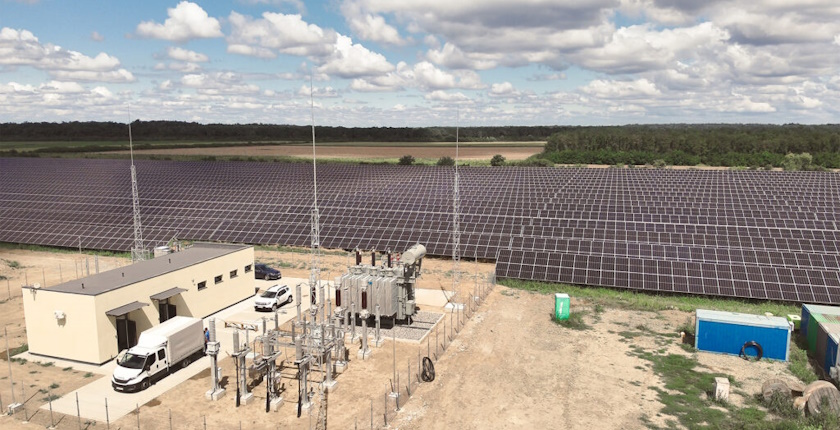
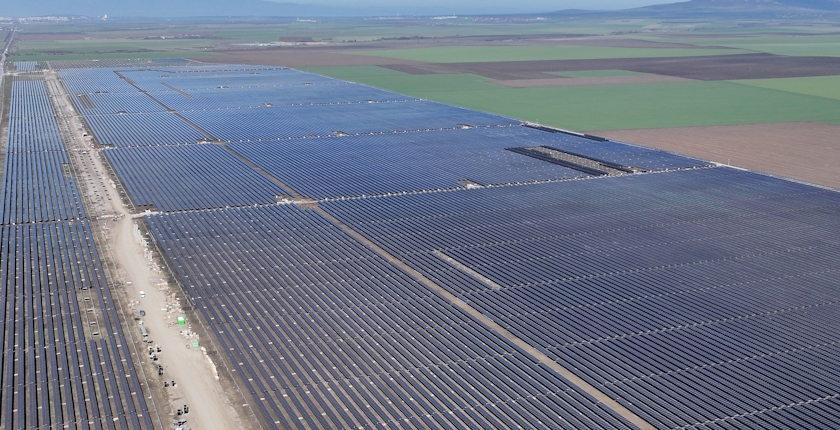
Winners include Rezolv Energy’s Dama Solar, which at 1.04 GW in total would currently be by far the largest PV system in Europe, excluding Turkey.

Romania’s Ministry of Energy and transmission system operator Transelectrica have conducted the country’s second wind and solar power auctions for government support in the form of CfDs. They imply fixed prices for beneficiaries for 15 years. If the producer sells its electricity in the market at a higher price, the government receives the difference. It works the other way around as well. The average winning price for wind power was EUR 73.89 per MWh, compared to EUR 40.35 per MWh for photovoltaics.

There was 2 GW available for wind power projects, but the authorities selected only 1.26 GW, within 23 qualified projects. It means their bids were lower than the ceiling of EUR 80 per MWh. Romanian media learned most of the details, while the official report is yet to be issued.

Rezolv, OX2, OMV Petrom, among winners in wind power segment

In the wind power auction, the participants secured less than two thirds of the quota. There are 23 projects of 21 companies on the list, with 1.26 GW accepted overall of the available 2 GW.

Midmar Callatis passed with the lowest bid, EUR 65.17 per MWh, for the Dunărea East project in Constanța county. The entity, controlled by Rezolv Energy, is eligible for a CfD for 211.2 MW. It is the largest proposed capacity that participated in the auction. The Dunărea East and West project is for 600 MW altogether.

The firm signed the grid connection contract last year. It expects to complete the wind park in 2030, to meet the deadline, like almost all other auction winners in both segments.

OX2 has split its project and won three contracts

The second winner by size is the Cerchezu wind power project. The owner, OX2, has split it into chunks, so 128 MW, 25.6 MW and 25.6 MW earned entry into the market incentives scheme. The special purpose vehicle (SPV), called South Wind, has bid EUR 69.87 per MWh, EUR 74.5 per MWh and EUR 76.5 per MWh, respectively, for a combined capacity of 179.2 MW.

Coming in third in terms of selected capacity, with 111.6 MW, is the future Poiana wind power project. The developer is Green Labs, which operates under Electrocentrale Borzești, part of the Renovatio group, under OMV Petrom.

Through its project firm CEF Pelicanu, Renovatio also won a CfD for 103.7 MW for its Alexandru Odobescu project. It bid EUR 76.9 per MWh.

Winning prices in second wind power auction higher amid demand drop

Ecoener Carpatica’s Miroslovești project in Iași county can sign a contract for 54.4 MW, at a price of EUR 68.75 per MWh. The Urleasca project passed with EUR 71.93 per MWh for 31 MW.

Eurowind Energy’s Cheap Energy Company was successful with a bid of EUR 78.5 per MWh for the Pecineaga Northeast (Nord Est or NordEst) endeavor. It applied for 48 MW.

Engie Romania passed with its Falcon wind power project

Falcon Wind of Engie Romania secured a CfD for 52.4 MW with a price of EUR 72.7 per MWh. It was the first under the line in the first round, with a bid that was EUR 5 higher. The location is in Mereni in Constanța county.

The accepted prices in the wind power auction are between EUR 65.17 per MWh and EUR 79.5 per MWh, compared to a range of EUR 54.59 per MWh to EUR 77.33 per MWh in the first round.

Accepted bids for solar power projects significantly lower than in first round

Conversely, solar power prices were much lower than last time. They landed at EUR 35.77 per MWh to EUR 45.2 per MWh, against a range of EUR 45.05 per MWh to EUR 54.19 per MWh in December. This time, the ceiling was EUR 73 per MWh. The commission accepted 26 bids of 1.49 GW in total, extending the quota by 16 MW.

The largest capacity, 520 MW, was awarded to special purpose vehicle West Power Investments for its Dama Solar project. It is for 1.04 GW in total peak capacity, which would make it the biggest solar power plant in Europe excluding Turkey. Rezolv Energy developed the project, together with Monsson. It won the incentives through two equal lots, with bids of EUR 42.2 per MWh each, on a rounded basis.

Enery Element gets almost 460 MW for its two PV projects

Other companies also partitioned their projects for the auction. Enery Element won 11 out of the 26 contracts, for its proposed Baboia PV plant, also called Ogrezeni. The bids were between EUR 35.77 per MWh and EUR 42 per MWh.

In the previous round, it failed to make the quota with EUR 56.82 per MWh. The combined capacity is 350.1 MW. According to Economica.net, the developer may have opted for splitting the PV plant to avoid surpassing the 50-hectare threshold per lot. The Ogrezeni project in Giurgiu county is for more than 500 MW overall, the media outlet noted.

The company also succeeded with four lots of its Dumbrava 2 project. Enery Element’s subsidiary Siret Solar Plant has bid EUR 38.76 per MWh to EUR 38.79 per MWh. The combined capacity is 108.6 MW.

Engie Romania is now eligible for a CfD for 170 MW in peak capacity, for its proposed Cornățelu photovoltaic facility. Its bid was the highest on the list, EUR 45.2 per MWh. The site is in Dâmbovița county

Of note, the government has so far signed contracts with 21 firms that won in the first solar and wind power auctions.
by in News

New solar park in Romania of 71 MW gets final permit for launch

Shikun and Binui Energy is about to begin delivering electricity to the grid from its Satu Mare photovoltaic plant. It is the company’s first renewables project in Romania and the surrounding region.

More than two and a half years after the start of construction, the Satu Mare solar power plant of 71 MW secured the authorization for the beginning of commercial operation, Profit.ro reported. Shikun and Binui Energy borrowed EUR 40.5 million in 2023 for the endeavor from Raiffeisen Bank International and Raiffeisen Bank Romania.

The company is part of Israel-based conglomerate Shikun and Binui, which is active in Romania’s real estate market. The photovoltaic facility in the Satu Mare county is its first investment in renewables in the country and the surrounding region. The contractor is CJR Renewables.

Project began in partnership with Monsson’s Muntmark

With the new permit, project firm Shikun and Binui Energy Satu Mare can register to begin selling electricity and start production. The PV plant spans 85 hectares. In 2021, news emerged that the company would invest up to EUR 50 million through its firm Camre Energy and in partnership with Emanuel Muntmark. He controls Monsson, one of the biggest developers of renewable energy and battery storage projects in Romania.

The same media outlet learned last year that the group intends to install over 300 MW in Buzoiești, in Argeș county. In June 2024, its subsidiary Green Energy Dynamic received technical approval for the Gold Wind onshore wind farm of 376 MW  in Constanta county in eastern Romania. The project is scheduled for completion by the end of 2028.

Earlier there were reports that Shikun and Binui was developing wind and solar power projects in Iași county.

Second solar power plant is under construction in adjacent county

The second major investment of its energy branch is the Șimleu Silvaniei PV facility. The construction of the 101 MW system began more than a year ago. It is in Sălaj county, adjacent to Satu Mare.

Shikun and Binui Energy secured a EUR 49 million loan from Raiffeisen Group for the project. It also picked CJR Renewables as the contractor for Șimleu Silvaniei.

Solar power has been dominating renewable energy investments in Romania for several years, but the wind power segment seems to be rebounding strongly. Battery energy storage systems are also strengthening their role, especially as auxilary facilities for PV and wind parks, turning them into hybrid power plants.

by in News

First part of Tenevo PV plant comes online, batteries are under construction

The largest hybrid power plant in Bulgaria is beginning to take shape – a joint venture of Eurowind Energy and Renalfa IPP commissioned the first segment of a solar park, and it is building a battery energy storage system (BESS). The Tenevo facility is planned to include a wind power plant as well.

Almost two years after the start of construction, a solar park in Yambol province in southeastern Bulgaria is now producing electricity. It has 69 MW in peak capacity. Project firm Tenevo Solar Technologies has a task to expand it to 237.6 MW, making it one of the biggest photovoltaic systems in the country.

Together with a battery system, of 315 MW in operating power and 760 MWh in capacity, and the planned wind farm of 250 MW, it would be the largest and most complex hybrid power plant in Bulgaria. At this moment, it would also be the first such green energy facility that doesn’t consist only of photovoltaics and batteries. The BESS part alone would probably be the biggest in Europe.

Tenevo will likely become the biggest hybrid power plant in Bulgaria and the first one with an additional source besides solar power and BESS

Tenevo operates under Eura IPP, incorporated in Bulgaria. It is an equally owned joint venture of Renalfa IPP and Eurowind Energy. The former of the two is itself a JV, founded by Vienna-based clean energy and e-mobility company Renalfa Solarpro Group, and French renewable energy infrastructure fund manager RGreen Invest.

Renalfa IPP said it has more than 650 MW in operation, over 1 GW of projects in late-stage development and a project pipeline of more than 3 GW. The company is active in Poland, Hungary, Romania, Bulgaria, and North Macedonia.

Eurowind Energy is a Danish investment and project development company in the field of renewable energy and an independent power producer. It has a global portfolio of over 60 GW, of which 1.3 GW in operation.

Second phase of Tenevo PV park to come online early next year

Together with the solar power plant, the 400 kV grid connection system started operating. The second phase of the Tenevo PV park will be put into operation in early 2026, as some of the panels were damaged by the extremely intense hailstorm in May, according to the update.

The BESS facility is under construction, Renalfa IPP revealed. EURA IPP secured a 320 MW connection to the transmission network, of which up to 213.7 MW is for the solar farm.

Raiffeisen, EBRD are main creditors

The European Bank for Reconstruction and Development (EBRD) has committed a senior secured loan of up to EUR 50 million. It includes a full or partial cover by a first loss guarantee under the EBRD InvestEU Framework, the lender’s first in Bulgaria. It valued the project at EUR 158.4 million.

Raiffeisen Bank International provided a financing facility of EUR 53 million.

The entire solar power segment of the hybrid power plant is expected to generate 332 GWh per year. The PV panels are equipped with single-axis trackers, allowing them to turn toward the sun, which boosts efficiency.

Tenevo is on the site of a former airport near an eponymous village in the municipality of Tundzha.

by in News

Wind power takes lead in new renewables investment wave in Romania

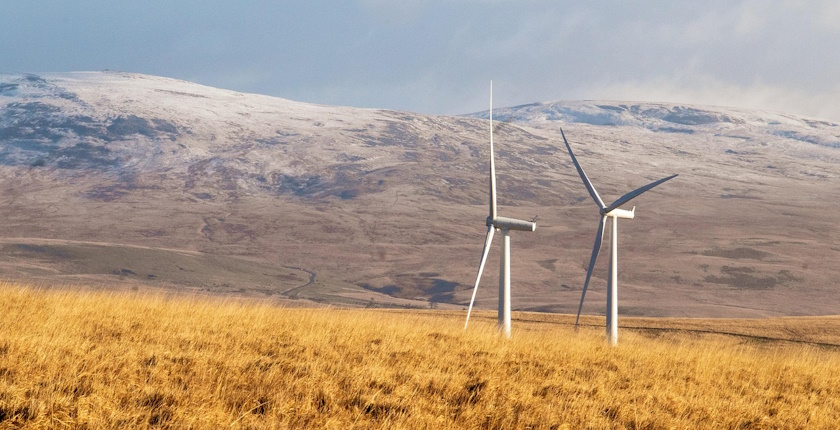
The rising number of maturing wind power projects and the ones under construction in Romania has highlighted the increasing role of the technology for the country’s energy transition. The recent updates are for three locations in the country’s east.

Investments in wind power in Romania are rebounding from a long lull. According to the International Renewable Energy Agency (IRENA), the country hosted nearly 3.1 GW in wind power capacity at the end of 2024. It achieved a peak of 3.24 GW a decade before. Investors are maturing an increasing number of projects or beginning construction, alongside significant acquisition activity.

Together with a wave of investments in battery storage, the wind power segment is making the domestic renewable energy market more balanced. It was dominated by photovoltaics for several years – primarily by the meteoric rise in the number of prosumers. Of note, there were 228,302 at the end of May, operating 2.73 GW in capacity.

New Minister of Energy Bogdan Ivan recently estimated that another 3.2 GW of solar and wind power combined would come online in Romania by the end of 2026.

Wind park of over 250 MW in Ialomița to be completed in 2027

The administration of Ialomița County in the country’s east announced that KKR, its subsidiary Greenvolt and Renovatio would build a wind park of more than 250 MW. It would consist of three power plants in the area around Țăndărei, Gheorghe Lazăr, Grivița and Ograda.

According to the regional authority, the Ialomița wind farm project east of Bucharest is worth more than EUR 400 million. Its completion is expected in 2027.

Greenvolt has won support for more than half of capacity in its Ialomița Nord wind power project at the government’s first wind and solar power auction, through a contract for difference (CfD). Total investment is for 246.4 MW.

Greek renewables giant to start construction of two wind power plants

HELLENiQ Renewables Romania, operating under Greece-based HELLENiQ Energy, acquired Ansthall Green Energy from OX2. The project firm owns a ready-to-build wind project in Scânteiesti in Galaţi in eastern Romania, with a licensed capacity of 96 MW.

The Greek parent company said construction is starting immediately through a deal with OX2 Construction. It expects to put the facility into operation in 2027.

It has a 12-year virtual power purchase agreement (PPA) with Koninklijke Ahold Delhaize, for 158 GWh per year. The company operates supermarket chains. Total annual output is estimated at 309 GWh.

HELLENiQ Energy revealed that it has bought two ready-to-build projects of 282 MW in total

HELLENiQ Energy’s Romanian company also signed a contract to take over Helios and Wind Energy, a special purpose vehicle owning a ready-to-build wind project in the nearby Vaslui region. The licensed capacity is 186 MW and there is an option to add a battery energy storage system (BESS). It would have 186 MW in operational power as well and a duration of one hour, translating to 186 MWh.

Regulators in Romania must approve the agreement before the transaction.

In addition, the company completed the purchase of a ready-to-build PV project of 123 MW in peak capacity. The location is in Haskovo region in southern Bulgaria, which marks HELLENiQ’s entry into the country. The solar power plant can include a BESS facility of 90 MW and 180 MWh.

The company previously known as Hellenic Petroleum (HELPE) intends to start the construction of two BESS in its home market. They would have 50 MW and 200 MWh altogether. The two endeavors in Florina were among the winners in the third auction for battery storage in Greece.

Turkish company, Romanian footbal star’s daughter advance joint project

The third recent update is for one of the biggest planned wind farms in Romania, also in the east. The location for the Dăeni project is in Tulcea county. It has received the grid connection approval from Transelectrica and an environmental permit from the National Environment Protection Agency (NEPA or, in Romanian, ANPM).

Project documentation for the wind power plant of 56 turbines of 7.2 MW each shows the facility should be commissioned by the end of 2031, Profit.ro reported. It translates to 403.2 MW in nominal capacity. Dăeni would have a connection to the transmission grid of over 394 MW.

Oxigen Delta is 50% owned by a subsidiary of Turkey-based Sanko Enerji

The developer is Oxigen Delta, in which 50% is owned by a subsidiary of Turkey-based Sanko Enerji, part of Sanko Holding. Milana-Maria Ilie, daughter of famous former Romanian football player Adrian Ilie, is among the main shareholders, the article adds. The investment was valued at some EUR 800 million last year.

Eximprod, which installed the first wind turbine in Romania more than two decades ago, has delivered the first megawatt-hours to the grid from its new wind farm in the country’s east. Rezolv secured a financing package for the second phase of its giant Vifor wind farm in Buzău county

Eurowind Energy built the turbines earlier this year at its Pecineaga wind park. Greece-based Public Power Corp. (PPC) is supposed to connect its Deleni facility to the grid before the end of the year.

OX2 is constructing the Green Breeze wind farm as the turnkey contractor for the investor, Nala Renewables.

by in News

Water shortages in Southeastern Europe point to desalination as strategic approach

Former Minister of Environment and Water of Bulgaria Borislav Sandov is urging the country’s authorities to deploy alternative water supply solutions, including desalination, to counter shortages. Greece is preparing a radical change in its water management model. Turkey got its first floating seawater purification platform, running on solar and wind power.

Southeastern Europe is among the most jeopardized regions in the world in the context of global warming. The lack of water has the most drastic effect on everything from wildlife to food production, energy and public health. Bulgaria’s former Minister of Environment and Water Borislav Sandov warned that over half a million people in the country are at risk of water shortages.

Eastern and northeastern Bulgaria have a persistent issue with droughts and lack of water, necessitating a switch toward alternative forms of supply in the next five to 10 years, including seawater desalination plants, he recently told bTV.

In addition to climatic factors, there are serious shortcomings in water management, together with theft and corruption, Sandov claimed. He pointed to an example where drastically undersized pipes of poor quality were installed in one area, resulting in constant breakdowns and supply interruptions.

Sandov attributed some of the water stress to fragmented management between different local, regional and national institutions. In his words, as much as 10% of all settlements in Bulgaria, though mostly small ones, aren’t covered by waterworks and sewerage systems. Moreover, 44% of the water in the network isn’t measured in volume terms at the entry point and 50% of the water sources don’t have a valid permit from the competent authority, he added.

Notably, a quarter of the population in neighboring Serbia occasionally or permanently lacks safe drinking water from waterworks systems.

Greece to radically change its water management system

Greece decided to get ahead of the droughts and heatwaves. The government has promised radical change in water management: a more functional system with more investments and new technologies, including desalination, but also recycling.

Tourism in the summer months exacerbates the water stress. On some islands, demand surges by up to 30 times. It creates conflict with the needs for irrigation for food production. Greek islands mostly use underground aquifers with easily exhaustible capacity.

Rainfall and snowfall in the country are gradually decreasing.

Similar to Bulgaria, water management is spread across hundreds of operators and institutions, lacking coordination. Losses in drinking water supply amount to as much as 40%, in comparison with up to a staggering 60% in irrigation.

The government in Athens promised water would remain a public good

According to a study by Deloitte with data from 2022, more than EUR 10 billion is necessary for investments in the two segments, excluding Attica. It is where Athens is located. Another EUR 500 million to EUR 700 million is needed for the peninsula.

Government-controlled power utility Public Power Corp. (PPC) will reportedly enter the game, not least because municipal water and sewerage firms owe it more than EUR 400 million. The company would convert debts into minority stakes in three centralized entities: for the regions of Athens and Thessaloniki and the rest of the country, the media learned.

PPC can contribute with its knowhow and experience in the construction and operation of dams and hydropower plants.

Importantly, the government vowed to keep water a public good.

Floating desalination platform with hybrid power plant put into operation in western Turkey

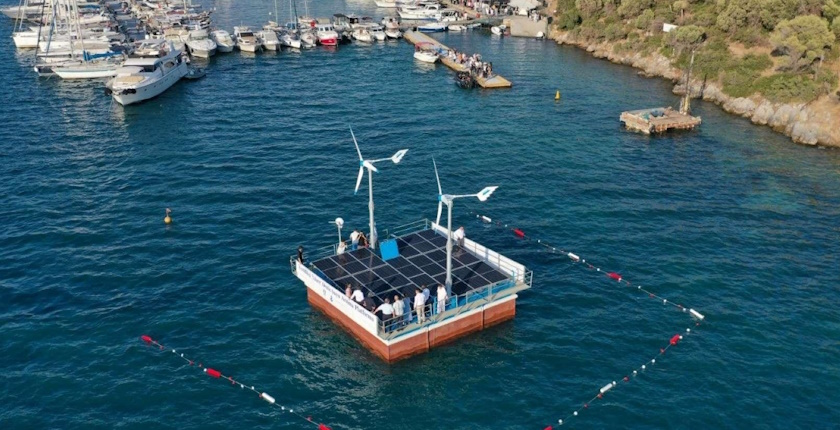
Right opposite the Greek island of Kos, offshore Bitez Marina, the Bodrum Municipality inaugurated Turkey’s first floating seawater purification platform. It runs entirely on renewable energy, producing 20 cubic metres of clean, non-potable water every day.

The project was developed in partnership with Istanbul-based company Blue Hybrid Solutions. The facility is powered by solar panels and two small wind turbines. It delivers water to an onshore tank for irrigation, emergency needs and, when required, public consumption, the local authority said.

Greece is already conducting a massive project for energy independence of numerous non-interconnected islands, including investments in desalination powered by renewables. It is also working to link other islands to the mainland grid.

[wpcc-iframe title=”BODRUM BELEDİYESİNDEN BİR İLK YÜZER DENİZ SUYU ARITMA PLATFORMU TANITILDI” width=”500″ height=”281″ src=”https://www.youtube.com/embed/KApvKHO8OS4?feature=oembed” frameborder=”0″ allow=”accelerometer; autoplay; clipboard-write; encrypted-media; gyroscope; picture-in-picture; web-share” referrerpolicy=”strict-origin-when-cross-origin” allowfullscreen=””]

by in News

Greek coal region of Megalopolis opens new chapter after lignite

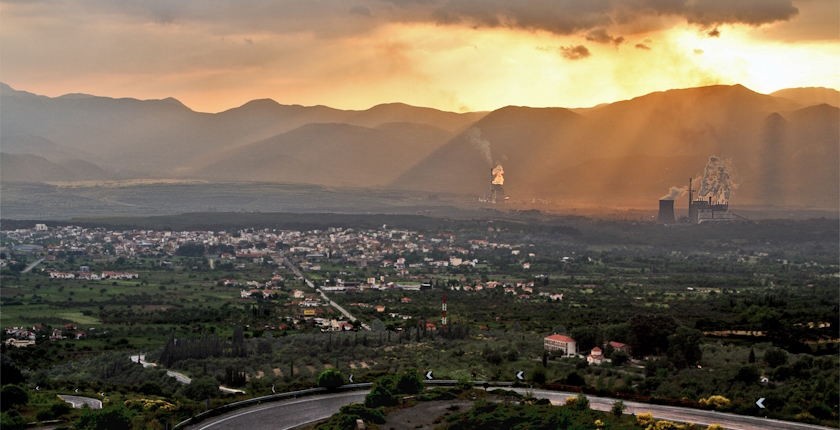
Last year, for the first time in decades, no smoke rose out of coal plants in the Peloponnese peninsula. The last two units had 500 MW together. Megalopolis is one of the two coal regions in Greece, along with Western Macedonia in the country’s north.

According to Public Power Corporation (PPC or DEI) the units Megalopolis-3 and Megalopolis-4 have now been permanently retired. Under the government-controlled utility’s plan to phase out coal completely next year, all such power plants stopped operating by now, with the exception of Ptolemaida 5, of 660 MW, which entered into operation last year. To maintain the security of supply, two units are kept in reserve, also in Western Macedonia in northern Greece.

PPC has produced a study for the reconstruction of the Megalopolis thermal power station, intending to accommodate other activities. Similar works are already underway in the local lignite mine.

New energy investments underway

The group’s investment plan involves various renewable energy and storage projects in Megalopolis to support the area’s energy transition. It is building two photovoltaic farms of 125 MW each, as part of a 490 MW cluster in the area.

The plan includes a 181 MW pumped storage hydropower station in the former lignite mine.

Based on the government’s Just Transition Development Program, Megalopolis will also host a battery factory, by Enercells, as well as two data centers, by Eunice and Kiefer, of 5 MW each. The investments have been approved by the Ministry of Economy and Finance, to seek funding from the European Union’s Just Transition Fund (JTF).

PPC expressed the belief that data centers are important for coal regions. Earlier this year, the group’s CEO George Stassis said they are ideal for such investments as the land and grid connections are already available. PPC is planning a 300 MW data center in Western Macedonia, but it hasn’t announced anything similar for Megalopolis yet.

by in News

North Macedonia raising capacity threshold for prosumers, speeding up permitting

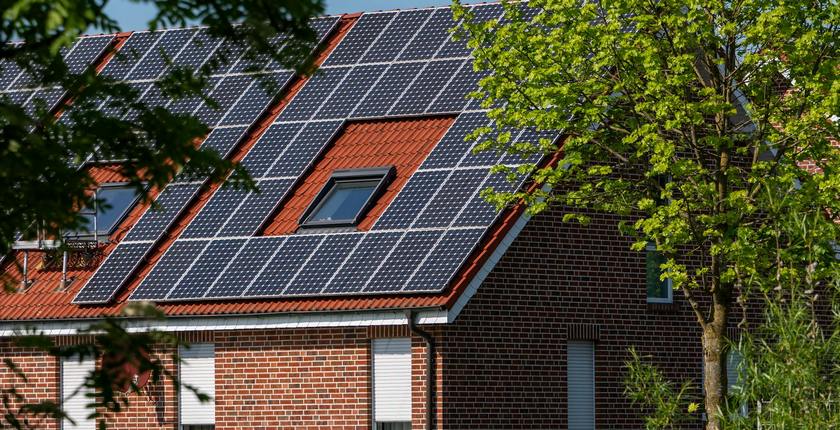
North Macedonia has prepared legislative changes to increase the capacity threshold for prosumers and speed up rooftop solar permitting and grid connection.

Under the proposed amendments to the Law on Energy Efficiency, the capacity threshold for rooftop solar installations would be increased to 10 kilowatts (kW) for households and 70 kW for legal entities, according to a statement from the Ministry of Energy, Mining and Mineral Resources. The current threshold is 6 kW for households and 40 kW for firms.

The threshold should go up to 10 kW for homes and 70 kW for businesses

The amendments should also introduce a one-month deadline for the permitting procedure for installing solar equipment with a capacity of up to 100 kW. This includes prosumers and energy communities, according to a draft law on renewable energy use.

According to the North Macedonian office of law firm CMS, the country’s parliament has already introduced amendments to the rulebook on renewable energy sources, increasing the capacity thresholds for both household and business prosumers, among other things.

One-month deadlines are proposed for rooftop solar permitting and grid connection

The ministry noted that a legal deadline for issuing permits for rooftop photovoltaics for prosumers is being introduced for the first time.

The same deadline is being proposed for grid connection: the distribution system operator would be required to connect the installation to the grid within one month of officially confirming that the submitted documentation is complete.

According to the proposed amendments, if connection to the requested location is not possible, the operator is obliged, within 15 days from the date of submission of the connection request, to notify the applicant in writing and propose an alternative connection point.

Installing solar collectors for hot water in new public buildings will become mandatory

The proposed legislative changes will also make the installation of solar collectors for hot water mandatory in new public buildings, or in cases of significant reconstruction of existing ones, if technically and economically feasible.

Renewable energy sources account for more than half of North Macedonia’s total generation capacity, with over 616 MW of new renewables capacity installed in the past two years, DW reported, citing data from the country’s Energy, Water Services and Municipal Waste Management Services Regulatory Commission (ERC or RKE).

by in News

Bulgaria on track to add 1.5 GW of solar power by mid-2026

The pace of large photovoltaic projects in Bulgaria indicates that total capacity can reach 6 GW by the middle of next year. The expansion isn’t slowing down.

Investors in large solar power plants in Bulgaria don’t seem intimidated by zero and negative wholesale electricity prices eating away at their revenues. One of the factors is a surge in the construction of battery energy storage systems (BESS), which iron out the gap between intraday peak production and the power demand curve. In a new analysis, Capital.bg estimated that the country’s photovoltaic capacity is set to increase by 1.5 GW by the end of the first half of next year, only accounting for big projects.

The total would reach 6 GW. The report lists 14 projects, of which some are benefitting from BESS grants from one of Bulgaria’s past tenders.

Chinese group building largest current PV project

The biggest solar park under construction is Simeonovgrad-Polyanovo, consisting of two units of 250 MW in total. It is located in the Haskovo region in the southern part of the country.

United Energy Group bought the two projects last year. It it the first significant Chinese investment in Bulgaria, the article reads. The PV plant is expected to be put into operation early next year.

The construction of the first phase of the Tenevo hybrid power plant began almost two years ago

Next on the list is Tenevo. Almost two years ago, Eurowind Energy and Renalfa IPP marked the start of the construction of the solar segment of a hybrid power plant near Yambol. The PV park is envisaged with 237.6 MW in peak capacity and a 213.7 MW grid connection.

The largest solar power plant in Bulgaria is called Apriltsi.

St. George coming online before year-end

Czech company Rezolv Energy bought the St. George project for 229 MW two years ago and broke ground at the construction site last autumn. According to the latest data, the investment is worth almost BGN 1 billion (EUR 511 million) and it is coming online by the end of the year. The developer secured a 199 MW connection.

Greek government-controlled utility Public Power Corp. (PPC) is commissionning its Colosseum (Kolizeum) facility of 165 MW in the coming months, the update reveals. The project in Chirpan has an approved network connection of 120 MW. The company is planning to add batteries of 25 MW in capability and a capacity of 55 MWh.

The company is also building an 88 MW in Vedrare near Plovdiv. The contractor for the facility in the municipality of Karlovo is Chint Green Energy of the Chint Group. The power plant is on track to become operational early next year.

A 123 MW system will be on 400 hectares between the villages of Knizhovnik and Dolno Vojvodino in Haskovo. Austria-based Enery said it would install a BESS of 180 MWh next to its solar park.

Electrohold is testing its Maglizh PV plant, the article adds. The project for 100 MW occupies 127 hectares and the estimated investment is almost EUR 90 million. The plan was changed along the way.

Top Energy Solutions has a construction permit for its Loznitsa project in northeastern Bulgaria. The project is for a peak capacity of 115 MW and a grid connection of 99.99 MW, spanning 82.4 hectares. It is located at the villages of Vesselina and Kamenar in the Loznitsa municipality, Razgrad district.

by in News

CW Enerji to tap on subsidies in Turkey for solar panel factory project

CW Enerji earmarked USD 520 million for the expansion of its solar panel manufacturing capacity in Antalya to 5 GW per year. It said it would benefit from the government’s HIT-30 incentives program.

While Europe is stagnating in solar panel production and some large facilities are even closing under pressure from China’s increasing global dominance, Turkey is expanding its industrial base across new green energy technologies. CW Enerji is about to invest USD 520 million in the construction of a photovoltaic equipment factory, Anadolu Agency reported.

The company said it would implement the project under the government’s HIT-30 incentives program for high technology. The location is in AOSB – Antalya Organized Industrial Zone in the country’s southern, Mediterranean region.

High domestic content enables access to subsidies

CW Enerji’s new facility, would complement the existing CW Solar Cell factory. It makes up to 1.2 GW of TOPCon high-efficiency solar cells per year and the company claims it is the largest in Europe.

The upcoming investment would enable an annual capacity of 5 GW by the end of the second phase, in 2028, according to the company. The products would have a domestic content of more than 80%, complying with the requirements for tax incentives, CW Enerji’s Chairman Tarık Sarvan said.

He founded the company in Turkey in 2010. It also makes other components and provides installation and maintenance services. CW Enerji has established subsidiaries in Munich, Germany, and Houston, Texas. Total solar panel capacity is 1.8 GW per year and it exports to nearly 60 countries, Sarvan added. He pointed out that the company’s target markets are the United States and Europe.

Dozens of companies manufacturing PV equipment in Turkey

Right before CW Enerji’s announcement, Astronergy allocated USD 700 million for its second solar module factory, in Balıkesir.

Early this year, 75 solar panel manufacturers operated in Turkey. Put together, their annual capacity was 44.5 GW. Three were making solar cells and their overall capacity was 6.1 GW per year.

The country is also strong in other technologies, like for geothermal power plants.

The government recently declared a 2035 target for solar and wind of 120 GW in total. At the end of June, Turkey’s total electricity capacity was 119,6 GW, of which photovoltaics accounted for just under 23 GW.

by in News

Bulgaria preparing more BESS subsidies amid boom in construction of large facilities

The Ministry of Energy of Bulgaria is reportedly working on a public call for EUR 120 million in state aid for investments in battery energy storage systems of 1.5 GWh overall. Many projects have been stuck since the European Union suspended funding, but major deals are underway nevertheless, alongside the construction of large facilities.

Bulgaria has managed to renegotiate the terms of the National Recovery and Resilience Plan (NNRP) with the European Commission, allocating another EUR 120 million for support for battery energy storage systems (BESS). Instead of awarding the grants to the projects that didn’t meet the quota in the National Infrastructure for Storage of Electricity from Renewable Sources (RESTORE) call for standalone facilities, the Ministry of Energy is preparing a separate competitive procedure, Kapital reported.

The EUR 120 million is apparently intended for supporting 1.5 GWh, compared to EUR 587 million last time, for 9.7 GWh. The move is far-fetched, as all battery facilities under the NRRP are required to come online already by the end of March.

The EU has blocked payments to Bulgaria from its Recovery and Resilience Facility (RRF), adding to the crunch. It’s why the winners from the RESTORE procedure still haven’t signed their contracts. However, the next tranche could be released soon.

Developers, contractors counting gigawatt-hours in BESS projects in Bulgaria

Small players are stretched the most by the lack of financing. On the other hand, many projects are advancing even before or without the grants.

Sunterra Re has entered into a strategic partnership with Sungrow to add the China-based company’s BESS solutions to its largest three solar power plants in Bulgaria. Total storage capacity is envisaged at more than 1 GWh. The Bulgarian operator said it already has 300 MWh.

Sunotec has struck massive deals for the deployment of its BESS solutions in Bulgaria

The deal is for the MV-Power Titan 2.0 lithium-iron-phosphate batteries and accompanying equipment and software. Sunterra Re owns PV plants Dalgo Pole (208 MW) Galabovo (201.4 MW) Karlovo (115 MW) and Pleven (9.6 MW).

Sungrow has just achieved another massive deal, with Sunotec.

Solaris Holding, a joint venture of the Bulgarian-German Sunotec and the main shareholders of Eurohold Bulgaria (Evrohold), recently commissioned a large hybrid power plant.

Bulgaria is among EU’s strongest BESS markets

Two months ago, a BESS facility of 124.1 MW in operating power, the largest in the country, was inaugurated in Lovech. At the time, the Ministry of Energy claimed it was the biggest in the EU.

Of note, Bulgarian company International Power Supply (IPS) is opening a factory for battery energy storage systems near Sofia. However, the Association for Production, Storage and Trading of Electricity (APSTE) warned that the government’s recycling levy for the installation of photovoltaic panels and BESS is five to 10 times higher than EU averages.

Bulgaria is one of the most lucrative markets for battery storage in Europe, given its wide range between the highest and lowest intraday wholesale electricity price.