by in News

Electrica sells green bonds for EUR 500 million amid record demand

Electricity supplier and distributor Electrica listed its first green bonds on the Luxembourg Stock Exchange. It was the largest issuance of its kind among Romanian companies, excluding financials.

Electrica, in which the Romanian Government controls a stake of just under 50%, issued green bonds worth up to EUR 500 million. It is using the proceeds to finance and refinance its projects, mainly for green energy production and energy storage.

The senior unsecured green bonds, maturing in five years, are now listed on the Luxembourg Stock Exchange. Admission to trading on the Bucharest Stock Exchange is estimated to take place at the beginning of August, Electrica said.

The company’s core activities are electricity distribution and supply and energy services, but it is expanding into renewables and battery storage.

Pricing reaches 2.3 percentage points above benchmark rate

Credit appraisal agency Fitch has assigned the 4.375% senior unsecured green notes a BBB- rating. It is the lowest investment grade. The projects will have a limited connection to Electrica’s 100%-owned distribution and supply subsidiaries Distribuție Energie Electrică Romania (DEER) and Electrica Furnizare, the note adds.

Electrica targets 1 GW of installed renewable energy capacity by 2030 alongside the deployment of 900 MWh of energy storage

The company’s inaugural debt securities were priced at a yield of 4.566%, according to a regulatory filing. It was 2.3 percentage points above the benchmark mid-interest rate swap. The demand from investors at the final price exceeded the supply by more than 11.5 times, marking a record oversubscription in bond issuances of Romanian companies, Electrica pointed out.

Moreover, it was the largest green bond issuance in Romania excluding financial institutions. Electrica targets 1 GW of installed capacity by 2030 alongside the deployment of 900 MWh of energy storage.

Electrica grows market capitalization by one fifth this year

Banca Comercială Română (member of Erste Group), BNP Paribas, Citi, ING, J.P. Morgan and Raiffeisen Bank International were the joint global coordinators and joint bookrunners in the transaction, while BT Capital Partners, IMI-Intesa Sanpaolo, Société Générale and UniCredit were joint bookrunners.

Electrica has EUR 1.06 billion in market capitalization. Its shares surged 21.1% since the end of last year.
by in News

Montenegro sets November 10 deadline for first solar power auction

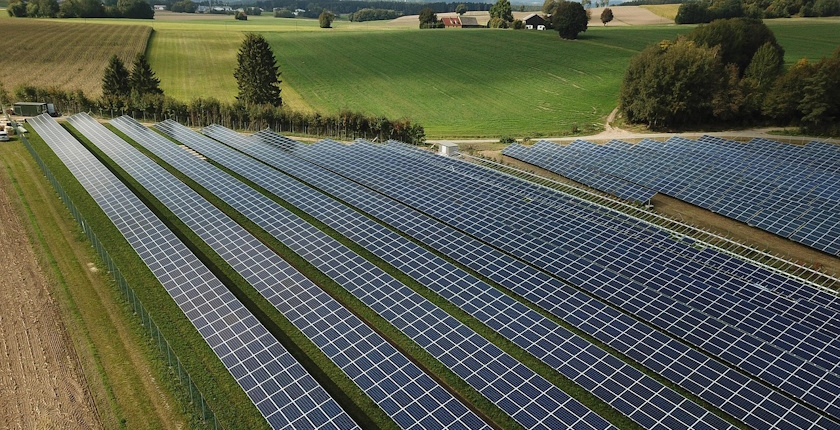
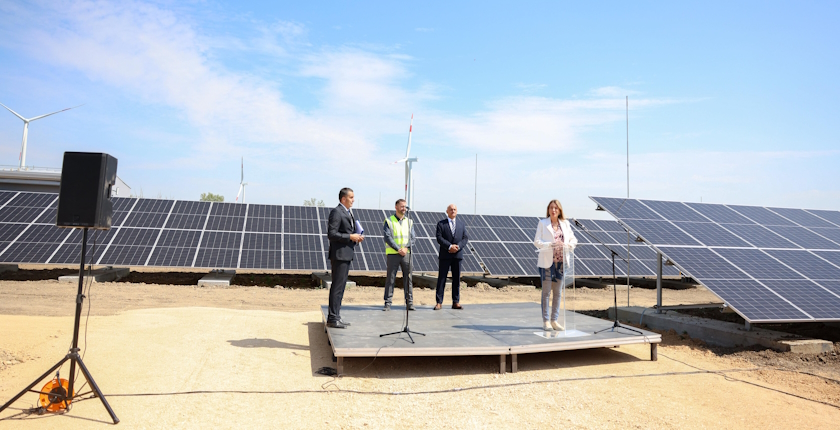
Legal entities and entrepreneurs in Montenegro are preparing to compete for market premiums with their solar power projects. The quota for the first such auction in the country is 250 MW, and applications close on November 10.

Following the completion of the legal framework with laws and decrees, the Montenegrin Ministry of Energy and Mining issued a public call for investors to participate in an auction for market premiums with their solar power projects. The government would provide support for 12 years.

Legal entities and entrepreneurs have until November 10 to send the envelopes with bank guarantees, documents proving that they are qualified, and their financial bids. The address is: Ministarstvo energetike i rudarstva, Rimski trg 46, 81000 Podgorica. The first such auction in Montenegro will be held for “unspecified locations,” which means that the planned photovoltaic systems can be located in any area in the country.

The available capacity is 250 MW, and eligible projects are for at least 400 kW each. There is no nominal upper limit for project capacity for which a potential participant bids, except the total quota itself.

However, the quota can be extended, by a maximum of 20%. The government said there is an extra 50 MW available for the inclusion of an entire eligible project that entered the quota only partially, or more such projects, in case the bids for them were equal. But if the part of the capacity that surpassed the quota is larger than the possible extension, the commission would award a market premium only for the part that did fit the quota.

Price to be adjusted for inflation every year

The accepted price, from the financial offer of a participant that obtained the status of a temporarily privileged producer through the auction, will be adjusted for the Eurozone inflation rate once per year.

Some of the qualification conditions are that the project didn’t or doesn’t benefit from government incentives, that construction works haven’t begun and that the developer hasn’t secured financing for their completion.

The lowest bids win, and the maximum allowed price is EUR 65 per MWh. The market premium is awarded via a contract for difference (CfD).

Namely, the operator of a renewable electricity plant has a guaranteed price, approved through the auction. When the firm sells electricity in the market at a higher price, it must return the difference. And vice versa: when the beneficiary gets less per megawatt-hour than the contract price, they are reimbursed.

Bank guarantees are EUR 20 per kW or EUR 40 per kW

As for the bank guarantees, they are determined at EUR 20 per kW (EUR 20,000 per MW) of the offered capacity for participants that have signed a contract for the construction of the infrastructure for a grid connection and for connecting the facility, or EUR 40 per kW for ones that have at least obtained an analysis of the possibility for a grid connection, from the transmission or distribution system operator, according to the documentation.

Upon the expiration of the deadline, the commission conducts the process of determining the eligibility of the bidders and projects, after which it opens and ranks the financial bids.

Minister of Energy and Mining Admir Šahmanović said the competitive bidding process is in the public interest: for the security of supply, opening the way for investments in other sectors and for investor confidence. He told the Mina-business news agency that the auction would bring more stable prices in the long run.

Conducting renewable electricity auctions is one of the commitments toward the European Union that were defined by the Reform Agenda of Montenegro 2024-2027. It contains the conditions for the approval of up to EUR 383 million from the Growth Plan for the Western Balkans and the Reform and Growth Facility (RGF).

by in News

Serbia’s EPS starts trial operation of its Petka PV plant on coal tailings dump

Serbian state-owned power utility Elektroprivreda Srbije, EPS, connected its first larger photovoltaic unit to the grid. The new solar power plant is called Petka and it has a 10 MW grid connection. It is located in the Kostolac coal mining complex east of Belgrade, next to a wind park that is nearing completion. Each new megawatt is important, according to Minister of Mining and Energy Dubravka Đedović Handanović and the company’s Chief Executive Officer Dušan Živković.

After many years of planning and launching numerous solar power projects, EPS launched the trial operation of its first larger facility of the kind. The Petka PV system has 10 MW in connection capacity. It is located on a former tailings dump of the Ćirikovac open pit coal mine in the Kostolac complex.

“It is another important pioneering milestone in our energy sector. We are now producing clean, green energy on the site of an old mining dump, which is a turning point and the beginning of the energy transition of Elektroprivreda Srbije and an example how we can use old energy for new energy,” Minister of Mining and Energy Dubravka Đedović Handanović stated.

Of note, EPS recently installed solar panels of 948 kW total on the buildings within the Termoelektrana Nikola Tesla A (TENT A) coal power plant and of TENT’s rail transportation arm. Another photovoltaic system is on the Lazići dam in Zaovine, belonging to the state-owned utility’s Bajina Bašta hydropower plant.

EPS to connect adjacent wind park Kostolac to grid next month

There are no big or small projects, as every megawatt is important for Serbia’s energy security and it means greater security, Đedović Handanović pointed out.

“In addition to the Petka solar power plant, wind generators of EPS’s first wind park stand tall today in the mining area. They are also built mainly on recultivated tailings dumps. We expect the connection to the grid in August and a testing phase, when the blades will start spinning. That way we will strengthen our electricity system here in Kostolac by 76 MW of green energy,” the minister said.

The ministry’s priorities are the projects for the Bistrica pumped storage hydropower plant and battery-backed solar power plants of 1 GW in total connection capacity

She recalled that the strategic goal of the Government of Serbia is defined by the Energy Development Strategy, to reach a 45% share of renewable energy sources by 2030.

“We have much more to do and put in maximum efforts, because ahead of us are strategic projects which will change Serbia’s electricity bloodflow to a significant extent. They primarily entail the construction of the Bistrica pumped storage hydropower plant and the project for solar power plants of 1 GW with battery storage units. Energy investments necessary in the next ten years are estimated at about EUR 14 billion. Therefore, we must make up for all the delays and be up to the task, to secure energy tranquility for the future generations”, Đedović Handanović added.

EPS continuing with other green projects in its coal mining areas

EPS’s Chief Executive Officer Dušan Živković said each new megawatt is important for the company and the electricity system, especially in tropical days, when electricity demand is getting higher and higher.

“Not only are we strengthening our green portfolio that way, but also the reliability of the entire energy system, while citizens and companies have a secure supply, the same as until now. Projects like this one are concrete steps toward decarbonization and a sustainable energy development, which are also our goals for the decades to come. We will continue with the similar projects both here in Kostolac and also at dumping and landfilling sites in other parts of EPS,” he asserted.

Petka is one of the first PV facilities in the Western Balkans on former coal exploitation locations.

In addition, the construction of the Kostolac B3 coal plant in the same complex was finished last year. It was EPS’s first big energy production system in more than three decades.

by in News

Impact Report 2024: GGF grows direct lending, committed to energy transition, energy security

In its Impact Report 2024, the Green for Growth Fund outlined how it powers the green transition across Southeast Europe, the Caucasus and beyond – from repurposing coal sites and decarbonizing industries to strengthening energy security and building climate resilience. It ended last year with EUR 1.09 billion in assets under management and an outstanding investment portfolio of EUR 1.03 billion.

Luxembourg-based GGF has become one of the largest green blended-finance funds. It marked its 15th anniversary in 2024 by passing the EUR 1 billion mark in its portfolio.

“To date, we have delivered over EUR 2 billion in green finance through 70+ active financial institutions, companies, and infrastructure projects. This is impact on a systematic level and reflects the dedication of our partners, teams, and investors. We delivered many landmark projects as we continue to grow our direct lending,” the fund said in its 2024 Impact Report: Breaking the billion for lasting green impact.

GGF highlighted its role in transforming legacy energy systems into clean energy sites in North Macedonia. “We are also investing in corporate decarbonization across resource-intensive sectors in Turkey, including the country’s second-largest retail chain. Working with our financial institution partners, Ukraine’s energy security – and the security of the wider region – remains our focus,” the update reads.

Driving the energy transition and strengthening energy security is an urgent task, the fund said and stressed that its commitment remains strong. It ended 2024 with EUR 1.09 billion in assets under management and an outstanding investment portfolio of EUR 1.03 billion.

Energy-intensive sectors in region can decarbonize

The cumulative volume invested in partner lending institutions has reached EUR 2 billion. GGF is active in 18 countries.

“Passing the EUR 1 billion mark brings greater responsibility. We must continue to show the world that energy-intensive sectors in the region can decarbonize and renewables can lead to energy stability and security,” Chairperson of the Board of Directors Simon Gupta stated.

Headline figures include 1.4 million tons of carbon dioxide emission savings per year, which is the equivalent of taking 949,000 cars off the road. GGF supported 1.76 GW of renewable energy capacity through 2024, which is a whopping 36.4% more than one year before. Its activity resulted in 2.16 million cubic meters of water saved or treated per annum, which translates to 865 swimming pools.

GGF strategically manages impact through supporting measures that mitigate climate change and promote sustainable economic growth in Southeast Europe including Turkey, the European Eastern Neighborhood Region, and the Middle East and North Africa.

From coal pit to solar plant

Recognizing the need for energy independence, the Western Balkans are prioritizing projects that support the green energy transition, GGF pointed out.

“But financing is essential to help countries shift to domestic and clean renewable power. We arranged EUR 25.7 million in project financing for a 50 MW solar power generation project on the site of the former Oslomej coal mine in Kičevo, North Macedonia,” it added.

GGF arranged a EUR 25.7 million package for a PV plant on former coal mining land in the REK Oslomej complex in North Macedonia

The region’s reliance on legacy coal-fired power plants has resulted in outages, shortfalls, closures and volatile energy costs, GGF warned. “Governments recognize this and are increasingly prioritizing sustainable power projects aimed at reducing fossil fuel imports, lowering costs and stabilizing energy supply. To fulfill this ambitious agenda, they need support,” the fund stressed.

Oslomej is GGF’s second project finance transaction in North Macedonia, following its investment as a minority shareholder in the 36 MW Bogoslovec wind farm in 2021.

“Our investment in the Oslomej solar project underscores our commitment to North Macedonia’s green energy transition. By reducing reliance on fossil fuels and enhancing energy security, this project aligns with our mission to mitigate climate change and promote sustainable energy solutions,” said Fund Director for GGF at Finance in Motion Borislav Kostadinov.

Of note, he was one of the keynote speakers at this year’s edition of Belgrade Energy Forum (BEF 2025), organized by Balkan Green Energy News. Finance in Motion is GGF’s advisor.

Future-proofing Turkish businesses

The fund provided USD 26 million to Sanko Tekstil, one of the largest yarn producers in Turkey. It financed the full cost of a 20 MW rooftop photovoltaic system and partially covered the construction of a fiber recycling facility in Gaziantep.

Meanwhile, a USD 18 million investment into A101, the country’s second-largest retail chain, is decarbonizing store operations across 81 cities via a large-scale solar installation. It supported a 30 MW solar power project, expected to meet 10% of the company’s electricity needs.

Embedding sustainability

GGF complements its financing with advisory and capacity-building services, and risk-management support. It includes environmental and social due diligence, as well as monitoring, to keep projects aligned with international best practices.

The advisory and capacity-building activities in 2024 focused on embedding sustainability and advancing green finance across partner institutions.

A key highlight was the completion of four Deep Greening Mainstreaming projects, which supported financial institutions in developing strategies in the environmental, social, and governance (ESG) sector, green products, and internal sustainability structures.

by in News

GGF grows direct lending, committed to energy transition, energy security

In its Impact Report 2024, Green for Growth Fund outlined how it powers the green transition across Southeast Europe, the Caucasus and beyond – from repurposing coal sites and decarbonizing industries to strengthening energy security and building climate resilience. It ended last year with EUR 1.09 billion in assets under management and an outstanding investment portfolio of EUR 1.03 billion.

Luxembourg-based GGF has become one of the largest green blended-finance funds. It marked its 15th anniversary in 2024 by passing the EUR 1 billion mark in its portfolio.

“To date, we have delivered over EUR 2 billion in green finance through 70+ active financial institutions, companies, and infrastructure projects. This is impact on a systematic level and reflects the dedication of our partners, teams, and investors. We delivered many landmark projects as we continue to grow our direct lending,” the fund said in its 2024 Impact Report: Breaking the billion for lasting green impact.

GGF highlighted its role in transforming legacy energy systems into clean energy sites in North Macedonia. “We are also investing in corporate decarbonization across resource-intensive sectors in Turkey, including the country’s second-largest retail chain. Working with our financial institution partners, Ukraine’s energy security – and the security of the wider region – remains our focus,” the update reads.

Driving the energy transition and strengthening energy security is an urgent task, the fund said and stressed that its commitment remains strong. It ended 2024 with EUR 1.09 billion in assets under management and an outstanding investment portfolio of EUR 1.03 billion.

Energy-intensive sectors in region can decarbonize

The cumulative volume invested in partner lending institutions has reached EUR 2 billion. GGF is active in 18 countries.

“Passing the EUR 1 billion mark brings greater responsibility. We must continue to show the world that energy-intensive sectors in the region can decarbonize and renewables can lead to energy stability and security,” Chairperson of the Board of Directors Simon Gupta stated.

Headline figures include 1.4 million tons of carbon dioxide emission savings per year, which is the equivalent of taking 949,000 cars off the road. GGF supported 1.76 GW of renewable energy capacity through 2024, which is a whopping 36.4% more than one year before. Its activity resulted in 2.16 million cubic meters of water saved or treated per annum, which translates to 865 swimming pools.

GGF strategically manages impact through supporting measures that mitigate climate change and promote sustainable economic growth in Southeast Europe including Turkey, the European Eastern Neighborhood Region, and the Middle East and North Africa.

From coal pit to solar plant

Recognizing the need for energy independence, the Western Balkans are prioritizing projects that support the green energy transition, GGF pointed out.

“But financing is essential to help countries shift to domestic and clean renewable power. We arranged EUR 25.7 million in project financing for a 50 MW solar power generation project on the site of the former Oslomej coal mine in Kičevo, North Macedonia,” it added.

GGF arranged a EUR 25.7 million package for a PV plant on former coal mining land in the REK Oslomej complex in North Macedonia

The region’s reliance on legacy coal-fired power plants has resulted in outages, shortfalls, closures and volatile energy costs, GGF warned. “Governments recognize this and are increasingly prioritizing sustainable power projects aimed at reducing fossil fuel imports, lowering costs and stabilizing energy supply. To fulfill this ambitious agenda, they need support,” the fund stressed.

Oslomej is GGF’s second project finance transaction in North Macedonia, following its investment as a minority shareholder in the 36 MW Bogoslovec wind farm in 2021.

“Our investment in the Oslomej solar project underscores our commitment to North Macedonia’s green energy transition. By reducing reliance on fossil fuels and enhancing energy security, this project aligns with our mission to mitigate climate change and promote sustainable energy solutions,” said Fund Director for GGF at Finance in Motion Borislav Kostadinov.

Of note, he was one of the keynote speakers at this year’s edition of Belgrade Energy Forum (BEF 2025), organized by Balkan Green Energy News. Finance in Motion is GGF’s advisor.

Future-proofing Turkish businesses

The fund provided USD 26 million to Sanko Tekstil, one of the largest yarn producers in Turkey. It financed the full cost of a 20 MW rooftop photovoltaic system and partially covered the construction of a fiber recycling facility in Gaziantep.

Meanwhile, a USD 18 million investment into A101, the country’s second-largest retail chain, is decarbonizing store operations across 81 cities via a large-scale solar installation. It supported a 30 MW solar power project, expected to meet 10% of the company’s electricity needs.

Embedding sustainability

GGF complements its financing with advisory and capacity-building services, and risk-management support. It includes environmental and social due diligence, as well as monitoring, to keep projects aligned with international best practices.

The advisory and capacity-building activities in 2024 focused on embedding sustainability and advancing green finance across partner institutions.

A key highlight was the completion of four Deep Greening Mainstreaming projects, which supported financial institutions in developing strategies in the environmental, social, and governance (ESG) sector, green products, and internal sustainability structures.

by in News

Public call for funding for energy communities in Western Balkans

The Emilia-Romagna Region in northern Italy is supporting the creation and strengthening of renewable energy communities (RECs) in five countries in the Western Balkans. Ten projects can receive up to EUR 200,000 each, alongside technical and other support.

For-profit and non-profit entities in Albania, Bosnia and Herzegovina, Montenegro, North Macedonia and Serbia are eligible for an open call for the setup, empowerment and potential investment in renewable energy communities (RECs). Within a project funded by the European Commission’s Directorate-General for Regional and Urban Policy (DG Regio), the Emilia-Romagna Region invited expressions of interest.

The initiative is called Better Cohesion through Development of Energy Communities in the Western Balkans. The administration of the northern Italian region is conducting the activity with the support of its consortium ART-ER Attractiveness Research Territory. It includes universities, research institutions, the regional chamber of commerce, local authorities and other stakeholders.

Up to 10 projects, or two per country, would receive a maximum of EUR 200,000, together with support in financial planning and community governance, technical assistance and mentoring and access to a digital energy management tool.

Phase 2 is for existing renewable energy communities

Eligible applicants in phase 1 include municipalities, nongovernmental organizations, associations, cooperatives, small and medium-sized enterprises and informal citizen groups with the capacity to formalize. All project activities must be carried out on a not-for-profit basis, meaning any surplus must be reinvested in the community.

Cross-border projects with partners in Croatia, Greece, Slovenia and Italy are eligible

Phase 1 is for candidates looking to activate a new energy community from the ground up — from stakeholder mobilisation to legal establishment. Existing renewable energy communities can enter in phase 2, to assess feasibility and conduct small-scale energy infrastructure investment.

The Emilia-Romagna Region pointed out that the call is also open for cross-border projects with partners in Croatia, Greece, Slovenia, and Italy – the European Union member states within the EU Strategy for the Adriatic and Ionian Region (EUSAIR).

Second deadline to submit drafts is October 20

Applicants are encouraged to engage with the process even at an early or conceptual stage of their initiative, as technical support and guidance will be provided to strengthen and finalize proposals, according to the documentation. The call will consist of two rounds.

The first draft proposal submission deadline is July 16, followed by the negotiation phase until August 22 and a deadline for final proposals on September 8. The respective dates for the second round are October 20, November 21 and December 5.

Applicants that are not yet ready can participate in the second round. It is also the opportunity to fulfill the quota of two projects per country.

Members of RECs must be located near their projects

The Western Balkans are introducing the legal framework for citizen energy communities (CECs) and renewable energy communities (RECs).

Shareholders or members of a renewable energy community are located in the proximity of the renewable energy project that it owns and develops. They are natural persons, small and medium-sized enterprises and local authorities.

A private enterprise can participate in RECs if it isn’t its primary commercial or professional activity

RECs utilize technology for energy production only from renewable sources, encompassing electricity, gas and heat. Private enterprises can participate in such a community only if it isn’t their primary commercial or professional activity.

CECs are limited to electricity but they can use fossil fuels

Citizen energy communities gather individuals, local authorities including municipalities and small enterprises. They engage in generation, distribution, supply, consumption, aggregation, energy storage, energy efficiency services and charging services for electric vehicles. CECs can also provide other energy services to its members or shareholders.

They can operate on a national scale and have the flexibility to employ both fossil fuel– and renewables-based technologies, but solely for electricity production. The range of activities of CECs is broader than for RECs.

by in News

Solar beats nuclear in June, becoming EU’s biggest electricity source for first time

Solar became the EU’s largest source of electricity for the first time in June 2025. National records for both photovoltaics and wind rolled in in May and June, pushing coal to an all-time low.

Solar was the largest source of electricity in the European Union for the first time last month, with multiple countries producing record amounts of solar power, Ember found. Wind power achieved the highest ever generation for the months of May and June, the think tank said.

Solar power generated 22.1% of EU electricity (45.4 TWh) in June, more than any other power source. It was a year-over-year increase of 22%. In second place was nuclear, with 21.8% (44.7 TWh), followed by wind, with 15.8% (32.4 TWh).

The big opportunity now comes from adding battery storage and flexibility to extend the use of renewable power into mornings and evenings, where fossil fuels still set high power prices, according to Ember’s Senior Energy analyst Chris Rosslowe.

At least thirteen EU countries set monthly solar records

At least thirteen countries recorded their highest-ever month of solar generation, amid an ongoing surge in photovoltaic installations. Among them were Bulgaria, Croatia, Greece, Slovenia and Romania, all the EU countries in the region that Balkan Green Energy News is focused on except Cyprus, for which there was no data for June.

Wind power reached an all-time high shares of 16.6% (33.7 TWh) and 15.8% (32.4 TWh) in May and June, respectively

Strong photovoltaic output helped the power system to handle higher levels of demand resulting from heatwaves that gripped the continent towards the end of the month, according to the report.

Wind farms generated 16.6% (33.7 TWh) and 15.8% (32.4 TWh) of EU electricity in May and June, respectively. It was an all-time high for both months. Notably, at the start of the year, wind conditions were relatively poor. They improved, and they were the main driver, though capacity has been continuously growing over the past year. Several large offshore wind farms were commissioned.

Coal falls to record low

As a result of high renewables generation in June, coal had the lowest-ever share of EU electricity. Total fossil generation was also low, but it grew in the entire first half of the year on an annual basis.

Coal generated just 6.1% (12.6 TWh) of EU electricity in June, down from the 8.8% registered in the same month of last year.

The two countries that account for the vast majority of EU coal power (79% in June) both saw record lows in June. Namely, Germany generated just 12.4% (4.8 TWh) of its power from coal, and Poland 42.9% (5.1 TWh). Four other countries recorded their lowest-ever month of coal generation in June: Czechia (17.9%), Bulgaria (16.7%), Denmark (3.3%) and Spain (0.6%), which is approaching its coal phaseout.

Fossil fuels generated 23.6% (48.5 TWh) of EU electricity in June, just above the record low of 22.9% in May 2024. Nevertheless, fossil generation in the first half of 2025 was 13% higher (by 45.7 TWh) than in the first half of 2024, mainly due to a jump in gas generation by 19% or 35.5 TWh. Lower hydropower (due to drought) and wind generation than last year, and increasing demand marked the period.

Electricity demand continued on an upward trajectory. In the first half of 2025, the EU consumed 1.31 PWh of electricity or 2.2% more than in the same period of last year.

by in News

Cyprus curtails as much renewable electricity in first half of 2025 as whole last year

According to data compiled by the CyprusGrid tracking platform, the island country curtailed more than 167 GWh of renewable electricity in the first six months of 2025. It was equivalent to last year’s entire cuts. On average, two thirds of the potential green energy production was lost per day in March.

In addition to being the only European Union member state without an interconnection with another power system, Cyprus only has oil-fired generators, a surging solar power capacity, wind parks and some biomass-fired facilities. Other countries, like Greece, also must curtail renewable electricity units, but maintaining system stability requires more drastic cuts in the isolated island nation. Notably, it still lacks energy storage, while the conventional power plants lack flexibility.

According to a statistical report from a few months ago, Cyprus hosted almost 850 MW of solar power, of which less than 400 MW was in commercial photovoltaic plants. Prosumers operated the rest. Licensed projects amounted to 2.8 GW. Wind power amounts to 155 MW.

Rapid growth of solar power capacity brings more episodes of overloads, when grid operators have to curtail photovoltaic and wind power production. At the same time, sudden weather changes can push production to a critically low level, which can also cause outages before conventional facilities step in to cover the deficit.

Curtailments to double this year

Founder of the CyprusGrid tracking platform Andreas Procopiou said on LinkedIn that more than 167 GWh of renewable energy was curtailed in the first half of the year. It’s how much was lost whole last year, he pointed out.

The conventional power plants in Cyprus aren’t able to lower or boost production fast enough to balance the changes in renewables

The cuts will almost certainly exceed 300 GWh in 2025, doubling the all-time high in just one year, Procopiou estimated. The average monthly growth rate has actually more than doubled from 2024, according to the developer of the electricity generation tracker.

Cuts boost emission costs by EUR 8 million

Curtailments erased 20.8 GWh in June alone. The daily average was 29.3% of total renewables output. It compares to May’s 33.9 GWh and 50.3%, respectively, after 37.9 GWh and 61.4% in April. March was the worst, with 38.2 GWh lost, or a whopping 67.9% of potential production, CyprusGrid data shows.

“Solar energy that could reduce costs and pollutants ends up being lost. For 2025 alone, the cuts already amount to more than 100,000 tons of additional CO₂ emissions and an additional burden of around EUR 8 million for emission allowances. A cost that we all ultimately pay,” Procopiou stressed.

Without storage, flexibility and serious planning, the energy transition remains just an empty slogan, the renewable energy expert pointed out.

Nevertheless, French giant TotalEnergies isn’t intimidated by the curtailments. It won the environmental approval a month ago for a photovoltaic park of 100 MW in peak capacity. But the company is planning to include energy storage.

by in News

Heatwave strains European grid, brings profit to energy storage operators

Record solar power production, backed by yet insufficient energy storage capacity, helped maintain the stability of the electricity system in Europe during the latest heatwave, Ember said. Many nuclear and other thermal power plants reduced their activity as river water temperature wasn’t low enough for efficient cooling. Intraday price spreads at European power exchanges landed a windfall for owners of battery energy storage systems and pumped storage hydropower plants.

The heatwave since late June has caused stress for European power systems, driving electricity demand and doubling daily power prices. Yet grids remained stable, fueled by record volumes of solar, think tank Ember pointed out in a report.

Outside temperatures jumped to more than 40 degrees Celsius, triggering an increase in electricity demand as the use of air conditioners soared. Outages in nuclear and thermal power plants exacerbated the challenges.

Daily electricity demand on July 1 was by up to 6% higher in Germany, 9% in France and 14% in Spain than on June 24. As for peak demand, it jumped by 12% in France, 15% in Spain, and 5% in Germany and Poland.

A bigger electricity price spread within one day means higher income for operators of battery energy storage systems

The average daily price surged 15% in Spain, 106% in Poland, 108% in France and 175% in Germany.

“Despite the huge pressure, European grids passed the stress test, and solar electricity played a major role in keeping them running. The surplus of solar energy during the day helped prevent blackouts. However, the use of energy storage is still insufficient, leading to reduced energy supply after sunset. This translated into a sharp increase in electricity prices,” said Ember’s Europe Programme Director Paweł Czyżak.

Record EU solar generation helps keep power supply stable

June saw the highest solar generation on record in the European Union – 45 TWh, which kept the grid well-supplied during daytime hours. The result was 22% up from one year before.

“Heatwaves will not go away – they will only get more severe in the future. Solutions that can help mitigate their impacts, such as battery storage, interconnection, demand flexibility and dynamic tariffs, should become a key part of grid planning and power market design,” Czyżak added. The biggest opportunity is to store solar electricity, to help power air conditioning well into the evening, he stressed.

Outages limited but still posing concern

The overheating of cables is the likely cause of power outages in Italy on July 1. With rising air and water temperatures, the cooling of thermal power plants becomes more challenging as well. It led to forced reductions in electricity generation from nuclear power plants in France and Switzerland.

The French nuclear fleet has been impacted the most, with all but one of the 18 facilities experiencing some type of capacity reduction. According to the update, up to 15% of the capacity may have been impacted.

A blackout of several hours struck large parts of the Czech Republic including Prague on July 4. However, the authorities only blamed it on a transmission cable in the country’s northwest falling, and the resulting domino effect. Notably, the air temperature was much lower than in previous days.

Sun brings power alongside heat

In the peak days of the heatwave in Germany, solar delivered 50 GW and even more, generating 33% to 39% of Germany’s electricity. The country hosts 14 GW of battery energy storage systems (BESS) and 10 GW of pumped storage, which partly bridged the gap between the peaks of production and consumption.

The rallies in electricity prices in the evenings are getting passed on to consumers, so using air conditioners gets more expensive upon sunset. It is a business case for clean flexibility solutions. Due to a high supply of solar electricity during the day, and a cooling-related demand peak in the late afternoon hours, the daily electricity price spreads skyrocketed.

The spread in Poland in the day-ahead segment almost reached EUR 500 per MWh on July 1. Namely, the daily low was EUR 21.04 per MWh below zero, and the peak amounted to EUR 471 per MWh. In Germany, the benchmark went from EUR 0.16 per MWh in negative territory to EUR 404.91 per MWh.

Storage assets charge at low prices and discharge during peak time, reducing the need for costly imported fossil fuels in the evening, and supporting the balancing of the grid, the analysts underscored.

Interconnection played a role as well. The heatwave peaked in different countries on different days, so interconnectors moved electricity to where it was needed most, dissipating the price peaks in the process.

by in News

Montenegro determines quota, maximum price for solar power auction

At the forthcoming auction for market premiums for electricity from solar power plants in Montenegro, the participants will bid for state support for 250 MW in total capacity. The maximum price to compete for is EUR 65 per MWh and the contracts will last 12 years.

The Government of Montenegro adopted the decisions and directives necessary for issuing a public call to auction for solar power projects of at least 400 kW. The lowest bids will win, and the maximum price is EUR 65 per MWh. Market premiums will be awarded, via 12-year contracts for difference (CfDs).

Conducting renewable electricity auctions is one of the commitments toward the European Union that were defined by the Reform Agenda of Montenegro 2024-2027. It contains the conditions for the approval of up to EUR 383 million from the Growth Plan for the Western Balkans and the Reform and Growth Facility (RGF).

The sum consists of EUR 110 million in grants via the Western Balkans Investment Framework and highly concessional loans, as the EU calls them. WBIF would provide EUR 95 million and the remainder is for the state treasury.

The commission responsible for the auction will extend the quota by up to 50 MW if it fits in one or more eligible projects in their entirety

The country plans solar and wind power auctions for 400 MW in total capacity. The quota for the first auction for the rights to market premiums, only for photovoltaic projects, is 250 MW.

However, the quota can be extended, by a maximum of 20%. The government said the extra 50 MW is available for the inclusion of an entire eligible project that entered the quota only partially, or more such projects, in case the bids for them were equal. But if the part of the capacity outside of the quota is larger than the possible extension, the commission would award a market premium only for the part that did fit the quota.

Conversely, in case a share of the quota isn’t awarded, it can be switched to the next auction.

Under a CfD, the operator of a renewable electricity plant has a guaranteed price, approved through the auction. When the firm sells electricity in the market at a higher price, it must return the difference. And vice versa: when the beneficiary gets less per megawatt-hour than the contract price, they are reimbursed.