by in News

Construction of Ingka Investments 300 MW solar park in Romania well underway

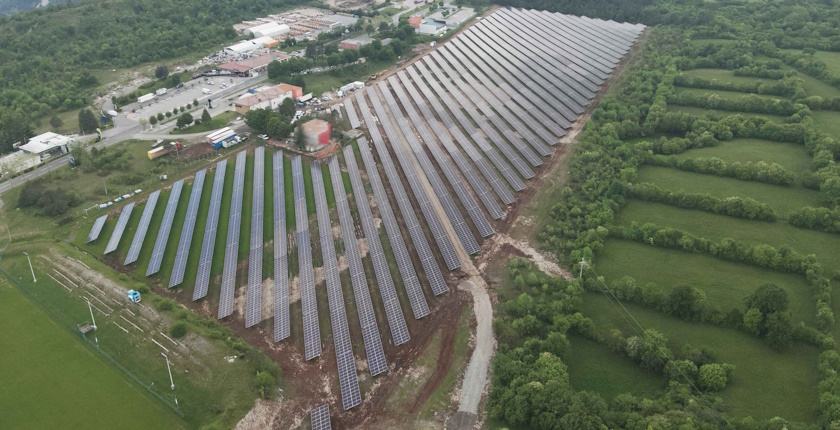
Ingka Investments, the investment division of the Sweden-based Ingka Holding, the largest IKEA franchisee company, said the construction of its first solar power plant in Romania is well underway. The Butimanu project is for 300 MW in peak capacity, which would make it the largest in the country.

The biggest IKEA stores operator is proceeding with a major renewable energy investment plan. Following last year’s regulatory approval in Romania, it is building one of Europe’s largest solar power plants.

The construction of a system of 300 MW in peak capacity is “well underway,” according to Ingka Investments. It is part of Ingka Holding, based in the Netherlands. The site is in Butimanu in Romania’s Dâmbovița county.

Ingka Investments bought the project in 2023. At the time, it said it was ready for construction, in two phases, and valued it at more than EUR 200 million. The Romanian Energy Regulatory Authority (ANRE) issued the permit for 247 MW in peak capacity and a 223 MW grid connection.

The company developed its first solar power project, set to become the biggest in Romania, through its special purpose vehicle Butimanu Energy. The facility just north of Bucharest, in the Muntenia region, would generate electricity equivalent to the needs of almost 170,000 households in the country, Ingka Investments said.

It complements Ingka’s nine wind farms in Romania. They consist of 64 turbines, totaling 171 MW.

Of note, IKEA supplies electricity to end consumers, including in Romania. Ingka Group has 594 wind turbines in 29 solar parks in 19 countries. Including PV plants, it generates 5 TWh per year.
by in News

Price of residential battery storage in Europe drops over 50% in two years

The mature residential battery storage markets in Europe are stabilizing, while policy-driven and emerging markets are gaining traction, according to EUPD Research. Its new report showed prices of home batteries slumped more than 50% between the first half of 2023 and the first half of this year.

The European residential battery storage market has remained resilient in 2025, with notable growth across mid-sized and emerging markets, according to EUPD Research’s latest Electrical Energy Storage (EES) Report. It tracked systems of up to 20 kWh.

While mature markets such as Germany and Italy began the year with more subdued figures, the overall market trajectory points to continued expansion, with over one million new residential storage systems expected to be installed across Europe this year. Although the phaseout of subsidies and adjustments to support schemes led to a weaker start in top markets, the outlook for the second half is more optimistic, the firm said.

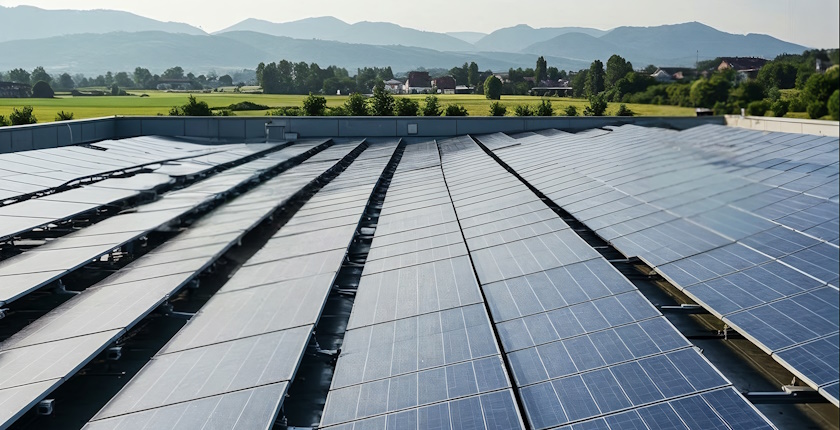
Home batteries are overwhelmingly intended for storing electricity from household photovoltaic systems, usually installed on roofs, balconies or on canopies next to houses.

Dynamic electricity tariffs, self-consumption fueling residential battery storage push

Increasing interest in dynamic electricity tariffs and enhanced self-consumption is expected to stimulate demand for residential market storage. Mature markets are stabilizing, while policy-driven and emerging markets are gaining traction, the update showed.

The sector continues to benefit from falling battery prices. A significant drop in lithium prices, combined with intensified competition due to the influx of new market players in the past two years, has accelerated price erosion and reduced overall system costs.

The data provider’s price index more than halved between the first half of 2023 and the first half of this year. The current average selling price of residential battery storage, in the second half of 2025, came in at EUR 711 per kWh. It is 46.6% lower than in the first half of 2023.

The segment of newly installed residential battery storage in Germany is in a moderate decline

Despite a moderate decline in residential battery installations during the first half of 2025, Germany remains the strongest market in Europe, with demand expected to stay resilient throughout the year. The projected 6% year-on-year decline is mainly due to slower deployment of photovoltaics, reduced regional incentives, and a growing shift in focus toward commercial and industrial (C&I) and utility-scale storage.

Alongside Italy, Germany is estimated to account for the lion’s share of new residential storage capacity additions through 2028, despite Italy’s current slowdown amid the gradual weakening of the Superbonus scheme.

This year’s residential battery storage additions in Europe’s largest economy are seen at 4.7 GWh, compared to a projected 6.04 GW in home PV installations of up to 20 kW. Italy accounts for an expected 1.24 GWh and 1.44 GW, respectively.

Steady, robust growth in several markets

Markets such as Austria, France, the Netherlands, and the Czech Republic are demonstrating steady and robust growth, driven by rising electricity costs since 2023, increasing PV adoption, stable policy support, and increased awareness of the benefits of energy independence.

Sweden, bolstered by tax rebates and a national push toward energy self-sufficiency, has seen a record number of PV systems being installed with residential storage.

As for equipment providers, BYD maintained its top position in 2024, capturing a 20% market share, which is expected to reach 21% this year.

by in News

Turkish renewables firm to drill for geothermal lithium

Margün Energy intends to search for lithium in geothermal waters in Seferihisar in western Turkey, where it took over a 12 MW geothermal power plant. It also launched a project to add a photovoltaic unit of 5.4 MW to the existing facility and create a hybrid power plant.

Turkey, the fourth in the world in geothermal power capacity, also has significant potential for lithium extraction. The production of the mineral used in batteries can increase the cost-effectiveness of geothermal energy projects. Margün Energy, listed at the Istanbul Stock Exchange since 2021, said it would conduct exploration works on 3,125 hectares in Izmir province.

The company recently bought a geothermal power plant in the area for USD 16 million from RSC Elektrik. The 12 MW facility is in Kavakdere in Seferihisar district. Margün Energy denied speculation that it would mine lithium.

If it finds a valuable amount of the mineral in geothermal water, it will build an extraction plant, according to the update. Margün Energy issued the statement after local residents expressed concern over potential environmental damage from lithium mining.

“We have not obtained any mining permits. Furthermore, Margün Energy is not a mining company… Mining lithium, which is used in battery production, and extracting lithium from geothermal fluid by separating it are very different things,” the announcement reads.

Margün Energy to look for precious metals as well

The company said it would continue its investments in geothermal energy such as electricity production and greenhouse farming, arguing it would create jobs for locals. It suggested it could extract carbon dioxide for commercial use as well.

Margün Energy added it would explore the presence of precious metals in geothermal fluids.

Planned PV unit to generate 10 GWh per year

In addition, it submitted a proposal to the country’s Energy Market Regulatory Authority (EMRA or EPDK) for the installation of a photovoltaic unit with 5.4 MW in peak capacity. It would be added to the existing facility, creating a hybrid power plant. The solar power system would generate 10 GWh per year and increase revenue by USD 1.05 million, the company estimated.

The PV plant would lift Margün Energy’s total capacity to 135.4 MW. The company mostly operates solar power plants and works as a contractor for engineering, procurement and construction (EPC) and operations and maintenance.

Notably, it owns the largest stake in Enda Energy Holding. The affiliate operates four hydropower plants, five wind power plants, one geothermal power plant and three solar power plants of 200 MW altogether.

Margün Energy rallied 109% since the beginning of the year.

by in News

Over 20,000 prosumer units connected in Greece in last 18 months

Greece’s distribution system operator HEDNO added more than 20,000 prosumers in the past year and a half, although the new net billing program faces delays.

Last year the government in Athens formally ended the net metering scheme and enacted net billing, aligning with the European Union’s regulations. Any aspiring prosumer with an existing application can switch to the new mechanism for free. The connection charge is EUR 370 per unit.

In the net billing mechanism, the compensation for the prosumer for the electricity delivered to the grid is based on the hourly wholesale price of electricity, instead of a fixed tariff. Projects are limited to a maximum 10.8 kW for households and 100 kW for businesses and energy communities. Virtual billing is also allowed, meaning that production and consumption can be in different locations.

Total capacity almost at 1 GW

According to data from the Hellenic Electricity Distribution Network Operator (HEDNO or DEDDIE), more than 20,000 individual prosumer units have been connected to the grid over the last 18 months, with the majority being connected under net metering.

It brought the overall number of prosumer installations to 35,312, with a total capacity of 995 MW, according to the update.

HEDNO also said 705 applications were in the final stages of the licensing process.

Limited interest from suppliers and aggregators

Despite high interest, progress in adding units within the net billing scheme has been slow. Only two electricity suppliers currently provide such contracts to prosumers and just one of them includes businesses, Energypress reported.

There is limited interest among aggregators to represent corporate net billing installations in the market. As for household units, the Renewable Energy Sources Operator and Guarantees of Origin (DAPEEP) provides the service free of charge.

Market participants are urging improvements in the relevant ministerial decree on net billing, for things to move forward. One of them would be to simplify contracts.

by in News

Project underway for 81 MW solar park on coal mine in Montenegro

The Government of Montenegro adopted urban planning and technical conditions for a solar power plant of 81.1 MW in peak capacity in Pljevlja. The site for the facility is part of a coal mining complex.

Greece is the most successful by far in the Balkans in transforming coal land into clean energy and advanced technology hubs. The projects in the region are mostly for solar power plants. Neighboring North Macedonia is next when it comes to implementation, while Romania and Bulgaria as well as Serbia and Slovenia have made their first steps. Bosnia and Herzegovina and Kosovo* are still in the planning phase, and now Montenegro is joining them with a photovoltaic project.

The government in Podgorica adopted the urban planning and technical conditions for a solar power plant of 81.1 MW in peak capacity in Pljevlja. The facility in the country’s north called Rudnik uglja would be in the Ilino Brdo I cadastral unit, on the site of the Potrlica open cast coal mine.

According to a study submitted with the application, the connection capacity would be 62.5 MW. The coal mine’s operator and PV project developer, Rudnik uglja Pljevlja, said the location spans 62.6 hectares.

The government plans to close the Pljevlja coal plant in 2041

The firm is a subsidiary of state-owned power utility Elektroprivreda Crne Gore (EPCG), which runs the Pljevlja power plant in the same complex. It is the only coal-fired facility in Montenegro. The government plans to close the thermal power plant, currently under reconstruction, in 2041.

Rudnik uglja Pljevlja presented a just transition plan in March. It aims to establish 12 businesses to transform the region and spin them off. They include construction, transportation and the installation of a small hydropower plant called Durutovići and a photovoltaic facility.

The previous government initiated the development of a plan two years ago for an industrial complex in Pljevlja. There are several separate renewable energy projects in the area as well.

* This designation is without prejudice to positions onstatus and is in line with UNSCR 1244/99 and the ICJ Opinion on the Kosovo declaration of independence.
by in News

IRENA: 91% of new renewables units are more cost-effective than fossil fuel alternatives

The fossil fuel age is crumbling, according to UN Secretary-General António Guterres. Renewables maintained their cost leadership in global power markets, the International Renewable Energy Agency said in an annual report. In 2024, onshore wind farms were the cheapest of all versus the lowest-cost fossil fuel alternatives, by 53% on average, while photovoltaic systems were 41% cheaper.

Onshore wind power was also the cheapest in levelized cost of electricity (LCOE) terms, followed by solar power. At the same time, 91% of newly commissioned utility-scale capacity was delivering power at a cost lower than for the cheapest electricity from new fossil fuel–fired units.

The Renewable Power Generation Costs in 2024 report confirmed the price advantage of renewables over fossil fuels, with cost declines driven by technological innovation, competitive supply chains and economies of scale, the International Renewable Energy Agency said. IRENA expects cost reductions to continue, but highlighted the short-term challenges.

Geopolitical shifts including trade tariffs, raw material bottlenecks, and evolving manufacturing dynamics, particularly in China, could temporarily raise costs.

Asia, Africa and South America, with stronger learning rates and high renewable potential, could see pronounced cost declines.

Higher costs are likely to persist in Europe and North America, driven by structural challenges such as permitting delays, limited grid capacity, and higher balance-of-system expenses, according to the update. In contrast, regions like Asia, Africa and South America, with stronger learning rates and high renewable potential, could see pronounced cost declines.

The organization pointed to the need for stable and predictable revenue frameworks to lower investment risk and attract capital.

“Clean energy is smart economics – and the world is following the money,” United Nations Secretary-General António Guterres stressed. In his view, the fossil fuel age is crumbling.

Capital costs inflating LCOE in developing countries

Mitigating financing risk is central to scaling renewables in both mature and emerging markets. Instruments such as power purchase agreements (PPAs) play a pivotal role in accessing affordable finance, while inconsistent policy environments and opaque procurement processes undermine investor confidence, IRENA added.

In many developing countries of the Global South, high capital costs, influenced by macroeconomic conditions and perceived investment risks, significantly inflate the levelized cost of electricity (LCOE) of renewables.

Onshore wind power production cheapest by far of all kinds of electricity

In 2024, onshore wind farms were the cheapest of all versus the lowest-cost fossil fuel alternatives, by 53% on average, while photovoltaic facilities were 41% cheaper. Of note, the cost of battery energy storage systems (BESS) declined by 93% from 2010 to 2024, to USD 192 per kWh.

Onshore wind remained the most affordable source of new renewable electricity, with a global weighted average LCOE at USD 0.034 per kWh (USD 34 per MWh), followed by new solar, at USD 0.043 per kWh, and new hydropower plants, USD 0.057 per kWh.

Again per the levelized cost of electricity, 91% of newly commissioned utility-scale renewables capacity was delivering power at a lower cost than the most affordable new fossil fuel–based units.

That said, LCOE increased slightly for solar power, by 0.6%. Onshore wind power was 3% more expensive than in 2023, compared to 4% for offshore wind and 13% for the bioenergy segment. Meanwhile, costs declined for concentrated solar power (CSP), by 46%, followed by electricity from geothermal units, 16%, and hydropower, which slipped 2%.

Solar and wind energy prices have begun to stabilize, which is a natural sign of market maturity, the authors underscored.

Photo: Renewable energy LCOE 2010-2024, in United States dollars per kilowatt-hour (IRENA)

Clear path to affordable, secure, sustainable energy

The addition of 582 GW of renewables capacity in 2024 led to significant cost savings, avoiding fossil fuel use valued at about USD 57 billion, new data shows. Looking at all renewables in operation, the avoided fossil fuel costs in 2024 reached up to USD 467 billion, IRENA’s Director-General Francesco La Camera stated.

New renewable power outcompetes fossil fuels on cost, offering a clear path to affordable, secure and sustainable energy, he pointed out.

by in News

China-based Astronergy to build solar cell factory in western Turkey

Astronergy allocated USD 700 million for its second solar module factory in Turkey. It aims to start manufacturing photovoltaic wafers and cells in Balıkesir in the first phase. The company is part of Chint Group, headquartered in China.

Turkey’s industrial base for renewable energy equipment is expanding. The solar and wind power segment is serving the participants in government auctions, which have high domestic content requirements, and benefiting from manufacturing incentives. China-based firm Astronergy, which already operates a solar panel factory in Adana of 1 GW in annual capacity, decided to build another facility in western Turkey.

The investment in Balıkesir will be worth USD 700 million, the company’s Chairman in Turkey Ercüment Kaya told Anadolu Agency. Astronergy, part of Chint Group, aims to start building the factory by the end of the year.

In the first phase, the facility would manufacture solar wafers and cells and reach 3 GW per year. By 2028, when it is set to be fully operational, it would have 5 GW in capacity and produce photovoltaic modules as well, the official revealed.

The solar panel manufacturer is planning to export 80% of the devices that it manufactures in the second factory

The company would employ its TOPCon 4.0 cell technology. Astronergy counts on the government’s HIT-30 program for high technology, the report adds. Kaya said the manufacturer bought land in Balıkesir’s industrial zone and that it intends to export 80% of the devices, mostly to the American market and Southern Europe.

Early this year, 75 solar panel manufacturers operated in Turkey. Put together, their annual capacity was 44.5 GW. Three were making solar cells and their overall capacity was 6.1 GW per year.

The country is also strong in other technologies, like for geothermal power plants.

The government recently declared a 2035 target for solar and wind of 120 GW in total. Turkey hosts some 23 GW in photovoltaic capacity.

by in News

Biggest PV plant in Slovenia begins regular operation

The largest solar power plant in Slovenia has only 7.1 MW in peak capacity and a 5 MW grid connection. The facility in the country’s southwest, on the border with Italy, has begun regular operation, according to its developer Moja elektrarna.

Slovenia is mostly leaning on small photovoltaic and battery storage installations for its renewables expansion. Moja elektrarna, a firm based in Maribor, the second-largest city, built the country’s biggest solar power facility.

The PV plant consists of 12,888 modules of 550 W apiece, Naš stik reported. It translates to barely 7.1 MW in peak capacity, in terms of direct current or DC. The grid connection, for alternating current (AC), is 5 MW.

Moja elektrarna installed the PV park at the Krvavi Potok village on the border with Italy. The facility in southwestern Slovenia is on the territory of the Hrpelje-Kozina municipality. It is expected to generate 8.4 GWh per year. The projected output is equivalent to the electricity consumption of 2,400 domestic households, the article adds.

Located next to one of the main roads to Italy, the PV plant in Krvavi Potok is suitable for powering future electric vehicle charging points

The firm said the test operation began on April 1 and that the solar power plant entered regular operation on July 1. It expects to receive the certificate of occupancy, the final permit, by September.

Moja elektrarna is a subsidiary of Austria-based PV-Invest, which earlier said the PV plant spans 7.2 hectares. The company has calculated that the solar power plant would prevent an equivalent of almost 64,000 tons of carbon dioxide emissions in total over its 30-year operating life.

Located next to one of the main roads to Italy, the facility is suitable for powering future electric vehicle charging points, according to the company. PV-Invest develops funding plans for private and institutional investors for joint photovoltaic projects supported by banks and financial institutions, according to its website.

In 2023, HESS built the now second-largest solar power plant in Slovenia in Brežice, at its hydropower plant.

by in News

Pexapark: PPA activity in Europe drops in first half of 2025

The number of power purchase agreements (PPAs) for renewables in Europe fell by 31% and the volume tumbled 26% in the first half of the year from the levels in the same period of 2024, Pexapark found. Germany and France registered sharp declines in the photovoltaics segment, but a surge in Italy and Spain has more than offset the drop.

The meteoric rise in deals for battery energy storage systems, BESS, is a clear sign of its maturity.

In its latest report, analytics and advisory firm Pexapark provided a detailed look into PPAs and contracts for battery energy storage systems in the first six months of 2025. It found that PPA activity shrank by more than a quarter in year-over-year terms, but not everywhere and not due to solar power.

Across 124 deals, 6.08 GW of renewable electricity capacity was contracted in the first half, which is 31% and 26% down, respectively, from the same period of 2024. Conversely, the average deal size advanced 5% to 48.2 MW.

Notably, the April-June period was much weaker than the first quarter of the year, with just 50 deals, but the volumes were almost evenly split.

The main technologies in the first half were solar power, 4.2 GW from 73 deals, onshore wind (1.4 GW and 32 PPAs), mixed technology (290 MW and nine deals) and offshore wind (134 MW and four deals). The result is proportionate to the picture from January through June 2024.

Despite concerns over saturation of demand for standalone solar, volumes have firmed. The 4.2 GW of solar capacity contracted under PPAs compares to 3.9 GW of the first half of last year. The deal count landed at 73, against 95, which is in line with the overall trend.

PPA activity in Germany plunged 84% in terms of volume

Solar offtake activity reveals a clear split in market momentum. It is slowing down in markets where cannibalization has worsened drastically and rapidly – such as Germany and France. In fact, Germany saw the largest decline in volumes – a remarkable 84% year-on-year decrease in terms of overall volumes, with 228 MW across eight deals in the last six months, versus 1.2 GW and 31 deals in last year’s equivalent.

There is stable or even upward appetite in markets which have had time to adjust to cannibalization and the lower valuation of solar production, or where cannibalization levels are still very low

Conversely, solar PPA activity in Italy and Spain spiked, more than making up for the said decline.

“These numbers support the hypothesis that there is stable, or even upward appetite in markets which have had time to adjust to cannibalization and the lower valuation of solar production – i.e., Spain, or cannibalization levels are still very low – such as Italy. Italy’s solar PPA volumes grew 184% year-on-year, with nearly an additional 700 MW procured compared to the same period last year. Corporate appetite in the country is growing, and so is deal size – with a 420 MW solar corporate deal announced in June comprising the country’s largest PPA ever recorded,” the analysis reads.

As for Southeastern Europe, OMV Petrom’s deal with Enery for their joint solar power project Gabare in Bulgaria was Europe’ third-largest PPA in June.

Flexibility monetization is opportunity for market players with right profile

In a market increasingly driven by flexibility monetization, today’s challenges – cannibalization, future capture dynamics and balancing risks – are becoming opportunities for market players with the right profile. And with corporate buyers more hesitant to pay premiums for solar, transactable prices are—perhaps for the first time in a while – closer to perceived fair value, according to the report’s authors.

Wholesale electricity prices in Sweden were negative for almost two fifths of the time in the first six months of 2025

Hourly periods with negative prices at wholesale electricity markets continued strong in the first half. Sweden maintained its top position by far, with most such events. There were 1,635 hours with negative prices from January until the end of June. It is a stunning 37.8% share of the entire period and already 63% of the tally from all last year.

The other jurisdictions that make up the top five in Europe: Finland, Germany, the Netherlands and Belgium, remained the same since 2024.

On average, European countries have already reached around 67% of the number of hours counted in 2024 as a whole. Norway hit 90%, Denmark 87% and Spain climbed to 86%, suggesting that last year’s records would fall.

Top five European markets by number of negative price hours, 2024 vs. the first half of 2025

BESS deal volumes already three times higher than in all 2024

The maturity of the BESS industry is clearly reflected in the deal count and contracted volumes over the past 18 months, with the trend increasingly pronounced in 2025.

Battery storage capacity being contracted under optimization or fixed-revenue offtake contracts (so-called floors and tolls, respectively) amounted to a total of 4.6 GW in capability and 9.2 GWh in capacity across 36 deals. It is just over three times more than in entire 2024 in both benchmarks. The deal count was 44% up from all last year.

The lion’s share of the deal count concerns BESS assets with a two-hour duration

The rapid growth was driven by a wave of new agreements in the two most advanced markets – Great Britain and Germany – alongside first-ever BESS deals emerging in Belgium, Poland, Greece, and Bulgaria. The lion’s share of the deal count concerns BESS assets with a two-hour duration, which the ratio of operating power and capacity also indicates.

Pexapark provides of price data, market intelligence, and advisory services for renewable energy. It was one of the knowledge partners at this year’s edition of Belgrade Energy Forum, organized by Balkan Green Energy News.

by in News

Slovenia publishes call for incentives for wind, solar power projects

Solar and wind power projects with or without energy storage that are on Slovenia’s priority list can be submitted for grants from the European Union’s Modernisation Fund. The round is worth EUR 29.5 million and the deadline is January 7. Notably, of the 1,117 projects for renewables and cogeneration approved for state support so far, only 254 were completed by the end of 2024.

The Ministry of the Environment, Climate and Energy launched a public call for cofunding under a mechanism for the modernization of energy systems in Slovenia and improvement of energy efficiency. It is for projects for solar and wind power plants, with or without storage, from the so-called A list of indicative, priority investments.

Eligible companies can receive support from the EU’s Modernisation Fund under the RES Scheme (Part A). It was approved by the European Investment Bank. The list was published in March of last year.

Total planned support amounts to over EUR 84 million and the selected projects must be completed by the end of September 2030. The deadline for submissions in the current round is January 7, 2026.

The grants can cover up to 45% of the costs for photovoltaic and wind power systems and a maximum of 30% of the electricity storage segment, the documentation shows. Storage capacity must be at least 0.75 kWh per kW of the nominal capacity of the power plant.

All five eligible projects are within state-owned HSE Group

There are 21 items on the A list and most are power grid investments. Only five are for renewables, of which Dravske elektrarne Maribor (DEM) is present with its controversial Ojstrica wind farm project, the proposed expansion of the Zlatoličje-Formin solar park, and the ZOOP photovoltaic project for 9.9 MW in peak capacity on the former Pobrežje waste landfill.

The largest priority investment among the ones that can apply in the current round is HSE’s proposed floating PV plant with batteries

The company is part of state-owned Holding Slovenske elektrarne – HSE. Another subsidiary on the list, Soške elektrarne Nova Gorica (SENG), intends to expand its recently commissioned Kanalski Vrh solar power plant.

HSE itself has the largest project – for the Družmirje floating solar power plant, which would include storage. It also plans to produce green hydrogen using electricity from the facility.

Few completed energy production projects among ones selected through public calls

The Energy Agency of Slovenia has so far approved 1,117 renewables and cogeneration projects to enter the support scheme, selected through 13 public calls. The combined planned capacity is 794 MW, of which there were 996 renewable energy projects, for 682 MW.

However, only 254 endeavors, with 112.6 MW altogether, were completed by the end of last year. In the previous round, the agency selected 507 projects, for a total nominal capacity of just over 259 MW, mostly for PV plants.

Of note, lengthy procedures, strict environmental rules and local opposition are keeping Slovenia at the bottom of the European Union’s wind power capacity chart in the European Union. The country hosts just three standalone wind turbines and DEM has contracted the fourth one.