by in News

Serbia’s EPS plans to build 500 MW of wind farms with strategic partner

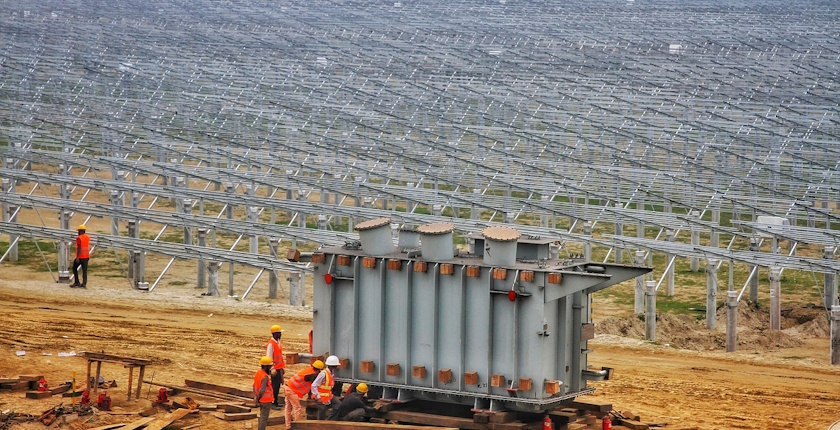
State-owned power utility Elektroprivreda Srbije (EPS) and the Government of Serbia plan to develop a 500 MW wind farm project with a strategic partner, according to Aleksandar Latinović, Head of Ancillary Services at EPS. He also noted that a 1,000 MW solar power project is expected to be online by 2029.

The Energy Infrastructure Development Plan and Energy Efficiency Measures for the period through 2028 envisage the construction of wind farms with a capacity of up to 500 MW.

The project could be similar to the 1,000 MW solar power project with 200 MW battery energy storage systems (BESS) that Serbia is implementing with strategic partners Hyundai Engineering and UGT Renewables (UGTR).

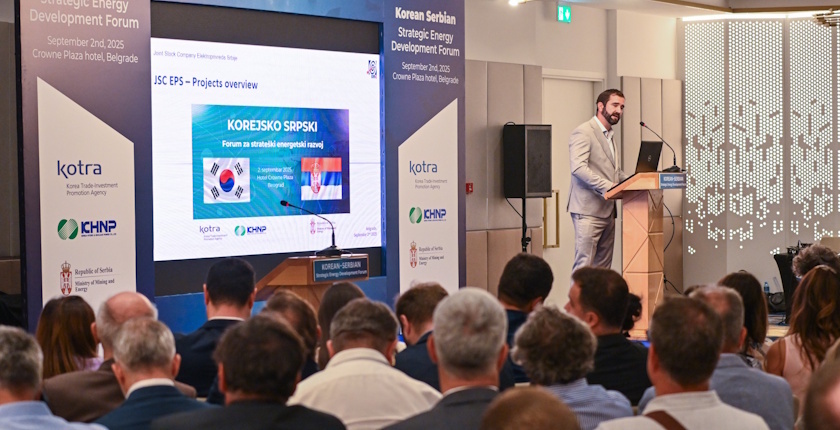
During the presentation of EPS’s development projects at the Korea-Serbia Strategic Energy Development Forum, held in Belgrade, Aleksandar Latinović recalled that the recently built Kostolac B3 power plant, as well as the pumped storage hydropower plant Bistrica, will provide energy to balance the system.

Tenders for two solar power plants are expected next year

Increasing the balancing reserve, in his words, is crucial for integrating new renewable energy sources into the power system. He particularly highlighted the Bistrica project, noting that it will have the same energy storage capacity as all currently existing BESSs in Europe. According to Latinović, the plant is expected to be operational by 2031 or 2032.

Latinović also recalled that EPS recently inaugurated Petka, its first solar power plant on a coal tailings dump. Though a small project, it is significant because EPS owns several thousand hectares of similar tailings and ash dumps.

The solar power plants Kolubara A (78 MW) and Morava (42 MW) are in the development phase, with tenders expected to be announced next year. Meanwhile, the Klenovnik project (110 MW) is undergoing a review of its preliminary feasibility study.

The 1 GW solar project is expected to be connected to the grid by 2029

Regarding wind energy, the 66 MW Kostolac wind farm is scheduled to begin trial operations next month.

For other wind farm projects, EPS and the Serbian government plan a 500 MW project with a strategic partner, he noted, stressing that EPS is willing to acquire already developed, construction-ready projects.

Latinović recalled that the preparation of a spatial plan for the 1 GW solar power project is underway. Strategic partners have already begun preparing investment and technical documentation, and a grid connection agreement with transmission system operator Elektromreža Srbije (EMS) has been signed.

A shortage of balancing energy could be an issue

According to the project timeline, this project will be operational and connected to the grid within four years, Latinović noted.

He stressed that integrating new renewable energy sources into the power system could lead to a shortage of balancing reserves. It is also possible, in his words, that there will be an excess of electricity when a significant amount of renewable energy is produced.

For this reason, EPS has initiated a study to analyze the use of hydrogen and heat storage.

The main focus of this study will be optimizing surplus electricity from intermittent renewable energy sources, increasing the system’s balancing reserve, replacing fuel oil in coal power plants with hydrogen-based fuel, and substituting gas and coal in heat production, Latinović explained.
by in News

Global solar installations soar 64% in the first half of 2025

The world’s total capacity of solar power plants has increased by 380 MW in the first half of 2025. It is a 64% increase compared to the same period last year, according to Ember.

In the first six months of 2024 the world added 232 GW. It took until September that year for new solar capacity to surpass 350 GW – a result for the entire 2023. This year the milestone of 350 GW was reached in June, according to the energy think tank Ember.

The total global cumulative installed capacity reached 2.2 TW by the end of 2024.

The rapid expansion of solar capacity in recent years has made it the fastest growing source of new electricity generation. In 2024, global solar output rose by 28% (+469 TWh) compared to 2023, more than any other source, Ember noted.

China continues to lead the world in solar growth. Global Energy Monitor said in July that three quarters of global solar, wind capacity under construction is in China.

From January until the end of June, the country’s photovoltaic installations were more than 100% higher year-over-year.”

China accounted for 67% of the global new installations – up from 54% in the first half of 2024, according to the think tank.

The result was partly driven by the developers’ intention to finish projects before new rules on wind and solar compensation came into effect in June this year.

This situation could lead to lower installation in the rest of the year, however Ember stressed new clean power procurement requirements for industry and higher full-year deployment expectations from China’s solar PV association (CPIA) as evidence that a new record volume of solar power plants would be recorded in 2025.

India follows China

All other countries together installed an estimated 124 GW in the first half of 2025 – 15% higher than the first half of 2024.

India won second place with 24 GW, a 49% increase over the already strong 16 GW added in deployment in H1-2024. The United States ranked third with 21 GW, up 4% year-on-year, despite recent moves by the US government to restrict clean power deployment.

The remaining countries added 65 GW in H1-2025, 22% more than in H1-2024. Ember pointed out data for Africa in which imports from China rose 60% in the last 12 months. But, the effects on the ground are still not unknown.

2025 is on track to become another historic year for solar power

Solar became the EU’s largest source of electricity for the first time in June 2025. However, the EU is set to install less new solar capacity in 2025 than it did last year – the first annual drop in a decade.

Ember estimated that 2025 is on track to become another historic year for solar power.

“These latest numbers on solar deployment in 2025 defy gravity, with annual solar installations continuing their sharp rise. In a world of volatile energy markets, solar offers domestically produced power that can be rolled out at record speed to meet growing demand, independent of global fossil fuel supply chains,” Senior Energy Analyst of Ember Nicolas Fulghum noted.

by in News

Abu Dhabi’s Mubadala buys into Romanian renewables developer Rezolv Energy

Mubadala Investment Company, a sovereign investment fund from Abu Dhabi, is acquiring a stake in Rezolv Energy, a major renewable energy investor in Romania, which is developing the largest solar park in Europe.

Mubadala is setting up a joint venture with Rezolv Energy’s owner, sustainable infrastructure investment fund Actis, for joint control of the Romanian firm, whose ongoing projects in the country exceed 2 GW, according to a report by Profit.ro.

The Mubadala-Actis joint venture, which has received the green light from the European Commission, will be created through the purchase of shares and securities.

Mubadala, with assets under management of USD 300 billion as of the end of 2024, is wholly owned by the government of Abu Dhabi, the United Arab Emirates (UAE).

The transaction has been cleared by the European Commission

Rezolv Energy’s ongoing projects in Romania include the construction of a photovoltaic park with an installed capacity of 1,044 MW in Arad County, called Dama Solar. Once in operation, it is expected to be the largest solar park in Europe. The investment envisages a battery energy storage system (BESS) with 500 MW of operating power.

Rezolv Energy is developing the 1,044 MW Dama Solar project and over 1 GW of wind farms in Romania

Its portfolio in Romania also includes a 600 MW wind project in Constanța county and a 461 MW wind park in Buzău county. The company has already signed a grid connection agreement for the facility in Constanța.

The company won four contracts for difference (CfD), for a total capacity of 951.2 MW, in the first two auctions organized by the Romanian Ministry of Energy, according to Profit.ro.

Rezolv Energy was launched by Actis in 2022, with an initial investment of EUR 500 million. It is now active in Romania, Croatia, the Czech Republic, Luxembourg, Bulgaria, and Slovakia, with a total portfolio of 2.5 GW of solar and wind projects.

by in News

Romanian prosumers propose measures to cut electricity bills by up to 60%

The Association of Energy Prosumers and Communities in Romania has called on the government to implement five measures that could swiftly reduce electricity bills.

The measures target both individual homes and multi-apartment buildings, and results could be visible in up to 12 months, according to the Association of Energy Prosumers and Communities (APCE).

The association pointed out that the measures are needed because consumers in Romania pay some of the highest energy prices in Europe.

The first measure is related to energy communities, as the country is lagging in implementing the relevant EU legislation. The association claims that the introduction of energy communities lowered energy bills in Spain by 60%.

The association called on the authorities to involve civil society in the lawmaking process

Such structures allow citizens to directly manage their energy production, distribution, and storage, achieving independence from traditional suppliers and producers, the APCE noted.

The association called on the authorities to involve civil society in the lawmaking process, and underlined that adoption could be completed in three months, with bill reductions within 3–12 months.

The second measure involves multi-apartment buildings. Through a simple legislative change, residents could become direct beneficiaries of solar energy produced on the roofs of their buildings, the APCE pointed out.

Romania could install up to 4,000 MW of rooftop solar on multi-apartment buildings

Romania, the association notes, could install up to 4,000 MW of solar power plants on 4,200 hectares of apartment building roofs. The proposed legislative changes could be adopted within three months, with results visible after 3–12 months.

Mini-PV systems for balconies have the potential to lower electricity bills by 60%, according to the APCE’s calculation. In Germany, over a million such systems have already been installed, leading to monthly bill reductions of more than 60%.

The association estimates that the legislation needed for their rollout could be adopted within 30 days, and results could be visible immediately after installation.

Tackling suppliers’ excessive profit margins

The regulation of the supply margin for energy produced by prosumers is the fourth proposed measure. The association said that in 2025, a surplus of almost 2 billion kWh of renewable energy would be injected into the grid by prosumers.

Romania’s regulator, ANRE, left it to suppliers to set their profit margins, resulting in high prices for electricity resold to consumers.

PACE calls for a clear regulation of the supply margin to ensure that electricity produced by prosumers reduces consumer bills.

Reducing transmission tariffs for the TSO

The estimated timeframe is up to three months for the measure to be adopted, with visible reductions in bills expected immediately after implementation.

The final measure is a reduction of transmission tariffs for the transmission system operator (TSO) Transelectrica.

Even though the TSO does not transport prosumers’ surplus electricity, it still charges them for the service. It collected over EUR 18 million in 2024, the APCE claims, adding that the figure for 2025 is estimated to be EUR 35 million.

by in News

Reverse energy flows turn Slovenian distributors into power producers

On May 1 and 2 this year, for the first time ever, five Slovenian power distribution companies fed more electricity into the transmission network than they drew from it. This shift is creating challenges for distribution grid operators while also highlighting the core reality of the energy transition.

Indeed, the circumstances were extraordinary during the first two days of May, writes Slovenia’s Naš stik. The weather was clear, but not warm enough for people to use air conditioners, while solar power plants connected to the distribution grid were generating electricity at nearly full capacity.

Industrial plants were not working due to the holiday, and many people were away from home, so electricity consumption from the transmission network fell sharply, reaching only 150 MW between 12 and 1 p.m. In winter, peak hourly consumption reaches around 2,200 MW.

Pumped storage hydropower plant Avče was operating at full capacity

Pumped storage hydropower plant Avče was operating at full capacity, receiving 157 MW from the transmission network. All Slovenian power distribution companies supplied more electricity to the transmission network than they received from it.

Elektro Ljubljana and Elektro Primorska drew energy from the transmission grid, but Elektro Maribor, Elektro Celje, and Elektro Gorenjska delivered significant amounts, resulting in a negative overall balance.

For four hours, the distribution network was a net electricity producer

The distribution network as a whole was a net producer of electricity for four hours on May 1, between 11 a.m. and 3 p.m. On the same day last year, the minimum hourly load of the transmission network was 770 MW, and power distribution companies drew 450-500 MW from the grid. The same thing happened on May 2.

It is worth noting that the total capacity of solar power plants in Slovenia is 1.4 GW, half of which was installed in 2023 and 2024, with the largest part connected to the distribution grid. The overall electricity generation capacity in Slovenia is 7.47 GW.

Managing voltage profiles on the grid poses the greatest challenge

The most pronounced change in energy flows was recorded at Elektro Celje. Boštjan Turinek, director of operations and development, said that a reverse flow of energy from the distribution network to the transmission network was first recorded in July 2022. At that time, the amount was minimal, around 4 MW.

However, in 2023, the reverse flow reached 40 MW, and this year it has already hit 100 MW. The biggest challenge, he explains, is managing voltage profiles on the grid.

The distribution network was built for one-way “traffic” – toward the end user – with the highest voltage at substations and the lowest at end consumers. The mass integration of distributed energy sources has disrupted these voltage profiles, Turinek stressed.

Distributed power plants like emergency vehicles

Ordinary consumers usually don’t notice this – perhaps only a slightly shortened lifespan of their LED bulbs, he said. However, according to him, solar power plant owners often experience automatic inverter shutdowns caused by overvoltage.

Besides holidays, changes in energy flows also occur during collective shutdowns of Slovenian industrial plants during the summer and spring breaks. If the weather is sunny at that time, the output from distributed energy sources is very high.

Turinek recalls that distributed power plants have been granted the same rights as emergency vehicles, so their output always takes priority, regardless of the state of the grid.

If the power system is to be properly managed, he adds, these plants should be placed on an equal footing with all others.

The net metering system for prosumers has had many positive effects, but it has also created numerous problems, Turinek concluded.

by in News

Croatia pauses applications for residential solar subsidies

High interest among Croatian citizens in subsidies for installing solar power plants for self-consumption has prompted the Environmental Protection and Energy Efficiency Fund to pause the application process.

The Environmental Protection and Energy Efficiency Fund (FZOEU) has announced that it will temporarily close the ongoing public call for incentives to install photovoltaic plants in family homes, which was opened on June 6. In just over two months, about 4,100 project applications have been received and are currently being processed, the FZOEU noted.

By mid-last year, 21,000 rooftop PV systems at households and businesses, with a total capacity of 642 MW, had been connected to the distribution network.

The large number of applications confirms that investing in renewables is a financially sound long-term decision

According to the FZOEU, the financing program encourages citizens to use renewable energy sources, reduce greenhouse gas emissions, and increase the energy independence of households.

The strong interest in this program demonstrates that citizens are taking the energy transition more seriously and want to actively participate in producing green energy, the fund claims.

With subsidies, solar installations become more accessible to the general public, and the high volume of applications confirms that investing in renewable energy sources is a financially sound long-term decision for households, FZOEU added.

Citizens can receive up to 50% of eligible costs

Only individuals—owners or co-owners of houses—who had residency at the address at the time the power plant was commissioned were eligible to apply. The fund co-finances facilities installed and commissioned from January 1, 2025, and citizens can receive up to 50% of the eligible costs, or up to EUR 600 per kW of installed power capacity.

Depending on available funds and the success rate of applications, the FZOEU will consider the possibility of relaunching the call for future prosumers.

Over the past two years, the fund has co-financed the installation of around 5,600 rooftop solar power plants in households.

In the first six months of last year alone, households and companies installed 5,504 PV facilities, according to data from Croatia’s distribution system operator, HEP-Operator Distribucijskog Sustava (HEP-ODS).

by in News

CE Oltenia to set up subsidiary to take over coal power plants slated for closure

Romanian state-controlled coal power utility Complexul Energetic Oltenia (CE Oltenia) is preparing to establish a subsidiary to take over its lignite-fired thermal power plants slated for closure and the coal mining operations that supply them.

CE Oltenia’s “lignite subsidiary” is envisaged under a restructuring and decarbonization plan approved by the European Commission, according to Profit.ro.

The subsidiary will incorporate and operate the existing lignite-based power generation units and related assets that are not planned to switch to natural gas or renewable energy sources, according to the European Commission’s decision from 2022 approving state aid for CE Oltenia’s restructuring.

The state aid Romania planned to grant CE Oltenia amounted to EUR 2.66 billion.

The subsidiary will operate coal-fired plants that are not planned to switch to gas or renewables

CE Oltenia’s decision to start the separation of lignite-related activities into a separate subsidiary was adopted as early as 2023, but nothing has been done since then.

Now, the company has launched a procedure to select a consultant and intends to award a contract by winter, with a deadline of about six months for the delivery of services.

The new firm is to be created before the end of CE Oltenia’s restructuring period, i.e. before the end of 2026, according to the commission’s decision. It further states that the lignite capacities in question should decrease over time and eventually be phased out, in accordance with the national coal phase-out timetable.

CE Oltenia is building 550 MW of solar power plants at former coal mines

Earlier this year, a joint venture between CE Oltenia and oil and gas company OMV Petrom signed an agreement with contractors to design and install four solar power plants at former coal mines, with a combined capacity of about 550 MW.

According to Profit.ro, Romanian Energy Minister Bogdan Ivan said last month that Romania was in talks with Brussels on a 5-year postponement of the deadline for closing lignite-fired power plants, envisaged by the country’s National Recovery and Resilience Plan.

by in News

First feed-in tariff auction in Federation of BiH draws strong interest

Ahead of a public call for the first auction for feed-in tariffs for solar power plants, the Federation of BiH’s renewable energy authority has launched a survey to assess interest among potential participants.

The auction covers feed-in tariffs (FIT) for small solar installations with an installed capacity of up to 150 kW, according to the Operator for Renewable Energy Sources and Efficient Cogeneration (Operator za OIEiEK).

The survey aims to estimate the number of applications for the upcoming auction and will run from August 22 to September 22.

The quotas for each technology and the amounts of electricity eligible for incentives are set in the decree on quotas for renewable energy sources and efficient cogeneration. The quota for the first auction is set at 12 MW of solar, of which 1.2 MW is reserved for renewable energy communities.

Under the Law on the Use of Renewable Energy Sources and Efficient Cogeneration and the auction rulebook, the first FIT auction is also open to all existing power plants that have not previously received any kind of incentive for electricity production, Operator za OIEiEK noted.

This, along with rising inquiries from investors and electricity producers, is one of the reasons for conducting the survey. Operator za OIEiEK added that its purpose is to gather information and that it will serve solely to estimate the potential number of applications.

The auction will be launched once the e-auction system is operational

Completing the survey doesn’t constitute an application to the public call, nor does it create any legal or formal obligation. Operator za OIEiEK encourages investors to participate in the survey by completing a six-question questionnaire.

Meanwhile, in Mostar, Operator za OIEiEK organized a roundtable to present the auction rulebook.

According to the rulebook, the auction will be conducted through an e-auction system.

Currently, the e-auction system is in the trial phase, with training underway for Operator za OIEiEK staff. Once the system is operational, a public call for the first FIT auction will be launched, according to Operator za OIEiEK.


by in News

Enerjisa Enerji to rebuild grid, install solar in earthquake-hit region in Turkey

Turkish electricity distribution company Enerjisa Enerji has secured a USD 150 million loan to rebuild and modernize the power grid in the earthquake-hit Toroslar region in the country’s south, as well as to install solar power plants to supply corporate customers. The loan was provided by the European Bank for Reconstruction and Development (EBRD).

The Toroslar region accounts for about one-third of Enerjisa Enerji’s total operations. It was heavily affected by the earthquakes of February 2023, which caused widespread damage and more than 55,000 fatalities, the EBRD noted.

The 2023 earthquake caused heavy damage and killed more than 55,000 people

Enerjisa Enerji will use the EBRD loan to finance the reconstruction and modernization of the electricity distribution network, contributing to the overall reconstruction efforts in the region. The company will also install solar power plants offering sustainable energy solutions to its corporate customers, the bank said.

The company said in a press release that the five-year loan would be utilized to improve the quality of its electricity distribution services and expand its customer-focused renewable energy solutions.

The solar power plants will offer sustainable energy to Enerjisa’s corporate customers

Enerjisa Enerji is a subsidiary of Enerjisa Üretim, a joint venture between German E.ON and Turkey-based Sabanci.

Early this year, Enerjisa Enerji won the right to build and operate two wind farms totaling 750 MW, the largest projects available in Turkey’s auction for a total of 1.2 GW of wind.

The EBRD also stated that the project demonstrates its commitment to Turkey’s green agenda by helping to prevent distribution losses in the electricity network, as well as supporting the construction of renewable energy infrastructure, leading to significant reductions in carbon emissions.

Philipp Ulbrich, the CFO of Enerjisa Enerji, said that support from the EBRD strengthens the company’s strategic steps toward sustainable growth, reflecting investor interest in the energy transition in Turkey.

Turkey has secured over EUR 650 million in World Bank financing to support renewables integration

Earlier this month, the World Bank approved a financing package for Turkey’s transmission system upgrade project, aimed at enabling the integration of increased renewable energy capacity. The package includes a EUR 625 million loan from the International Bank for Reconstruction and Development (IBRD), a EUR 32.8 million loan from the Clean Technology Fund (CTF), and a USD 2 million CTF grant.

by in News

Deanovec PV project near Zagreb conditionally passes environmental assessment

Croatia’s Ministry of Environmental Protection and Green Transition has decided that no environmental impact assessment study is required for the 65.7 MW Deanovec solar power plant project. The investment was initiated by Statkraft, which recently sold its entire business in the country to Resalta.

The project is planned on the territory of Ivanić-Grad in Zagreb county, with a peak capacity of 65.7 MW. The Deanovec site covers 73.2 hectares, of which photovoltaic modules would occupy around 28 hectares.

In May, Statkraft OIE, the project firm, submitted a request to the ministry to determine whether a full environmental impact assessment is necessary. It submitted the environmental study, produced by Zagreb-based Eko Invest, revealing that the plant would have a 59 MW grid connection.

The ministry concluded that a full environmental impact assessment is not necessary, but the investor must prevent potential harm.

The prescribed measures include coordination with the local hunting rights holder. Protection of watercourses involves preventing precipitation runoff from access roads into nearby streams. Wherever possible, cable lines must be placed within existing infrastructure corridors. The solar park needs to be divided into four fenced sections, with fencing designed to allow the passage of small animals.

Deanovec solar power project deemed environmentally acceptable

According to the decision, the investor must use anti-reflective PV modules, ensure sufficient spacing between them, and install eco-friendly lighting. Vegetation within the solar park must be mechanically maintained, without herbicides or chemicals, while the removal of invasive plant species is mandatory.

The ministry stated that the project is not expected to have significant negative impacts on biodiversity, soil, watercourses, agricultural land, landscape, or air quality, and that the defined mitigation measures are sufficient to avoid potential harm. All relevant authorities provided positive opinions, and the public consultation process did not result in major objections.

Furthermore, the ministry ruled that a comprehensive assessment under the procedure for the network of nature protection areas is not required. Its purpose is to determine whether a planned project could have a significant negative impact on protected areas, including those within the Natura 2000 network. It was concluded that the Deanovec solar power project does not affect or directly threaten these areas.

Norwegian energy giant Statkraft recently announced it was selling all its operations in Croatia to Resalta. However, it is still listed as the owner of the Deanovec project.