by in News

Đokić: We expect EU to accept request to postpone CBAM implementation

Minister of Energy and Mining of the Republic of Srpska Petar Đokić expressed belief that the European Commission would postpone the implementation CBAM, set for January 1, 2026.

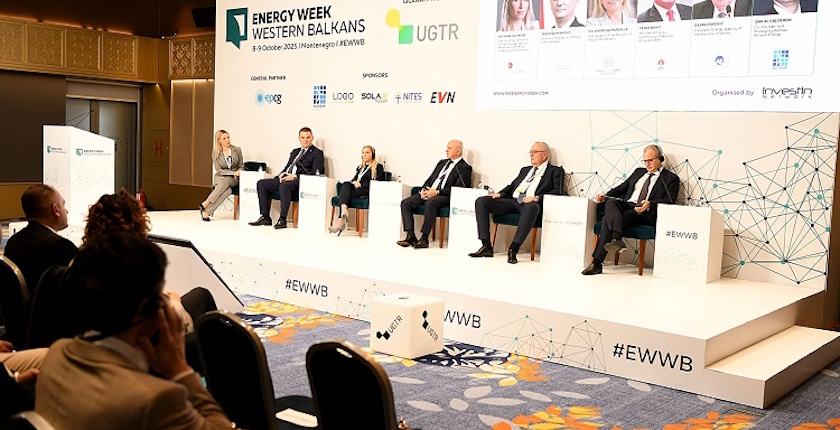
Minister Petar Đokić participated in the Energy Week Western Balkans 2025 conference, where he recalled that the Republic of Srpska has signed several contracts with domestic and foreign partners for the construction of renewable power plants totalling 2,170 MW. The investments are estimated at BAM 5 billion (EUR 2.56 billion).

Đokić noted that the construction of two hydropower plants, of 159 MW and 34 MW, is underway, as well as of the Buk Bijela hydropower plant, in cooperation with Serbia.

Đokić: The rest of the world no longer follows European politics

So far, two contracts have been signed for the construction of wind farms, of which one is in an advanced stage of construction, he underlined. The plan is to complete all contracted projects within three years, according to Đokić.

It will further increase the share of clean energy in total production.

He highlighted the challenges posed by the European Union’s policies, including the Carbon Border Adjustment Mechanism (CBAM), a cross-border emissions tax. Its application could have a very negative impact on the local economy, Đokić noted.

As the rest of the world no longer follows European policies, the question arises whether Europe has the right to impose new obligations on its members, especially if such obligations cause economic disruptions, he claimed.

Đokić: The request of the Republic of Srpska to postpone the implementation of CBAM is justified

Đokić said that the request of the Republic of Srpska to postpone the implementation of CBAM is justified. According to him, Bosnia and Herzegovina has fulfilled the last condition, the adoption of the law on the electricity regulator, transmission, and market, as it is now in parliamentary procedure.

CBAM brings fees on the CO2 emissions of goods imported to the EU from countries that don’t have equivalently priced carbon schemes. They include the Western Balkans.

The tax will cover cement, iron and steel, aluminum, fertilizers, electricity, and hydrogen.

Serbia, which is also part of the Western Balkans region, launched public consultations last week on its draft Law on Greenhouse Gas Emissions Tax and the Law on Carbon-Intensive Product Imports Tax.

Đokić spoke at a panel with Minister of Energy and Mining of Montenegro Admir Šahmanović, Ambassador of Italy to Montenegro Andreina Marsella, President of the Energy Agency of the Republic of Serbia (AERS) Dejan Popović, and co-founder and managing partner of Alcazar Energy Daniel Calderon.
by in News

North Macedonia receives applications for 4.2 GW of battery projects

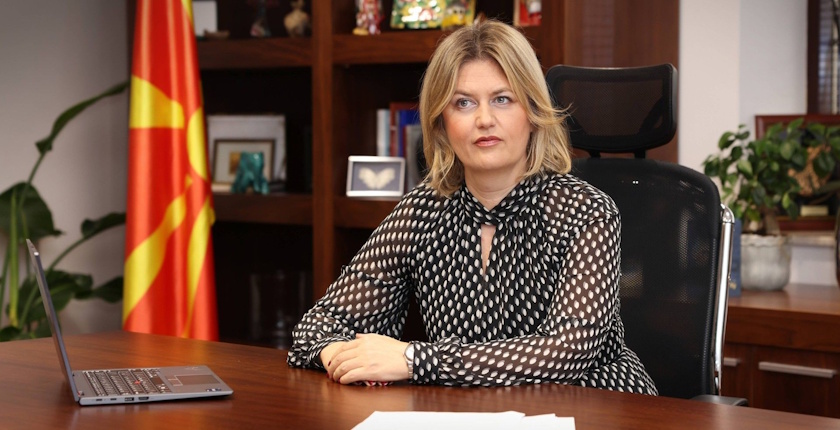
North Macedonia has received requests for new wind farms, solar parks and gas power plants of 7,100 MW in total capacity, as well as for standalone batteries and ones that would be co-located with power plants, for 4,172 MW in overall operating power, Minister of Energy, Mining and Mineral Resources Sanja Božinovska revealed.

The Ministry of Energy, Mining and Mineral Resources has received an initiative for a 495 MW gas-fired cogeneration plant. Sanja Božinovska said the details are unknown as the submitted documentation is too extensive and is still being analyzed, state news agency MIA reported.

Of note, there were already proposals for gas-fired power plants in the country. The government has signed a memorandum of understanding with Kazancı Holding on projects for such facilities.

Investors intend to install standalone and co-located BESS

Investors submitted initiatives for wind farms of 1,590 MW altogether, as well as for a total of 402 MW and 1,080 MWh in battery energy storage systems (BESS) that would be co-located with wind farms.

So-called initiatives were also received for solar power projects totaling 5,052 MW and accompanying BESS of 1,174 MW in combined capability and 3,018 MWh in capacity. Investors plan to build standalone batteries of an overall 2,596 MW and 3,094 MWh, respectively.

Božinovska said it is great news, though that it’s more important whether the documentation is valid.

She recalled that the recently adopted Law on Energy introduced an annual construction plan for priority energy projects.

October 1 was the deadline for foreign investors to submit their projects

October 1 was the deadline for foreign investors interested in the construction of power plants to submit documentation, Božinovska noted. The ministry received a huge number of documents and it will take time to process them, she stressed.

Batteries became all the rage in the renewable energy sector worldwide. North Macedonia is set for a landmark achievement in its region.

YESS Power plans to commission a 60 MW BESS in the country next month. It would be the first large facility of its kind in the Western Balkans.

by in News

Croatia’s HEP to install 90 solar power plants on rooftops of its facilities

Croatia’s power utility Hrvatska Elektroprivreda intends to install 90 solar power plants on its facilities across Croatia.

HEP ESCO, a subsidiary of Hrvatska Elektroprivreda (HEP), has launched a public procurement for the installation of 90 photovoltaic plants under a design-and-build model and on a turnkey basis.

The firm develops, implements, and finances energy efficiency projects based on the ESCO model.

The investment is estimated at EUR 5.3 million, and the deadline for submitting bids is November 3.

HEP ESCO plans to sign a contract with the best bidder within 90 days after selecting it. The deadline for the completion of works will be 18 months, according to the public call.

Five groups of solar power plants

The public call is divided into five geographical groups in Croatia.

Group 1 is for Zagreb and its surroundings. Solar panels would be installed at ten locations, with an estimated investment of EUR 1.2 million. Group 2 covers hydropower plants Zavrlje, Orlovac, Peruća, and Zakučaci in the coastal region of Dalmatia, as well as power distribution facilities. The works in the segment are valued at EUR 770,000, local media reported.

Four cities in the region of Slavonia make up the third group, with 20 locations. Solar panels would be installed for EUR 1.21 million in Virovitica, Požega, Vinkovci, and Vukovar.

HEP has over 50 solar power plants on the rooftops of its buildings and facilities

A total of 15 locations in the areas of Međimurje and Zagorje and the Sisak-Moslavina county, and including hydropower plant Ozalj, all in northwestern Croatia, are in the fourth group. The estimated value is EUR 1.1 million.

The value of the investment in Istria, Primorje, and Gorski Kotar is EUR 1.03 million. It entails the Fužine hydropower plant, Rijeka, Vinodol, and electricity distribution facilities.

Of note, HEP has more than 50 solar power plants on the rooftops of its buildings and facilities.

HEP Proizvodnja, HEP’s power production arm, has 12 PV plants on administrative buildings, thermal power plants and hydropower plants. The total capacity is about 1.5 MW. HEP ODS, the country’s distribution system operator, has another 44 solar power plants with a total capacity of 1.1 MW on its roofs.

by in News

Celje, Šoštanj among Slovenian municipal authorities pursuing energy independence

The City of Celje in Slovenia plans to install 11 solar power plants on its public buildings, and the Municipality of Šoštanj agreed contracted four such units. The photovoltaic systems would be part of energy communities. Šoštanj expects to save EUR 70,000 per year while Celje is counting on EUR 200,000.

Novo Mesto, another municipality in Slovenia, recently made a similar move toward achieving energy independence.

The total capacity of the solar power plants in Celje and Šoštanj is 1.9 MW. They have signed contracts with ECE, a subsidiary of state-owned power utility Holding Slovenske Elektrarne (HSE). The projects are funded from the National Recovery and Resilience Plan (NRRP) and by the two municipal authorities.

Šoštanj is set to get solar power plants with a capacity of 500 kW altogether, at four locations: the sports hall of the Karel Destovnik Kajuh elementary school, a music school, health center, and the Pilon Center.

The total investment is EUR 500,000, with the local authority receiving a EUR 450,000 grant via the NRRP.

Both municipal authorities now have energy communities

In Celje, approximately 1.4 MW would be installed at several locations including the Z’dežele Stadium, Celje Summer Pool, Celje Health Center, elementary schools and kindergartens.

The City of Celje secured a EUR 1 million grant from NRRP, and the total investment is estimated at EUR 1.4 million.

Sebastijan Roudi and Boris Goličnik (photo: Municipality of Šoštanj)

In addition to building solar power plants, the contract includes five years of maintenance, offtaking surplus electricity production, and supply during insufficient power generation. It also involves managing the energy community.

In Šoštanj, the energy community would involve more than 15 public buildings, and the one in the City of Celje would consist of PV units on more than 40 public buildings.

The two projects are scheduled for completion in December and November, respectively.

Šoštanj aims to produce 70% of the electricity consumed by its public buildings

When the power plants are built, the municipality expects to cover 70% of the consumption of all public buildings, and the third-largest city in Slovenia aims for a 15% share.

The Šoštanj project is envisaged for 500 MWh of clean electricity output per year, reducing electricity costs by about EUR 70,000. Total savings over the entire lifespan of the solar power systems is seen at EUR 2 million.

Celje’s PV plants would produce 1,462 MWh of energy annually and save approximately EUR 200,000, translating to around EUR 5 million throughout their service life.

Investment for the long-term benefit of the community

Mayor of Šoštanj Boris Goličnik said the contract signifies the continuation of the municipality’s vision of energy independence.

“This is an investment in the future, in the green transition, and for a permanent benefit of our community,” he stated.

According to Celje’s Mayor Matija Kovač, it is a strategic decision on managing energy, costs, and the environment in the future. He said the planned PV units are just the beginning.

Sebastijan Roudi, ECE CEO, asserted that as part of the HSE group, the firm places grea t emphasis on demanding energy projects, developing new billing models, and seeking ways to accelerate the green transition.

by in News

Slovenia’s Novo Mesto makes important step on path to energy independence

The Municipality of Novo Mesto has made an important step toward becoming the first major local authority in Slovenia to achieve energy independence.

In the presence of Minister of the Environment, Climate and Energy Bojan Kumer, Mayor of Novo Mesto Gregor Macedoni and President of the Management Board of Petrol Sašo Berger signed an agreement on the construction of solar power plants on municipal land and structures.

The Municipality of Novo Mesto estimated that the new photovoltaic units would get it to a nearly 80% energy self-sufficiency.

The Ministry of the Environment, Climate, and Energy supported the project with co-financing of EUR 882,000 from the European Union’s Recovery and Resilience Facility. The total cost of the project is EUR 1.1 million. The municipality secured support from the ministry and Petrol is covering the remainder.

The collaboration will be implemented as a public-private partnership

Within the public-private partnership (PPP), Petrol will build ten new solar power plants and will also operate them.

Mayor Gregor Macedoni explained that the new investment will include the construction of solar power plants at the Portoval sports center, primary schools Stopiče, Otočec, Bršljin, Dragotin Kete, and Brusnice, as well as kindergartens Pedenjped, Ostržek, Ciciban, and Videk.

The municipality also plans to install a community solar power plant on the old CEROD landfill and additional ones on the remaining municipal facilities and parking canopies.

Total production in the municipality would be 2.5 GWh annually

“This year, we have already installed six solar power plants, and together with four facilities from 2010 and planned additional capacities, the total production in our municipality will reach 2.5 GWh per year,” Macedoni stated.

According to the mayor, the goal remains clear – to achieve complete self-sufficiency of the municipality with electricity from renewable sources

Minister Bojan Kumer underlined that the signing demonstrates that the path set by the ministry, more than three years ago, was the right one.

The projects, in his words, are primarily beneficial for the citizens. “Together, we will all be better prepared for future energy challenges,” Kumer stated.

According to him, the municipality has become a good example, and it will continue on the same path.

by in News

RES Croatia to Brussels: Renewables have no future in Croatia

RES Croatia, together with SolarPower Europe and WindEurope, has sent a letter to the European Commission to raise concerns about the crisis in Croatia’s renewable energy sector.

The three associations emphasized that for several years, 60 projects for investments in solar, wind, geothermal, and batteries have been blocked, and that if nothing is done, many of them would soon be abandoned.

Without urgent deblocking of renewable energy projects, Croatia will lose investments, increase fossil fuel imports, which already exceed 25%, and miss the European Union’s and national target of at least 42.5% of energy consumption coming from renewables by 2030, according to Renewable Energy Sources of Croatia (RES Croatia), SolarPower Europe and WindEurope.

The national organization warned that the government is gradually phasing out subsidies for electricity prices for citizens and entrepreneurs. At the same time, the development of renewable energy sources as the only sustainable solution for lower bills and lowering imports is at a complete standstill, it added.

Projects with a total capacity of 3.5 GW and investments of EUR 3 billion are blocked

Croatia is currently subject to infringement proceedings due to delays in implementing the European Union’s RED II and RED III directive. They aren’t just a piece of paper, but a mechanism to ensure energy security and independence, which is of strategic interest for Croatia and its citizens, RES Croatia underscored.

The organizations are urging the European Commission to use its tools to demand from the government to determine the grid connection fee, but at EUR 0 per kWh, open up the balancing market for renewable energy producers, and integrate battery energy storage systems (BESS) and electrification into national planning.

Currently, 60 projects for solar power plants, wind farms, geothermal power plants, and batteries with a total capacity of 3.5 GW and investments of EUR 3 billion are blocked, according to the letter, accompanied by an annex.

The domestic industry is unable to sign long-term PPAs

For these projects, the state has already charged EUR 25 million through energy approvals— the first in a series of documents that requires payment to the state, which, due to the blockage, are beginning to expire at the end of this year.

Organizations stressed that these projects are permanently losing the paid money, while local communities are losing significant revenues that would have been allocated to them from the implementation of renewable energy projects.

They also drew attention to the domestic industry’s inability to sign long-term power purchase agreements (PPAs) with renewable energy producers, securing more favorable market conditions and thereby increasing its competitiveness in European and global markets.

Of note, the European Commission advised Croatia in June to speed up the installation of renewable energy capacities.

If nothing is done, projects of as much as 2.5 GW overall will be abandoned as early as next week

The associations pointed out that the development of new projects larger than 10 MW has stalled since 2022 because the Croatian Energy Regulatory Agency (HERA) has not set a transmission network connection fee for renewable power plants.

Instead, they added, Croatia’s transmission system operator (TSO) HOPS is trying to shift the costs of network modernization – planned over ten years ago and not related to new projects – to new renewable energy projects.

The minister of economy said in March that the upcoming connection fee would be EUR 0 per kW

It is increasing the project cost by 30% to 40%, making them unprofitable, RES Croatia said.

Such a model for financing the network is not from European practice, because 80% of member states rely on EU funds and their national budgets, rather than on producers.

They also recalled that the minister of economy announced in March that a connection fee would be set at EUR 0 per kW and that developers would be offered flexible contracts to encourage investment in battery storage. But that promise has not yet been fulfilled.

The three organizations warn that if nothing is done, projects of up to 2.5 GW altogether would be abandoned as early as next week after HOPS’s decision,. It means companies would withdraw from the Croatian market and lose millions in investments that would have permanently lowered energy prices in the country, RES Croatia claimed.

The balancing market is not functional

An additional problem is the non-functional balancing market, according to the letter.

HEP Proizvodnja, a subsidiary of state-owned utility Hrvatska Elektroprivreda (HEP), is the dominant provider of balancing services, and often the only one. HOPS is legally obliged to ensure market-based procurement of these services, yet it is itself a wholly owned subsidiary of HEP.

It creates an obvious conflict of interest and undermines market competition, the signatories underlined.

“Despite the demonstrated technical ability of solar and wind power plants to provide balancing services, HOPS doesn’t allow these plants to participate in balancing markets. As a result, HOPS frequently activates extremely expensive balancing resources, often at maximum regulated prices even during hours of high renewable generation and positive market prices,” the letter reads.

Croatia has no serious electrification plan

The organizations pointed out that such pricing constitutes a clear violation of the EU principle that balancing services must reflect only the actual costs incurred by the TSO.

They also stressed that Croatia lacks a concrete electrification plan. In 2022, renewable energy accounted for only 2.4% of final energy consumption in transport, with electricity from renewables contributing just 0.2%.

The target for renewable electricity in transport by 2030 is only 5.8%, reflecting limited ambition compared to the EU ambitions, according to the letter.

Electrification of railways could significantly reduce emissions and accelerate the transition, however, it remains an untapped potential, the signatories organizations noted.

by in News

Power the Balkans: Optimizing Solar & BESS projects with RatedPower – webinar announcement

RatedPower, a leading provider of software for solar plant design and optimization, is organizing a free webinar to present its solutions that boost the efficiency and profitability of PV and battery storage projects. The online event, to be held on October 13 at 3 pm CEST, comes at a time when renewables are gaining momentum in the Balkans, increasing the need for complex planning and engineering and making digital solutions essential for project optimization.

In the upcoming webinar, which you can register for using the REGISTRATION LINK,  experts will showcase how RatedPower solutions automate and streamline the design of solar power plants and battery energy storage systems (BESS), maximize efficiency and return on investment, provide accurate reports for better decision-making, and enable seamless collaboration across teams, according to an announcement from the company.

“Digital solutions are becoming essential to streamline processes – from design and engineering to operations, reporting, and collaboration. By integrating advanced software tools, developers and engineers can save time, reduce costs, and maximize the efficiency and performance of their assets,” reads the statement.

RatedPower’s advanced software tools save time, reduce costs, and maximize performance

RatedPower, part of Enverus, a global software-as-a-service (SaaS) platform for the energy sector, offers a one-stop cloud-based solution for PV plant and BESS design and engineering as well as hybrid systems. Its end-to-end platform offers integrated services that cover design, engineering, procurement, and even operational optimization, ensuring a seamless lifecycle approach.

According to the statement, users have confirmed to have doubled their portfolio, increased their profitability by over 20%, and reduced the levelized cost of energy (LCOE) by 5%.

RatedPower is not limited to traditional solar. Its model adapts to hybrid renewable energy systems, BESS integration, and smart grid optimization, positioning it as a strategic partner for the next generation of sustainable energy solutions.

By harnessing real-world performance data and predictive analytics, it helps developers, investors, and operators make smarter, more profitable decisions, mitigating risk and maximizing ROI, reads the statement. The platform enables renewable energy professionals to automatically design, simulate, and optimize PV plants and storage systems.

Unlocking the Balkans’ renewables potential with RatedPower solutions

Headquartered in Madrid, Spain, RatedPower has a portfolio of thousands of projects across Europe, the Americas, Asia, and Africa, with a client base that includes leading developers, utilities, EPC (engineering, procurement, and construction) companies, and engineering firms.

Serving more than 480 companies and 5,800 users worldwide, RatedPower has designed over 64,000 projects worldwide and produced simulations for a total of 5.1 TW of capacity. The projects are supplying green energy to 13 million households, mitigating 18 million tons of CO₂ emissions.

RatedPower has a global footprint, but it views the Balkans as a key region for renewable energy growth.

“RatedPower is committed to empowering renewable energy professionals worldwide – and the Balkans represent one of the most exciting regions for renewable growth,” said Emil Trepin, Account Executive at RatedPower.

Photo: Emil Trepin, Account Executive at RatedPower

“Our software provides the precision, efficiency, and collaboration tools needed to take PV and BESS projects from concept to completion, helping to unlock the region’s true potential,” he stressed.

by in News

Parliament of Montenegro installs solar power plant

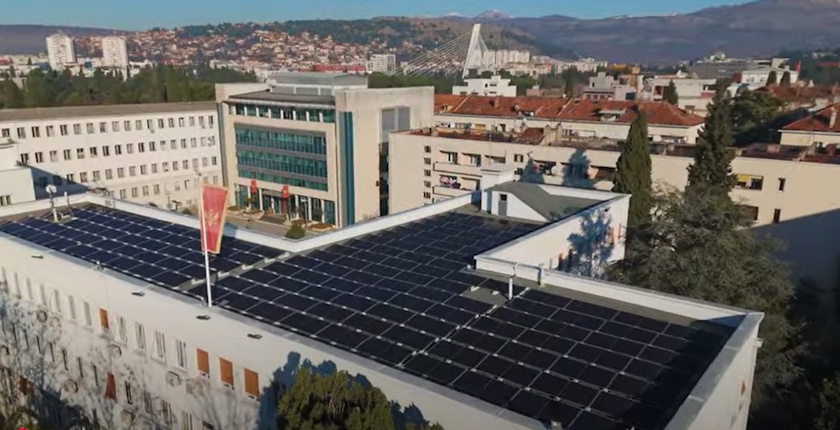
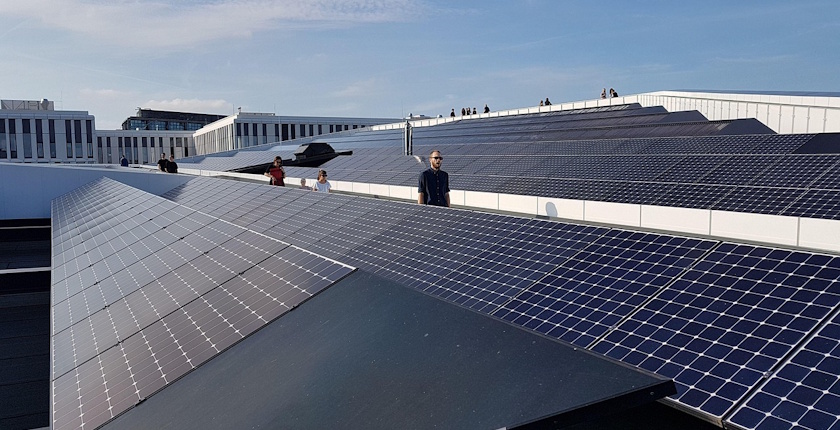
The solar power plant on the roof of the Parliament of Montenegro in Podgorica has started producing electricity. The plant’s total peak capacity is 81 kW, and it is expected to generate approximately 100,000 kWh per year.

Montenegro is likely the first country in the former Yugoslavia to install solar panels on the roof of its parliament. This project represents an important step towards sustainable development and the efficient use of energy resources, according to the Parliament of Montenegro.

The installed photovoltaic system consists of 150 monocrystalline solar panels, each with a capacity of 540 W. The total peak capacity of the plant is 81 kW. Electricity is delivered to the grid through a 70 kVA inverter.

The estimated annual power production of 100,000 kWh will cover a significant portion of the assembly’s consumption and contribute to reducing greenhouse gas emissions. This achievement will promote the parliament into a prosumer.

The solar plant will cover a significant part of the parliament’s consumption

The parliament underlined that the implementation of the project represents its commitment to improving energy efficiency. It recalled that the previous renovation enabled a significant decrease in the power consumption.

This year, the assembly plans to start modernizing its cooling system and boost energy efficiency with a new facade. The activities are set to be finished in 2026, further enhancing the overall energy balance of the building.

For years now Montenegro has been implementing a program for the installation of solar panels on the roofs of households and businesses

The Parliament of Montenegro said that, as a socially responsible institution, it is strategically oriented towards modern sustainability standards, rational management of public funds, and environmental protection.

For years now, Montenegro has been implementing a program for the installation of solar panels on the roofs of households and businesses. Power utility Elektroprivreda Crne Gore (EPCG) is in charge of the program. Solari 3000+ and Solari 500+ are finished, and Solari 5000+ is underway.

Of note, the Government of Serbia also announced its intention to install photovoltaic units and become a prosumer. However, there are currently no new updates regarding the implementation of this project.

by in News

Bajramović: Investments of BAM 1.4 billion needed for distribution grids in BiH

Necessary investments in Bosnia and Herzegovina’s electricity distribution grids by 2030 amount to BAM 1.4 billion (EUR 716 million), according to Zijad Bajramović, chairman of the Bosnia and Herzegovina committee of the International Council on Large Electric Systems (CIGRE).

The growing installation of power plants utilizing renewable energy sources is creating congestion in transmission and distribution networks, so the limited available capacity for their connection is an issue across the entire region, Zijad Bajramović told state news agency Fena. Nezavisne Novine republished the report.

An additional burden on the distribution network is expected from the electrification of transportation and increased electricity use for heating and cooling.

Energy storage is a solution for the problems emerging in the grid

Bajramović explained that new 110 kV substations are necessary, as is the completion of the ongoing transition to the 20 kV voltage level. Attention should also be paid to integrating prosumers, especially the households that both produce electricity, with solar panels on their roofs, and consume it.

He highlighted balancing as well as maintaining voltage conditions and supply quality as the main challenges from the rise in renewable electricity capacity on the grid. Energy storage is a solution for the issues.

Batteries can prevent renewables generation curtailments

Bajramović expects battery energy storage systems to play an increasingly significant role in relieving network congestion.

BESS, in his words, are a flexibility tool for absorbing excess generation locally, and temporarily easing the pressure on the transmission grid. They can prevent curtailments of power generation from variable renewable sources, he added.

Bajramović recalled that calculations have showed batteries of 225 MW / 450 MWh in total would be necessary to connect 1,500 MW of solar power capacity and 1,000 MW of wind power to the transmission network.

An increase in distribution network tariffs would provide funds for investment in strengthening and modernizing the distribution network, in his view.

Batteries are being installed at a rapid rate around the world as well as in the region. Not only private companies, but also state-owned utilities such as Romania’s Hidroelectrica and Montenegro’s Elektroprivreda Crne Gore (EPCG) are investing in such projects.

by in News

Abu Dhabi’s Mubadala buys into renewables developer Rezolv Energy

Mubadala Investment Company, a sovereign investment fund from Abu Dhabi, is acquiring a stake in Rezolv Energy, a major renewable energy investor in Romania, which is developing the largest solar park in Europe.

Mubadala is setting up a joint venture with Rezolv Energy’s owner, sustainable infrastructure investment fund Actis, for joint control of the firm, whose ongoing projects in the country exceed 2 GW, according to a report by Profit.ro.

The Mubadala-Actis joint venture, which has received the green light from the European Commission, will be created through the purchase of shares and securities.

Mubadala, with assets under management of USD 300 billion as of the end of 2024, is wholly owned by the government of Abu Dhabi, the United Arab Emirates (UAE).

The transaction has been cleared by the European Commission

Rezolv Energy’s ongoing projects in Romania include the construction of a photovoltaic park with an installed capacity of 1,044 MW in Arad County, called Dama Solar. Once in operation, it is expected to be the largest solar park in Europe. The investment envisages a battery energy storage system (BESS) with 500 MW of operating power.

Rezolv Energy is developing the 1,044 MW Dama Solar project and over 1 GW of wind farms in Romania

Its portfolio in Romania also includes a 600 MW wind project in Constanța county and a 461 MW wind park in Buzău county. The company has already signed a grid connection agreement for the facility in Constanța.

The company won four contracts for difference (CfD), for a total capacity of 951.2 MW, in the first two auctions organized by the Romanian Ministry of Energy, according to Profit.ro.

Rezolv Energy was launched by Actis in 2022, with an initial investment of EUR 500 million. It is now active in Romania, Croatia, the Czech Republic, Luxembourg, Bulgaria, and Slovakia, with a total portfolio of 2.5 GW of solar and wind projects.