by in News

Turkish firm Astor Enerji to install 2 GWh of battery capacity at its solar projects in Romania

Swiss energy storage provider Energy Vault has signed an agreement to supply up to 2 GWh of battery capacity for the solar power projects of Turkey-based Astor Enerji in Romania. Astor Enerji, for its part, will provide transformers and high-voltage equipment for more than 1 GW of Energy Vault’s battery projects worldwide.

Astor Enerji recently entered the Romanian market through the acquisition of four photovoltaic projects with a total capacity of 279 MW, according to reports. The transactions, which require regulatory approval, were carried out in April through Astor Enerji’s Romanian subsidiary Astor RO Energy.

Astor Enerji has acquired 279 MW of solar projects in Romania

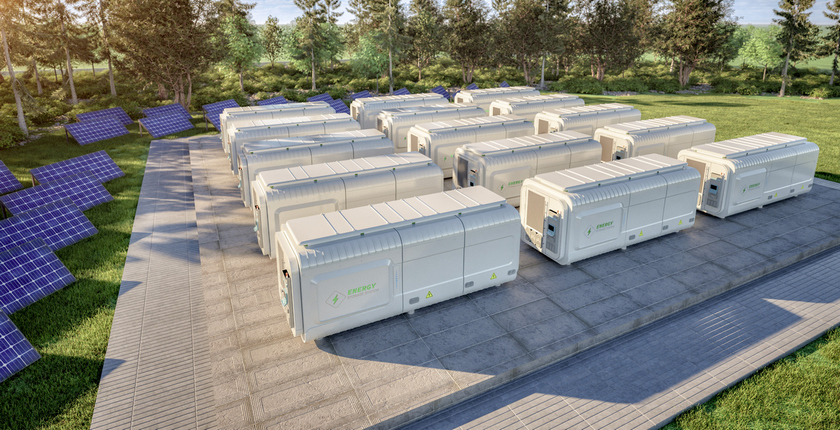
Under the global partnership agreement, Astor will receive battery energy storage systems (BESS) for the four grid-connected photovoltaic projects in Romania, with a total storage capacity of up to 2 GWh, according to a press release from Energy Vault.

Astor Enerji, for its part, will supply transformers and high-voltage equipment for Energy Vault’s BESS projects of over 1 GW overall, planned in the United States, Australia, and Europe.

Olcay Doğan, CFO of Astor Enerji, stated that Energy Vault’s innovative approach to energy storage makes it an ideal partner to support the Turkish company’s expansion into the battery sector.

According to Energy Vault’s chief revenue officer, Marco Terruzzin, the collaboration with Astor Enerji will help build the technology and supply chain capacity to meet surging power demand from artificial intelligence (AI) data centers and the rapid adoption of renewable energy.

Energy Vault has secured USD 300 million for BESS projects around the world

Energy Vault develops and deploys utility-scale energy storage solutions, including proprietary gravity-based storage, battery storage, and green hydrogen energy storage technologies. It recently announced a USD 300 million deal with an investment fund to finance the launch of a subsidiary that will develop, build, own, and operate energy storage assets, standalone or paired with generation facilities, around the world.

Astor Enerji supplies power transformers, distribution transformers, and high-voltage to medium-voltage switchgear to markets in Europe, Africa, Asia, and the United States.
by in News

German startup Voltfang turning used EV batteries into energy storage for solar, wind

German startup Voltfang has opened a plant to manufacture energy storage units for solar and wind from used electric vehicle batteries. The company says the facility is the largest of its kind in Europe, with annual output set to reach 250 MWh in 2026.

The plant in Aachen will produce second-life battery storage systems for commercial, industrial, and large-scale applications. Its annual output is planned to rise to 1 GWh by 2030.

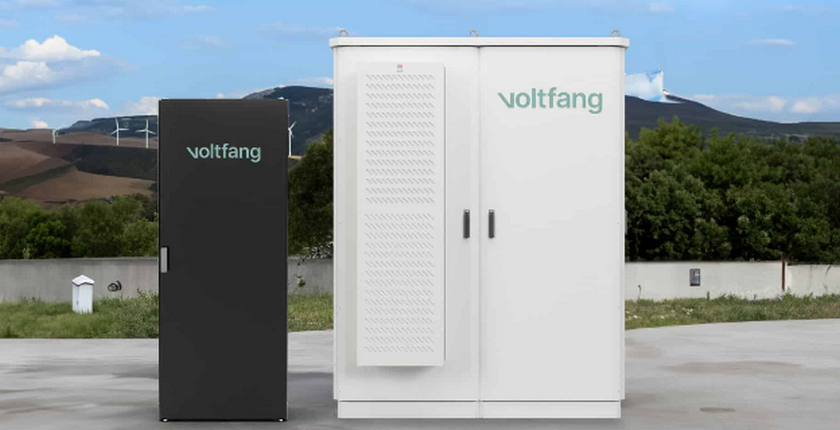
The facility will assemble fridge-sized energy storage units that households and companies can use to store excess electricity generated by solar panels or wind turbines.

Voltfang’s batteries can be used by homes and businesses to store energy from solar or wind facilities

The plant employs around 100 people, and Voltfang claims it is the largest facility in Europe for repurposing lithium-ion batteries.

David Oudsandji, co-founder and managing director of Voltfang, said the company’s goal is to develop high-performance battery storage systems for German and European industry.

Voltfang hopes to turn a profit by next year, but Oudsandji noted that the supply of used EV batteries is still small, as most such vehicles are only a few years old.

The supply of used electric vehicle batteries is still limited

Another obstacle is that new batteries, mainly from China, are becoming increasingly efficient and affordable, while refurbishing old ones is a complex process.

On the other hand, it is more sustainable and helps create a circular economy and ensure energy independence, according to Oudsandji.

by in News

Šahmanović: Montenegro expects first large private wind and solar plants to be online in 2026

Over the past year, Montenegro has adopted two reform laws – on energy and on renewable energy sources – and scheduled its first auctions for market premiums. Admir Šahmanović, Minister of Energy and Mining, told Balkan Green Energy News that the new regulations fully align the sector with the European Union acquis, sending a clear signal to investors that Montenegro now has a stable regulatory framework and market-based prices that safeguard citizens’ interests. Becoming part of the European energy space, he added, is not only a political goal but also the path Montenegro should follow to ensure cleaner and more secure energy for future generations.

Admir Šahmanović served as Minister of Mining, Oil and Gas in the government of Prime Minister Milojko Spajić. In February this year, he became the coordinator of the Ministry of Energy, and since April, he has served as Montenegro’s Minister of Energy and Mining. In an interview with Balkan Green Energy News, Šahmanović discusses his plans to mobilize larger investments, Montenegro’s timeframe for coupling its electricity market with Italy and the EU, the ministry’s steps to prepare the country for the EU’s carbon border tax, and plans for investments in the natural gas sector.

What are the key innovations introduced by Montenegro’s law on renewable energy sources?

The law on renewable energy sources introduced, for the first time, a clear, competitive and fully transparent support mechanism for green energy production – an auction scheme.

Over the past months, we have worked hard to ensure the law really takes hold. We have prepared about 15 by-laws that enabled us to launch the first auctions. I believe this is one of the most important contributions of the new law, as it sends a clear message to investors that Montenegro has a stable framework and market-based prices that safeguard citizens’ interests.

In this way, we are laying a solid foundation for a rapid energy transition, which is both our strategic choice and our responsibility to future generations.

Montenegro has also adopted a new law on energy. What does this regulation bring?

The Law on Energy is our umbrella regulation, providing a framework that fully aligns the sector with the EU acquis. It introduces stricter standards, greater protection of end consumers, better competition, and stronger institutional oversight.

It also opens Montenegro’s energy sector to the European market and creates a stable, predictable environment. This is important not only for investors but also for all consumers, as people are ultimately the ones affected by any change in the system.

You stated that these reforms set a clear strategic path for Montenegro, which sees its energy future within the European market. What will this future bring to Montenegro, its economy, and its citizens?

Our ambition is to make Montenegro a country with clean energy and a stable system. Being part of the European energy space ensures greater security of supply, lower costs in the long term, and a strong inflow of investments. Our economy will have access to a larger market, and our citizens will benefit from safe, sustainable, and environmentally friendly energy.

It is not just a political goal – it is a path I want us to follow in our development, so that we leave our children a country with cleaner and more secure energy.

Admir Šahmanović visiting northern Montenegro with EPCG Director Ivan Bulatović

Applications have been invited for Montenegro’s first auctions for market premiums. What benefits do you expect from auctions?

The auction mechanism allows us to select the most favorable and serious investors through a fair and competitive process. Projects are implemented without budget subsidies and with minimal risk to the state.

We expect auctions to ensure new capacities, create jobs, improve the use of our natural resources, and strengthen overall energy stability. These are the benefits citizens will feel, both on their electricity bills and through new opportunities that will open up in local communities.

Investor interest in wind and solar is strong, with requests to build power plants totaling around 5.5 GW. When do you expect these projects to be realized?

Such strong interest is the best proof that the reforms are yielding results. We expect the first large projects to be online in 2026, with significant capacities ready by 2030. Transparent procedures, good cooperation with local communities, and improved grid infrastructure will be key to making these investments a reality.

What are the main obstacles to these projects? How to remove them?

The biggest challenges are administrative procedures, transmission network limitations, and spatial planning documents. We are working to address them through interdepartmental cooperation, digitalization of processes, and the state’s commitment.

We are strengthening capacities, speeding up permitting, and modernizing regulations. I want to ensure that investors coming to Montenegro know they can work in a clear, predictable, and fair environment.

Admir Šahmanović at the ministerial panel at Belgrade Energy Forum 2025 in May

Preparations are underway to link Montenegro’s electricity market with the EU via Italy, with 2027 featuring as the target year.

Yes, we are working diligently on institutional and market integration. This involves harmonizing the rules, passing the remaining by-laws, and preparing the market operator. With the support of the EU and the Energy Community, I am confident that 2027 will remain the year when we will fully open our market to Europe.

All countries in the region are facing CBAM. How prepared is Montenegro?

CBAM will change the rules for electricity exports to the EU, bringing new costs as well as opportunities. We are aware that it will be a financial burden on our economy, but that is precisely why we view it as an additional incentive to accelerate the implementation of renewable energy projects and increase our own production of green electricity.

We are working on adjusting the regulatory framework, harmonizing economic activities, and ensuring the largest possible share of clean energy to remain competitive and maintain full access to the European market while reducing emissions.

Montenegro also has ambitious plans in the natural gas sector – a gas pipeline, a terminal for liquefied natural gas (LNG), and gas-fired power plants. How far along are these projects?

I see gas as a development opportunity – to ensure greater security of supply, diversification, and new opportunities for the economy. But I also believe that such strategic projects must be developed through dialogue with local communities, with full respect for their views.

We are currently preparing and developing the Ionian Adriatic Pipeline (IAP) project and assessing the potential for an LNG terminal. We are doing this responsibly, one step at a time, and in line with the EU’s energy transition goals.

by in News

Hidroelectrica seeks to buy wind, solar projects totaling 520 MW

Romanian state-owned hydropower plant operator Hidroelectrica, the largest electricity producer in the country, is looking to take over a 250 MW wind farm project under development and a total of about 270 MW of solar projects.

Hidroelectrica’s plan is to acquire the companies that own the rights, permits, land, and other assets related to the renewable energy projects under development, according to a report by Profit.ro.

The plan is to acquire the companies developing the wind and solar projects

The Romanian power utility is currently selecting consultants to conduct due diligence on the projects and the development companies, before making acquisition decisions.

Hidroelectrica operates 188 hydropower plans, with a combined capacity of 6.4 GW, and only one wind park, of 108 MW. The wind park, Crucea Nord, should soon get a battery energy storage system of 36 MW under a contract signed in April this year.

In May, Hidroelectrica hired a contractor for installing its first photovoltaic plants. The solar panels, with a total capacity of 2.96 MW, are to be deployed on the roofs of 20 hydroelectric plants, in an investment valued at EUR 1.77 million.

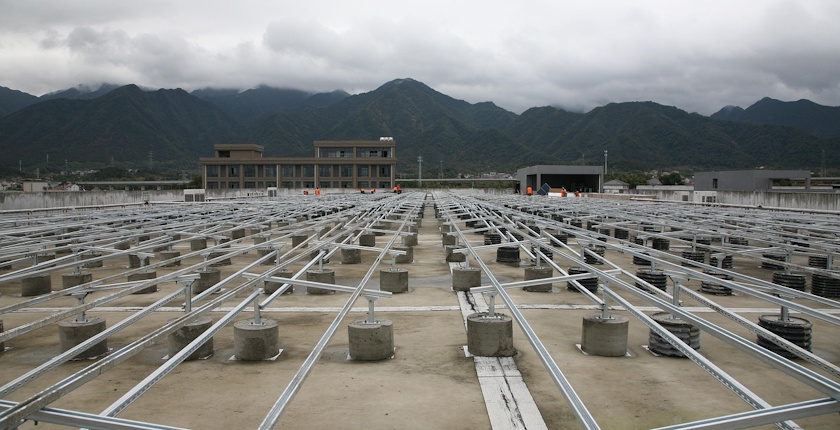
Hidroelectrica plans to install photovoltaic panels at 20 hydropower plants and build a floating solar plant

In June, the company selected a contractor for its first floating solar power plant, of 10 MW, which would be installed on the reservoir of the Ipotești hydroelectric plant. Hidroelectrica said at the time that it intended to obtain know-how from the construction and operation of the pilot floating solar system and replicate the concept elsewhere.

Hidroelectrica has also invited bids for installing a battery energy storage system (BESS) with a nominal power of 64 MW at the Iron Gate 2 (Porțile de Fier 2) hydropower plant on the Danube. It would be used to provide balancing services to the national electricity system and adjust the time intervals of hydropower production at Iron Gate 2.

The company’s profit in the first half of 2025 dropped 41% against the same period a year earlier, to RON 1.587 billion (EUR 313.6 million) as revenue fell 16% to RON 4.315 billion (EUR 852.7 million). Its total power output decreased 27% year-on-year to 6,068 GWh, pushing electricity purchases up 62% to 674 GWh, according to Profit.ro.

by in News

Worrying results of coal, overburden production in BiH’s power utility

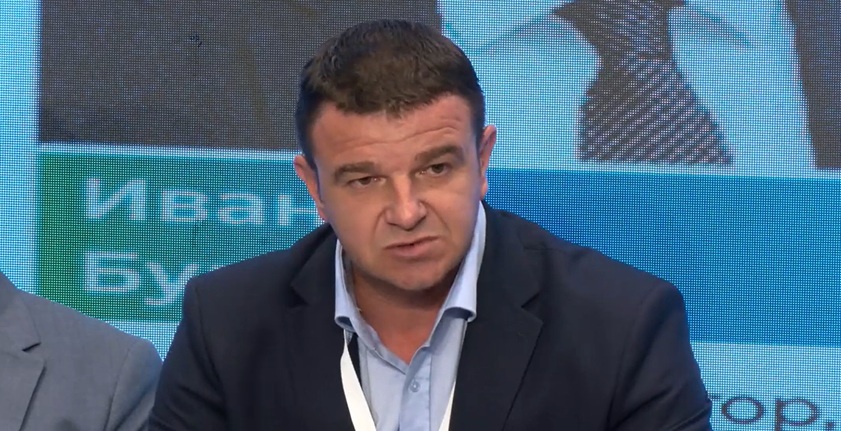
Coal deliveries to thermal power plants in the first half of the year reached 73% of the plan, while only 43% of the overburden excavation target was achieved, warned Sanel Buljubašić, CEO of Bosnia and Herzegovina’s state-owned power utility Elektroprivreda Bosne i Hercegovine (EPBiH).

Increasing coal production is the only way to stabilize the energy system in the Federation of Bosnia and Herzegovina (FBiH), Sanel Buljubašić told state news agency Fena. Focus.ba republished the report.

FBiH is one of the two entities making up BiH. The other one is the Republic of Srpska.

The chief executive pointed to the significance of coal, stressing that 80% of EPBiH’s production comes from coal power plants, with hydropower plants providing the remainder.

Of note, the company recorded a loss of BAM 45.47 million (EUR 23.25 million) for the first half of this year. BiH’s electricity imports were 4.5 times higher than in the same period of 2024.

Buljubašić: We will fulfill our obligations only if the mines fulfill theirs

Buljubašić recalled that the Government of FBiH raised the price of coal at the beginning of 2024 and signed a new collective agreement in the mining sector to demonstrate its commitment to improving working conditions for miners and their status.

The coal mines are operating under an entity called EPBiH Concern. They must produce the planned quantities of coal, which have been jointly agreed and contracted, the CEO underscored and added that EPBiH would meet its obligations only if the mines do the same.

Buljubašić said RMU Breza and RMU Đurđevik are facing the most pressing issues while that RU Kreka is making its best result of the past three years. Coal mine operators RU Kreka, RMU Kakanj, and RMU Abid Lolić have increased production, he added.

Of the nearly 5,000 workers, 1,226 are occupationally disabled

The company head said EPBiH Concern’s mines employ 4,967 workers, of whom 1,226 are occupationally disabled. Additionally, on average, between 1,500 and 1,700 employees are absent every day for various reasons, such as annual leave or sick leave.

In his words, restructuring would imply a program for surplus workers at RMU Zenica, closing mines that are technologically and economically unviable and continuing investments by procuring equipment for economically viable mines to increase productivity.

One of the main problems is the devastated coal deposits, a result of years of delay in overburden excavation, Buljubašić stressed.

Just transition includes mine shutdowns, installation of solar power, batteries, and the use of biomass

The just transition project in BiH’s coal regions, estimated at BAM 160 million (EUR 81.8 million), is being implemented with a World Bank loan. Most of the funds will be spent on closing mines and taking care of surplus employees of RMU Zenica, repurposing RU Kreka’s land, building the 12.2 MW Dubrave photovoltaic plant, repurposing the land of RMU Banovići and installing another solar power plant, of 15 MW, the CEO explained.

He pointed out that the authorities are preparing a law on the closure of Zenica mines — the first such legislation in BiH.

Green investments within a just transition platform for coal regions can include the construction of battery energy storage systems (BESS) and fast-growing biomass plantations, according to Buljubašić.

He announced that EPBiH would soon present its Prosumer 5000+ project and a long-term development plan for EPBiH for the period 2025-2050, within the energy sector development strategy.

by in News

Nofar Energy set to secure financing for 515 MW of solar in Romania

Israeli renewables company Nofar Energy is set to secure a EUR 68 million loan from the European Bank for Reconstruction and Development (EBRD) for three large-scale photovoltaic projects in Romania, with a combined capacity of 515 MW, including the 265.5 MW Corbii Mari solar park.

The EBRD’s loan, with an expected approval date of September 10, 2025, will be disbursed to Nofar’s three Romanian subsidiaries – Corbii Mari Solar Plant, Aviv Renewable Investment, and Slobozia Solar Plant.

Nofar’s firms intend to build a 175.7 MW solar farm in Iepurești, a 74 MW solar farm in Slobozia, both in Giurgiu county, and a 265.5 MW solar farm in Corbii Mari, Dâmboviţa county, according to the EBRD.

The three solar parks are expected to generate 676 GWh of electricity annually. Their operation is expected to reduce CO2 emissions by 280,000 tons annually, the bank noted.

The three solar parks are expected to produce 676 GWh a year

The Corbii Mari solar park, spanning a total of 290 hectares, would be located near the Romanian capital, Bucharest. Given its size, the project is divided into six lots, Romanian news portal Profit.ro reported.

Nofar operates the largest existing photovoltaic park in Romania, of 155 MW, located in Rătești in Argeș county.

Nofar’s 155 MW solar park in Rătești is currently the largest in Romania

There are other major photovoltaic projects in Romania larger than Corbii Mari, in various stages of development, including one of over 1 GW, under development in Arad county by Czech company Rezolv Energy.

Ingka Investments, the investment division of Sweden-based Ingka Holding, the largest IKEA franchisee company, is building its first solar power plant in Romania. The Butimanu project is for 300 MW in peak capacity, it recently said.

Nofar is also developing the Ghimpați solar project near Bucharest, with an installed capacity of 146 MW. Earlier this year, the Israeli company said it had connected to the electricity grid its solar park in Ada, the largest such system in neighboring Serbia.

by in News

INVL fund secures loan for 71 MW of solar projects in Romania

INVL Renewable Energy Fund I has secured a EUR 29.3 million loan for the installation of solar power plants with a capacity of 71 MW in Romania.

INVL Renewable Energy Fund I, managed by INVL Asset Management, invests in renewable energy projects.

The new EUR 29.3 million loan agreement has been signed with Kommunalkredit Austria AG, the fund revealed.

It is its second loan to the fund. In November 2023, the bank approved EUR 25 million for the construction of solar power plants in Romania.

Kommunalkredit’s long-term support plays an important role in accelerating the transition to green energy in the region, according to Liudas Liutkevičius, Managing Partner at INVL Renewable Energy Fund I.

INVL Renewable Energy Fund I is focusing on the Polish and Romanian markets

Construction of the facilities of an overall 71 MW in Dolj County is scheduled for completion by the end of September next year, according to the update. It is the fund’s third large-scale solar energy project in Romania.

INVL Renewable Energy Fund I is focusing on the Polish and Romanian markets, having a combined portfolio of projects in development of 389 MW.

In Romania, the fund is planning eight photovoltaic units with a total capacity of 356 MW. Its future solar parks in Poland would have 32 MW overall. All are due to be completed by the end of 2027.

Ponomarenko: The bank is committed to enabling the energy transition in high-growth markets

Investments in Romania and Poland are expected to exceed EUR 250 million altogether, the fund added.

Konstantin Ponomarenko, a Senior Structurer at Kommunalkredit Austria, said the development of solar energy infrastructure in Romania reflects both the fund’s strategic vision and the bank’s commitment to enabling the energy transition in high-growth markets.

The transaction underlines Kommunalkredit’s dedication to delivering bespoke financing solutions that empower sustainable development across Europe, he added.

by in News

EU faces first annual solar installation decline since 2015 – report

The European Union is set to install less new solar capacity in 2025 than it did last year – the first annual drop in a decade, according to SolarPower Europe.

In its mid-year analysis of the photovoltaic market in the EU, SolarPower Europe said new installations are expected to decrease 1.4% this year. It would be the first slowdown since 2015. The market increased by 47% in 2022, by 51% in 2023, and by 3.3% in 2024.

The EU is set to add 64.2 GW, compared to 65.1 GW in 2024, SolarPower Europe said.

The update comes after solar became the EU’s largest source of electricity for the first time, in June 2025. According to Ember, photovoltaics generated 22.1% of EU electricity (45.4 TWh) last month, more than any other power source. In absolute terms, it was a year-over-year increase of 22%.

Dries Acke, Deputy CEO of SolarPower Europe, said the 1.4% decline may seem small, but that the symbolism is big. In his view, a market decline, right when solar is meant to be accelerating, deserves EU leaders’ attention.

“Europe needs competitive electricity, energy security, and climate solutions. Solar delivers on all of those needs. Now policymakers must deliver the electrification, flexibility and energy storage frameworks that will drive solar success through the rest of the decade,” Acke stated.

The European Commission’s 2025 target for overal PV capacity is 400 GW, while by the end of the year the bloc should host 402 GW. To meet the 2030 target, and deliver the continent’s decarbonisation and competitiveness goals, Europe must install nearly 70 GW per year through the rest of the decade, according to SolarPower Europe.

Rooftop segment is shrinking

The projected decrease in solar is driven primarily by a declining rooftop segment, particularly home solar, the report reads.

Traditionally strong residential rooftop solar markets, like Italy, the Netherlands, Austria, Belgium, Czechia, and Hungary, are slowing. Households there are now postponing installations as the impact of the 2022 energy crisis wanes, according to the association.

There is one more reason – a withdrawal of incentive schemes without adequate replacements. It resulted in a residential rooftop market collapse of over 60% versus 2023 in most of the group. Similarly, Poland, Spain, and Germany are experiencing a decline of over 40%. Good news comes from utility-scale solar. It is expected to continue growing and amount to around half of all new capacity additions.

The authors of the outlook attributed the confidence to improved auction design, and the boost in auction-deployed solar from hybrid and co-located storage projects, especially in Germany and Bulgaria. Germany leads in solar auctions, followed by the Netherlands, France, and Italy, with Poland and Ireland also scaling up, the report underlines.

It also points to a weakening in the segment of corporate power purchase agreements (PPAs). They have been a key driver of utility-scale solar in recent years. However, in 2025, falling electricity prices have reduced buyers’ incentive to sign long-term deals.

New solar PPA signings have dropped by 41% in the second quarter of this year against end-March, according to the report.

by in News

Meet VIREAS: new AI-powered virtual assistant for energy

Croatia’s Regional Energy Agency North has launched VIREAS – a virtual energy assistant powered by artificial intelligence.

VIREAS answers users’ questions about energy renovation and renewable energy sources in real time, provides recommendations tailored to users’ homes and needs, helps identify opportunities to save energy and reduce costs, and explains technical concepts in simple terms, the Regional Energy Agency North (REA North) said.

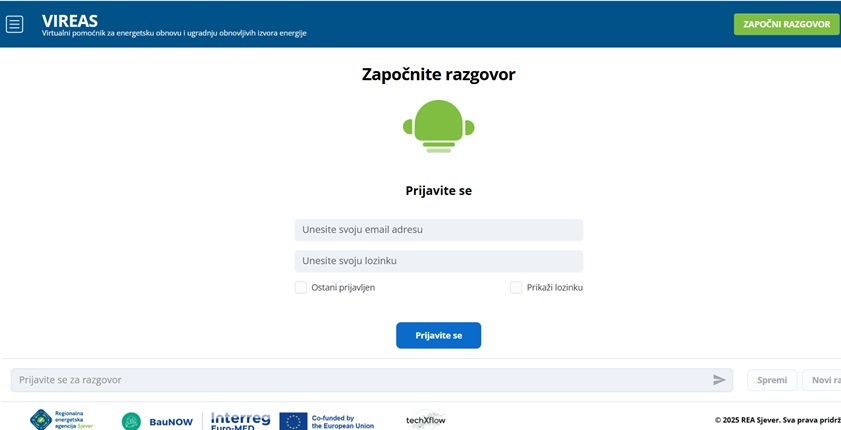
The VIREAS app is an interactive platform that enables users to engage with an AI assistant on various topics related to energy efficiency and renewable energy.

VIREAS is designed for those who want to save energy and use renewables

The idea behind the chatbot is to help owners of houses and buildings improve energy efficiency or install facilities for the use of renewable energy sources. For example, it assists in renovating the facade, replacing the heating system, or installing a heat pump or solar power plant.

It enables faster, easier, and more secure decision-making processes related to energy renovation, without the need for expert knowledge, the agency claimed.

VIREAS can be used both by people with very little knowledge and by experts

Using VIREAS is simple and user-friendly for everyone, whether you have very little knowledge or you are an expert, according to REA North.

In addition to technical recommendations, VIREAS informs users about available subsidies and public calls from the Environmental Protection and Energy Efficiency Fund or FZOEU, making it easier to access public funds and further reduce investment costs.

The agency warned that VIREAS doesn’t replace a project designer or a certified energy consultant

REA North underlined that VIREAS uses official sources of information. It includes public calls launched by FZOEU, technical rules on thermal protection and heating and cooling systems, and energy certification rulebooks.

The agency stressed that although its chatbot provides useful information and tips, it doesn’t replace a project designer or authorized energy consultant. REA North advised citizens to consult experts to make a final decision and for the preparation of project documentation.

The design of the chatbot was co-financed by the BauNOW project under the Interreg Euro-MED program.

by in News

Construction of largest wind farm in Western Balkans kicks off in Štip in North Macedonia

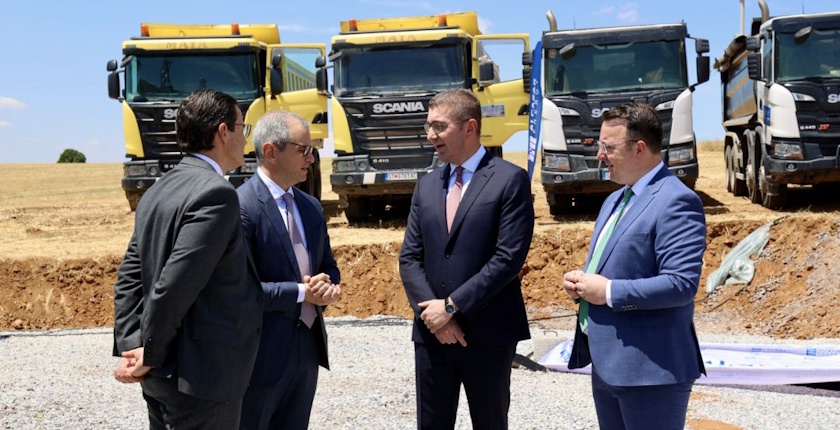
The construction of the largest wind farm in the Western Balkans region has begun in North Macedonia. The Government of North Macedonia and investor Alcazar Energy Partners held a groundbreaking ceremony near the city of Štip for the 400 MW facility.

The Štip wind farm will cover an area of 326 hectares in the municipalities of Karbinci, Radoviš, and Štip, southeast of the capital city of Skopje. Alcazar Energy Partners, which is developing the largest renewable energy platform in the Western Balkans, plans to invest USD 500 million and install 55 wind turbines, which would generate electricity equivalent to the needs of 100,000 households.

The largest operational wind farm in the Western Balkans is Čibuk 1, with a capacity of 158 MW, while the largest project in the pipeline is Maestrale Ring, also in Serbia, for 854 MW.

Co-Founder and Managing Partner of Alcazar Energy Daniel Calderon praised North Macedonia’s readiness to launch such a large-scale project.

The investment will create 600 jobs

The foundation is being laid for a project worth over USD 500 million, which will create 600 jobs, provide clean energy, and reduce carbon dioxide emissions, he stated.

Photo: Government of North Macedonia

Calderon also recalled that in a Bloomberg analysis, investments in renewable energy in the Western Balkans were estimated at USD 11 billion. Due to its advantages, including location, North Macedonia can expect to receive 30% to 40% of it.

North Macedonia’s Prime Minister Hristijan Mickoski noted that the ceremony represents the fulfillment of what the newly formed government promised and agreed with the investor a year ago. He added it is only the first phase.

The power plant will produce 1 TWh of electricity per year

There are many more ideas on how the investment can add even greater value and be more significant both for the investor and for North Macedonia, but it will be discussed at a later stage, according to Mickoski.

He added that the power plant would generate 1 TWh of electricity per year.

North Macedonia currently has two wind farms – Bogdanci, with a capacity of 36.8 MW and a 15 MW expansion underway, and Bogoslovec, of 36 MW, in which the Green Growth Fund (GGF) is a minority shareholder.

The largest wind farm in Europe has a capacity of 2,000 MW

In mid-April, Alcazar Energy Partners signed a development support agreement for the Štip project with the International Finance Corporation, a member of the World Bank Group. The company has a 1.6 GW pipeline of greenfield onshore wind and solar assets,

Of note, the largest operational wind farm in Europe is Markbygden in Sweden, with a capacity of 2,000 MW. Among the top ten, there is another wind farm in Sweden and one in Norway, while the others are in the United Kingdom. The list also includes the 600 MW Fântânele-Cogealac-Gradina wind park in Romania.