by in News

Three quarters of global solar, wind capacity under construction is in China

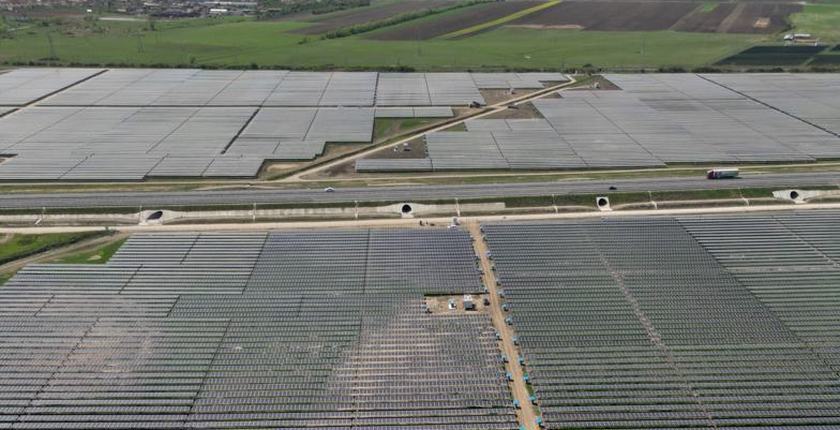
China continues to dominate the renewable energy landscape, representing 29% of all planned wind and solar capacity and a staggering three quarters of the segment under construction, according to the Global Energy Monitor.

All prospective projects in the world would have 4,484 GW in total capacity, of which 1,302 GW is in China. Next are Brazil, Australia and the United States.

The group consists of announced projects and the ones in the pre-construction phase and under construction. The list comprises solar projects of 20 MW or more and wind projects of at least 10 MW, both in terms of connection capacity.

There is 689 GW of new wind farms and photovoltaic plants in the world under construction. China accounts for 74% or 510 GW, the data reads.

According to Global Energy Monitor’s Global Solar Power Tracker, China has over 709 GW of prospective solar capacity, representing over one third of the global pipeline in 2025.

The country’s wind capacity has a similar rate of growth as solar, per Global Energy Monitor’s Global Wind Power Tracker. There is over 590 GW in prospective phases — nearly 530 GW onshore and 63 GW offshore. China’s prospective capacity accounts for about one third of the worldwide total.

The rapid buildout underscores China’s drive to accelerate its renewable energy development, with at least 205 GW slated to come online by the end of the year, though the total capacity is expected to be even higher, the update shows.

“China is fast-tracking a 1.3 TW pipeline of utility-scale solar and wind projects. Of this, 510 GW is already under construction, primed to be added to China’s 1.4 TW solar and wind capacity already in operation,” Global Energy Monitor said.

As of March 2025, China is the world’s offshore wind powerhouse, growing from under 5 GW in 2018 to 42.7 GW in 2025 (50% of global capacity).

China’s 1.4 TW in operating solar and wind parks outstrips thermal power

In Q1 2025, China’s combined wind and solar capacity surpassed its total coal and gas segment for the first time, supplying nearly 23% of the country’s total electricity consumed, compared to roughly 18% in Q1 2024, the National Energy Administration (NEA) revealed.

Moreover, the increase in output from solar, wind, and other non-fossil energy met China’s additional electricity demand in Q1 2025. Its operating solar and wind capacity soared to 1.4 TW altogether, now accounting for 44% of the global total. It is also more than the combined total of the European Union, United States, and India, the Global Energy Monitor underscored.
by in News

EU’s Modernisation Fund disburses EUR 3.66 billion for clean energy projects in nine countries

Energy modernization projects in nine member states of the European Union will receive a total of EUR 3.66 billion from the Modernisation Fund, in the largest disbursement to date from the facility financed by carbon pricing revenues, according to a press release from the European Commission. The selected projects focus on renewable energy, grid upgrades, energy storage, and energy efficiency.

The largest beneficiary of the latest disbursement is Poland, which will receive EUR 1.33 billion for its projects, followed by the Czech Republic, with EUR 1.05 billion, and Romania, with EUR 712.3 million. Hungary will get EUR 181.3 million, Croatia EUR 170 million, and Greece EUR 113.6 million. The rest will go to Latvia (EUR 40 million), Lithuania (EUR 37 million), and Slovenia (EUR 19.7 million).

Croatia will finance renewable heat production and zero-emission transportation, and Slovenia will upgrade power grid to integrate renewables

In Croatia, EUR 80 million will be used for the production and use of heat from renewable energy sources and energy efficiency improvement in heating and cooling systems. The rest will go to investments in zero-emission transportation. In Slovenia, the funding will facilitate renewables integration through the modernization and development of the electricity transmission and distribution network.

Greece, which became a Modernisation Fund beneficiary in January 2024, intends to replace urban diesel buses with new electric buses, improve energy efficiency in municipal swimming pools, and switch the heating and cooling systems in its greenhouse infrastructure to renewables.

In Romania, the funding will help improve the energy efficiency of facilities covered by the European Union’s Emissions Trading System (EU ETS), support the contract-for-difference (CfD) scheme for onshore wind and solar, and finance the installation of solar and wind power plants for self-consumption in the agricultural and food sectors and public institutions. It is also intended for investments in new solar, wind, and hydropower capacities and to support the modernization and rehabilitation of the district heating network.

In the Czech Republic and Lihtuania, the funding will support energy storage projects

Other example projects include investments in storage capacity for renewable electricity in the Czech Republic, investments in large-scale energy storage capacities in Lithuania, and a clean air program in Poland that focuses on energy efficiency improvements and heat source replacements in single-family houses, according to the press release.

The investments will reduce greenhouse gas emissions in the energy, industry, and transportation sectors, improve energy efficiency, and help the beneficiary states meet climate and energy targets, the commission said.

The projects will also help improve people’s everyday lives, by reducing bills, improving public services, creating jobs, and making the energy transition real, fair, and beneficial for all, according to Teresa Ribera, the European Commission’s Executive Vice-President for Clean, Just and Competitive Transition.

With this latest round of funding, the total disbursements from the Modernisation Fund since January 2021 have climbed to EUR 19.1 billion. The fund is financed by revenues from the auctioning of emission allowances under the EU ETS.

by in News

Project underway for 99 MW Bokšić solar plant with battery storage

The Croatian Ministry of Environmental Protection and Green Transition has initiated a procedure to determine the need for an environmental impact assessment for the planned 99 MW solar power project Bokšić, which includes a battery energy storage system.

The annual electricity production of the Bokšić solar power plant is estimated at just under 120 GWh. The facility, with a planned connection power of 89 MW, would be connected to the grid through a new 110/33 kV transformer station, and then to the existing 110 kV Našice-Slatina transmission line.

The annual electricity output is estimated at just under 120 GWh

The project also includes a battery energy storage system (BESS), according to the environmental impact assessment report prepared in February and updated in June. It would be designed for an operating power of 38 MW and a capacity of 70.8 MWh, with an expected lifespan of 20 years.

Solar power plant Bokšić will have a 70.8 MWh battery system

The assessment procedure is necessary because the developer, Zagreb-based Funicula, intends to build a stand-alone photovoltaic plant, according to the ministry. The project’s site is near Bokšić, in the Đurđenovac municipality in Osijek-Baranja County.

The solar power plant is planned to occupy ​​about 123.8 hectares of land, with photovoltaic panels covering about 46 hectares. The site will be enclosed by a protective masonry fence up to two meters high, raised at least 15 centimeters above the ground to allow small animals to pass underneath, according to the ministry.

Bokšić is among the largest solar projects in Croatia

Few solar projects in Croatia are for a larger capacity than Bokšić. State power utility Hrvatska elektroprivreda (HEP) is working on the Korlat endeavor, also of 99 MW. At an auction last year, two major solar power projects were awarded market premiums – Promina, with a planned installed capacity of around 189 MW, developed by Spain-based Acciona Energia, and Obrovac Sinjski, for 144 MW, to be built by Aurelis Solis.

by in News

Danish Eurowind Energy to build 220 MW solar park in Romania

Denmark-based renewable energy company Eurowind Energy has announced plans to develop a 220 MW solar park in Romania in an investment valued at EUR 174.8 million. It would be its largest solar park in Romania and one of the biggest in the country. In addition, the company ordered wind turbines from Vestas for its three projects in Romania.

Eurowind’s future solar park, located in Vișina in Dâmbovița County, will span 345 hectares, comprising over 400,000 photovoltaic panels. Its projected annual electricity output is 400 GWh, equivalent to the consumption of around 150,000 Romanian households.

The Vișina solar park is the fifth photovoltaic project developed by Eurowind in Romania, following those in Hălchiu, Măgurele, Pufești, and Teiuș. By the end of 2025, the company plans to operate a local portfolio of 124 MW, alongside a pipeline of about 7.5 GW of solar, wind, hybrid, and storage solutions, according to its website.

Vișina is Eurowind’s fifth solar project in Romania

The Teiuș Solar Park, with a capacity of 60.2 MW, was commissioned in April this year. The EUR 55 million project was developed in collaboration with local firm Teiuș Solar. Its planned annual production is 103.59 GWh of electricity.

Also in April, Eurowind signed a 12-year virtual power purchase agreement (PPA) in Romania for the supply of electricity from its Pecineaga wind park. The contract was signed with Sweden-based automotive manufacturer Autoliv.

Eurowind has ordered 143 MW of Vestas wind turbines for its wind farms in Romania

Wind turbine manufacturer Vestas said yesterday that Eurowind Energy has placed a 143 MW order for its Frumușița, Vector, and Pecineaga Northeast (NordEst) wind power projects in Romania. The contract includes the supply and installation of 23 wind turbines from the EnVentus platform, Vestas added.

In addition to wind and solar, Eurowind Energy’s portfolio includes hydrogen, biogas, power-to-heat, and battery storage projects. It operates in 16 markets across Europe and the United States, according to the Danish company’s website.

by in News

Energy storage in focus: How custom insurance solutions are fueling Southeast Europe’s green transition

Battery energy storage is becoming increasingly central to the energy transition in Southeast Europe and beyond, thanks to its key role in enabling renewables integration while ensuring grid flexibility and resilience. However, as battery energy storage systems (BESS) become more advanced and technologically complex, the risks involved exceed those of traditional renewable energy projects, making tailor-made insurance vital to their bankability, safety, and profitability. We discuss the importance of energy storage for the region’s green transition, as well as the critical role of custom-made insurance solutions in the success of BESS projects, with Delyan Iliev, Managing Director of Renewable Energy Insurance Broker (REIB), a market leader in BESS insurance in Southeast Europe.

Why storage is becoming central to Europe’s energy strategy

As Europe accelerates its energy transition, solar is leading the charge. In 2024 alone, 21.9 GWh of new battery energy storage systems (BESS) were installed across the continent, marking a 15% year-on-year growth. With storage now considered essential for grid flexibility, market stability, and renewable integration, Southeast Europe is beginning to recognize its strategic value.

“Energy storage is not a side note anymore, it’s quickly becoming a pillar of the energy system,” says Delyan Iliev, Managing Director of Renewable Energy Insurance Broker (REIB). “We’re proud to help accelerate that shift. In the first half of 2025, we’ve already insured over 5 GWh of battery projects across Europe – including in Bulgaria, Germany, and the UK. That scale shows how far the market has come, and how much trust there is in high-quality insurance.”

In Serbia, solar deployment is gaining pace, and developers are preparing for large-scale projects. Regulatory frameworks are evolving to support hybrid models that combine generation with storage. BESS is no longer just a technical upgrade; it’s a strategic enabler for grid stability, revenue optimization, and investor confidence.

What makes BESS riskier than traditional energy projects?

As storage projects become more complex, so do the risks. Unlike conventional solar or wind installations, BESS introduces specific technical and operational challenges—from thermal runaway and fire risk to cyber threats, component failure, and yield degradation. These are real risks requiring serious attention from insurers and developers alike.

Poor system design, such as insufficient spacing between battery units and PV modules, can also trigger insurance exclusions or delay permitting. “In emerging markets like Serbia, where regulations are still catching up with technology, project design and compliance can make or break an investment,” says Iliev.

This is why traditional, off-the-shelf insurance is no longer adequate. Storage requires a more nuanced approach – one that aligns with each project’s structure, revenue model, and operational realities.

REIB’s approach: Insurance that mirrors project reality

Recognizing this need, Renewable Energy Insurance Broker has created tailor-made insurance solutions designed specifically for energy storage systems. A cornerstone of its model is Business Interruption (BI) insurance – not a standard add-on, but a fully customized product. Rather than applying generic compensation formulas, REIB designs the BI structure around how each project actually earns revenue, whether through tolling agreements, profit-share arrangements, or hybrid mechanisms.

This precision ensures fair and effective compensation, not only when a system completely fails, but also when partial degradation or performance issues occur. Furthermore, the BI coverage accounts for income loss, not just profit, delivering significantly higher payouts in case of disruption. Indemnity periods can be extended up to 18 months, supporting the financial stability of a project well beyond initial damage control.

Why early-stage insurance is so critical for BESS

One of the most critical features in REIB’s offering is early-stage protection. The company insures storage projects from the installation phase, well before grid connection. This phase, often excluded by traditional policies, is one of the riskiest stages in a project’s lifecycle. By covering this early gap, REIB offers peace of mind to both developers and investors.

In addition, REIB’s policies include protection against underperformance (reduced yield), cyber risk coverage for systems managed via EMS or SCADA, and third-party liability, including sudden environmental pollution, which is increasingly relevant for permitting and compliance in European markets.

Applicable to co-located and stand-alone storage

While co-located solar + storage projects dominate the market, stand-alone BESS is gaining traction in Serbia and other Southeast European countries. These projects play a crucial role in grid balancing, frequency regulation, and capacity markets, especially in areas where renewable generation is unevenly distributed.

REIB’s insurance framework applies to both co-located and stand-alone BESS systems, adjusting coverage parameters to meet the distinct operational and revenue profiles of each. Whether tied to a solar plant or operating independently, these assets face risks that must be managed holistically.

What gives REIB its unique market perspective?

REIB is more than a broker, it’s also an investor. The company is directly involved in PV+BESS projects like the 4.1 MWp solar plant with 4MW/8 MWh BESS in Nikolichevtsi and the 5 MWp + 6MW/12 MWh BESS in Bagrentsi. “We don’t just assess risk from a distance,” says Iliev. “We experience it firsthand, and that’s what helps us design smarter coverage.”

How insurance can drive the BESS market forward

For REIB, insurance is not just a regulatory requirement; it’s a strategic lever. “Well-structured insurance improves bankability, secures investor confidence, and unlocks access to financing,” says Iliev. “In a sector like BESS, that can be the difference between stalled progress and market leadership.”

As Serbia and its neighbors move toward a new energy reality, battery systems will be central to the equation. Making them bankable, and insurable is where REIB steps in, helping to turn risk into resilience and innovation into long-term value.

For more information about tailor-made insurance solutions for BESS projects, contact the REIB team to explore how they can support your next project.

by in News

Solar module maker Bisol to triple production capacity with new Slovenian plant

Slovenia-based Bisol Group, the largest manufacturer of European-made solar modules, plans to build a new factory in an investment estimated at EUR 32.3 million. The facility in Murska Sobota in northeastern Slovenia is expected to triple Bisol’s annual production capacity, from 750 MW currently.

“We want to start construction in September. We are still selecting a contractor. Production must begin no later than October 31, 2027,” says Uroš Merc, co-founder and CEO of Bisol Group.

Production at the new plant is expected to begin in 2027

Its modules, manufactured in Slovenia, are labeled Made in Europe and enjoy a privileged status in Italy and Austria, ensuring higher subsidies or tax breaks for customers. According to Slovenian portal Finance, Italian customers now purchase most of their European modules from Bisol.

The company, founded in 2004, exports 98% of its production to 140 countries worldwide, with its largest markets remaining in Europe. Since its inception, Bisol has exported 2 GW of solar modules worth more than EUR 1.2 billion. Last year, it posted a net profit of EUR 12 million on revenues of EUR 66 million.

In 2009, the company expanded its portfolio with mounting solutions for solar modules. They are now sold in 50 countries worldwide.

Bisol has sold 2 GW of solar modules since its inception in 2004

The company’s headquarters and existing production facilities are located in Latkova Vas near Prebold, Slovenia. It employs 230 people across 14 subsidiaries and affiliated companies.

The group also operates solar power plants and sells electricity

The group also operates several solar power plants and sells electricity, both wholesale and retail, through its subsidiary Bisol Energija. Its offer includes dynamic tariffs for both businesses and households. At the end of last year, Bisol Energija introduced virtual communities for its customers.

by in News

Grants for public institutions’ solar projects in Romania top EUR 500 million

The Romanian Ministry of Energy has signed 29 more grants to public entities for investments in solar power plants for self-consumption, bringing the total number of projects under the program to 1,046. The latest round of grants is worth EUR 11.3 million, putting the total sum approved so far at EUR 502 million.

The 29 grants, financed from the European Union’s Modernisation Fund, will help build solar power plants with a total installed capacity of 9.13 MW at schools, hospitals, city halls, and other institutions across Romania. It brings the total installed capacity supported under the program to over 403 MW, according to a press release from the Ministry of Energy.

The latest batch of projects puts the total planned capacity at over 403 MW

In many cases, installed renewable capacities cover up to 70% of the energy needs of public institutions, the ministry noted.

Romania’s outgoing Minister of Energy Sebastian Burduja hailed the program as a “paradigm shift,” noting that Romania was already in a new energy era, with local communities no longer just consumers, but active participants.

“Over the past two years, the Ministry of Energy has consistently provided support to local public authorities that understood the importance of investing in energy production for their own consumption. We have made funds available, simplified procedures, and worked side by side with beneficiaries so that the projects move forward quickly,” Burduja stated in a Facebook post.

The latest round of contracts covers public entities in 18 counties across the country: Arad, Argeș, Bacău, Brăila, Călărași, Constanța, Dâmbovița, Galați, Brașov, Gorj, Hunedoara, Maramureș, Mehedinți, Olt, Sibiu, Suceava, Teleorman, and Timiș.

The number of contracts has increased from 633 in March

In March, the ministry said it had signed 633 contracts, worth a combined EUR 339 million, of which EUR 294 million was from the Modernisation Fund. Total planned capacity at the time was 237.4 MW.

by in News

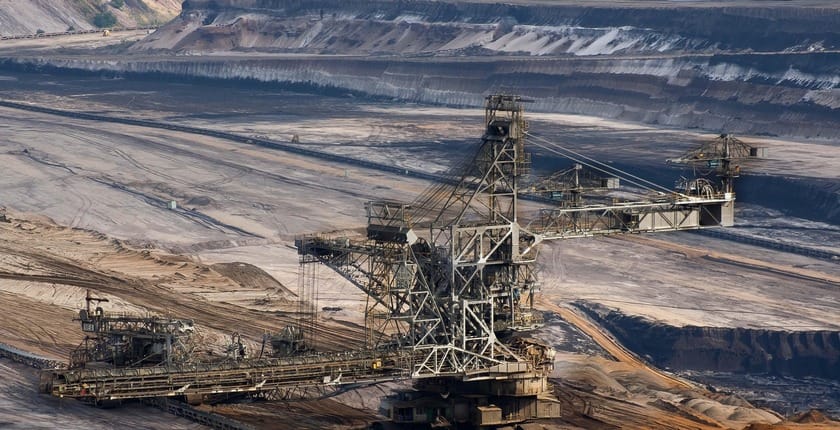
Turning abandoned coal mines into PV plants could boost global solar capacity by 15%

Building photovoltaic plants on abandoned open-pit coal mines could add nearly 300 GW of new solar worldwide, equivalent to 15% of the current global capacity, according to a survey by Global Energy Monitor (GEM). Greece and three Western Balkan countries are among the global leaders in projects to build solar at abandoned coal mines.

It shows that over 300 open-pit coal mines recently out of commission could house around 103 GW of photovoltaic capacity, while upcoming closures of 127 large operations could host an additional 185 GW of solar. Nearly all abandoned coal mines and upcoming closures covered by the survey are in close proximity to existing grid infrastructure, including substations and transmission lines.

The 15% increase in solar capacity could cover the electricity needs of Germany

GEM estimates that this 15% increase in the global solar capacity would be roughly enough to meet the annual electricity consumption of a country like Germany. The report also notes that coal mine to solar conversion is a practice that aligns land reclamation with clean energy goals and local job creation.

GEM recalls that in 2024, total solar capacity additions in the world reached a record 599 GW, with more than 2 TW of utility-scale projects currently under development.

GEM: China is the global leader in coal-to-solar transition

China is the global leader in coal-to-solar conversion, with 90 projects already operational, totaling 14 GW, and 46 more in the pipeline, with a combined capacity of 9 GW, according to GEM’s survey. Australia has 2.7 GW of announced projects, followed by the United States, with about 1.3 GW of announced projects and as much in the pre-construction phase.

In Europe, Greece leads the way, with 1.44 GW of announced projects and 550 MW in the pre-construction phase, while Germany has a total of 868 MW, of which 20% are already operating and 75% are in the pre-construction phase, according to GEM’s data.

In the Western Balkans, North Macedonia has 100 MW of projects under construction and another 100 MW announced, followed by Bosnia and Herzegovina, with 115 MW in the pre-construction phase, and Serbia, with 97 MW of announced projects.

GEM’s survey covered only open-pit coal mines decommissioned in the last five years and those whose closure is expected by the end of 2030.

However, according to announcements from developers and grid operators, several large-scale PV projects on coal land have already been completed in the region tracked by Balkan Green Energy News.

In Greece, the capacity in operation is nearing 1 GW. In North Macedonia, a part of the REK Oslomej coal power complex is now home to three solar power plants, with a total capacity of 140 MW, while in Serbia, the 9.75 MW Petka PV plant is about to go online.

by in News

Federation of BiH launches grants program for prosumers

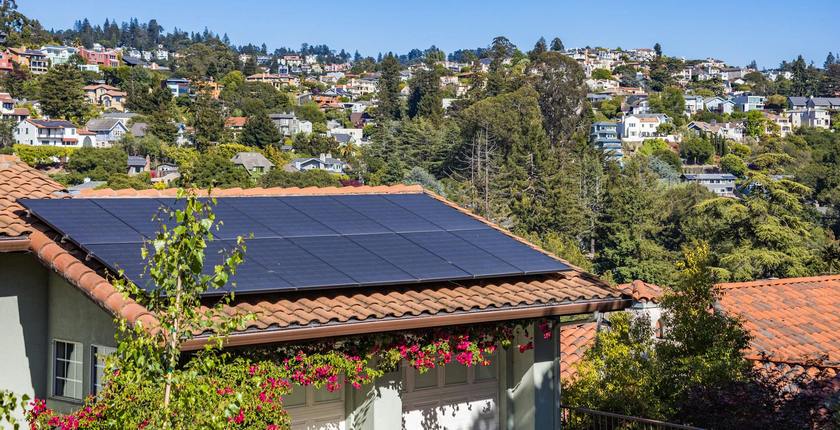
The Federation of BiH, one of the two entities constituting Bosnia and Herzegovina, has launched a grants program to co-finance the installation of rooftop solar power plants, expected to cover around 500 households a year and lead to an increase of 4.2 GWh in renewable electricity production.

Operator for Renewable Energy Sources and Efficient Cogeneration – Operator za OIEiEK estimates that the average installed capacity of the solar power plants will be 6 kW, and that the grants will help reduce greenhouse gas emissions by 3,800 tons a year.

The program will be funded from renewable energy surcharges

The program will be funded from renewable energy surcharges paid through electricity bills by all consumers in FBiH. Grants will be approved for two categories of applicants. The first one is vulnerable households whose annual consumption exceeds 3,500 kWh. The second covers those who consume more than 5,500 kWh a year and whose connection power is equal to or less than the requested installed capacity of the solar installation, according to the decision of the Operator za OIEiEK.

The maximum grant amount per applicant is BAM 7,000 (EUR 3,580), or up to 60% of the investment cost for users in the second category.

Damir Miljević: People in extreme energy poverty will get solar power plants for free

Although the budget and the anticipated scope of the program are modest, one positive aspect is that part of it is intended to fully cover the cost of PV installations for people in extreme energy poverty. They will receive a rooftop system free of charge, eliminating, partially but permanently, some of the concerns about financing their energy needs, according to Damir Miljević, a member of the Board of the Center for Sustainable Energy Transition (RESET), a BiH think tank.

Prosumers were introduced in the FBiH legislation two years ago, with the passage of a set of reform energy bills, including the Law on the Use of Renewable Energy Sources and Efficient Cogeneration.

At the national level in Bosnia and Herzegovina, prosumer regulations have not been adopted yet. According to some estimates, the country could cover half of its electricity consumption by installing solar panels on about a million roofs.

by in News

Virtual power plants: How they work and who can benefit from extra income

Virtual power plants, aggregators, and flexibility are gaining increasing attention, and not just within the energy sector. The growth and volatility of electricity prices have forced many businesses and institutions to install solar panels to cut costs. Virtual power plants – set up by aggregators to provide flexibility services – can generate additional income for new electricity producers and consumers capable of reducing or increasing consumption or storing energy.

The deployment of solar panels across Europe, including the Western Balkans, is experiencing remarkable growth, bringing numerous benefits to all who choose to produce electricity for self-consumption and become prosumers. Two of the four D’s of the energy transition are already underway – democratization and decentralization – resulting in increasing numbers of small energy producers and growing amounts of distributed (decentralized) production from renewable energy sources.

This has led to the emergence of aggregators – firms that connect multiple small producers, or even large-scale solar power plants or wind farms, with energy consumers capable of reducing or increasing consumption on demand, and with energy storage systems. The result is the virtual power plant, which functions like a real power plant thanks to software that connects and harmonizes all these actors.

Such a system can “iron out” the variability of renewable energy sources – solar or wind, and offer a more predictable energy delivery to the market as well as auxiliary services and on-demand flexibility to the system.

Naturally, this brings revenue, which is distributed among the members. For all this to work in practice, a lot of regulation is needed, and it is slowly being adopted in this region. Although they have not yet reached their full potential, there are already virtual power plants and aggregators in Bosnia and Herzegovina, Croatia, Hungary… But how does it all look in practice?

Energy Institute Hrvoje Požar joins virtual power plant KOER

By concluding an aggregation agreement, Energy Institute Hrvoje Požar (EIHP) has joined the KOER virtual power plant. Specifically, EIHP made available its 50 kW solar power plant, installed on the roof of its office building, to KOER, an aggregator on the Croatian electricity market.

Minea Skok, head of the Scientific Council and senior researcher at EHIP, explains to Balkan Green Energy News that KOER has conducted preparations for including the EIHP solar power plant in the virtual power plant.

The aggregator has installed control and metering equipment that enables the reading of electricity production from the existing electricity meter, along with software that enables data aggregation and forwarding to the transmission system operator, real-time 24/7 monitoring and alerting, reporting to the operator and the owner, and cost calculation.

It also conducted internal tests of the EIHP solar power plant’s balancing energy.

KOER provides services to Croatia’s transmission system operator HOPS

KOER’s virtual power plant, along with eight other providers on the Croatian market (aggregators and network users), provides services to the Croatian Transmission System Operator (HOPS), which is responsible for organizing the balancing market throughout Croatia, Skok explains.

Currently, the service involves balancing through the activation of balancing energy from a contracted mFRR (manual frequency restoration reserve), and soon also from aFRR (automatic frequency restoration reserve), according to her.

These system services are essential for any country’s transmission system operator to maintain power system balance, ensuring that all consumers have enough electricity at all times. These services also provide flexibility, which is increasingly in demand due to the growing share of solar power plants and wind farms – energy sources that are not flexible, since they only generate electricity when the sun is shining or the wind is blowing.

KOER and EIHP split the earnings 50-50

As for EHIP’s compensation for providing these services, Skok revealed that the contract defines the compensation received by KOER, as the aggregator, is split 50-50 with EHIP.

For the provision of these services, HOPS organizes tenders in which KOER competes with other service providers.

Skok emphasizes that EHIP’s solar power plant is profitable on its own, as it brings savings through lower electricity bills, which means the service fee is additional income.

On top of all that, gaining practical experience is an added value for EIHP, says Skok.

EIHP will also install a heat pump and a battery

The 50 kW photovoltaic power plant, matching the maximum available roof space of the EIHP building, was put into operation nearly a year ago.

Its average annual output is about 50,000 kWh. The EIHP building’s electricity consumption used to be 186,539 kWh, but thanks to energy renovation and the option of working from home, it was reduced. As a result, in the first ten months of operation, the power plant covered 53% of EIHP’s electricity consumption.

Following the energy renovation and the installation of solar panels, EHIP now plans to install a heat pump and a battery.

With its solar power plant, EIHP makes an additional contribution to power system balancing. By adding flexibility on the consumption side through the planned installation of a battery system and a heat pump, and in cooperation with KOER, the aggregator, EIHP contributes to system stability and the integration of new renewable energy sources, according to Skok.