by in News

Water shortages in Southeastern Europe point to desalination as strategic approach

Former Minister of Environment and Water of Bulgaria Borislav Sandov is urging the country’s authorities to deploy alternative water supply solutions, including desalination, to counter shortages. Greece is preparing a radical change in its water management model. Turkey got its first floating seawater purification platform, running on solar and wind power.

Southeastern Europe is among the most jeopardized regions in the world in the context of global warming. The lack of water has the most drastic effect on everything from wildlife to food production, energy and public health. Bulgaria’s former Minister of Environment and Water Borislav Sandov warned that over half a million people in the country are at risk of water shortages.

Eastern and northeastern Bulgaria have a persistent issue with droughts and lack of water, necessitating a switch toward alternative forms of supply in the next five to 10 years, including seawater desalination plants, he recently told bTV.

In addition to climatic factors, there are serious shortcomings in water management, together with theft and corruption, Sandov claimed. He pointed to an example where drastically undersized pipes of poor quality were installed in one area, resulting in constant breakdowns and supply interruptions.

Sandov attributed some of the water stress to fragmented management between different local, regional and national institutions. In his words, as much as 10% of all settlements in Bulgaria, though mostly small ones, aren’t covered by waterworks and sewerage systems. Moreover, 44% of the water in the network isn’t measured in volume terms at the entry point and 50% of the water sources don’t have a valid permit from the competent authority, he added.

Notably, a quarter of the population in neighboring Serbia occasionally or permanently lacks safe drinking water from waterworks systems.

Greece to radically change its water management system

Greece decided to get ahead of the droughts and heatwaves. The government has promised radical change in water management: a more functional system with more investments and new technologies, including desalination, but also recycling.

Tourism in the summer months exacerbates the water stress. On some islands, demand surges by up to 30 times. It creates conflict with the needs for irrigation for food production. Greek islands mostly use underground aquifers with easily exhaustible capacity.

Rainfall and snowfall in the country are gradually decreasing.

Similar to Bulgaria, water management is spread across hundreds of operators and institutions, lacking coordination. Losses in drinking water supply amount to as much as 40%, in comparison with up to a staggering 60% in irrigation.

The government in Athens promised water would remain a public good

According to a study by Deloitte with data from 2022, more than EUR 10 billion is necessary for investments in the two segments, excluding Attica. It is where Athens is located. Another EUR 500 million to EUR 700 million is needed for the peninsula.

Government-controlled power utility Public Power Corp. (PPC) will reportedly enter the game, not least because municipal water and sewerage firms owe it more than EUR 400 million. The company would convert debts into minority stakes in three centralized entities: for the regions of Athens and Thessaloniki and the rest of the country, the media learned.

PPC can contribute with its knowhow and experience in the construction and operation of dams and hydropower plants.

Importantly, the government vowed to keep water a public good.

Floating desalination platform with hybrid power plant put into operation in western Turkey

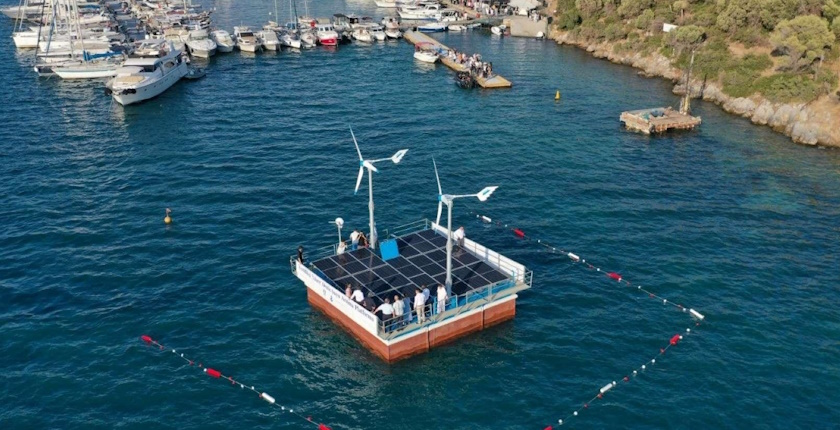
Right opposite the Greek island of Kos, offshore Bitez Marina, the Bodrum Municipality inaugurated Turkey’s first floating seawater purification platform. It runs entirely on renewable energy, producing 20 cubic metres of clean, non-potable water every day.

The project was developed in partnership with Istanbul-based company Blue Hybrid Solutions. The facility is powered by solar panels and two small wind turbines. It delivers water to an onshore tank for irrigation, emergency needs and, when required, public consumption, the local authority said.

Greece is already conducting a massive project for energy independence of numerous non-interconnected islands, including investments in desalination powered by renewables. It is also working to link other islands to the mainland grid.

[wpcc-iframe title=”BODRUM BELEDİYESİNDEN BİR İLK YÜZER DENİZ SUYU ARITMA PLATFORMU TANITILDI” width=”500″ height=”281″ src=”https://www.youtube.com/embed/KApvKHO8OS4?feature=oembed” frameborder=”0″ allow=”accelerometer; autoplay; clipboard-write; encrypted-media; gyroscope; picture-in-picture; web-share” referrerpolicy=”strict-origin-when-cross-origin” allowfullscreen=””]
by in News

North Macedonia raising capacity threshold for prosumers, speeding up permitting

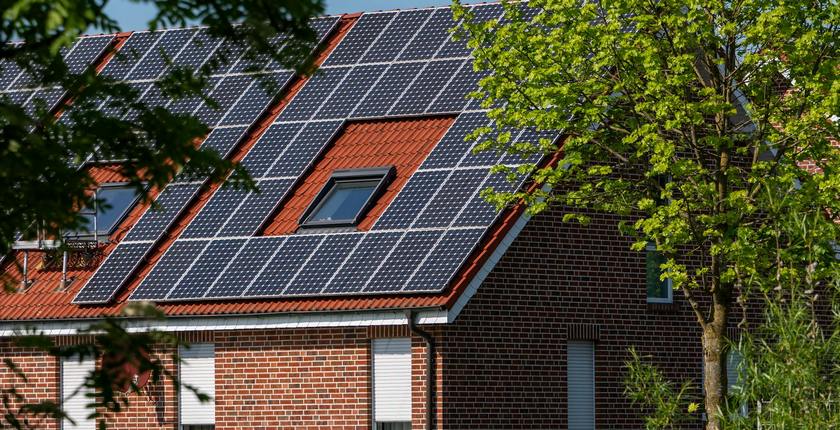
North Macedonia has prepared legislative changes to increase the capacity threshold for prosumers and speed up rooftop solar permitting and grid connection.

Under the proposed amendments to the Law on Energy Efficiency, the capacity threshold for rooftop solar installations would be increased to 10 kilowatts (kW) for households and 70 kW for legal entities, according to a statement from the Ministry of Energy, Mining and Mineral Resources. The current threshold is 6 kW for households and 40 kW for firms.

The threshold should go up to 10 kW for homes and 70 kW for businesses

The amendments should also introduce a one-month deadline for the permitting procedure for installing solar equipment with a capacity of up to 100 kW. This includes prosumers and energy communities, according to a draft law on renewable energy use.

According to the North Macedonian office of law firm CMS, the country’s parliament has already introduced amendments to the rulebook on renewable energy sources, increasing the capacity thresholds for both household and business prosumers, among other things.

One-month deadlines are proposed for rooftop solar permitting and grid connection

The ministry noted that a legal deadline for issuing permits for rooftop photovoltaics for prosumers is being introduced for the first time.

The same deadline is being proposed for grid connection: the distribution system operator would be required to connect the installation to the grid within one month of officially confirming that the submitted documentation is complete.

According to the proposed amendments, if connection to the requested location is not possible, the operator is obliged, within 15 days from the date of submission of the connection request, to notify the applicant in writing and propose an alternative connection point.

Installing solar collectors for hot water in new public buildings will become mandatory

The proposed legislative changes will also make the installation of solar collectors for hot water mandatory in new public buildings, or in cases of significant reconstruction of existing ones, if technically and economically feasible.

Renewable energy sources account for more than half of North Macedonia’s total generation capacity, with over 616 MW of new renewables capacity installed in the past two years, DW reported, citing data from the country’s Energy, Water Services and Municipal Waste Management Services Regulatory Commission (ERC or RKE).

by in News

CW Enerji to tap on subsidies in Turkey for solar panel factory project

CW Enerji earmarked USD 520 million for the expansion of its solar panel manufacturing capacity in Antalya to 5 GW per year. It said it would benefit from the government’s HIT-30 incentives program.

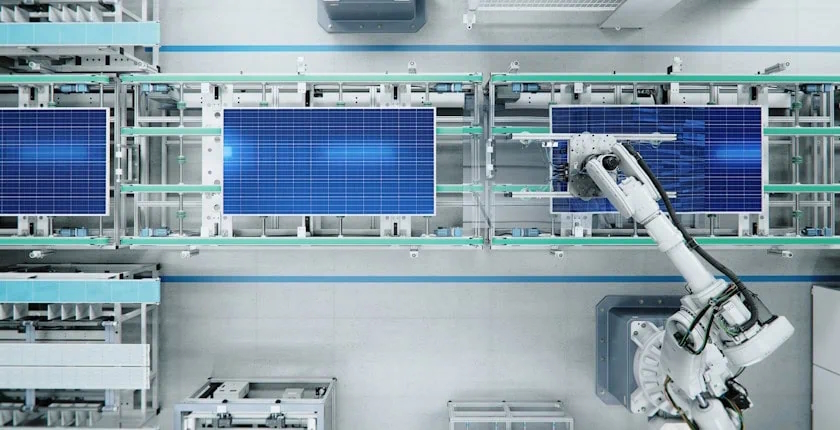
While Europe is stagnating in solar panel production and some large facilities are even closing under pressure from China’s increasing global dominance, Turkey is expanding its industrial base across new green energy technologies. CW Enerji is about to invest USD 520 million in the construction of a photovoltaic equipment factory, Anadolu Agency reported.

The company said it would implement the project under the government’s HIT-30 incentives program for high technology. The location is in AOSB – Antalya Organized Industrial Zone in the country’s southern, Mediterranean region.

High domestic content enables access to subsidies

CW Enerji’s new facility, would complement the existing CW Solar Cell factory. It makes up to 1.2 GW of TOPCon high-efficiency solar cells per year and the company claims it is the largest in Europe.

The upcoming investment would enable an annual capacity of 5 GW by the end of the second phase, in 2028, according to the company. The products would have a domestic content of more than 80%, complying with the requirements for tax incentives, CW Enerji’s Chairman Tarık Sarvan said.

He founded the company in Turkey in 2010. It also makes other components and provides installation and maintenance services. CW Enerji has established subsidiaries in Munich, Germany, and Houston, Texas. Total solar panel capacity is 1.8 GW per year and it exports to nearly 60 countries, Sarvan added. He pointed out that the company’s target markets are the United States and Europe.

Dozens of companies manufacturing PV equipment in Turkey

Right before CW Enerji’s announcement, Astronergy allocated USD 700 million for its second solar module factory, in Balıkesir.

Early this year, 75 solar panel manufacturers operated in Turkey. Put together, their annual capacity was 44.5 GW. Three were making solar cells and their overall capacity was 6.1 GW per year.

The country is also strong in other technologies, like for geothermal power plants.

The government recently declared a 2035 target for solar and wind of 120 GW in total. At the end of June, Turkey’s total electricity capacity was 119,6 GW, of which photovoltaics accounted for just under 23 GW.

by in News

Price of residential battery storage in Europe drops over 50% in two years

The mature residential battery storage markets in Europe are stabilizing, while policy-driven and emerging markets are gaining traction, according to EUPD Research. Its new report showed prices of home batteries slumped more than 50% between the first half of 2023 and the first half of this year.

The European residential battery storage market has remained resilient in 2025, with notable growth across mid-sized and emerging markets, according to EUPD Research’s latest Electrical Energy Storage (EES) Report. It tracked systems of up to 20 kWh.

While mature markets such as Germany and Italy began the year with more subdued figures, the overall market trajectory points to continued expansion, with over one million new residential storage systems expected to be installed across Europe this year. Although the phaseout of subsidies and adjustments to support schemes led to a weaker start in top markets, the outlook for the second half is more optimistic, the firm said.

Home batteries are overwhelmingly intended for storing electricity from household photovoltaic systems, usually installed on roofs, balconies or on canopies next to houses.

Dynamic electricity tariffs, self-consumption fueling residential battery storage push

Increasing interest in dynamic electricity tariffs and enhanced self-consumption is expected to stimulate demand for residential market storage. Mature markets are stabilizing, while policy-driven and emerging markets are gaining traction, the update showed.

The sector continues to benefit from falling battery prices. A significant drop in lithium prices, combined with intensified competition due to the influx of new market players in the past two years, has accelerated price erosion and reduced overall system costs.

The data provider’s price index more than halved between the first half of 2023 and the first half of this year. The current average selling price of residential battery storage, in the second half of 2025, came in at EUR 711 per kWh. It is 46.6% lower than in the first half of 2023.

The segment of newly installed residential battery storage in Germany is in a moderate decline

Despite a moderate decline in residential battery installations during the first half of 2025, Germany remains the strongest market in Europe, with demand expected to stay resilient throughout the year. The projected 6% year-on-year decline is mainly due to slower deployment of photovoltaics, reduced regional incentives, and a growing shift in focus toward commercial and industrial (C&I) and utility-scale storage.

Alongside Italy, Germany is estimated to account for the lion’s share of new residential storage capacity additions through 2028, despite Italy’s current slowdown amid the gradual weakening of the Superbonus scheme.

This year’s residential battery storage additions in Europe’s largest economy are seen at 4.7 GWh, compared to a projected 6.04 GW in home PV installations of up to 20 kW. Italy accounts for an expected 1.24 GWh and 1.44 GW, respectively.

Steady, robust growth in several markets

Markets such as Austria, France, the Netherlands, and the Czech Republic are demonstrating steady and robust growth, driven by rising electricity costs since 2023, increasing PV adoption, stable policy support, and increased awareness of the benefits of energy independence.

Sweden, bolstered by tax rebates and a national push toward energy self-sufficiency, has seen a record number of PV systems being installed with residential storage.

As for equipment providers, BYD maintained its top position in 2024, capturing a 20% market share, which is expected to reach 21% this year.

by in News

EU faces first annual solar installation decline since 2015 – report

The European Union is set to install less new solar capacity in 2025 than it did last year – the first annual drop in a decade, according to SolarPower Europe.

In its mid-year analysis of the photovoltaic market in the EU, SolarPower Europe said new installations are expected to decrease 1.4% this year. It would be the first slowdown since 2015. The market increased by 47% in 2022, by 51% in 2023, and by 3.3% in 2024.

The EU is set to add 64.2 GW, compared to 65.1 GW in 2024, SolarPower Europe said.

The update comes after solar became the EU’s largest source of electricity for the first time, in June 2025. According to Ember, photovoltaics generated 22.1% of EU electricity (45.4 TWh) last month, more than any other power source. In absolute terms, it was a year-over-year increase of 22%.

Dries Acke, Deputy CEO of SolarPower Europe, said the 1.4% decline may seem small, but that the symbolism is big. In his view, a market decline, right when solar is meant to be accelerating, deserves EU leaders’ attention.

“Europe needs competitive electricity, energy security, and climate solutions. Solar delivers on all of those needs. Now policymakers must deliver the electrification, flexibility and energy storage frameworks that will drive solar success through the rest of the decade,” Acke stated.

The European Commission’s 2025 target for overal PV capacity is 400 GW, while by the end of the year the bloc should host 402 GW. To meet the 2030 target, and deliver the continent’s decarbonisation and competitiveness goals, Europe must install nearly 70 GW per year through the rest of the decade, according to SolarPower Europe.

Rooftop segment is shrinking

The projected decrease in solar is driven primarily by a declining rooftop segment, particularly home solar, the report reads.

Traditionally strong residential rooftop solar markets, like Italy, the Netherlands, Austria, Belgium, Czechia, and Hungary, are slowing. Households there are now postponing installations as the impact of the 2022 energy crisis wanes, according to the association.

There is one more reason – a withdrawal of incentive schemes without adequate replacements. It resulted in a residential rooftop market collapse of over 60% versus 2023 in most of the group. Similarly, Poland, Spain, and Germany are experiencing a decline of over 40%. Good news comes from utility-scale solar. It is expected to continue growing and amount to around half of all new capacity additions.

The authors of the outlook attributed the confidence to improved auction design, and the boost in auction-deployed solar from hybrid and co-located storage projects, especially in Germany and Bulgaria. Germany leads in solar auctions, followed by the Netherlands, France, and Italy, with Poland and Ireland also scaling up, the report underlines.

It also points to a weakening in the segment of corporate power purchase agreements (PPAs). They have been a key driver of utility-scale solar in recent years. However, in 2025, falling electricity prices have reduced buyers’ incentive to sign long-term deals.

New solar PPA signings have dropped by 41% in the second quarter of this year against end-March, according to the report.

by in News

China-based Astronergy to build solar cell factory in western Turkey

Astronergy allocated USD 700 million for its second solar module factory in Turkey. It aims to start manufacturing photovoltaic wafers and cells in Balıkesir in the first phase. The company is part of Chint Group, headquartered in China.

Turkey’s industrial base for renewable energy equipment is expanding. The solar and wind power segment is serving the participants in government auctions, which have high domestic content requirements, and benefiting from manufacturing incentives. China-based firm Astronergy, which already operates a solar panel factory in Adana of 1 GW in annual capacity, decided to build another facility in western Turkey.

The investment in Balıkesir will be worth USD 700 million, the company’s Chairman in Turkey Ercüment Kaya told Anadolu Agency. Astronergy, part of Chint Group, aims to start building the factory by the end of the year.

In the first phase, the facility would manufacture solar wafers and cells and reach 3 GW per year. By 2028, when it is set to be fully operational, it would have 5 GW in capacity and produce photovoltaic modules as well, the official revealed.

The solar panel manufacturer is planning to export 80% of the devices that it manufactures in the second factory

The company would employ its TOPCon 4.0 cell technology. Astronergy counts on the government’s HIT-30 program for high technology, the report adds. Kaya said the manufacturer bought land in Balıkesir’s industrial zone and that it intends to export 80% of the devices, mostly to the American market and Southern Europe.

Early this year, 75 solar panel manufacturers operated in Turkey. Put together, their annual capacity was 44.5 GW. Three were making solar cells and their overall capacity was 6.1 GW per year.

The country is also strong in other technologies, like for geothermal power plants.

The government recently declared a 2035 target for solar and wind of 120 GW in total. Turkey hosts some 23 GW in photovoltaic capacity.

by in News

Project underway for 99 MW Bokšić solar plant with battery storage

The Croatian Ministry of Environmental Protection and Green Transition has initiated a procedure to determine the need for an environmental impact assessment for the planned 99 MW solar power project Bokšić, which includes a battery energy storage system.

The annual electricity production of the Bokšić solar power plant is estimated at just under 120 GWh. The facility, with a planned connection power of 89 MW, would be connected to the grid through a new 110/33 kV transformer station, and then to the existing 110 kV Našice-Slatina transmission line.

The annual electricity output is estimated at just under 120 GWh

The project also includes a battery energy storage system (BESS), according to the environmental impact assessment report prepared in February and updated in June. It would be designed for an operating power of 38 MW and a capacity of 70.8 MWh, with an expected lifespan of 20 years.

Solar power plant Bokšić will have a 70.8 MWh battery system

The assessment procedure is necessary because the developer, Zagreb-based Funicula, intends to build a stand-alone photovoltaic plant, according to the ministry. The project’s site is near Bokšić, in the Đurđenovac municipality in Osijek-Baranja County.

The solar power plant is planned to occupy ​​about 123.8 hectares of land, with photovoltaic panels covering about 46 hectares. The site will be enclosed by a protective masonry fence up to two meters high, raised at least 15 centimeters above the ground to allow small animals to pass underneath, according to the ministry.

Bokšić is among the largest solar projects in Croatia

Few solar projects in Croatia are for a larger capacity than Bokšić. State power utility Hrvatska elektroprivreda (HEP) is working on the Korlat endeavor, also of 99 MW. At an auction last year, two major solar power projects were awarded market premiums – Promina, with a planned installed capacity of around 189 MW, developed by Spain-based Acciona Energia, and Obrovac Sinjski, for 144 MW, to be built by Aurelis Solis.

by in News

Europe’s largest floating solar power plant begins operation

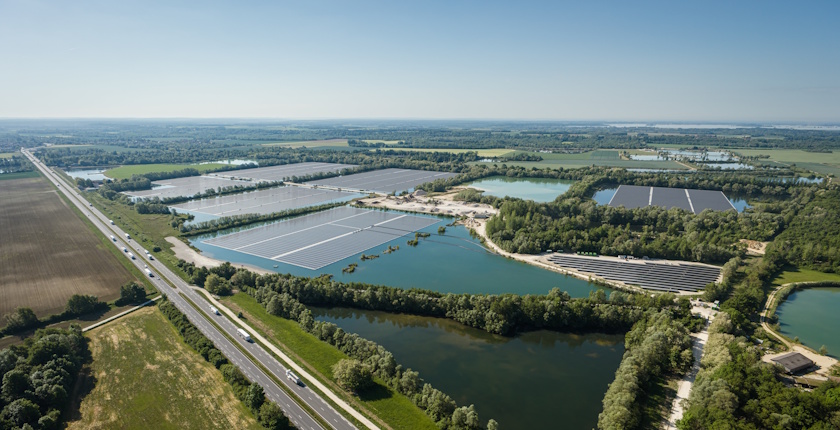
The largest floating solar power plant in Europe, named Les Ilots Blandin, has officially begun operation in France. With a total capacity of 74.3 MW, the facility is located in the Haute-Marne department, on the site of former gravel pits, and is expected to generate enough electricity to supply 37,000 people annually.

In the Haute-Marne department, the largest floating solar plant in Europe was launched by Q Energy and Velto Renewables. Located near the commune of Perthes, the facility features 135,000 solar panels installed on floating platforms.

It sits on basins formed by flooded former gravel pits, closed in 2020 and owned by local company Etablissements Blandin. The newly inaugurated floating solar power plant was named Les Ilots Blandin, which translates as Blandin’s islets.

The solar panels cover 45.5 hectares

The total area spans 127 hectares, and the solar panels cover 45.5 hectares, project manager at French floating solar developer Ciel et Terre, Vincent Pinchou, told pv magazine France. The company was responsible for supplying and installing the floating structures, modules, and inverters.

The power plant has a total peak capacity of 74.3 MW, with 72.3 MW installed on floating platforms and 2 MW on land. The ground-mounted section was strategically integrated to optimize both energy production and the site’s economic performance. The installation consists of six separate platforms, each ranging in capacity from 8 MW to 17 MW.

According to the developers, the plant will generate enough renewable electricity to supply 37,000 people and prevent 18,000 tons of CO₂ emissions per year.

Floating solar plants are more expensive to build and maintain than ground-mounted ones

In northern regions of France, there is significant potential for the development of floating solar technology. However, Corentin Sivy, Development Director of Q Energy, emphasized that one of the main challenges remains economic. Floating solar plants are more expensive to build and maintain than ground-mounted ones. Moreover, France’s Commission de Régulation de l’Énergie (CRE) does not hold separate tenders for floating projects; they must compete directly with ground-based systems.

The project’s financing was secured in September 2024, with more than EUR 50 million provided by Crédit Agricole Transitions & Energies and Bpifrance. In early 2025, Spanish renewable energy company Velto Renewables acquired a 50% stake in the project.

“Velto is accelerating its development in France with a clear objective: to establish a long-term presence in France for several decades. We are here to stay. Our mission is to develop, operate, and support projects over the long term, in harmony with local specificities; this is one of the reasons we are proud of our partnership with Q Energy in France,” CEO of Velto Renewables Lucas de Haro said at the inauguration.

by in News

LONGi ignites Romania’s energy transition with 54.1 MW BC technology triumph

A solar power plant in Romania’s northwest is on schedule to be connected to the grid in the fourth quarter of this year. The 54.1 MW facility in Chișineu-Criș features LONGi Solar’s back contact or BC modules, with an efficiency of 24.8%. It is the largest solar installation for retail infrastructure in the country.

LONGi Solar, a global leader in solar technology, has deployed 54.1 MW of its Hi-MO 9 back contact (BC) modules at the CEF Chișineu-Criș solar park in Romania’s Arad county. Developed for NEPI Rockcastle and its subsidiary Solpower Energy, and engineered by engineering, purchase and construction (EPC) partner Enevo Group, this utility-scale project – Romania’s largest solar installation for retail infrastructure – will positively impact the direct pathway for decarbonization at NEPI Rockcastle’s property portfolio in Romania, showcasing BC technology’s pivotal role in grid-scale renewable transitions.

The Chișineu-Criș facility, features 84,000 Hi-MO 9 modules, strategically deployed to maximize energy autonomy for NEPI Rockcastle’s retail assets in Romania. The plant, located in the country’s northwest, has been in full ownership of the leading owner and developer of shopping centers across Central and Eastern Europe since last year.

Hi-MO 9 has unmatched performance

Construction started in January 2025, and it remains on schedule for a grid connection in the fourth quarter. The project exemplifies BC technology’s scalability, with Hi-MO 9’s 24.8% module efficiency and -0.26%/°C temperature coefficient, ensuring optimal performance in Romania’s continental climate.

“This project exemplifies how BC technology transforms utility-scale solar into a reliable backbone for major infrastructure. Hi-MO 9’s unmatched performance ensures NEPI Rockcastle’s portfolio achieves energy stability,” stated Mirel Jarnea, Country Manager Utility Scale Business Unit of LONGi.

Faced with Romania’s grid limitations and land efficiency demands, Hi-MO 9’s back contact architecture eliminated front-grid shading losses to achieve 8% higher yield versus TOPCon products. Its PID/LID resistance guarantees 30-year performance stability – critical for NEPI Rockcastle’s long-term asset strategy – while minimizing maintenance costs across the 54.1 MW site.

Eduard Meiloiu, Executive Director Renewables BU of ENEVO, said: “Our collaboration with LONGi has been seamless from start to finish, reflecting a truly efficient and aligned partnership. BC technology brought clear engineering advantages – from higher efficiency and improved thermal performance to long-term reliability. Our engineering team greatly appreciated the precision and flexibility of the solution, which enabled us to deliver a robust project tailored to local conditions and fully aligned with Romania’s sustainability goals.”

Project to create over one hundred local jobs

This project is expected to generate around 70,171 MWh of clean electricity each year, which is enough to power approximately 29,300 Romanian homes. In doing so, it will also help avoid around 21,100 tons of CO₂ emissions annually, as contribution to climate goals.

Beyond environmental benefits, the project will create over 100 local jobs and give priority to regional contractors, boosting the local economy. By aligning climate mitigation with local economic development, this utility-scale solar initiative highlights how renewable infrastructure can meaningfully contribute to emissions reduction and socio-economic resilience.

Radu: NEPI Rockcastle’s photovoltaic project pipeline will enable it to generate 6% of its portfolio’s electricity needs

“NEPI Rockcastle’s green energy program is advancing through three major stages, reflecting our long-term commitment to sustainability and decarbonization. We’re investing EUR 110 million in new photovoltaic projects, including solar panel installations across 23 properties in CEE and greenfield developments in Romania totaling 159 MW in capacity. These efforts already enable us to generate 6% of our portfolio’s electricity needs and will help us reach our target of 84% renewable electricity usage. As part of this program, we partnered with LONGi specifically for the Chișineu-Criș solar project, where their high-efficiency photovoltaic modules are helping us deliver a flagship utility-scale development in Romania. This collaboration supports our strategic goal of enhancing the use of electricity from renewable sources and energy autonomy of our retail assets,” concluded Andrei Radu, Group Development Director at NEPI Rockcastle.

As Eastern Europe’s premier solar portfolio directly powering retail infrastructure, CEF Chișineu-Criș establishes a replicable model for large-scale renewable integration. With NEPI Rockcastle planning expansion across its property network, LONGi’s BC technology stands ready to accelerate Europe’s utility-scale revolution.

About NEPI Rockcastle

NEPI Rockcastle is Europe’s third-largest listed retail real estate company by investment portfolio value and the largest owner, operator, and developer of shopping centers in Central and Eastern Europe (CEE). The company’s EUR 8 billion portfolio is located across eight CEE countries and includes 60 properties. It is a market leader in Romania and Poland (NEPI Rockcastle’s two largest markets) and has shopping centers in Bulgaria, Hungary, Slovakia, Croatia, the Czech Republic, and Lithuania.

About LONGi

Founded in 2000, LONGi is committed to being the world’s leading solar technology company, focusing on customer-driven value creation for full scenario energy transformation.

Under its mission of “making the best of solar energy to build a green world,” LONGi has dedicated itself to technology innovation and established several business sectors, covering mono silicon wafers, cells and modules, commercial and industrial distributed solar solutions, green energy solutions and hydrogen equipment. The company has honed its capabilities to provide green energy and has, more recently, also embraced green hydrogen products and solutions to support global zero-carbon development.

by in News

Solar module maker Bisol to triple production capacity with new Slovenian plant

Slovenia-based Bisol Group, the largest manufacturer of European-made solar modules, plans to build a new factory in an investment estimated at EUR 32.3 million. The facility in Murska Sobota in northeastern Slovenia is expected to triple Bisol’s annual production capacity, from 750 MW currently.

“We want to start construction in September. We are still selecting a contractor. Production must begin no later than October 31, 2027,” says Uroš Merc, co-founder and CEO of Bisol Group.

Production at the new plant is expected to begin in 2027

Its modules, manufactured in Slovenia, are labeled Made in Europe and enjoy a privileged status in Italy and Austria, ensuring higher subsidies or tax breaks for customers. According to Slovenian portal Finance, Italian customers now purchase most of their European modules from Bisol.

The company, founded in 2004, exports 98% of its production to 140 countries worldwide, with its largest markets remaining in Europe. Since its inception, Bisol has exported 2 GW of solar modules worth more than EUR 1.2 billion. Last year, it posted a net profit of EUR 12 million on revenues of EUR 66 million.

In 2009, the company expanded its portfolio with mounting solutions for solar modules. They are now sold in 50 countries worldwide.

Bisol has sold 2 GW of solar modules since its inception in 2004

The company’s headquarters and existing production facilities are located in Latkova Vas near Prebold, Slovenia. It employs 230 people across 14 subsidiaries and affiliated companies.

The group also operates solar power plants and sells electricity

The group also operates several solar power plants and sells electricity, both wholesale and retail, through its subsidiary Bisol Energija. Its offer includes dynamic tariffs for both businesses and households. At the end of last year, Bisol Energija introduced virtual communities for its customers.