by in News

Subsidies for green heating approved for 100,000 Greek homes

The Greek Ministry of Environment and Energy published the first list of households that will benefit from the national program for modernizing heating systems.

In total, more than 100,000 households have been accepted, of which 5,000 are classified as vulnerable. The renewable heating program had an original budget of EUR 223 million, with support from the NextGenerationEU fund, but it was later enlarged to EUR 647 million. It takes place under the RePowerEU policy initiative and the National Recovery and Resilience Plan Greece 2.0.

The initiative supports energy upgrades of buildings and the substitution of older heating systems using fossil fuels, with new ones based on renewable energy. Notably, Greece set a goal for a 52.6% share of renewable heating by 2030, according to its National Energy and Climate Plan (NECP). In 2023, the level reached 26.2%, therefore there is a long distance to cover.

Most buildings in the country currently use either heating oil or natural gas. The goal is to shift to green technologies such as heat pumps or rooftop solar water heaters. These solar systems are especially popular in Greece, since the scorching sun provides ample thermal energy to convert into hot water, even during winter months. They also have a high domestic added value, as they are mainly constructed by Greek companies.

At least 50% of the cost covered

Support is provided for the general public according to income criteria, with 50% to 60% of the cost covered. Beneficiaries get up to EUR 1,020 for their energy upgrades.

As for vulnerable households, there are no income criteria and they get up to EUR 6,000 for each installation.

More applications are expected to be approved in the following months, as Greece aims to complete the program before June 2026, when the EU’s Recovery and Resilience Facility (RRF) reaches its end.
by in News

Croatia initiates project to harness solar energy along highways

Croatia’s highway management enterprise, Hrvatske Autoceste, is implementing a project for solar power plants along its highways. The company plans to use the electricity for self-consumption and for electric vehicle chargers. It would reduce costs and increase its energy independence.

After a tender procedure, Hrvatske Autoceste (HAC) selected ETS Farago to produce project designs for photovoltaic plants at four locations on the A3 highway. It heads east from the capital Zagreb to the border with Serbia.

The job, covering 36 hectares, should be finished by March 2026. Along with the documentation, the selected company is required to submit an assessment of its advantages and disadvantages.

It would be followed by a techno-economic analysis and, if it is favorable, a tender for the installation of solar panels. It is the final step, expected not before 2027.

Slovenia and BiH have initiated similar projects

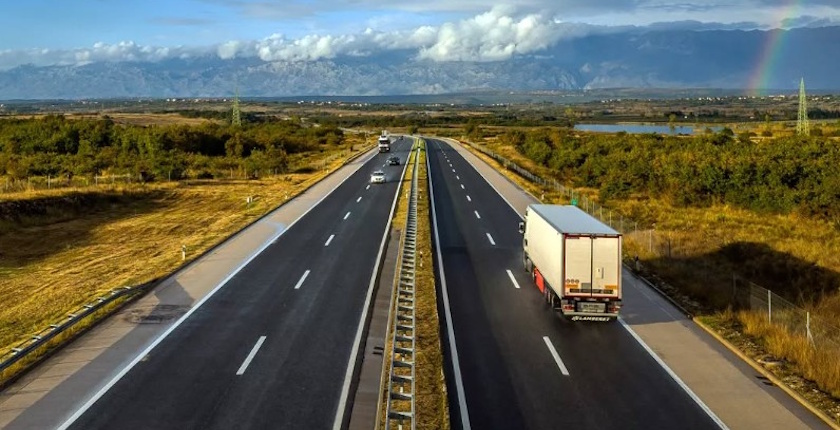
Of note, Slovenia and Bosnia and Herzegovina have initiated similar projects. Roadside locations could be a good solution for solar panels, given that such land is unused and alternatives are limited.

ETS Farago is tasked with preparing three versions for each of the four locations: Zagreb Plitvice (2.5 hectares), Rastovica (3.1 hectares), Sredanci (11 hectares), and Ivanja Reka (18 hectares). The first two are next to rest areas, while the other two are at interchanges.

HAC intends to install 259 electric vehicle chargers

The first model is for the production of electricity for self-consumption, with the surplus fed into the grid. Another option is self-consumption including battery energy storage systems (BESS). The third model is the complete sale of all electricity produced in the PV facilities.

The contract is estimated at EUR 11,400 excluding VAT.

HAC previously said that in addition to supplying its own facilities, such as toll booths, traffic maintenance and control centers, and street lighting, its project called solar highways is key to plans for expanding electric vehicle infrastructure.

The company intends to install 259 chargers on roads within five years.

by in News

LONGi enters energy storage market, redefining industry standards with Ultimate Safety

LONGi, the global leader in solar technology, unveiled its energy storage strategy in London, officially announcing its entry into the storage sector with the launch of the LONGi Energy Storage One-Stop Solution. This marks LONGi’s strategic evolution from a global photovoltaic leader to an integrated Solar-Storage-Hydrogen comprehensive energy solution provider.

Addressing the challenge of the projected doubling of global electricity demand by 2050, Dennis She, Vice President of LONGi, introduced for the first time the Stability Triangle energy framework centered on solar, energy storage, and hydrogen energy.

“Solar is the creator of clean energy, energy storage is the stabilizer of the power system, and hydrogen is the regulator that balances it all,” Mr. She stated to energy experts and investors from around the world. “The synergy of these three will build a truly widespread, highly resilient, and affordable zero-carbon energy system.”

From Solar to Solar-Storage-Hydrogen: building a Stability Triangle energy framework

Currently, LONGi possesses leading technologies in PV and hydrogen energy – with its HIBC cell efficiency reaching 27.81% and its ALK electrolyzer capacity ranking first globally.

This expansion into energy storage signifies the further enhancement of LONGi’s strategic layout, fully forming a closed-loop across the entire Solar-Storage-Hydrogen value chain.

Breaking new ground with Ultimate Safety: reshaping the logic of competition in energy storage

Energy storage is a crucial piece in the renewable energy system, and the industry is shifting from policy-driven to market-driven growth.

Dennis She pointed out, “The current development stage of the energy storage industry is very similar to the early days of solar – confidence-driven rapid growth, but also bringing disorderly competition. The future dimension of competition in energy storage has evolved from ‘having the technology’ to ‘value reliability.’”

He emphasized, “Safety, reliability, and stability are the yardsticks for measuring energy storage solutions, and are also the cornerstone for winning the long-term trust of the market and customers.”

To uphold the value proposition of Ultimate Safety, LONGi has chosen to engage in deep collaboration with PotisEdge, an expert in energy storage safety. Adhering to a three-pillar technical architecture of “intrinsic safety, active defense, and intelligent early warning,” and through its fully self-developed 5S energy storage system with unique BMS and iCCS designs, PotisEdge has maintained a safety record of “zero thermal runaway” incidents across more than 12 GWh of cumulative energy storage and power battery systems over the past decade. This will provide solid technical support for LONGi’s energy storage solutions.

Establishing the first Solar-Storage Technology Innovation Center in Europe

To accelerate Europe’s energy transition, LONGi officially announced the establishment of its first Solar-Storage Technology Innovation Center (Center of Excellence, CoE) in Europe. This center will integrate core functions including project consulting, technical training, O&M support, and spare parts services, dedicated to providing European customers with rapid-response, full-lifecycle localized professional services, comprehensively ensuring the safety, reliability, and long-term returns of integrated solar-storage assets.

Choosing London for this global strategy launch underscores LONGi’s high regard for the European market. “Europe’s urgent need for energy transition and its mature market mechanisms provide an ideal platform for practicing integrated Solar-Storage-Hydrogen solutions,” Mr. She stated during the launch.

The LONGi Energy Storage Solution will be deployed first in key markets such as the UK, Germany, Italy, and Spain, helping utilities and power companies build smarter and more efficient clean energy systems. In the future, LONGi will continue to explore viable pathways for the global zero-carbon transition through its Solar-Storage-Hydrogen integration strategy, working hand-in-hand with all parties towards a sustainable future powered by renewable energy.

About LONGi

Founded in 2000, LONGi is committed to being the world’s leading solar technology company, focusing on customer-driven value creation for full scenario energy transformation. Under its mission of “making the best of solar energy to build a green world”, LONGi has dedicated itself to technology innovation and established several business sectors, covering mono silicon wafers cells and modules, commercial & industrial distributed solar solutions, green energy solutions and hydrogen equipment.

The company has honed its capabilities to provide green energy and has more recently, also embraced green hydrogen products and solutions to support global zero-carbon development.

by in News

Revolutionising retail: power of real-time energy visibility with SolarEdge ONE for C&I

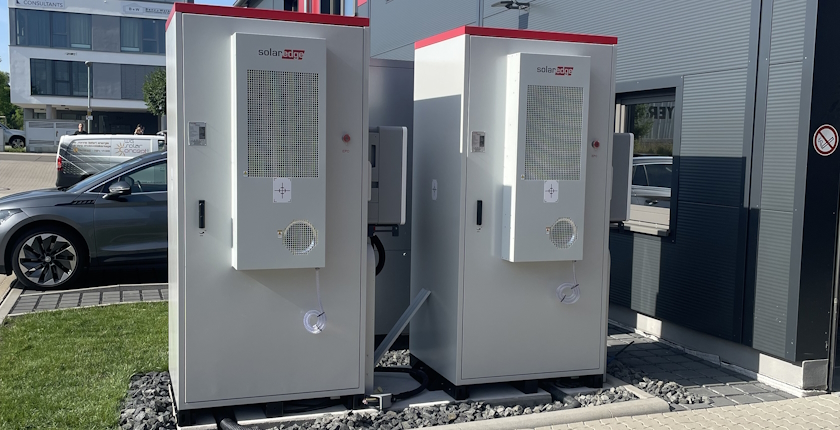
As retail evolves, supermarkets are under pressure to boost efficiency and sustainability. The key enabler of this transformation is SolarEdge ONE for C&I – a comprehensive platform that delivers real-time energy visibility and management for commercial and industrial (C&I) environments.

SolarEdge ONE for C&I integrates advanced solar PV, storage, and energy analytics, providing retailers with a unified “single pane of glass” to monitor, control, and optimize energy flows across their entire estate. This platform enables supermarkets to harness solar energy during peak hours, store excess power, and intelligently manage consumption, reducing reliance on the grid and lowering operational costs.

With the rise of electric vehicles and increasing electrification, supermarkets face growing energy demands. SolarEdge ONE for C&I addresses this by combining real-time data from solar panels, refrigeration, lighting, HVAC, and EV chargers. The result is a holistic view of energy usage, allowing retailers to identify inefficiencies, prevent asset failures, and take targeted actions to reduce waste and costs.

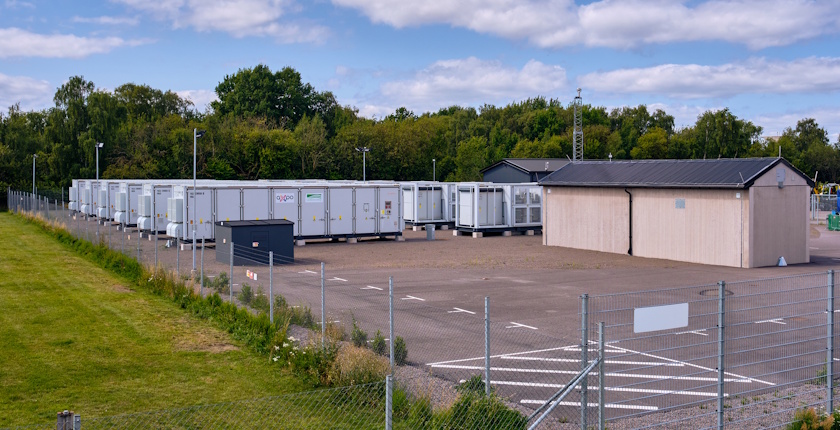
CSS-OD WG Solar Germany

Millions of sensor readings in real time

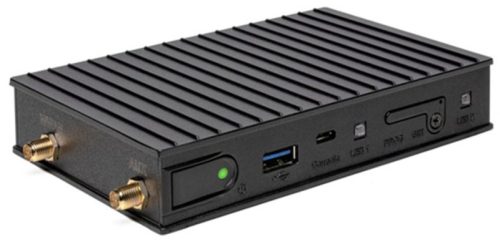
A standout feature of SolarEdge ONE for C&I is its edge-based computing, capable of processing millions of sensor readings in real time. This empowers retailers to visualize and analyze data instantly, even across hundreds of stores, warehouses, and logistics centers. The platform’s scalability means that even large retail chains can centralize energy management, ensuring consistent performance and rapid response to anomalies.

The financial benefits are significant: retailers using SolarEdge ONE for C&I have reported substantial reductions in energy costs – such as a 4.5% drop in lighting expenses – translating to millions in annual savings. The system also supports flexible energy pricing strategies, enabling retailers to shift consumption based on tariff changes, avoid penalties, and even participate in energy trading or arbitrage.

SolarEdge ONE Controller for C&I

SolarEdge ONE for C&I sets retailers on path to future

By leveraging SolarEdge ONE for C&I, supermarkets are not only meeting their sustainability goals but also gaining a competitive edge in a dynamic energy market. The platform’s advanced analytics and automation prepare retailers for the future, allowing them to optimize energy use, comply with carbon reduction targets, and unlock new revenue streams.

In summary, SolarEdge ONE for C&I is transforming retail energy management. Its real-time visibility, intelligent controls, and scalable architecture empower supermarkets to operate more efficiently, sustainably, and profitably – setting a new standard for the industry.

Find out more: SolarEdge ONE for C&I: optimizing all energy assets | SolarEdge

by in News

Webinar summary: How to design PV and BESS in the Balkans faster and smarter with RatedPower software

RatedPower, a leading provider of software for PV plant and BESS design and engineering, has organized a webinar to present its solutions that make it faster and easier for developers and contractors to design and build PV and battery storage facilities, helping increase their efficiency and profitability. The online event included a step-by-step demonstration of how RatedPower’s cloud-based software tool creates simulations of PV plants, battery energy storage systems (BESS), and hybrid facilities to assess costs, performance, and profitability under various scenarios. The hosts also answered questions such as whether the software can be used for rooftop solar, how it accounts for terrain, what financial aspects it considers, and how user-friendly it is for non-technical staff. A recording of the webinar is available at this link.

The webinar opened with an overview of the main challenges that solar and BESS projects face in the Balkans, but also elsewhere in the world. These include a lack of collaboration between teams, difficulty finding investors for projects in the ready-to-build stage, insufficient documentation needed for permitting, lengthy manual calculations, and poor decision-making in feasibility studies.

Addressing common challenges in the Balkans

RatedPower was created precisely to address these problems, and today it provides services for a wide range of companies in the solar and BESS market, including well-known international players, it was explained at the webinar, hosted by Emil Trepin, Account Executive at RatedPower.

The company decided to expand to the Balkans because it is one of the fastest-growing regions in Europe when it comes to renewable energy projects. This, it was explained, is thanks to energy transition efforts, grid modernization, investment momentum, and state support for renewables across the region.

Much more than an engineering tool

RatedPower, part of Enverus, a global software-as-a-service (SaaS) platform for the energy sector, offers a cloud-based tool for designing ground-mounted PV plants of 1 MW and above, and up to 3-4 GW, as well as hybrid systems (PV plus BESS) and standalone battery storage projects.

The platform creates the fastest simulations in the industry, reducing design and engineering time by up to 90%, while helping increase project profitability by about 20%. It generates over 400 pages of ready-to-use documents, including bills of quantities, single-line diagrams, business plans, and much more.

The tool reduces design and engineering time by up to 90%

RatedPower’s software is much more than an engineering tool – it is a decision-making platform that combines the simulation of technical design, energy yield, and financial analysis, according to the hosts.

A step-by-step demonstration of how the platform works

During the demonstration, Matteo Menazzi, Technical Advisor at RatedPower, explained how the platform is used in practice. Since it is cloud-based, it can be accessed from any web browser and used simultaneously by several people working on the same project or on multiple projects.

The first step is to select a location on the map, taking into account various restrictions, such as roads, forests, and archaeological sites, and then add PV arrays, BESS, and other equipment.

Equipment, such as PV modules or battery containers, is selected from a pre-filled database or uploaded manually. The software then creates a full simulation in a matter of seconds, allowing users to test different modules or equipment and compare results.

Solar modules, batteries, and other equipment can be selected from a pre-filled database

In the layout phase, users can set the distance between rows, adapt the configuration to the terrain slope, and estimate the scope and cost of necessary earthworks.

The software also allows the customization of grid connection parameters, including voltage levels and line types (underground or overhead). It then automatically estimates substation size and electrical losses, and calculates the necessary cable lengths.

It calculates the amount of electricity that can be produced and injected into the grid, as well as financial performance. In addition, a large number of documents is automatically generated – from hourly energy yield and battery performance results to lists of necessary cables, bills of quantities, and 2D and 3D drawings.

Designs can be edited and saved as templates for future projects

It is important to note that any design created with the RatedPower software can be edited by moving, adding, or removing elements. Also, all inputs can be saved as a template, which can be used for another project, saving considerable time.

Designing battery storage systems with RatedPower

When it comes to batteries, users can choose a power conversion system and battery containers from the database, define the number of BESS blocks and their layout, and adjust the distances between containers to comply with fire safety regulations. They can also customize charging and discharging efficiency and use the optimization algorithm to adjust operations for maximum profitability.

It is also possible to choose between a fixed and a variable price. For variable prices, the software will upload the day-ahead price for the relevant market or allow users to upload their own price. The tool will also recommend the most profitable time to sell electricity.

Users can also choose whether to charge the batteries only from the PV plant or from the grid as well.

The software provides project cost estimates based on standard values or the user’s input

In the financial segment, RatedPower’s software will estimate the total cost of building a PV plant or battery system, based on standard values provided by the International Renewable Energy Agency (IRENA) and the US National Renewable Energy Laboratory (NREL).

However, input values can also be fully customized by the user, based on the price of solar modules, BESS units, or cables.

If you want to know more about RatedPower’s software, request a demo today.

by in News

Croatia allocates EUR 50 million for prosumers in business sector to install BESS

Croatia has allocated EUR 50 million to support businesses in installing batteries for storing energy from their existing solar power plants or ones they plan to install.

In recent years, many companies all over Europe have installed solar panels for self-consumption to reduce electricity costs. But battery energy storage systems (BESS) offer additional benefits for such prosumers.

Now Croatia’s Ministry of Economy and Sustainable Development has launched a public call for the allocation of grants to firms.

Small, medium, and large entrepreneurs are eligible to apply

The goal is to enable entrepreneurs to store the energy produced in their power plants and use it when it is most needed – delivering it to the grid later or for their own consumption.

The call is financed by funds from the National Recovery and Resilience Plan (NRRP). Small, medium, and large entrepreneurs are eligible to submit applications. The deadline is January 31, 2026.

The ministry’s goal is to continue investments in the power system, thereby ensuring the integration of an increasing amount of energy from renewable sources.

BESS has numerous advantages over other technologies: high efficiency, adaptability, reliability, economic viability, and fast response, the call reads.

The call targets installation of batteries with a total capacity of 60 MWh

All applicants must specify concrete benefits that would be achieved by implementing the project in their bids.

BESS projects with a total capacity of at least 60 MWh could be installed by the end of the second quarter of 2026, according to the call.

New energy storage capacities would significantly increase the flexibility and resilience of the domestic power system, the ministry said.

The minimum subsidy amount per project is EUR 60,000, and the highest is EUR 1.5 million. The minimum storage capacity eligible for grant is 1 MWh per facility.

Of note, Croatia has already implemented a call for the installation of batteries in firms.

However, the subsidies were allocated for joint installation of renewable power plants and batteries.

by in News

Dušan Jerković Primary School in Ruma – first prosumer school in Serbia’s Srem district

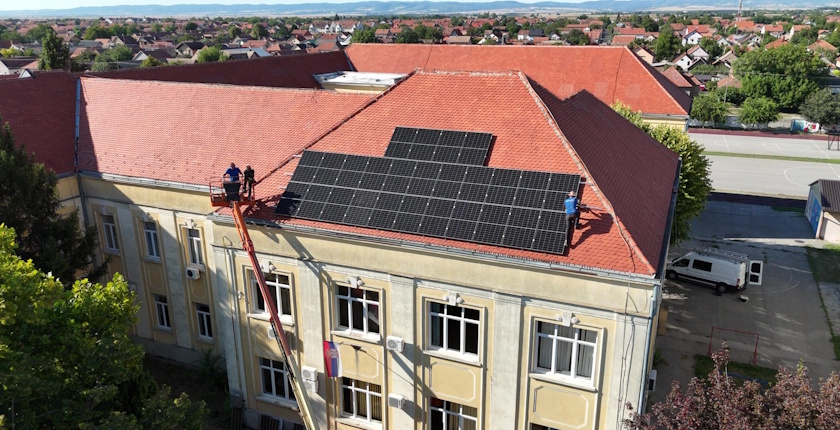
The Dušan Jerković Primary School in Ruma is the first school in the Srem (Syrmia) region, in Serbia’s north, with a solar power plant installed on its roof, and it is in the process of obtaining the prosumer status. The project was implemented in cooperation with the Elektropionir energy cooperative and funded by German Development Cooperation. The Deutsche Gesellschaft für Internationale Zusammenarbeit (GIZ) GmbH implemented the endeavor.

Although the number of prosumers in Serbia is growing, it still remains relatively small compared to the vast potential of rooftops and the abundance of sunshine that the country enjoys. According to recent data from electricity distribution system operator Elektrodistribucija Srbije (EDS), there were 5,310 registered prosumers, formally called buyers-producers.

Their total installed capacity was over 113 MW. Most were households (3,848), followed by legal entities (1,457), while the number of residential communities producing their own energy remains very small, only five.

A few years ago, upon an assessment of rooftop areas in Serbia suitable for solar panel installation, the surface was estimated at as much as 600 square kilometers. Installing solar panels on just 10% would translate to 6 GW of solar power capacity.

On a bright note, awareness of renewable energy sources and their importance is steadily increasing, as shown by the growing number of institutions — including kindergartens, primary and secondary schools — choosing to take steps toward energy independence and become prosumers. One such example is in the Syrmia area, locally called Srem, and specifically in Ruma, where the Dušan Jerković Primary School recently became the proud owner of a rooftop solar power plant. The town is located west of Belgrade.

[wpcc-iframe title=”Solarna elektrana na krovu škole Dušan Jerković u Rumi prva škola prozjumer u Sremu” width=”500″ height=”281″ src=”https://www.youtube.com/embed/9w4_aGTyiEU?feature=oembed” frameborder=”0″ allow=”accelerometer; autoplay; clipboard-write; encrypted-media; gyroscope; picture-in-picture; web-share” referrerpolicy=”strict-origin-when-cross-origin” allowfullscreen=””]

According to school principal Ivana Milojević, the idea was born in September 2024, when representatives of the energy cooperative Elektropionir first visited the school and proposed a partnership.

Elektropionir organized a series of lectures and workshops for students, parents, and school staff

Before the solar installation began, Elektropionir organized a series of lectures and workshops for students, parents, and school staff, focusing on renewable energy sources and the benefits of installing solar panels. The proposal to set up a photovoltaic system on the school’s roof was enthusiastically supported by both the school administration and the Municipality of Ruma, which owns the building.

Foto: Elektropionir

The power plant will significantly reduce the school’s electricity bill

The German Development Cooperation fully funded the installation of a 10 kW solar power plant in a project implemented by GIZ. The system was completed in late August, and the process of obtaining the prosumer status from DSO Elektrodistribucija Srbije (EDS) is underway.

It means that the generated electricity will be used to cover the building’s energy needs, and any surplus will be delivered to the grid, while the school will be able to utilize the excess energy later, when its consumption exceeds production.

“I am very proud that the Dušan Jerković Primary School is the first school in Srem to have a solar power plant. Our school, known for its yellow color, has now got a touch of green, symbolizing our commitment to protecting nature and raising environmental awareness among our students and fellow townspeople. We sincerely thank GIZ and the Elektropionir energy cooperative for their effort, work, and financial support in materializing a wonderful idea,” principal Ivana Milojević said.

The new solar plant will significantly reduce the school’s electricity bills, allowing it to use the savings for other improvements — such as upgrading classrooms or purchasing teaching materials to enhance the learning process.

by in News

Green resilience: How Kyiv is shaping a sustainable future amid crisis

Balkan Green Energy News, the media partner of the 2025 Just Transition Young Voices Awards, is publishing the three winning articles. The Energy Community Secretariat organized the contest in collaboration with Bankwatch, CAN Europe, the CLEW Network, and the Regional Youth Cooperation Office. The aim is to promote young adults set to shape the climate, energy, and social landscape in the years ahead in the Energy Community region. 

Author: Kateryna Pereloma

Kyiv, the heart of Ukraine, is a city renowned for its golden domes, cultural depth, and enduring spirit. In recent years, especially since the full-scale invasion of Ukraine in 2022, the people of Kyiv have faced extraordinary challenges. But amid the destruction and uncertainty, a new kind of rebuilding has taken root – one that is greener, smarter, and focused on long-term sustainability.

When the war disrupted supply chains, energy infrastructure, and food systems, communities across Kyiv were forced to adapt quickly. What began as survival soon evolved into innovation. As energy security became a national priority, citizens and officials in Ukraine’s capital started reimagining what a more self-reliant and sustainable city could look like.

One of the most visible changes has been the rise of solar energy. While Ukraine had been developing renewables before the war as well, the conflict accelerated the adoption of decentralized energy sources.

In many neighborhoods, especially those affected by blackouts and grid instability, residents pooled resources to install rooftop solar panels, solar-powered water heaters, and even small-scale battery storage systems. Tenants’ associations in apartment buildings began using crowdfunding platforms to raise money for green energy upgrades. My neighbor, for example, spearheaded a project in our building to install solar panels that now help power our elevator and joint lighting systems.

Solar energy became lifeline for schools, hospitals, critical infrastructure

Schools and hospitals also embraced solar as a lifeline. Through international aid and local initiatives, dozens of Kyiv’s critical infrastructure facilities have been outfitted with renewable energy systems.

This isn’t just about environmentalism – it’s about resilience. When the power goes out during missile attacks or rolling blackouts, these systems keep vital services running. The city’s shift to green energy has become a form of defense as much as it is a commitment to sustainability.

Waste management has also undergone a transformation. Before 2022, recycling in Kyiv was limited and often inconsistent. But since the war began, grassroots recycling programs have surged. Volunteer-led sorting centers appeared in districts like Obolon, Podil, and Solomianskyi, where residents bring plastics, paper, electronics, and batteries.

These centers often operate out of garages, schoolyards, or community centers – and they’re staffed by locals determined to reduce waste and pollution. The Zero Waste Alliance Ukraine, a nonprofit that started as a small awareness campaign, has grown into a national network promoting sustainable consumption and waste reduction in cities like Kyiv.

Modernizing Kyiv’s subway system is priority

Public transportation is another area where the city has made strides. Although metro stations are damaged and they doubled as bomb shelters during attacks, Kyiv’s subway system remains one of the greenest forms of transport in the region. The city government, recognizing its importance, has prioritized its modernization.

The number of cyclists is rising, and so is the length of bike lines

Electric buses are being introduced, and there are pilot projects for low-emission zones in the city center.

The number of bicycle commuters has also increased significantly since fuel prices soared and road conditions became more unpredictable. I started biking to work last year, and I’ve noticed more bike lanes being marked, as well as more people making the same choice – not only for convenience but for the environment.

Local communities farming strawberries between buildings

Food systems are shifting, too. With imports disrupted and many large-scale farms in occupied or war-damaged areas, Kyiv residents began to grow food in unexpected places. Urban gardening took off in parks, on balconies, and even in underground shelters.

In our district, we turned a neglected courtyard into a communal garden with tomatoes, herbs, and strawberries. It’s not a large-scale solution, but it brings people together, reduces dependence on long supply chains, and fosters a deeper connection to the land.

Green startups popping up throughout Ukraine’s capital city

Crucially, these changes are being supported by a growing culture of green entrepreneurship.

Startups focused on eco-construction, sustainable packaging, and electric mobility are popping up throughout the city. One standout example is a Kyiv-based company that makes biodegradable packaging from hemp – a plant widely grown in Ukraine.

Another startup, EcoFactor, retrofits older buildings to improve their energy efficiency, employing many internally displaced people in the process. These green businesses don’t just support the environment; they offer livelihoods and hope amid uncertainty.

Youth and students are looking toward a sustainable post-war future

Perhaps most inspiring is the role of young people in this transition. Ukrainian youth have always been politically and socially active, but the war has heightened their sense of responsibility.

Environmental clubs in Kyiv universities are organizing climate literacy workshops, cleanup events, and public advocacy campaigns – even during air raid alerts. I recently attended a student-led event called Green Rebuild, where architecture and engineering students presented ideas for post-war reconstruction using sustainable materials and passive design principles.

It struck me that the generation growing up during war is also the one leading us toward a cleaner, more conscious future.

Even amid destruction, there can be creation

Our shift toward a green local economy isn’t linear or perfect. There are still challenges with funding, access to technology, and bureaucratic delays. And yet, what’s happening here is remarkable: a city under siege is laying the foundations for a sustainable future. We are proving that even amid destruction, there can be creation – that rebuilding a nation can also mean rethinking how we live, produce, and share.

In Kyiv today, sustainability is not just a political goal or a global trend – it’s a grassroots reality. It’s neighbors coming together to plant gardens, fix solar panels, sort recyclables, and imagine better ways of living. It’s resilience not only in the face of war, but in the face of climate change, inequality, and old ways of doing things.

The capital city’s story is still unfolding. But as we rebuild, we are building green – not because it’s fashionable, but because it’s essential. And in doing so, we’re showing the world that even in the darkest moments, there is light – and sometimes, that light comes from solar panels on a Kyiv rooftop.

by in News

Croatia’s HEP to install 90 solar power plants on rooftops of its facilities

Croatia’s power utility Hrvatska Elektroprivreda intends to install 90 solar power plants on its facilities across Croatia.

HEP ESCO, a subsidiary of Hrvatska Elektroprivreda (HEP), has launched a public procurement for the installation of 90 photovoltaic plants under a design-and-build model and on a turnkey basis.

The firm develops, implements, and finances energy efficiency projects based on the ESCO model.

The investment is estimated at EUR 5.3 million, and the deadline for submitting bids is November 3.

HEP ESCO plans to sign a contract with the best bidder within 90 days after selecting it. The deadline for the completion of works will be 18 months, according to the public call.

Five groups of solar power plants

The public call is divided into five geographical groups in Croatia.

Group 1 is for Zagreb and its surroundings. Solar panels would be installed at ten locations, with an estimated investment of EUR 1.2 million. Group 2 covers hydropower plants Zavrlje, Orlovac, Peruća, and Zakučaci in the coastal region of Dalmatia, as well as power distribution facilities. The works in the segment are valued at EUR 770,000, local media reported.

Four cities in the region of Slavonia make up the third group, with 20 locations. Solar panels would be installed for EUR 1.21 million in Virovitica, Požega, Vinkovci, and Vukovar.

HEP has over 50 solar power plants on the rooftops of its buildings and facilities

A total of 15 locations in the areas of Međimurje and Zagorje and the Sisak-Moslavina county, and including hydropower plant Ozalj, all in northwestern Croatia, are in the fourth group. The estimated value is EUR 1.1 million.

The value of the investment in Istria, Primorje, and Gorski Kotar is EUR 1.03 million. It entails the Fužine hydropower plant, Rijeka, Vinodol, and electricity distribution facilities.

Of note, HEP has more than 50 solar power plants on the rooftops of its buildings and facilities.

HEP Proizvodnja, HEP’s power production arm, has 12 PV plants on administrative buildings, thermal power plants and hydropower plants. The total capacity is about 1.5 MW. HEP ODS, the country’s distribution system operator, has another 44 solar power plants with a total capacity of 1.1 MW on its roofs.

by in News

CMS committed to sustainability – first law firm in Belgrade with solar power plant on its rooftop

CMS is the first law firm in Belgrade to install a solar power plant on the roof of its own building. The plant has been in operation for nine months now.

Two months ago, it also obtained official status as a prosumer (buyer-producer) of electricity. It is an important milestone in CMS Belgrade’s transition to more sustainable energy use, according to the announcement.

Since reaching full operating capacity, the solar plant has covered around 50% of its total electricity consumption.

The long-term goal is ambitious yet achievable, according to CMS Belgrade: 70% of electricity consumption from solar by the end of 2025, and 100% within the next three years.

“Sustainability is not just a goal — it’s a responsibility, and one we are committed to integrating into every part of our business,” the announcement reads.

Radivoje Petrikić, the Managing Partner at CMS Belgrade (Petrikić & Partneri AOD in cooperation with CMS Reich-Rohrwig Hainz), said: “We are committed to integrating eco-friendly practices into every aspect of our business. By embracing sustainability in our daily operations, we are not only shaping a brighter future for our firm but also contributing to a greener planet for generations to come.”

The office is part of international law firm CMS CEE, based in Vienna.