by in News

Green solutions in practice: Roundtable in Knjaževac points the way to a sustainable, energy-efficient future

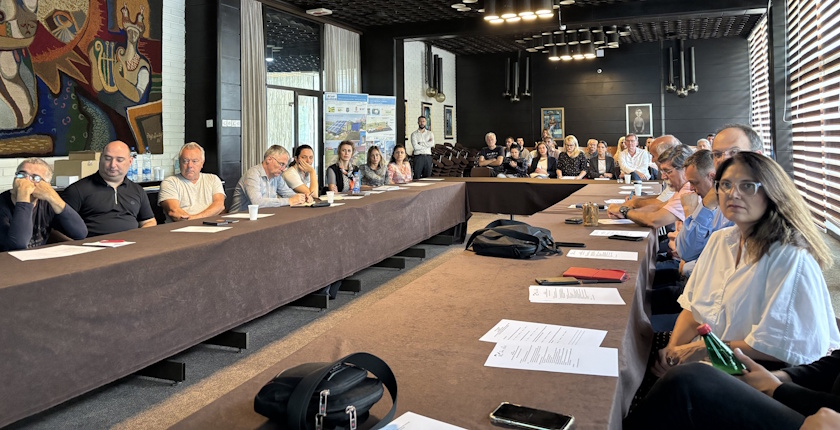
A roundtable titled Green Solutions in Practice, held in the eastern Serbian town of Knjaževac, brought together local government officials, experts, rural tourism providers, entrepreneurs, and citizens to exchange experiences on renewable energy sources and energy efficiency.

The event was organized by the Regional Development Agency of Eastern Serbia (RARIS) as part of the Promotion of Renewable Energy Sources and Energy Efficiency in Eastern Serbia project, implemented by German Cooperation in Serbia GIZ. The gathering demonstrated that eastern Serbia is becoming an increasingly active player in implementing green solutions and strengthening energy sustainability.

The roundtable Green Solutions in Practice was opened by Saša Petrović, Deputy Mayor of Knjaževac, who highlighted the importance of the green transition for promoting rural development and improving the quality of life.

Daniela Kostadinova, a representative of GIZ, presented the organization’s contribution to achieving energy sustainability in Serbia. She said that the project’s results so far have been highly significant, but added that she believes further development and awareness-raising are still necessary.

Photo: RARIS

Kostadinova also stressed the importance of financial support for citizens to implement energy efficiency measures, and she pointed out that energy poverty should be the next priority to address. She expressed hope that some ideas would be realized by the end of the Promotion of Renewable Energy Sources and Energy Efficiency in Serbia project, which runs until December.

Expressing her satisfaction at the opportunity to visit partner municipalities, Kostadinova noted that GIZ strives to provide both advice and support to its partners in the implementation of projects. She added that long-term success is extremely important to GIZ, which seeks to maintain its reputation as a high-quality and reliable partner.

Empowering eastern Serbia through renewable energy

Vladan Jeremić, Director of RARIS, presented the results of the Promotion of Renewable Energy Sources and Energy Efficiency in Eastern Serbia project. Four key results have been achieved: establishing a regional platform for renewable energy and energy efficiency in Eastern Serbia as a mechanism for aligning the positions, interests, and policies of key local and regional stakeholders; strengthening regional capacities; opening the Energy Advisory Center; and raising public awareness about the importance of renewable energy sources and energy efficiency.

Jeremić: People are eager to learn about renewable energy sources and energy efficiency

As a result of the regional platform’s work, the first renewable energy and energy efficiency fair was held in Zaječar. Numerous workshops and training sessions have been organized, and a guide on applying renewable energy and energy efficiency in rural tourism has been produced.

According to Jeremić, the project has shown that people are eager to acquire the knowledge they need to improve their lives in practice, making them more cost-effective, affordable, and sustainable, while also contributing to the energy transition.

“At the initiative of citizens, although it wasn’t planned within the project, we organized the fair. Even though we didn’t have an appropriate exhibition space, and despite the demanding nature of such events, we worked with great enthusiasm. The fair brought together technicians, engineers, and representatives of local governments and the private sector, many of whom are here today, which we see as a strong indicator of our success,” he said.

Managing energy efficiently in rural tourism

As part of the project, an interesting guide has been prepared for owners of rural tourism households, offering practical tips for improving energy efficiency, reducing costs, and introducing sustainable solutions into their business.

Ivan Svetozarević, the author of the guide and owner of a rural tourism household called Gorski konak in the village of Zubetinac, presented the guide through an engaging presentation filled with personal examples. The presentation addressed the question of how to manage energy efficiently in rural tourism. Situated on the slopes of Stara Planina, Gorski konak stands out as a model of sustainability.

Photo: Ivan Svetozarević / RARIS

The Svetozarević family equipped the household with solar panels, solar collectors for water heating, and a heat pump. Guests can use electric bicycles to reduce car use and emissions. Cooperation with neighbors and local producers further enhances the sustainability of the entire complex.

“My wife and I have been in this for over 20 years, but only a few years ago did we have the opportunity to install solar panels and a heat pump. Sustainability is actually our way of life,” said Svetozarević.

Multidisciplinary approach as a key to communication

Maja Lalić, Creative Director of the Mikser Festival, emphasized the importance of communication in promoting sustainable practices and raising public awareness about renewable energy sources and energy efficiency.

“The Mikser Festival is a partner of GIZ in popularizing these topics, seeking to involve the culture and creative industries sector, which has so far been rarely represented in discussions on renewable energy and energy efficiency. As a multidisciplinary platform, Mikser brings together numerous actors from different fields and engages in citizen education to bring these important topics closer to a wider audience,” she said.

For years, the organization has been staging events in revitalized abandoned industrial facilities as part of circular economy measures, applying various sustainable practices, such as issuing e-tickets, using reusable cups, and avoiding PVC branding.

Photo: RARIS

In cooperation with GIZ, this year’s edition of the festival developed an interactive educational program to increase energy literacy among three target groups: architecture and design professionals, young people, and the general population. The program included a panel discussion titled New Citizen Energy, where experts and prosumers dispelled myths about energy, shared experiences, and presented local challenges and solutions.

A special focus was placed on youth and children through workshops, empowering them to become agents of community change and develop creative ways to raise energy awareness and sustainable habits.

Mikser as a communicator and a dissemination platform

Maja Lalić highlighted the importance of decentralization, noting that successful initiatives from different parts of Serbia are encouraging, though they often remain less known to the wider public.

“Mikser positions itself as a communicator and a platform for disseminating success stories, giving people and communities space to share their experiences and inspire others. It is precisely this openness that makes the festival a dynamic place of meeting and exchange, supporting the further development of sustainability,” she said.

Examples of good practice

The application of renewable energy sources and energy efficiency measures goes far beyond installing solar panels or replacing windows, as demonstrated by various innovative examples of good practice.

Ilija Stevanović from the Mihajlo Pupin Institute presented innovative solutions developed in cooperation with farmers, schools, and festivals. As a special example, he cited the “digitalized field” implemented in collaboration with farmer Nikola Lončar from Belegiš and the smart device Mobisan – a mobile solar power generator.

Mobisan combines soil sensors, a weather station, and wireless communication to collect data on microclimate and soil conditions, enabling automated irrigation and fertilization. The device is controlled remotely and powered by solar panels, saving resources and reducing the use of chemicals.

Ognjen Tomašević from the Exit Foundation presented the “Green Exit” initiative and plans to improve the energy efficiency of one of the region’s largest events.

Innovative solutions are contributing to the festival’s energy efficiency

In addition to recycling, which has been a focus of the Exit Festival’s activities for five years, a “solar guitar” and gramophone-shaped solar collectors have been developed in cooperation with the Mihajlo Pupin Institute. These two devices provide electricity and hot water to Exit camp users, aiming to improve its energy efficiency.

Photo: Solar guitar / Mihajlo Pupin Institute

Aleksandar Branković, the owner of one of the first home solar power plants in eastern Serbia, presented his 6.7-kilowatt system installed back in 2013, making it one of the first in Serbia.

Vladan Dragićević, energy manager at the Municipality of Knjaževac, presented the achievements of the Energy Advisory Center. “The Energy Advisory Center is not just a place – it is a network of trust, a space where knowledge turns into savings and the energy transition into an opportunity for all,” he emphasized.

More than 70 citizens have received support at the Energy Advisory Center

The center provides relevant information and advice enabling citizens and businesses to use energy more efficiently, reduce costs, and even generate additional income. To date, more than 70 citizens have received advisory support.

The center is open for both individual consultations and group discussions on various topics, and it offers all necessary advice related to energy efficiency.
by in News

North Macedonia adopts Law on Energy Efficiency

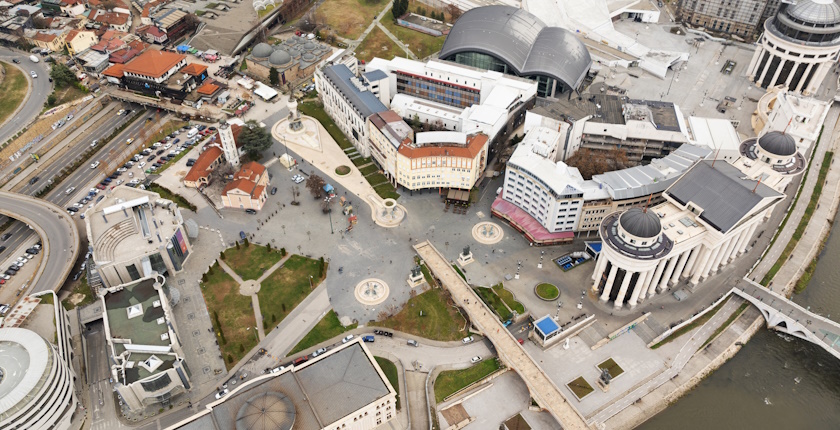
North Macedonia’s new Law on Energy Efficiency brings a long-term strategy for the reconstruction of buildings and the obligation to set up solar collectors on public buildings. It envisages financial support for investments in solar panels, geothermal systems and smart technologies.

The Assembly of North Macedonia adopted the Law on Energy Efficiency at its last session. The new legal framework, aligned with European standards, will directly contribute to lowering bills for citizens and businesses, a cleaner environment and the creation of new green jobs, the Ministry of Energy, Mining and Minerals said.

The law is a substantial step forward in reducing energy consumption, integrating renewable sources and reducing greenhouse gas emissions, the statement reads. It will bring the country closer to fulfilling European climate goals and to a green transition, the ministry added.

The new legislation introduces the European Union’s principle “energy efficiency first,” according to the announcement. One of the novelties is a long-term strategy for the reconstruction of residential, public and commercial buildings.

At least 3% of public buildings must be reconstructed every year

The law mandates tripling energy savings in the public sector. At least 3% of public buildings must be reconstructed every year. In the construction or reconstruction of schools, kindergartens and public institutions, it will be obligatory to install solar collectors.

New measures include financial support for investments in solar panels, geothermal systems and smart technologies. The ministry said the law brings high standards in public procurement, digital transparency and professionalization of energy audits. Energy performance certificates will be included in the real estate cadastre.

The Law on Energy Efficiency is part of the package of reform laws that lay the foundation for a stable, sustainable and competitive energy sector – with energy security, better quality of life for citizens and accelerated accession to the European Union, the ministry underscored.

Of note, public calls are ongoing for households in energy poverty, for free inverter air conditioners and financial aid.

by in News

Zen Energy Group kicks off construction of hybrid PV-BESS project in North Macedonia

Luxembourg-based Zen Energy Group has started the installation of a hybrid energy project in North Macedonia, combining a solar power plant and a battery energy storage system.

A solar power plant with a battery energy storage system (BESS) could become the country’s second hybrid power plant, with Fortis Energy installing energy storage near Oslomej solar park.

Zen Energy Group kicked off the construction of a landmark solar plus storage project in North Macedonia, Yossi Edelstein, Chief Executive Officer of Zen Energy Group, wrote on LinkedIn.

From concept to construction, Zen Energy Group is making the future of energy a reality in the country, he added.

“We are proud to share that our 82 MW utility-scale solar project with 50 MWh BESS in North Macedonia has officially entered the construction phase,” Edelstein stated.

The PV plant will use LONGi bifacial solar panels

The company’s team kicked off earthworks, development of access roada and cut-and-fill activities. The project is scheduled to start delivering green electricity to the national grid by late April 2026 and to achieve full commercial operation date in August 2026, according to Edelstein.

The project marks another significant step toward advancing clean energy generation in the region, he added.

According to the firm’s website, the photovoltaic plant will be located near Negotino. It will use LONGi bifacial solar panels for the expected annual production of 124,198 MWh.

The financing was secured from NLB bank, the website reads.

The developer revealed that it has signed a power purchase agreement (PPA) for 10 years in total, with a six-year fixed price period.

Seven projects in the pipeline

Works near Negotino (photo: Zen Energy Group/LinkedIn)

Zen Energy Group is developing seven energy investments – for three solar parks, two wind farms, a standalone BESS, and a commercial and industrial (C&I) portfolio in the UK.

Wind farms Unirea (102 MW) and Traian (78 MW) are located in Romania, while two PV facilities in North Macedonia would have a total capacity of 137 MW. The Negotino endeavor is for 82 MW and the Armatus investment envisages 55 MW.

Solar project Hajdučica of 125 MW is planned in Serbia. All three PV plants would have BESS. The company is developing the Lacu Sarat standalone battery facility in Romania. If it were in operation now, it would be the largest BESS in Europe.

by in News

LONGi and Nofar Energy forge landmark partnership for Romania’s largest solar project using revolutionary BC technology

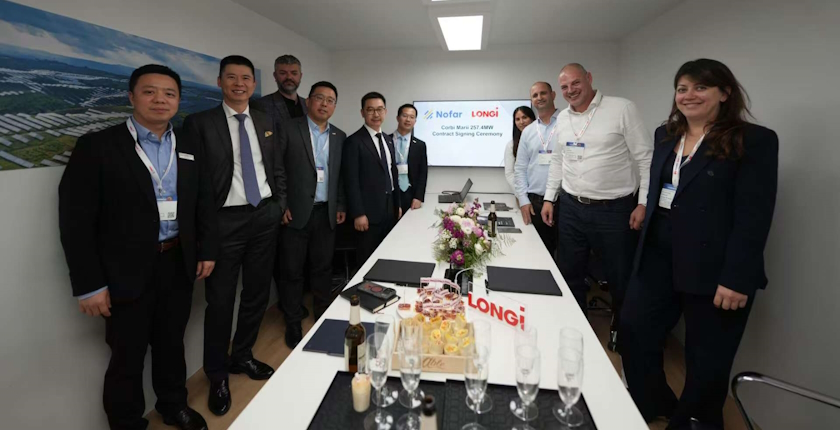
LONGi Solar, the global leader in solar innovation, and Israel’s premier renewable energy developer Nofar Energy have announced a historic partnership to develop one of Romania‘s largest solar installations – the 282 MW Corbii Mari project in Dâmbovița county. This pathbreaking collaboration will deploy over 430,000 Hi-MO 9 BC modules, establishing back contact technology as Europe’s definitive solution for utility-scale energy transformation while marking Nofar’s most ambitious international venture to date.

The Corbii Mari photovoltaic project of 282 MW will go into production in 2026. It represents a dual milestone in Europe’s renewable transition. As Nofar Energy’s largest overseas IPP investment, it anchors the Israeli leader’s strategic expansion into European markets. Simultaneously, the installation stands as Romania’s largest BC deployment, leveraging Hi-MO 9’s industry-leading 24.8% efficiency to overcome the region’s climatic challenges. The project’s seamless execution demonstrates how the BC technology of LONGi Solar delivers unparalleled bankability for developers navigating Europe’s complex energy landscape.

The two companies have agreed to deploy more than 430,000 Hi-MO 9 BC modules.

Leon Zhang, President of LONGi Europe, emphasized the project’s transformative impact: “Corbii Mari transcends conventional solar deployments – it’s a powerful validation that BC technology has matured into Europe’s utility-scale foundation. By choosing Hi-MO 9 for their flagship European venture, Nofar Energy demonstrates how visionary partners are accelerating the energy transition through technological leadership.”

The 282 MW Corbii Mari initiative positions back contact modules as Europe’s utility-scale standard

Mirel Jarnea, Strategic Accounts Manager SEE of LONGi Europe, added: “Nofar’s selection of Hi-MO 9 is a testament to the global energy sector’s recognition of BC technology as the ultimate frontier in solar innovation. This partnership reaffirms our commitment to delivering solutions that redefine efficiency, durability, and sustainability.”

Setting benchmark for sustainable innovation

Favi Stelian, Managing Partner Romania of Nofar Energy, stated: “The Corbii Mari project represents a defining moment for Nofar Energy’s European vision. By partnering with LONGi and deploying Hi-MO 9 BC technology, we are not only delivering Romania’s largest solar initiative but also setting a new benchmark for sustainable innovation across the continent.”

The project harnesses Hi-MO 9’s revolutionary back contact architecture to achieve exceptional performance in Romania’s variable climate. The modules’ temperature resilience and 30-year degradation guarantee ensure consistent energy generation, while the ultra-high power output minimizes land use – preserving Dâmbovița county’s agricultural ecosystems.

With an estimated annual output of 380 GWh, Corbii Mari will displace 220,000 tonnes of carbon emissions annually, equivalent to removing 48,000 combustion-engine vehicles from roads while powering over 50,000 Romanian households.

Positioned at the vanguard of Eastern Europe’s energy transition, Corbii Mari establishes a replicable model for Nofar’s expanding multi-GW European pipeline. The collaboration signals accelerating regional adoption of BC technology, with project insights informing solar development across emerging markets where efficiency and bankability are paramount.

About LONGi

Founded in 2000, LONGi is committed to being the world’s leading solar technology company, focusing on customer-driven value creation for full scenario energy transformation.

Under its mission of Making the Best of Solar Energy to Build a Green World, LONGi has dedicated itself to technology innovation and established several business sectors, covering mono silicon wafers cells and modules, commercial and industrial (C&I) distributed solar solutions, green energy solutions and hydrogen equipment. The company has honed its capabilities to provide green energy and, more recently, also embraced green hydrogen products and solutions to support global zero-carbon development.

About NOFAR Energy

Founded in 2011, Nofar Energy is a global leader in renewable energy investments. Since 2020, Nofar has been a public traded company (TASE: NOFR) at the Tel Aviv Stock Exchange. For the last 12 years, Nofar has been growing rapidly and consistently, with an extensive portfolio of projects and subsidiaries across nine territories, 200 employees worldwide, and major renewable energy and energy storage projects.

by in News

Parliament of Montenegro installs solar power plant

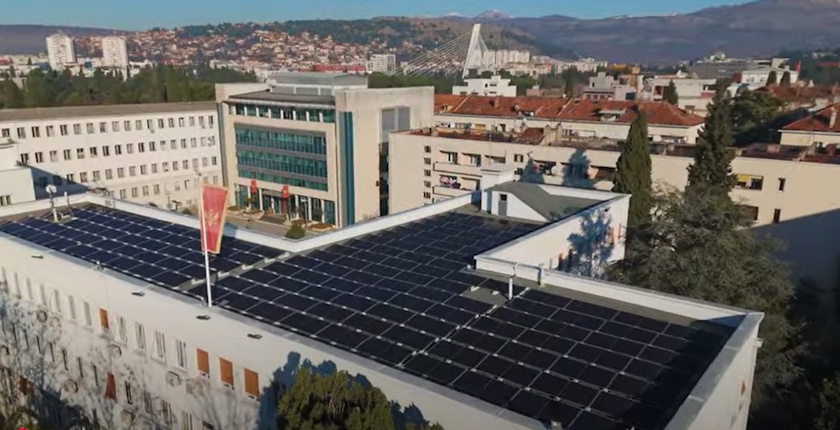
The solar power plant on the roof of the Parliament of Montenegro in Podgorica has started producing electricity. The plant’s total peak capacity is 81 kW, and it is expected to generate approximately 100,000 kWh per year.

Montenegro is likely the first country in the former Yugoslavia to install solar panels on the roof of its parliament. This project represents an important step towards sustainable development and the efficient use of energy resources, according to the Parliament of Montenegro.

The installed photovoltaic system consists of 150 monocrystalline solar panels, each with a capacity of 540 W. The total peak capacity of the plant is 81 kW. Electricity is delivered to the grid through a 70 kVA inverter.

The estimated annual power production of 100,000 kWh will cover a significant portion of the assembly’s consumption and contribute to reducing greenhouse gas emissions. This achievement will promote the parliament into a prosumer.

The solar plant will cover a significant part of the parliament’s consumption

The parliament underlined that the implementation of the project represents its commitment to improving energy efficiency. It recalled that the previous renovation enabled a significant decrease in the power consumption.

This year, the assembly plans to start modernizing its cooling system and boost energy efficiency with a new facade. The activities are set to be finished in 2026, further enhancing the overall energy balance of the building.

For years now Montenegro has been implementing a program for the installation of solar panels on the roofs of households and businesses

The Parliament of Montenegro said that, as a socially responsible institution, it is strategically oriented towards modern sustainability standards, rational management of public funds, and environmental protection.

For years now, Montenegro has been implementing a program for the installation of solar panels on the roofs of households and businesses. Power utility Elektroprivreda Crne Gore (EPCG) is in charge of the program. Solari 3000+ and Solari 500+ are finished, and Solari 5000+ is underway.

Of note, the Government of Serbia also announced its intention to install photovoltaic units and become a prosumer. However, there are currently no new updates regarding the implementation of this project.

by in News

Turkey launches solar, wind power auctions with November deadlines

The Ministry of Energy and Natural Resources of Turkey issued a public call for solar and wind power auctions for 2 GW in total. It will receive the applications on November 4 and November 18, respectively. One competitive bidding process is for a floating solar power project of 35 MW.

Following the successful auctions for renewable energy projects that were completed early this year, Turkey kicked off another round. It is also for 2 GW of overall connection capacity, in light of the country’s ambition to grow its combined solar and wind power capacity to 120 GW by 2035. The two technologies reached 37.1 GW together a month ago, out of 120.2 GW in total.

Auctions are held under the Renewable Energy Zones (REZ) state support mechanism. The scheme is better known by its Turkish acronym YEKA.

Ten solar power areas in eight provinces

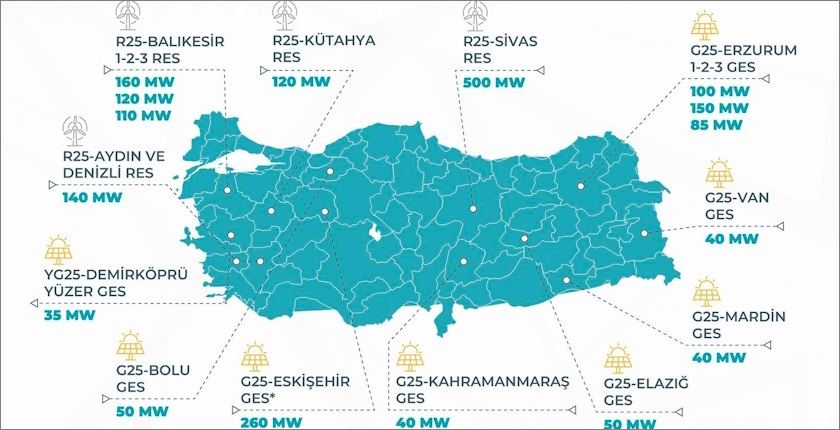
The upcoming solar energy auctions, REZ SPP 2025 (YEKA GES 2025), are for 850 MW altogether. There are ten areas in eight provinces designated for bidding: Kahramanmaraş, Mardin and Van, with 40 MW each, Bolu and Elazığ (50 MW each), Erzurum 1-3 (100 MW, 150 MW and 85 MW), Eskişehir (260 MW) and Demirköprü in Manisa province, with 35 MW.

The upcoming solar power auctions will include Turkey’s first bidding for a floating photovoltaic plant

Notably, the last one is for a planned floating solar power plant on the reservoir of the Demirköprü hydropower plant. The facility on the Gediz river, east of Izmir, is owned by state-owned Electricity Generation Corp. (EÜAŞ). Turkey now hosts only two small floating photovoltaic units, and the auction will be the first of its kind.

Applications will be received on November 4, the ministry said and added it would subsequently publish a schedule for bidding.

Wind power capacity quota is 1.15 GW

Participants can apply on November 18 for the wind energy round of auctions, REZ WPP 2025 (YEKA RES 2025). It is for an overall 1.15 GW in six areas.

Investors will compete for 500 MW in Sivas province, a 140 MW project in Aydın and Denizli, 120 MW in Kütahya and three areas in Balıkesir – 160 MW, 120 MW and 110 MW.

Winners to submit guarantees of EUR 75,000 per MW for PV projects, EUR 100,000 per MW for wind

Potential bidders will pay a fee of EUR 1,550 for each auction they apply for. They must submit letters of guarantee lasting one year and worth EUR 15,000 per MW for photovoltaics and EUR 20,000 per MW for wind power. Winners will submit 10-year guarantees before signing their contracts: EUR 75,000 per MW and EUR 100,000 per MW, respectively.

The ceiling or starting price is EUR 55 per MWh and the floor prices are EUR 32.5 per MWh for solar power and EUR 35 per MWh for wind. If bids hit the floor, another auction will be held between the competitors, like in the previous round. It is for a so-called contribution share that they are ready to pay. The minimum is EUR 10,000 per MW of planned capacity and the highest bid wins.

Successful participants can sell electricity on the free market for five years in the case of solar power plants, while the period lasts six years for wind. After that, both categories enter a 20-year scheme with a guaranteed price.

Turkey tops 120 GW in total electricity capacity

At the end of July, electricity capacity in Turkey totaled 120.2 GW, the ministry revealed. Hydropower accounted for 26.9% or 32.3 GW, compared to 23.4 GW in photovoltaics (19.5%) and 13.7 GW of wind power, translating to 11.4%.

The share of biofuel and waste was 1.9%, with 2.34 GW, and geothermal power plants had 1.73 GW altogether, which is 1.4%. Gas power plants in Turkey had 24.7 GW in combined capacity (20.6%). The remainder is coal: 21.9 GW or 18.3%.

by in News

Bajramović: Investments of BAM 1.4 billion needed for distribution grids in BiH

Necessary investments in Bosnia and Herzegovina’s electricity distribution grids by 2030 amount to BAM 1.4 billion (EUR 716 million), according to Zijad Bajramović, chairman of the Bosnia and Herzegovina committee of the International Council on Large Electric Systems (CIGRE).

The growing installation of power plants utilizing renewable energy sources is creating congestion in transmission and distribution networks, so the limited available capacity for their connection is an issue across the entire region, Zijad Bajramović told state news agency Fena. Nezavisne Novine republished the report.

An additional burden on the distribution network is expected from the electrification of transportation and increased electricity use for heating and cooling.

Energy storage is a solution for the problems emerging in the grid

Bajramović explained that new 110 kV substations are necessary, as is the completion of the ongoing transition to the 20 kV voltage level. Attention should also be paid to integrating prosumers, especially the households that both produce electricity, with solar panels on their roofs, and consume it.

He highlighted balancing as well as maintaining voltage conditions and supply quality as the main challenges from the rise in renewable electricity capacity on the grid. Energy storage is a solution for the issues.

Batteries can prevent renewables generation curtailments

Bajramović expects battery energy storage systems to play an increasingly significant role in relieving network congestion.

BESS, in his words, are a flexibility tool for absorbing excess generation locally, and temporarily easing the pressure on the transmission grid. They can prevent curtailments of power generation from variable renewable sources, he added.

Bajramović recalled that calculations have showed batteries of 225 MW / 450 MWh in total would be necessary to connect 1,500 MW of solar power capacity and 1,000 MW of wind power to the transmission network.

An increase in distribution network tariffs would provide funds for investment in strengthening and modernizing the distribution network, in his view.

Batteries are being installed at a rapid rate around the world as well as in the region. Not only private companies, but also state-owned utilities such as Romania’s Hidroelectrica and Montenegro’s Elektroprivreda Crne Gore (EPCG) are investing in such projects.

by in News

Record solar panel imports in Africa: a lifeline for a continent where 600 million people lack electricity

Half of Africa’s population still lacks access to electricity, but a record surge in solar panel imports could signal a turning point. A report by the Ember research center shows a 60% increase in solar panel imports from China to Africa. Although it is too early to make forecasts, the report suggests that the solar boom could positively impact the power systems of many African countries.

As many as 570 million people in Africa still lack reliable access to electricity, which is almost half of the continent’s population. According to data from the Energy Progress Report, in 2022, 685 million people worldwide did not have access to electricity, meaning that Africa accounts for 80% of the global population without access.

While North African nations and countries like Ghana, Gabon, and South Africa have made progress, major challenges remain in Central Africa and the Sahel region (Burkina Faso, Mali, Niger, Cameroon, Guinea, Gambia, Senegal, Nigeria, Chad, and Mauritania), where entire communities remain off the grid.

Solar energy could be an opportunity for Africa to skip the phase of relying on fossil fuels and make a significant step toward an energy transition. It is still too early to say if this process is already underway, but the latest report by Ember shows that solar power is gaining serious momentum.

The total imported capacity reached 15,032 MW

According to their analysis, from June 2024 to June 2025, solar panel imports from China to Africa increased by 60%. The total imported capacity during these 12 months amounted to 15,032 MW. Ember used Chinese customs data in the report because China is the world’s largest producer and exporter of solar panels, accounting for around 80% of the global output in 2024.

The last significant increase in solar imports was recorded in 2023, when South Africa experienced a solar boom due to its energy crisis. However, new data shows that interest in solar energy is spreading to other countries as well. Solar panel imports outside South Africa nearly tripled in the last two years, rising from 3,734 MW to 11,248 MW.

The report shows that a record solar panel import was set in as many as 20 African countries, while 25 countries imported at least 100 MW of solar capacity from June 2024 to June 2025.

Increasing solar panel imports could reduce fuel imports

Ember’s analysis suggests that solar could significantly contribute to electricity production in many African countries. If Sierra Leone installed all the panels imported in the last 12 months, it could produce the equivalent of 61% of its total electricity output from 2023. Similar results are seen in Chad — 49%.

In five countries, newly imported solar panels could contribute more than 10% of total electricity production from 2023: Liberia (25%), Somalia (15%), Eritrea (15%), Togo (11%), and Benin (10%). Overall, 16 countries have the potential to increase electricity production by at least 5%, according to the report.

In addition, solar panel imports can significantly reduce fossil fuel imports, especially diesel, on which many African countries still rely. According to 2022 research by Wood Mackenzie, 17 African countries had more diesel generator capacity than grid-connected power plants.

In some countries, such as Nigeria, if diesel imports for electricity production were stopped, savings could cover the cost of solar panels in approximately six months or even less.

Although solar expansion in Africa is accelerating, experts emphasize that the process is still in its early stages and that more data and research are needed to fully understand its potential.

by in News

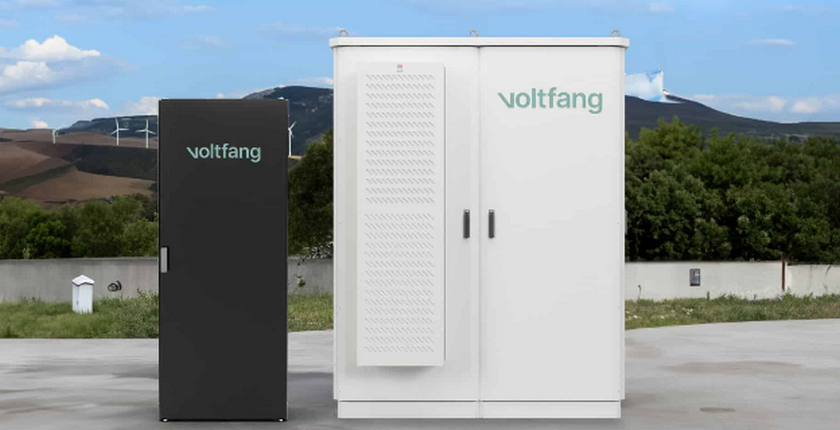
German startup Voltfang turning used EV batteries into energy storage for solar, wind

German startup Voltfang has opened a plant to manufacture energy storage units for solar and wind from used electric vehicle batteries. The company says the facility is the largest of its kind in Europe, with annual output set to reach 250 MWh in 2026.

The plant in Aachen will produce second-life battery storage systems for commercial, industrial, and large-scale applications. Its annual output is planned to rise to 1 GWh by 2030.

The facility will assemble fridge-sized energy storage units that households and companies can use to store excess electricity generated by solar panels or wind turbines.

Voltfang’s batteries can be used by homes and businesses to store energy from solar or wind facilities

The plant employs around 100 people, and Voltfang claims it is the largest facility in Europe for repurposing lithium-ion batteries.

David Oudsandji, co-founder and managing director of Voltfang, said the company’s goal is to develop high-performance battery storage systems for German and European industry.

Voltfang hopes to turn a profit by next year, but Oudsandji noted that the supply of used EV batteries is still small, as most such vehicles are only a few years old.

The supply of used electric vehicle batteries is still limited

Another obstacle is that new batteries, mainly from China, are becoming increasingly efficient and affordable, while refurbishing old ones is a complex process.

On the other hand, it is more sustainable and helps create a circular economy and ensure energy independence, according to Oudsandji.

by in News

North Macedonia’s draft law envisages renewable energy auctions for CfDs

North Macedonia drafted the Law on the Use of Energy from Renewable Sources to facilitate a decrease in fossil fuel consumption and a rise in the share of green energy. The legislation introduces market premiums under two-way contracts for difference (CfDs), which would be approved through renewable energy auctions. It also regulates net metering and net billing for prosumers and defines renewable energy communities.

The Ministry of Energy, Mining and Minerals of North Macedonia called on citizens, experts and stakeholders to submit opinions and proposals for the draft Law on the Use of Energy from Renewable Sources. It will regulate the segment separately for the first time, “following the example of a large number of countries in the region and the EU,” the statement adds.

The public debate lasts until August 30. According to the ministry, the most significant novelty is the two-way contract for difference (CfD). It is defined in Macedonian as contract for market settlement of the price difference. The bill envisages awarding such market premiums through renewable energy auctions.

It is a mechanism that guarantees financial stability for renewable energy producers and protects consumers from extreme price fluctuations, the ministry argued. The draft is fully aligned with the European Union’s energy legislation including the Renewable Energy Directive (RED3), the update adds.

Basis for renewables deployment in heating, cooling, transportation

The proposed measures aim to lower the use of fossil fuels and grow the share of renewables in gross energy consumption, the ministry added. They facilitate support for long-term investments and faster deployment of renewable energy in heating, cooling and transportation, it underscored.

Guarantees of origin of electricity are included in the bill, together with a framework for international cooperation and energy markets.

The draft establishes the basis for the establishment of renewable energy communities of citizens and companies and other legal entities such as local authorities. The scope also involves net metering and net billing for prosumers – “consumers-producers.”

Multiapartment structures can become prosumers with units up to 50 kW

While the ministry earlier said it would raise the upper capacity limit for prosumers in the segment of households to 10 kW, the ceiling in the draft law is 10.8 kW for individual homes and 50 kW for multiapartment structures. The draft also introduces the collective prosumer, a group of citizens and commercial entities residing in the same building or apartment complex.

Prosumers with units up to 16 kW would be in the net metering mechanism. Net billing is for 16 kW to 50 kW, and larger facilities are envisaged for a commercial supply scheme.

Notably, prosumers operating power plants of over 300 kW are obligated to cover the balancing expenses, the text reads.