by in News

Two small hydropower turbines to be integrated into Sofia water supply lines

Veolia received a green light from Bulgaria’s capital city to install two hydropower generators within the city’s major water supply lines. The system is envisaged to generate 12 GWh of electricity per year.

Mostly owned by local authorities and underfunded, water and sewerage utilities in Southeastern Europe are struggling to provide enough drinking water and even to remain financially stable. They are under pressure from the effects of global warming and volatile electricity costs. After a water supply firm in Bansko in southwestern Bulgaria installed a miniature in-pipe hydropower generator, the solution sparked interest throughout the country.

Sofiyska voda, Veolia’s subsidiary that produces drinking water and manages wastewater for the capital city, is about to deploy the technology. In-pipe hydropower systems could play a part in decarbonization and energy efficiency as they are simple and don’t harm the environment. Such devices utilize the flowing water’s kinetic and potential energy and excess pressure – otherwise it would be released in the form of heat through a valve and wasted.

Making Sofia sustainable, energy-efficient, modern European city

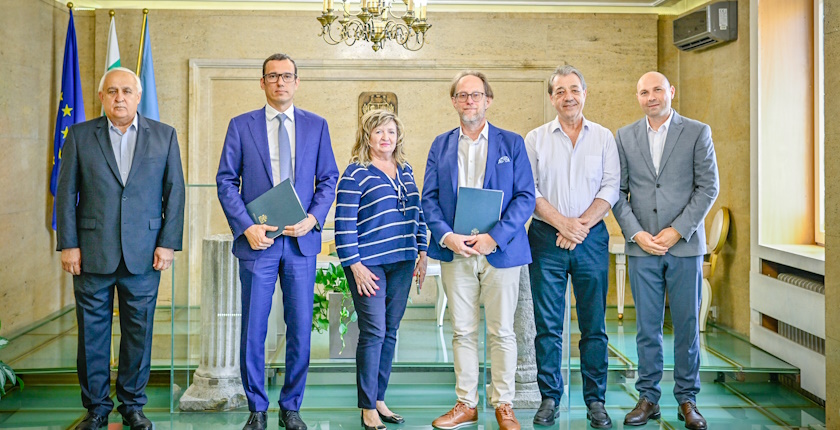
Sofia Mayor Vasil Terziev and Country Director of Veolia for Bulgaria, Greece and Albania Francois Debergh signed a memorandum of cooperation for the construction of two small hydropower plants along the city’s trunk water mains.

Earlier, the Sofia Municipal Council approved the findings of a joint working group that explored the possibilities for the investment.

“Our goal is to work consistently for making Sofia a sustainable, energy-efficient and modern European city. One of the key priorities in our vision for development is the use of renewable energy sources. Therefore, among the important fields in which we are working is the construction of small hydropower plants that will allow our city to generate clean electricity locally – with care for nature,” said Mayor Vasil Terziev.

Sofia has been planning in-pipe hydroelectric systems for more than two decades

Such facilities will help reduce the carbon footprint of the capital city and improve the management of water resources, according to the company and the Sofia Municipality, also known as Stolichna (capital) Municipality. They added that renewable energy investments are contributing to the city’s efforts toward energy independence and climate neutrality.

“The project is an example of how the existing infrastructure can be best utilized for clean energy production. After commissioning, the plants will produce approximately 12 GWh of renewable energy per year, which will account for additional annual savings of over 8,000 tonnes of CO2 emissions. The memorandum is fully aligned with Sofia’s commitments to climate neutrality and Veolia’s participation in the NetZeroCities initiative,” Debergh stated.

Sofiyska voda utility striving for energy independence

Sofiyska voda’s wastewater treatment plant in Kubratovo has been energy independent since 2015. It produces biogas from the sludge separated in the process. The parent company stressed that a pending solar power project would make Sofiyska voda the first energy-neutral water supply and sewerage operator in the region, among only a few on the global scale.

The local authority in Sofia recalled there was an idea already in 2003 for eight hydropower facilities on the water supply lines.

Another alternative hydroelectric project was recently unveiled in northwestern Bulgaria. With the ambition to build several hydroelectric plants on pontoons on the Danube river, a local company intends to install a 20 kW pilot facility in Vidin.
by in News

Romania preparing EUR 300 million in subsidies for geothermal heating, cooling

The Romanian Government has drafted a state aid mechanism for the production and transport of geothermal energy for district heating or cooling systems. The proposed scheme would be worth EUR 300 million, sourced from the European Union’s Modernisation Fund.

In addition to solar and wind energy, hydropower and battery energy storage systems, Romania is increasingly counting on geothermal potential for its energy transition and decarbonization efforts. The government in Bucharest is preparing EUR 300 million in subsidies for geothermal district heating or cooling systems, Profit.ro reported.

It drafted a state aid package that would be covered from the Modernisation Fund. It is a tool for supporting investments in renewables, energy efficiency, storage and networks and a just transition in 13 European Union member states with lower incomes. The funds are from the proceeds of the sales of greenhouse gas emission certificates within the EU Emissions Trading System (EU ETS).

The proposed subsidies are aimed at the production and transport of heat from geothermal energy, including modernization projects, to the points of connection with the district heating network, according to the document.

No need for auction as budget is sufficient for all mature projects

The budget would be divided into EUR 50 million per year through 2030. The funds are intended to cover the net additional costs of the projects – funding gaps. Typically, they are determined as the difference between the net present value of the factual scenario and the counterfactual scenario over the life of the project, the update reveals.

The government estimated that nine projects would split the available funds

There would be nine beneficiary projects, translating to EUR 33.3 million each, the government estimated. Eligible are thermal energy producers and municipal authorities and their units.

There won’t be a competitive bidding process for allocating the state aid, as the Ministry of Energy received too few mature proposals since 2023, within its exploratory public call, the document adds. The government has concluded the budget would cover the potential demand.

Bucharest, Timișoara among potential beneficiaries

State-owned Electrocentrale București (ELCEN), which produces thermal energy for the district heating system in the capital Bucharest, and National Company Bucharest Airports (CNAB), are among the entities interested in the subsidies.

Bucharest’s Sector 1 administrative authority and the Municipality of Timișoara are in the group as well. The latter, Romania’s fifth-largest city, established cooperation last year with OMV Petrom for district geothermal heating.

The article noted that Green Tech International, listed on the Bucharest Stock Exchange (BSE or BVB), is on the list. It operates geothermal wells in Călimănești-Căciulata in the country’s south. The company also supplies heat and sanitary hot water in Nădlac in Arad county in the northwest.

One other company interested in the state aid scheme is Transgex. The city of Oradea, where it is based, inaugurated an 18 MW geothermal district heating plant two months ago.

The government recently launched a EUR 56 million grant program for municipal authorities for geothermal energy projects.

In other relevant news from Southeastern Europe, Slovenia launched a EUR 51.2 million cofunding package for green district heating and cooling ten days ago, for companies and cooperatives.

by in News

Project underway for 81 MW solar park on coal mine in Montenegro

The Government of Montenegro adopted urban planning and technical conditions for a solar power plant of 81.1 MW in peak capacity in Pljevlja. The site for the facility is part of a coal mining complex.

Greece is the most successful by far in the Balkans in transforming coal land into clean energy and advanced technology hubs. The projects in the region are mostly for solar power plants. Neighboring North Macedonia is next when it comes to implementation, while Romania and Bulgaria as well as Serbia and Slovenia have made their first steps. Bosnia and Herzegovina and Kosovo* are still in the planning phase, and now Montenegro is joining them with a photovoltaic project.

The government in Podgorica adopted the urban planning and technical conditions for a solar power plant of 81.1 MW in peak capacity in Pljevlja. The facility in the country’s north called Rudnik uglja would be in the Ilino Brdo I cadastral unit, on the site of the Potrlica open cast coal mine.

According to a study submitted with the application, the connection capacity would be 62.5 MW. The coal mine’s operator and PV project developer, Rudnik uglja Pljevlja, said the location spans 62.6 hectares.

The government plans to close the Pljevlja coal plant in 2041

The firm is a subsidiary of state-owned power utility Elektroprivreda Crne Gore (EPCG), which runs the Pljevlja power plant in the same complex. It is the only coal-fired facility in Montenegro. The government plans to close the thermal power plant, currently under reconstruction, in 2041.

Rudnik uglja Pljevlja presented a just transition plan in March. It aims to establish 12 businesses to transform the region and spin them off. They include construction, transportation and the installation of a small hydropower plant called Durutovići and a photovoltaic facility.

The previous government initiated the development of a plan two years ago for an industrial complex in Pljevlja. There are several separate renewable energy projects in the area as well.

* This designation is without prejudice to positions onstatus and is in line with UNSCR 1244/99 and the ICJ Opinion on the Kosovo declaration of independence.
by in News

IRENA: 91% of new renewables units are more cost-effective than fossil fuel alternatives

The fossil fuel age is crumbling, according to UN Secretary-General António Guterres. Renewables maintained their cost leadership in global power markets, the International Renewable Energy Agency said in an annual report. In 2024, onshore wind farms were the cheapest of all versus the lowest-cost fossil fuel alternatives, by 53% on average, while photovoltaic systems were 41% cheaper.

Onshore wind power was also the cheapest in levelized cost of electricity (LCOE) terms, followed by solar power. At the same time, 91% of newly commissioned utility-scale capacity was delivering power at a cost lower than for the cheapest electricity from new fossil fuel–fired units.

The Renewable Power Generation Costs in 2024 report confirmed the price advantage of renewables over fossil fuels, with cost declines driven by technological innovation, competitive supply chains and economies of scale, the International Renewable Energy Agency said. IRENA expects cost reductions to continue, but highlighted the short-term challenges.

Geopolitical shifts including trade tariffs, raw material bottlenecks, and evolving manufacturing dynamics, particularly in China, could temporarily raise costs.

Asia, Africa and South America, with stronger learning rates and high renewable potential, could see pronounced cost declines.

Higher costs are likely to persist in Europe and North America, driven by structural challenges such as permitting delays, limited grid capacity, and higher balance-of-system expenses, according to the update. In contrast, regions like Asia, Africa and South America, with stronger learning rates and high renewable potential, could see pronounced cost declines.

The organization pointed to the need for stable and predictable revenue frameworks to lower investment risk and attract capital.

“Clean energy is smart economics – and the world is following the money,” United Nations Secretary-General António Guterres stressed. In his view, the fossil fuel age is crumbling.

Capital costs inflating LCOE in developing countries

Mitigating financing risk is central to scaling renewables in both mature and emerging markets. Instruments such as power purchase agreements (PPAs) play a pivotal role in accessing affordable finance, while inconsistent policy environments and opaque procurement processes undermine investor confidence, IRENA added.

In many developing countries of the Global South, high capital costs, influenced by macroeconomic conditions and perceived investment risks, significantly inflate the levelized cost of electricity (LCOE) of renewables.

Onshore wind power production cheapest by far of all kinds of electricity

In 2024, onshore wind farms were the cheapest of all versus the lowest-cost fossil fuel alternatives, by 53% on average, while photovoltaic facilities were 41% cheaper. Of note, the cost of battery energy storage systems (BESS) declined by 93% from 2010 to 2024, to USD 192 per kWh.

Onshore wind remained the most affordable source of new renewable electricity, with a global weighted average LCOE at USD 0.034 per kWh (USD 34 per MWh), followed by new solar, at USD 0.043 per kWh, and new hydropower plants, USD 0.057 per kWh.

Again per the levelized cost of electricity, 91% of newly commissioned utility-scale renewables capacity was delivering power at a lower cost than the most affordable new fossil fuel–based units.

That said, LCOE increased slightly for solar power, by 0.6%. Onshore wind power was 3% more expensive than in 2023, compared to 4% for offshore wind and 13% for the bioenergy segment. Meanwhile, costs declined for concentrated solar power (CSP), by 46%, followed by electricity from geothermal units, 16%, and hydropower, which slipped 2%.

Solar and wind energy prices have begun to stabilize, which is a natural sign of market maturity, the authors underscored.

Photo: Renewable energy LCOE 2010-2024, in United States dollars per kilowatt-hour (IRENA)

Clear path to affordable, secure, sustainable energy

The addition of 582 GW of renewables capacity in 2024 led to significant cost savings, avoiding fossil fuel use valued at about USD 57 billion, new data shows. Looking at all renewables in operation, the avoided fossil fuel costs in 2024 reached up to USD 467 billion, IRENA’s Director-General Francesco La Camera stated.

New renewable power outcompetes fossil fuels on cost, offering a clear path to affordable, secure and sustainable energy, he pointed out.

by in News

Slovenia kicks off grants program for renewables-based district heating, cooling

The Ministry of the Environment, Climate and Energy of Slovenia launched a public call for cofunding the construction or restructuring of district heating and cooling systems using renewable energy sources. The grants, for companies and cooperatives, are from the European Union’s cohesion support mechanisms.

The introduction of renewables-based district heating and cooling systems reduces pollution, greenhouse gas emissions and the dependence on fossil fuels. Much of the European household and business sectors still rely on gas boilers for heating. In addition, the ever-increasing severity and length of heat waves are prompting the need for a systemic cooling solution.

As part of its decarbonization and energy efficiency efforts, Slovenia launched a EUR 51.2 million cofunding package for companies and cooperatives.

The program covers the construction or restructuring of district heating and cooling systems using renewable energy sources. The first deadline for applications is September 11, followed by one on January 8, the Ministry of the Environment, Climate and Energy said.

The public call will be open until the entire sum is allocated, or at the latest until September 11, 2026, the third deadline. The EU’s cohesion funding accounts for 85% and Slovenia is providing the rest.

District heating projects that include cooling get additional points

While primarily aimed at increasing the production of electricity and heat from renewable energy sources and from waste heat, the scheme includes additional points for projects that involve cooling. The systems are required to cover at least 350 kW of consumption.

Eligible equipment includes heat pumps, solar collectors, wood biomass boilers and combined heat and power (CHP or cogeneration) solutions.

Large companies can receive up to 45% of their investment, while mid-sized ones can get 55%. The cap for small and micro enterprises is 65%. The maximum individual grant is EUR 30 million.

Slovenia’s current calls for subsidizing sustainable mobility, energy efficiency and renewables projects are worth more than EUR 300 million altogether. The government is preparing four more, for EUR 62 million overall.

by in News

Germany supports Serbia in clean energy supply, environmental protection

The Republic of Serbia and Germany’s KfW Development Bank signed a loan agreement on July 18 for EUR 135 million for the second phase of the credit program Green Transition Development Policy Operation (DPO II).

The signatures underscore the joint activities by Germany and Serbia aimed at a climate-compliant and socially just energy transition, said Chargés d’Affaires ad interim Carsten Meyer-Wiefhausen from the Embassy of the Federal Republic of Germany in Serbia. “We will continue to be with Serbia on this path and support its reform efforts,” he stressed.

Within the financing for the reforms, the World Bank, French Development Agency (AFD) and the German KfW Development Bank are supporting the Republic of Serbia in conducting its ambitious reform agenda. The goal is to accelerate the transition to energy from clean sources and align with EU standards in environmental protection and climate.

Series of reforms through DPO II

Several successful reforms have been materialized within DPO II, among which:

  1. Promoting investments that are acceptable in environmental and climate terms: Public investments are graded under environmental criteria and with regard to the risk of natural disasters, and with models developed solely for the purpose. The citizens of Serbia benefit from the government’s more sustainable investment decisions.
  2. Enhanced transparency in the public budget: The Government of the Republic of Serbia has committed to publishing information on the execution of the public budget, not only at the end of the fiscal year, but also during the year. It improves the transparency of public expenditures, primarily concerning investments in environmental and climate protection.
  3. Affordable energy prices: The Government of the Republic of Serbia has rolled out temporary targeted subsidies for households with low income, like citizens with low pensions. The share of households receiving such aid has grown from 2.7%, registered in 2021, to last year’s 8%.
  4. Improvement in waste disposal: Aligning with EU standards brings a better approach to sanitary landfills, namely from 42% (2021) to last year’s 50%. The citizens of Serbia benefit from improved waste disposal and a cleaner environment.
  5. Prepared for CBAM: Since this year, large industrial facilities and power plants report their CO2 emissions in line with EU standards. That way Serbia is more prepared for the upcoming full implementation of the European Carbon Border Adjustment Mechanism (CBAM) for carbon prices. For instance, the country would be able to price CO2 emissions and charge them.

Financing reforms within climate partnership

Germany’s contribution to financing reforms is an integral part of Germany’s climate partnership with Serbia and the entire Western Balkans. The purpose of the partnership is to support Serbia’s work on achieving its national climate goals and adapting to climate change. The key goal of the partnerships is for the transformation that is necessary to meet climate goals, in the interest of Serbian citizens, to be socially just, a just transition.

This year, Serbia and Germany are celebrating the 25th anniversary of their development cooperation. In the meantime, KfW financed projects worth EUR 2.5 billion in Serbia.

by in News

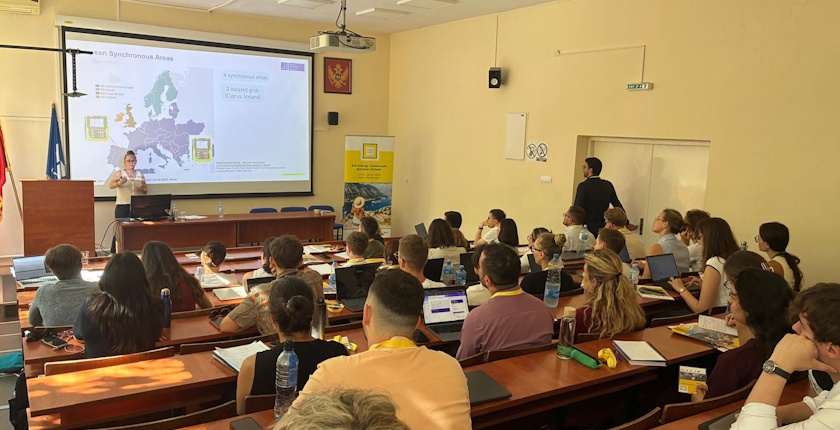
Ninth Energy Community Summer School gathers 40 participants in Montenegro from 28 countries

The ninth Energy Community Summer School has kicked off in Montenegro, gathering 40 participants from 28 countries.

On July 19, forty young professionals and researchers from 28 countries convened at the Faculty of Maritime Studies in Kotor, Montenegro, to dive deep into the pressing technical, political, and economic issues driving the energy transition, according to the Energy Community Secretariat.

“The energy transition is no longer a distant goal—it’s happening now, shaped by technology, driven by policy, and tested by crises,” Artur Lorkowski, Director of the Energy Community Secretariat, said in his welcoming address.

Lorkowski: A successful and just transition depends on bringing together diverse people and perspectives

A successful and just transition depends on bringing together diverse people and perspectives to learn and exchange ideas—just as the secretariat does each year at this summer school, and as it has done for two decades across the Energy Community: building connections, aligning energy rules, and driving the shift to cleaner, more secure energy systems in our region, according to Lorkowski.

The 2025 edition attracted 242 applications from 58 countries. At the end of the selection procedure, 40 participants representing 28 countries were selected: 18 from Energy Community contracting parties, one from an observer country, 18 from EU member states (including seven from the Visegrád Group), and the remainder from Switzerland, South Africa, and the United States.

Among them, 27 hold a master’s degree and 13 have a PhD.

The seven-day program is organized by the Energy Community Secretariat, in collaboration with the International Visegrad Fund, Friedrich-Ebert-Stiftung – Dialogue Southeast Europe (FES-SOE), and Montenegro’s state-owned companies – power utility Elektroprivreda Crne Gore (EPCG), and distribution system operator Crnogorski Elektrodistributivni Sistem (CEDIS).

The Energy Community’s long-standing commitment to building the next generation of leaders

Since its launch in 2016, the initiative has also been supported by Polis University (Tirana), Comenius University (Bratislava), Jagiellonian University (Krakow), Masaryk University (Brno), and REKK (Budapest).

The Summer School reflects the Energy Community’s long-standing commitment to building the   next generation of leaders—those who will drive long-term integration, cooperation, and sustainable energy transformation across the region, the secretariat pointed out.

Throughout the week, participants will work closely with leading experts from academia, industry, and policymaking circles to examine real-world approaches to transforming energy systems.

Through lectures, case studies, and collaborative discussions, they will explore how innovation, cross-border cooperation, and policy reform can drive decarbonization while supporting economic development and regional stability, according to the secreatariat.

by in News

Energy Community marks 20th anniversary as integration pillar for Southeastern Europe

The Energy Community Ministerial Council held its annual informal meeting in Athens, where the organization was founded twenty years ago. No contracting party is expected to meet the criteria for exemption from the Carbon Border Adjustment Mechanism (CBAM) in the electricity sector – the European Union is due to start charging the CO2 tax on January 1 – but the European Commission could propose amendments.

The Energy Community promotes integration, reforms and investments across the region, top officials stressed.

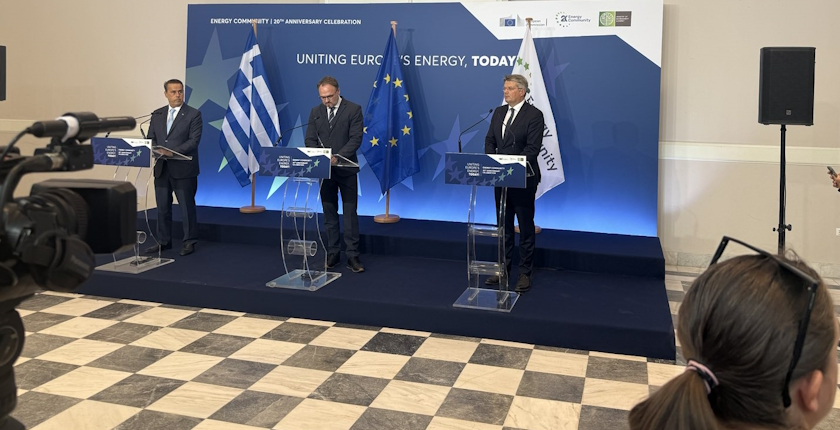
Ministers from the Energy Community contracting parties convened today at the Informal Ministerial Council in Athens to mark the organization’s 20th anniversary. The Energy Community Treaty, establishing the Energy Community, was also signed in the Greek capital. The purpose of the organization is to create a more integrated market, help attract investment and speed up decarbonization by aligning with the European Union’s rules on energy, environment and competitiveness.

In recent years, close cooperation has enabled the contracting parties to strengthen the security of supply, particularly against the backdrop of the ongoing Russian war in Ukraine, the Energy Community Secretariat said. During the annual gathering, hosted by the Greek Ministry of the Environment and Energy, the ministers underlined the need for an accelerated integration with the EU, grounded in delivering a secure, resilient energy transition.

Ministers agreed to revise capacity calculation regions

Many contracting parties are close to completing the reforms needed to launch the 18-month countdown to electricity market coupling – including full legal alignment under the Energy Community’s Electricity Integration Package and the appointment of nominated electricity market operators (NEMOs). If transposition is verified as compliant by the European Commission and the Energy Community Secretariat, integration will be initiated with the EU’s Single Day-Ahead Coupling (SDAC) and Single Intraday Market Coupling (SIDC).

Ministers made a breakthrough in regional coordination, backing a proposal by EU transmission system operators to revise capacity calculation regions (CCRs), now under review by the EU energy regulator ACER – Agency for the Cooperation of Energy Regulators. Recognizing the proposal’s importance for an effective operation of the interconnected grid, they called for swift follow-up, including the operationalization of regional coordination centers (RCCs) and system operation regions (SORs).

The aim is to boost electricity flows and grid security, especially along the north-south corridor of the Balkans, while laying the groundwork for full EU market coupling.

Decarbonization must accelerate ahead of CBAM implementation in 2026

To avoid disruptions to regional electricity trade, clarifying CBAM rules for electricity is a priority for the ministers, the secretariat pointed out. The EU is set to begin charging the carbon border tax on January 1.

Lorkowski: Electricity market integration and decarbonisation are two sides of the same coin

As no contracting party is expected to meet the exemption criteria by then, a proportionate and context-sensitive application of the mechanism is essential, as supported by active engagement in the European Commission’s ongoing call for evidence that precedes the future amendments of the CBAM regulation to be possibly proposed by the European Commission, in the secretariat’s view.

“Electricity market integration and decarbonisation are two sides of the same coin. The green energy transition unlocks meaningful integration with the EU market – and vice versa. Only by aligning policy, infrastructure, and pricing can contracting parties fully realise the benefits of clean, secure, and affordable energy,” said Energy Community Secretariat Director Artur Lorkowski.

The ministers called for carbon revenues to support vulnerable communities and mobilize investment in clean energy, stressing that just transition financing must go hand in hand with policy reforms.

Energy Community Treaty is now cornerstone of Europe’s energy architecture

Born out of crisis and shaped by cooperation, the Energy Community Treaty has become a cornerstone of Europe’s energy architecture, Lorkowski stressed. What began as an unlikely experiment in regional integration has grown into a dynamic framework – extending the EU’s internal energy market, strengthening energy security, and advancing the clean energy transition across South-Eastern and Eastern Europe, he asserted.

Energy Community contracting parties can fully integrate their electricity markets with the EU before joining it

“Our contracting parties are now on the cusp of a major breakthrough: full electricity market integration with the EU – even ahead of accession. This is the product of two decades of reform, dialogue, and trust-building. With the right political will, we can move from transposition to transformation,” Lorkowski stated.

In his view, Greece is the window for the Energy Community contracting parties to the liquefied natural gas (LNG) market and the access point to the European electricity system. Close cooperation with the Western Balkans has economic benefits for Greece – but beyond the economy, it is also about security and stability, Lorkowski said at the event.

Energy Community pioneered extension of EU energy market

Over the past two decades, the Energy Community has brought the EU closer to its neighbours, pioneering the extension of the trade bloc’s energy market across its borders, promoting integration, reforms and investments across the region, according to European Commissioner for Energy and Housing Dan Jørgensen.

“Now it is time to look ahead at our shared future based on a greener, sustainable and resilient system which will bring cheaper energy and more security to all,” he said.

Separately, in an interview with Kathimerini, Jørgensen noted that Southeastern Europe experienced electricity price spikes last summer, mainly in the evening hours, due to a lack of cross-border capacity and sufficient flexibility. The only solution is further infrastructure and market integration, as costs are separated and benefits are multiplied, he opined.

For every EUR 2 billion invested annually in cross-border infrastructure, the potential benefits reach up to EUR 5 billion, the commissioner added.

Papastavrou: Southeastern Europe’s is at disadvantage as its electricity market is not fully integrated with EU

Southeastern Europe is still not fully integrated with the EU, which is a structural disadvantage for citizens, said Minister of Environment and Energy of Greece Stavros Papastavrou.

“I am very optimistic after the first session of the meeting, because all the contracting parties expressed commitment, a strong commitment, to market coupling,” he stated. Papastavrou said a lot of work is required in the electricity sphere to bridge the gap for the prosperity of citizens and the entire region.

Energy integration is one of the pillars of EU accession

Energy integration is not just a technical issue – it is one of the fundamental pillars of the EU accession process, the minister told his counterparts from the Energy Community.

“Greece, too, has faced the same challenges that many of you are experiencing today. Back in 2005, our energy system was almost entirely dependent on lignite, by more than 60%. Today, we have reduced lignite use by an impressive 91% – a clear demonstration of our strong commitment to a clean, sustainable, and resilient energy future,” he stated.

Serbia’s Đedović Handanović sees possibility for market coupling with Hungary already next year

Serbia was the first in the region to fulfill the conditions for market coupling with the EU, the country’s Minister of Mining and Energy Dubravka Đedović Handanović said. She urged for the verification process to be accelerated, so that Serbia can connect with the Hungarian market in 2026 and, through it, with the other EU member states.

The minister acknowledged the challenge of the upcoming full implementation of CBAM.

Photo: Minister Dubravka Đedović Handanović (Nenad Kostić / Ministry of Mining and Energy)

Serbian institutions analyzed the available options from the study that the European Commission published. “We think that carbon pricing should be introduced gradually, in phases and fairly, with support from funds from the European Union,” she said.

The minister stressed that revenues from carbon taxes would be directed, like in the EU, to decarbonization, renewables, energy efficiency, just transition and support to companies.

“Without an adequate period of time for the transition from coal to renewable energy sources, without modernizing the network, increasing RES capacities and adjusting the industry, higher carbon costs can only increase the financial pressure on our industry and consumers, which is already happening in the EU, instead of resulting in a significant emissions reduction in the short term. Solving these issues requires careful planning, a phasein and the EU’s targeted financial support, so that climate goals would be aligned with the economic reality,” Đedović Handanović said.

She recalled that EU member states had more than two decades to gradually adjust to carbon emission levies. Đedović Handanović affirmed that Serbia is willing to continue its alignment with the EU’s energy and climate policy.

“All the reform measures that we are conducting are primarily for the benefit of our citizens and companies, and we won’t make decisions overnight that would jeopardize our energy stability,” she said.

by in News

Clean transition, decarbonization among priorities in EU’s draft budget

Within the European Union’s proposed budget for the period from 2028 to 2034, the EUR 409 billion European Competitiveness Fund is for investments in strategic technologies, including for the clean transition and decarbonization. The new Connecting Europe Facility (CEF), worth EUR 81.4 billion, would finance the completion of Trans-European Networks and foster the EU’s green and clean transition in energy and transportation.

The European Commission proposed the next long-term budget of almost EUR 2 trillion, of which 35% would be earmarked for climate and environment. Energy infrastructure spending in the so-called Multiannual Financial Framework (MFF) for 2028-2034 will be EUR 29.5 billion, five times higher than in the previous seven-year period, it said, arguing it would reinforce energy independence and accelerate the clean transition.

The entire proposed sum amounts to 1.26% of the expected gross national income, on average. The framework is aimed at an independent, prosperous, secure, and thriving society and economy, the update adds.

“Europe faces an increasing number of challenges in numerous areas such as security, defence, competitiveness, migration, energy and climate resilience. These are not temporary but reflect systemic geopolitical and economic shifts that require a strong and forward-looking response,” the EU’s top executive body said.

Adapting to local needs

The European Commission pointed out that the budget would be tailored to local needs. National and regional partnership plans based on investments and reforms would be introduced, for targeted impact where it matters most and ensuring a faster and more flexible support for more economic, social and territorial cohesion across the union, according to the outlined measures.

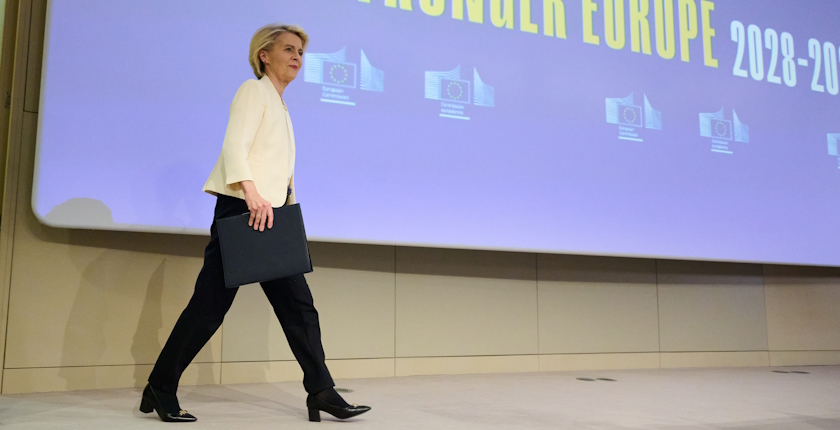
“Our new long-term budget will help protect European citizens, strengthen Europe’s social model and make our European industry thrive,” European Commission President Ursula von der Leyen stated.

For the first time, the spending plan would enable member states to invest more in the EU objectives, with loans of up to 150 billion EUR altogether. “We will call it Catalyst Europe. The loans are backed by the EU budget. It targets common European priorities. You can invest it – for example in defence industry or energy infrastructure or strategic technologies,” Von der Leyen said.

The budget plan includes a European Competitiveness Fund, worth EUR 409 billion, for investment in strategic technologies. Operating under one rulebook, and offering a single gateway to funding applicants, it aims to simplify and accelerate EU funding and catalyse private and public investment. The focus is on four areas:

  • clean transition and decarbonization,
  • digital transition,
  • health, biotech, agriculture and bioeconomy,
  • defense and space.

In close connection with the European Competitiveness Fund, the EU research framework, with its flagship Horizon Europe worth EUR 175 billion, will continue to finance world-class innovation, the commissioners revealed.

Commissioners line up EUR 81.4 billion in budget for next Connecting Europe Facility

The next Connecting Europe Facility (CEF), worth EUR 81.4 billion, would finance the completion of Trans-European Networks and foster the EU’s green and clean transition in energy and transportation. It covers cross-border projects for energy, transportation and military mobility that are essential for competitiveness and security and reducing strategic dependencies.

To simplify external action financing, the EU’s top executive body envisaged an item called Global Europe, of EUR 200 billion, to maximise impact on the ground and improve visibility of EU external action in partner countries. It would allow the EU budget to step up support to candidate countries and prepare for their accession.

Among other segments, the European Commission said it plans to direct 75% of revenues from the Carbon Border Adjustment Mechanism (CBAM) to the EU budget. It expects the resource to generate EUR 1.4 billion per year.

by in News

Bulgarian battery factory Exeron X-BESS gets EU strategic status

Bulgaria-based International Power Supply (IPS) is opening a factory for battery energy storage systems using proprietary technology. The Exeron X-BESS is one of only six strategic projects in the European Union with a designation under the Net Zero Industry Act.

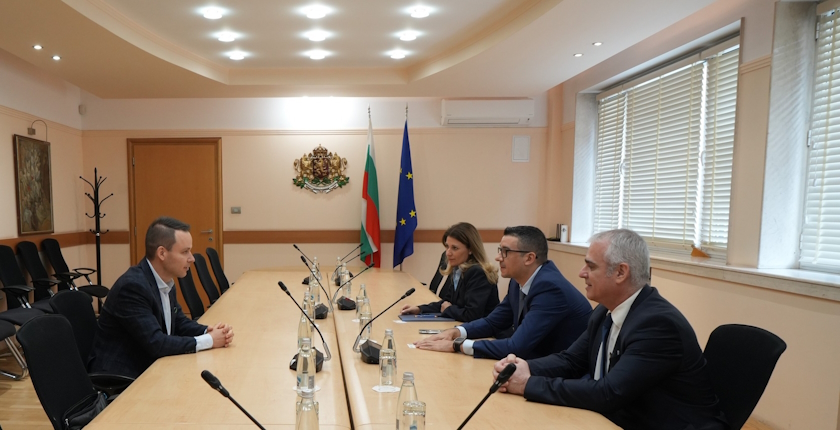
Minister of Economy and Industry of Bulgaria Petar Dilov met with Chief Executive Officer of International Power Supply (IPS) Alexander Rangelov, as the company’s investment in the production of BESS entered the EU’s public registry of strategic projects under NZIA. It is one of only six endeavors that made it to the list so far.

The Exeron X-BESS factory will put Bulgaria on the world map for the production of battery energy storage technologies, the ministry said. It is fully aligned with the NZIA goals for secure and sustainable supply of net zero emission technologies and the expansion of production capacities and supply chains, it added.

Exeron X-BESS to become key factor in EU’s clean technology chain

The government is promoting energy efficiency and the security of supply for industrial production in Bulgaria, especially in the segment of zero emission technologies, Dilov stresed. “The project is an important step towards including Bulgaria among European producers of environmental technologies and the implementation of high-tech solutions to mitigate climate change,” the minister stated.

He expressed the belief that the project would become a key factor in the clean technology chain. It is a step forward for Bulgaria’s participation in the European and global industry that is transforming the energy sector, Dilov pointed out.

The X-BESS line includes a battery management system developed by IPS

IPS has patented the entire Exeron X-BESS technology. Production should begin in the autumn. The facility is in the Hemus high-tech industrial park in Kremikovtzi (Kremikovtsi) near Sofia.

The project entails the creation of 65 jobs by the end of the year, of which a quarter would be in development and engineering. Two thirds of the employees would be technical specialists.

The majority owner of IPS, with 65.5%, is Power Technology Investment Group. It is controlled by the family of the founder Stoil Rangelov Trifonov. SIL Energy Invest has 31.5%. The Capital Investments Fund (CIFund) of the Bulgarian Development Bank holds the remaining 3%.

The company mainly uses European parts and the lithium-iron-phosphate (LFP) battery cells are from China. IPS has a proprietary battery management system (BMS) for the X-BESS line.

NZIA is fast-tracking permits for strategic projects

The NZIA designation secures a priority status at the national level for all administrative processes, faster permitting including environmental approvals, and advice on financing.

Of the six projects in the list, three are in Germany. Carbon2Business and MoReTec are for the decarbonization of a cement plant and chemicals production, respectively, while the one branded Resilience develops renewable energy technologies.

The remaining two are located in Sweden. NKT HV Cables AB is an endeavor for new electricity grid technologies including electric charging for transportation and grid digitalization solutions. The Talga Battery ANODE Refinery ONE is the only other project in the battery and energy storage segment.