by in News

CWP Europe completes rooftop PV plant for Henkel Serbia

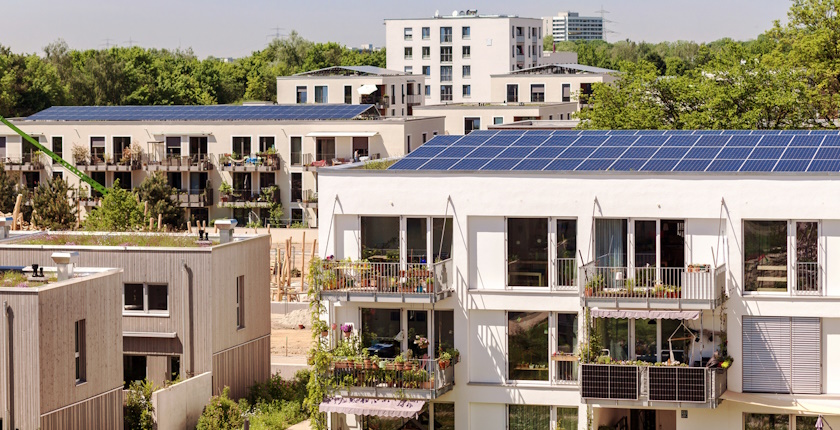
In partnership with Resalta, CWP Europe led the investment in a rooftop photovoltaic system of 6 MW in peak capacity in Kruševac in Serbia. They completed the project under an innovative ESCO model, contributing to the decarbonization efforts of the manufacturer of detergents and other chemical products.

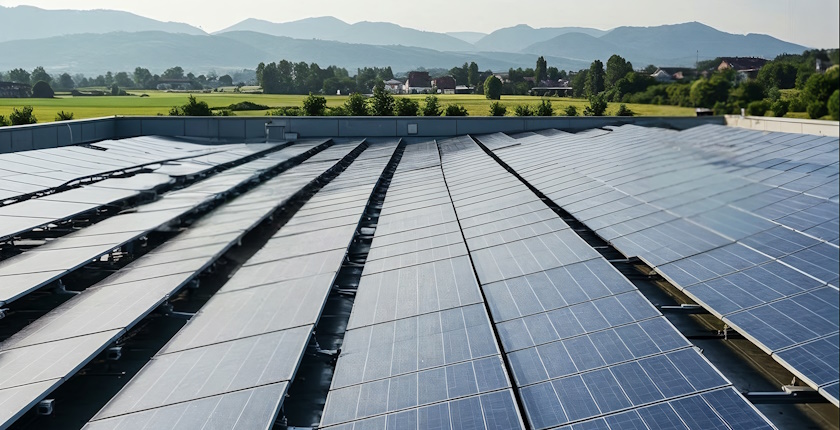
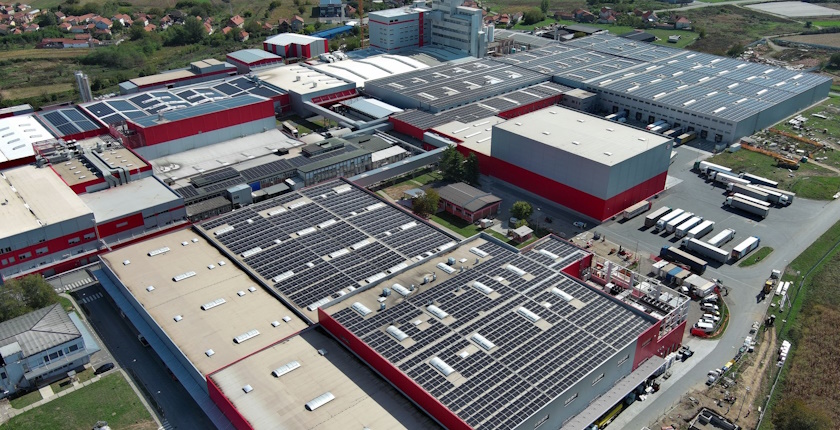
CWP Europe has successfully completed and commissioned a rooftop solar power plant for Henkel Serbia’s facility in Kruševac. The facility has 6 MW in peak capacity. Developed in partnership with Resalta and financed by UniCreditBank, the project was realized under an innovative ESCO (energy services company) model, with CWP Europe as the key investor.

Now fully operational, the photovoltaic plant is producing an estimated 6,278 MWh of green electricity annually, meeting 21% of the facility’s total energy consumption. The solar power plant will ensure optimal performance for the next 15 years.

The new PV system’s operations prevent an equivalent of 5,857 tons of carbon dioxide emissions per year, according to the update.

Special investment in distributed generation segment

While CWP Europe’s core focus remains on large-scale renewable energy assets across the region, this rooftop project represents a targeted engagement in the distributed generation space – undertaken to support a leading industrial partner in advancing its decarbonization and sustainability objectives.

With a proven track record in developing impactful renewable energy projects, the company is proud to have brought its expertise and investment capacity to a project that sets a new benchmark for industrial decarbonization in Serbia, the statement reads.

CWP Europe has more than 10 GW in its project pipeline

CWP Europe is a leading renewable energy project development company in Southeast Europe. Over the past 17 years, CWP has invested in sustainable development and the energy transition, successfully developing the largest wind farms in the region including the largest wind farm in Europe – the 600 MW Fântânele-Cogealac project in Romania.

It is currently developing over 10 GW of renewable energy project capacity. CWP Europe is a joint venture between CWP Global, a leading global renewable energy company, and Mercuria Energy Trading, one of the world’s largest independent energy traders, with over USD 140 billion in revenue.

[wpcc-iframe title=”CWP x Henkel Serbia – 6 MWp Rooftop Solar Plant Cutting 6,000 Tons CO₂ Annually” width=”500″ height=”281″ src=”https://www.youtube.com/embed/5nY4-zq5ckc?feature=oembed” frameborder=”0″ allow=”accelerometer; autoplay; clipboard-write; encrypted-media; gyroscope; picture-in-picture; web-share” referrerpolicy=”strict-origin-when-cross-origin” allowfullscreen=””]
by in News

Heat pump sales in Europe plunge in 2024

The European Union has an ambitious goal to lift the number of heat pumps to 60 million by 2030. Still, total sales of the devices in 19 European countries fell by a combined 22% last year, according to the European Heat Pump Association (EHPA).

As part of its energy transition strategy, the EU aims to have 60 million heat pumps in operation by 2030 at the latest. It would allow at least half of European buildings to be heated, and partly cooled, using renewable energy sources. Gas consumption in buildings would be 40% lower than in 2022, saving EUR 60 billion in energy imports and significantly cutting CO₂ emissions.

More than 25 million heat pumps have already been installed in Europe

The intermediate target of 20 million by 2026 was surpassed before the end of 2024, EHPA data shows. Last year, Europe had more than 25 million heat pumps installed. However, reaching 60 million units in less than six years now appears increasingly challenging.

The report notes that after steady sales growth through 2022, the market declined in both 2023 and 2024. Last year, sales in the observed group of 19 countries fell by 22%. The steepest drops were recorded in the Czech Republic (64%) and Germany (48%).

Photo (EHPA): Number of heat pumps sold every year from 2012 to 2024

The report’s authors warned that if current trends continue, the EU could fall short by about 15 million units in 2030, or 25% below the target.

Leading markets and new data from Southeastern Europe

France and Italy had the strongest sales in 2024, with 546,000 and 348,000 units, respectively. However, looking at the share of households using heat pumps, Scandinavian countries are in the lead.

Scandinavian countries are in the lead in the household heat pump segment

Norway has 632 heat pumps per 1,000 households, followed by Finland, with 524. Sales remained strong in 2024, with 48 and 33 heat pumps per 1,000 households, the highest levels in Europe.

Photo (EHPA): Number of heat pumps sold per 1,000 households in 2024

EHPA published sales estimates for nine additional European countries for the first time, including some that Balkan Green Energy News tracks. Sales in Bulgaria and Croatia amounted to 8,000 units each last year. In Cyprus, 3,000 were bought, compared to 18,000 in Greece, 4,000 in Latvia, 1,000 in Luxembourg, 6,000 in Malta, 10,000 in Romania and 13,000 in Slovenia. There are no historical data for the countries in the group for comparison.

The estimates are based on 2023 sales figures from the EurObserv’ER Heat Pump Barometer 2024, supplemented with 2024 sales estimates provided by heat pump manufacturers.

UK records the largest growth in heat pump sales

The United Kingdom, Ireland, and Portugal were the only countries achieving growth last year. Although the total number of heat pumps in the UK remains relatively small, sales increased by 56% in 2024.

Photo (EHPA): The table shows the number of units sold in 2024, followed by the decrease or increase in sales from 2023 and the total number of heat pumps at the end of 2024 by country

According to EHPA, the progress was driven by a combination of clear and stable policy, the government’s Boiler Upgrade Scheme – offering up to GBP 7,500 per household to replace fossil fuel systems – as well as removing hybrid systems from subsidy schemes, raising public awareness, and increasing the number of trained installers.

Ireland also saw strong sales growth, 19%, underpinned by long-term policy stability and a clear commitment to renewable energy. It ranks fifth in Europe in the share of heat pumps among households. The market initially grew in the new-build sector, where heat pumps have become standard, while the renovation segment is expanding thanks to subsidies and a rising carbon tax.

Additional measures needed

EHPA pointed out that stronger strategic support at the EU level, along with stable legislation and regulations, is crucial for achieving the targets.

“More heat pumps is a win-win for Europe – and it must also be the smart choice for consumers. To get there, electricity prices must be made more competitive, good long-term support schemes put in place and installers trained up, so buying a heat pump is affordable and easy,” said EHPA Executive Director Paul Kenny.

by in News

North Macedonia’s draft law envisages renewable energy auctions for CfDs

North Macedonia drafted the Law on the Use of Energy from Renewable Sources to facilitate a decrease in fossil fuel consumption and a rise in the share of green energy. The legislation introduces market premiums under two-way contracts for difference (CfDs), which would be approved through renewable energy auctions. It also regulates net metering and net billing for prosumers and defines renewable energy communities.

The Ministry of Energy, Mining and Minerals of North Macedonia called on citizens, experts and stakeholders to submit opinions and proposals for the draft Law on the Use of Energy from Renewable Sources. It will regulate the segment separately for the first time, “following the example of a large number of countries in the region and the EU,” the statement adds.

The public debate lasts until August 30. According to the ministry, the most significant novelty is the two-way contract for difference (CfD). It is defined in Macedonian as contract for market settlement of the price difference. The bill envisages awarding such market premiums through renewable energy auctions.

It is a mechanism that guarantees financial stability for renewable energy producers and protects consumers from extreme price fluctuations, the ministry argued. The draft is fully aligned with the European Union’s energy legislation including the Renewable Energy Directive (RED3), the update adds.

Basis for renewables deployment in heating, cooling, transportation

The proposed measures aim to lower the use of fossil fuels and grow the share of renewables in gross energy consumption, the ministry added. They facilitate support for long-term investments and faster deployment of renewable energy in heating, cooling and transportation, it underscored.

Guarantees of origin of electricity are included in the bill, together with a framework for international cooperation and energy markets.

The draft establishes the basis for the establishment of renewable energy communities of citizens and companies and other legal entities such as local authorities. The scope also involves net metering and net billing for prosumers – “consumers-producers.”

Multiapartment structures can become prosumers with units up to 50 kW

While the ministry earlier said it would raise the upper capacity limit for prosumers in the segment of households to 10 kW, the ceiling in the draft law is 10.8 kW for individual homes and 50 kW for multiapartment structures. The draft also introduces the collective prosumer, a group of citizens and commercial entities residing in the same building or apartment complex.

Prosumers with units up to 16 kW would be in the net metering mechanism. Net billing is for 16 kW to 50 kW, and larger facilities are envisaged for a commercial supply scheme.

Notably, prosumers operating power plants of over 300 kW are obligated to cover the balancing expenses, the text reads.

by in News

Kragujevac heating plant begins ash removal from disposal site in city center

District heating plant Energetika has begun removing coal ash from an uncovered disposal site that has been polluting air and soil for years in the heart of Kragujevac, Serbia’s fourth-largest city. The effort is part of a project financed by an EUR 18 million loan from the European Bank for Reconstruction and Development (EBRD), to decarbonize the local district heating system.

The ash from Kragujevac is transported to cement plants in Kosjerić and Popovac to be used in the production of cement and construction materials, in line with circular economy principles, according to Serbian Minister of Environmental Protection Sara Pavkov.

On the first day, about 75 tons of ash was removed from the site, with plans to transport a total of 60,000 tons over 24 months.

The ash will be used in cement production in Kosjerić and Popovac

Ash removal is the second phase of the district heating decarbonization project in Kragujevac. In the first phase, old boilers were replaced with gas-fired units, significantly reducing air pollution, according to Dejan Ružić, deputy mayor of Kragujevac. This marked the end of coal use in the city’s district heating system.

The EBRD approved the loan for the project in 2021. Of the total amount, EUR 14 million was earmarked for boiler replacement, together with up to EUR 4 million for ash removal.

In the first phase, coal-fired boilers were replaced with gas-fired units

The bank said at the time that gas-fired boilers would have a capacity of 110 MW and that CO2 emissions from district heating would be cut by an estimated 66%, with sulfur dioxide and particulate matter (PM) emissions eliminated.

The Ministry of Environmental Protection has hired Novi Sad-based engineering and consultancy firm AG Institut to monitor the ash disposal services under a EUR 73.900 contract. The works are targeted for completion by July 15, 2027.

Aleksandar Lazović, general manager of the district heating plant, said the works would be carried out in line with the highest environmental standards, in a covered area, to prevent ash from dispersing into the environment.

District heating decarbonization in several Serbian cities

In June this year, Serbia and the EBRD signed a EUR 50 million loan to finance a series of air quality projects in Belgrade, Niš, Valjevo, Zaječar, Novi Pazar, and Smederevo, which had been mapped as cities with the largest excesses of harmful emissions.

The planned projects include replacing outdated boilers running on fuel oil, coal, and other air-polluting fuels with modern and sustainable heat energy sources, such as heat pumps, biomass, and industrial waste heat.

by in News

Greek coal region of Megalopolis opens new chapter after lignite

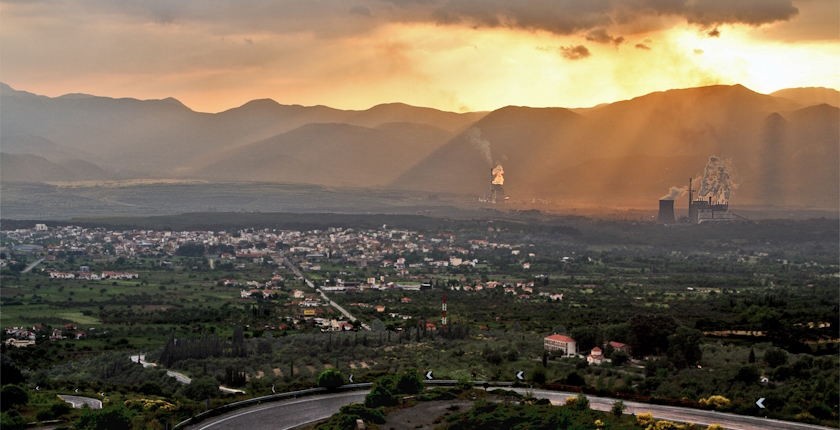
Last year, for the first time in decades, no smoke rose out of coal plants in the Peloponnese peninsula. The last two units had 500 MW together. Megalopolis is one of the two coal regions in Greece, along with Western Macedonia in the country’s north.

According to Public Power Corporation (PPC or DEI) the units Megalopolis-3 and Megalopolis-4 have now been permanently retired. Under the government-controlled utility’s plan to phase out coal completely next year, all such power plants stopped operating by now, with the exception of Ptolemaida 5, of 660 MW, which entered into operation last year. To maintain the security of supply, two units are kept in reserve, also in Western Macedonia in northern Greece.

PPC has produced a study for the reconstruction of the Megalopolis thermal power station, intending to accommodate other activities. Similar works are already underway in the local lignite mine.

New energy investments underway

The group’s investment plan involves various renewable energy and storage projects in Megalopolis to support the area’s energy transition. It is building two photovoltaic farms of 125 MW each, as part of a 490 MW cluster in the area.

The plan includes a 181 MW pumped storage hydropower station in the former lignite mine.

Based on the government’s Just Transition Development Program, Megalopolis will also host a battery factory, by Enercells, as well as two data centers, by Eunice and Kiefer, of 5 MW each. The investments have been approved by the Ministry of Economy and Finance, to seek funding from the European Union’s Just Transition Fund (JTF).

PPC expressed the belief that data centers are important for coal regions. Earlier this year, the group’s CEO George Stassis said they are ideal for such investments as the land and grid connections are already available. PPC is planning a 300 MW data center in Western Macedonia, but it hasn’t announced anything similar for Megalopolis yet.

by in News

EU donates EUR 240 million to Serbia for environment, energy efficiency

The European Union approved EUR 240 million in non-repayable assistance to Serbia from pre-accession funds for projects worth an overall EUR 325.2 million. The investments, intended for the period through 2032, are for waste and wastewater management, energy efficiency improvement and the transition to renewable energy sources.

Serbia and the European Union signed a financing agreement for the Multiannual Operational Programme on Environment and Energy, worth EUR 325.2 million. It includes EUR 240 million in non-repayable funds from the Instrument for Pre-accession Assistance, and Serbia is providing the rest.

State institutions will run the mechanism under an indirect management system, in accordance with the way that EU member states conduct programs within the cohesion and regional development funds. The agreement is another type of support in EU accession, the Ministry of European Integration said.

Grants also intended for green energy, waterworks

Serbia’s National IPA Coordinator and State Secretary at the Ministry of European Integration Mira Radenović Bojić said the agreement enables significant financial support for improving environmental protection and further developing the energy sector.

“This way we secured support for sustainable waste management, improvement of wastewater treatment infrastructure and the promotion of energy efficiency measures in public buildings and households,” she stressed. Radenović Bojić added that the assistance package also covers the development of capacities for the transition to renewable energy sources as well as the improvement of public waterworks and sewerage systems.

The program involves measures to protect air quality, aiming to lower harmful emissions and improve public health.

“In addition to renewing or building infrastructure, the program will support the development of strategic documents and plans for the harmonization with European Union standards. We will invest in capacity building of local and national institutions and in the development of technical documentation. Ultimately, the program will enable better cooperation with the relevant national and international stakeholders including civil society organizations and the private sector, in order to secure integrated implementation and improvement of the sustainable development policy,” Mira Radenović Bojić pointed out.

Von Beckerath: Our joint future depends on green, just transition

The agreement is another example of the EU’s strong and long-standing commitment to supporting Serbia on its path toward the EU, said the new Ambassador of the EU in Serbia Andreas von Beckerath.

“Environmental protection and sustainable energy are not only the core of the European Green Deal, but they are key to improving the quality of life of all citizens. With this significant investment, in synergy with the new Growth Plan for the Western Balkans, our goal is to accelerate Serbia’s alignment with EU standards and help the materialization of tangible benefits for citizens and the environment. Our joint future depends on this green and just transition, and we are delighted that we will go down that path together,” the chief of the Delegation of the EU stated.

The plan includes EUR 141.9 million for waste and wastewater and EUR 140 million for air quality and energy efficiency

The program, which covers the programming years 2024-2027, will be implemented from 2025 to 2032. It consists of EUR 141.9 million for waste and wastewater management and waterworks, EUR 140 million for air quality and energy efficiency and EUR 43.3 million for technical support.

There is EUR 44.9 million in the program earmarked for 2024, followed by EUR 108 million for the current year and EUR 76.8 million and EUR 95.5 million for the next two.

by in News

Council of Europe urges North Macedonia to improve environment, protect Romas from disproportionate risks

North Macedonia should bridge the gap between commitments and reality on human rights of Romas and environmental protection, the Council of Europe said. In his new memorandum, the organization’s Commissioner for Human Rights Michael O’Flaherty raised concerns about environmental risks disproportionately affecting Romas, including air and waste pollution, lack of sanitation and exclusion from public services.

As for broader environmental issues, the official noted that poor implementation of laws negatively impacts health and human rights, with cities like Skopje, Bitola, and Tetovo among the most polluted in Europe. O’Flaherty also warned of pressure on journalists and activists.

The Council of Europe Commissioner for Human Rights Michael O’Flaherty published a Memorandum on the Human Rights of Roma and on Issues Related to the Right to a Clean and Healthy Environment in North Macedonia, following his visit in April. He acknowledged the country’s significant efforts and political will to address human rights challenges faced by the Roma community.

Nevertheless, the official observed a gap between the policy framework and its implementation. O’Flaherty expressed concern that Romas continue to face discrimination, poverty and social exclusion. The government responded that relevant authorities would give careful attention to his recommendations.

The commissioner pointed to environmental risks disproportionately affecting Romas, including air and waste pollution, lack of sanitation and exclusion from public services.

Turning to broader environmental issues, he noted North Macedonia’s strong legal and policy framework and international commitments, including constitutional recognition of the right to a healthy environment, criminalizing ecocide and pledging to phase out coal. “Yet, poor implementation negatively impacts health and human rights, with cities like Skopje, Bitola, and Tetovo among the most polluted in Europe. Challenges remain in waste management, pollution control, and public access to environmental information,” the Council of Europe said.

Marginalized Roma communities disproportionately exposed to environmental hazards

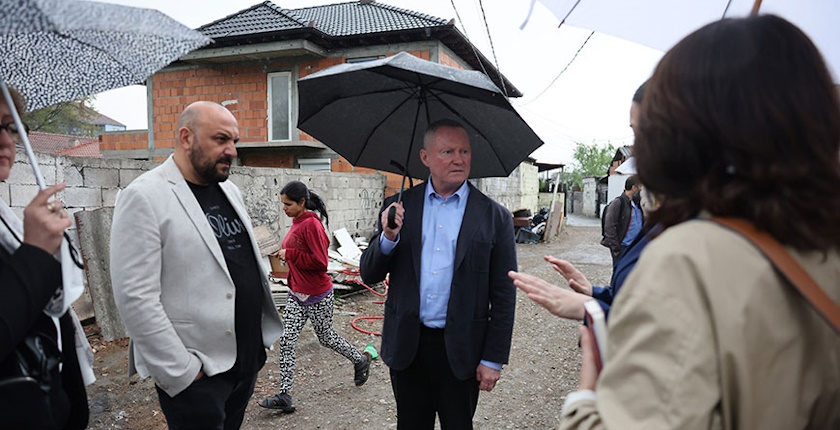
O’Flaherty was informed that marginalized Roma communities experience disproportionate exposure to environmental hazards due to poverty and their living conditions. He visited a settlement in Skopje that has not been legalized in Skopje.

In such settlements, Romas often live in precarious conditions, with dwellings prone to mould and lacking access to services that are essential for living in a healthy environment, including sanitation facilities, sewage systems and clean running water, the memorandum reads.

Air quality meters have been installed in other parts of the city of Skopje, but not in the Roma-dominated Šuto Orizari

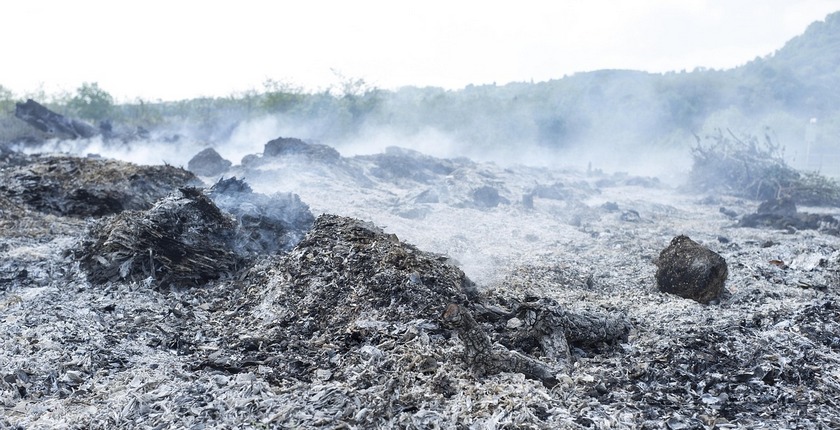
“The commissioner is concerned that vulnerable Roma communities are overexposed to air pollution because of poor quality housing and because they burn wood, plastic and waste for heating, due to poverty and a lack of access to safe energy sources. This increases the risk of respiratory illnesses, chronic diseases and reduces life expectancy. In this regard, the commissioner notes that air quality meters, designed to measure spikes in pollution levels and warn the inhabitants, have been installed in other parts of the city of Skopje, but not in the municipality of Šuto Orizari,” mostly inhabited by Roma, the report adds.

The official was informed that areas inhabited by Romas are sometimes excluded from public garbage collection, exposing them to waste pollution and further health risks.

Efforts underway to provide jobs, equipment to informal waste recyclers

O’Flaherty highlighted the recent efforts to equip a local kindergarten in Šuto Orizari with solar panels for heating and to increase the number of parks. In addition, he said he was impressed by a social enterprise that works for the recognition of the contribution of informal waste recyclers to environmental protection and supports them by providing formal employment and electric tricycles for the transport of waste.

The commissioner recommended that the authorities design and implement measures to uphold the community’s right to a healthy environment, as enshrined in the constitution. It includes access to adequate housing, notably as regards the requirements of adequate location and access to public services like clean water, sanitation and the removal of waste and toxic waste.

Persistent challenges in waste management including illegal landfills

The Council of Europe’s Commissioner for Human Rights acknowledged that North Macedonia has ratified multiple international and regional conventions and agreements related to the protection of nature, the atmosphere, tackling climate change, and dealing with chemicals, waste, soil and industrial accidents. It is one of the few member states of the Council of Europe to have introduced the crime of ecocide.

On the other hand, O’Flaherty raised the issue of the lack of implementation of laws and strategic objectives. He is concerned about negative impacts on people’s health of high levels of air pollution, with three cities in the country – Skopje, Bitola and Tetovo – regularly exceeding safe levels of polluting particles and ranking among the 10 most polluted cities in Europe, and sometimes the world, according to the memorandum.

O’Flaherty acknowledged that serious environmental issues cannot be resolved overnight and praised North Macedonia for numerous efforts

The official wrote about the negative impacts on human rights and the environment posed by persistent challenges in waste management and the proliferation of illegal landfills, disproportionately affecting vulnerable communities including Romas.

Serious environmental problems cannot be resolved overnight, he underscored. The commissioner praised the government for efforts that include increasing the number of electric buses, tax reduction on other electric vehicles, work toward an energy system based on gas and the phasing out of coal, as well as ongoing projects to address toxic sites and illegal landfills.

Access to justice largely absent

O’Flaherty learned that access to justice in cases of environmental human rights violations, including the right to a healthy environment, has been largely absent in North Macedonia.

Individuals supported by nongovernmental organizations working on human rights and the environment were unsuccessful in several environmental court cases. The Macedonian Young Lawyers Association (MYLA or MZMP) reported having brought six cases since 2019 concerning air pollution, waste management and water pollution. They were dismissed, with courts arguing they do not have the competence to deal with such matters.

NGOs also report that in some cases the Aarhus Convention and international law are incorrectly interpreted by domestic courts.

The commissioner observed that environmental activists are generally free to carry out their work in North Macedonia. However, he expressed concern about an increase in the use of vexatious lawsuits or so-called strategic lawsuits against public participation (SLAPPs) to silence investigative journalists and activists.

One example is Investigative Reporting Lab Macedonia (IRL), a journalistic NGO. It was ordered to pay thousands of euros of legal costs in the context of a defamation complaint about its documentary entitled Conspiracy Against the Air. Threats of the use of legal defamation and smear campaigns online are also used to silence activists, the Council of Europe added in the memorandum.

[wpcc-iframe title=”Редакција | Заговор против воздухот | Eпизода 1 | ИРЛ” width=”500″ height=”281″ src=”https://www.youtube.com/embed/asdHr27RgqI?feature=oembed” frameborder=”0″ allow=”accelerometer; autoplay; clipboard-write; encrypted-media; gyroscope; picture-in-picture; web-share” referrerpolicy=”strict-origin-when-cross-origin” allowfullscreen=””]
by in News

WindEurope: EU must boost investment in ports, ships to meet offshore wind targets

Europe needs to increase investment in ports and shipbuilding, which play a crucial role in offshore wind development, to achieve its goals in this energy segment, according to wind industry association WindEurope. The European Commission’s upcoming strategies for ports and the maritime industry are expected to create conditions for the necessary investment.

The European Union aims to increase its offshore wind capacity from 36.6 GW to 84 GW by 2030, but one of the most pressing challenges it faces is the lack of timely investment in vessel manufacturing and port infrastructure, WindEurope warns.

To meet its 2030 energy security targets, the EU must install at least 10 GW of offshore wind each year. After 2030, this figure will have to increase to 15 GW a year, says WindEurope, noting that robust and resilient port infrastructure and supply chain are key for the achievement of the offshore goals.

After 2030, the EU will have to install 15 GW of offshore wind a year

Over the past three years, over EUR 6.7 billion has been invested in port infrastructure and new vessels across the EU, but a further EUR 6.4 billion is required, the association explains, noting that the European Commission is now working on its EU Ports Strategy.

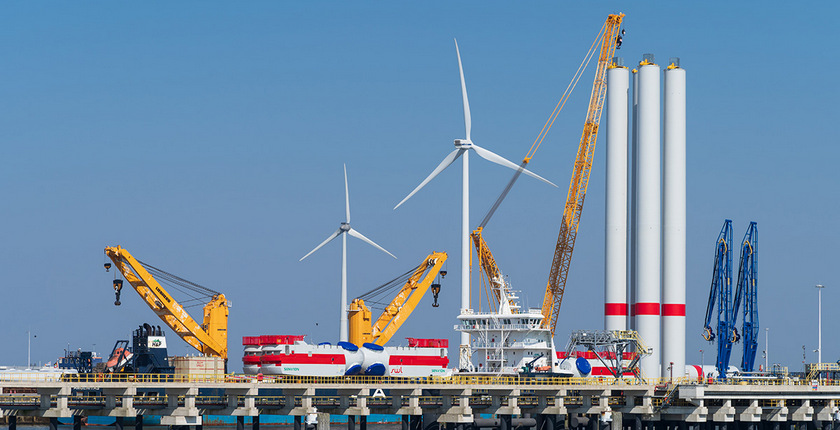
All offshore wind equipment is transported through ports, and they often serve as bases for the operation and maintenance of offshore wind farms. Ports also host local wind energy supply chains and offer space to store and, in the case of floating turbines, assemble large components, the association notes.

Investment in port infrastructure over the past three years has amounted to EUR 4.4 billion, which can ensure that the EU meets its offshore wind targets, but an additional EUR 2.4 billion is needed to put the bloc on track to achieve post-2030 offshore deployment goals, according to WindEurope.

To make this happen, the EU’s strategy must seek to mobilize additional funding, streamline permitting, and establish planning at the EU level, the association recommends.

A further EUR 4 billion in investment is needed for new ships to handle next-generation wind turbines

When it comes to vessels, they should be a key area of focus in the EU Industrial Maritime Strategy, which aims to enhance the competitiveness, sustainability, and resilience of Europe’s maritime manufacturing sector, WindEurope says.

In the past three years, the EU has invested at least EUR 2.3 billion in new vessels, but it will have to spend a further EUR 4 billion to keep pace with wind turbine technology innovation and handle the upcoming generation of turbines with capacities exceeding 15 MW, it explains.

The strategy should also enable the decarbonization of maritime operations by supporting the shift to clean fuels, such as electricity, ammonia, and hydrogen, and by providing funding for retrofitting vessels and building new zero-emission ships, according to WindEurope.

by in News

Serbia adopts Just Energy Transition Plan until 2030

Serbia now has a Just Energy Transition Plan until 2030. The document contains suggested measures for the mitigation of the impact of reducing fossil fuel use, primarily coal, so that workers, firms and communities aren’t left behind.

Following last month’s completion of the public consultation process regarding the proposed Just Transition Action Plan, the Government of Serbia passed, at its last session, the Just Energy Transition Plan of the Republic of Serbia until 2030. The document leans on the Integrated National Energy and Climate Plan (INECP or NECP)

It lays out sustainable energy policy measures that would need or could be undertaken. The point is in reducing fossil fuel dependence and improving security and efficiency of electricity supply by switching to renewable energy sources, and in an energy efficiency boost.

A just transition aims to promote environmentally sustainable economies in a way that is fair and inclusive for all

“A just transition aims to promote environmentally sustainable economies in a way that is fair and inclusive for all – workers, businesses and communities – by creating opportunities for decent work and leaving no one behind. This initiative should not be seen as a fixed set of rules, but as a dynamic process based on dialogue with a focus on addressing the concerns and needs of local populations and affected stakeholders,” the plan reads.

The approach is based on mitigating the negative effects of the energy transition process. It implies significant investments in retraining and reskilling, to assist workers in adjusting to new industries, as well as education, the plan adds.

It highlights the importance of incentivizing the development of new industries, and supporting small and medium-sized enterprises, which can enable alternative sources of income and employment.

Electricity system collapse in December 2021 marked as turning point?

Until December 2021, domestic electricity production met domestic needs, although even before that, the power system had been making maximum efforts for many years to provide sufficient amounts of electricity or, rather, provide sufficient amounts of coal for the operation of thermal power plants, the document notes.

There is no elaboration on the time reference, but that’s when a major outage struck coal-fired thermal power plants of state-owned power utility Elektroprivreda Srbije (EPS). Of note, it was one in a string of serious incidents in the electricity system.

Coal plants are old and they mostly don’t comply with environmental standards

“The fact is that existing electricity generation plants are old and most of them are not in line with new operating conditions and standards when it comes to environmental protection. Therefore, it is quite clear that in the case of the Serbian energy sector, the energy transition should lead to a radical change in the structure of sources and methods of electricity production,” according to the plan.

Coal plants, open pit mines could be replaced with wide range of activities from culture to gas power plants

Listed among the possibilities for repurposing coal plants and coal mine land after shutting them down are green power plants (but also gas-fueled energy facilities), launching industrial production, logistical and commercial activities, together with sports, culture, education, agriculture, tourism and waste management.

In 2023. there were 25,288 employees in thermal power plants (22.2%) and coal mines (77.8%), the document notes. The oldest coal plant, Kolubara A of 239 MW, was built in 1956, and the newest unit is Kostolac B3, of 350 MW. It came online last year.

“Social dialogue mechanisms should be established to ensure that the voices of all stakeholders are heard and their concerns are addressed. This includes consultations with trade unions, local self-governments and civil society organisations,” the Just Energy Transition Plan of the Republic of Serbia until 2030 suggests.

Expenses are envisaged at EUR 75.4 million, of which EUR 12 million would be for incentives for entrepreneurship and self-employment and EUR 60 million for improving business structure at existing industrial parks.

Carbon pricing system to make coal power plants in Serbia increasingly uncompetitive

One section covers the upcoming rollout of charges within the European Union’s Carbon Border Adjustment Mechanism (CBAM). The tax affects imports of a group of raw materials and electricity. Third countries can be exempted if they establish their own carbon pricing and emissions trading systems.

“In order to balance the economic and environmental impacts of the introduction of domestic carbon pricing in Serbia, a phased approach could be adopted, starting with a modest carbon price and gradually increasing it. Support for affected industries, such as subsidies for low-carbon technologies and worker retraining programs, along with recycling revenues to finance green projects and providing direct rebates to citizens, can mitigate negative effects,” the plan adds.

NGOs have criticized the action plan draft for only describing preparatory activities

Actually, proceeds from greenhouse gas emissions allowances in the EU are used only for the green economic transition, and it is similar with most environmental levies.

The introduction of a carbon tax mechanism will make domestic coal-fired power plants increasingly uncompetitive, especially in regional electricity markets, the government warned.

Nongovernmental organizations and associations earlier criticized the draft, arguing that it delays the energy transition until 2030, only lists preparatory activities and that, inter alia, there is no targeted date for ending the use of coal for electricity production.

In any case, a just energy transition requires defining deadlines and projects and securing funds exclusively for the said purposes. Otherwise the market will trample coal plants and mines, and it will probably happen abruptly, which would jeopardize energy security and employment. Such effects are already tangible in Southeastern Europe, especially in Bosnia and Herzegovina, as well as in Bulgaria and Slovenia.

by in News

Construction of Ingka Investments 300 MW solar park in Romania well underway

Ingka Investments, the investment division of the Sweden-based Ingka Holding, the largest IKEA franchisee company, said the construction of its first solar power plant in Romania is well underway. The Butimanu project is for 300 MW in peak capacity, which would make it the largest in the country.

The biggest IKEA stores operator is proceeding with a major renewable energy investment plan. Following last year’s regulatory approval in Romania, it is building one of Europe’s largest solar power plants.

The construction of a system of 300 MW in peak capacity is “well underway,” according to Ingka Investments. It is part of Ingka Holding, based in the Netherlands. The site is in Butimanu in Romania’s Dâmbovița county.

Ingka Investments bought the project in 2023. At the time, it said it was ready for construction, in two phases, and valued it at more than EUR 200 million. The Romanian Energy Regulatory Authority (ANRE) issued the permit for 247 MW in peak capacity and a 223 MW grid connection.

The company developed its first solar power project, set to become the biggest in Romania, through its special purpose vehicle Butimanu Energy. The facility just north of Bucharest, in the Muntenia region, would generate electricity equivalent to the needs of almost 170,000 households in the country, Ingka Investments said.

It complements Ingka’s nine wind farms in Romania. They consist of 64 turbines, totaling 171 MW.

Of note, IKEA supplies electricity to end consumers, including in Romania. Ingka Group has 594 wind turbines in 29 solar parks in 19 countries. Including PV plants, it generates 5 TWh per year.