by in News

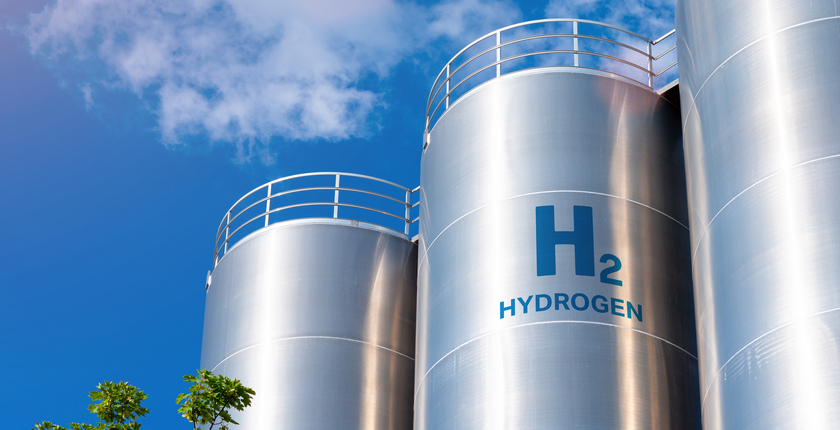
Greece to rely on carbon price, renewables potential in green hydrogen development

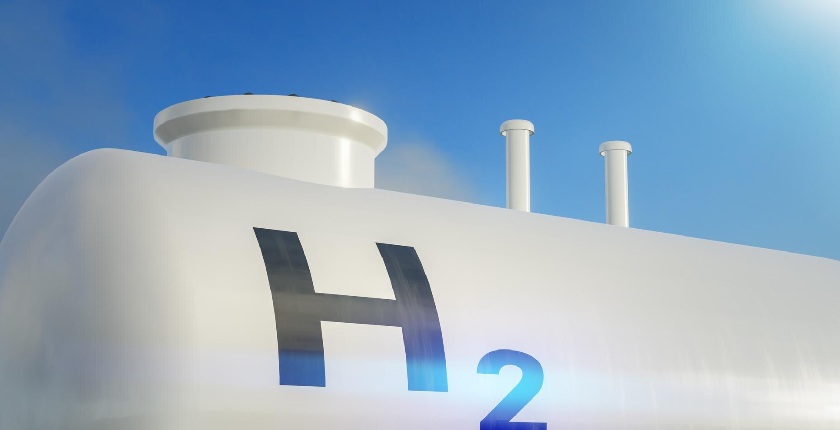
Despite early efforts to develop green hydrogen and its first regulatory framework, Greece finds itself on a steep curve.

The government has presented the first law on hydrogen and renewable gases in parliament. At the same time, refineries and other industries are working on projects that will determine green hydrogen’s cost-effectiveness.

However, a significant obstacle is the government’s unwillingness to support the new technology, either through subsidies or other financial instruments. The Ministry of Environment and Energy has specified that no upcoming technology would benefit from public funds. The goal is to maintain a low cost for the consumer during the energy transition.

According to Professor Pantelis Kapros from the National Technical University of Athens (NTUA), it means hydrogen will have to rely almost exclusively on the price of carbon. As the European Union’s European Trading System (EU ETS) is about to enter its second phase in 2026, the price of carbon allowances is projected to rise steeply.

Even so, market participants estimate that a ton of carbon dioxide equivalent would need to cost EUR 140, two times more than today, to make green hydrogen competitive against grey hydrogen, which is produced from natural gas.

Exports and power prices added to the equation

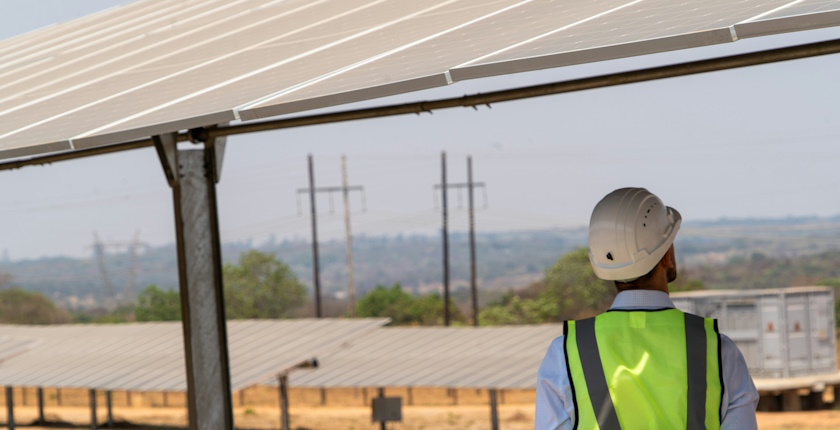
Regardless, Greece sees an opportunity to produce and export green hydrogen. The reason is its high renewables potential and production. The ever-increasing photovoltaic capacity has caused an overabundance of energy during the day. More demand is needed to balance the system and hydrogen can provide a way out.

Tsafos: We want to become a supplier

The hope is that the low renewable energy cost, combined with potential interest in shipping hydrogen abroad, will justify long-term investments.

“Our view is that as long as the market is interested, we want to become a supplier,” Deputy Minister of Environment and Energy Nikos Tsafos said at the Hydrogen & Green Gases Forum in Athens.

A potential problem is that green hydrogen plants are not expected to be viable if they only produce during the day, when renewable energy prices are usually lower. “Ten hours of operation are not enough to support producers and there are also technical issues to solve,” said Dimitris Kardomateas, head of the Center for Renewable Energy Sources and Saving (CRES).

He also pointed to the average daily wholesale power price, as it is higher in Greece than in most other European markets. It should be noted that electricity makes up about 70% of the total operating cost of electrolyzers.

Biomethane considered more mature

On the other hand, biomethane is considered much easier to develop.  The technology depends less on power prices and also faces fewer technical hurdles. “Biomethane has a clear role, especially through its ability to enter the gas network, and we want to utilize it”, said Tsafos.

Gas distribution company Enaon EDA emphasized its readiness to include biomethane in its network. Its CEO Barbara Morgante noted that a study is underway to pinpoint the various existing and planned biomethane production plants around the country, as well as their proximity to Enaon’s network.

Biomethane is usually obtained by processing biogas to get methane of the same purity as in fossil gas. The renewable fuel can also be produced from clean hydrogen and CO2.
by in News

Ireland ends coal use – Spain, Italy, Greece set to follow

The Moneypoint power plant stopped burning coal, marking the end of Ireland’s coal era. The last such facilities in several other countries in the European Union are operating only barely or occasionally.

Ireland has ended coal power generation. It is the eleventh coal-free country in the European Union and the 15th in Europe overall. Notably, nine countries in total never hosted coal power plants, according to the Beyond Fossil Fuels database.

Slovakia and Spain officially intend to exit coal this year, followed by Greece (2026), France and Hungary (2027) and Denmark (2028). However, the dates could be pushed forward and there is a possibility that more countries will join the group in the meantime. Several of their remaining facilities are active just sporadically – in islands or to cover winter peaks or only until the district heating systems that they supply switch to cleaner sources.

For instance, the share of coal power in Finland is minuscule.

Coal power is already uncompetitive most of the time. Moreover, when such facilities are idle, their costs rise further because of salaries and the complex logistics.

Moneypoint plant switches to backup with heavy fuel oil

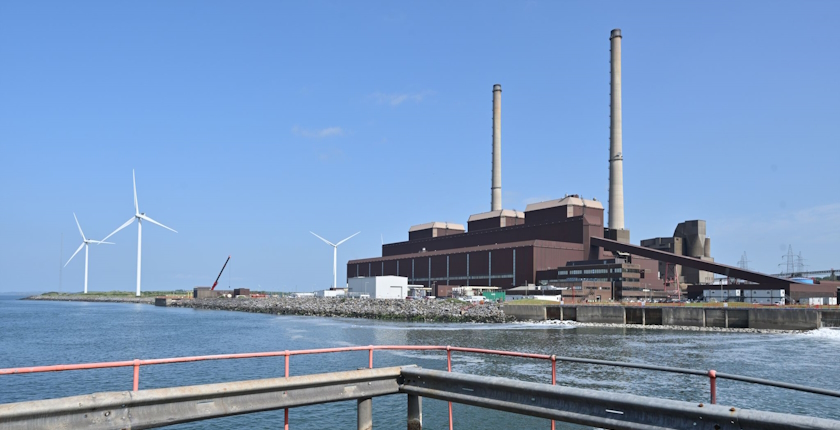
The Moneypoint plant in Ireland ceased burning coal last week earlier than planned. Its operator ESB is turning the site into a renewable energy hub.

At the turn of the millennium, wind supplied just 1% of the country’s electricity. Today, it generates more than a third.

“The government’s priority now must be building a power system fit for a renewable future; one with the storage, flexibility, and grid infrastructure needed to run fully on clean, domestic renewable electricity,” said Alexandru Mustață, campaigner on coal and gas at Beyond Fossil Fuels.

Moneypoint will serve a limited backup role until 2029, burning heavy fuel oil under emergency instruction from transmission system operator EirGrid.

Subsea interconnections to enable coal phaseout completion in Spain, Italy

Spain and Italy are set to follow suit, excluding the Balearic Islands and Sardinia, respectively.

Brindisi Sud (2 GW) and Torrevaldaliga Nord (2 GW) are expected to cease regular operations in mid-2025 and are set to be placed into a strategic reserve, pending full decommissioning. Italy’s remaining coal plants, Sulcis (590 MW) and Fiume Santo (640 MW) in Sardinia, are expected to remain online until a second undersea grid cable to the mainland is completed.

Aboño (916 MW) in Spain is being converted from coal to fossil gas. Soto de Ribera (350 MW) and Los Barrios (589 MW), are barely operating. The Alcúdia plant in the island of Mallorca has two coal units of 130 MW each. Its closure depends on the construction of the archipelago’s second interconnection with the mainland.

Slovakia’s coal phaseout was extended for a short while as a smaller unit kept using what it had left in stock

Slovakian energy company Slovenské elektrárne ended production at its combined heat and power (CHP) plant Vojany (220 MW) in March of last year, which was supposed to mark the country’s coal exit. However, the Teko facility of 121 MW continued to operate with its remaining stockpiles to cover the winter season.

The Cordemais coal plant (1.2 GW) in France is designated for closure in 2027. Émile-Huchet (600 MW), the other remaining facility in the country, should be converted to gas by then.

Turkey, Germany, Poland, Slovenia, the Czech Republic, Serbia, Montenegro, Bosnia and Herzegovina and Kosovo* have the largest shares of coal in power production in the European Union and Southeastern Europe.

* This designation is without prejudice to positions onstatus and is in line with UNSCR 1244/99 and the ICJ Opinion on the Kosovo declaration of independence.
by in News

OMV Petrom enters Bulgarian solar power market as partner in one of biggest projects

As part of its decarbonization efforts, Romanian hydrocarbons producer OMV Petrom is strengthening its presence in neighboring Bulgaria. It agreed to buy 50% of the Gabare solar power project, of 400 MW, from its developer Enery Element.

The solar power investment frenzy in most of Southeastern Europe is continuing despite rising curtailments and the frequent occurrence of negative power prices. Major developers and operators are counting on battery storage to gradually close the still widening gap between intraday peak production and consumption in spring and autumn.

Romanian oil and gas company OMV Petrom – a subsidiary of OMV – is acquiring a 50% stake in Bulgarian firm Dunav Solar Plant. It is developing the 400 MW Gabare photovoltaic project in Byala Slatina near Sofia.

Until now, the sole owner was Enery Element, a joint venture between Austrian renewable energy company Enery Development and its Bulgarian partner Element Power Group. The two sides didn’t disclose the amount. They expect to close the transaction later this year, after fulfilling certain conditions.

Partners to invest EUR 200 million in total by production launch in 2027

The solar park is expected to enter commercial operation in 2027. By then, OMV Petrom and Enery plan to invest EUR 200 million, including from external financing. They are targeting their final investment decision before the end of 2025.

Solar trackers will maximize output, which will be equivalent to the consumption of 150,000 domestic households, the Romanian company pointed out. A battery energy storage system (BESS) of up to 600 MWh in capacity is an option for future consideration, OMV Petrom added.

Neel: Natural gas and renewables complement each other

“By investing in one of the largest photovoltaic projects in Bulgaria, we are strengthening our presence on this neighbouring market and are supporting the region’s energy transition. We believe that natural gas and renewables complement each other and play a key role in reducing emissions while ensuring energy stability,” said member of the Executive Board of OMV Petrom Franck Neel, responsible for the Gas and Power division.

He added that the company would also offtake 50% of the generated electricity, through a power purchase agreement (PPA), without revealing further details.

Enery currently generates almost 700 GWh of clean electricity per year from 490 MW in installed capacity. It has 8 GW in the project pipeline in 11 countries.

Permits for PV park secured

The construction permits and the grid connection have already been secured, according to the update. At 400 MW in peak capacity, Apriltsi is the largest solar power plant in the Balkans and Eastern Europe, excluding Turkey.

However, a PV system of 550 MW in Greece is about to be completed.

OMV Petrom is the largest integrated energy producer in Southeastern Europe, with an annual group hydrocarbon production of 40 million barrels of oil equivalent in 2024. In addition, it is expanding in the segments of wind power and photovoltaics, energy storage, alternative fuels including green hydrogen, and chargers for electric vehicles.

OMV earlier expressed interest in renewables in Serbia and Hungary as well

The group has a refining capacity of 4.5 million tons. It operates an 860 MW high-efficiency gas-fired power plant. The group is present in Romania and neighbouring countries through 780 filling stations under the brands OMV and Petrom, of which 93 in Bulgaria.

At the end of last year, Austrian energy giant OMV had a 51.2% stake in OMV Petrom. The Romanian Ministry of Energy controlled 20.7% and pension funds in the country participated with 23.7% in total.

In Bulgaria, OMV Petrom started supplying natural gas to business customers last year. Following the discovery of gas resources in Romania’s Neptun Deep block in the Black Sea, it is now exploring the gas potential in Bulgaria’s Han Asparuh block. In April, the company said it approved an investment budget of EUR 1.6 billion for 2025, or over 20% more than in 2024.

Pparent company OMV, headquartered in Vienna, expressed interest last summer in the wind and solar power potential of Romania, Serbia, Bulgaria and Hungary.

by in News

Alteo building solar park with battery storage for MOL Group

MOL’s 37.4 MW solar power plant with a battery energy storage system (BESS) of 40 MWh will contribute to the energy independence of its oil and gas complex in southern Hungary. Alteo is the contractor building the facility. The battery segment has received grants totaling EUR 20.5 million.

MOL Group marked the start of construction of a solar park and BESS at its Algyő site in Csongrád-Csanád county. The Hungarian company pointed out that smart green transition, reducing external energy consumption, is a key element of its Shape Tomorrow strategy.

The investment will significantly contribute to the energy independence of the oil and gas complex in southern Hungary, improve the flexibility of electricity supply and lower the site’s CO2 emissions by 13,000 tons per year, according to the announcement.

MOL Group hired Alteo, in which it holds minority stake

The photovoltaic plant project is for 37.4 MW and the battery energy storage system would have 40 MWh in capacity. Alteo, listed at the Budapest Stock Exchange, is the contractor for the construction of the facility. MOL Group, which holds a minority stake, controls a total of 73.8% of its shares together with two private equity funds.

The company’s full name is Alteo Energy Services. As an aggregator, it owns or operates gas power plants and renewables, combined with energy storage, while also providing software as a service (SaaS).

Storage is essential for smart energy transition

MOL has won support of EUR 20.5 million in total for the energy storage project in Algyő. A EUR 6.7 million grant came via the European Union’s Recovery and Resilience Facility (RRF) and Hungary’s National Recovery and Resilience Plan (NRRP), while the government secured the remainder.

“Our strategic goal is a smart energy transition, for which energy storage is essential, as it ensures the integration and flexible use of sustainable energy systems. Algyő is a symbolic location for us – it is here that six decades of industrial experience meet the technology of the future,” said Managing Director of MOL Exploration and Production Hungary Péter Archibald Schubert.

Solar power capacity in Hungary has topped 8 GW

The solar power plant’s output is equivalent to the annual consumption of 22,500 households in the county, while the BESS can flexibly cover 7,300 households, he added.

MOL Group operates seven solar parks in Hungary and two in Croatia, of 111 MW altogether. Its goal is to reach 200 MW in renewable energy capacity by the end of next year.

Alteo will operate MOL’s other battery energy storage system, in Tiszaújváros

Of note, the company broke ground in March for a 40 MWh battery system at the MOL Petrochemicals site in Tiszaújváros, in northeastern Hungary. It selected Alteo as its operator. The investment is worth EUR 16.3 million, of which EUR 6.7 million is a grant from NRRP.

As for the PV and battery investment in Algyő, the local authority made the 47-hectare site available to the integrated hydrocarbons producer, Hungarian media reported.

At the ceremony, Deputy State Secretary for Energy Transition at the Ministry of Energy Viktor Horváth said that the country’s solar power capacity has surpassed 8 GW. It is ninth in the world in PV capacity per capita.

In other storage news, MET Group inaugurated the largest BESS in Hungary last week at its gas power plant near Budapest.

by in News

Coal power plant Maritsa East 3 plans to build solar plant, 200 MW battery system

Coal-fired power plant ContourGlobal Maritsa East 3, which operates only sporadically to ensure the stability of supply for Bulgaria’s power system, plans to repurpose the grid infrastructure of its units 1 and 2 for solar and battery storage capacities. Units 3 and 4 will remain on standby to generate electricity during peak demand periods in the summer and winter months, but the plant will need state support to cover maintenance and workforce costs.

Maritsa East 3 (Maritsa iztok 3), majority owned by the US-based ContourGlobal, plans to use the existing grid infrastructure, including transformers and switchgear, to speed up the green energy project within the complex, according to Vassil Shtonov, Executive Director of ContourGlobal Bulgaria.

The central element is a 200 MW standalone battery energy storage system (BESS), the largest of its kind in Bulgaria, which would improve the flexibility and stability of the national power system, Shtonov explained in an interview with Capital.bg.

The project involves a 200 MW standalone battery system and a solar power plant

The planned battery system at Maritsa East 3 was among 82 projects selected to receive a total of EUR 587 million in subsidies from Bulgaria’s Ministry of Energy in April this year.

“In parallel, we are considering the development of an additional hybrid solar park with a battery at the same site,” he said. This will allow for faster deployment of new clean energy capacity, while preserving all options for future use of the coal-fired plant and its original infrastructure, Shtonov added.

ContourGlobal plans to build 400MW to 500 MW of renewable energy capacity combined with batteries

ContourGlobal plans to invest hundreds of millions of euros to develop 400 MW to 500 MW of renewable energy capacity combined with storage systems, he said, adding that nearly half of this target is under construction or final approval. The company’s goal is to phase out coal by 2027 and achieve carbon neutrality by 2040, he stressed, recalling that Bulgaria’s targeted coal phaseout date is 2038.

Keeping coal plants on standby requires state support

Bulgaria’s state-owned National Electricity Co. (NEK) holds a minority stake in Maritsa East 3. After the plant’s 15-year power purchase contract with NEK expired in February 2024, it has only been able to operate on the free market for a few months a year. This year, units 3 and 4 were online from January to the end of March to maintain energy security.

Shtonov: Key coal-fired power plants should get a fixed amount from the state

However, to be on standby for system security, the plant needs to keep workers on the payroll even when it is not operating. For this reason, strategically important coal-fired power plants should receive a fixed amount from the state to cover ongoing personnel and maintenance costs, and then be switched on when necessary to protect consumers from sharp increases in electricity prices, as happened last year in July and November, according to Shtonov.

by in News

Slovenia preparing hydrogen action plan until 2030

The Slovenian Ministry of the Environment, Climate and Energy has invited bids for preparing a draft action plan to achieve the hydrogen targets from the National Energy and Climate Plan (NECP). The document is intended to guide the development of hydrogen technologies in Slovenia until 2030, with an outlook to 2040.

Hydrogen is expected to help decarbonize sectors such as industrial production, transportation, and energy. The action plan must clearly define strategic goals, measures, and projects for introducing hydrogen, including cross-sectoral integration (power-to-X solutions), according to the public call.

Hydrogen is expected to help Slovenia decarbonize industrial production, transportation, and energy

The drafting of the action plan is partly financed by the European Union as part of the North Adriatic Hydrogen Valley (NAHV) project, a joint effort by partners from Slovenia, Croatia, and Italy, the ministry said. The NAHV is expected to start producing hydrogen by the end of 2026.

The document is co-financed by the EU under the North Adriatic Hydrogen Valley project

The document is intended to provide guidelines for the development of infrastructure, support policies, and incentive measures that would enable the gradual development of the hydrogen ecosystem in Slovenia. It must also define a timeline and provide cost estimates. Its purpose is to define a comprehensive, coordinated, and feasible set of measures, the ministry said.

The action plan must provide a timeline, cost estimates, and a feasible set of measures

The plan should also include an analysis of existing hydrogen strategies in the EU; an overview of existing hydrogen initiatives and projects in Slovenia; recommendations for technical, political, financial, legal, and regulatory feasibility; and an analysis of environmental and socio-economic impacts.

Bids are accepted until July 17, while the deadline for completing the job is 10 months from signing the contract, according to the public call.

by in News

EU institutions reach deal on CBAM simplification

The Council of the European Union struck a provisional agreement with negotiators from the European Parliament regarding the European Commission’s proposal to simplify the CBAM carbon border tax. The initial levy, which would be gradually increased year by year until it matches the EU ETS price, is coming into force on January 1. The administration in Brussels doesn’t seem willing to consider delaying the date, even though neighboring third countries and their exporters to the EU are struggling to adjust to the new system, especially in the electricity sector.

The Polish presidency of the Council of the EU and European Parliament’s negotiators reached a provisional agreement on one of the proposals of the so-called Omnibus 1 legislative package: a regulation that would simplify and strengthen the Carbon Border Adjustment Mechanism (CBAM).

The proposal seeks to ease compliance without compromising the scheme’s climate goals. The colegislators said it would reduce the regulatory and administrative burden, as well as costs for EU companies, especially small and medium-sized enterprises (SMEs).

CBAM is a tool to equalize the price of carbon paid for EU products operating under the EU Emissions Trading System (EU ETS) with that of imported goods, and to encourage greater climate ambition in non-EU countries.

No relief in scope so far for EU’s neighboring countries

Notably, third countries including the Western Balkans and Turkey and the companies there that export cement, iron and steel, aluminum, fertilizers, electricity and hydrogen to the EU are running out of time before charges are introduced on January 1 next year. Primarily, the governments need to introduce carbon pricing systems to be exempted.

ENTSO-E asked for a one-year delay of the initial CBAM charges for electricity

Earlier this month, the European Network of Transmission System Operators for Electricity (ENTSO-E) highlighted several contradictions in CBAM in its sector. It suggested to the European Commission to prolong the transitional period by one year. The latest update doesn’t indicate any willingness to suspend the levy.

Moreover, the European Commission needs to assess in early 2026 whether to extend the scope to other ETS sectors and how to help exporters of CBAM products at risk of carbon leakage. The EU is set to increase the tariffs every year until they match the EU ETS at the start of 2034.

Boosting EU competitiveness

The European Commission said in February that the measures it proposed would save EUR 6.3 billion.

“Simplification is a top priority for the Polish presidency. Today’s provisional agreement with the parliament is yet another step towards reducing administrative burden for our companies and further boosting EU competitiveness,” Minister for the European Union of Poland Adam Szłapka said about the deal with lawmakers.

The colegislators retained the key components of the commission’s proposal to simplify CBAM rules, according to the Council of the EU. There would be a broader de minimis exemption from obligations applicable to importers that do not exceed a single mass-based threshold set at a level of 50 tons per year. The revised regulation would also permit them to avoid any initial disruptions as they will be able to continue importing while awaiting CBAM registration.

Both institutions must formally adopt the measures before they enter into force, which is expected by September, the Council of the EU said.

According to the European Parliament, 90% of importers would be exempted and 99% of CO2 emissions from iron, steel, aluminium and cement imports are still covered.

by in News

EU nuclear ambitions: EUR 241 billion in investment needed by 2050

The European Commission has estimated that EUR 241 billion in investment is needed for the implementation of member states’ plans for nuclear energy until 2050. It includes extending the lifetime of existing power plants and building new large-scale reactors.

Additional investment is needed for small modular reactors (SMRs), advanced modular reactors (AMRs), and microreactors, as well as for fusion for the longer-term future, according to the European Commission’s eighth Nuclear Illustrative Programme (Programme Illustrative Nucleaire – PINC).

A few days ago, the World Bank decided to lift its 2013 moratorium on financing nuclear energy projects amid growing global electricity demand.

The commission has now underlined that for some EU countries, nuclear energy is an important component of decarbonization, industrial competitiveness, and security of supply strategies. The commission estimates that over 90% of electricity in the EU in 2040 will be produced from decarbonized sources, primarily renewables, complemented by nuclear energy.

Jørgensen: To truly deliver the clean energy transition, we need all zero- and low-carbon energy solutions

Nuclear installed capacity across the EU is projected to grow from 98 GWe in 2025 to 109 GWe by 2050.

The commission recognizes that all zero- and low-carbon energy solutions are needed to decarbonize the EU’s energy system. Accordingly, the Nuclear Illustrative Programme is intended to help drive member states’ actions towards priority areas.

“To truly deliver the clean energy transition, we need all zero- and low-carbon energy solutions. Nuclear energy has a role to play in building a resilient and cleaner energy system. Ensuring the necessary framework conditions will allow the EU to keep its industrial leadership in this sector while also upholding the highest safety standards and responsible management of radioactive waste,” said Dan Jørgensen, Commissioner for Energy and Housing.

The highest standards of nuclear safety are among the EU’s top priorities

The commission highlighted the highest nuclear safety standards and a responsible management of radioactive waste as a top priority for the EU.

The commercialization and market uptake of cutting-edge nuclear technologies, including SMRs, AMRs, microreactors, and fusion for the longer term, will also be central for the sector’s future in Europe and beyond, according to the EU’s executive arm.

A requirement under Article 40 of the Euratom Treaty, PINC provides a comprehensive, fact-based overview of nuclear development trends, as well as the scope of investment needs across the EU.

The commission will publish the final version of PINC after receiving the Opinion of the European Economic and Social Committee.

by in News

Joksimović: Serbia preparing to introduce carbon pricing

Serbia is preparing to introduce carbon pricing, Jovana Joksimović, Assistant Minister of Mining and Energy for International Cooperation and European Integration, has announced.

The authorities are preparing a comprehensive analysis of carbon pricing for all products that will be affected by the European Union’s (EU) Carbon Border Adjustment Mechanism (CBAM), Jovana Joksimović said at a conference on the introduction of the EU’s carbon border tax.

The Ministry of Mining and Energy has carried out an assessment of the impact of the EU regulation on Serbia’s electricity sector, she said, without providing further details.

A few days ago, the National Alliance for Local Economic Development (NALED) called on state institutions to protect Serbia’s energy-intensive industries from the impacts of CBAM, warning the EU’s carbon border tax would threaten jobs and businesses in that sector.

Serbia is the only Energy Community contracting party prepared to implement emissions monitoring, reporting, and verification

“When it comes to reporting, Serbia is the only contracting party of the Energy Community that is prepared to implement the monitoring, reporting, and verification (MRV) system by transposing the relevant EU legislation. MRV is a prerequisite for introducing a carbon pricing mechanism and can facilitate the implementation of CBAM,” said Joksimović.

She recalled that the European Commission has accepted alternative options for carbon pricing for the Energy Community contracting parties, including carbon taxes and a fixed-price emissions trading system until EU accession.

CO2 emission factors are the biggest concern

According to her, Serbia’s main concern is the discrepancy between the two CO2 emission factors set by the European Commission – one for electricity and another for electricity used in the production of other CBAM products, which is used for calculating indirect emissions.

She recalled that the European Network of Electricity Transmission System Operators (ENTSO-E) recently proposed to the European Commission to consider revising the CBAM methodology during the transition period to ensure a fair and consistent approach.

A unified methodology would encourage investments in renewable energy, support common climate goals, and promote a fair transition to a decarbonized economy.

The EU’s carbon border tax could disrupt electricity market coupling

“The economic implications of CBAM implementation require careful consideration, particularly with regard to its potentially disproportionate impact on the Western Balkans. We expect the European Commission to accept the national electricity mix emission factor in the application of CBAM for electricity, meaning that the cost of the levy decreases as the share of renewable energy increases,” she said.

Jovanović stressed that CBAM could disrupt ongoing efforts in electricity market coupling.

“The European Commission is expected to propose a constructive solution, given that market coupling and the implementation of CBAM are supposed to be compatible,” she pointed out.

by in News

NALED urges action to protect jobs at energy-intensive industries threatened by CBAM

The National Alliance for Local Economic Development (NALED) has called on the authorities to establish a regulatory framework that would shield Serbia’s energy-intensive industries from the impact of the European Union’s (EU) Carbon Border Adjustment Mechanism (CBAM), which threatens jobs and businesses employing about 7% of the country’s workforce and accounting for 11% of its GDP.

Once the EU starts taxing the import of high-emission products on January 1, 2026, exporters from Serbia will face an increase in the prices of their products on the EU market. Simultaneously, they will face unfair competition on the domestic market from third countries that have not introduced a national carbon pricing system, according to the National Alliance for Local Economic Development (NALED).

The entry into force of the Carbon Border Adjustment Mechanism (CBAM) means that a levy will be charged on imports of cement, iron, steel, aluminum, fertilizers, hydrogen, and electricity into the EU from countries that do not tax CO2 emissions. Although there is more and more talk about delaying the implementation of the tax, it would not make the problem of CO2 taxation disappear – it would only give the affected countries more time to prepare for the change.

NALED has completed an analysis of CBAM’s potential impacts

NALED warns that the introduction of CBAM could have a severely adverse and destabilizing impact on the competitiveness of Serbia’s energy-intensive industries, which requires an urgent and appropriate response from state institutions. NALED’s recently completed analysis of potential impacts of CBAM suggests a high risk of financial pressures and loss of competitiveness of Serbia’s energy-intensive industries, which employ about 7% of the country’s workforce and account for 11% of its GDP.

“To maintain the competitiveness of domestic industry in the initial stage of its green transition, it is necessary to provide mechanisms for reducing CO2 emissions as soon as possible through a set of national regulatory measures. After that, a national mechanism should be established that would include levying a carbon tax on domestic industry, along with a national CBAM mechanism, modeled after the EU’s, to tax goods from third countries where climate policies are less ambitious than Serbia’s,” says Slobodan Krstović, director of NALED’s Sustainable Development Department.

Revenues from CO2 taxation would be used to decarbonize Serbia’s energy-intensive industries

This would ensure a level playing field, in terms of costs related to CO2 emissions, for the sale of energy-intensive products on the Serbian market, as is the case in the EU.

Additional budget revenues that would be secured in this way would primarily be used for supporting the decarbonization of energy-intensive industries, Krstović added.

The analysis further shows that introducing a national CO2 tax at the carbon price projected for 2034 in the National Energy and Climate Plan (NECP) –about EUR 40 per ton – would cost the economy up to EUR 539 million a year, not including the electricity sector.

A domestic CBAM would bring an additional EUR 13 million in state budget revenues in 2027 and as much as EUR 128.6 million in 2034.

Serbia needs mechanisms to decarbonize energy-intensive industries

NALED believes that such a measure, which would channel revenues into Serbia’s budget instead of the EU coffers, would be sustainably justified if the state first introduced regulatory mechanisms to help industry reduce its CO2 emissions.

Given that CBAM and the Green Agenda are new regulatory factors, which have not been taken into account before when defining state aid rules, it is necessary to thoroughly review the existing regulations for granting state aid to companies, according to NALED.

Adapting the national regulatory framework to ensure mechanisms for the decarbonization of energy-intensive industries primarily involves liberalizing the import of alternative fuels and raw materials, banning the export of waste that can be processed in Serbia, and incentivizing the construction of new renewable energy capacities.

If the state fails to react, the domestic industry will face a serious threat

In the absence of state action, NALED warns, the projected decline in the cost efficiency of domestic industry would irreversibly jeopardize Serbia’s exports to the EU market, as well as its competitiveness on the domestic market due to a sharp increase in imports of CBAM goods from non-EU countries.

This would inevitably lead to the loss of a large number of jobs and the financial sustainability of the entire energy-intensive industry operating in Serbia, NALED concludes.

The authorities in Bosnia and Herzegovina recently estimated the economy’s potential loss due to CBAM at between BAM 722 million and BAM 3.17 billion (EUR 369 million to EUR 1.62 billion).