by in News

Gas power plant Brestanica in Slovenia adds photovoltaic unit

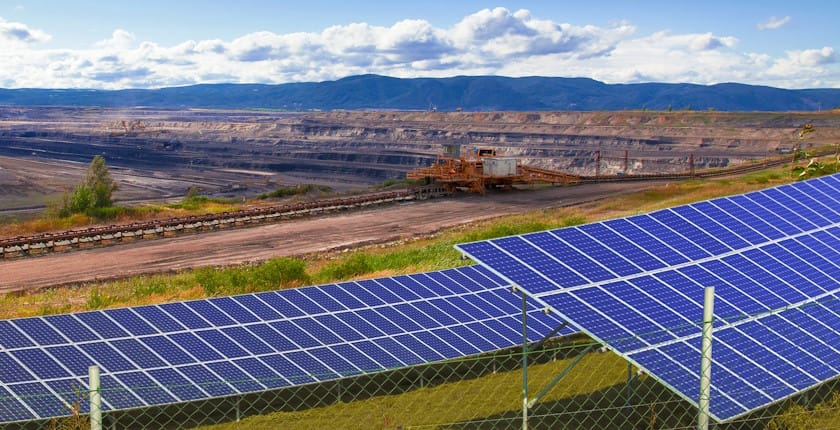
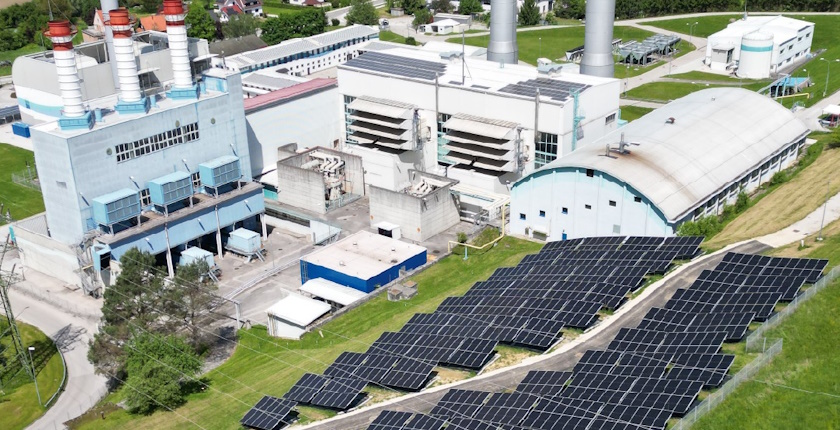
A ground-mounted solar power plant of 466 kW started generating electricity on a regular basis at Slovenian state-owned gas power plant Termoelektrarna Brestanica (TEB).

GEN-I’s subsidiary GEN-I Sonce installed a photovoltaic system, as the contractor, at the gas power plant run by fellow GEN Group member Termoelektrarna Brestanica (TEB). The 466 kW ground-mounted solar power plant entered regular operation, Naš stik reported.

The new facility in Brestanica in the municipality of Krško near Slovenia’s border with Croatia consists of 810 modules. The project was backed by the government’s renewable energy grant program. It covered 20% of the cost, which amounted to just under EUR 600,000.

MFE TEB4, the new unit, entered test operation in February. It is the fourth PV system at the Brestanica gas power plant. Two are on roofs and one is a solar canopy on the parking lot. Commissioned in 2009 and 2010, they have 170 kW in combined peak capacity.

The estimated annual production of the fourth solar power system can meet the electricity needs of more than one hundred Slovenian households.

Almost a third of the project budget was invested in the installation of a transformer. It enables more renewable electricity capacity to be connected to the grid around TEB, the article reveals.

GEN Group’s state-owned parent company GEN energija operates the Krško nuclear power plant, also known by the acronym NEK and, in Slovenian, JEK.

by in News

The cost of keeping warm: delivering a just clean heat and cooling transition for European citizens

Author: Delia Villagrasa, Director of the Cool Heating Coalition, EUSEW’s partner organisation, and Beatriz Yordi, Director, Carbon Markets and Clean Mobility, DG CLIMA, European Commission

Millions of people already struggle to pay energy bills in Europe. ETS2 – which will be launched in 2027 and will put a price on carbon emissions from buildings and transport – risks deepening the energy poverty problem. However, a significant share of ETS2 revenue will be directed to energy efficiency upgrades and clean heating solutions. Through the Social Climate Fund, vulnerable groups will also receive access to these benefits. With clean heat at its heart, the fund could mark a pivotal step in the EU’s journey to net-zero, tackle energy poverty, slash emissions, and finance a fair, fossil-free future.

In 2023, 47 million Europeans were unable to afford to heat their homes. Europe’s largely inefficient building stock relies heavily on fossil fuels for thermal comfort, subjecting citizens to volatile energy prices. Amidst high energy bills and other increases in the cost of living, it has never been more important to get the pricing right on fossil fuels.

Clean heat is the key to energy independence

​​​Following the onset of the energy crisis in 2021, gas prices experienced significant volatility, peaking on the Dutch TTF at more than 10 times current gas prices (340€/MWh in late 2022 vs 32€/MWh today). As Russia continued to wage war against Ukraine, citizens have had to ​ shoulder the burden of fossil fuel import costs to the tune of €427 billion in 2024. ​As long as Europe remains dependent on fossil fuels, citizens will continue to face soaring energy prices, whether through taxes which fund gas subsidies or through their rising energy bills. The way forward is through independence from fossil fuels.

Decarbonising heating and cooling, which together account for around half (47%) of the EU’s energy consumptionis a major step towards energy independence. Over 73% of EU household heating comes from fossil fuels. Households that are able and willing to invest in energy efficiency works and clean heat technologies face multiple barriers. Consumers across Europe are often not able to easily decarbonise their homes as they are battling high upfront costs and face a lack of skills and structural factors that make clean heating and cooling technologies more expensive to use, like a high electricity-to-gas price ratio and fiscalities. Markets are currently misaligned with our ambition for a fossil-free future, and need a clear policy steer towards decarbonisation.

Enabling Europe’s energy transformation

Starting in 2027, the Emissions Trading System 2 (ETS2) will put a price on carbon emissions from fossil fuel use within buildings. The policy incentivises the switch to efficient, low-carbon solutions by increasing the costs for fossil fuels. The roll-out of ETS2 could cause fossil fuels prices to rise, but it also provides funding opportunities for modern and clean heat technologies.

Instead of directing money from higher energy bills towards paying for Europe’s fossil fuel imports, ETS2 will raise money that Member States can use to invest in modernising their energy systems. Member States will collectively raise approximately €270 billion before 2032, generating an unprecedented amount of funds for investment in energy efficiency improvements, renewables, and bill assistance. While pricing out the fossil fuel status quo, which has long been upheld by subsidies, ETS2 will ensure a stream of investments that can transform our energy systems.

Fairness and fossil-free futures

For many consumers, well-designed programmes and investments will mean they have the freedom to choose cleaner, modern technologies. However, low-income households will likely have more difficulties absorbing the higher costs of fossil fuel use. Though responsible for the lowest amount of emissions, the poorest households are likely to feel the deepest effects of the rise in costs.

To shelter the vulnerable from rising prices, revenues from ETS2 will also provide at least €86.7 billion towards the Social Climate Fund (SCF). This instrument ensures that the distribution of revenues remains fair by earmarking a sizeable amount for direct support of those most in need. The five countries who will receive the largest amounts from the SCF pot will be Poland, France, Italy, Spain, and Romania. Relative to the number of vulnerable households, Greece, Bulgaria, Slovakia, and Romania will receive the most resources to provide assistance to those with the lowest income.

Copyright: Bruegel

For instance, a quarter of the Romanian population experienced some form of energy poverty in 2021. Romania is also one of the Member States with the highest percentage of households struggling with unpaid utility bills. The country stands to receive approximately €6 billion to enact its Social Climate Plan, supporting low-income and vulnerable households and SMEs to make green investments.

Beyond a new pricing system, ETS2 is a signal for the buildings and heating markets to decarbonise, a way of raising the capital needed to invest in renewables and energy efficiency, and an opportunity to foster solidarity between Member States and in society. Pricing fossil fuel use aligns global financial flows with our vision of the future: one where energy independence, warm homes, and thriving citizens are the norm.

This opinion editorial is produced in co-operation with the European Sustainable Energy Week (EUSEW) 2025. See ec.europa.eu/eusew for more details.

by in News

ENTSO-E proposes delaying CBAM on electricity by one year

The European Network of Transmission System Operators for Electricity suggested to the European Commission to prolong the transitional period of the Carbon Border Adjustment Mechanism (CBAM) for electricity by one year, to January 1, 2027. It recommended an additional impact assessment, an analysis of possible exemptions for third countries as well as to exempt transmission system operators (TSOs).

In its new position paper, ENTSO-E supported the general principles of CBAM, but it warned against creating disproportionate administrative burdens and costs for TSOs. The pan-European body recommended exempting TSO activities from the CBAM scope, arguing there is a minimal risk of carbon leakage and pointing to their role in keeping the lights on and ensuring the security of the power system.

Moreover, ENTSO-E said an additional impact assessment is needed before the completion of the transitional period for electricity overall. The European Commission should also review in depth the list of third countries eligible for exemption, pending their adjustment to the European Union’s Emissions Trading System (EU ETS), it added.

The current criteria to calculate the actual emissions embedded in electricity production are impossible for importers to implement

“ENTSO-E encourages policy makers to use the targeted revision of CBAM part of the Omnibus simplification package on sustainability to postpone the definitive period as of 1 January 2027. It should also be noted that in its current form, the application of the provisions under CBAM regulation would have a major impact on the Energy Community countries and the UK imports,” the update reads.

Carbon leakage occurs when companies based in the EU move carbon-intensive production to countries with less stringent climate policies, or when EU products get replaced by more carbon-intensive imports.

CBAM was devised to bring CO2 prices for imported cement, iron and steel, aluminum, fertilizers, hydrogen and electricity to the same level as in EU ETS. Under the current rules, the EU will start charging CBAM at the beginning of January next year and gradually increase the tariffs to reach 100% at the start of 2034.

No provisions regulating implicit electricity trading

ENTSO-E acknowledged the role of the carbon border tax in putting a fair price on carbon emissions from carbon-intensive goods entering the EU, and to promote cleaner industrial production globally. Nevertheless, there are still many questions even about the current reporting obligations, it pointed out.

“TSOs adjacent to EU external borders are the most exposed to the concerns raised in this paper. It concerns a significant number of ENTSO-E members, almost one third of the EU members of the association,” the paper adds. In specific cases, the measures may also lead to efficiency losses, reduce EU competitiveness and reduce incentives for building and connecting offshore wind, it underscored.

Obstacles to importing electricity from third countries could contradict the goal of efficiently importing cheap green electricity

CBAM only assumes that electricity is traded with third countries through explicit allocation, not taking into account implicit trading. Like implicit electricity trading within the internal electricity market, there is no nomination on the interconnectors, only anonymous trading between markets, ENTSO-E explained.

“These obstacles to importing electricity from third countries could contradict the goal of efficiently importing cheap green electricity into the EU if applied also to third countries with robust decarbonisation policies and renewable energy sources. The current criteria to calculate the actual emissions embedded in electricity production make it impossible for importers to implement, mainly due to impossibility to trace the origin of the electricity,” the TSO network stressed.

CBAM would tax historical instead of actual emissions

The current default CO2 levels are based upon the carbon intensity of the five-year average through 2020, even though third countries made tremendous efforts in decarbonising their energy mix in the meantime, according to ENTSO-E. It suggested allowing such countries to be exempted if they verify their progress through proper data platforms.

ENTSO-E invited the European Commission to envisage a revision aligned with the current delay in CBAM implementing acts, stressing that it is impossible for the market to digest them before the end of the year.

Energy Community contracting parties, including the Western Balkans, are eligible for exemption from CBAM on electricity until 2030. The condition for each one is to couple its electricity market with an EU neighbor.

by in News

NGOs request withdrawal of draft just transition action plan in Serbia

Eighteen non-governmental organizations have criticized Serbia’s draft just transition action plan and called for the creation of a new document with concrete measures and activities. The Ministry of Mining and Energy said the adoption of the action plan should enable the establishment of an institutional framework for managing a just transition and define the most important activities up to 2030.

The Ministry of Mining and Energy recently published a draft just transition action plan and launched a public debate. The plan foresees investments of EUR 88 million.

The presentation of the draft took place yesterday in the Chamber of Commerce and Industry (PKS) in Belgrade. The public debate began on May 21 and ended today.

According to the Renewables and Environmental Regulatory Institute (RERI) and the Belgrade Open School, with support from 16 organizations, the ministry announced at the debate in PKS that the energy transition would be postponed until 2030 and that the proposed measures would be limited to preparatory activities aimed at preventing the negative outcomes of the energy transition.

The NGOs called for the development of a new draft with concrete measures and activities for a just transition.

The organizations urged the EBRD to check if the drafting and adoption of the document is in line with its standards

They called on the ministry to restart the preparation of the draft in line with the standards of the Law on the Planning System and the Energy Community’s guidelines for planning the just transition. They also urged the European Bank for Reconstruction and Development (EBRD) to compare the document’s drafting and adoption process against its environmental and social protection standards.

Of note, the draft is the result of a project funded by the EBRD. The NGOs outlined five main shortcomings.

The public debate was supposed to be organized in Lazarevac, Obrenovac, Kostolac, Požarevac, and other locations where the residents will be most affected

The first is that the public was neglected (the 20-day period for public debate is insufficient; no presentations were held in Lazarevac, Obrenovac, Kostolac, Požarevac, or other places where the residents will face the greatest and most direct impact). Another one is legal baselessness.

The third objection relates to the fact that the measures are neither precise nor substantive but only preparatory (most of the proposed measures are either preparatory or require additional analyses and research). The next item is that half a million euros are envisaged for updating recently adopted acts (it is not specified which strategies, laws, and bylaws need to be amended).

Finally, the civil sector criticized the fact that there is no precise date for phasing out coal-fired electricity production (it prevents affected communities and workers from making rational and informed decisions).

Zlatković: The draft action plan serves as an introduction to a broader energy transition process

Aleksandar Zlatković – second from left (photo: Ministry of Mining and Energy)

Aleksandar Zlatković, advisor to the minister of mining and energy and head of the working group for the preparation of strategic documents at the ministry, said that the draft action plan represents an operational framework for the specification of the strategic goals defined in the Integrated National Energy and Climate Plan until 2030, with a vision to 2050 (INECP), and the Energy Development Strategy until 2040, with projections to 2050.

The proposed measures include support for workers and communities in transition, strengthening local economies, education, and retraining, as well as capacity building for local authorities.

The detailed elaboration and identification of priority territories and targeted measures will be carried out by bodies that are planned to be established

According to Zlatković, the document also serves as an introduction to a broader energy transition process and establishes the institutional framework for setting up the bodies that would systematically manage and plan the just and energy transition processes.

“It is important to emphasize that the action plan provides only illustrative examples for some potentially affected regions. The detailed elaboration and identification of priority territories and targeted measures will be carried out through the work of the newly formed bodies, primarily after the adoption of the decarbonization plan of Elektroprivreda Srbije (EPS),” Zlatković stated. The state-owned power utility is expected to produce the document by the end of the year, he added.

by in News

Future Green Business conference highlights role of Croatian companies, EU-Africa partnership in climate action

The International Institute for Climate Action (IICA) held its third international Future Green Initiative conference on climate change. The event in Zagreb was dedicated to the role of the business and financial sectors in mitigating climate change. President of IICE Marija Pujo Tadić said Europe wants other states and the main global players to join its ambitious climate targets and action.

Abze Djigma, one of the most prominent African negotiators on the global climate, was a special guest and keynote speaker at the conference. In her words, a just transition isn’t possible without African mineral resources, and Africa is ready to cooperate in the sector, with mutual respect.

Within the trajectory to reaching climate neutrality by the mid-21st century, the EU and its member states intend to determine an intermediate 2040 target of 90% for greenhouse gas emission cuts. It implies a rapid switch to a low-carbon and sustainable economy. The International Institute for Climate Action (IICA) is contributing to the efforts through training, communications and awareness raising for the business and financial sectors and the facilitation of networking.

With its activities, IICA promotes knowledge exchange and strengthening social and personal responsibility toward sustainability. It helps companies adapt their operations and governance to the requirements for stable growth, to tackle the climate crisis.

At its third international conference Future Green Business, the institute gathered Croatian and EU officials and Croatian company executives. The event in Zagreb was titled How the Business and Financial Sector Can Contribute to Climate Change Mitigation (EU & Africa).

Reliable partners are exceptionally important for transition to sustainable economy

President of IICA and Special Advisor-Envoy for Climate Action of the Government of Croatia Marija Pujo Tadić stressed that the conference was a reflection of the recently held 3rd European Union – African Union Ministerial Meeting, which marked 25 years of the partnership. The aim of the event in Zagreb was to highlight the significance of cooperation, particularly in the context of the climate crisis, for the corporate and financial sectors.

The EU is Africa’s biggest trade partner as well as the biggest investor and donor of development and humanitarian aid

“Both continents inevitably have to undergo their path of transforming the economy to a sustainable economy. And on that path, it is exceptionally important to have reliable partners. Europe and Africa are an example with their strong global cooperation of 25 years, directed toward peace, security, governance, prosperity and a human dimension,” Pujo Tadić underscored.

In her view, Africa is EU’s geopolitical priority at a time of increased geopolitical instability. Marija Pujo Tadić recalled that the EU is Africa’s biggest trade partner as well as the biggest investor and donor of development and humanitarian aid.

“Europe remains committed to its climate goals and ambitions and it is calling on other states and the main players to join these ambitious goals and action, and all other countries to meet their national commitments in the runup to COP30 in Brazil,” she asserted.

The conference featured a panel discussion between the representatives of large Croatian companies in the spheres of industrial production, logistics and finance.

Čović Vidović: EU’s Africa policy is no longer developmental but directed toward market-based partnerships

Deputy Head of the European Commission Representation in Croatia and the Head of Press and Media Andrea Čović Vidović said the Council of the EU has just announced that the administration in Brussels and member states mobilized EUR 28.6 billion of international climate finance from public and EUR 7.2 billion from private sources in 2023.

“That support is increasingly targeted not only towards adaptation and mitigation, but towards strategic partnerships, such as with Africa, our very important partner for a sustainable future,” she stated.

The European Commission is spearheading change through legislative initiatives that shape the global climate transition, Čović Vidović stressed. “As for our policy toward Africa, it is no longer developmental. It is aimed at market-based partnerships for mutual benefits. Of course, also for the benefit of the global climate,” she added.

Decisions that political, business leaders make at climate negotiating table affect everyone

A special guest and keynote speaker at the conference was Princess of the Mossi people of Burkina Faso and Co-Chair of the UNFCCC Paris Commitee on Capacity-building Abze Djigma. She has been participating in international climate negotiations for the last two decades.

Abze Djigma highlighted the significance of the concept of just transition. Both political and business leaders need to be aware that their decisions in climate talks affect everyone, and especially that they have the responsibility to improve living conditions, in her words.

At their recent meeting, the European Union and African Union considered the possibilities for cooperation in the critical minerals segment, Abze Djigma noted. A just transition is not possible without African mineral resources, and Africa is ready for cooperation in that field with mutual respect, she underscored.

It is not fair that licenses issued to foreign mining companies enable them to access the international finance market and the billions for their investments, while neither the African countries hosting their projects nor the domestic economy can’t use the asset that way, Abze Djigma asserted. It is why the legal framework needs to include provisions on ownership shares for the government and local firms, so that there are joint opportunities, she explained.

Abze Djigma also promotes empowering youth, the less fortunate and women through, for instance, enabling access to sustainable and affordable energy in rural areas.

Private sector has responsibility but also unique chance to be part of solution

Without systemic and determined action, global temperature will keep growing, with ever more serious consequences for the economy, society and nature, said Croatia’s State Secretary at the Ministry of Environmental Protection and Green Transition Tanja Radić Lakoš.

“The business and financial sectors have the responsibility, but also a unique chance to become part of the solution, with their tools, knowledge and capital. Enterprises that integrate climate change management, climate risks, into the core of their strategies, not only contribute to environmental protection, but become more resilient, more competitive and more attractive to investors,” she asserted.

 Radić Lakoš: Social fairness must be an integral part of the green transition

Radić Lakoš stressed that Croatia would utilize European and national funds for the green transition in a targeted and transparent manner, making sure that no one is left behind.

“Social fairness must be an integral part of the green transition, as it is not a privilege, but the right of all our citizens,” she added and pointed out that the country is eligible for EUR 1.26 billion from the EU’s Social Climate Fund (SCF). Radić Lakoš noted that Croatia is adding EUR 420 million to the sum. SCF is intended for financial support to vulnerable households and enterprises.

The funding contributes to climate objectives through the decarbonization of transportation, improvement of the energy efficiency of buildings and the creation of green jobs.

Croatia getting EUR 1.3 billion by 2030 from proceeds from sales of CO2 certificates

Furthermore, Croatia is receiving the proceeds from the sales of carbon certificates via the Modernisation Fund, Radić Lakoš recalled. The amount allocated to the country until 2030 currently has a market value of EUR 1.3 billion. The funds are intended, among other uses, for the decarbonization of heating systems, energy efficiency measures and low-carbon road transportation.

Another five public calls are envisaged this year, worth an overall EUR 285 million from the Modernisation Fund

So far there were three calls, where 224 beneficiaries were awarded a total of EUR 80 million. There are five more calls envisaged for 2025 and they are worth a combined EUR 285 million, of which part of the support will go through financial instruments, Radić Lakoš added.

In the 20 years since its inception, the Environmental Protection and Energy Efficiency Fund (EPEEF or, in Croatian, FZOEU) conducted almost 60,000 sustainable development and green transition projects, its Director Luka Balen told the audience at the event. “As we can see, climate change is not an issue for the future. It is a matter of everyday life,” he stated.

by in News

Association of Serbian Energy Intensive Industry is actively participating in decarbonization dialogue

The Association of Serbian Energy Intensive Industry (ASEII), founded in September 2024, advocates for a coordinated national and regional approach to decarbonization that ensures the process strengthens rather than erodes competitiveness. “We believe it is very important that energy-intensive industries have their place in the dialogue around decarbonization, not only as passive observers but as active participants,” Director Svetlana Simić said at Belgrade Energy Forum 2025.

The Association of Serbian Energy Intensive Industry was established at a time when the domestic industry is facing complex challenges associated with the energy transition. Its five founding members represent the core of Serbia’s real economy, operating in the steel, fertilizer, and cement sectors.

“These are five leading companies in their respective fields: Metalfer, Elixir, Lafarge, Titan, and Moravacem. Our mission is clear: to be the voice of industry in the era of the energy transition. We believe it is very important that energy-intensive industries have their place in the dialogue around decarbonization, not only as passive observers but as active participants,” Director of ASEII Svetlana Simić said at Belgrade Energy Forum 2025 (BEF 2025).

The companies can offer solutions through their capacities, know-how, and experience, she underscored.

[wpcc-iframe title=”Stanislava Simic, Director, Association of Serbian Energy Intensive Industry” width=”500″ height=”281″ src=”https://www.youtube.com/embed/LM69KRWjkm4?feature=oembed” frameborder=”0″ allow=”accelerometer; autoplay; clipboard-write; encrypted-media; gyroscope; picture-in-picture; web-share” referrerpolicy=”strict-origin-when-cross-origin” allowfullscreen=””]

State and industry need to be partners in decarbonization

The Association of Serbian Energy Intensive Industry was founded in September. It advocates for a coordinated national and regional approach: one that protects strategic sectors, fosters low-carbon investment, and ensures that decarbonization strengthens rather than erodes competitiveness.

ASEII was a silver sponsor of this year’s conference, organized by Balkan Green Energy News. “We are at Belgrade Energy Forum today to highlight the importance of partnership between the state, the industry, and other stakeholders. We are also facing a serious challenge: the introduction of CBAM,” Simić stated.

Simić: We need legislative mechanisms that recognize how much companies are investing in their processes and innovation to reduce emissions

CBAM – the European Union’s Carbon Border Adjustment Mechanism, is a levy on carbon dioxide emissions for foreign cement, iron and steel, aluminum, fertilizers, hydrogen and electricity. The administration in Brussels launched it to protect its economy from imports from third countries with less stringent or no carbon pricing. CBAM charges are due to be introduced gradually, starting in January.

Serbia, like the entire region, must act wisely, strategically, and swiftly, Simić pointed out. “We need legislative mechanisms that recognize how much companies are investing in their processes and innovation to reduce emissions and secure an equal footing in the market,” she said.

Zečević: Many companies have been preparing for CBAM

Branko Zečević, president of Metalfer Group and one of the founders of the Association of Serbian Energy Intensive Industry, was one of the panelists at BEF 2025, in a session titled Addressing carbon pricing in the Western Balkans – Turning decarbonisation challenges into opportunities through collaboration, innovation and competitiveness.

He said CBAM’s effects on Serbian exports can’t be quantified easily yet, but that many companies have been preparing for it and investing in decarbonization. In Zečević’s view, a much bigger threat for the industry in Serbia and the region is an expected flood of goods that will not be able to enter the EU market anymore. He stressed that a domestic carbon pricing system is necessary.

by in News

Western Balkans urged to step up just transition measures

In its new guidelines for the just transition, the Energy Community Secretariat highlighted the lack of policies and measures in its contracting parties in the Western Balkans. The concept implies incorporating a people-centred and regionally tailored approach, in national energy and climate planning, to phasing out fossil fuels while providing targeted support to those most affected. Just transition plans can help attract investments.

The Energy Community Secretariat published the Policy Guidelines on Just Transition as part of integrated energy and climate planning. It aims to assist the contracting parties in aligning with their legal obligations. The international organization called on them to adopt dedicated just transition plans (JTPs) or roadmaps, matching their national energy and climate plans (NECPs). The criticism of the Western Balkans mostly concerns the lack of policies and measures in the NECPs.

Of note, Serbia issued its draft Just Transition Action Plan last month. The World Bank approved a EUR 79.9 million loan and a EUR 2.89 million grant for the purpose, to the Federation of Bosnia and Herzegovina, one of the two entities constituting BiH.

Signing the Sofia Declaration in 2020, the Western Balkans committed to decarbonizing their economies to net zero by 2050

The secretariat recommended that the contracting parties improve their reporting on the matter as well. The just transition is a people-centred and regionally tailored approach to phasing out fossil fuels while providing targeted support to those most affected by the process, it pointed out.

In the Sofia Declaration on the Green Agenda for the Western Balkans, adopted in 2020, six contracting parties in the region committed to decarbonizing their economies and the 2050 climate neutrality objective.

A just transition implies support to affected workers and communities, addressing energy poverty, promoting inclusive governance, and ensuring fair access to the benefits of the transition, according to the guidelines. The economies would need to switch to clean, secure and affordable energy for all, the document notes.

Average coal power plant is almost five decades old

In most contracting parties, coal-based electricity generation is still dominant, characterised by low efficiency and high levels of emissions of carbon dioxide and pollutants.

Coal plants in the Western Balkans are between 34 and 67 years old, with an average age of 46 years in 2023. It entails risks to the security of electricity supply, the Energy Community Secretariat warned.

For comparison, it provided an overview of the situation in the European Union. The authors noted that Romania has no national JTP, but that it developed six territorial just transition plans or TJTPs. They cover the coal regions of Hunedoara, Gorj, Dolj, Galați, Prahova and Mureș.

Due to the insufficient level of integration of just transition in NECPs and the decision by many Energy Community contracting parties to create separate policies and measures in the form of just transition plans, the secretariat recommends that they develop them replicating the structure and content of TJTPs and base them on lessons learnt from European Union member states.

Authorities should support firms, job creation, equal opportunities

JTPs should be based on a granular identification of territories most impacted by decarbonisation, supported by thorough socio-economic and environmental impact assessments.

According to the guidelines, decision makers should support economic stakeholders such as micro, small and medium-sized enterprises and startups. It applies to the creation of firms, too, including through business incubators and consulting services. Workers and jobseekers need upskilling, reskilling and training, the update reads.

Women’s labour market participation and entrepreneurship, as well as equal pay, play an important role in ensuring equal opportunities

Women’s labour market participation and entrepreneurship, as well as equal pay, play an important role in ensuring equal opportunities, the document adds.

“Although no dedicated financing is currently available solely for just transition in the Energy Community, the preparation of comprehensive and credible just transition plans can significantly increase the chances of mobilising both public and private funding in the future. Just transition plans can serve as strategic investment roadmaps,” the authors of the guidelines underscored.

by in News

Serbia drafts just transition action plan

Serbia plans to invest EUR 88.8 million by 2030, through its just transition action plan, in activities aimed at mitigating the impacts of the planned reduction in coal-based energy production, and ensuring a just transition.

The Ministry of Mining and Energy has published a draft just transition action plan and launched a public debate. Within the process, it scheduled a meeting for June 9 in the Chamber of Commerce and Industry (PKS) in Belgrade.

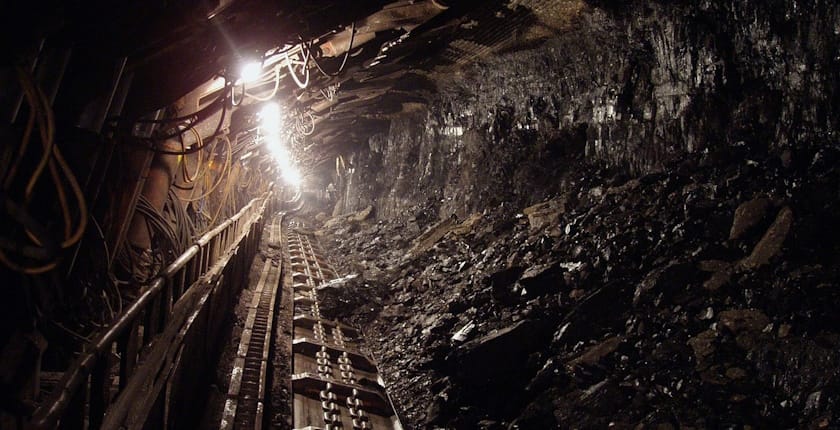
A decarbonization plan will be subsequently defined, including for the shutdown of coal power plants and the transition of underground mines run by state-owned firm JP PEU Resavica, the document reads.

The draft includes an analysis of the planned closure of two coal power plants

The draft contains an analysis of the planned closure of coal-fired thermal power plants Kolubara A and Morava, the oldest in the country. State-owned power utility Elektroprivreda Srbije (EPS) operates them, alongside four other such facilities and open pit mining complexes Kolubara and Kostolac, while Resavica comprises nine mines.

Of note, EPS presented a preliminary plan in 2023 for shutting down its coal power plants.

A significant workforce reduction in lignite production is expected after 2030

The total number of employees in coal power plants and coal mines in Serbia is 25,288. About 20,000 are in the mines.

If the Kolubara and Morava plants were closed, about 472 jobs in the Kolubara region could be indirectly affected, mainly within subcontractors and firms in EPS’s value chain. The draft’s authors estimated that at Rembas, the largest mine within JP PEU Resavica, a total of 930 jobs could be directly affected by 2030, with an additional 958 to 1,367 jobs in indirect risk, primarily in mining subcontractors.

New jobs in the renewable energy sector

Citing Serbia’s Integrated National Energy and Climate Plan, the document adds the thermal power plants are expected to operate at reduced capacity after 2030, but that an accelerated closure is not foreseen. It would result in significant job cuts in lignite production, the draft reads.

The draft’s authors expect the transition to a green economy to create full-time jobs by 2030 and beyond, nationwide, in the construction, management, and maintenance of new renewable energy capacities.

The renewable energy industry in Serbia is projected to create up to 6,105 jobs across the country by 2030, of which 4,397 in the solar energy sector.

EUR 60 million allocated for industrial parks

Out of the planned EUR 88.6 million, the largest portion – EUR 60 million, would be allocated for the improvement of economic infrastructure in existing industrial parks. Local authorities would get grants to upgrade them, amounting to EUR 12 million.

The measure is expected to diversify local economies and attract new investments within industrial parks in affected areas.

The second-largest allocation in the draft would be EUR 12 million for an entrepreneurship and self-employment support program. It includes grants and tax incentives for starting new businesses, with investments of at least EUR 50,000 for small and medium-sized enterprises and EUR 10,000 for self-employed individuals.

Again, the initiative is expected to facilitate the creation of at least 200 businesses and support 200 self-employed individuals.

The draft is the result of a project financed by the European Bank for Reconstruction and Development (EBRD). It began in October 2021.

by in News

Third Regional Power Sector Exchange in Ohrid: Power grids at core of energy transition

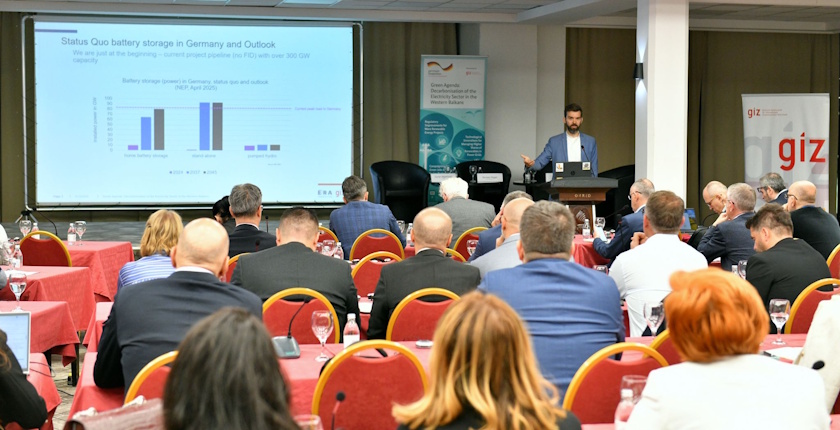
The third Regional Power Sector Exchange of the Western Balkans in Ohrid in North Macedonia gathered over 80 energy professionals from the region to discuss the future of electricity decarbonization and the urgent need to modernize power infrastructure.

Organised under the framework of the Regional Climate Partnership between Germany and the Western Balkans, the conference brought together representatives of transmission and distribution system operators, energy regulators, and energy ministries to accelerate coordinated action toward a greener, more resilient power system.

“No grids, no glory. This slogan captures the challenge in front of us. Without investment in power grids, adaptable regulation, and skilled professionals, the renewable energy transition cannot succeed,” Project Manager at GIZ Nicolas Heger said in his welcoming remarks.

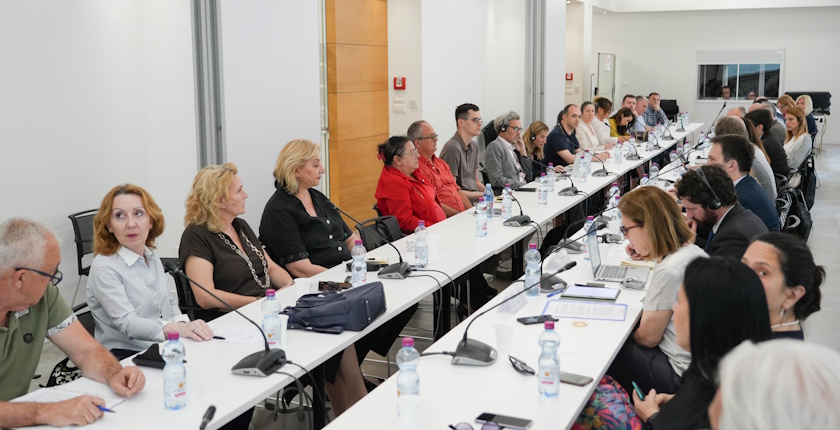
Oberhuber: The Western Balkans have the potential to become a major exporter of clean electricity

Opening addresses were delivered by David Oberhuber, GIZ Country Director in North Macedonia, Anca-Iulia Cimpeanu, European Commission (DG ENER), and Davor Bajs, Energy Community Secretariat.

In his keynote speech, Oberhuber stressed the region’s strategic importance in the Regional Climate Partnership.

The Western Balkans has the potential to become a major exporter of clean electricity to Western Europe and a hub for investment and innovation in renewable energy, he said.

North Macedonia is advancing its energy transition by expanding renewables – solar power capacity reached 506 MW in 2023 – and reducing coal dependency, although thermal power plants still accounted for 47.3% of total electricity production in early 2024.

In 2023, renewables made up 33.15% of electricity generation, with households, transport, and industry as the top energy consumers.

To accelerate the shift, tailored support projects were launched. The Energy, Water Services and Municipal Waste Management Services Regulatory Commission is tackling the surge in renewables applications. Distribution system operator (DSO) EVN is focusing on smart grids and energy quality, and transmission system operator (TSO) MEPSO is exploring options to reduce balancing costs through regional market mechanisms.

Six tailored support projects presented

The event included three sessions on tailored support projects.

Professor Nermin Suljanović presented the project Concept on Data Exchange Between System Operators in Bosnia and Herzegovina.

The data platform enables automatic data exchange among all actors in the electricity market in Bosnia and Herzegovina, ensuring data interoperability and harmonized communication interfaces, according to Suljanović.

He also outlined the project Technical Specification and Requirements for Integration of Renewables into DSO Telecommunication Network.

E-mobility is not only related to energy but also to transportation, telecommunication, data security

A project titled Procedure for Handling RES Connection Requests to the Grid – Queue Management was presented by expert Miltos Aslanoglou, and the Roadmap for Creating a Legal and Regulatory Framework for EV Charging by expert Dejan Stojadinović.

“EU legislation on this matter is a good base for the Western Balkan countries to prepare relevant legal and regulatory frameworks. E-mobility is not only related to energy but also to transportation, telecommunication, data security, and other issues,” Stojadinović said.

Goran Majstrović, Deputy Director and Head of the Energy Transmission and Distribution Department at Energy Institute Hrvoje Požar (EIHP), gave an insight into the project Feasibility Analysis and Funding Assessment for using Dynamic Line Rating (DLR) on the Kosovo* Transmission Grid.

Simplification of Procedures for Prosumer Connection to the Distribution Network in the Federation of BiH was the name of the project introduced by expert Goran Dobrić.

The need for regionally integrated networks has never been greater

Blackouts in both Southern and Southeastern Europe have highlighted vulnerabilities in grid infrastructure amidst growing shares of renewable energy. The need for modern, flexible, and regionally integrated networks has never been greater.

The event was part of a wider regional project implemented by GIZ on behalf of the German government, supporting the integration of renewables and enhancing energy security across the WB6.

In just two years, the project has supported over 30 institutions, trained more than 135 energy professionals, and facilitated the development of the Action Plan for Power Grids in the Western Balkans, in cooperation with the Energy Community Secretariat.

Network redesigns are lagging behind renewables by seven to ten years

Goran Majstrović from Energy Institute Hrvoje Požar presented the Action Plan for Power Grids in the Western Balkans.

“The path to integration of renewables is not just replacing power plants but redesigning the entire system to accommodate them. Network redesigns are lagging behind renewables by seven to ten years,” he asserted.

In the plan, the required grid investments by 2030 in the six countries of the Western Balkans (WB6) are estimated at EUR 10 billion to EUR 14 billion. Investments in primary equipment are seen at EUR 6 billion to EUR 8 billion. As for secondary equipment (digitalization), the forecasted tally is EUR 4 billion to EUR 6 billion.

Phase 2 of the project Green Agenda: Decarbonisation of the Electricity Sector in the Western Balkans is scheduled for completion in 2028. The Regional Power Sector Exchange will remain a key platform for cooperation, helping ensure the energy transition in the region is just and inclusive.

* This designation is without prejudice to positions onstatus and is in line with UNSCR 1244/99 and the ICJ Opinion on the Kosovo declaration of independence.
by in News

Green for Growth Fund launches partnership with Swedish International Development Cooperation Agency

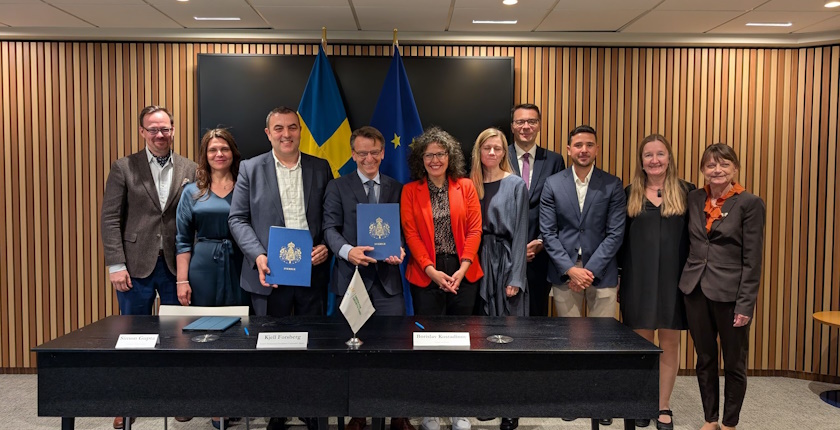
An agreement between the Green for Growth Fund (GGF) and Swedish International Development Cooperation Agency (Sida) enabled the expansion of green lending in the Western Balkans and the European Union’s Eastern Neighborhood. With the new unfunded guarantee of EUR 60 million, GGF can provide EUR 120 million in loans through financial intermediaries and directly to companies.

The Green for Growth Fund established a new partnership, with the Swedish International Development Cooperation Agency. It facilitates GGF’s first risk-sharing, unfunded guarantee. The Luxembourg-based fund and Sweden’s development cooperation agency said they both support real economies and acceleration of the green transition in the Western Balkans and the countries of the EU’s Eastern Neighborhood.

The signed unfunded guarantee amounts to EUR 60 million. It enables GGF to provide EUR 120 million in loans to private businesses and households through financial intermediaries and directly to companies. The package is for urgently needed investments in the decarbonization of the economy – expanding renewable energy generation and improving energy efficiency.

With unfunded portfolio risk-sharing facilities, international financing institutions or similar lenders and agencies accept a share of risk in an investment instead of committing capital.

New funding approach is major milestone for Green for Growth Fund

The Green for Growth Fund promotes energy efficiency and renewable energy in Southeast Europe, the Caucasus, Middle East and North Africa. By providing refinancing to local financial institutions, it helps businesses and households access sustainable energy solutions, fostering energy efficiency and reducing carbon emissions.

GGF was initiated as a public-private partnership by the European Investment Bank and Germany’s KfW Development Bank, with financial support from the European Union, the German Federal Ministry for Economic Cooperation and Development (BMZ) and other international investors. Finance in Motion serves as GGF’s advisor.

“We are excited to welcome Sida as a new guarantee partner to the Green for Growth Fund. This innovative funding approach, being the first of its kind for us, represents a major milestone. We are grateful to Finance in Motion for their exceptional work in structuring this deal. This partnership not only strengthens our capacity to support green initiatives but also enhances our ability to prepare financial institutions and businesses for future opportunities in the EU market,” GGF’s Board Chairperson Simon Gupta stated.

Bridging investment gap in high-risk markets

The Swedish International Development Cooperation’s Agency’s Assistant Director General Kjell Forsberg, responsible for trade, private sector and financial instruments, said the partnership is aimed at supporting countries highly prioritized by Sweden. The guarantee collaboration between the agency and the Green for Growth Fund bridges the investment gap in high-risk markets while complementing other Swedish official development assistance (ODA) contributions as well as the European Union’s programs.

“We are grateful to Sida for their partnership and support. This collaboration is crucial for the Green for Growth Fund, enhancing our efforts in promoting energy efficiency and renewable energy projects,” said Borislav Kostadinov, Fund Director of GGF at Finance in Motion.