Desulfurization project at Kakanj thermal power plant to cut emissions by almost 100%
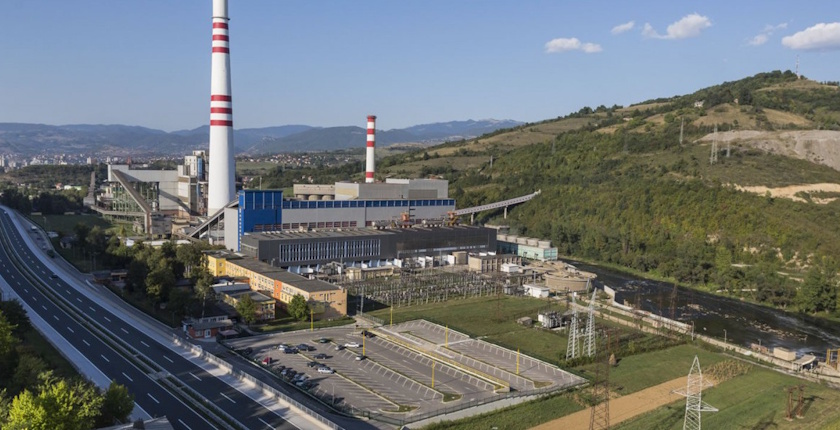
Bosnia and Herzegovina’s state power utility, Elektroprivreda BiH, is implementing a desulfurization project at units 6 and 7 of the Kakanj thermal power plant. The project is expected to reduce sulfur dioxide (SO₂) emissions by about 98.5%.
Currently, SO₂ emissions from the Kakanj plant amount to around 9,000 milligrams per cubic meter (mg/Nm3). With the construction of a joint desulfurization facility for units 6 and 7, the emissions will be cut by nearly 60 times, to below 150 mg/Nm3.
According to Bosnia and Herzegovina’s state power utility, Elektroprivreda BiH (EPBiH), the project is being implemented in line with Energy Community directives, which prohibit the operation of thermal units without desulfurization and denitrification systems after 2027, as well as with the obligations under Bosnia and Herzegovina’s National Emission Reduction Plan (NERP BiH) and EPBiH’s Energy Transition and Decarbonization Strategy until 2050.
Thanks to previously installed hybrid filters, dust emissions have already been reduced to below 10 mg/Nm3, significantly below the limits set by NERP BiH and EU directives, EPBiH said in a statement. The company also plans to build a denitrification facility to ensure nitrogen oxide (NOₓ) emissions are fully compliant with these regulations.
The denitrification project is valued at EUR 28.1 million
“Although these projects will allow the operation of our units beyond January 1, 2028 – ensuring the production of electricity from our own sources and heat for the town of Kakanj – the most important benefit for us as a socially responsible company will be the one we feel directly, in terms of improved quality of life. Cleaner air is a key factor in protecting public health and the environment, and it also strengthens our relationship with the local community. At the same time, we are ensuring continued operation of the coal mines that supply the power plant,” said EPBiH General Director Sanel Buljubašić.
The desulfurization project is worth BAM 126.4 million (EUR 62.8 million) and is financed with EPBiH’s own funds. The denitrification project will require an additional BAM 55 million (EUR 28.1 million). Upon completion, the Kakanj power plant will be fully compliant with EU directives and ready to operate for the next two decades.
Revitalization of Unit 7 underway
The desulfurization work on the 300-meter-tall chimney is expected to be completed by the end of this year. In parallel, EPBiH is carrying out the revitalization of Unit 7 – an investment worth BAM 80 million (EUR 40.9 million). These works should be completed by the end of May 2026, extending the unit’s lifespan by another 15 years.
Due to these activities, the plant’s current production is around 40% of its full capacity, according to the statement.
Preparations for desulfurization at thermal power plant Tuzla
In an effort to secure continued electricity generation from its coal-fired plants beyond the deadline set by the Energy Community, EPBiH is also preparing a desulfurization project for the Tuzla thermal power plant. The investment is estimated at BAM 170 million (EUR 86.9 million). The evaluation of bids for Unit 6 is underway, while tender documentation for units 4 and 5 is being prepared.
EPBiH’s goal is to cut overall emissions by up to 80% by 2050 by modernizing existing units and increasing generation from renewable energy sources, which will help reduce pollution significantly, improve public health, and protect ecosystems.
Sulfur dioxide emissions remain a major challenge for coal power plants across the Western Balkans. According to Comply or Close, a report by environmental organization Bankwatch, these plants emitted six times more SO₂ in 2024 than allowed, while combined PM and NOx emissions once again exceeded legal limits.
In 2024, Bosnia and Herzegovina’s thermal power plants became the region’s top sulfur dioxide polluters for the first time, releasing a total of 212,840 tonnes, or 17.1% more than in 2023 and 11.3 times above the permitted level.