by in News

Davos: China reaffirms green agenda as US slams EU’s net-zero goal

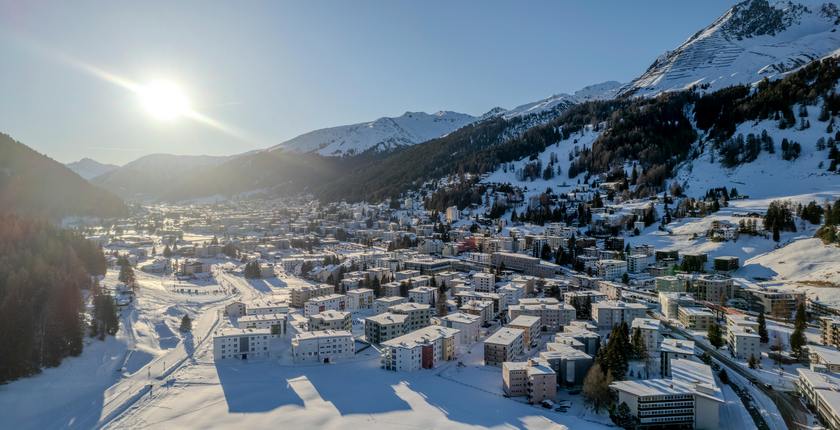
At the World Economic Forum (WEF) in Davos, China reiterated its commitment to green development, in contrast to the United States, whose secretary of commerce said America should rely on oil and gas instead of pursuing a green transition and criticized the European Union’s (EU) net-zero target. US President Donald Trump, for his part, described the energy transition as a “scam” that caused an energy collapse in Europe.

Speaking at the WEF Annual Meeting 2026 in Davos, Switzerland, Chinese Vice Premier He Lifeng emphasized China’s resolve to reduce its greenhouse gas emissions, adding that the country’s upcoming five-year plan would keep the focus on green growth fueled by solar, batteries, and electric vehicles (EVs).

China’s Vice Premier urged other countries to help combat emissions

He also urged other nations and foreign companies to collaborate with China on creating “a green and prosperous future.”

“We invite enterprises from all over the world to embrace the opportunities from the green and low-carbon transition, and work closely with China in such areas as green infrastructure, green energy, green minerals, and green finance,” He said in a speech at Davos.

In contrast, US Commerce Secretary Howard Lutnick criticized the EU’s solar and wind development, as well as its net-zero goal, adding that the green transition is not something the US should pursue. Lutnick also said that the world should focus on coal as an energy source rather than renewables, according to reports.

In January 2025, President Donald Trump signed executive orders reversing much of the previous administration’s climate policy and withdrawing the US from the Paris Agreement once again.

US Commerce Secretary claims seeking net zero without battery production would make the EU subservient to China

“Why are you going to do solar and wind? Why would Europe agree to be net zero in 2030 when they don’t make a battery? So, if they go 2030, they are deciding to be subservient to China, who makes the batteries,” Lutnick said.

“Why would the US, which has oil and natural gas, try to convert to all-electricity? China does not have oil and natural gas – electricity and electric cars make perfect sense to them,” Lutnick said at a WEF panel.

According to news agencies, Lutnick’s harsh criticism of Europe at a VIP dinner on Tuesday made European Central Bank President Christine Lagarde walk out of the event.

Trump slams “the green new scam” and claims China sells wind turbines to others, but does not build its own wind farms

For his part, Trump also criticized the EU’s transition to renewables, claiming that the US had avoided “the catastrophic energy collapse which befell every European nation that pursued the green new scam.” He also described the green transition as “perhaps the greatest hoax in history.”

In his speech in Davos, the US president claimed that wind farms “lose money” and that China only sells wind turbines without building any wind farms itself.

“They sell them to the stupid people that buy them. They don’t use them themselves,” Trump said, adding that China has only built a “couple of wind farms” in order to “show people what they could look like.”

According to available data, China has the largest wind power capacity in the world, at around 600 GW.
by in News

Davos: China reaffirms green agenda as US slams EU’s net-zero goal

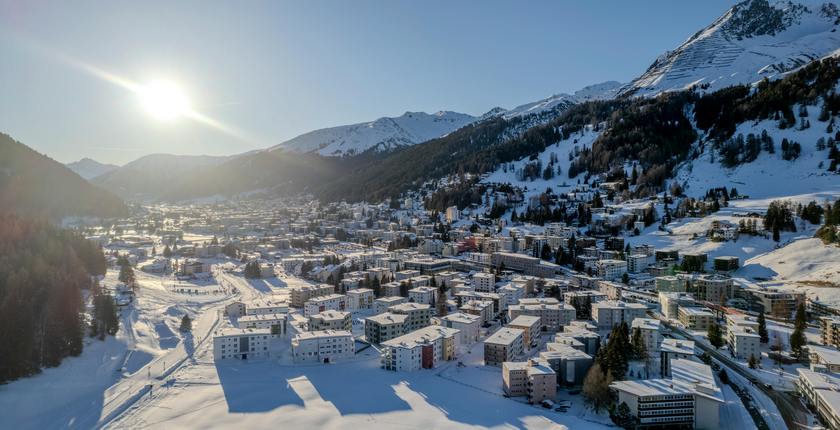
At the World Economic Forum (WEF) in Davos, China reiterated its commitment to green development, in contrast to the United States, whose secretary of commerce said America should rely on oil and gas instead of pursuing a green transition and criticized the European Union’s (EU) net-zero target. US President Donald Trump, for his part, described the energy transition as a “scam” that caused an energy collapse in Europe.

Speaking at the WEF Annual Meeting 2026 in Davos, Switzerland, Chinese Vice Premier He Lifeng emphasized China’s resolve to reduce its greenhouse gas emissions, adding that the country’s upcoming five-year plan would keep the focus on green growth fueled by solar, batteries, and electric vehicles (EVs).

China’s Vice Premier urged other countries to help combat emissions

He also urged other nations and foreign companies to collaborate with China on creating “a green and prosperous future.”

“We invite enterprises from all over the world to embrace the opportunities from the green and low-carbon transition, and work closely with China in such areas as green infrastructure, green energy, green minerals, and green finance,” He said in a speech at Davos.

In contrast, US Commerce Secretary Howard Lutnick criticized the EU’s solar and wind development, as well as its net-zero goal, adding that the green transition is not something the US should pursue. Lutnick also said that the world should focus on coal as an energy source rather than renewables, according to reports.

In January 2025, President Donald Trump signed executive orders reversing much of the previous administration’s climate policy and withdrawing the US from the Paris Agreement once again.

US Commerce Secretary claims seeking net zero without battery production would make the EU subservient to China

“Why are you going to do solar and wind? Why would Europe agree to be net zero in 2030 when they don’t make a battery? So, if they go 2030, they are deciding to be subservient to China, who makes the batteries,” Lutnick said.

“Why would the US, which has oil and natural gas, try to convert to all-electricity? China does not have oil and natural gas – electricity and electric cars make perfect sense to them,” Lutnick said at a WEF panel.

According to news agencies, Lutnick’s harsh criticism of Europe at a VIP dinner on Tuesday made European Central Bank President Christine Lagarde walk out of the event.

Trump slams “the green new scam” and claims China sells wind turbines to others, but does not build its own wind farms

For his part, Trump also criticized the EU’s transition to renewables, claiming that the US had avoided “the catastrophic energy collapse which befell every European nation that pursued the green new scam.” He also described the green transition as “perhaps the greatest hoax in history.”

In his speech in Davos, the US president claimed that wind farms “lose money” and that China only sells wind turbines without building any wind farms itself.

“They sell them to the stupid people that buy them. They don’t use them themselves,” Trump said, adding that China has only built a “couple of wind farms” in order to “show people what they could look like.”

According to available data, China has the largest wind power capacity in the world, at around 600 GW.
by in News

Turkey to launch carbon market, sign deals for large renewables projects in 2026

Turkey will launch a national carbon trade market, sign intergovernmental agreements on large-scale renewable energy projects and connect 2,000 MW of energy storage to the grid in 2026. These moves will be accompanied by the historic start of electricity production at the country’s first nuclear power plant Akkuyu, and a doubling of domestic natural gas production from the Sakarya field.

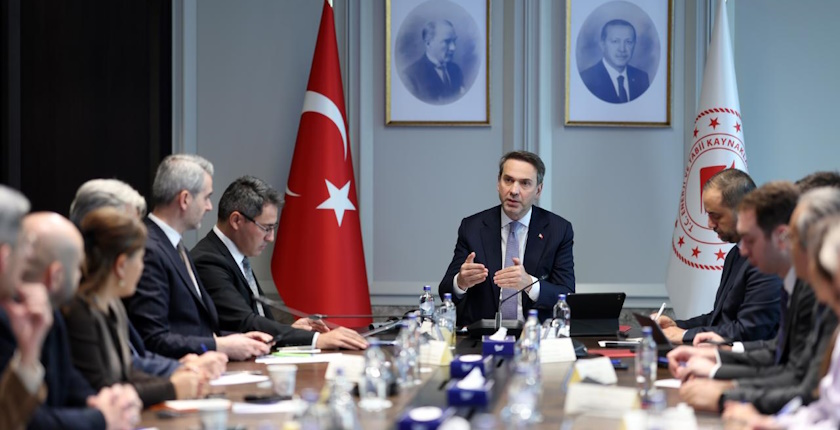
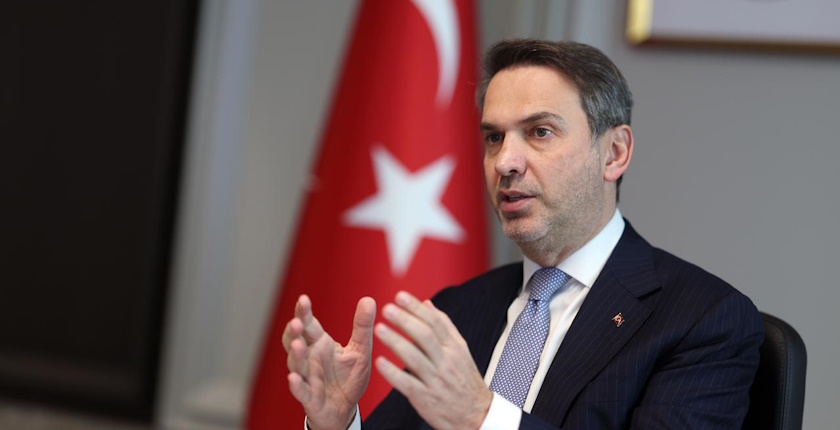
These developments represent the core of the 2026 vision for energy and mining in Turkey, revealed by Minister of Energy and Natural Resources Alparslan Bayraktar.

Large-scale projects will be launched next year through intergovernmental agreements, he stressed.

The deals include solar and other renewable energy technologies and storage, Bayraktar explained.

According to the minister, Turkey remains committed to its emission reduction targets. The government plans to launch a carbon trade center and market in 2026 within the Energy Exchange Istanbul (EXIST or EPİAŞ), he said.

Of note, Turkey’s imports of a group of goods and electricity to the European Union will be subject to the CBAM carbon border tax from January 1, 2026.

Energy storage facilities totaling 2,000 MW will be commissioned in 2026

Bayraktar recalled that the country issued permits for the installation of an overall 33,500 MW of energy storage. A very small portion has been implemented so far, but 2,000 MW will be commissioned in 2026, he underlined.

The minister said Turkey is considering the introduction of Storage Resources Zones or Depolama Alanları (DEKA) in 2026.

It would be similar to Renewable Energy Zones mechanism – REZ or YEKA – for support for solar and wind projects.

Bayraktar mentioned that a 5,000 MW solar power arrangement with Saudi Arabia-based ACWA is being discussed. Of note, it is equivalent to between 30% and 40% of Turkey’s current photovoltaic capacity.

Locations for the 2,000 MW solar project are in Sivas and Taşeli

He expressed belief that the agreement for the first phase, which envisages 2,000 MW, would be finalized in the first quarter of 2026. The plan is for 1,000 MW in Sivas and 1,000 MW in Taşeli.

A solar-plus-storage project with another company from a different country in the Persian Gulf is also under consideration, Bayraktar revealed. The investment is estimated at EUR 1.5 billion to EUR 2 billion.

A floating solar power plant of about 3,000 MW will be built as soon as possible, according to Bayraktar

In Bayraktar’s view, there is great potential in floating solar power plants. The country intends to implement a floating solar power plant of about 3,000 MW as soon as possible, the minister underlined.

The partners in this endeavour could be private companies or Turkish government-controlled Electricity Generation Corp. (EÜAŞ), the minister said. He claimed significant plans have been developed for offshore wind projects for 2026.

“We are considering a model similar to YEKA for offshore wind,” he added.

Russia to provide USD 9 billion for Akkuyu

turkey 2026 vision energy Alparslan Bayraktar brifing
Photo: Ministry of Energy and Natural Resources

The Akkuyu project is entering its final stages, according to the minister.

The country secured a USD 9 billion financing package from Russia for the investment, of which USD 4 billion to USD 5 billion is intended to be drawn in 2026.

Simultaneously, the ministry is in talks with South Korea, the US, China, and Russia for nuclear projects in Sinop and Thrace.

The Sakarya gas field is expected to double its current output in 2026, to 7.5 billion cubic meters, Bayraktar underscored.

This surge will prevent approximately USD 3.2 billion in energy imports, he explained.

by in News

Turkey to launch carbon market, sign deals for large renewables projects in 2026

Turkey will launch a national carbon trade market, sign intergovernmental agreements on large-scale renewable energy projects and connect 2,000 MW of energy storage to the grid in 2026. These moves will be accompanied by the historic start of electricity production at the country’s first nuclear power plant Akkuyu, and a doubling of domestic natural gas production from the Sakarya field.

These developments represent the core of the 2026 vision for energy and mining in Turkey, revealed by Minister of Energy and Natural Resources Alparslan Bayraktar.

Large-scale projects will be launched next year through intergovernmental agreements, he stressed.

The deals include solar and other renewable energy technologies and storage, Bayraktar explained.

According to the minister, Turkey remains committed to its emission reduction targets. The government plans to launch a carbon trade center and market in 2026 within the Energy Exchange Istanbul (EXIST or EPİAŞ), he said.

Of note, Turkey’s imports of a group of goods and electricity to the European Union will be subject to the CBAM carbon border tax from January 1, 2026.

Energy storage facilities totaling 2,000 MW will be commissioned in 2026

Bayraktar recalled that the country issued permits for the installation of an overall 33,500 MW of energy storage. A very small portion has been implemented so far, but 2,000 MW will be commissioned in 2026, he underlined.

The minister said Turkey is considering the introduction of Storage Resources Zones or Depolama Alanları (DEKA) in 2026.

It would be similar to Renewable Energy Zones mechanism – REZ or YEKA – for support for solar and wind projects.

Bayraktar mentioned that a 5,000 MW solar power arrangement with Saudi Arabia-based ACWA is being discussed. Of note, it is equivalent to between 30% and 40% of Turkey’s current photovoltaic capacity.

Locations for the 2,000 MW solar project are in Sivas and Taşeli

He expressed belief that the agreement for the first phase, which envisages 2,000 MW, would be finalized in the first quarter of 2026. The plan is for 1,000 MW in Sivas and 1,000 MW in Taşeli.

A solar-plus-storage project with another company from a different country in the Persian Gulf is also under consideration, Bayraktar revealed. The investment is estimated at EUR 1.5 billion to EUR 2 billion.

A floating solar power plant of about 3,000 MW will be built as soon as possible, according to Bayraktar

In Bayraktar’s view, there is great potential in floating solar power plants. The country intends to implement a floating solar power plant of about 3,000 MW as soon as possible, the minister underlined.

The partners in this endeavour could be private companies or Turkish government-controlled Electricity Generation Corp. (EÜAŞ), the minister said. He claimed significant plans have been developed for offshore wind projects for 2026.

“We are considering a model similar to YEKA for offshore wind,” he added.

Russia to provide USD 9 billion for Akkuyu

turkey 2026 vision energy Alparslan Bayraktar brifing
Photo: Ministry of Energy and Natural Resources

The Akkuyu project is entering its final stages, according to the minister.

The country secured a USD 9 billion financing package from Russia for the investment, of which USD 4 billion to USD 5 billion is intended to be drawn in 2026.

Simultaneously, the ministry is in talks with South Korea, the US, China, and Russia for nuclear projects in Sinop and Thrace.

The Sakarya gas field is expected to double its current output in 2026, to 7.5 billion cubic meters, Bayraktar underscored.

This surge will prevent approximately USD 3.2 billion in energy imports, he explained.

by in News

European Commission proposes easing 2035 car emissions rules

The European Commission has proposed a new Automotive Package that aims to give carmakers greater flexibility in meeting emissions reduction requirements. The new rules would lower the emissions cut target from 100% to 90%, allowing the sale of hybrid and internal combustion vehicles after 2035.

From 2035 onwards, carmakers will need to comply with a 90% emissions reduction target, while the remaining 10% emissions will need to be compensated through the use of low-carbon steel produced in the European Union, or from e-fuels and biofuels, according to a press release from the commission.

“This will allow for plug-in hybrids (PHEV), range extenders, mild hybrids, and internal combustion engine vehicles to still play a role beyond 2035, in addition to full electric (EVs) and hydrogen vehicles,” reads the announcement.

Carmakers will be incentivized to produce affordable EVs

The commission is also proposing “super credits” to incentivize carmakers to produce small, affordable electric cars made in the European Union. This measure would be in place until 2035.

Hoekstra: The EU is staying the course towards zero-emissions mobility

European Climate Action Commissioner Wopke Hoekstra has said the EU is staying the course towards zero-emissions mobility, but introducing some flexibilities for manufacturers to meet their CO2 targets in the most cost-efficient way.

The move comes amid pressure from car manufacturers, who claim their business is threatened by competition from China and the United States, according to reports.

The move comes amid pressure from European carmakers

Several EU member states – Germany, Italy, Bulgaria, the Czech Republic, Hungary, Poland, and Slovakia – say their automakers are struggling with high energy prices, a shortage of components, including batteries, and weak demand for electric vehicles.

The proposal includes a EUR 1.8 billion package to help develop a fully EU-made battery value chain and tackle competition from outside the bloc. As part of the accompanying Battery Booster package, EUR 1.5 billion will be disbursed in interest-free loans to European battery manufacturers, according to the press release.

by in News

Coal plant Kakanj in BiH halts electricity production amid record air pollution

Due to record air pollution levels in recent days, the Municipality of Kakanj requested that the local coal-fired power plant’s activity be reduced to supplying thermal energy for district heating only. The thermal power plant says it has already done so.

After “unprecedented” amounts of pollutants were measured in Kakanj, Mayor Mirnes Bajtarević asked the management of the Kakanj thermal power plant and state power utility Elektroprivreda Bosne i Hercegovine (EPBiH), as well as Federation of BiH Minister of Environment and Tourism Nasiha Pozder, to ensure that the operation of the power plant is urgently reduced to a minimum, only for the needs of the district heating system in Kakanj.

The power plant said that since Sunday, the only block in operation has been Unit 6, which supplies thermal energy for district heating in Kakanj, news portal Akta reported.

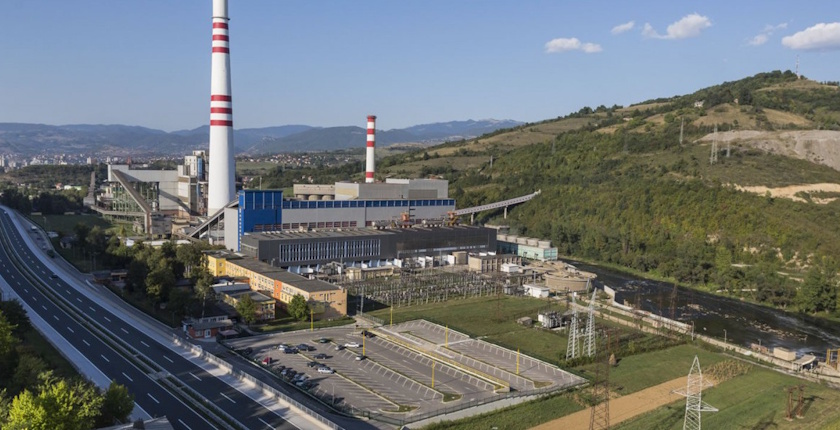
Kakanj, the second-largest electricity producer in the EPBiH portfolio, has three operational units with a total capacity of 450 MW. Unit 6 has a capacity of 110 MW.

The municipal authorities said in the statement that, if necessary, it would invite residents to protest in front of the thermal power plant, which is seen as the main culprit for the alarming air pollution levels in recent months.

The local cement plant is urged to stop using alternative fuels

According to BiH media reports, recent sulfur dioxide (SO₂) levels in Kakanj have exceeded all permitted limits, posing an immediate threat to public health.

The municipality also issued a fresh request to the FBiH inspection body to inspect the operation of the thermal power plant, as well as Heidelberg Materials Cement, which has been asked to stop using alternative fuels.

The municipality will also demand a report on the desulfurization project at Kakanj

The municipality said it would demand that the thermal power plant provide a report on the progress and timeline of works on the ongoing desulfurization project, including the expected completion date.

EPBiH is implementing the desulfurization project at units 6 and 7 at Kakanj, hoping to reduce SO2 emissions by about 98.5%. SO2 emissions will be reduced to below 150 mg/Nm3, or nearly 60 times lower than current levels, EPBiH said in October.

Last year, the company was the largest power producer in BiH. Kakanj generated 1,431 GWh or 27% of EPBiH’s output.

One of the largest SO2 emitters in the region

Three years ago, the Energy Community Secretariat opened a case against Bosnia and Herzegovina for failing to shut down two units at the Kakanj and Tuzla thermal power plants despite the expiry of the 20,000 operating hours permitted after January 1, 2018, under the opt-out mechanism.

Kakanj was also mentioned in Bankwatch’s annual Comply or Close report, published in June this year.

According to the report, six power generation units in the Western Balkans exceeded their individual ceilings for SO2 emissions by more than ten times – Ugljevik, Gacko, Tuzla 6 and Kakanj 7 in Bosnia and Herzegovina; Kostolac A2 in Serbia; and Bitola B1 and B2 in North Macedonia.

by in News

Zagreb to invest EUR 56 million in waste management, low-emission machinery

Croatia’s capital, Zagreb, intends to invest EUR 56 million in waste management, green areas, and low-emission machinery. It expects the investment to reduce the environmental footprint of its municipal utilities and their operating costs.

Zagreb Holding (ZGH), the umbrella firm for the city’s utility companies, has requested approval from the authorities for a long-term EUR 56 million green loan agreement.

The Zagreb city assembly will decide on the request on December 16.

The green loan agreement with the International Finance Corporation (IFC) would finance investments aimed at supporting the development of circular waste management by procuring lower-emission vehicles and machinery for separate waste collection, developing green spaces, and maintaining roads.

ZGH to introduce smart waste management technologies

The loan would also be used for primary waste separation infrastructure, bio-waste treatment facilities, as well as information and communication technologies for data-driven smart waste management operations, ZGH said.

The company intends to replace its existing outdated machinery by acquiring municipal vehicles, machines, and equipment, with the aim of increasing operational efficiency and the scope of services provided to citizens.

Additionally, this investment will have a significant environmental impact by reducing greenhouse gas emissions.

NOx and PM emissions will be reduced by up to 80%

According to an analysis by ZGH, the average age of more than 300 vehicles, machines, and pieces of equipment is 14 years, which significantly exceeds the average economic service life of vehicles and machines. More than 70% of the vehicles do not meet current environmental standards (EURO 6), which leads to negative impacts on the environment and rising maintenance costs.

Thanks to the investment in EURO 6 and Stage V compliant vehicles, emissions of nitrogen oxides (NOx) and PM particles would be reduced by up to 80%, the update reads.

ZGH plans to introduce digital systems to increase the operational efficiency of its vehicles and machinery, such as monitoring fuel consumption, technical condition, and mileage.

The loan proceeds will be allocated to the city’s public utilities.

The waste utility Čistoća will receive EUR 22.2 million, road utility Zagrebačke Ceste EUR 14.9 million, green areas utility Zrinjevac EUR 16.4 million, cemetery utility Gradska Groblja EUR 861,000, the ICT Sector EUR 1.5 million, and the customer relations sector EUR 120,000.

by in News

Bruegel: Without refining or delaying CBAM for electricity, EU risks market integration, security of supply

Unless the rules are refined for the electricity sector, the Carbon Border Adjustment Mechanism (CBAM) risks undermining the European electricity market integration and security of supply, Brussels-based think tank Bruegel warned.

Bruegel has analyzed the impacts of the application of CBAM, set for January 1, 2026. The tax will apply to steel, cement, iron, aluminium, fertilizers, hydrogen, electricity, and also to the cross-border trade in electricity.

The think tank proposes the application of CBAM in the electricity sector to be reconsidered, or at least for it to be postponed until 2028.

“Including electricity from January 2026 risks undermining European electricity market integration and security of energy supply, while the climate benefits are unclear. A delay could form part of a constructive compromise in an ongoing CBAM revision,” Ben McWilliams, Rouven Stubbe and Georg Zachmann wrote.

Ukraine and the Western Balkans will face implied export penalties of EUR 70-80 per MWh

The trading partners affected by CBAM on electricity are the United Kingdom, Morocco, the Western Balkans – Albania, BiH, Kosovo*, Montenegro, North Macedonia, and Serbia – Ukraine, Moldova and Turkey.

According to the analysis, Ukraine and the Western Balkans will face implied export penalties of EUR 70 per MWh to EUR 80 per MWh. It will significantly reduce trade with the EU, the authors stressed.

Ukraine’s electricity exports to the EU are expected to drop more than 60% from the level in a scenario without CBAM – from 6 TWh to 2.5 TWh, they added.

Additional trade barriers on the EU’s eastern borders would slow electricity market integration.

The export of solar power from Greece to other EU countries could also be affected by CBAM

“Falling average electricity prices, lower market values for renewables and increased price volatility would also reduce incentives to invest in renewable assets in these countries. Moreover, the Western Balkans is an important transit region for intra-European electricity trading. The export of solar power from Greece to other EU countries, for example, could also be affected by CBAM,” the analysis reads.

The authors said the policy goal of integrating Energy Community countries into the EU’s internal energy market is strategically more important than addressing carbon leakage and argued that, in the long run, it is more important from a climate perspective, too.

Not clear whether the application of CBAM to the electricity trade will deliver

They recalled that the purpose of CBAM is to reduce the risk of so-called carbon leakage, as well as to encourage third countries to implement domestic carbon pricing.

“However, it is not clear that the application of CBAM, as currently designed, to the electricity trade will deliver on either front,” the authors said. They named two reasons why carbon leakage in the electricity sector is problematic. The free allowances issued to electricity producers under the ETS were already phased out in 2013 – implying that electricity is not considered by the European Commission to be a sector at serious risk of carbon leakage.

The current CBAM legislation is not clear enough

Secondly, the current CBAM legislation is not clear enough. Unless hard-to-fulfil conditions apply, the Regulation (EU) 2023/956, which established CBAM, proposes that default carbon emission values be applied.

The outcome is that the values in question are calculated according to the last five-year average CO2 intensity of electricity produced from fossil fuels. It is problematic because electricity is exported when prices in one grid are lower than in another, which typically happens when renewables output is high, the think tank underlined in its analysis.

It is also unfair because power systems are evolving – production from fossil fuels is decreasing and renewables generation is increasing.

The coupling of the electricity markets of Energy Community countries is unlikely before 2028

Regarding CBAM’s intention to push third countries to introduce carbon pricing, the authors said that the first developments indicate some results.

However, they explained that an exemption for the electricity sectors of third countries is available under certain conditions, including electricity market coupling and the introduction of an ETS with an equivalent price to the EU ETS by 2030.

The CBAM charge sets off in January 2026, and the coupling of the electricity markets of Energy Community countries is unlikely before 2028, which means that an exemption for electricity cannot be secured before that date under current rules, the analysis underlined.

The solution

The authors pointed out that the potential gains from including electricity in CBAM are limited, compared to the frictions it will create. They suggested to the EU to follow the lead of the UK, which doesn’t plan to include electricity in its own CBAM, and thus to drop electricity from its sectoral coverage.

Otherwise, the authors proposed a revision of the calculation of default carbon emissions, and application delay until 2028 with additional analysis on the risk of carbon leakage in the electricity sector.

Regarding the default carbon emissions, five-year average CO2 intensity should be substituted for average grid emission factors calculated on an hourly or 15-minute basis, administered by the European Network of Transmission System Operators for Electricity (ENTSO-E) and national transmission system operators.

The application of CBAM to electricity should be delayed until 2028 to avoid disruption to the electricity trade and to give more time for the introduction of domestic carbon pricing and the coupling of electricity markets, the authors of the analysis concluded.

* This designation is without prejudice to positions onstatus and is in line with UNSCR 1244/99 and the ICJ Opinion on the Kosovo declaration of independence.
by in News

Desulfurization project at Kakanj thermal power plant to cut emissions by almost 100%

Bosnia and Herzegovina’s state power utility, Elektroprivreda BiH, is implementing a desulfurization project at units 6 and 7 of the Kakanj thermal power plant. The project is expected to reduce sulfur dioxide (SO₂) emissions by about 98.5%.

Currently, SO₂ emissions from the Kakanj plant amount to around 9,000 milligrams per cubic meter (mg/Nm3). With the construction of a joint desulfurization facility for units 6 and 7, the emissions will be cut by nearly 60 times, to below 150 mg/Nm3.

According to Bosnia and Herzegovina’s state power utility, Elektroprivreda BiH (EPBiH), the project is being implemented in line with Energy Community directives, which prohibit the operation of thermal units without desulfurization and denitrification systems after 2027, as well as with the obligations under Bosnia and Herzegovina’s National Emission Reduction Plan (NERP BiH) and EPBiH’s Energy Transition and Decarbonization Strategy until 2050.

Thanks to previously installed hybrid filters, dust emissions have already been reduced to below 10 mg/Nm3, significantly below the limits set by NERP BiH and EU directives, EPBiH said in a statement. The company also plans to build a denitrification facility to ensure nitrogen oxide (NOₓ) emissions are fully compliant with these regulations.

The denitrification project is valued at EUR 28.1 million

“Although these projects will allow the operation of our units beyond January 1, 2028 – ensuring the production of electricity from our own sources and heat for the town of Kakanj – the most important benefit for us as a socially responsible company will be the one we feel directly, in terms of improved quality of life. Cleaner air is a key factor in protecting public health and the environment, and it also strengthens our relationship with the local community. At the same time, we are ensuring continued operation of the coal mines that supply the power plant,” said EPBiH General Director Sanel Buljubašić.

The desulfurization project is worth BAM 126.4 million (EUR 62.8 million) and is financed with EPBiH’s own funds. The denitrification project will require an additional BAM 55 million (EUR 28.1 million). Upon completion, the Kakanj power plant will be fully compliant with EU directives and ready to operate for the next two decades.

Revitalization of Unit 7 underway

The desulfurization work on the 300-meter-tall chimney is expected to be completed by the end of this year. In parallel, EPBiH is carrying out the revitalization of Unit 7 – an investment worth BAM 80 million (EUR 40.9 million). These works should be completed by the end of May 2026, extending the unit’s lifespan by another 15 years.

Due to these activities, the plant’s current production is around 40% of its full capacity, according to the statement.

Preparations for desulfurization at thermal power plant Tuzla

In an effort to secure continued electricity generation from its coal-fired plants beyond the deadline set by the Energy Community, EPBiH is also preparing a desulfurization project for the Tuzla thermal power plant. The investment is estimated at BAM 170 million (EUR 86.9 million). The evaluation of bids for Unit 6 is underway, while tender documentation for units 4 and 5 is being prepared.

EPBiH’s goal is to cut overall emissions by up to 80% by 2050 by modernizing existing units and increasing generation from renewable energy sources, which will help reduce pollution significantly, improve public health, and protect ecosystems.

Sulfur dioxide emissions remain a major challenge for coal power plants across the Western Balkans. According to Comply or Close, a report by environmental organization Bankwatch, these plants emitted six times more SO₂ in 2024 than allowed, while combined PM and NOx emissions once again exceeded legal limits.

In 2024, Bosnia and Herzegovina’s thermal power plants became the region’s top sulfur dioxide polluters for the first time, releasing a total of 212,840 tonnes, or 17.1% more than in 2023 and 11.3 times above the permitted level.

by in News

Slovenia allocates EUR 375 million for sustainable mobility

Slovenia has allocated EUR 835 million from the Climate Fund for climate change mitigation and adaptation. The funds should be used over the period 2025-2028.

The Government of Slovenia has adopted a decree on the allocation plan for the Climate Fund for 2025-2028. The plan follows the key measures from the previous plan for the period 2023-2026 and adds funds for 2027 and 2028. The amount is determined based on expected revenues from emission allowance auctions.

Emission allowances are part of the European Union Emissions Trading System (EU ETS).

The funds will be directed to sectors addressing the main climate challenges, both in mitigation and adaptation to climate change. Measures supporting the green transition and increasing the country’s resilience to climate change will also be supported, according to the Government of Slovenia.

EUR 121 million was allocated for decarbonizing the economy

The largest chunk will go to sustainable mobility – EUR 375 million. The funds will be used for investments in public transport – purchase of new trains and buses, renovation of ticketing and information systems, co-financing of zero-emission vehicles and charging infrastructure, promotion of cycling and walking, and shifting freight transport from roads to rail.

EUR 121 million is designated for decarbonizing the economy. The government will co-finance successful European Union projects, support the introduction of a circular economy and sustainable reporting for small and medium-sized enterprises, as well as investments in industrial decarbonization.

Energy renovation of public and residential buildings, measures to reduce energy poverty, and the construction of nearly zero-energy buildings are also part of the allocation plan. There is EUR 111 million for such activities.

EUR 26 million is set for awareness raising and education

EUR 95 million is designated for renewable energy sources. The funds will be used to replace outdated household heating devices with modern ones and heat pumps, as well as for energy storage, geothermal energy, and measures to increase the energy self-sufficiency of buildings.

The Climate Fund will support additional climate change adaptation measures. The activities include reducing flood risks, preserving biodiversity, adaptation in forestry and agriculture, and strengthening the resilience of local communities. The allocated funds amount to EUR 49 million.

Slovenia has envisaged EUR 12 million for international climate change financing and EUR 26 million for awareness raising and education.

  • 1
  • 2