by in News

Europe’s Environment 2025 report: Not good

Biodiversity is declining and water stress is affecting one third of Europe’s population and territory, while the frequency and magnitude of climate-related disasters are increasing. In short, this is the message from the report Europe’s Environment 2025.

​Europe’s Environment 2025 is the most comprehensive analysis on the current state and outlook for the continent’s environment, climate, and sustainability, building on data from across 38 countries, according to the European Environment Agency (EEA).

The outlook for most environmental trends is concerning and poses major risks to Europe’s economic prosperity, security, and quality of life, the authors warned. The agency said climate change and environmental degradation pose a direct threat to Europe’s competitiveness, pointing out that it depends on natural resources.

Progress on a range of factors that enable the shift towards sustainability – such as innovation, green employment, and sustainable finance – gives cause for hope, EEA added.

​More than 80% of protected habitats are in a poor or bad state

The report shows biodiversity is declining across terrestrial, freshwater, and marine ecosystems in Europe due to persistent pressures driven by unsustainable production and consumption patterns, demonstrated most notably in the food system.

More than 80% of protected habitats are in a poor or bad state, with 60% to 70% of soils degraded, the document reads.

On a positive note, the extent of protected areas increased over the past decade – by 2022, 26.1% of the European Union’s land and 12.3% of its seas were protected. However, designating protected areas alone does not guarantee that biodiversity is effectively protected, the authors wrote.

​Water stress is affecting one third of Europe’s population and territory

The report’s findings point to severe pressure on water resources: water stress is affecting one third of Europe’s population and territory.

Only 37% of surface water bodies had a good or high ecological status in 2021, with the degradation of aquatic ecosystems threatening Europe’s water resilience. Agriculture is responsible for the most significant pressure on both surface and groundwater, data revealed.

EEA recalled that Europe is the fastest-warming continent on the planet.

Weather- and climate-related extremes caused economic losses of assets estimated at EUR 738 billion in the EU’s 27 member states over the period 1980-2023, with over EUR 162 billion in costs from 2021 to 2023 alone, the report reads.

Over 70,000 people in Europe are estimated to have died from heat in 2022.

The average annual economic losses in the 2020‑2023 period were 2.5 times as high as in the preceding decade, from 2010 to 2019, according to the report.

Downpours are increasing in severity, with several regions subject to catastrophic floods in recent years, while extreme heat, once rare, is becoming more frequent, with deadly consequences: over 70,000 people in Europe are estimated to have died from heat in 2022.

The greatest challenges call for a need to rethink the links between the economy and the natural environment, land, water and natural resources, EEA underscored.

“We cannot afford to lower our climate, environment and sustainability ambitions. Our state of environment report, co-created with 38 countries, clearly sets out the science-based knowledge and demonstrates why we need to act. In the European Union, we have the policies, the tools and the knowledge, and decades of experience in working together towards our sustainability goals. What we do today will shape our future,” EEA Executive Director Leena Ylä-Mononen said.

Bright spots

The report also highlighted the good results of environmental protection policies in Europe.

The EU has cut its domestic greenhouse gas (GHG) emissions by 37% since 1990, largely driven by reducing fossil fuel use and doubling the share of renewables since 2005.

All member states have reduced their reliance on fossil fuels and shifted towards more sustainable energy sources over the last decade, while increased energy efficiency has brought down demand.

In 2023, renewable energy sources represented over 24% of the EU’s final energy use, a record high.

The bloc’s industrial system has managed to reduce emissions by more than 35% from 2005 to 2023, while emissions from buildings fell by more than 35% between 2005 and 2023.

Significant progress has been made in reducing pollution in Europe. EU policies led to improvements in air quality and reduced premature deaths attributable to fine particulate matter from 2005 to 2022 by 45%, according to the Europe’s Environment 2025 report.


by in News

Google reveals Gemini AI’s energy and water consumption

Artificial intelligence (AI) is becoming increasingly important in our daily lives, but its rapid expansion is raising concerns about how much energy it consumes. Google has become the first tech company to publish a report on the energy consumption, emissions, and water use of its AI software, Gemini.

Google estimates that the median Gemini text prompt uses 0.24 watt-hours (Wh) of energy, emits 0.03 grams of CO2 equivalent, and consumes 0.26 milliliters (or about five drops) of water. “The per-prompt energy impact is equivalent to watching TV for less than nine seconds,” according to a press release from the company.

When applying a non-comprehensive methodology, which only considers the consumption of active TPU and GPU chips, the median Gemini text prompt uses 0.10 Wh of energy, emits 0.02 gCO2e, and consumes 0.12 mL of water.

On the other hand, Google’s comprehensive methodology includes the energy and water consumption of the software itself, the operation of IT equipment in data centers, the energy used by chips while idle, as well as the amount of water used to cool the equipment.

It should be noted, however, that energy consumption depends on multiple factors, including prompt length, the number of users, and the model’s efficiency.

Google’s AI is becoming increasingly efficient thanks to innovations

Google claims that its consumption of energy and water for AI is “substantially lower than many public estimates.” It also stresses that its AI systems are becoming more efficient through research innovations and software and hardware efficiency improvements.

Over a recent 12-month period, the energy and total carbon footprint of the median Gemini Apps text prompt dropped by 33 times and 44 times, respectively, while delivering higher-quality responses, the company claims.

Google has announced that it will continue investing in technologies that reduce per-prompt energy and water use, as well as emissions associated with AI systems. By 2030, the company aims to achieve net-zero emissions and to replenish 120% of the freshwater consumed in its data centers and offices.

However, despite Google’s efforts to reduce emissions, they have soared 51% compared to 2019, driven by the expansion of data center capacities needed for training and running AI models.

By 2030, data centers could be consuming 4.5% of global electricity generation

Data centers are essential for the operation of AI systems, and the International Energy Agency (IEA) estimates that their total electricity consumption could double by 2026, reaching 1,000 TWh per year, equivalent to Japan’s entire annual electricity use.

According to research firm SemiAnalysis, the expansion of AI could lead to data centers using 4.5% of total global electricity generation by 2030.

by in News

Belgrade in focus: challenges and solutions for sustainable urban development

Author: Ivan Gazdić, Attorney at Law and Partner at Petrikić & Partneri AOD in cooperation with CMS Reich-Rohrwig Hainz

For many years, Belgrade has struggled with long-standing urban, infrastructural and environmental challenges that have impeded its progress towards sustainable development in accordance with the standards of contemporary European cities. The main obstacles to Belgrade’s urban advancement include poorly regulated construction, persistent traffic congestion, high levels of air pollution and a chronic lack of green spaces. To reach the level of cities like Vienna or Paris, Belgrade should undertake systemic reforms, establish a clear development strategy, and ensure more decisive action by the city authorities.

An analysis of the current situation reveals that Belgrade holds significant potential for transformation. This ranges from preserving its cultural heritage and implementing coordinated development in the city centre to introducing sustainable mobility solutions tailored to pedestrians and cyclists. Further opportunities lie in investing in green initiatives and developing affordable housing, drawing on best practices from across Europe. Nevertheless, without a more robust city budget and stronger support from both experts and the wider public, these ambitions risk remaining little more than aspirations.

Architectural identity of Belgrade: between heritage preservation and modern development

Achieving sustainable urban development in Belgrade requires a careful balance between modern construction and the preservation of historical architecture. Areas featuring buildings from the late 19th and early 20th centuries – structures that form the bedrock of Belgrade’s cultural heritage and architectural identity – are particularly vulnerable.

Among the architectural styles of this period, academism stands out as especially prominent. Its defining features – symmetry, monumentality and richly decorated façades – have left a lasting imprint on the city’s visual and cultural character. The National Theatre and the National Museum are among the most distinguished examples of academic architecture in Belgrade, and the city’s main cultural landmarks at the Republic Square (Trg Republike), one of the city centre’s most significant urban spaces.

The new opera house could be designed to incorporate elements of academism

For these reasons, any new development in the central urban zones needs to be approached with great care and fully harmonised with the historical context.

One notable proposal in recent years is the construction of a landmark opera house on the site of the current Staklenac shopping centre at the Republic Square. Given the enduring popularity of the historicist and decorative styles among Belgrade residents, the new opera house could be designed to incorporate elements of academism.

Such an approach would not only ensure architectural coherence with the National Theatre, but would also create a direct aesthetic and cultural link to the era when the idea of building an opera house in Belgrade was first seriously considered.

Opera (photo: AI-generated illustration – OpenAI, 2025)

However, it is important to emphasise that preserving Belgrade’s identity does not mean relying solely on historical architectural styles. Contemporary Serbian architecture is equally important for maintaining the authenticity of the city’s urban fabric and adapting it to modern needs.

To fully harness this potential, the city should continuously promote local architects through regular public competitions, professional exhibitions, and the implementation of the most successful proposals – following the model of established European architectural practices. Initiatives such as BINA and mandatory architectural competitions create opportunities for innovation and give young architects in Belgrade a chance to shape the city’s contemporary architectural identity.

Mia Dorćol, an award-winning project of the Zabriskie studio, one of the notable examples of contemporary architecture in Belgrade (photo: zabriskie.rs/Ilya Ivanov)

One of the most notable examples of successful public architectural competitions in Serbia was the international competition held in 2021 for the new Belgrade Philharmonic building at Ušće, organised by the United Nations Development Programme (UNDP) and the Government of Serbia.

The winning proposal, by London-based Amanda Levete Architects (AL_A), envisioned a concert hall without a defined front or back façade, allowing for seamless integration with the landscape of Ušće Park and the Danube River. Architect Amanda Levete described the project as “an expression of harmony between nature, architecture and music”, emphasising the need to “bring nature back into our cities to make them greener and more beautiful places”.

In line with this vision, the design features a green roof and landscaping with native tree species. The new Philharmonic building thus stands as an example of sustainable and contemporary architecture in Belgrade. However, despite receiving positive evaluations from the professional community, the project has been delayed due to uncertain funding and administrative hurdles relating to the building permit.

Future Belgrade Philharmonic building, integrated into the Ušće Park landscape (render: AL_A/Zabriskie Studio)

Unfortunately, the opportunity to showcase contemporary domestic architecture through the Belgrade Waterfront project appears to have been missed. The project has frequently been criticised for its lack of alignment with the urban and cultural context of Belgrade. According to many architects, it prioritises spectacle and commercial appeal over authenticity, failing to reflect the spirit of Belgrade’s urban culture.

It draws neither from the architectural language of Belgrade academism nor from the legacy of socialist modernism in New Belgrade, instead adopting the global International Style – a contemporary architectural trend that heavily favours glass and steel, with little regard for local or historical references.

Given the growing disconnect between new construction and the historical character of central Belgrade, establishing a professional body to oversee architectural standards in the inner city seems increasingly necessary. Composed of architects and art historians, such a body would be empowered to review new projects and reject or condition those that are not appropriate for the historic urban core of the capital.

Terazije as the Times Square of Belgrade

Walking through Terazije in Belgrade, it’s hard not to notice the Albania Palace – a building that has stood as a symbol of modern architecture in the capital for decades. Interestingly, before the Second World War, there was a plan to build Mitić’s Palace, intended for a different location but never realised. However, when we look at the architectural drawings of Mitić’s Palace, the resemblance to Albania Palace is striking, allowing us to imagine what Albania might have looked like had it been built with a few additional floors.

Mitić’s Palace, an excerpt from the newspaper Vreme, 10 November 1940, p. 5 (digitised by the University Library Svetozar Marković)

In her text on the history of the building, Milica Ceranić notes that architect Ivan Zdravković once remarked that the Albania Palace appeared somewhat unbalanced – as if something were missing from the top. The idea of upgrading the building was considered in the late 1980s, when architect Branko Bon proposed adding several floors to make the structure “more graceful and less squat”.

With careful planning and respect for heritage preservation guidelines, such an upgrade could one day restore the building’s lost prominence, which was diminished by the construction of taller surrounding buildings in the second half of the 20th century. It could also help reshape the modern image of Terazije as a lively urban square in Belgrade – echoing the energy of major public squares around the world.

Why Belgrade isn’t a city for cyclists – and why it needs to become one

Traffic and mobility remain among key unresolved urban issues in Belgrade. The lack of a developed cycling infrastructure, combined with an overburdened public transportation system, is recognised as one of the main factors contributing to traffic congestion and increased air pollution. Introducing safe, physically separated bike lanes in the capital would not only improve road safety but also encourage broader use of bicycles as a means of transport.

Following the construction of a network of physically separated bike lanes in Seville, the number of bike trips rose by more than 400%, while the risk of traffic accidents per trip dropped by around 60%. In Belgrade, where cyclists often ride on pavements due to the lack of space on the roads, the need for the planned development of safe and separate bike infrastructure is becoming increasingly clear.

A cyclist in Paris near the Eiffel Tower, 2025 (photo: © Olivier DJIANN/iStock)

In central Belgrade, heavy traffic congestion is often caused by vehicles parked on pavements and a chronic shortage of garages, while pedestrian zones are limited to just a few streets – such as Knez Mihailova, Obilićev Venac and Topličin Venac.

Experts have long emphasised the need to expand pedestrian zones in Belgrade, which is standard practice in well-organised European cities. Instead of serving as a pedestrian zone and an attractive tourist destination, Kosančićev Venac, the oldest preserved historical area in Belgrade, has been left to traffic chaos and is clogged with parked cars every day.

Prioritising infrastructure that supports sustainable mobility is no longer just a matter of urban planning – it is a question of public health and the city’s long-term resilience

Recently, Paris held a referendum approving the gradual closure of 500 additional streets to traffic and a 10% reduction in parking, significantly decreasing the number of cars in the city centre. At the same time, the Paris city administration is investing in the creation of new parks and the expansion of green areas in urban neighbourhoods, accompanied by a strong public push for streets to be shared more fairly and adapted to the needs of pedestrians and cyclists.

In addition to enhancing safety and accessibility for pedestrians and cyclists, investing in new infrastructure plays a vital role in protecting the environment. Encouraging alternative modes of transport, such as cycling and walking, helps reduce car dependency, leading to lower emissions of harmful pollutants that significantly degrade air quality in Belgrade.

Cities like Copenhagen and Amsterdam, which have consistently invested in pedestrian-friendly and cycling infrastructure, report noticeably lower pollution levels and a higher quality of life for their residents. With air pollution episodes becoming increasingly frequent in Belgrade, prioritising infrastructure that supports sustainable mobility is no longer just a matter of urban planning – it is a question of public health and the city’s long-term resilience.

Energy efficiency and urban sustainability in Belgrade

  • nZEB and ZEB standards: EU regulations and Serbia’s position

Energy efficiency is a cornerstone of the European Union’s climate and energy policy. Under the revised Energy Performance of Buildings Directive (EPBD), all new buildings in the EU must meet near-zero energy building (nZEB) standards, while existing buildings are to be systematically renovated to reduce both energy consumption and greenhouse gas emissions.

The Fit for 55 package has raised the bar even higher: by 2030, the EU aims to reduce overall greenhouse gas emissions by at least 55% compared to 1990 levels, with the building sector expected to play a key role in achieving this target.

nZEB standards are still not clearly defined at the national level

The most recent revision of the EPBD stipulates that, beginning on 1 January 2028, all newly constructed public buildings must comply with the Zero‑Emission Building (ZEB) standard. Starting on 1 January 2030, this requirement extends to all new buildings – both residential and non‑residential. ZEBs must feature extremely high energy performance, produce zero on-site carbon emissions from fossil fuels, and ensure that any remaining energy demand is met exclusively through renewable energy sources (on-site, nearby, or via district systems).

As a contracting party to the Energy Community and a candidate for EU membership, Serbia is required to gradually align its national legislation with EU regulations. However, nZEB standards are still not clearly defined at the national level, and to date, no public building in Serbia has been constructed according to these criteria.

  • National project for nearly zero-energy buildings: Belgrade among participating cities

The Nearly Zero-Energy Buildings in Serbia project, launched at the end of 2023, has a total budget of EUR 77.68 million – EUR 50 million in concessional loans from KfW and EUR 27.68 million in grants provided by the EU, the German government, REEP and IPA funds. The project consists of three components: the energy rehabilitation of approximately 35 public buildings, the installation of solar panels on around 125 buildings, and the pilot construction of one or two buildings in line with the nZEB standard.

Implementation is scheduled to continue until February 2026, with expected energy savings of at least 40% and an overall annual reduction in CO₂ emissions of around 11,750 tonnes (6,900 tonnes through building rehabilitation and 4,850 tonnes through solar panel installation). So far, teams and working groups have been established to identify the buildings to be included, while public calls and the start of construction work are expected in 2025. The locations and building types planned under the nZEB pilot component have not yet been disclosed, indicating that this part of the project is still in the preparatory phase.

  • International support for energy efficiency: 30 public buildings in Belgrade undergoing renovation

In 2024, two major energy renovation projects for public buildings were launched in Belgrade, with a combined value exceeding EUR 50 million.

The first project involves the rehabilitation of 26 state-owned buildings – including the Palace of Serbia and the Institute for the Improvement of Education – with support from the Council of Europe Development Bank (CEB) and UNDP. Completion is planned for 2027. The upgrades include window and door replacement, thermal insulation, LED lighting and other energy efficiency measures, along with the integration of renewable energy sources. These improvements are expected to reduce energy consumption by 36–50%, lower CO₂ emissions by around 45%, and generate average annual savings of EUR 10,000 per facility.

At the same time, the project “EU and EBRD for Energy Efficiency in Belgrade” is underway, targeting four municipal institutions: the Belgrade City Library, the Student Polyclinic, the Student Hospital, and the Institute for Emergency Medical Assistance. The EU has allocated EUR 11 million in grants, while the EBRD has provided an additional EUR 5 million in loans. Similar renovation measures are expected to deliver energy savings of 46–86% and reduce CO₂ emissions by 41–74%. The tender was announced in May 2023, and construction began in May 2024, with completion expected by 2026.

  • Belgrade without a fund, but relying on temporary solutions for residential building renovation

More than 85% of existing residential buildings in Serbia remain energy inefficient. The previously announced city fund for improving energy efficiency – intended to support window and door replacement, façade insulation and heating system upgrades – never came to fruition in its intended form. Instead, the City of Belgrade adopted an alternative model: periodic public calls for awarding subsidies for construction or renovation works, or loans for housing associations.

However, a fund based on the revolving principle would offer a more sustainable solution to the long-term challenge of deteriorating buildings. Initially financed through the city budget and donor contributions and later replenished via user repayments through public utility company Infostan (the City of Belgrade’s consolidated billing and collection of utility services), such a model would enable continuous reinvestment in new projects. This would create a stable, transparent and self-sustaining financing system, with a significantly lower risk of misuse compared to current subsidy schemes and individual loan arrangements.

The Fund for the Improvement of Energy Efficiency in Serbia exists within the legal and strategic framework, but it has yet to be fully institutionalised

At the national level, the Fund for the Improvement of Energy Efficiency in Serbia exists within the legal and strategic framework, but it has yet to be fully institutionalised or to function as an independent operational body.

Currently, funding for energy efficiency is provided through alternative mechanisms – such as public calls from the Ministry of Mining and Energy, local co-financing programmes and international projects. Still, it is expected that the fund will be formally established in the coming years and begin operating at full capacity, aligned with European standards and the goals of sustainable development.

The untapped potential of Belgrade’s rivers: still no wastewater treatment plants

Revitalising the rivers and opening access to the banks of the Sava and the Danube for recreational use would significantly enhance quality of life and boost Belgrade’s tourism appeal. Many European cities have transformed previously neglected riverbanks into vibrant public spaces – a notable example being Madrid’s Madrid Río, a ten-kilometre green oasis created by burying the highway along the Manzanares River and adding walking paths, sports fields, playgrounds and even sandy beaches.

In July 2025, Paris broke a century‑long precedent by officially reopening the Seine to swimming for the first time since 1923, following a EUR 1.4 billion cleanup ahead of the 2024 Olympic Games.

Meanwhile, Zagreb, Budapest and Prague have already built or modernised large facilities for municipal wastewater treatment, yet Belgrade still has over one hundred direct discharges flowing freely into the Sava and the Danube – without any purification. Estimates show that a complete system of sewage collectors and the construction of five wastewater treatment plants would require at least EUR 1 billion to EUR 1.5 billion.

The government signed commercial contracts worth EUR 3.2 billion with Chinese company CRBC

Although the construction of the main wastewater treatment plant in Veliko Selo is included in the national Clean Serbia programme, the method of financing and the exact scope of work have yet to be clearly defined.

Official sources confirm that EU grants were also considered for projects such as the Belgrade wastewater treatment plant (which Serbia uses, but which, according to available reports and assessments by relevant institutions, are insufficient for investments of this scale). Instead, at the end of 2021, the government signed commercial contracts worth EUR 3.2 billion with Chinese company CRBC (financed through a Chinese loan) for the Clean Serbia programme, aimed at building a sewage network and wastewater treatment plants in 65 municipalities at 73 locations across the country, including parts of Belgrade.

Shortage of green spaces: Belgrade falls short of WHO recommendations

According to the World Health Organization (WHO), Belgrade does not have enough green space per capita. This underscores the urgent need for systematic approach to urban planning that focuses on expanding parks and green areas, as well as ensuring more regular and higher-quality maintenance of existing greenery. Rather than relying on an ad hoc approach, the city needs a long-term strategy to increase green space per resident and enhance the overall quality of urban life.

Belgrade is experiencing a declining trend in green space per capita – citywide estimates range between 14 and 20 m² per person, while in central municipalities such as Vračar, that figure drops to just 2 to 3 m². This is significantly below the WHO’s recommended minimum of 9 m² per person, and even further from its ideal benchmark of 50 m² per person.

The forgotten plans of Mali Kalemegdan

As early as the late 19th century, urban planners envisioned transforming the Belgrade Fortress into a structured city park filled with attractions. The first public competition for the design of the Kalemegdan park was held in 1898, and the winning proposal by architect Dimitrije T. Leko included the addition of artificial water features in Mali Kalemegdan (the lower section of the park). Leko’s design featured a small lake – referred to as “the pond” – and a stream with a waterfall located near children’s playgrounds.

This made the park a major attraction in the early decades of the 20th century. At the time, the city even installed a dedicated water supply system, drawing water from the Sava River for irrigation and to fill the ponds. These water features, however, disappeared in 1936 with the construction of the Belgrade Zoo.

Mali Kalemegdan (photo:_AI-generated illustration – OpenAI, 2025)

Reportedly, on the occasion of the 120th anniversary of the first Kalemegdan park plan, some admirers of Belgrade’s historical heritage proposed restoring the stream, waterfall and pond as a tourist attraction. However, the outcome of this initiative remains uncertain.

Most residents of Belgrade seem to agree that Kalemegdan should be cleared of all unnecessary and improvised structures that undermine its cultural and historical character – such as souvenir stalls, temporary kiosks and ad hoc café terraces – that have proliferated over time across the fortress plateaus. Removing these makeshift structures would allow for a more authentic and unobstructed experience of this nationally significant cultural landmark.

Housing and social policy

Unlike Vienna – where as many as 62% of residents live in subsidised apartments with below-market rents – Belgrade has virtually no meaningful stock of municipal housing. Rental and housing prices in the city have reached levels that are disproportionate to local incomes. Experts note that the construction of socially affordable housing would significantly alleviate the housing crisis, particularly among young people and students. While Vienna invests approximately EUR 600 million annually in the construction of new apartments, thereby helping to stabilise the housing market over the long term, Belgrade allocates only symbolic amounts to such initiatives.

In this context, the public-private partnership (PPP) model could offer an effective solution for building student dormitories and addressing the chronic shortage of student accommodation. One successful example comes from Nikšić, Montenegro, where a student residence was built through a PPP contract. Similar projects are now being explored throughout the Western Balkans.

Budget and financial challenges

The City of Belgrade’s budget for 2025 is approximately EUR 1.6 billion. With an estimated 1.68 million residents within the city’s administrative territory, this translates to around EUR 950 per capita annually. By comparison, Vienna planned a budget of approximately EUR 19.8 billion for the same period; with around 2.03 million residents, this equates to roughly EUR 9,800 per person. Paris adopted a budget of EUR 11.3 billion for 2025, which corresponds to approximately EUR 5,500 per capita, based on a population of about 2.05 million.

In Serbia, local self-governments receive a portion of the personal income tax (PIT) – primarily the salary tax – based on citizens’ registered place of residence. According to the Law on Financing Local Self-Government, since 2016, 77% of salary tax revenues are allocated to cities, while Belgrade receives a reduced share of 66%. These percentages were higher in the past. This means that Belgrade currently retains 66% of the salary tax revenue generated within its territory. Other components of PIT (such as those from self-employment or agriculture) are allocated entirely to local budgets.

It appears that reforms to public finance and fiscal policy should be considered

In contrast, Serbia’s value added tax (VAT) revenue is retained in full by the central government. Local governments do not receive a direct share of VAT; instead, funds are allocated through general, non-earmarked transfers. As a result, Belgrade cannot rely on a stable inflow of VAT revenue – unlike cities in countries such as Austria, where a portion of VAT is allocated directly to local governments and constitutes a significant part of their budgets.

Given these structural limitations and compared with the budgetary capacities of other major European cities, it appears that reforms to public finance and fiscal policy should be considered. Without such changes, Belgrade will continue to face significant constraints in funding strategically important projects – including those essential to the city’s transition towards a greener and more sustainable future.

Is Belgrade ready to catch up with Europe in sustainable development?

Belgrade’s development in the spirit of modern European cities is achievable only through long-term planning, a clear vision and well-defined priorities – not through short-term decisions or frequent shifts in direction. A more functional urban future requires a larger city budget, more efficient use of public funds, and the coordinated implementation of urban planning initiatives.

At the same time, Belgrade should invest in the revitalization of historic urban cores, the expansion of pedestrian zones, the development of cycling infrastructure, the construction of wastewater treatment plants, and the gradual adoption of the “Viennese model” of social housing. Achieving this vision will demand strong political will, strategic governance, and the active engagement of both experts and citizens.

The experiences of cities such as Vienna and Paris demonstrate that, while such development may require significant public investment, it yields numerous long-term benefits.

Ultimately, Belgrade’s trajectory will depend on both the decisions of city leaders and the engagement of its citizens. From the authorities, responsibility is expected; from the public, initiative and participation. Time is not an ally – every decision made today shapes the Belgrade we will live in tomorrow.

by in News

Serbia secures EUR 50 million loan for air quality projects

The Government of Serbia has secured a EUR 50 million loan to fund a series of air quality projects across several cities. The funds will primarily go towards replacing coal- and fuel oil-fired boiler rooms in six cities.

For years, air pollution has been one of the biggest environmental issues in Serbia.

Minister of Environmental Protection Sara Pavkov and First Deputy Prime Minister and Minister of Finance Siniša Mali have signed two agreements with the European Bank for Reconstruction and Development (EBRD), which will soon lead to significant investments in air protection projects in multiple Serbian cities, the Ministry of Environmental Protection said.

Mali signed a EUR 50 million loan agreement, while Pavkov inked the project agreement. On behalf of the bank, both documents were signed by Matteo Colangeli, EBRD Regional Head of the Western Balkans.

EUR 50 million will be invested in cities with the highest levels of harmful emissions

Pavkov noted that based on these agreements, EUR 50 million would be invested in cities mapped as those with the largest excesses of harmful emissions. This is good news for residents of Belgrade, Niš, Valjevo, Zaječar, Novi Pazar, and Smederevo, where the projects will be implemented, she added.

In these cities, old, outdated boilers running on fuel oil, coal, and other fuels with an adverse impact on air quality will be replaced. Modern and sustainable heat energy sources, such as heat pumps, biomass, and industrial waste heat, will be installed, she stressed.

The projects will also include, where possible, connection to district heating systems or natural gas networks.

An air protection law is in the process of adoption

“These projects are the culmination of years of work. We have entered a phase where we can expect the launch of construction and intensification of the efforts for cleaner air, which remains one of our top priorities,” Pavkov stressed.

She recalled that an EBRD loan had helped replace 50-year-old coal boilers with state-of-the-art gas boilers at the Kragujevac district heating plant. The second phase, the remediation of the ash landfill, has also begun, she added.

From 2021 to 2024, the ministry has implemented projects to replace 169 boiler rooms in public institutions across 76 local authorities, according to Pavkov.

Under a public call, funds have been allocated for projects in 18 municipalities in 2025, with another call currently underway. An air protection bill is now before the National Assembly, intended to provide a new overarching framework and fresh momentum in the fight for better air quality, Pavkov noted.

by in News

Sarajevo rolls out fully digital system to track air-polluting emissions

Sarajevo, the capital of Bosnia and Herzegovina, has developed a register of air-polluting emissions and an information system to track pollutants. The register aims to reduce air pollution in Sarajevo, which very often tops the list of the world’s most polluted cities.

The project to develop the emissions register and the air-pollutant information system for the Sarajevo Canton took two years, according to the government of the Sarajevo Canton. During that period, comprehensive data were collected on various air pollution sources, including home fireplaces, boiler rooms, industry, traffic, and agriculture.

In creating the register, nearly 100,000 individual emission sources were analyzed. The emissions of all pollutants from those sources were calculated in line with the European Environmental Protection Agency (EPA) standards.

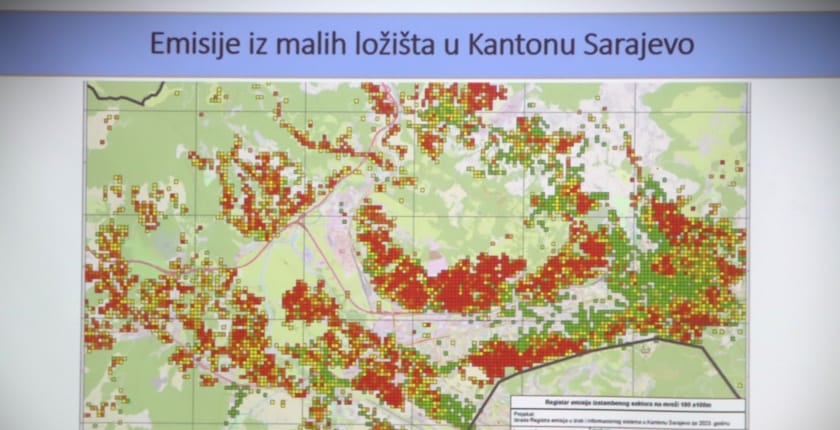
The project has created emissions distribution maps for key pollutants

Compared with previous versions, the new register offers significant improvements. It uses the latest methodologies for the spatial distribution of emissions and data verification, complemented by the establishment of a central GIS database and an interactive web portal.

For the first time, the public can compare emissions data for different pollutants on a high-resolution spatial grid (100×100 meters). In addition to the detailed register of emissions, distribution maps for key pollutants, including particulate matter (PM10), sulfur dioxide (SO2), and nitrogen oxides (NOx), are also available.

The information system is set to be publicly available within a month

According to the government, the system allows for the identification of areas with excessive air pollution. A robust emissions register serves as a foundation for strategic financing of projects aimed at improving air quality, including implementing the Strategy for Limiting the Use of Coal and Other Solid Fuels in the Sarajevo Canton (2023-2033), the government added. The strategy was adopted in February 2024.

The new emissions register and air quality categorization map will provide essential data inputs for future planning and strategies across various sectors, including spatial planning, energy, transportation, and healthcare.

Jansson: Air pollution remains one of the most urgent public health challenges in Sarajevo

Birgitta Jansson, deputy head of development cooperation at the Swedish Embassy in BiH, highlighted air pollution as one of the most urgent public health and environmental challenges in the Sarajevo Canton.

“By taking a pioneering step to make environmental data publicly accessible, the canton is enabling transparent, informed, and long-term action toward cleaner air and climate neutrality – and Sweden is proud to support this important initiative,” she noted.

The Prime Minister of the Sarajevo Canton, Nihad Uk, stressed that the new register allows the government to plan measures more accurately, apply for international funding, and make sustainable decisions based on relevant data.

Softić Kadenić: A unique project in BiH

The Minister of Justice and Administration of the Sarajevo Canton, Darja Softić Kadenić, described the project as unique in BiH, since for the first time it introduces a fully digital, accurate, and comprehensive system for monitoring annual emissions into the air.

It is placing Sarajevo Canton among the more advanced European cities, she added.

According to Raduška Cupać, head of the Energy and Environment Sector at UNDP in BiH, the system is more than a technical tool – it is a strategic asset that empowers institutions, companies, and citizens to take concrete steps toward environmental protection.

The register was developed by a consortium of companies Ceteor, E3, and GDI.

by in News

Trump administration suspends USD 20 billion in emissions reduction funding

The US Environmental Protection Agency (EPA) has frozen USD 20 billion in funding for greenhouse gas reduction projects, citing, among other things, concerns over potential fraud, waste, and abuse, news agencies reported. The move prompted a lawsuit by environmental NGO Climate United Fund, one of the beneficiaries of the program aimed at financing thousands of green energy and climate action projects.

The funding was appropriated by Congress under former President Joe Biden, but the new US administration, led by Donald Trump, decided to freeze it, the reports noted. The Greenhouse Gas Reduction Fund, commonly known as the green bank, was launched in 2022.

The green bank was launched under the Biden administration

In a statement, the EPA said that the Justice Department and the Federal Bureau of Investigation (FBI) were now reviewing the program. Lee Zeldin, the EPA’s new chief, said that “EPA will be an exceptional steward of taxpayer dollars dedicated to our core mission of protecting human health and the environment, not a frivolous spender in the name of ‘climate equity,’” according to news agencies.

The EPA also said it would seek to use the green bank funds “with enhanced controls.”

Over the weekend, Climate United Fund, which had been awarded nearly USD 7 billion under the program to finance clean energy and climate-friendly projects, sued the EPA, demanding access to the funds.

Climate Action Fund had been awarded nearly USD 7 billion for thousands of projects

The organization also sued Citibank, though which the money was to be disbursed, for withholding the funds, according to reports.

In April 2024, it was announced that the EPA had selected eight recipients, including Climate United Fund, to be awarded a total of USD 20 billion in grants to finance tens of thousands of projects aimed at combating climate change and promoting environmental justice. The money was formally awarded in August.

  • 1
  • 2