by in News

Zagreb to invest EUR 56 million in waste management, low-emission machinery

Croatia’s capital, Zagreb, intends to invest EUR 56 million in waste management, green areas, and low-emission machinery. It expects the investment to reduce the environmental footprint of its municipal utilities and their operating costs.

Zagreb Holding (ZGH), the umbrella firm for the city’s utility companies, has requested approval from the authorities for a long-term EUR 56 million green loan agreement.

The Zagreb city assembly will decide on the request on December 16.

The green loan agreement with the International Finance Corporation (IFC) would finance investments aimed at supporting the development of circular waste management by procuring lower-emission vehicles and machinery for separate waste collection, developing green spaces, and maintaining roads.

ZGH to introduce smart waste management technologies

The loan would also be used for primary waste separation infrastructure, bio-waste treatment facilities, as well as information and communication technologies for data-driven smart waste management operations, ZGH said.

The company intends to replace its existing outdated machinery by acquiring municipal vehicles, machines, and equipment, with the aim of increasing operational efficiency and the scope of services provided to citizens.

Additionally, this investment will have a significant environmental impact by reducing greenhouse gas emissions.

NOx and PM emissions will be reduced by up to 80%

According to an analysis by ZGH, the average age of more than 300 vehicles, machines, and pieces of equipment is 14 years, which significantly exceeds the average economic service life of vehicles and machines. More than 70% of the vehicles do not meet current environmental standards (EURO 6), which leads to negative impacts on the environment and rising maintenance costs.

Thanks to the investment in EURO 6 and Stage V compliant vehicles, emissions of nitrogen oxides (NOx) and PM particles would be reduced by up to 80%, the update reads.

ZGH plans to introduce digital systems to increase the operational efficiency of its vehicles and machinery, such as monitoring fuel consumption, technical condition, and mileage.

The loan proceeds will be allocated to the city’s public utilities.

The waste utility Čistoća will receive EUR 22.2 million, road utility Zagrebačke Ceste EUR 14.9 million, green areas utility Zrinjevac EUR 16.4 million, cemetery utility Gradska Groblja EUR 861,000, the ICT Sector EUR 1.5 million, and the customer relations sector EUR 120,000.
by in News

Desulfurization project at Kakanj thermal power plant to cut emissions by almost 100%

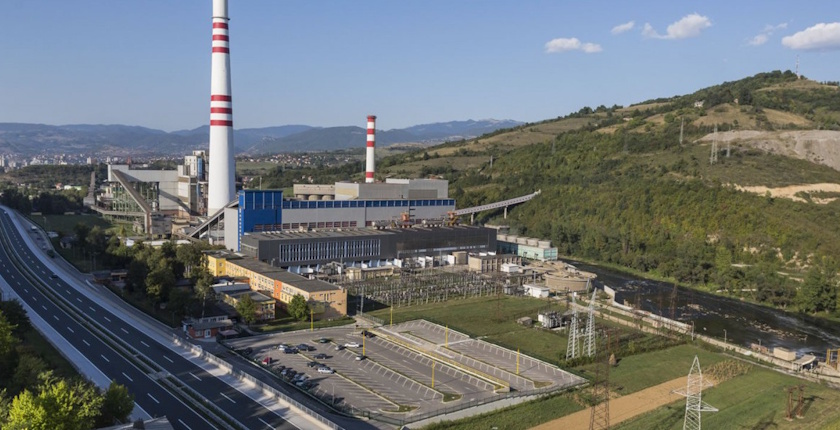
Bosnia and Herzegovina’s state power utility, Elektroprivreda BiH, is implementing a desulfurization project at units 6 and 7 of the Kakanj thermal power plant. The project is expected to reduce sulfur dioxide (SO₂) emissions by about 98.5%.

Currently, SO₂ emissions from the Kakanj plant amount to around 9,000 milligrams per cubic meter (mg/Nm3). With the construction of a joint desulfurization facility for units 6 and 7, the emissions will be cut by nearly 60 times, to below 150 mg/Nm3.

According to Bosnia and Herzegovina’s state power utility, Elektroprivreda BiH (EPBiH), the project is being implemented in line with Energy Community directives, which prohibit the operation of thermal units without desulfurization and denitrification systems after 2027, as well as with the obligations under Bosnia and Herzegovina’s National Emission Reduction Plan (NERP BiH) and EPBiH’s Energy Transition and Decarbonization Strategy until 2050.

Thanks to previously installed hybrid filters, dust emissions have already been reduced to below 10 mg/Nm3, significantly below the limits set by NERP BiH and EU directives, EPBiH said in a statement. The company also plans to build a denitrification facility to ensure nitrogen oxide (NOₓ) emissions are fully compliant with these regulations.

The denitrification project is valued at EUR 28.1 million

“Although these projects will allow the operation of our units beyond January 1, 2028 – ensuring the production of electricity from our own sources and heat for the town of Kakanj – the most important benefit for us as a socially responsible company will be the one we feel directly, in terms of improved quality of life. Cleaner air is a key factor in protecting public health and the environment, and it also strengthens our relationship with the local community. At the same time, we are ensuring continued operation of the coal mines that supply the power plant,” said EPBiH General Director Sanel Buljubašić.

The desulfurization project is worth BAM 126.4 million (EUR 62.8 million) and is financed with EPBiH’s own funds. The denitrification project will require an additional BAM 55 million (EUR 28.1 million). Upon completion, the Kakanj power plant will be fully compliant with EU directives and ready to operate for the next two decades.

Revitalization of Unit 7 underway

The desulfurization work on the 300-meter-tall chimney is expected to be completed by the end of this year. In parallel, EPBiH is carrying out the revitalization of Unit 7 – an investment worth BAM 80 million (EUR 40.9 million). These works should be completed by the end of May 2026, extending the unit’s lifespan by another 15 years.

Due to these activities, the plant’s current production is around 40% of its full capacity, according to the statement.

Preparations for desulfurization at thermal power plant Tuzla

In an effort to secure continued electricity generation from its coal-fired plants beyond the deadline set by the Energy Community, EPBiH is also preparing a desulfurization project for the Tuzla thermal power plant. The investment is estimated at BAM 170 million (EUR 86.9 million). The evaluation of bids for Unit 6 is underway, while tender documentation for units 4 and 5 is being prepared.

EPBiH’s goal is to cut overall emissions by up to 80% by 2050 by modernizing existing units and increasing generation from renewable energy sources, which will help reduce pollution significantly, improve public health, and protect ecosystems.

Sulfur dioxide emissions remain a major challenge for coal power plants across the Western Balkans. According to Comply or Close, a report by environmental organization Bankwatch, these plants emitted six times more SO₂ in 2024 than allowed, while combined PM and NOx emissions once again exceeded legal limits.

In 2024, Bosnia and Herzegovina’s thermal power plants became the region’s top sulfur dioxide polluters for the first time, releasing a total of 212,840 tonnes, or 17.1% more than in 2023 and 11.3 times above the permitted level.

by in News

Sarajevo rolls out fully digital system to track air-polluting emissions

Sarajevo, the capital of Bosnia and Herzegovina, has developed a register of air-polluting emissions and an information system to track pollutants. The register aims to reduce air pollution in Sarajevo, which very often tops the list of the world’s most polluted cities.

The project to develop the emissions register and the air-pollutant information system for the Sarajevo Canton took two years, according to the government of the Sarajevo Canton. During that period, comprehensive data were collected on various air pollution sources, including home fireplaces, boiler rooms, industry, traffic, and agriculture.

In creating the register, nearly 100,000 individual emission sources were analyzed. The emissions of all pollutants from those sources were calculated in line with the European Environmental Protection Agency (EPA) standards.

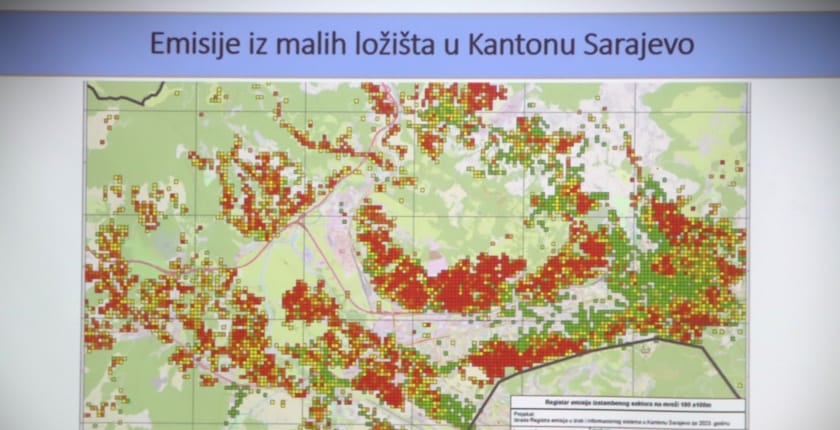
The project has created emissions distribution maps for key pollutants

Compared with previous versions, the new register offers significant improvements. It uses the latest methodologies for the spatial distribution of emissions and data verification, complemented by the establishment of a central GIS database and an interactive web portal.

For the first time, the public can compare emissions data for different pollutants on a high-resolution spatial grid (100×100 meters). In addition to the detailed register of emissions, distribution maps for key pollutants, including particulate matter (PM10), sulfur dioxide (SO2), and nitrogen oxides (NOx), are also available.

The information system is set to be publicly available within a month

According to the government, the system allows for the identification of areas with excessive air pollution. A robust emissions register serves as a foundation for strategic financing of projects aimed at improving air quality, including implementing the Strategy for Limiting the Use of Coal and Other Solid Fuels in the Sarajevo Canton (2023-2033), the government added. The strategy was adopted in February 2024.

The new emissions register and air quality categorization map will provide essential data inputs for future planning and strategies across various sectors, including spatial planning, energy, transportation, and healthcare.

Jansson: Air pollution remains one of the most urgent public health challenges in Sarajevo

Birgitta Jansson, deputy head of development cooperation at the Swedish Embassy in BiH, highlighted air pollution as one of the most urgent public health and environmental challenges in the Sarajevo Canton.

“By taking a pioneering step to make environmental data publicly accessible, the canton is enabling transparent, informed, and long-term action toward cleaner air and climate neutrality – and Sweden is proud to support this important initiative,” she noted.

The Prime Minister of the Sarajevo Canton, Nihad Uk, stressed that the new register allows the government to plan measures more accurately, apply for international funding, and make sustainable decisions based on relevant data.

Softić Kadenić: A unique project in BiH

The Minister of Justice and Administration of the Sarajevo Canton, Darja Softić Kadenić, described the project as unique in BiH, since for the first time it introduces a fully digital, accurate, and comprehensive system for monitoring annual emissions into the air.

It is placing Sarajevo Canton among the more advanced European cities, she added.

According to Raduška Cupać, head of the Energy and Environment Sector at UNDP in BiH, the system is more than a technical tool – it is a strategic asset that empowers institutions, companies, and citizens to take concrete steps toward environmental protection.

The register was developed by a consortium of companies Ceteor, E3, and GDI.