by in News

Elektroprivreda BiH to invest EUR 885 million over next three years

Government-controlled power company Elektroprivreda BiH plans to invest BAM 1.73 billion (EUR 884.6 million) over the next three years, according to its 2026-2028 business plan.

The investments would be financed through loans, and BAM 538 million (EUR 275 million) from own funds of Elektroprivreda BiH (EPBiH), which operates in the Federation of BiH. Of note, it is one of the two entities making up Bosnia and Herzegovina. The other one is the Republic of Srpska.

In line with available funds and restructuring plans, the company intends to continue investing in coal mines within the EPBiH group over the three-year period.

The goal is a stable and sustainable coal production at the volume needed for the planned operation of the thermal power plants, the utility said.

The previous business plan, for the 2025-2027 period, provided for investments of BAM 2.1 billion (EUR 1.074 billion).

The three-year period should be marked by the construction of a large number of PV plants

EPBiH has highlighted the construction of new renewable energy power plants as a long-term strategic and priority goal. The construction of several solar power plants at already identified locations are particularly significant, the plan reads.

The upcoming three-year period should be marked by the construction of a large number of PV facilities at multiple locations on mining sites, company-owned land, on the roofs of its own facilities and those of its customers, EPBiH explained.

EPBiH also plans to acquire operational renewable energy facilities as well as projects in development. The plan envisages the purchase or lease of land suitable for the construction of solar power plants.

Positive business performance and maintaining the position as the dominant electricity supplier in BiH are also outlined in the business plan, adopted by the company’s assembly.

Desulfurization and denitrification of flue gases projects are planned for two thermal power plants

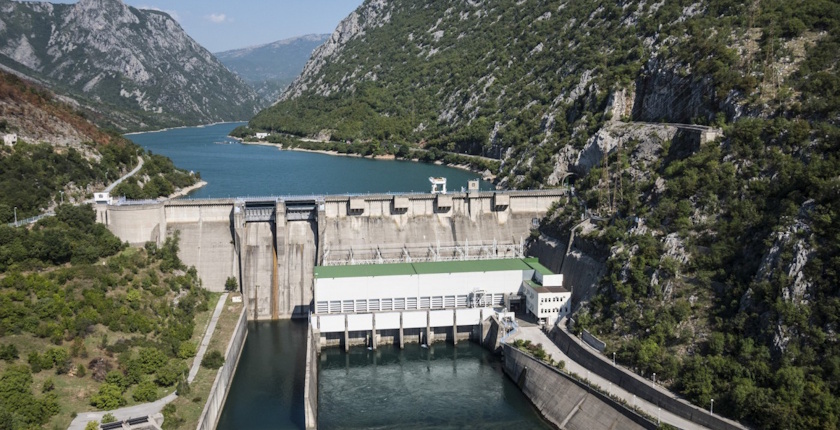
EPBiH has launched flue gas desulfurization and denitrification projects for its Tuzla and Kakanj coal-fired power plants. It would also upgrade unit 7 in Kakanj, unit 4 in Tuzla, and the Salakovac hydropower plant.

The document envisages the establishment of the distribution system operator (DSO), based on the provisions of the Law on Electricity of the Federation of BiH. It came into force in August 2023.

The law stipulates unbundling the distribution activity from EPBiH and establishing the DSO as a separate legal entity, a 100%-owned subsidiary, the company underlined.
by in News

Elektroprivreda BiH to invest EUR 885 million over next three years

Government-controlled power company Elektroprivreda BiH plans to invest BAM 1.73 billion (EUR 884.6 million) over the next three years, according to its 2026-2028 business plan.

The investments would be financed through loans, and BAM 538 million (EUR 275 million) from own funds of Elektroprivreda BiH (EPBiH), which operates in the Federation of BiH. Of note, it is one of the two entities making up Bosnia and Herzegovina. The other one is the Republic of Srpska.

In line with available funds and restructuring plans, the company intends to continue investing in coal mines within the EPBiH group over the three-year period.

The goal is a stable and sustainable coal production at the volume needed for the planned operation of the thermal power plants, the utility said.

The previous business plan, for the 2025-2027 period, provided for investments of BAM 2.1 billion (EUR 1.074 billion).

The three-year period should be marked by the construction of a large number of PV plants

EPBiH has highlighted the construction of new renewable energy power plants as a long-term strategic and priority goal. The construction of several solar power plants at already identified locations are particularly significant, the plan reads.

The upcoming three-year period should be marked by the construction of a large number of PV facilities at multiple locations on mining sites, company-owned land, on the roofs of its own facilities and those of its customers, EPBiH explained.

EPBiH also plans to acquire operational renewable energy facilities as well as projects in development. The plan envisages the purchase or lease of land suitable for the construction of solar power plants.

Positive business performance and maintaining the position as the dominant electricity supplier in BiH are also outlined in the business plan, adopted by the company’s assembly.

Desulfurization and denitrification of flue gases projects are planned for two thermal power plants

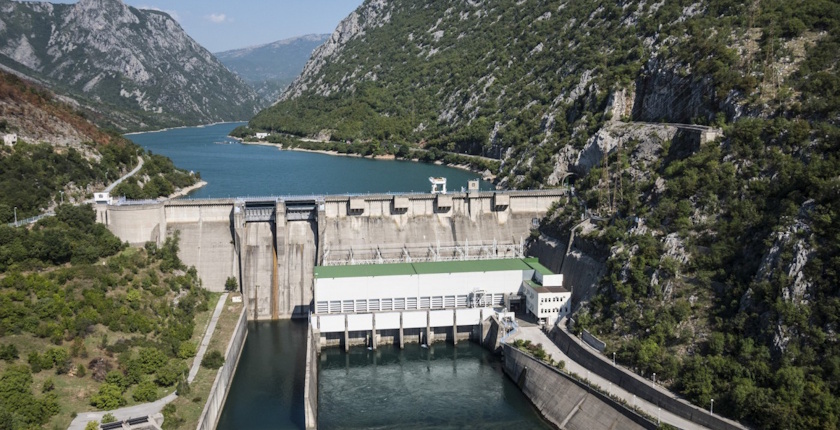
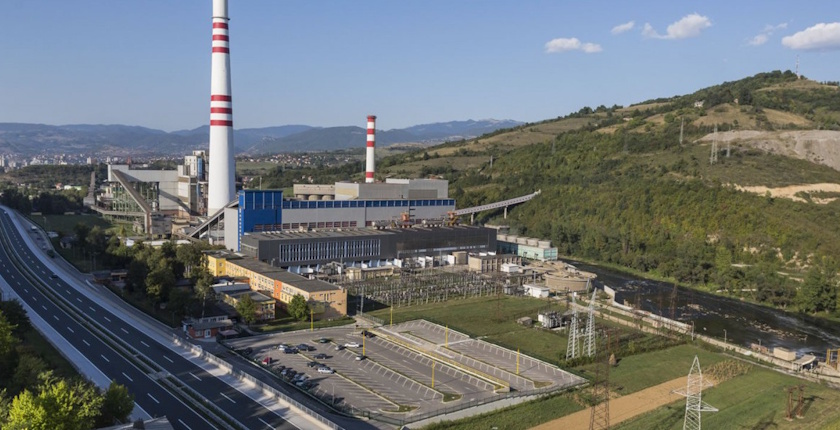
EPBiH has launched flue gas desulfurization and denitrification projects for its Tuzla and Kakanj coal-fired power plants. It would also upgrade unit 7 in Kakanj, unit 4 in Tuzla, and the Salakovac hydropower plant.

The document envisages the establishment of the distribution system operator (DSO), based on the provisions of the Law on Electricity of the Federation of BiH. It came into force in August 2023.

The law stipulates unbundling the distribution activity from EPBiH and establishing the DSO as a separate legal entity, a 100%-owned subsidiary, the company underlined.
by in News

Desulfurization project at Kakanj thermal power plant to cut emissions by almost 100%

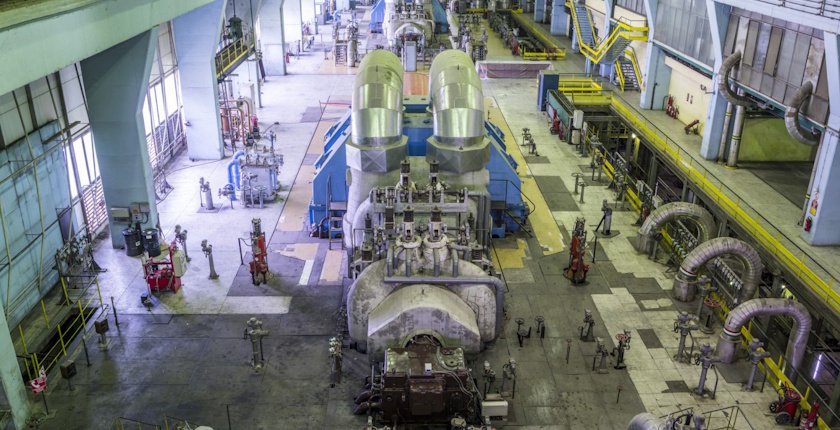
Bosnia and Herzegovina’s state power utility, Elektroprivreda BiH, is implementing a desulfurization project at units 6 and 7 of the Kakanj thermal power plant. The project is expected to reduce sulfur dioxide (SO₂) emissions by about 98.5%.

Currently, SO₂ emissions from the Kakanj plant amount to around 9,000 milligrams per cubic meter (mg/Nm3). With the construction of a joint desulfurization facility for units 6 and 7, the emissions will be cut by nearly 60 times, to below 150 mg/Nm3.

According to Bosnia and Herzegovina’s state power utility, Elektroprivreda BiH (EPBiH), the project is being implemented in line with Energy Community directives, which prohibit the operation of thermal units without desulfurization and denitrification systems after 2027, as well as with the obligations under Bosnia and Herzegovina’s National Emission Reduction Plan (NERP BiH) and EPBiH’s Energy Transition and Decarbonization Strategy until 2050.

Thanks to previously installed hybrid filters, dust emissions have already been reduced to below 10 mg/Nm3, significantly below the limits set by NERP BiH and EU directives, EPBiH said in a statement. The company also plans to build a denitrification facility to ensure nitrogen oxide (NOₓ) emissions are fully compliant with these regulations.

The denitrification project is valued at EUR 28.1 million

“Although these projects will allow the operation of our units beyond January 1, 2028 – ensuring the production of electricity from our own sources and heat for the town of Kakanj – the most important benefit for us as a socially responsible company will be the one we feel directly, in terms of improved quality of life. Cleaner air is a key factor in protecting public health and the environment, and it also strengthens our relationship with the local community. At the same time, we are ensuring continued operation of the coal mines that supply the power plant,” said EPBiH General Director Sanel Buljubašić.

The desulfurization project is worth BAM 126.4 million (EUR 62.8 million) and is financed with EPBiH’s own funds. The denitrification project will require an additional BAM 55 million (EUR 28.1 million). Upon completion, the Kakanj power plant will be fully compliant with EU directives and ready to operate for the next two decades.

Revitalization of Unit 7 underway

The desulfurization work on the 300-meter-tall chimney is expected to be completed by the end of this year. In parallel, EPBiH is carrying out the revitalization of Unit 7 – an investment worth BAM 80 million (EUR 40.9 million). These works should be completed by the end of May 2026, extending the unit’s lifespan by another 15 years.

Due to these activities, the plant’s current production is around 40% of its full capacity, according to the statement.

Preparations for desulfurization at thermal power plant Tuzla

In an effort to secure continued electricity generation from its coal-fired plants beyond the deadline set by the Energy Community, EPBiH is also preparing a desulfurization project for the Tuzla thermal power plant. The investment is estimated at BAM 170 million (EUR 86.9 million). The evaluation of bids for Unit 6 is underway, while tender documentation for units 4 and 5 is being prepared.

EPBiH’s goal is to cut overall emissions by up to 80% by 2050 by modernizing existing units and increasing generation from renewable energy sources, which will help reduce pollution significantly, improve public health, and protect ecosystems.

Sulfur dioxide emissions remain a major challenge for coal power plants across the Western Balkans. According to Comply or Close, a report by environmental organization Bankwatch, these plants emitted six times more SO₂ in 2024 than allowed, while combined PM and NOx emissions once again exceeded legal limits.

In 2024, Bosnia and Herzegovina’s thermal power plants became the region’s top sulfur dioxide polluters for the first time, releasing a total of 212,840 tonnes, or 17.1% more than in 2023 and 11.3 times above the permitted level.

by in News

BiH’s power utility EPBiH cancels waste co-incineration trial in Tuzla coal plant

Power utility Elektroprivreda Bosne i Hercegovine aborted a waste co-incineration test at its Tuzla coal power plant. It halted the pilot project upon a request from the city authorities.

Elektroprivreda BiH (EPBiH) announced it would comply with the resolutions that the City Council of Tuzla adopted, and halt the development project for trial co-incineration of alternative SRF and RDF fuel with coal at its Tuzla thermal power plant. RDF – refuse-derived fuel, and SRF – solid recovered fuel, are made from waste, and SRF is of higher quality.

The company claimed that, being socially responsible, it bases its operations on consistent compliance with laws, regulations, and local community views, continuous improvement of environmental standards, and a commitment to transparent dialogue and cooperation with all relevant stakeholders.

The plan was to incinerate 100 tons of waste

The trial waste co-incineration was scheduled for yesterday, but the day before, the Tuzla City Council demanded its cancellation at an emergency session.

The first reports about waste incineration at the Tuzla thermal power plant emerged in 2022. EPBiH said at the time that it planned to convert unit 3 of the Tuzla thermal power plant into a cogeneration unit, using wood biomass. However, Bankwatch and the Aarhus Center accused the company of intending to mix waste in, as well.

The idea to incinerate waste in coal power plants has been widely discussed in the region for several years. In 2021, Slovenian state-owned power utility Holding Slovenske Elektrarne (HSE) abandoned a project to burn waste in its Termoelektrarna Šoštanj (TEŠ) facility, citing opposition from local authorities and citizens.

Another BiH power utility, ERS, also plans waste incineration

In May 2023, Elektroprivreda Republike Srpske (ERS), another government-controlled power utility in BiH, revealed a plan for a trial incineration of waste.

Serbia’s Elektroprivreda Srbije (EPS) has such plans, too. The company has initiated several studies and pilot projects to analyze the use of alternative fuels in coal-fired power plants.

Its last move was to ask the Ministry of Environmental Protection to determine the scope and content of the environmental impact assessment study required for the project.

Tuzla City Council: We won’t allow experiments on Tuzla’s citizens

TPP Tuzla (photo: EPBiH)

The day before the planned waste incineration, the Tuzla city parliament adopted several conclusions. Among other things, it demanded urgent action from the Federal Ministry of Environment and Tourism and EPBiH regarding the lack of consultations with local authorities.

The assembly demanded that the management of TPP Tuzla immediately suspend all activities related to the incineration of RDF waste until an urgent public discussion is held with the participation of citizens, experts, and political representatives.

The local council stressed its opposition to all plans for co-incineration and incineration of waste, specifically RDF, until it is assured that the plan complies with legal, environmental, and health requirements.

The City of Tuzla and the City Council clearly and firmly declared that they won’t permit any experiments on Tuzla’s citizens, especially ones with potentially harmful or severe or even fatal consequences for human health, as well as environmental risks, the local parliament said.

Ministry: Everything was done to ensure testing was conducted under controlled and transparent conditions

The Federal Ministry of Environment and Tourism noted that EPBiH has requested permission for a trial co-incineration of a mix of coal and alternative SRF and RDF fuel at TPP Tuzla. However, according to the current Environmental Protection Law, there is no legal obligation to obtain either an environmental permit or an environmental impact assessment for trial co-incineration, it explained.

The ministry said that for the purpose of transparency it has issued an expert opinion to ensure the testing is implemented under controlled and transparent conditions, taking into account the interests of the local community.

EPBiH informed the entity ministry that, following the local assembly’s intervention, a federal environmental protection inspector conducted an inspection at TPP Tuzla on July 7 and confirmed that all the conditions were met for testing.