by in News

North Macedonia Moves Closer to European Green Electricity Certification System

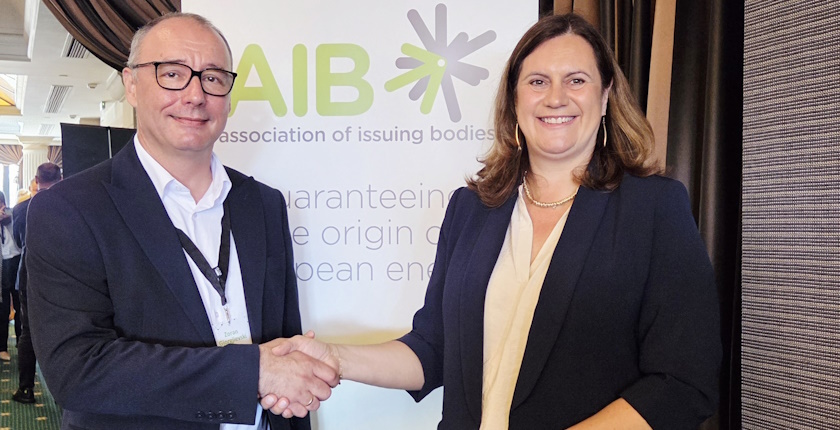
North Macedonia’s National Electricity Market Operator, MEMO, has officially joined the Association of Issuing Bodies (AIB), marking an important step toward deeper integration with the European framework for guarantees of origin and cross-border renewable electricity trade.

The decision was confirmed during the General Assembly of the Association of Issuing Bodies, where MEMO became a full member of the Brussels-based European energy certification organization. The move comes as the Ministry of Energy, Mining and Mineral Resources and the Energy Community Secretariat continue efforts to advance the mutual recognition of guarantees of origin between the European Union and Energy Community countries.

Guarantees of origin are electronic certificates proving that a specific quantity of electricity has been generated from renewable energy sources. They are increasingly important for transparent energy markets, renewable energy producers, suppliers and companies seeking to demonstrate the use of green electricity in line with ESG and decarbonisation standards.

MEMO introduced its electronic registry for guarantees of origin in April last year, in cooperation with energy certificate company Grexel and in line with European Energy Certificate System rules and AIB standards. Since then, North Macedonia has issued around 500,000 guarantees of origin, with each certificate representing 1 MWh of electricity produced from renewable sources.

According to MEMO Chief Executive Officer Zoran Gjorgjievski, AIB membership enables the Macedonian guarantees of origin system to implement the procedures required for future accession to the European Energy Certificate System. This will allow the secure, transparent and internationally recognized issuance and trading of green electricity certificates.

He emphasized that further integration of North Macedonia’s electricity market with the European energy market is essential, as it creates new opportunities for renewable energy producers, suppliers and businesses while strengthening trust, competitiveness and investment attractiveness in the country’s renewable energy sector.

Denko Rafajlovski, Head of MEMO’s Renewable Energy Support Department, noted that guarantees of origin play a key role in promoting renewable energy and giving consumers greater transparency and choice over the source of the electricity they use. Through the AIB Hub, national registries are connected, enabling the efficient cross-border transfer of green certificates between countries.

MEMO became an observer member of AIB last year as a first step toward full membership. Its accession now represents a significant milestone in the development of a modern, transparent and European-aligned electricity market in North Macedonia.

Cross-border trade in guarantees of origin will become possible once national legislation and technical requirements are fully harmonized with European Union standards.

by in News

Early-Stage Progress and Challenges Mark Energy Community’s Priority Infrastructure Projects

Most projects included in the first list of Projects of Energy Community Interest (PECI) remain at an early stage of development, with several challenges likely to affect their implementation timelines, according to an assessment by the Energy Community Regulatory Board.

The Evaluation Report on PECI projects provides a comprehensive overview of progress on initiatives selected in the 2024 PECI list. It covers six priority investments—five in electricity transmission and one in energy storage—identified as critical for strengthening cross-border interconnections, enhancing security of supply, and enabling greater integration of renewable energy across the Energy Community.

The projects under review include:

  • Completion of the 400 kV Albanian internal transmission ring;
  • Capacity expansion of the existing 220 kV interconnection between Bosnia and Herzegovina and Montenegro (Trebinje–Perućica overhead line);
  • The Trans-Balkan Corridor, specifically the 400 kV double overhead line linking Bajina Bašta in Serbia with Višegrad in Bosnia and Herzegovina and Pljevlja in Montenegro (with the latter two sections included in the PECI list);
  • Reconfiguration of Albania’s 400 kV grid alongside a new Albania–Kosovo* interconnection;
  • The 330 kV overhead line between Balti in Moldova and Dnestrovsk HPP-2 in Ukraine;
  • The 225 MW DTEK energy storage project.

To date, only the Bosnia and Herzegovina–Montenegro interconnection has secured direct financing, provided by the European Bank for Reconstruction and Development. Meanwhile, two projects—the Albanian internal ring and the Albania–Kosovo* interconnection—received financial backing in 2025 from the European Commission through the Western Balkans Investment Framework, as highlighted by the Energy Community Secretariat.

The report finds that most projects are still in conceptual, feasibility, or planning phases, with expected implementation timelines extending from 2028 to 2032. Throughout 2025, efforts have largely focused on feasibility assessments, preparatory activities, financing structures, and regulatory alignment, rather than physical construction.

Importantly, the evaluation notes that no systemic delays have been identified when measured against the expected level of project maturity following their designation in the 2024 PECI list.

However, the report underscores several structural challenges that could affect delivery in later stages. These include complex permitting and administrative procedures—particularly for cross-border infrastructure—ongoing financing constraints and rising investment costs, as well as external risks such as geopolitical and security factors, especially in relation to Ukraine.

The assessment emphasizes that early identification and mitigation of such risks will be essential to ensure a smooth transition from planning to construction in the coming years.

The ECRB also stresses the importance of continued regulatory oversight and proactive engagement by national regulatory authorities to maintain project momentum and ensure efficient implementation.

Looking ahead, the Energy Community Secretariat launched a public consultation in March on eight candidate projects for the next PECI list. The updated selection, aligned with the TEN-E Regulation framework, is expected to be adopted in December 2027, following an opinion from the ECRB anticipated by the end of August 2026.

by in News

Albania’s Hydropower Surge Strengthens Its Position in Regional and EU Energy Markets

The first three months of 2026 marked a substantial increase in electricity generation in Albania, driven primarily by a sharp rise in hydropower output. Production from hydropower plants was 70% higher in January–March 2026 compared to the same period a year earlier.

According to data published in the report of the Energy Community on the Carbon Border Adjustment Mechanism (CBAM), Albania gained a clear advantage over other regional countries in exporting electricity generated from renewable sources.

Specifically, the first quarterly report on CBAM implementation highlights that Albania’s hydropower generation increased significantly, positioning the country as a far more aggressive net exporter of electricity to both the regional market and the European Union.

“Hydropower production in Albania increased by 1.34 TWh (+70%) in the first quarter of 2026 compared to the same period in 2025, rising from 1.93 TWh to 3.27 TWh,” the report states. This growth was concentrated in January and February, with increases of +72% and +84% respectively, reflecting exceptionally favorable hydrological conditions.

This surplus translated directly into higher exports. Albania increased scheduled electricity exports by approximately 4,100 MWh per day to Greece, 3,700 MWh per day to Kosovo, and 2,000 MWh per day to Montenegro.

The report estimates that “these shifts in trade flows represent a net movement of approximately 1.2 TWh of Albanian electricity exported in the first quarter of 2026,” a volume that closely matches the incremental increase in hydropower generation.

The economic impact is further amplified by how CBAM treats Albanian electricity. Unlike Serbia, Bosnia and Herzegovina, or Montenegro, Albania benefits from a zero emissions factor. This means its electricity exports to the European Union are not subject to additional carbon costs.

“Electricity imported into the European Union from Albania was not financially affected by CBAM,” the report notes, adding that this “created a commercial incentive to import Albanian electricity into EU markets.”

Such dynamics position Albania as a preferential energy corridor դեպի the European market, particularly through Greece and onward to Italy. The report observes that exports from Albania to Greece intensified, with Albanian electricity—combined with strong Greek domestic production—subsequently redirected toward Bulgaria and Italy.

The Energy Community further warns that hydropower-dominated systems like Albania’s “appear to be in a structurally more competitive position,” suggesting that CBAM is already creating long-term winners and losers in the region. In contrast, countries with higher coal-based generation face substantial financial penalties.

For example, Montenegro pays approximately €73.8 per MWh of electricity exported to the European Union, while Albania pays zero. “The contrast between Albania and Montenegro illustrates how country-level emission factors shape cross-border electricity trade,” the report concludes, placing Albania firmly on the side of Europe’s evolving energy transition.

by in News

Tariff Methodologies in the Energy Community: Convergence, Cost Recovery, and Albania’s Reform Trajectory (ECRB 2025–2026 Analysis)

The Energy Community was created to extend EU electricity and gas market rules to the Western Balkans, Moldova, Georgia, and Ukraine through a legally binding framework. Within that system, the Energy Community Regulatory Board (ECRB) serves as the regional voice of regulators and, under Article 18 of the Electricity Regulation, prepares a biannual best-practice report on transmission and distribution tariff methodologies. The March 2026 report is the second such exercise and is explicitly designed to reduce market fragmentation by comparing how Contracting Parties set, update, and structure network tariffs.

That matters because tariff methodology is not just a technical exercise. It determines whether TSOs and DSOs recover efficient costs, whether users see price signals that reward efficiency and flexibility, and whether the network can absorb renewables, storage, EV charging, and other new uses without shifting hidden costs onto captive customers. The report frames tariff design around cost reflectivity, transparency, security of supply, and system efficiency, which is exactly where electricity-market reform and energy transition policy intersect.

Regional overview: nine Contracting Parties, one broad direction, uneven speed

Across the nine Contracting Parties—Albania, Bosnia and Herzegovina, Georgia, Kosovo*, Moldova, Montenegro, North Macedonia, Serbia, and Ukraine—the strongest common trend is not full harmonization but gradual convergence toward more incentive-based regulation. Since 2022, almost all regulators have introduced some form of change to improve cost reflectivity, investment incentives, or quality-of-service regulation; the most notable reforms are in Moldova, North Macedonia, Montenegro, Kosovo*, and Ukraine.

A useful way to read the region is by regulatory “maturity” rather than by simple tariff levels. Albania is the clearest price-cap case; Georgia has a sophisticated hybrid “building-blocks” design; Moldova and Kosovo* are moving toward more explicit EIP-aligned frameworks; North Macedonia and Montenegro are actively redesigning components of the charge to reflect flexibility, quality, and capacity; Bosnia and Herzegovina and Serbia remain more conservative and largely cost-plus on transmission; and Ukraine sits between emergency constraints and structural reform, with a major unbundling of renewable-support costs underway.

Table 1. Regional regulatory snapshot by country

Country Transmission regulation Distribution regulation Update cycle / tariff revision Transparency / stakeholder involvement Main reform direction
Albania Price-cap oriented, incentive-based Price-cap oriented, with quality factor 3-year D-cycle; T updates mostly at end of period or via extraordinary review Public consultations; tariffs and methodology publicly available Incremental updates, quality, cost-reflectivity
Bosnia and Herzegovina Cost-plus Cost-plus / regulatory methodologies by entity No fixed regulatory period; revisions when justified Public and specific consultations; info public, incl. English Stability, modest modernization
Georgia Hybrid cost-plus + revenue-cap “building blocks” Hybrid 5-year regulatory period Public/specific consultations; info public incl. English Fixed/capacity elements under review
Kosovo* Allowed-revenue, annual approval under ex-ante regulation New principles adopted in 2024; full methodology expected in 2026 5-year regulatory period Public consultations New users, injection tariffs, capacity signals
Moldova Incentive-based revenue cap Incentive-based, new methodology in 2025 Methodology indefinite; tariff updates annual Public + specific consultations; multi-authority review EIP alignment and innovation
Montenegro Hybrid incentive/performance-based Hybrid; now includes power-based distribution injection charge Flexible multi-year practice; current period 2023–2025 Public consultations Quality, storage, AIT/SAIDI, cost reflectivity
North Macedonia Revenue cap; t-2 base year Revenue cap; t-2 and lump sum access fee 3-year cycle Public and specific consultations Time-of-use, locational and flexibility signals
Serbia Cost-plus Cost-plus / mixed user basis 1-year cycle Public consultations Flexibility services under new by-laws
Ukraine Cost-plus transitional; incentive-based not fully applied Mostly incentive-based for most DSOs 1-year cycle for cost-plus DSOs; special periods for incentive regulation Public and specific consultations Separate RES-support costs; new connection logic

Deep dive: Albania

Albania is the report’s most important “special case” because it combines a comparatively mature regulatory philosophy with a relatively static formal methodology. The transmission methodology, approved in 2017, has not been materially amended since then. The report describes Albania’s transmission regime as price-cap oriented and incentive-based, with allowed revenue built from forecast OPEX and CAPEX, and with cost recovery limited to transmission-related items such as metering, maintenance, losses, ancillary services, third-party services, and taxes.

The distribution methodology is also rooted in a 2017 framework, but unlike transmission it has been incrementally adjusted since 2022 to reflect operational costs, investment plans, and, importantly, quality-of-service indicators. ERE now adds a performance-improvement factor to the D tariff formula, which is a meaningful step toward incentive regulation that is closer to EU practice. The report also notes that Albanian transmission tariffs are updated mainly at the end of the regulatory period unless extraordinary circumstances justify re-evaluation.

That said, Albania is not the most modern tariff system in the region. It remains strongly volumetric on the demand side, with no major transmission-methodology overhaul since 2017 and no reported planned reform program in the report. Compared with peers, Albania is ahead on the clarity of its price-cap logic and on the integration of quality signals, but behind Georgia, Moldova, Montenegro, and North Macedonia in methodological renewal and in preparing for capacity-based and flexibility-related network use.

Table 2. Albania in regional context

Dimension Albania Regional comparison
Transmission framework 2017 methodology, price-cap oriented Less updated than Moldova, Kosovo*, North Macedonia, Montenegro
Distribution framework 2017 methodology, gradually refined More advanced than purely static systems because of quality factor
Quality incentives Yes, D tariff includes performance-improvement factor In line with Georgia, Kosovo*, Montenegro, Ukraine
Injection charges No transmission/distribution injection charges More conservative than Montenegro, and ahead of countries that have not introduced them
Modernization pace Incremental, not transformational Middle of the pack: prudent but not frontrunner

Cost structure and cost recovery: the region still relies on the classic network model

Across the Energy Community, the default cost model remains the “average cost” approach: allowed revenue is divided by forecast volumes of energy or capacity. The report does not find meaningful adoption of incremental or fully forward-looking cost models. That means most systems still recover costs in a way that is structurally familiar, but not always well suited to emerging flexibility services or highly dynamic network use.

On the cost side, all Contracting Parties recover CAPEX, OPEX, and distribution losses through D tariffs, while TSOs also recover losses and ancillary services through T tariffs in most systems. The main divergence lies in “extra” categories: costs for data hubs, redispatching, market coupling, ENTSO-E contributions, R&D, and support schemes are only partially recognized or not recognized at all in many countries. The report is explicit that network charges should not absorb unrelated policy costs, and Ukraine is the clearest example of moving to separate renewable-support costs from the transmission tariff.

Investment treatment is also uneven. Loans are broadly recognized in tariffs and/or RAB, while grants are usually excluded from return. Anticipatory investments are rare in distribution and still selective in transmission, but Kosovo*, Moldova, Montenegro, and North Macedonia are already using forward-looking logic for strategic projects. That is a significant marker of policy maturity because it shows the region is beginning to treat network tariff design as an infrastructure-planning tool, not only a cost-pass-through mechanism.

Table 3. 2024 average transmission tariffs and 2020–2024 change

Country 2024 transmission tariff (EUR/MWh) 2020 tariff Change 2020–2024
Albania 8.44 6.06 +39.3%
Bosnia and Herzegovina 5.25 4.97 +5.7%
Georgia 7.07 5.85 +20.8%
Kosovo* 9.58 5.37 +78.4%
Moldova 9.48 7.43 +27.6%
Montenegro* 27.97 29.99 -6.7%
North Macedonia 4.77 2.86 +66.8%
Serbia 5.21 4.25 +22.6%
Ukraine 12.16 6.46 +88.2%

* Montenegro’s figure is not directly comparable to all others because distribution-connected consumers are charged capacity fees without a clean T/D breakdown.

The tariff series show three striking facts. First, Ukraine and Kosovo* experienced the fastest transmission tariff growth, and by 2024 Ukraine had the highest clearly comparable T tariff among the nine CPs. Second, North Macedonia, Albania, and Moldova also show strong upward movement, reflecting reform and/or cost pressure. Third, Montenegro is a structural outlier because of its capacity-fee design and very high reported average transmission-related value.

Table 4. 2024 household and non-household distribution tariffs

Country HH D tariff 2024 (EUR/MWh) 2020 Change Non-HH D tariff 2024 (EUR/MWh) 2020 Change
Albania 58.21 38.69 +50.5% N/A N/A N/A
Bosnia and Herzegovina 30.20 28.75 +5.0% 21.24 15.66 +35.6%
Georgia 30.99 19.54 +58.6% 30.99 12.80 +142.1%
Kosovo* 25.49 25.24 +1.0% 22.54 22.32 +1.0%
Moldova 33.22 27.00 +23.0% 33.22 27.00 +23.0%
Montenegro* 30.60 35.76 -14.4% 27.10 31.25 -13.3%
North Macedonia 38.96 25.03 +55.7% 38.96 25.03 +55.7%
Serbia 36.64 30.19 +21.4% 22.92 20.35 +12.6%
Ukraine 37.00 22.00 +68.2% 29.00 16.00 +81.3%

The distribution data show that Albania, North Macedonia, and Ukraine have seen especially strong growth in household distribution tariffs, while Georgia’s non-household tariff rose sharply. In contrast, Montenegro is the only country with a clear decline in both household and non-household distribution values over the 2020–2024 period. The cross-country average in 2024 is about EUR 35.7/MWh for household D tariffs and EUR 28.2/MWh for non-household D tariffs, underscoring how distribution still dominates the final network bill.

Tariff design and charges: the region is still dominated by withdrawal charges

All Contracting Parties apply withdrawal tariffs on both transmission and distribution. Injection charges are the exception, not the rule: they exist on transmission only in Bosnia and Herzegovina, Montenegro, and Ukraine, and on distribution only in Montenegro. Kosovo* and Georgia are explicitly preparing reforms in this direction.

The tariff base is also revealing. Transmission withdrawal tariffs are energy-only in Albania, Georgia, Moldova, and Ukraine, but energy-plus-power in Bosnia and Herzegovina, Kosovo*, Montenegro, North Macedonia, and Serbia. Distribution withdrawal tariffs are energy-only in Albania, Georgia, Kosovo*, Moldova, and Ukraine; energy-plus-power in Bosnia and Herzegovina, Montenegro, North Macedonia, and Serbia; and lump-sum elements are now visible in Bosnia and Herzegovina, Montenegro, and North Macedonia. That makes the latter three countries the most structurally diversified on D-tariff design.

Injection charges are particularly important because they show whether a country is moving away from the historic assumption that only consumers cause network costs. Montenegro is the clearest example of a system where producers share transmission and distribution costs in a measurable way: 34% of transmission costs are allocated to producers, and 0.16% of DSO costs are recovered from distribution-connected producers. Bosnia and Herzegovina and Kosovo* also recover part of transmission costs through injection charges, but Ukraine uses its dispatch tariff primarily to recover system-operation and ancillary-service costs.

Connection charges are another area where the region is differentiating. Albania and Montenegro use shallow connection charges at transmission and Albania uses a detailed multi-component D connection fee. Bosnia and Herzegovina and Ukraine use deep connection logic in several cases, while Georgia and Kosovo* are moving toward more detailed and differentiated rules for producers, small generators, EV charging, and storage. The policy message is clear: connection methodology is becoming a central instrument for shaping the next wave of grid users.

Table 5. Tariff-design signals and network-user treatment

Feature Leaders / current practice Where it is still limited
Injection charges Montenegro; parts of BiH and Ukraine; future plans in Georgia and Kosovo* Most CPs still have none
Time-of-use T tariffs Montenegro and Serbia Not widely applied elsewhere
Time-of-use D tariffs Bosnia and Herzegovina, Montenegro, Serbia No broader rollout yet
Locational signals None currently applied All CPs
Reactive charges Widely used on D level; selective on T level Many are administrative, not cost-based
New users (storage, EVs, prosumers) Kosovo*, North Macedonia, Ukraine, Georgia moving fastest Most systems still adapting

Energy transition and future trends

The report’s most important forward-looking conclusion is that tariff methodology is now being pulled into the energy-transition agenda. The EIP requires tariffs to reflect new users and new services, including flexibility, storage, distributed generation, smart grids, and renewable-energy communities. On that criterion, North Macedonia, Montenegro, Moldova, Serbia, Ukraine, Georgia, and Kosovo* are all in active reform mode, though with different starting points.

Ukraine is the clearest case of structural transition: renewable-support costs are being separated from the transmission tariff under a roadmap extending to 2030, which is the right direction if the goal is to remove unrelated policy costs from network charges. North Macedonia is preparing to empower time-of-use tariffs and locational signals under its new Energy Law. Montenegro plans AIT- and SAIDI-based incentives from 2027, while Moldova and Serbia are tasked to develop new EIP-aligned methodologies in 2025–2026. Georgia is considering fixed and/or power-based components in future regulatory periods, and Kosovo* has already adopted the principles that will underpin a new distribution-use-of-system methodology.

Comparative insights

The best-performing systems are not necessarily the cheapest. They are the ones that combine transparency, incentive compatibility, and room for new network users. On that basis, Georgia, Moldova, Montenegro, and North Macedonia are the most dynamic reformers; Albania is strong on regulatory clarity and quality signals; Kosovo* is making a significant methodological leap; and Ukraine is undertaking the most consequential structural separation of non-network costs.

The lagging systems are those where the methodology is still heavily cost-plus, the revision process is relatively static, and the tariff structure has not yet been redesigned for storage, EVs, distributed generation, or flexibility. Bosnia and Herzegovina and Serbia are the clearest examples on transmission; Albania is the clearest example of a system that is stable but too static; and Ukraine, while reform-minded, remains constrained by wartime conditions and transitional cost recovery.

There is also a visible convergence trend. Most CPs now publicly disclose tariff-related information, consult stakeholders, and use incentive-based language even where the practical model remains cost-plus. But there is still divergence in three areas: the share of cost recovered from producers, the treatment of losses, and the introduction of capacity-based or time-differentiated charges. Those are likely to be the decisive battlegrounds of the 2025–2027 reform cycle.

Conclusions and recommendations

The report shows a region that is no longer debating whether tariff methodology should change, but how fast and in what direction. The best systems are moving from simple volumetric pass-through toward more nuanced designs that reward efficient use of the grid, preserve cost recovery, and prepare for flexibility, storage, and electrification. The most important policy lesson is that network tariffs must stop carrying unrelated policy costs and must begin sending clearer signals to both consumers and producers.

For the region, the priority should be to widen the use of capacity-based and time-differentiated charges where smart metering and system conditions justify them; to standardize transparent treatment of losses and investment recovery; and to ensure that injection charges, where used, are designed around clear cost causation rather than purely administrative objectives. Regulators should also accelerate methodology updates so that storage, EV charging, demand response, and renewable-energy communities are not forced into legacy tariff rules.

For Albania specifically, the recommendation is not radical deregulation but methodological modernization. ERE should preserve the strengths of its price-cap framework and quality factor, but update the transmission methodology so it can explicitly accommodate new cost categories, emerging users, and possibly limited capacity-based or time-differentiated elements. Albania should also improve the linkage between tariff design and network modernization, because its current framework is credible but comparatively static beside Moldova, North Macedonia, Montenegro, and Kosovo*.

If Albania uses the next reform cycle to combine price-cap discipline with a more explicit treatment of flexibility, data, and new users, it can remain one of the region’s clearest regulatory references while closing the gap with the most dynamic reformers. That would align well with the Energy Community acquis and with the report’s central message: tariff methodology is now a core instrument of energy-transition governance, not a back-office accounting exercise.

by in News

The Green Backbone: Albania and Western Balkan Partners Unveil Strategic Energy Projects for 2026 EU Funding

The Energy Community has officially opened the public consultation for the 2026 list of Projects of Energy Community Interest (PECI), marking a pivotal moment for the Western Balkans’ energy infrastructure. Running from March 16 to April 17, 2026, the consultation evaluates eight critical projects designed to dismantle cross-border bottlenecks and pave the way for a massive influx of renewable energy.

For Albania and its neighbours, Kosovo, North Macedonia, Montenegro, and Bosnia and Herzegovina the selected projects represent a shift from traditional hydroelectric production to a sophisticated, integrated system of large-scale storage and high-voltage transmission corridors. These projects are now positioned to seek diverse financing, including EU grants, Western Balkans Investment Framework (WBIF) funds, and favourable loans from international financial institutions.

Below is a detailed technical and strategic breakdown of the flagship projects currently in the PECI selection pipeline.

1. Project E12: Moglice Pumped-Storage – The Balkans’ “Giant Battery”

At the heart of Albania’s green transition is the Moglice Extension Pumped-Storage Hydropower Plant (PSH). Developed by Devoll Hydropower Sh.A. (part of the Statkraft Group), this project is set to become one of the largest flexibility assets in the region.

  • Technical Parameters:

    • Maximum Power (Pmax): 1,620 MW (with a dynamic operational range of -1,620 MW to +1,620 MW).

    • Storage Capacity: 30,000 MWh (approx. 30 GWh).

    • Voltage: 400 kV.

    • Efficiency: 77% roundtrip efficiency.

  • Strategic Role: The plant will function as a “green battery,” utilizing the existing Moglice reservoir (380 million m³) and a new upper reservoir (25 million m³). It is designed to store surplus energy during periods of high production and release it during peak demand, providing critical balancing services to Albania and neighboring EU markets like Greece and Italy.

  • Timeline: Currently in the economic feasibility stage, with the earliest commissioning targeted for 2033.

2. Project E04: The 220 kV Balkan Triangle Rehabilitation

To ensure the reliability of the “Balkan Triangle” (Albania, Montenegro, and Bosnia & Herzegovina), the rehabilitation of the aging 220 kV Trebinje–Vau i Dejës corridor has been prioritized. This line is a vital artery that has recently struggled with congestion due to new solar and hydro capacities.

  • Technical Parameters:

    • Voltage: 220 kV.

    • Length: 162.92 km.

    • Transmission Power: Upgraded to carry 1,500 A using specialized high-capacity conductors.

    • Promoters: NOS BiH, Elektroprijenos-Elektroprenos BiH, and CGES (Montenegro).

  • Strategic Role: The project addresses severe climatic challenges and infrastructure depreciation. By replacing OPGW, insulation, and conductors on existing poles without increasing mechanical load, the project will increase Net Transfer Capacity (NTC) and resolve long-standing congestions between BA–ME, ME–AL, and AL–BA.

  • Timeline: Currently in the Detail Design Study phase, with an expected commissioning date of 2030.

3. Project E05 & Regional Corridors: Integrating Wind and Strengthening East-West Links

The expansion of the 400 kV network is a two-pronged strategy: strengthening regional East-West ties and unlocking wind potential in Northeast Albania.

A. The East-West Western Section (Project E05)

Connecting Kosovo and North Macedonia, this 103 km interconnector is a key link in the regional transmission “rings.”

  • Technical Parameters: 400 kV; 1330 MW Pmax.

  • Objective: Connecting the upgraded Prizren (XK) substation to a new substation in Tetovo (MK). This project enhances the security of supply and supports the large-scale integration of Renewable Energy Sources (RES) across the corridor.

  • Timeline: Expected commissioning by 2035.

B. The Albania–Kosovo Interconnection (Strategic Link)

As highlighted by recent strategic filings, Albania is pushing for a new 400 kV interconnection between Fierza (AL) and Prizren (XK).

  • Strategic Role: This link is deemed essential to facilitate the integration of over 1 GW of planned wind energy capacity in Northeast Albania. It will alleviate existing 220 kV grid overloads and significantly boost regional energy trading.

Financing the Future

These PECI projects are governed by the revised EU TEN-E Regulation, which streamlines the path toward final approval in December 2026. Because these projects provide cross-border benefits, they are eligible for a “blended” financing model. This includes state budget allocations, private investment from promoters like Statkraft and KOSTT, and significant support from European Union grants and loans.

As the Western Balkans move away from coal and toward a renewable-heavy mix, these projects—Moglice’s storage, the 220 kV rehabilitation, and the 400 kV corridors—form the essential hardware of a modernized, secure, and decarbonized European energy market.

by in News

Montenegro Achieves Regulatory Milestone: Full Alignment with EU Electricity Integration Package

In a significant leap toward European energy integration, Montenegro has officially completed the transposition of the European Union’s Electricity Integration Package (EIP). According to the Energy Community Secretariat, this regulatory alignment positions Montenegro alongside Moldova and Serbia as frontrunners in the Western Balkans’ effort to merge with the European single electricity market.

The move is designed to catalyze Montenegro’s energy transition by enhancing market competitiveness and ensuring the country can participate in regional power exchanges even before formal EU accession.

The Gateway to Market Coupling: SDAC and SIDC

The primary objective of transposing the EIP is to enable Market Coupling. By harmonizing its domestic laws with EU standards, Montenegro is preparing to join two critical pillars of the European energy infrastructure:

  • Single Day-Ahead Coupling (SDAC): A mechanism that optimizes electricity prices and cross-border flows across Europe for the following day.

  • Single Intraday Coupling (SIDC): A continuous trading environment that allows market participants to adjust their positions as close to real-time as possible.

This integration is expected to lower costs for consumers, provide clearer signals for renewable energy investors, and significantly bolster the security of the national supply.

The Legislative Roadmap

The finalization of this process occurred on February 15, 2026, when the Montenegrin government adopted two pivotal decrees governing:

  1. System Operation: Establishing technical rules for grid stability.

  2. Emergency and Restoration: Outlining protocols for grid recovery during unforeseen outages.

These decrees complement existing legislation, including the Law on Energy and the Law on Cross-Border Exchanges in Electricity and Natural Gas. Together, these legal frameworks form the “four pillars” identified by the Secretariat as essential for a cost-efficient clean energy transition:

  • Clear investment signals.

  • Strengthened regional cooperation.

  • Reinforced fair competition.

  • Enhanced security of supply.

The Path to Verification

While the legislative work is complete, Montenegro now enters the Verification Phase. This process involves a rigorous audit by the Energy Community Secretariat and the European Commission to ensure that the laws on paper translate into functional market practices.

Country Status of EIP Transposition Verification Phase
Serbia Completed In Progress (Started Oct 2025)
Moldova Completed Initiating
Montenegro Completed Pending Request
North Macedonia Partial Pending Legislation

“Montenegro is now stepping up efforts to submit a formal request initiating the verification process,” the Secretariat noted, echoing recent sentiments from Director Artur Lorkowski regarding the rapid progress of the “Vienna Group” of energy reformers.

Expert Analysis: What This Means for the Region

For a small economy like Montenegro, market coupling is a “force multiplier.” By removing the barriers to cross-border electricity trade, the country can better manage the intermittency of new wind and solar projects. This regulatory bridge to the EU not only modernizes the grid but also makes Montenegro a more attractive destination for “green” capital, as energy produced domestically can now be more easily sold into the massive European market.

by in News

Albania’s Energy Sector: Key 2025 Insights and Outlook

Albania’s energy sector in 2025 remains dominated by hydro and oil, but undergoing rapid change. Gross available energy (supply) in 2023 was 2,234 ktoe, against primary production of 1,799 ktoe. Imported oil and electricity cover the gap: the country needs roughly 4–5 TWh of net imports annually. In 2023 final energy consumption was 1,942 ktoe (down 2.8% year-on-year), with industry (~27%), residential (~34%), transport (~22%), services (~11%) and other sectors (~6%) each accounting for a share. Albania’s energy intensity remains fairly low – roughly 0.17 ktoe per million EUR of GDP (–4.0% in 2023) – reflecting both efficiency gains and a modest economic base.

Infrastructure investments are focused on grid upgrades and new pipelines. Two major 400 kV transmission projects are planned or underway: closing the internal 400 kV ring and building a 400 kV Albania–Kosovo* interconnector (both under WBIF support). The long-delayed Elbasan–Bitola 400 kV line (a 2018 Energy Community project of common interest) still awaits completion. On gas, Albania currently has no domestic market – it consumes virtually no pipeline gas today – but this will change. A Fier exit point on the Trans-Adriatic Pipeline (TAP) is under construction (targeted commissioning October 2027), and a planned Fier–Vlora feeder line is in planning. Meanwhile a new Korça gasification scheme (Azerbaijani Azeri gas via TAP) was agreed in November 2024, aiming to extend distribution into eastern Albania. These gas projects could underpin future power and industrial expansion.

2023 Albania Primary Energy Production by Fuel (ktoe) – oil and hydro dominate

Electricity Market: Liberalization and Infrastructure

Since 2023 Albania has made notable strides in power market integration, but wholesale trading remains limited. A day-ahead market was launched in April 2023 and coupled with Kosovo* from January 2024 – the first cross-border market coupling in the Energy Community. Complementary regional intraday auctions (CRIDAs) between Albania and Kosovo* began in December 2024. (Plans for a continuous intraday market are pending.) The Albanian Power Exchange (ALPEX) operates these markets: by 2024 it had 26 registered participants, of which 16 trade intraday, and traded roughly 12% of Albania’s final electricity consumption on the day-ahead market.

However, full liberalization is unfinished. The day-ahead and intraday markets run in parallel with a traditional regulated market. The state-owned utility KESH still supplies universal service customers (low-voltage households) under a public service obligation (PSO) at government-set prices. Regulated tariffs and supply obligations extend to most small businesses and residential clients. Only customers on 10–110 kV networks (large industry) face market prices, with lower-voltage consumers still sheltered under universal service tariffs. Indeed, current regulations keep in place a PSO for KESH (originally a temporary crisis measure) and a supplier-of-last-resort (SoLR) regime for others. Retail prices for low-voltage consumers thus remain controlled (free market entry is limited), and new retail deregulation phases (10 kV by 2025, 6 kV by 2026) are planned. (These interventions still fall short of EU requirements.)

Balancing and ancillary services are developing along European lines. A 15-minute imbalance settlement period was introduced in 2025 (after delays). Balancing energy is procured via a merit-order market operated by OST (the national TSO). Cross-border balancing cooperation is currently minimal: Albania only shares frequency-restoration reserves with Kosovo* under a joint “AK block” agreement. Full participation in European balancing platforms will require transposing the EU Electricity Regulation (2019/943) and Network Code on balancing (2017/2195) – work that has only just begun.

On network infrastructure, the transmission system operator OST is certified (ownership unbundled) and a member of ENTSO-E, but key grid upgrades lag. The TEN-E revision (2022/869) – which would designate new energy corridors – has not been transposed. In the meantime, two grid projects of regional interest are under development: closing Albania’s internal 400 kV loop and a new 400 kV tie to Kosovo*, both backed by EU grants. Investment plans for OST and the DSO (OSSH) are now regularly approved by the regulator ERE; ERE also endorsed the 2025–27 capital plan of OST in 2025, which includes these projects. Distribution network upgrades (smart metering, loss reduction) remain on the agenda but face funding constraints.

[Insert chart: Albania Electricity Market Coupling Timeline (Day-ahead April 2023, coupling Jan 2024, CRIDAs Dec 2024)]

Gas Market: Emerging Supply and Infrastructure

Historically, Albania had no natural gas consumption; electricity and heating ran on oil and biomass. This is changing. Although no domestic gas market exists yet, Albania is transposing EU gas rules in anticipation. The regulator has applied REMIT transparency rules (excluding market rules). Certification under the Third Package is in place: TAP AG (cross-border pipeline) is certified as an exempt TSO, and Albgaz (Albania’s gas TSO) was conditionally certified under ownership unbundling. Albgaz’s remaining unbundling issues have been repeatedly extended (new deadline end-2025), and TAP and Albgaz plan separate network codes once pipelines operate.

Two key pipeline projects will shape Albania’s gas landscape. First, the TAP Fier exit point will link Albania to the Trans-Adriatic Pipeline. Construction is slated to start May 2026 and complete by October 2027. This facility (a pressure-reduction station and meter) will allow Azeri gas from TAP to enter Albanian networks. Second, the Korça Gasification Project – a private initiative by Azerbaijan’s SOCAR – will build a local grid from a new Fier (TAP) connection eastward. A 2024 MoU commits Albgaz and SOCAR to design and build the exit and local pipeline, with a TAP capacity nomination already in place. If realized (final investment decision pending), Korça would for the first time supply gas to industries and possibly power plants in southern Albania by the late 2020s.

Domestic gas demand is expected to grow once these are online (power plants and industry will switch from oil), but there is no wholesale gas trade yet. Secondary legislation to allow retail gas supply exists, but without an existing network to serve, these serve mainly as placeholders. In practice, Albania’s future gas wholesale is effectively TAP-dominated; a functioning national hub or trading platform is still years away.

Renewable Energy and Decarbonisation

Albania’s power system is already very green by global standards, but has room to diversify. In 2024 total renewable electricity capacity reached about 3,005 MW – dominated by small hydropower (<10 MW) at some 2,181 MW and utility-scale hydro (≈375 MW), with 449 MW of solar PV. (Wind and biogas are currently negligible: the report notes only 3 MW of wind.) Renewables supplied most of Albania’s generation in 2023 (hydro plus a modest biomass cogeneration), but exact shares are not broken out in the report. What is clear is that Albania’s 2030 renewables target is ambitious: the adopted National Energy and Climate Plan (NECP) aims for 54.4% of final energy consumption from renewables by 2030, above the 52.0% goal set by the Energy Community Decision. The NECP also envisions sectoral sub-targets (e.g. ~178% for electricity, 34.6% transport, 16.6% heating/cooling) that exceed current EU RED II mandates.

Policy reforms are in motion to boost renewables. The 2023 Renewable Energy Law shifted from fixed feed-in tariffs to competitive auctions (contracts-for-difference/premium) for green power. Two auctions were already held with fixed prices, with plans to transition to pure CfDs once Albania’s day-ahead market achieves liquidity. So far no statistical transfers or joint schemes (EU cooperation mechanisms) have been used. Net metering is enabled (rooftop systems up to 500 kW) and Albania plans to move to net billing (full retail credit) as of 2024. The law also incorporated guarantees-of-origin (GOs) for all renewable generation: an electronic GO registry became operational under ERE in May 2023, laying groundwork for tracking clean energy. However, “renewable energy communities” are still theoretical – no community project has been set up yet.

In the heating sector, Albania is rolling out support for solar thermal collectors and heat pumps. A recent scheme reimburses 70% of solar water heater costs for low-income households (vs. 20–30% for other systems). Draft legislation for broader RES heating/cooling incentives is pending. On bioenergy, Albania has transposed most RED II provisions, but needs secondary rules for verifying sustainability (GHG savings and land-use criteria) for bioliquids and solid biomass used in heat and power.

Overall, the renewables pipeline is robust: capacity grew by +279 MW in 2024 (mostly PV additions). Auctions and net-billing should further drive solar rooftop uptake, especially for homes and businesses now escaping fixed feed-in tariffs. Hydropower will remain the backbone of Albania’s system; future small hydro additions and the potential for wind in the flat coastal plains (not yet tapped) could further diversify output.

Energy Efficiency and Buildings

Improving efficiency is a strategic priority. Albania’s buildings are its largest energy sink, consuming 38% of final energy in 2023. Recognizing this, in June 2025 Albania adopted a new Energy Performance of Buildings law, aligning key provisions with EU directives (including upcoming 2024 requirements). An Energy Performance Certificate (EPC) system is now operational, with ongoing training and software development. Crucially, a long-term renovation strategy (in line with the EU’s Renovation Wave) was approved in February 2025. The government is developing a detailed renovation plan to reduce building energy use, tackle energy poverty, and modernize housing and offices across Albania’s regions.

Albania’s energy consumption is already edging down. Primary energy use fell to 2,141 ktoe in 2023 (–1.5% year-on-year), while final consumption was 1,942 ktoe (–2.8%). For comparison, the 2030 NECP targets are much higher: 2,600 ktoe (primary) and 2,400 ktoe (final). The continuing decline reflects efficiency measures and structural changes. Energy intensity (use per GDP) is among the lowest regionally at ~0.17 ktoe/MEUR. Key upcoming measures include a new Energy Efficiency Law (planned in 2025 to transpose the recast EU EED), full implementation of the energy obligation scheme, and mandatory labelling and standards (a product-labeling law was passed in mid-2024). So far Albania lacks a dedicated EE fund; financing for retrofits has come from budgets and donor programs, with early ESCO activity in the housing sector. Improved access to credit and subsidies for vulnerable households are being discussed as next steps.

Policy, Regulation and EU Alignment

Albania’s legislative framework is being steadily updated to meet EU/EnC requirements, but gaps remain. The Electricity Integration Package (EIP) – the core EU rulebook for electricity markets – is not yet fully transposed. A draft law (May 2025) would implement many EIP provisions (market design, unbundling, RES integration, etc.), but it has not been passed. In the interim, ERE has adopted some CACM rules: a national capacity allocation & congestion management regulation (EUR 543/2013) was approved in April 2025. Albania also uses the SEE Regional Auction Office (SEE CAO) for cross-border capacity. Notably, the EU rule requiring at least 70% of interconnector capacity to be offered to the market is not in force yet.

In gas, Albania’s alignment is behind schedule. The EU’s Gas Security of Supply Regulation (2017/1938) is only partly implemented in law (via amendments to the 2021 Gas Law). A national Risk-Preparedness regulation (EU 2019/941) is due by end-2025; a draft Power Sector Law under discussion could designate the ministry as risk authority and mandate a preparedness plan. On emissions, Albania’s 2021 Law on Climate Change set up GHG inventories and MRV (monitoring/reporting) systems, and a new climate law (expected 2025) will refine MRVA obligations. However, Albania has no 2050 neutrality strategy yet – a critical missing piece. The Energy Community Secretariat notes this as an opportunity: the new climate law is a chance to embed a 2050 net-zero goal aligned with regional climate neutrality. Similarly, the EU’s new targets (at least –55% GHG by 2030 vs 1990) should be written into law; Albania’s NECP-included target of –53.2% by 2030 has yet to be codified.

Installed Renewable Energy Capacity by Type (MW, 2024) – large hydro vs small hydro vs solar

On renewables and energy, many EU directives are in place but not fully enforced. The transposition of RED II’s sustainability criteria for bioenergy remains incomplete (secondary rules are pending). The Energy Efficiency Directive’s Article 5/7 energy savings obligations are being revised (a new Energy Efficiency Law is expected in 2025). ERE, the energy regulator, is largely independent and well-funded (through fees), but it needs more capacity in market integration and surveillance. The Competition Authority and audit agencies are updating rules: notably, Albania’s competition law still lacks a ban on anti-competitive decisions by associations, a gap being addressed.

Challenges and Investment Opportunities

Challenges for Albania’s energy sector are many. The system is highly hydro-dependent, making it vulnerable to droughts (although the report does not quantify this risk, it is implicit). Hydropower output can swing year-to-year; in dry seasons Albania may import costly thermal power. The wholesale market is still tightly regulated: KESH’s PSO obligation and the tariff freeze for households suppress price signals. With only ~12% of demand traded on the exchange, liquidity and competition are low. Energy poverty is acute – in 2023, 34.8% of households fell behind on utility bills – and subsidies for low-income consumers cost the state ~€14.2 million per year (for under-300 kWh relief). Distribution losses remain high (the report’s chart shows ~27% of primary energy lost in losses and transformation). Regulatory delays (EIP, RED II, TEN-E) also pose risks: without quick reforms, Albania could be left out of key EU market frameworks. Finally, the lack of domestic fossil fuel resources (all oil is imported) means geopolitics still loom large.

Yet opportunities abound for investors. Albania’s grid needs modernization: the 400 kV ring and new interconnectors will unlock capacity and relieve bottlenecks. The Western Balkans Investment Framework (WBIF) and EU funds stand ready to de-risk these projects. On renewables, Albania has proven technology potential. Small hydropower already leads capacity, but solar PV has room to grow – rooftop solar in particular is financially attractive given high sunshine hours and net-billing rules. The successful launch of auctions means new wind and solar projects can seek investors. Albania also has significant wind potential along its Adriatic coast and offshore (noted by developers, though not yet realized).

In gas, early movers will find unique first-mover advantage. The imminent TAP exit point and new Korça pipeline will create an Albanian gas market where none exists. Gas-fired power plants (modern CCGTs) could then enter the mix to complement variable renewables and stabilize supply – currently discussions are underway for a planned new gas power plant (with a 2023 EIA completed). Domestic industries (steel, chemicals, cement) will benefit from cheaper and cleaner gas fuel.

The drive toward European integration is another driver. Albania’s commitment to join the EU means it can tap structural funds and grants (as the 400 kV and efficiency projects already do) to lower investment risk. The Regional Electricity Market (REM) in Southeast Europe is expanding; full day-ahead coupling with North Macedonia, Greece, and others is slated for the coming years through the IBWT process. Albanian power can thus access wider markets (raising price realization for producers). New balancing and reserve-sharing arrangements in the synchronous continental Europe grid could also enhance system stability.

Outlook (2025–2035)

Looking ahead 5–10 years, Albania’s energy transition will be shaped by how quickly reforms and investments are realized. If the EIP is transposed and markets liberalized, Albania could see a virtuous cycle: more foreign investment, deeper regional trading, and faster renewables rollout. The TAP exit (online ~2027) will mark a milestone – enabling real gasification of the economy and likely powering a switch away from oil in power and transport. The 400 kV grid projects (current timeline by 2030) will significantly improve domestic reliability and export capacity.

However, several risks remain. Climate variability poses growing uncertainty: reduced rainfall could lower hydropower generation, necessitating backup thermal plants or imports during dry spells. Delays in drafting the 2050 climate-neutrality strategy or failing to meet Energy Community targets could hinder access to green financing. Continued energy poverty and fiscal pressure from subsidies could constrain budgets for infrastructure. Geopolitical shocks (e.g. regional supply disruptions or price spikes) remain possible, underscoring the need for energy diversification.

On balance, Albania’s prospects are positive: an increasingly competitive energy mix is emerging. By 2030 Albania could comfortably meet its 54% renewables share and even push beyond with new solar and pumped hydro. Improved interconnections and market coupling will integrate Albania into the European grid both technically and economically. Enhanced efficiency in buildings and industry will moderate demand growth (the country’s 2030 NECP actually foresees higher consumption targets than today). This combination – rising renewables and efficiency gains – will bolster Albania’s sustainability, reduce emissions, and hedge fossil-fuel price risks.

In conclusion, the 2025 Energy Community Country Report highlights a period of transition for Albania: from a historically state-dominated, hydro-driven system towards a more liberalized, diversified, and EU-aligned energy economy. Achieving this vision will require sustained reform and investment. The payoff – in terms of economic competitiveness, cleaner air, and greater energy security – promises to be substantial for Albania and its regional partners.

Sources: Energy Community Secretariat, Albania – Annual Implementation Report, Nov. 2025

by in News

Guarantees of origin: turning renewable ambition into action

Author: Naida Hausmann, Lead of the Renewable Energy Taskforce, Energy Community Secretariat

Far from being mere certificates, guarantees of origin (GOs) underpin the entire renewable energy value chain – building trust and accountability among producers, businesses and consumers. By ensuring transparent tracking of green electricity and enabling cross-border recognition, GOs can accelerate decarbonisation across the EU and the Energy Community, helping Europe achieve its climate targets. Mutual recognition between the EU and the Energy Community would open regional markets, attract investment, and give consumers and businesses a tangible role in the energy transition.

A guarantee of origin (GO) certifies that one megawatt-hour (MWh) of electricity was generated from renewable sources. It provides a transparent chain of information about where and how electricity was produced, allowing consumers and companies to claim the renewable origin of the electricity they use, even if they draw it from a mixed grid.

In the European Union, the national systems for guarantees of origin are well established. Cross-border transfer of certificates is enabled through the Association of Issuing Bodies (AIB), helping to build confidence among suppliers and buyers alike.

As part of the Energy Community regional project, nearly all issuing bodies have now established national electronic registries for issuing GOs

In the Energy Community, similar systems are advancing rapidly, laying the groundwork for a fully integrated regional market for renewable electricity. As part of the Energy Community regional project, nearly all issuing bodies have now established national electronic registries for issuing GOs.

Work is ongoing to finalise disclosure rules, with the goal of fully aligning these systems with EU legislation and requirements. Once fully aligned, these systems can enable seamless cross-border trade in renewable electricity – bringing the Energy Community a step closer to the EU’s internal energy market.

Empowering consumers and corporates

GOs transform energy consumers from passive users into active participants in the energy transition. When a household subscribes to a “100% renewable” tariff, or when a company purchases GOs to match its electricity use, it signals clear market demand for renewable generation. This demand translates into investment: it strengthens developers’ business cases, supports project financing, and helps accelerate the construction of new renewables capacity.

Moreover, when GOs are sold separately from electricity, they provide an additional revenue stream for developers, making projects more financially viable.

For corporates, GOs have become an essential tool to meet sustainability and reporting obligations and demonstrate that their electricity consumption is renewable. GOs therefore form the backbone of corporate energy procurement strategies and sustainability claims, particularly when coupled with long-term power purchase agreements (PPAs).

Naida Hausmann Guarantees of origin GOs turning renewable ambition into action features

Why mutual recognition matters

Under the EU’s Renewable Energy Directive, GOs can only be mutually recognised with third countries once a formal agreement is concluded – a requirement that carries significant implications. For the Energy Community contracting parties, such recognition would effectively link their systems with the EU market for renewable attributes, allowing renewable energy producers to access European buyers and investors.

Importantly, such recognition would also catalyse other mechanisms that drive the uptake of renewables, enabling regional PPAs, enhancing liquidity and sending stronger investment signals. For investors and utilities alike, a unified GO market reduces risk, increases price transparency and ensures that renewable attributes are valued consistently across borders.

For investors and utilities alike, a unified GO market reduces risk, increases price transparency and ensures that renewable attributes are valued consistently across borders

In the Energy Community region, where access to capital remains a barrier to the deployment of renewables, this is not a minor issue – it is a gateway to unlocking the private investment needed to meet regional and European decarbonisation goals.

The Energy Community Secretariat, together with the European Commission, has been advancing a decision for mutual recognition. Once in place, it will allow certificates issued in the Energy Community to be traded and recognised within the EU, provided they meet equivalent standards of reliability and verification.

Criteria for recognition

Beyond the technical criteria for establishing and maintaining a system of guarantees of origin by national competent authorities, including membership in the AIB, the draft decision on the mutual recognition of guarantees of origin, as presented by the European Commission, sets out additional requirements. These include criteria for the transposition and implementation of the acquis communautaire on electricity and renewable energy.

The Energy Community Secretariat is expected to support the assessment of compliance and monitor implementation. Together, these criteria aim to establish a credible and transparent framework for mutual recognition, ensuring that GOs issued across the region are reliable and can be confidently traded.

Way forward

With almost all issuing bodies in Energy Community contracting parties having operationalised electronic registries for GOs, the focus should now shift to implementing robust disclosure rules and meeting the remaining criteria for mutual recognition. Ensuring alignment with EU legislation and participating in the AIB will be essential to create a transparent and trusted system, unlocking cross-border trade, investment and market confidence in renewable electricity.

Issuing bodies in Albania, the Republic of Srpska (Bosnia and Herzegovina), Georgia, Kosovo*, North Macedonia, Montenegro, Serbia, and Ukraine have operationalised their registries. The issuing body in Moldova has signed an agreement with a service provider and is expected to operationalise its registry by the end of 2025, while the only issuing body without an electronic registry remains that of the Federation of BiH.

Conclusion

GOs translate environmental ambition into measurable progress toward decarbonisation. They give visibility to renewable electricity, credibility to corporate climate action and empower consumers with choice and the ability to participate in the clean energy transition. For the Energy Community and the European Union alike, mutual recognition of GOs would mark a practical and symbolic step toward a truly integrated European renewables market – one where clean electricity, investment and trust flow freely across borders.

By turning certificates into confidence and ambition into action, GOs can help bridge the remaining gap between policy objectives and market reality, ensuring that the path to decarbonisation is both transparent and inclusive.

by in News

Energy Community Secretariat seeks expert for its Centre for Renewables Acceleration

The Energy Community Secretariat, with support from the Open Society Foundations Western Balkans, is seeking a senior-level delegated expert with a thorough understanding of renewable energy planning processes and permitting workflows to support the operation of the secretariat’s Centre for Renewables Acceleration.

The role will establish effective communication and partnerships with institutions, stakeholders, businesses, and municipalities across the Western Balkan contracting parties, according to the announcement.

It will include drafting key policy documents, supporting contracting parties to identify priorities and support needs, and developing a scaleup plan for the center’s activities, including pilot projects and framework improvements.

Experts interested in participation can write to the Energy Community Secretariat and request the tender documentation.

The deadline for submission is February 14 at 10:00 CET.

In its LinkedIn post about the tender, the secretariat asked readers to tag someone who they think would be a great fit, or to leave a comment for a bigger reach. “Help us support renewables acceleration in the Western Balkans!” it added.

by in News

Energy Community Secretariat seeks expert for its Centre for Renewables Acceleration

The Energy Community Secretariat, with support from the Open Society Foundations Western Balkans, is seeking a senior-level delegated expert with a thorough understanding of renewable energy planning processes and permitting workflows to support the operation of the secretariat’s Centre for Renewables Acceleration.

The role will establish effective communication and partnerships with institutions, stakeholders, businesses, and municipalities across the Western Balkan contracting parties, according to the announcement.

It will include drafting key policy documents, supporting contracting parties to identify priorities and support needs, and developing a scaleup plan for the center’s activities, including pilot projects and framework improvements.

Experts interested in participation can write to the Energy Community Secretariat and request the tender documentation.

The deadline for submission is February 14 at 10:00 CET.

In its LinkedIn post about the tender, the secretariat asked readers to tag someone who they think would be a great fit, or to leave a comment for a bigger reach. “Help us support renewables acceleration in the Western Balkans!” it added.